

P0501 on 1997-2001 Honda CR-V: Speed Sensor Causes and Fixes
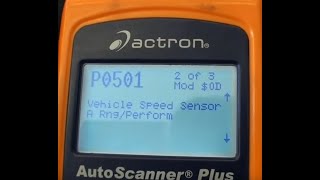
On a 1997-2001 Honda CR-V, code P0501 is almost always caused by a failed Vehicle Speed Sensor (VSS) located on the transmission. Before replacing it, check for a blown Fuse 15 (7.5A) under the dash, as a known wiring issue can cause the fuse to blow. A new sensor costs about $25-$75 for a quality aftermarket part or over $200 for the OEM Denso unit. Avoid the cheapest aftermarket sensors, as their plastic gears are known to break off in the transmission.
- P0501 on a 1st Gen CR-V points directly to a problem with the Vehicle Speed Sensor (VSS) circuit.
- Always check Fuse 15 (7.5A) under the dash and inspect the wiring harness for damage near the intake manifold before buying any parts.
- The most likely fix is replacing the VSS, which is a DIY-friendly job located on top of the transmission.
- Symptoms include a dead speedometer and harsh, erratic shifting from the automatic transmission.
- Invest in a quality Denso (OEM) or reputable aftermarket VSS; cheap parts are known to fail and can cause bigger problems.
What's Unique About the 1997-2001 Honda CR-V
For the first-generation Honda CR-V, the entire vehicle speed reading relies on a single, gear-driven sensor mounted on the transmission. A failure of this one part will simultaneously cause an inoperative speedometer and severe automatic transmission shifting problems, which can be alarming. A well-documented issue on Hondas of this era is the engine wiring harness rubbing against the sharp edge of the intake manifold support bracket. This chafing causes a short circuit that blows the 7.5A Fuse 15, which powers the VSS, O2 sensor heaters, and other components, making a fuse/wiring check a critical first step.
Symptoms You May Notice
- Inoperative or erratic speedometer (needle bounces or stays at 0 MPH)
- Harsh, erratic, or delayed shifting (automatic transmission)
- Cruise control will not engage
- Check Engine Light is on
- Odometer does not accumulate mileage
- Replacing the VSS without first checking the fuse and wiring. If the fuse is blown due to a short, a new sensor will not fix the problem.
- Assuming a major internal transmission failure due to the harsh shifting symptoms, when it is only the VSS providing bad data.
- Repeatedly replacing the VSS with cheap aftermarket units. Some owners have gone through multiple faulty aftermarket sensors before an OEM or quality part resolved the issue.
Most Likely Causes
- Failed Vehicle Speed Sensor (VSS) 🔴 High Probability The VSS is a common failure point on many vehicles of this age due to heat and vibration. Some owners report that cheap aftermarket sensors with plastic gears are particularly unreliable and can break off inside the transmission.
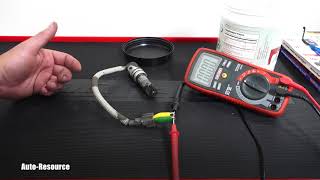
How to confirm: Using a scan tool with live data, monitor the vehicle speed PID while driving. If the reading is zero, erratic, or doesn't match the actual speed, the sensor is the likely cause (assuming wiring and fuse are good). Another method is to remove the sensor and spin its gear with a drill while monitoring the scan tool or speedometer; if it registers a speed, the sensor is likely good and the drive gear 🎬 Watch: A quick guide on how to test your sensor. inside the transmission may be the issue.
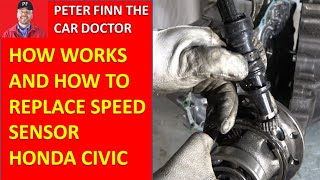
Typical fix: Replace the Vehicle Speed Sensor on the transmission. 🎬 Watch: This walkthrough shows how to replace the speed sensor. It is highly recommended to use an OEM Denso part or a high-quality aftermarket equivalent to avoid premature failure.
Est. part cost: $25-$75 - Damaged Wiring or Connector 🟡 Medium Probability A known issue on Hondas from this period involves the wiring harness chafing against the intake manifold support bracket, causing a short to ground. This is detailed in Honda TSB 99-029. 🎬 See how to fix the P0501 code and wiring issues. Connectors can also become corroded or filled with debris, especially after hosing down the engine bay.
How to confirm: Visually inspect the wiring harness leading to the VSS, paying close attention to the area where it passes the intake manifold bracket. Check the 3-pin VSS connector for corrosion, bent pins, or loose wires.
Typical fix: Repair the damaged section of the wiring harness with tape or by splicing in new wire. Protect the harness from future chafing by wrapping it in corrugated plastic tubing as recommended by the TSB. Clean or replace the connector if it is damaged.
Est. part cost: $5-$50 - Blown Fuse 🟡 Medium Probability Related to the wiring issue, a short circuit will often blow the fuse that supplies power to the VSS. On this platform, it is the 7.5A 'Fuse 15' in the under-dash fuse box. This fuse also powers the O2 sensor heaters and ELD, so its failure may be accompanied by other codes (P0135, P0141, P1298).
How to confirm: Check the No. 15 (7.5A) fuse in the fuse box located under the driver's side of the dashboard. If it is blown, a short circuit is present and must be found.
Typical fix: Replace the fuse after finding and repairing the short circuit in the wiring harness. Simply replacing the fuse without fixing the short will result in it blowing again.
Est. part cost: $1-$5
Rare But Worth Checking
- Faulty Instrument Cluster: If the VSS and wiring test good, but the speedometer is inoperative while the scan tool shows a correct speed reading, the problem may lie within the speedometer gauge itself. This can be caused by cracked solder joints on the cluster's circuit board.
- Faulty Powertrain Control Module (PCM): This is very rare. The PCM should only be considered after all other possibilities, including the sensor, wiring, and instrument cluster, have been definitively ruled out. One owner on Reddit replaced the VSS, wiring, fuse, and cluster before finally swapping the ECU, which also did not solve the problem, indicating how rare a PCM failure is for this specific code.
- Worn VSS Drive Gear (Internal to Transmission): There was a bulletin for 98-99 models regarding a worn VSS drive gear on the differential. If multiple new, quality sensors fail to produce a reading, the internal plastic gear that spins the VSS may be worn or damaged.
Diagnosis Steps
- Read the trouble codes with an OBD-II scanner.
- Check the No. 15 (7.5A) fuse in the under-dash fuse/relay box. If it's blown, find and repair the short in the wiring harness before proceeding. The most likely location for the short is where the harness rubs the intake manifold bracket.
- If the fuse is good, visually inspect the VSS wiring harness and its 3-pin connector for any signs of damage, corrosion, or chafing.
- Connect a scan tool that can display live data. Monitor the 'Vehicle Speed' parameter while driving. If the speed is 0 mph, jumps erratically, or does not increase smoothly, the VSS circuit is faulty.
- If a scan tool is not available, you can test the sensor directly. Disconnect the 3-pin connector. Check for power (approx. 12V) and ground at the connector with the key on. The third wire is the signal wire, which should produce a pulsing AC voltage as the wheels turn.
- If the wiring, fuse, and connections are good, and the scan tool shows an incorrect speed reading, replace the Vehicle Speed Sensor.
- If a new, quality VSS does not solve the problem, the issue may be a faulty instrument cluster or, in very rare cases, the PCM.
Parts You'll Likely Need
- Vehicle Speed Sensor (VSS)
(OEM #78410-S10-003)— This is the most common part to fail, causing the P0501 code and its associated symptoms on the 1997-2001 CR-V.
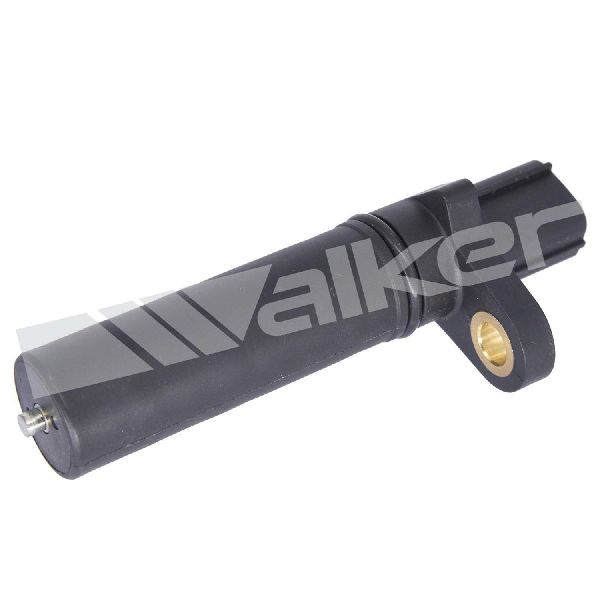
Trusted brands: Denso (OEM Supplier), Standard Motor Products (Intermotor), Walker Products
OEM price range: $220-$240
Aftermarket price range: $25-$75
Related Codes That Often Appear With This One
- P0500 — P0500 indicates a complete loss of signal from the VSS, while P0501 indicates an erratic signal. Depending on the failure mode, one code may appear before the other.
- P0135, P0141, P1298 — These codes for the O2 sensor heaters and Electrical Load Detector (ELD) can appear alongside P0501 if the root cause is a blown Fuse 15, as this single fuse powers all of these components.
Technical Service Bulletins (TSBs) & Recalls
- Honda TSB 99-029 (for 1996-99 Civic, but highly relevant): Describes the engine wire harness rubbing on the intake manifold bracket, causing a short to ground. This blows Fuse 15 and can set codes P0501, P0135, P0141, and P1298. The fix is to repair the wires and protect the harness with corrugated tubing.
Platform-Specific Known Issues
- A Technical Service Bulletin for related Honda models (99-029) highlights a common issue where the engine wiring harness rubs against the intake manifold bracket. This can cause a short that blows Fuse 15, which powers the VSS, leading to P0501 symptoms.
- Owners on forums like Honda-Tech and Reddit strongly caution against using very cheap aftermarket VSS units, as the plastic gears can be poorly made and break off inside the transmission, creating a much larger problem.
Mechanic-Grade Diagnostic Values
- Vehicle Speed Sensor (VSS) Internal Resistance — expected: 190-250 Ohms. Failure: A reading outside this range indicates a faulty sensor coil.
- VSS Connector Pin 2 (Power) to Ground — expected: Battery Voltage (Approx. 12V) with ignition ON. Failure: No voltage indicates a blown fuse (Fuse 15) or a break in the power wire.
- VSS Connector Pin 1 (Ground) to Chassis — expected: Near 0 Ohms continuity. Failure: High resistance indicates a bad ground connection, which can cause erratic signals.
- VSS Connector Pin 3 (Signal) Voltage — expected: Pulsing voltage (0V to 5V+ square wave) when the drive wheels are turning. The frequency of the pulse increases with wheel speed.. Failure: No pulse, or a steady voltage, indicates a failed sensor or a wiring issue between the sensor and PCM.
Wiring & Ground Locations
- G101 — Typically bolted to the thermostat housing on the cylinder head.. This is a primary power and logic ground for the ECU (PCM). A loose or corroded G101 ground can cause a host of erratic sensor readings and codes, including P0501, even if the VSS and its dedicated wiring are good.
- VSS 3-Pin Connector — On top of the transmission housing, towards the rear of the engine bay.. This is the direct connection to the sensor. Pin 1 is Ground (BLK), Pin 2 is Power (BLK/YEL), and Pin 3 is Signal (YEL/BLU). Testing for power, ground, and signal at this connector is the most direct way to diagnose the VSS circuit.
- Transmission Housing Ground — A ground strap running from the transmission case to the vehicle frame, often located underneath the air filter box.. Ensures the transmission, where the VSS is mounted, has a solid ground reference to the chassis. A poor connection here can cause electrical noise and interfere with sensor signals.
Real Owner Repair Stories
- Honda Forum (2001 Honda CR-V) — P0501 code, speedometer and odometer not working.
❌ Tried (didn't work) Replacing the Vehicle Speed Sensor (VSS), Replacing the VSS connector cable, Replacing Fuse 15, Replacing the instrument gauge cluster, Replacing the ECU
✅ What actually fixed it The owner suspected the final unresolved issue was related to faulty wiring behind the instrument cluster, potentially damaged during the installation of an aftermarket media device. This highlights that after all common parts are replaced, a hard-to-find wiring fault, often caused by previous work, can be the root cause.
OEM Part Supersession History
78410-S10-003→None found
Heads up: This part is specific to the 1997-2001 CR-V with an automatic transmission. While VSS sensors from other Hondas of the era (like the Civic or Accord) may look physically similar, they may have different gear tooth counts or connector keying, making them incompatible. Always verify the part number for the specific vehicle.
Model Year Variations Within This Range
- 1997-1998 vs 1999-2001: The engine was updated for the 1999 model year. Pre-facelift models (97-98) used the B20B engine (126 hp), while facelift models (99-01) used the B20Z engine (147 hp) with a higher compression ratio and a different intake manifold. While the VSS part number and P0501 diagnosis remain the same, the location of surrounding components, like the intake manifold bracket that can cause wiring chafe, may have minor differences.
Diagnostic Flowchart
Other Known Issues on This Vehicle
Issues unrelated to this code that are worth knowing about as an owner of this generation:
- Receding Exhaust Valves / Burnt Valves 🔴 High — Very common. Honda's recommended 105,000-mile valve adjustment interval is widely considered inadequate. Many mechanics recommend checking/adjusting every 30,000 miles to prevent tight exhaust valves, which can lead to misfires (P030x codes) and eventually a burnt valve requiring cylinder head repair.
- Rear Differential 'Moan' or 'Groan' on Tight Turns 🟡 Low — Extremely common. The clutch packs in the rear differential cause a groaning or chattering noise on slow, tight turns when the fluid is worn. (Ref: Though no formal TSB is frequently cited, this is a universally known issue. The fix is to drain and refill the differential with Genuine Honda Dual Pump Fluid II.)
- Oil Leaks (Sump/Oil Pan Gasket) 🟠 Medium — Almost every 1st generation CR-V will experience this. The oil pan gasket is a very common leak point.
- Failing/Leaking Radiator 🔴 High — Common for this model generation due to age. The plastic end tanks are prone to cracking, leading to coolant loss and potential overheating.
- Worn Rear Trailing Arm Bushings 🟠 Medium — A common wear item that causes a 'floating' or unstable feeling from the rear of the car.
- Ignition Switch Failure (Recall) 🔴 High — Affects 1997-1999 models. Electrical contacts in the ignition switch can wear, causing the engine to stall while driving. (Ref: NHTSA Campaign ID: 02V120000)
Used vs. New Parts: Buying Guide for This Vehicle
When a used part is the smart pick: A used OEM Denso VSS from a reputable junkyard is often a smarter choice than a new, non-branded aftermarket sensor. Given the high failure rate and potential for gear breakage with cheap aftermarket units, a tested, used original part can be more reliable.
Donor-vehicle mileage cap: roughly under 150000 miles for the part to have meaningful remaining life.
What to inspect on the donor part:
- Inspect the plastic gear at the end of the sensor. Look for any signs of chipping, cracking, or excessive wear on the teeth.
- Check the electrical connector pins for corrosion, moisture, or damage.
- If possible, ask the seller if the donor vehicle's speedometer was functional before it was dismantled.
- Choose a part from a vehicle that does not show signs of being in a major front-end collision, which could have damaged the transmission and its sensors.
OEM-only on this vehicle (don't cheap out):
- Vehicle Speed Sensor (VSS) - Strongly recommended to use OEM Denso (new or used) or a top-tier aftermarket brand.
Aftermarket brands forum-validated for this vehicle:
- Denso (OEM)
- Standard Motor Products (SMP)
- Walker Products
Brands owners have reported issues with on this vehicle:
- Unbranded, no-name sensors from online marketplaces are frequently cited in forums as being unreliable, having fitment issues, or having plastic gears that break off inside the transmission.
Real Owner Stories
Aggregated from forums and TSBs cited above. Mileages and costs reflect what owners reported in those sources.
2001 Honda CR-V
Symptoms: A persistent P0501 code that was not fixed by replacing multiple parts.
What fixed it: The issue was not resolved after replacing the VSS, VSS connector cable, Fuse 15, instrument cluster, and ECU, highlighting the potential for a rare, hard-to-find wiring issue.
Source hint: Reddit r/crv
1997 Honda CR-V
Symptoms: VSS failure after installing a cheap eBay sensor.
What fixed it: The cheap sensor's gear broke off inside the transmission, creating a larger problem. Subsequent quality aftermarket sensors also failed to work correctly, suggesting the broken part was preventing proper engagement.
Source hint: Honda-Tech.com thread titled '1997 crv rd1 awd automatic speed sensor problems'
Related OBD-II Codes
Frequently Asked Questions
I saw TSB 99-029 mentioned for a Civic. Does it apply to my 1999 Honda CR-V with a P0501 code?
Can I use a cheap aftermarket Vehicle Speed Sensor (VSS) to fix my CR-V's P0501 code?
My speedometer stopped working and I have a P0501 code. I replaced Fuse 15 and it blew again. What's wrong?
I have a P0501 code, but also codes P0135 and P0141. Are these connected?
My CR-V's speedometer is erratic and the cruise control won't work. Are these related to the P0501 code?
Besides the VSS and wiring, what else could cause a P0501 code?
Helpful Videos
We Have This Part in Stock


The information in this article is provided for general reference and educational purposes only. Vehicle specifications, procedures, and part compatibility can vary by production date, trim level, and region. Always consult your vehicle's factory service manual and verify part numbers before purchasing or performing repairs. Safety-critical components such as airbags, seat belts, and braking systems should be installed by a qualified professional.
- Honda CR-V:
- 🎬 Helpful Videos
- 🛍️ Shop This Part
- What's Unique About the 1997-2001 Honda CR-V
- Symptoms You May Notice
- Most Likely Causes
- Rare But Worth Checking
- Diagnosis Steps
- Parts You'll Likely Need
- Related Codes That Often Appear With This One
- Technical Service Bulletins (TSBs) & Recalls
- Platform-Specific Known Issues
- Mechanic-Grade Diagnostic Values
- Wiring & Ground Locations
- Real Owner Repair Stories
- OEM Part Supersession History
- Model Year Variations Within This Range
- Diagnostic Flowchart
- Other Known Issues on This Vehicle
- Used vs. New Parts: Buying Guide for This Vehicle
- Real Owner Stories
- 2001 Honda CR-V
- 1997 Honda CR-V
- Related OBD-II Codes
- Frequently Asked Questions
- 🎟️ Get 5% Off