

OBD-II Code P1298: Understanding its Multiple Meanings (ELD, IDM, and More)
The Ultimate Guide to Diagnosing and Fixing P1298 on Honda, Ford, Chrysler, and VW
- Verify your vehicle's specific P1298 definition first: it indicates a $30 Electric Load Detector (ELD) failure on Hondas, but a critical $500+ Injector Driver Module (IDM) fault on Ford 7.3L diesels.
- Check under-dash fuse #15 on Hondas before buying parts; a blown 15A fuse guarantees a shorted wiring harness under the intake manifold rather than a bad ELD.
- Charge Ford 7.3L batteries to at least 12.0V before diagnosing an IDM failure, as cranking with low voltage triggers a false P1298 code during the Key-On-Engine-Off (KOEO) test.
- Stop driving if you experience flickering lights or stalling; an overcharging alternator triggering P1298 on a Honda pushes voltage past 15V and destroys the main engine computer (PCM).
What Does P1298 Mean?

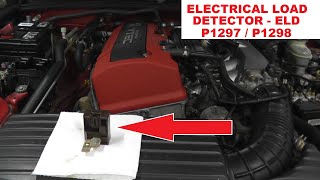
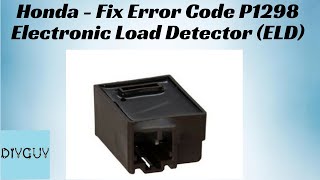
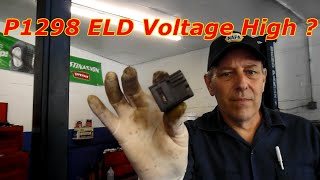
P1298 is a manufacturer-specific code. For Honda and Acura, the Electric Load Detector (ELD) sends a high voltage signal (near 5V) to the Powertrain Control Module (PCM). The ELD measures electrical demand to regulate alternator output. For Ford, it indicates an internal failure in the Injector Driver Module (IDM). For Chrysler/Dodge, it points to a lean fuel mixture at wide-open throttle.
Technical definition: For Honda and Acura: 'Electric Load Detector (ELD) Circuit High Voltage,' indicating the PCM registers a voltage from the ELD circuit above the specified threshold (stuck near 5V). For Ford: 'Injector Driver Module (IDM) Failure,' indicating a critical internal fault within the fuel injector control module. For Volkswagen: 'Coolant Temperature Sensor Circuit High Input.' For Chrysler/Dodge: 'System Too Lean at Prolonged Wide Open Throttle.'
Can I Drive With P1298?
Yes, But With Caution. Driving is not recommended. For Honda/Acura, a faulty ELD causes unexpected stalling, battery drain, or an alternator overcharging condition (above 15V) that destroys the ECU and other electronics. For Ford 7.3L diesels, this code indicates a serious Injector Driver Module (IDM) fault causing a sudden no-start condition or severe drivability problems, leaving you stranded. Diagnose the issue immediately before driving further.
Common Causes

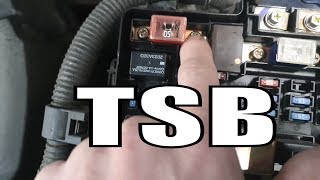
- Faulty Electric Load Detector (ELD) Unit (Very Common) — This is the primary cause on Honda and Acura vehicles. The ELD sensor, located in the under-hood fuse box, fails due to cracked internal solder joints. Honda issued Technical Service Bulletin (TSB) 05-006 specifically for this failure.
- Faulty Injector Driver Module (IDM) (Common) — On Ford 7.3L Powerstroke engines, this code points directly to a failed IDM. The failure stems from internal circuit damage caused by age, heat, or moisture intrusion into the module casing.
- Blown Fuse & Shorted Wiring (Common) — On Hondas, a blown 15A fuse in the under-dash panel (fuse #6 or #15) triggers this code. A fuse that blows repeatedly guarantees a short circuit in the wiring harness, most commonly where it rubs against a metal bracket under the intake manifold.
- Failing Alternator (Overcharging) (Less Common) — If the alternator's internal voltage regulator fails and overcharges the system (producing more than 14.8V), the ELD reports this over-voltage condition to the PCM, triggering P1298.
- Low Battery Voltage (Less Common) — On Ford 7.3L trucks, a weak battery (below 10V) triggers a false P1298 code during the Key-On-Engine-Off (KOEO) test. Fully charge the batteries and clear the codes before replacing the IDM.
- Poor Ground Connection (Less Common) — A corroded or loose main engine, chassis, or component ground strap causes voltage fluctuations, forcing the ELD to send incorrect voltage readings to the PCM.
- Aftermarket Accessories or Performance Tuners (Rare) — Improperly installed high-power stereos draw current that bypasses the ELD, causing erratic readings. On Ford trucks, aftermarket performance tuners (chips) sometimes trigger a false P1298 code.
- Faulty Powertrain Control Module (PCM) (Rare) — The vehicle's main computer fails and incorrectly processes the signal from the ELD or IDM. Consider this only after exhaustively testing all wiring, fuses, and the sensor/module itself.
Symptoms

- Check Engine Light On — The Malfunction Indicator Lamp (MIL) illuminates. On some Hondas, the code stores as a 'permanent' code without turning on the light, which still causes an automatic emissions test failure.
- Engine Stalling, Erratic Idle, or No-Start — Hondas stall at idle or experience fluctuating idle speeds. Fords experience intermittent stalling or a complete no-start condition where the engine cranks but refuses to fire.
- Flickering or Dimming Lights — Headlights and dashboard lights flicker, dim, or pulse rhythmically as the charging system struggles to maintain a stable voltage.
- Battery Draining or Warning Light — A faulty ELD or overcharging alternator disrupts the charging system, leading to a dead battery or an illuminated battery/charging system warning light.
- Reduced Power and Poor Fuel Economy — An ELD failure forces the alternator to work harder than necessary, reducing fuel mileage. On Fords, an IDM failure directly disrupts fuel injection, causing severe power loss.
Diagnostic Flowchart
Tap your situation to follow the diagnostic path that matches what you're seeing on this code.
Common Fixes & Costs
- Replace the Electric Load Detector (ELD) — Parts: $30-$50, Labor: $50-$100, ~0.5 hr book time (DIY)
- Replace Injector Driver Module (Ford 7.3L) — Parts: $300-$600, Labor: $150-$250, ~1.5 hr book time (Professional)
- Replace Blown Fuse and Repair Shorted Wire — Parts: $5-$15, Labor: $150-$300, ~2.0 hr book time (Intermediate)
- Replace Alternator — Parts: $200-$400, Labor: $100-$250, ~2.0 hr book time (Intermediate)
- Clean or Repair Wiring Connector/Grounds — Parts: $5-$20, Labor: $75-$150, ~1.0 hr book time (Intermediate)
- Replace Under-Hood Fuse Box Assembly — Parts: $150-$400, Labor: $100-$200, ~1.5 hr book time (Professional)
Used vs. New Parts: Buying Guide
When a used part is worth it: For a Ford 7.3L IDM, a professionally remanufactured unit is a better value than a new OEM part and far more reliable than a junkyard part. For the inexpensive Honda ELD, buying new is always the better choice.
Donor-vehicle mileage cap: roughly under 50000 miles for the part to have meaningful remaining life.
Donor quality checklist:
- Avoid used Ford IDMs from regions with high humidity or heavy road salt use due to the risk of water intrusion.
- Verify the exact part number. IDM versions changed through the 7.3L production run.
- Demand a functional warranty of at least 90 days. Reputable remanufacturers offer 1 year or more.
Decision logic:
- If The part is a Honda ELD → Buy new. The cost difference is minimal ($20-$40) and eliminates the risk of getting a used part with the same internal failure.
- If The part is a Ford 7.3L IDM and budget is the primary concern → Buy a remanufactured unit with a long warranty. Avoid junkyard parts, as they have a high failure rate and no warranty.
- If The vehicle is critical and reliability is paramount → Buy a new OEM or high-quality remanufactured part from a trusted vendor.
Warranty tradeoff: Junkyard parts offer a 30-day warranty at best. Remanufactured parts carry a 1-3 year warranty. New OEM parts carry a 1-year warranty.
Worst-case if a used part fails: $400-$600 if a used IDM fails shortly after installation, requiring repeat labor costs plus another part.
What Happens If You Wait — Timeline
- 0-2 weeks: Honda: Check Engine Light on, no other symptoms. Ford: Code sets on KOEO test with no drivability issues, or intermittent rough idle starts. (MPG impact: 0-2%% · Added cost: $0)
- 2 weeks - 3 months: Honda: Lights flicker, idle becomes slightly erratic. Ford: Rough running and misfires become frequent. Noticeable power loss and drop in fuel economy. (MPG impact: 3-10%% · Added cost: $50-150 in wasted fuel)
- 3-6 months: Honda: If caused by an overcharging alternator, battery damage begins. Stalling at idle becomes common. Ford: Engine stalls intermittently while driving. Hard starting becomes common. (MPG impact: 5-15%% · Added cost: $200-400 (Towing cost from a stall, potential battery replacement for Honda))
- 6+ months: Honda: Sustained over-voltage from a bad alternator destroys the ECU/PCM. Ford: The IDM fails completely, resulting in a crank-no-start condition. (MPG impact: 10-25%% · Added cost: $800-$2500 (Honda: ECU/PCM replacement. Ford: IDM replacement + towing))
Cost of Not Fixing It
- Immediate (Honda/Acura): Erratic idle, potential stalling, and reduced fuel economy. (Added cost: Negligible)
- 0-3 Months (Honda/Acura): If caused by an overcharging alternator, continued driving destroys the battery and damages the main computer (ECU/PCM). (Added cost: $800 - $2500 (Cost to replace battery and ECU).)
- Immediate (Ford 7.3L): Severe drivability issues, including major power loss, engine misfires, and a high risk of being stranded due to a sudden no-start condition. (Added cost: $200+ (Towing cost when the truck fails to start).)
Diagnosis Steps

- Confirm the Code's Meaning for Your Vehicle
Use an OBD-II scanner with manufacturer-specific definitions. Verify if P1298 means ELD failure (Honda/Acura), IDM failure (Ford), or a lean condition (Chrysler). Misunderstanding the code guarantees a misdiagnosis.
Tools: OBD-II Scanner (Beginner) - Inspect Fuses (Honda/Acura)
Check the under-dash fuse box for a blown 15A fuse at position #6 or #15. This fuse protects the alternator and O2 sensor heaters. If blown, do not replace the ELD yet; you have a short circuit.
Tools: Owner's manual, fuse puller (Beginner) - Test Battery and Alternator Output
Check battery voltage with the car off (should be ~12.6V). Start the engine and test again. Voltage must be 13.5-14.5V. If voltage exceeds 15V, the alternator is overcharging and causing the code. On a Ford 7.3L, cranking voltage below 10V sets a false P1298.
Tools: Digital Multimeter (Intermediate) - [Pro Tip] Test Honda ELD Circuit at the Connector
Unplug the 3-pin connector at the ELD in the under-hood fuse box. With the key ON, probe the terminals: Pin 1 (BLK/YEL) needs ~12V. Pin 2 (BLK) needs good ground (<0.1Ω). Pin 3 (GRN/RED) needs a 5V reference from the PCM. If correct, the ELD unit is faulty.
Tools: Digital Multimeter, wiring diagram (Advanced) - [Advanced] Live Data Test for Honda ELD
With the engine running, monitor the signal wire (GRN/RED). With no electrical loads, voltage should be ~3.0V. Turn on headlights and A/C; voltage must drop to ~1.5V. If voltage is stuck near 4.5-5.0V regardless of load, the ELD has failed internally.
Tools: Digital Multimeter or Live Data Scanner (Advanced) - Check for a Shorted Wiring Harness (Wiggle Test)
If fuse #15 blows repeatedly, inspect the wiring harness where it passes under the intake manifold support bracket. Wiggle the harness while monitoring voltage; spikes or drops indicate an intermittent short to ground.
Tools: Digital Multimeter (Advanced) - [Pro Tip] Test Ford IDM Power and Ground
Before condemning a Ford 7.3L IDM, verify its power and ground. With the key ON, measure voltage at the IDM's main power pin (must be 12.0V ± 0.5V). Check resistance between the IDM ground pin and chassis (must be <0.1 Ω). Poor grounds mimic IDM failure.
Tools: Digital Multimeter, Wiring Diagram (Advanced) - [Pro Tip] Test Ford IDM Circuit (KOEO Test)
Ensure batteries are fully charged. Run the Key-On-Engine-Off (KOEO) self-test and injector 'buzz test' using a professional scanner. If P1298 appears consistently and injectors fail to buzz, the IDM is faulty. Stop DIY diagnosis here and consult a diesel specialist if wiring tests are required.
Tools: Professional Scan Tool (Professional) - Inspect for Water Intrusion (Ford IDM)
The IDM sits on the driver's side fender well. Visually inspect the module and connector for water stains, rust, or green/white corrosion on the pins. Water damage guarantees IDM failure.
Tools: Flashlight (Intermediate) - [Advanced] Test Chrysler Fuel Pressure for Lean Code
If a Chrysler sets P1298 for a lean condition, connect a fuel pressure gauge to the fuel rail. At idle with the regulator vacuum line connected, pressure should be ~31 PSI. Disconnect the vacuum line; pressure must rise to ~39 PSI. Low pressure indicates a weak fuel pump.
Tools: Fuel Pressure Gauge (Advanced)
When This Code Triggers (Freeze-Frame Conditions)
- Vehicle/Application: Honda/Acura (Code sets when the PCM expects a change in ELD voltage but doesn't see one.)
- Engine RPM: 650-800 RPM (Idle) or 1500-2500 RPM (Cruise) (Fault is detected at idle or during steady-state driving when electrical load changes.)
- Electrical Load: High (Headlights, A/C, Defroster ON) (The fault is most apparent when a high electrical load is applied and the ELD voltage fails to drop as expected.)
- Vehicle/Application: Ford 7.3L Diesel (Code sets during a self-test rather than during normal driving.)
- Vehicle Speed: 0 MPH (The P1298 internal fault is detected during the Key-On-Engine-Off (KOEO) self-test.)
Related Codes
- P1297 — The direct companion code for 'ELD Circuit Low Voltage.' P1298 means the signal is stuck high (near 5V), while P1297 means it's stuck low (near 0V). The root cause is usually the same faulty ELD unit.
- P1316 — On Ford 7.3L diesels, this means 'IDM Codes Detected.' It is a gateway code requiring an injector buzz test to retrieve codes stored within the IDM itself, which is where P1298 is found.
- P0300-P0308 — Cylinder misfire codes. A failing ELD causes unstable system voltage, weakening ignition spark and leading to misfires. Diagnose P1298 first as it is the underlying cause.
- P0500 — Vehicle Speed Sensor (VSS) Malfunction. Appears alongside P1298 on Hondas if the #15 under-dash fuse blows, as this single fuse protects both the VSS and ELD circuits. Suspect a short circuit.
Climate & Environmental Factors
- Humidity / Water Exposure: The Ford 7.3L IDM case has a vent that breathes with temperature changes. This vent is a primary entry point for moisture from rain or engine washing, leading to internal circuit board corrosion and complete module failure.
- Extreme Cold: Cold weather lowers battery voltage. On Ford 7.3L trucks, cranking voltage below 10V triggers a false P1298 code during a Key-On-Engine-Off test. Always ensure batteries are fully charged in cold climates before diagnosing the IDM.
- Vibration and Heat: Years of engine vibration and heat cycles cause internal solder joints on both the Honda ELD and Ford IDM circuit boards to crack, leading to intermittent or total failure.
How to Talk to a Mechanic About This Code
This signals you understand the specific failure points for your vehicle. It guides the mechanic toward an efficient diagnosis and prevents them from replacing the most expensive part without proper validation.
Avoid saying:
- My check engine light is on, can you just fix it?
- I'm not sure what's wrong, just do whatever you think is best.
- A guy online said to replace this part.
Questions to ask before authorizing the repair:
- Can you show me the old part and explain why it failed?
- What is the warranty on the parts and the labor for this repair?
- Is this a firm quote, or could there be additional charges? Please provide a written estimate.
- For Honda: Did you test the ELD signal voltage and check fuse #15?
- For Ford: What were the battery voltages, and did the P1298 code appear during the buzz test?
Where to Take It: Dealer vs Independent vs Chain
- Dealer:
Best for: Vehicles still under powertrain or emissions warranty., Complex electrical issues where factory diagnostic tools are a significant advantage.
Downsides: Highest labor rates, often 1.5-2x more than independent shops., Defaults to replacing larger, more expensive assemblies (e.g., entire fuse box instead of just the ELD). (Typical cost: +50% vs. baseline) - Independent Shop:
For Honda/Acura, a trusted independent shop is the best fit. For a Ford 7.3L, a reputable independent DIESEL shop is the ideal choice; they have the necessary experience and tools without the high dealer cost.
Best for: Out-of-warranty vehicles where cost is a major factor., Common repairs with well-documented fixes.
Downsides: Quality and expertise vary widely. For Ford 7.3L, a diesel specialist is required, not a general mechanic. (Typical cost: +0% vs. baseline) - Chain Shop:
AVOID. The diagnostic nuance of P1298 (wiring short vs. module failure, false codes) is a poor fit for the chain shop model. There is a high risk of incorrect diagnosis.
Best for: Simple, routine maintenance like oil changes, tires, and batteries.
Downsides: Technicians often lack the in-depth diagnostic tools and experience for complex electrical faults., High pressure to upsell leads to misdiagnosis (e.g., selling an alternator when only the ELD is bad). (Typical cost: -10% vs. baseline)
When to Walk Away From the Repair
If the estimated repair cost exceeds 40-50% of the car's private-party value, consider selling or trading it in. For older, high-mileage vehicles (>150,000 miles), this threshold drops to 30-40%.
- Car worth $3000, fix is $150: Fix it. The repair cost for a Honda ELD is very low compared to the car's value.
- Car worth $5000, fix is $800: Borderline. For a Ford 7.3L IDM, this is a significant repair. If the truck is otherwise reliable, fixing it is reasonable. If it has other pending issues, it may be time to sell.
- Car worth $2500, fix is $1500: Walk away. The repair cost is 60% of the vehicle's value. It is not a sound financial decision.
What Scan Tool You Need for This Code
Minimum: A scanner that reads manufacturer-specific codes and displays live data PIDs (Parameter IDs).
A basic $20 reader only shows the 'P1298' code number, not the manufacturer's definition (ELD vs IDM). It cannot display live ELD voltage for Honda diagnosis or perform the critical injector 'buzz test' for Ford diagnosis.
Budget: BlueDriver Pro or FORScan with adapter (~$100) — For Honda, BlueDriver displays live data, allowing you to watch the ELD voltage change with electrical load. For Ford 7.3L, the free FORScan software on a laptop combined with a compatible OBD-II adapter ($30-$50) performs the essential injector 'buzz test'.
Mid-range: Foxwell NT510 Elite / NT710 (~$180) — Offers brand-specific software with deep diagnostic capabilities. It provides reliable live data graphing and includes bidirectional controls, making it a powerful tool for DIY diagnosis of either the ELD or IDM system.
Professional: Autel MaxiCOM MK808S (~$500) — Provides full bidirectional control, allowing it to command tests like the Ford injector buzz test directly from the tool. It offers comprehensive live data and dealer-level diagnostics for nearly all makes and models.
Rent vs buy: For a one-time Honda ELD fix, borrowing a scanner from an auto parts store is sufficient if it shows live data. For the complex Ford IDM diagnosis, buying a budget option like a FORScan adapter is a wise investment.
How to Clear the Code After You Fix It
- Reconnect battery if disconnected for the repair.
- Use an OBD-II scan tool to formally clear the Diagnostic Trouble Codes (DTCs).
- Perform the manufacturer-specific drive cycle to allow readiness monitors to run.
Drive cycle (~30 minutes): For Honda: Cold start (sit for 6+ hours), idle 2-3 mins with A/C on, drive at a steady 55 mph for 3-5 minutes, then perform 10-15 minutes of mixed city/highway driving. For Ford: A complex cycle involving specific highway speeds (45-65 mph for 10 mins) and stop-and-go traffic.
Readiness monitors affected: Comprehensive Component Monitor (CCM), Catalyst (CAT) Monitor, Oxygen (O2) Sensor Monitor
Before emissions retest: drive at least 100 miles to fully set monitors.
Watch out for:
- Disconnecting the battery does not clear a 'permanent' P1298 code and resets all readiness monitors to 'Not Ready', guaranteeing an emissions test failure.
- The code returns immediately if the underlying fault (bad ELD, shorted wire) is not fixed.
- Failing to complete the full drive cycle leaves monitors 'Not Ready'.
Will This Fail Emissions / State Inspection?
Yes — this code typically fails an OBD-II emissions inspection.
- California: An active P1298 code is an automatic smog check failure. All required readiness monitors must be 'Ready'. After repair, a specific drive cycle must be completed, taking up to 100 miles.
- New York: The NYS vehicle inspection includes an OBD-II scan. A Check Engine Light with code P1298 results in an immediate failure.
- Texas: In counties requiring an emissions test, an illuminated Check Engine Light is an automatic failure. You cannot pass until the vehicle is repaired and the code is cleared.
Most Commonly Affected Vehicles
- Honda Civic (2001-2005) — Extremely common failure covered by TSB 05-006. The ELD is a separate, easily replaceable part (P/N 38255-S5A-003) in the fuse box.
- Honda CR-V (2002-2006) — Covered by TSB 05-006 for a high failure rate of the ELD unit (P/N 38255-S5A-003).
- Honda Accord (1998-2007) — Prone to ELD failure. On older models, the ELD is integrated into the fuse box, requiring replacement of the entire assembly. A shorted wire near the alternator is also common.
- Acura RSX (2002-2006) — Shares components with the Civic, making it susceptible to the exact same ELD failure (P/N 38255-S5A-003).
- Acura TL, MDX (2001-2006) — Suffer from ELD failures. Earlier models require a full fuse box replacement, while newer styles allow for separate ELD replacement.
- Ford F-Series / E-Series with 7.3L Powerstroke Diesel (1997-2003) — P1298 means 'Injector Driver Module (IDM) Failure'. False codes are frequently triggered by low battery voltage or aftermarket performance chips.
- Volkswagen Jetta, Golf (TDI) (1999-2006) — P1298 indicates an issue with the Coolant Temperature Sensor on the radiator outlet (G83), entirely unrelated to the charging system.
- Chrysler / Dodge / Jeep Various (1996-2004) — P1298 indicates 'System Too Lean at Prolonged Wide Open Throttle.' This is a fuel mixture problem, not an electrical fault.
Manufacturer-Specific Notes
- Honda / Acura: This code almost always points to the Electric Load Detector (ELD). A common secondary cause is a short in the wiring harness where it rubs against a bracket under the intake manifold, which blows the #15 or #6 fuse.
- Ford: P1298 means 'Injector Driver Module (IDM) Failure' on 7.3L Powerstroke engines. A false code is easily triggered by low battery voltage or aftermarket performance chips.
- Chrysler / Dodge / Jeep: P1298 means 'System Too Lean at Prolonged Wide Open Throttle.' This is a fuel delivery issue related to a weak fuel pump or clogged filter, completely unrelated to the electrical system.
Real Owner Stories
2001 Honda Civic at 155K miles - The Misdiagnosis Runaround
Car had a rough, bouncing idle and hesitation.
What they tried:
- Replaced air filter, valve cover gasket, and spark plugs - no change.
- Used a cheap scanner, got a cylinder 2 misfire code (P0302) and P1298. Added SeaFoam - no change.
- Reset ECU by pulling fuse - no change.
Outcome: A new ELD unit (part #38255-S5A-003) fixed all issues. The faulty ELD caused voltage instability, leading to the misfire code and poor engine performance.
Lesson: On Hondas, electrical codes like P1298 cause secondary, misleading codes like misfires. Address the primary electrical fault (P1298) first.
1997 Ford F-250 7.3L - The False Flag
Truck had rough start issues but ran perfectly fine once warmed up.
What they tried:
- Connected a professional scan tool to run diagnostics.
- Pulled codes P1298 (IDM Failure) and P0605 (Control Module ROM Error) during the Key-On-Engine-Off (KOEO) test.
- Noticed no codes appeared during the Key-On-Engine-Running (KOER) test.
Outcome: The owner suspected false flags triggered by under-voltage during cranking. The focus remained on fixing confirmed glow plug issues, saving $500 on an unnecessary IDM.
Lesson: On a Ford 7.3L, P1298 is often a false code triggered during KOEO tests if battery voltage is low. If the truck runs well and the code doesn't appear during a running test, fix known issues first.
1997 Honda Civic DX at 75K miles - The Short Circuit
Engine revved high, Check Engine Light came on, and performance degraded until the car wouldn't start.
What they tried:
- Pulled code P1298. Replaced the entire under-hood fuse box - code immediately returned.
- Checked all fuses, found fuse #15 was blown. Replaced it, but it blew again instantly.
Outcome: The actual problem was a shorted wire in the harness under the intake manifold, covered by Honda TSB 99-029. The wire rubbed against a metal bracket, blowing fuse #15 and causing multiple system failures.
Lesson: If replacing the ELD doesn't fix P1298 on a Honda, or if fuse #15 keeps blowing, immediately suspect a shorted wire near the intake manifold bracket.
How to Prevent This Code From Triggering
- Periodically clean battery terminals and check grounds (Honda & Ford) (Every 6 months) — Corroded terminals and poor grounds cause voltage fluctuations that stress modules like the ELD and IDM, leading to premature failure.
- Keep cowl drains and fender wells clear of debris (Ford 7.3L) (Annually, especially before rainy season) — The IDM is vulnerable to water overflowing from clogged cowl drains. Keeping these areas clean reduces the risk of water entering the IDM's case vent.
- Avoid high-pressure washing in the engine bay (Ford 7.3L) (During every wash) — Directly spraying the driver's side fender well forces water into the IDM's vent, causing immediate failure. Use low-pressure water.
- Perform periodic preventative charging of the battery (Honda & Ford) (Every 3-4 months, especially for short-trip vehicles) — A fully charged battery reduces strain on the charging system. A weak battery causes an alternator to overwork or triggers false codes in the IDM.
- Consider an IDM water shield or relocation (Ford 7.3L) (One-time modification) — For trucks in very wet climates, fabricating a shield or relocating the IDM to a higher, drier location prevents water intrusion, the #1 killer of IDMs.
Frequently Asked Questions
What exactly does the Electric Load Detector (ELD) do?
The ELD measures electrical demand and commands the alternator to adjust output. This reduces unnecessary engine load and improves fuel efficiency.
I replaced the ELD on my Honda, but the P1298 code came back. What's next?
Check the 15A fuse (#15 or #6) in the under-dash fuse box. A blown fuse indicates a short circuit, most commonly located where the wiring harness rubs against the intake manifold bracket.
Can a bad battery cause a P1298 code?
Yes. On Hondas, a failing battery causes voltage instability that triggers the code. On Ford 7.3L diesels, cranking with a weak battery (below 10V) sets a false P1298 during a KOEO test.
My car is a Ford F-250 and has P1298. Does this mean my ELD is bad?
No. On a Ford 7.3L Powerstroke, P1298 indicates an Injector Driver Module (IDM) failure. This is a completely different, more complex, and more expensive part.
Where is the ELD located on a Honda Civic or CR-V?
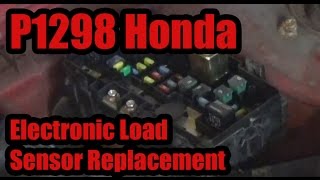
The ELD sits inside the main under-hood fuse box. It is a small plastic module secured by two large fuses (typically 80A and 40A) that the main power bus bar passes through.
My mechanic says I need a whole new fuse box for my Acura, is that true?
Only on older models (pre-2000) where the ELD was permanently integrated. For most common models like the 2001-2005 Civic or RSX, you can buy and replace the ELD unit separately.
Will a P1298 code cause me to fail an emissions test?
Yes. Even without a Check Engine Light, the PCM stores P1298 as a permanent or pending code. This results in an automatic smog check failure until repaired and cleared.
What is the 'buzz test' for a Ford P1298?
The buzz test is a diagnostic function for Ford diesels that commands the IDM to rapidly cycle each fuel injector. If injectors fail to buzz audibly or the test triggers P1298, the IDM or its wiring has failed.
Key Takeaways
- Verify your vehicle's specific P1298 definition first: it indicates a $30 Electric Load Detector (ELD) failure on Hondas, but a critical $500+ Injector Driver Module (IDM) fault on Ford 7.3L diesels.
- Check under-dash fuse #15 on Hondas before buying parts; a blown 15A fuse guarantees a shorted wiring harness under the intake manifold rather than a bad ELD.
- Charge Ford 7.3L batteries to at least 12.0V before diagnosing an IDM failure, as cranking with low voltage triggers a false P1298 code during the Key-On-Engine-Off (KOEO) test.
- Stop driving if you experience flickering lights or stalling; an overcharging alternator triggering P1298 on a Honda pushes voltage past 15V and destroys the main engine computer (PCM).
Helpful Videos

The information in this article is provided for general reference and educational purposes only. Vehicle specifications, procedures, and part compatibility can vary by production date, trim level, and region. Always consult your vehicle's factory service manual and verify part numbers before purchasing or performing repairs. Safety-critical components such as airbags, seat belts, and braking systems should be installed by a qualified professional.
- 🎬 Helpful Videos
- What Does P1298 Mean?
- Can I Drive With P1298?
- Common Causes
- Symptoms
- Diagnostic Flowchart
- Common Fixes & Costs
- Used vs. New Parts: Buying Guide
- What Happens If You Wait — Timeline
- Cost of Not Fixing It
- Diagnosis Steps
- When This Code Triggers (Freeze-Frame Conditions)
- Related Codes
- Climate & Environmental Factors
- How to Talk to a Mechanic About This Code
- Where to Take It: Dealer vs Independent vs Chain
- When to Walk Away From the Repair
- What Scan Tool You Need for This Code
- How to Clear the Code After You Fix It
- Will This Fail Emissions / State Inspection?
- Most Commonly Affected Vehicles
- Manufacturer-Specific Notes
- Real Owner Stories
- 2001 Honda Civic at 155K miles - The Misdiagnosis Runaround
- 1997 Ford F-250 7.3L - The False Flag
- 1997 Honda Civic DX at 75K miles - The Short Circuit
- How to Prevent This Code From Triggering
- Frequently Asked Questions
- What exactly does the Electric Load Detector (ELD) do?
- I replaced the ELD on my Honda, but the P1298 code came back. What's next?
- Can a bad battery cause a P1298 code?
- My car is a Ford F-250 and has P1298. Does this mean my ELD is bad?
- Where is the ELD located on a Honda Civic or CR-V?
- My mechanic says I need a whole new fuse box for my Acura, is that true?
- Will a P1298 code cause me to fail an emissions test?
- What is the 'buzz test' for a Ford P1298?
- Key Takeaways
- 🎟️ Get 5% Off