

P0500 on 2010-2017 Chevrolet Equinox: Vehicle Speed Sensor Fault Causes and Fixes
On a 2010-2017 Equinox, P0500 is almost always caused by a cracked magnetic reluctor ring on a wheel hub assembly, which requires replacing the entire hub. This failure is extremely common on this platform due to rust buildup under the ring. This will also trigger ABS and StabiliTrak warnings. Expect to pay $100-$250 for a new hub assembly.
- P0500 on this Equinox points to a problem with the wheel speed sensing system, not a transmission sensor.
- The most likely cause is a cracked magnetic ring on a wheel hub assembly, a known weak point on this vehicle.
- Always scan for ABS codes (like C0035/C0040) to find out which wheel is at fault before buying parts.
- Visually inspect the magnetic ring on the hub before replacing the ABS sensor to avoid a common and costly misdiagnosis.
- If the ring is broken, you must replace the entire wheel hub and bearing assembly.
What's Unique About the 2010-2017 Chevrolet Equinox
The Chevrolet Equinox and its sibling, the GMC Terrain, are well-known for a specific failure that causes the P0500 code. The magnetic reluctor ring (or tone ring), which is integrated into the wheel hub and bearing assembly, is highly prone to cracking or breaking apart due to rust buildup underneath it. This is the most common cause of the code, often leading to the misdiagnosis of a bad ABS sensor. Technicians familiar with this platform will often inspect the ring for damage before replacing any other parts. The ring itself is not a serviceable part; the entire hub must be replaced if the ring is found to be damaged.
Generation note: The 2010-2017 model years cover the second generation of the Chevrolet Equinox, which is built on the GM Theta platform. A mid-cycle refresh occurred in 2016, but the wheel hub and ABS sensor design that leads to this P0500 fault is consistent across the entire generation. This issue is shared with its platform mate, the GMC Terrain (2010-2017).
Symptoms You May Notice
- Check Engine Light is on
- ABS warning light is on
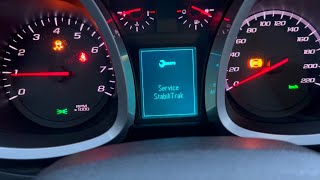
- "Service StabiliTrak" or "Service Traction Control" message is displayed on the dash
- Cruise control is inoperative
- Speedometer may be erratic or read 0 MPH
- Transmission may shift harshly or at incorrect times
- AWD system may be disabled (if equipped)
- Vehicle may enter "Reduced Engine Power" mode
- Replacing the ABS wheel speed sensor without first inspecting the magnetic reluctor ring on the wheel hub. If the ring is cracked, a new sensor will not fix the issue. This is the most common misstep for this specific vehicle.
Most Likely Causes
- Cracked or Damaged Magnetic Reluctor Ring on Wheel Hub 🔴 High Probability The design allows for moisture and road salt to get between the hub and the magnetic ring, causing rust to build up and eventually crack the ring. This is a widely documented failure on this platform and its GMC Terrain sibling.
How to confirm: Use a scan tool capable of reading ABS codes to identify the specific wheel (e.g., C0040 for Front Right). Then, visually inspect the magnetic ring on the back of that wheel hub assembly. You may need to remove the sensor or use a borescope to see the cracks clearly. The ring may be split or have a chunk missing.
Typical fix: Replace the entire wheel hub and bearing assembly. The reluctor ring is not available as a separate part from GM.
Est. part cost: $80-$250 - Faulty ABS Wheel Speed Sensor 🟡 Medium Probability The sensors are exposed to harsh conditions at the wheel, leading to failure from moisture, debris, or internal electronics faults over time. This is often misdiagnosed as the primary issue when the reluctor ring is the actual cause.
How to confirm: After confirming the reluctor ring is intact, use a scan tool to monitor live data from all four wheel speed sensors while driving. The sensor whose reading drops out or is erratic is the faulty one. You can also test the sensor's internal resistance with a multimeter; compare the reading to the sensor on the opposite side. A significant difference indicates a fault.
Typical fix: Replace the faulty ABS wheel speed sensor. It is held in by a single bolt and is relatively easy to access after removing the wheel.
Est. part cost: $25-$70 - Damaged Wiring or Connector ⚪ Low Probability The wiring harness running to the wheel can be damaged by road debris, improper repairs, or corrosion in the connector pins from water intrusion. Wires can also break internally near the connector from repeated suspension movement.
How to confirm: Visually inspect the entire length of the sensor's wiring harness from the wheel to the main connector for any signs of chafing, breaks, or corrosion. Wiggle the connector and harness while monitoring live data on a scan tool to see if the signal cuts out. Check for continuity on both wires with a multimeter.
Typical fix: Repair the broken section of wire or replace the pigtail connector. In some cases, a new sensor with an integrated harness is the easiest solution.
Est. part cost: $15-$50
Rare But Worth Checking
- Faulty Electronic Brake Control Module (EBCM): This is very rare. Before condemning the EBCM, all other possibilities (hub, sensor, wiring) must be exhaustively ruled out. This would likely present with multiple wheel speed sensor codes or communication codes (U-codes), such as U0121.
Diagnosis Steps
- Connect an OBD-II scanner capable of reading ABS/chassis codes.
- Read the codes. Look for specific C-codes (C0035, C0040, C0045, C0050) that will identify which wheel is causing the fault.
- Raise and safely support the vehicle to access the identified wheel.
- Visually inspect the magnetic reluctor ring on the back of the wheel hub assembly. Look for cracks, breaks, or significant rust buildup that may have pushed the ring out of alignment. A borescope or even a phone camera can help get a clear view. A visible crack or separation confirms the hub assembly is the fault.
- If the ring is damaged, the wheel hub assembly is the faulty part and must be replaced.
- If the ring appears intact, inspect the ABS wheel speed sensor. Check for physical damage, heavy contamination with metallic debris, or damage from a missing half-shaft 'anti-click' washer as noted in TSB 19-NA-103.
- Inspect the sensor's wiring harness for any cuts, chafing, or corrosion at the connector.
- If a professional scan tool is available, monitor the live data for the suspect wheel speed sensor while spinning the wheel by hand. Compare its reading to the other wheels. A faulty sensor will show no reading or an erratic one.
- Based on these findings, replace the faulty component (hub assembly or sensor). 🎬 See step-by-step instructions for replacing a rear wheel hub
Parts You'll Likely Need
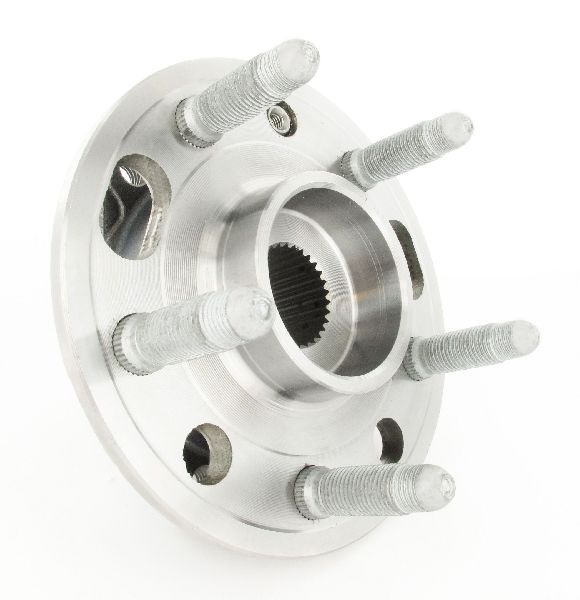
- Wheel Hub and Bearing Assembly
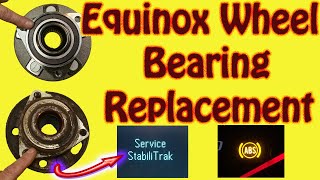
(OEM #ACDelco 513288 (Front), ACDelco 512440 (Rear))— This is the most common failure. The integrated magnetic reluctor ring cracks, causing the P0500 code. The entire hub must be replaced. 🎬 Watch how to replace a front wheel bearing on this Equinox
Trusted brands: ACDelco, Moog, Timken, Detroit Axle, Dorman
OEM price range: $150-$250
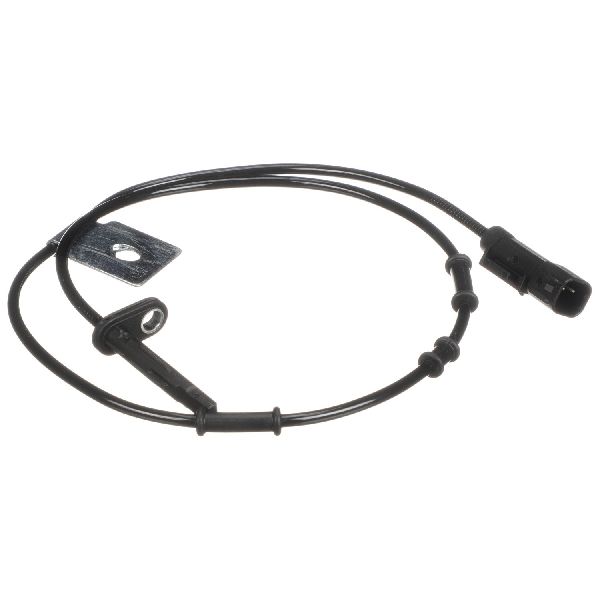
Aftermarket price range: $80-$160 - ABS Wheel Speed Sensor
(OEM #ACDelco 20938121 (Front), ACDelco 13331883 (Rear, example))— This is the second most likely cause if the reluctor ring on the hub is confirmed to be intact.
Trusted brands: ACDelco, Dorman, Standard Motor Products (SMP), SKP
OEM price range: $50-$80
Aftermarket price range: $25-$50
Related Codes That Often Appear With This One
- C0035 — This is the specific ABS code for a fault in the Front Left wheel speed sensor circuit, pinpointing the location of the P0500's root cause.
- C0040 — This is the specific ABS code for a fault in the Front Right wheel speed sensor circuit, pinpointing the location of the P0500's root cause.
- C0045 — This is the specific ABS code for a fault in the Rear Left wheel speed sensor circuit, pinpointing the location of the P0500's root cause.
- C0050 — This is the specific ABS code for a fault in the Rear Right wheel speed sensor circuit, pinpointing the location of the P0500's root cause.
Technical Service Bulletins (TSBs) & Recalls
- TSB 19-NA-103: Mentions that a missing 'anti-click' washer on a front half-shaft can cause damage to the wheel speed sensor, which could be a contributing factor.
Platform-Specific Known Issues
- The magnetic reluctor rings on the factory wheel hubs are known to fail from corrosion, leading to a cluster of warnings (ABS, StabiliTrak, Check Engine) and the P0500 code. This is a very common issue for the 2010-2017 Equinox and GMC Terrain.
- A user on a Chevrolet forum noted their 2011 Equinox experienced the 'Service Stabilitrak' and 'Reduced Engine Power' messages, which were ultimately traced back to a faulty throttle body sensor, highlighting that while the wheel speed system is the common cause, other issues can trigger similar warnings.
Mechanic-Grade Diagnostic Values
- ABS Wheel Speed Sensor Resistance (Magneto-Resistive Type) — expected: Typically in the Mega-ohm (MΩ) range. A reading of 4-5 MΩ is common. The key is to compare the suspect sensor with a known-good sensor on the other side of the vehicle; they should be very close.. Failure: A reading of 'OL' (Open Loop) or 0 ohms indicates a failed sensor. A value significantly different from the opposing sensor also indicates a fault.
- ABS Wheel Speed Sensor Current Switching (with scan tool) — expected: When spinning the wheel, a functional sensor's current output should switch between approximately 7mA and 14mA.. Failure: A static current reading or no reading at all while the wheel is spinning points to a faulty sensor or circuit issue.
- ABS Pump Fuse (Underhood Fuse Block) — expected: 40 Amps, located at position F13.. Failure: A blown fuse will cut power to the ABS pump.
- ABS Module Fuse (Underhood Fuse Block) — expected: 20 Amps, located at position F16.. Failure: A blown fuse will cut power to the EBCM, causing communication loss and multiple codes.
Scan Tool Commands That Help
- GDS2 / Professional Scan Tool: Live Data > EBCM > Wheel Speed Sensors — This is the primary diagnostic step after reading codes. It allows you to view the speed output from all four sensors in real-time while driving or spinning the wheels. The faulty sensor will show an erratic, dropping, or zero MPH reading compared to the others.
Wiring & Ground Locations
- EBCM (Electronic Brake Control Module) — Located in the rear of the engine compartment, under the hood, near the brake fluid reservoir.. This module receives all wheel speed sensor signals and calculates the vehicle speed. All sensor wiring terminates here, and it communicates the final speed data to the ECM. A bad connection at its main 38-pin connector could cause a P0500.
- Underhood Fuse Block — Located in the left rear of the engine compartment.. Contains the primary fuses for the ABS system, including F13 (40A ABS Pump) and F16 (20A ABS Module). A loss of power here will disable the entire system.
- G109 — A primary engine ground located at the top rear of the engine.. A poor engine or chassis ground can cause a variety of electrical issues, including erratic sensor readings and module communication problems. While not a direct cause, it should be checked if multiple, seemingly unrelated electrical faults are present.
- Wheel Speed Sensor Connector — At each wheel hub, connecting the sensor pigtail to the main chassis harness.. This 2-pin connector is a common point of failure due to corrosion from water and road salt, or from wires breaking internally from suspension flex.
Real Owner Repair Stories
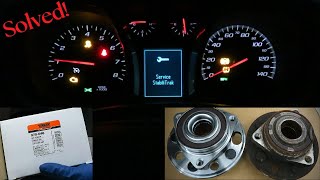
- YouTube channel 'DC Auto Enhancement' (2010-2017 Chevrolet Equinox AWD) — ABS, Traction Control, and StabiliTrak lights on. Grinding/pulsating noise from brakes at low speed. Scan tool showed a code for the right front wheel speed sensor.
❌ Tried (didn't work) Replaced the right front ABS wheel speed sensor. The problem persisted immediately after replacement.
✅ What actually fixed it The magnetic reluctor ring on the back of the right front wheel hub assembly was found to be cracked. Replacing the entire wheel hub assembly (Moog Part #513288) resolved all symptoms and codes.
OEM Part Supersession History
13507374, 13564982→ACDelco 513288— Part consolidation and potential design updates over the vehicle's lifecycle.
Heads up: ACDelco 513288 is the widely accepted professional-grade replacement for the front hubs on this platform.10384745, 15872664, 20763148→ACDelco 20938121— Part consolidation for rear wheel speed sensors across multiple GM platforms.
Heads up: While listed for the Equinox, part 20938121 is more commonly associated with Silverado/Sierra trucks. Always verify fitment using the vehicle's VIN, as front and rear sensors differ and may have changed during the generation.
Model Year Variations Within This Range
- 2016-2017: The 2016 model year received a mid-cycle refresh with updated front and rear fascias, new headlights, and interior updates. However, the underlying chassis, suspension, and ABS components (wheel hubs, sensors, EBCM) that cause the P0500 fault remained consistent with the 2010-2015 models.
Diagnostic Flowchart
Other Known Issues on This Vehicle
Issues unrelated to this code that are worth knowing about as an owner of this generation:
- Excessive Oil Consumption (2.4L Ecotec) 🔴 High — Very common in 2010-2013 models, but present through 2017. Caused by faulty piston rings. Can lead to low oil levels and catastrophic engine damage. (Ref: Multiple TSBs and a class-action lawsuit settlement exist for this issue, extending warranty coverage for some owners.)
- Stretched Timing Chains (2.4L Ecotec & 3.6L V6) 🔴 High — Common on both engines, often exacerbated by low oil levels from oil consumption. Symptoms include a rattling noise on cold start and codes like P0016/P0017. Failure can destroy the engine. (Ref: TSB PIP3423L addresses related diagnostic codes for V6 models.)
- Faulty Variable Valve Timing (VVT) Solenoids 🟠 Medium — Common on the 2.4L engine, causing rough idle, stalling, and codes like P0010/P0011. Often caused by dirty or low oil.
- Frozen PCV Orifice / Blown Main Seal 🔴 High — In cold climates, moisture in the PCV system can freeze, blocking the orifice. This causes crankcase pressure to build and can blow out the rear main seal, causing a massive oil leak. (Ref: TSB #14882 addresses this issue.)
- Catalytic Converter Failure (2.4L Ecotec) 🟠 Medium — Often a secondary failure caused by the excessive oil consumption issue. Unburned oil contaminates and clogs the catalytic converter, leading to performance issues and costly replacement.
Used vs. New Parts: Buying Guide for This Vehicle
When a used part is the smart pick: For this repair, using used parts is generally not recommended. The primary failure part, the wheel hub assembly, is a wear item with a known design flaw (cracking reluctor ring). A used hub carries a high risk of either being already faulty or failing soon after installation.
Donor-vehicle mileage cap: roughly under 40000 miles for the part to have meaningful remaining life.
What to inspect on the donor part:
- If considering a used hub, visually inspect the magnetic reluctor ring on the back for ANY signs of cracking, swelling, or rust separation. If it's not perfectly smooth and intact, reject it.
- Check for any play or roughness when turning the bearing by hand.
- For a used sensor or wiring, inspect for brittle plastic, corrosion in the connector, or any signs of wire insulation damage.
Aftermarket brands forum-validated for this vehicle:
- For Wheel Hub Assemblies: Timken, Moog, and SKF are highly regarded premium brands. ACDelco Gold/Professional is the OEM-tier choice.
- For ABS Sensors: ACDelco, Dorman, Standard Motor Products (SMP), and SKP are all common and reliable choices.
Brands owners have reported issues with on this vehicle:
- Avoid unbranded, 'white-box' wheel hub assemblies from online marketplaces. These often use lower-quality bearings and seals that can fail prematurely, leading to a repeat of the same repair.
Real Owner Stories
Aggregated from forums and TSBs cited above. Mileages and costs reflect what owners reported in those sources.
2011 Chevrolet Equinox
Symptoms: Experienced 'Service Stabilitrak' and 'Reduced Engine Power' messages on the dash.
What fixed it: The issue was traced back to a faulty throttle body sensor.
Source hint: chevroletforum.com: Multiple threads discuss the 'Service StabiliTrak' warning that accompanies the P0500 code.
2010-2017 GMC Terrain
Symptoms: ABS and Check Engine lights on; confirmed the tone ring is not a serviceable part.
What fixed it: Replacement of the entire wheel bearing assembly because the reluctor ring was cracked.
Source hint: Reddit r/MechanicAdvice & r/Chevy: Multiple threads corroborate that the primary cause is a cracked reluctor ring on the wheel bearing
Related OBD-II Codes
Frequently Asked Questions
Why is my 2010-2017 Chevrolet Equinox showing 'Service StabiliTrak' and 'Reduced Engine Power' along with code P0500?
Can I just replace the magnetic reluctor ring on my Equinox wheel hub?
Does TSB 19-NA-103 apply to the P0500 code on my Equinox?
Is it common for the ABS sensor itself to fail on the Equinox?
Why does my Equinox shift harshly when the Check Engine Light and ABS lights are on?
Will rust in the rust belt states cause this P0500 issue on my Equinox?
Helpful Videos
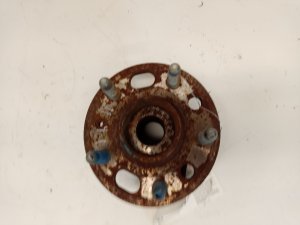
Used OEM Parts in Stock

New Aftermarket Parts Available



The information in this article is provided for general reference and educational purposes only. Vehicle specifications, procedures, and part compatibility can vary by production date, trim level, and region. Always consult your vehicle's factory service manual and verify part numbers before purchasing or performing repairs. Safety-critical components such as airbags, seat belts, and braking systems should be installed by a qualified professional.
- Chevrolet Equinox:
- 🎬 Helpful Videos
- 🛍️ Shop This Part
- What's Unique About the 2010-2017 Chevrolet Equinox
- Symptoms You May Notice
- Most Likely Causes
- Rare But Worth Checking
- Diagnosis Steps
- Parts You'll Likely Need
- Related Codes That Often Appear With This One
- Technical Service Bulletins (TSBs) & Recalls
- Platform-Specific Known Issues
- Mechanic-Grade Diagnostic Values
- Scan Tool Commands That Help
- Wiring & Ground Locations
- Real Owner Repair Stories
- OEM Part Supersession History
- Model Year Variations Within This Range
- Diagnostic Flowchart
- Other Known Issues on This Vehicle
- Used vs. New Parts: Buying Guide for This Vehicle
- Real Owner Stories
- 2011 Chevrolet Equinox
- 2010-2017 GMC Terrain
- Related OBD-II Codes
- Frequently Asked Questions
- 🎟️ Get 5% Off