

P0496 on 2015-2020 Ford F-150 2.7L EcoBoost: Causes and Fixes for EVAP High Purge Flow
For a 2015-2020 F-150 with the 2.7L EcoBoost, code P0496 is almost always caused by a failing canister purge valve. This part gets stuck open, allowing un-metered fuel vapor into the engine when it shouldn't. This leads to classic symptoms like a hard-to-start engine right after refueling, a rough idle, and a disabled remote start. Replacing the purge valve is a straightforward DIY fix, with the OEM Motorcraft part costing between $55 and $100.
- P0496 on your 2.7L F-150 almost always points to a bad canister purge valve.
- The most telling symptom is the engine struggling to start right after you fill the gas tank.
- Replacing the purge valve is a very easy and affordable DIY repair that usually takes less than 20 minutes.
- Always use a quality OEM (Motorcraft) or reputable aftermarket part to avoid recurring issues.
- If a new purge valve doesn't solve the problem, inspect its wiring connector before moving to less common causes like the FTP sensor.
What's Unique About the 2015-2020 Ford F-150

On the 2.7L EcoBoost F-150, the canister purge valve is a very common failure point that leads to code P0496. While other causes are possible, this valve is notoriously prone to sticking open. Ford has also issued a Technical Service Bulletin (SSM 50306) for many vehicles, including the 2021 F-150, noting that P0496 can appear even when the purge valve is functional, and advises specific diagnostic tests before replacement. This suggests the system can be sensitive and requires careful diagnosis. The purge valve itself is an assembly with integrated hoses, making it a specific part rather than a generic valve. Overfilling the fuel tank on models with the capless fuel filler is a known contributor to premature failure of this valve, as liquid fuel can be forced into the vapor lines and damage the valve's internals.
Symptoms You May Notice
- Difficulty starting the engine, or a rough, stumbling start immediately after refueling. [30, 33, NHTSA ODI #11537486]
- Rough or unstable idle. [NHTSA ODI #11727824]
- Check Engine Light (CEL) is on.
- A whooshing or hissing sound from the engine bay.
- Disabled remote start function. [NHTSA ODI #11558036]
- Slightly reduced fuel economy due to un-metered vapor entering the engine.
- Extended cranking time before the engine starts.
- Replacing the gas cap. While a loose or faulty gas cap can cause other EVAP codes (like P0455 or P0456 for leaks), it is not a typical cause for P0496, which specifically relates to vapor flow when none is commanded by the computer.
- Replacing the charcoal canister. The canister itself is usually not the cause unless it has become saturated with liquid fuel from chronic overfilling of the gas tank ('topping off'). This saturation can then send debris and raw fuel into the purge valve, causing it to fail.
Most Likely Causes

- Faulty Canister Purge Valve (Solenoid) 🔴 High Probability This is a widely documented common failure item on many Ford vehicles using EcoBoost engines, including the F-150, Edge, and Explorer. The valve's internal mechanism fails and it gets stuck in the open position, allowing un-metered fuel vapor into the intake at the wrong time. This is often exacerbated by repeatedly overfilling the fuel tank, which can force liquid fuel into the vapor system and damage the valve.
How to confirm: With the engine off, disconnect the vapor line leading from the purge valve to the intake manifold. Use a hand vacuum pump to apply vacuum to the valve's intake port (the side from the charcoal canister). If it doesn't hold vacuum, it's stuck open and bad. A simpler method is to remove the valve and try to blow through it; if air passes, it has failed. A professional technician can use a scan tool to command the valve closed while monitoring the Fuel Tank Pressure (FTP) sensor; a drop in pressure indicates a leak past the valve.
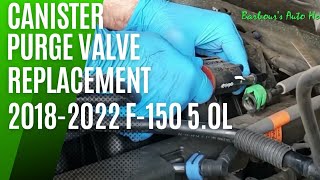
Typical fix: Replace the canister purge valve assembly. It is located on top of the engine and is relatively easy to access by removing the engine cover. It is held on by two 10mm nuts and has four hose/electrical connections.
Est. part cost: $55-$100 for OEM Motorcraft, $35-$70 for aftermarket.
Rare But Worth Checking
- Wiring Harness Issue: A TSB for other Ford models (SSM 51247) points to a wiring harness connection at connector C1198 causing this code, among others. This may be due to water intrusion or chafing on the driver's side lower frame area. While not specific to the F-150, it's a possibility if a new purge valve doesn't fix the issue. Inspect wiring near the purge valve for any chafing or damage. [NHTSA TSB #SSM 51247]
- Faulty Fuel Tank Pressure (FTP) Sensor: The FTP sensor tells the computer the pressure in the EVAP system. If it provides a false reading, the computer may incorrectly trigger P0496. One owner on f150forum.com reported a dealer replacing the FTP sensor after a second purge valve failed to resolve the code. This is less common than the purge valve itself and more difficult to replace as it is located on top of the fuel tank.
- Stuck EVAP Blocking Valve: One owner on a Reddit forum (r/f150) with a 2019 F-150 3.5L reported that after replacing the purge valve and FTP sensor, the P0496 issue was finally traced to a stuck EVAP 'Blocking Valve'. The mechanic noted this was a difficult diagnosis on a newer system. This is an uncommon but documented possibility.
- Faulty EVAP Canister Vent Valve: While the purge valve is on the engine, the vent valve (or vent solenoid) is located near the charcoal canister at the rear of the vehicle. It's normally open and closes to seal the system for testing. If it gets stuck closed, it can cause pressure issues that may contribute to or be misdiagnosed as P0496. Some owners have reported needing to replace both the purge and vent valves to fully resolve EVAP system codes.
Diagnosis Steps

- Verify the code with an OBD-II scanner. Note any other codes present, especially P1450, P0455, or P0456.
- Confirm the primary symptom: Does the truck have a long crank or stumble/run rough immediately after refueling? If yes, the canister purge valve is the prime suspect.
- Locate the canister purge valve on the top of the 2.7L engine, under the plastic engine cover.
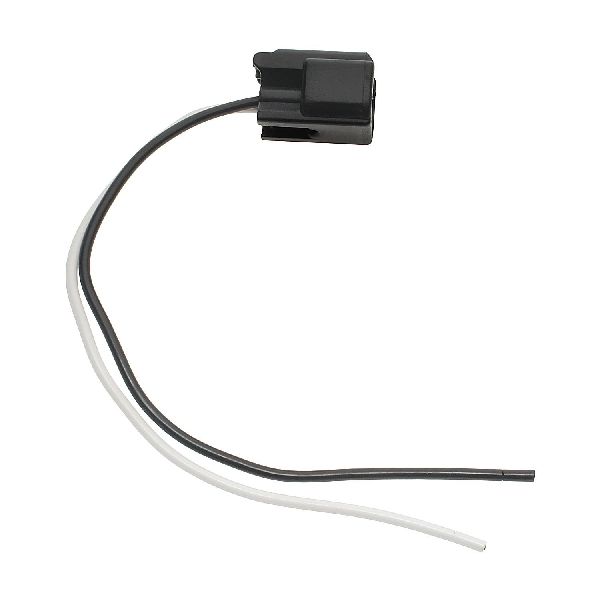
- Inspect the electrical connector and the multiple hoses attached to the purge valve assembly for any visible damage, cracks, or loose connections.
- Test the purge valve. With the engine off, remove the valve from the engine (typically held by two 10mm nuts). Try to blow through the port that receives vapor from the charcoal canister. If any air passes through, the valve is stuck open and must be replaced. It should be completely sealed when not energized.
- If the valve seems okay, use a multimeter to check for voltage at the electrical connector with the key on. If voltage is present when it shouldn't be, there may be a wiring short to power.
- If the purge valve and its wiring are confirmed good, the next step is to perform a full EVAP system leak test with a smoke machine. This can identify leaks in hoses or other components that could cause the code, though this is less likely for P0496 than for other EVAP codes.
- As a final, less common step, consider testing the Fuel Tank Pressure (FTP) sensor for accurate readings using a professional scan tool. A faulty sensor can send bad data to the PCM, causing the code to be set erroneously.
Parts You'll Likely Need

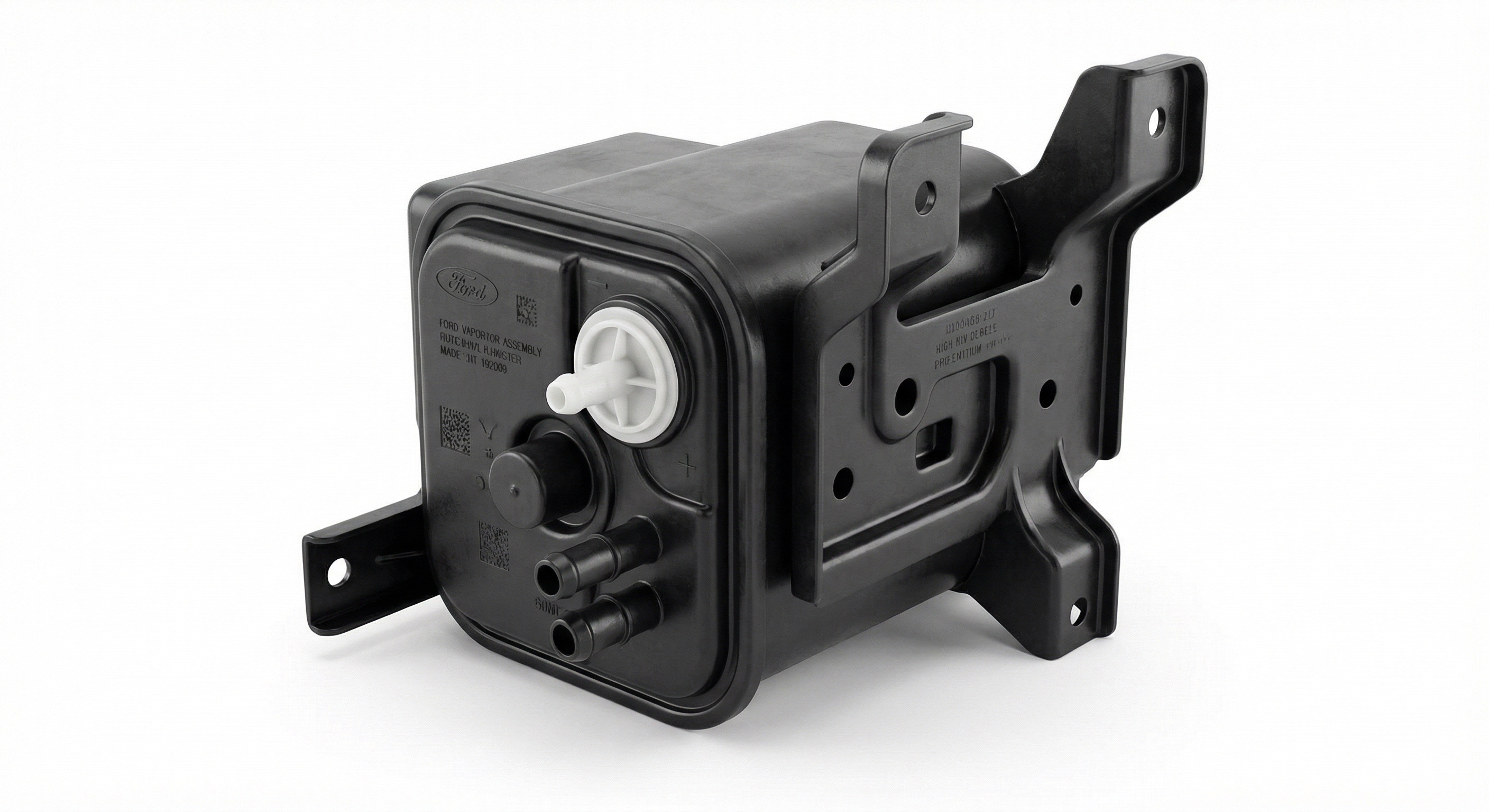
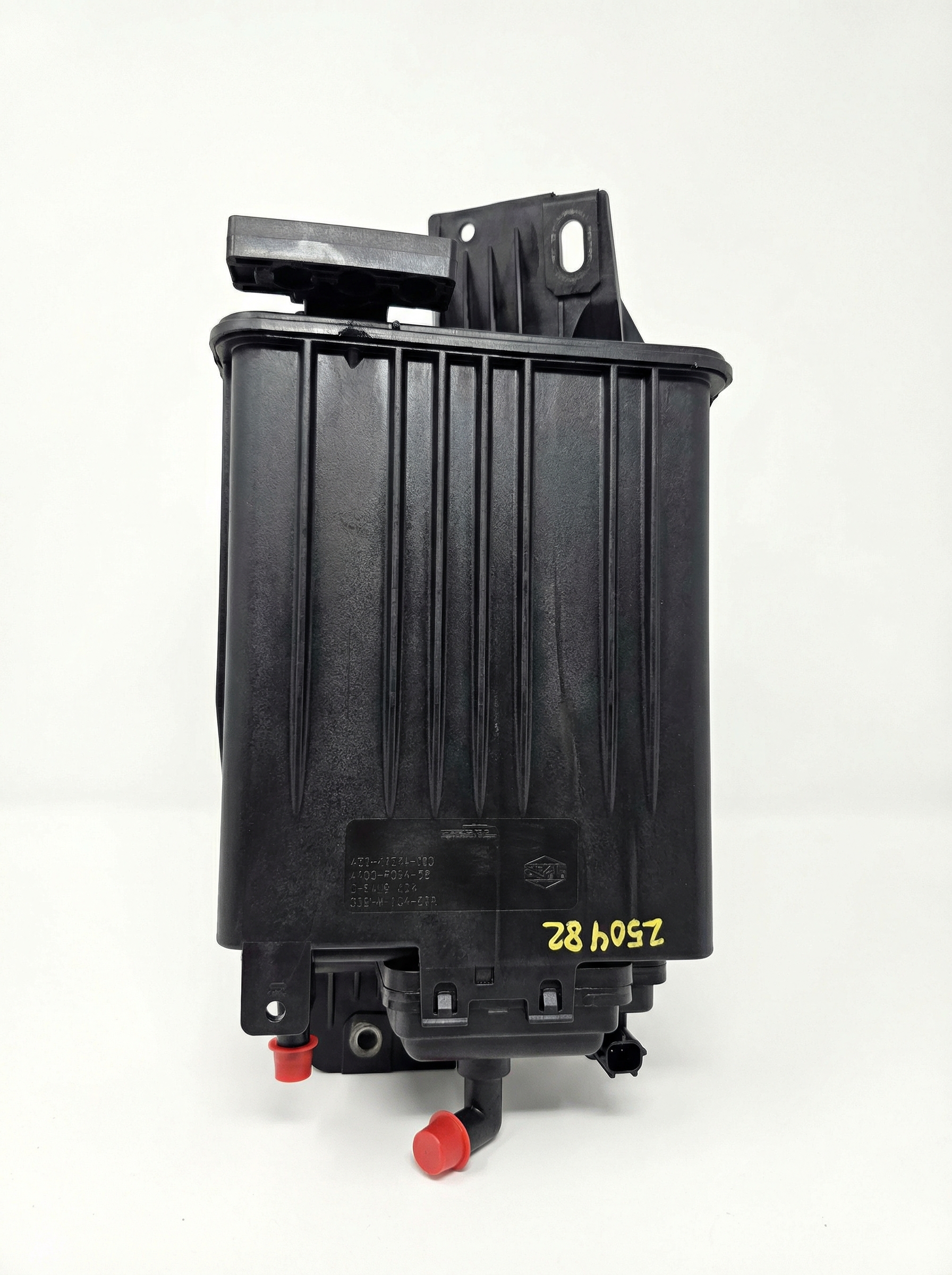
- Vapor Canister Purge Valve
(OEM #BU5Z-9B328-B (Note: This is a general Ford part number, always verify with VIN. Some sources show part number may vary, e.g., CX2408 or specific assembly numbers like 66871XSTH for certain years).)— This is the most frequent cause of P0496 on this platform. It sticks open, allowing fuel vapors into the engine at the wrong time, causing the hard start after fueling and rough idle symptoms.
Trusted brands: Motorcraft, Dorman, Standard Motor Products
OEM price range: $55-$100
Aftermarket price range: $35-$70
Related Codes That Often Appear With This One
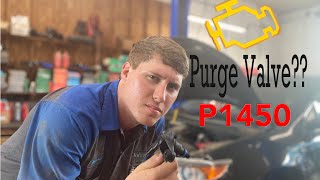
- P1450 — This Ford-specific code for 'Unable to Bleed Up Fuel Tank Vacuum' is very often triggered alongside P0496. Both point directly to a fault in the purge valve or a major blockage/restriction in the EVAP lines. An f150forum.com user with an '18 2.7L experienced both codes together.
- P0456 — 'EVAP System Small Leak Detected.' A stuck-open purge valve can be interpreted by the system as a small, constant leak, causing both codes to appear. This was seen in an NHTSA complaint for a Ford Fusion with the same symptoms. [NHTSA ODI #11537486, 38]
- P0455 — 'EVAP System Large Leak Detected.' Similar to P0456, a purge valve that is significantly stuck open can be flagged as a large leak by the PCM.
- P0451 — 'EVAP System Pressure Sensor/Switch Range/Performance.' This code can appear with P0496 if the FTP sensor's readings are erratic or illogical, which can happen when the purge valve is stuck open and causing constant vacuum when none is expected. A forum user reported this combination on their 2018 2.7L.
Technical Service Bulletins (TSBs) & Recalls
- SSM 51247: Mentions P0496 can be caused by a wiring harness issue at connector C1198 on other Ford models, which is a relevant diagnostic consideration if the purge valve replacement does not work. [NHTSA TSB #SSM 51247]
- SSM 50306: Applies to 2021+ F-150s and other Fords, noting that P0496 can be set even with a functional purge valve and recommends specific diagnostic tests before replacement.
Platform-Specific Known Issues
- TSB SSM 50306 was issued for 2021 F-150s (and other models) with P0496, advising technicians to perform specific scan tool tests before replacing the purge valve, as returned parts were often found to be functional. This indicates the system can be sensitive and may log the code without a hard part failure.
- A user on f150forum.com noted that a PCM recall update (24e12) for their truck seemed to clear a persistent P0496 code, suggesting some logic-related issues could be at play, although this is anecdotal.
Mechanic-Grade Diagnostic Values
- Fuel Tank Pressure (FTP) Sensor Reading (Non-Purge) — expected: Near 0 inches of water (inH2O) or ~2.5 Volts. Failure: A vacuum reading of more than 10 inches of water when the purge valve is commanded closed will trigger P0496.
- EVAP Purge Valve Solenoid Circuit Resistance — expected: Less than 5 ohms. Failure: A reading higher than 5 ohms indicates an open or high-resistance circuit that needs repair.
Hidden / Shadow Codes Worth Checking
- Mode $06: Mode $06 is not a specific code, but a diagnostic mode that provides access to the results of the PCM's self-tests for various emissions monitors, including the EVAP system. It can show test values and limits before a full-blown Diagnostic Trouble Code (DTC) is set. This can be useful for identifying intermittent issues or confirming a repair has allowed the monitor to run and pass. (see via A capable OBD-II scan tool with Mode $06 functionality, such as FORScan software with a compatible adapter.)
Scan Tool Commands That Help
- FORScan / Ford IDS: EVAP System Test — This is a bidirectional test that allows a technician to command the purge valve and vent valve to open and close while monitoring the Fuel Tank Pressure (FTP) sensor. It's the definitive way to test the function of the entire EVAP system, verify if the purge valve is truly stuck open, and check for leaks without a smoke machine.
- FORScan / Ford IDS: Reset All Adaptations / Clear KAM — After replacing a component like the purge valve, clearing the Keep Alive Memory (KAM) forces the PCM to relearn the EVAP system's operating parameters. This can help clear the code and prevent it from returning if the old, faulty data was causing issues.
Real Owner Repair Stories
- Reddit user on r/f150 (2019 F-150 3.5L EcoBoost (similar EVAP system)) — Persistent P0496 code.
❌ Tried (didn't work) Replaced purge valve (DIY), Replaced vent solenoid (shop, aftermarket part), Replaced Fuel Tank Pressure sensor (shop, aftermarket part, which caused new codes), Replaced vent solenoid and FTP sensor again with OEM parts, Replaced EVAP 'Blocking Valve'
✅ What actually fixed it The PCM (powertrain control module) had shorted internally. It was replaced under Ford's 8yr/80,000mi federal emissions warranty, which resolved the P0496 code and issues with other related parts. - Quora user (2015 F-150 2.7L with 91k miles) — Code P1450 (Unable to Bleed Up Fuel Tank Vacuum), engine runs rough and stalls after coasting.
✅ What actually fixed it Replacing the canister purge valve on top of the engine. The user noted the failure was caused by repeatedly overfilling the fuel tank, which is a common issue on 2015-2016 models with the capless filler.
"I Checked Everything" — The Actual Cause
- In some cases, the PCM itself can be the cause. A forum user reported that after replacing the purge valve, vent valve, and FTP sensor, the P0496 code persisted. The final diagnosis was an internally shorted PCM, which was commanding the purge valve to stay open. Replacing the PCM under the federal emissions warranty finally fixed the issue.
When the Usual Fixes Don't Work
- While replacing the purge valve is the most common fix, it is not always the solution. One owner of a 2019 F-150 went through replacing the purge valve, vent solenoid, and fuel tank pressure sensor (some with aftermarket parts that caused additional codes) before the issue was traced to a stuck EVAP 'Blocking Valve'. The final resolution, however, was an internally shorted PCM that was replaced under warranty. This highlights that if a new OEM purge valve doesn't fix the code, a deeper electrical diagnosis focusing on the PCM and related wiring is necessary.
OEM Part Supersession History
JL34-9B325-D (Engineering Number)→BU5Z-9B328-B (Service Part Number)— Standard part number update and consolidation across multiple vehicle lines.
Heads up: While BU5Z-9B328-B is the widely cited service part, it's crucial to verify fitment with the vehicle's VIN. A user with a 2018 F-150 noted that a generic part from an auto parts store did not fit, and they had to order the specific OEM part (JL349B325D) to match the original.
Model Year Variations Within This Range
- 2018-2020: The 2.7L EcoBoost received a significant update for the 2018 model year, introducing dual port-and-direct fuel injection. While the fundamental cause of P0496 (purge valve) remains the same, the engine block, internals, and some control strategies differ from the 2015-2017 models.
- 2015-2017: These first-generation 2.7L engines were paired with the 6-speed 6R80 transmission, whereas 2018+ models received the 10-speed 10R80. This does not directly affect the P0496 code but is a major differentiator for the powertrain.
Diagnostic Flowchart
Other Known Issues on This Vehicle
Issues unrelated to this code that are worth knowing about as an owner of this generation:
- Leaking Plastic Oil Pan 🟠 Medium — Very common on 2015-2017 models. The original RTV seal fails or the plastic pan warps. Less common on 2018+ which received an updated pan design. (Ref: TSB 23-2083 (supersedes 19-2205) for 2015-2017 models. TSB 19-2189 for 2018-2019 models.)
- 10R80 10-Speed Transmission Harsh/Delayed Shifting 🟠 Medium — Widespread issue affecting many 2017+ F-150s with the 10-speed auto. Symptoms include harsh shifts, clunking, and delayed engagement. Can occur at various mileages. (Ref: Multiple TSBs issued, including TSB 22-2428 and 24-2046, addressing software updates, valve body issues, and internal CDF clutch drum failures.)
- Carbon Buildup on Intake Valves 🟡 Low — A known side-effect of the direct-injection-only design on pre-2018 2.7L engines. Buildup occurs gradually over tens of thousands of miles, potentially causing rough idle or reduced performance. Ford added port injection in 2018 to mitigate this.
- Timing Chain Rattle on Cold Start 🟠 Medium — More prevalent on early (2015-2017) 2.7L engines. A brief rattle upon starting can indicate a stretched timing chain or failing tensioner, which can lead to serious engine damage if ignored.
Used vs. New Parts: Buying Guide for This Vehicle
When a used part is the smart pick: For the primary cause of P0496, the canister purge valve, buying a used part is generally not recommended. It is a relatively inexpensive electronic solenoid that is a known common failure item. The risk of getting a part that has already failed or is near the end of its service life is high.
Donor-vehicle mileage cap: roughly under 40000 miles for the part to have meaningful remaining life.
What to inspect on the donor part:
- Ensure there are no cracks in the plastic housing or hose connection points.
- Check that the electrical connector pins are clean and free of corrosion.
- If possible, attempt to blow through the valve; no air should pass through when de-energized.
OEM-only on this vehicle (don't cheap out):
- Canister Purge Valve: While some aftermarket brands are acceptable, forum users have reported fitment issues and premature failures. Given the relatively low cost of the OEM Motorcraft part, it is the strongly recommended choice.
- Fuel Tank Pressure (FTP) Sensor: A Reddit user reported that an aftermarket FTP sensor caused additional, incorrect trouble codes, which were only resolved by installing an OEM part.
Aftermarket brands forum-validated for this vehicle:
- Motorcraft (OEM)
- Standard Motor Products (SMP)
Brands owners have reported issues with on this vehicle:
- Dorman: While widely available, one user noted a Dorman vent valve (a related EVAP part) caused a false P0456 leak code.
Real Owner Stories
Aggregated from forums and TSBs cited above. Mileages and costs reflect what owners reported in those sources.
2018 F-150 2.7L — 50000 miles
Symptoms: Check engine light with code P0496 - evap high purge flow.
What fixed it: The dealer replaced the evap purge valve a second time along with the ftp (fuel tank pressure) sensor after an initial valve replacement failed to solve the issue.
Source hint: F150Forum.com
2018 F-150 2.7L
Symptoms: Persistent P0496 code.
What fixed it: PCM recall update (24e12) appeared to clear the code.
Source hint: f150forum.com user anecdote
Related OBD-II Codes
Frequently Asked Questions
Where is the canister purge valve located on my 2.7L EcoBoost F-150?
Does TSB SSM 50306 apply to my 2015-2020 F-150?
Why does my truck struggle to start only after I fill up the gas tank?
Can overfilling my gas tank cause the P0496 code?
Is there a specific wiring issue I should check if replacing the valve doesn't work?
Will a PCM software update fix my P0496 code?
Helpful Videos

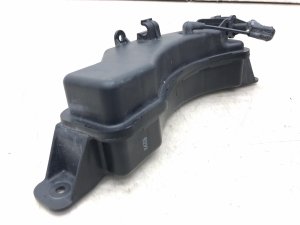
Used OEM Parts in Stock
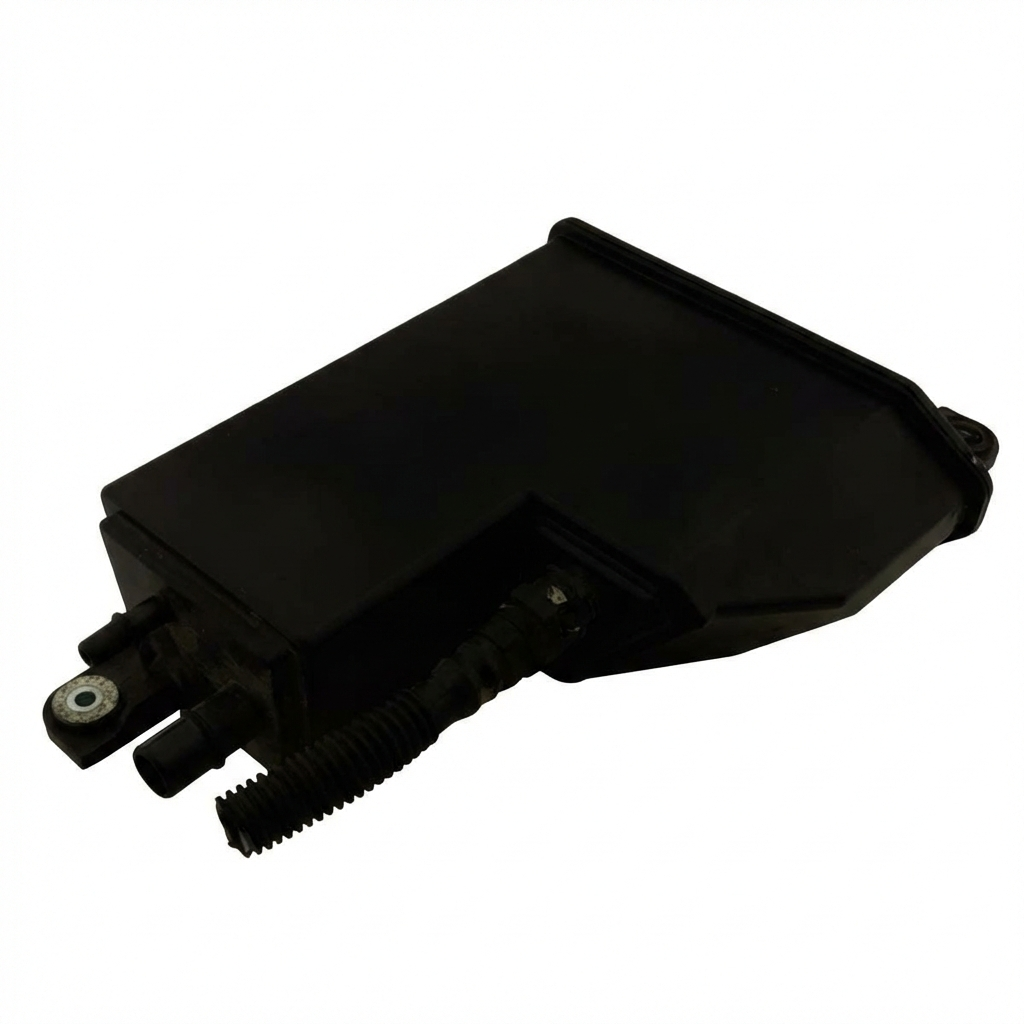
New Aftermarket Parts Available


The information in this article is provided for general reference and educational purposes only. Vehicle specifications, procedures, and part compatibility can vary by production date, trim level, and region. Always consult your vehicle's factory service manual and verify part numbers before purchasing or performing repairs. Safety-critical components such as airbags, seat belts, and braking systems should be installed by a qualified professional.
- Ford F-150:
- 🎬 Helpful Videos
- 🛍️ Shop This Part
- What's Unique About the 2015-2020 Ford F-150
- Symptoms You May Notice
- Most Likely Causes
- Rare But Worth Checking
- Diagnosis Steps
- Parts You'll Likely Need
- Related Codes That Often Appear With This One
- Technical Service Bulletins (TSBs) & Recalls
- Platform-Specific Known Issues
- Mechanic-Grade Diagnostic Values
- Hidden / Shadow Codes Worth Checking
- Scan Tool Commands That Help
- Real Owner Repair Stories
- "I Checked Everything" — The Actual Cause
- When the Usual Fixes Don't Work
- OEM Part Supersession History
- Model Year Variations Within This Range
- Diagnostic Flowchart
- Other Known Issues on This Vehicle
- Used vs. New Parts: Buying Guide for This Vehicle
- Real Owner Stories
- 2018 F-150 2.7L — 50000 miles
- 2018 F-150 2.7L
- Related OBD-II Codes
- Frequently Asked Questions
- 🎟️ Get 5% Off