

P0496 on 2013-2017 Ford C-MAX: EVAP High Purge Flow Causes and Fixes
On a 2013-2017 Ford C-MAX, code P0496 is almost always caused by a faulty canister purge valve that is stuck open. A key symptom is difficulty starting the engine right after refueling. It's a simple DIY fix, with the replacement part (OEM # AU5Z-9C915-E) costing between $40 and $80.
- P0496 on your C-MAX almost certainly means the canister purge valve is stuck open.
- The most telling symptom, besides the check engine light, is difficulty starting the car right after you finish refueling.
- The most reliable diagnostic is to start the engine and check for vacuum at the purge valve's outlet port; there should be none at idle.
- Replacing the purge valve (OEM Part # AU5Z-9C915-E) is a simple, beginner-friendly DIY job that usually takes less than 30 minutes.
What's Unique About the 2013-2017 Ford C-MAX
The Ford C-MAX shares its hybrid powertrain and many components with the Ford Fusion Hybrid and Lincoln MKZ Hybrid. Ford has acknowledged issues with the canister purge valve on these platforms, issuing Technical Service Bulletin (TSB) 19-2207 which notes the sealing capability of the original valve may be insufficient, leading to codes like P0496 and the frequently-related P1450 ('Unable to Bleed Up Fuel Tank Vacuum'). The TSB recommends replacing the valve and updating the PCM software. While the related Ford Focus platform had a safety recall (18S32) for a similar issue, this recall does not apply to the C-MAX. If left unfixed for a long time, the constant vacuum from the stuck valve can, in some cases, cause the plastic fuel tank to deform.
Symptoms You May Notice
- Check Engine Light illuminated
- Difficulty starting the engine, especially immediately after refueling (may crank for a long time or start and immediately stall).
- Rough or unstable idle, particularly after starting.
- Slightly reduced fuel economy.
- Possible fuel smell.
- Black smoke from tailpipe on startup (less common).
- Remote start failure; an owner reported the built-in remote start function stopped working and produced an unusual noise when P0496 was present (NHTSA ODI #11558036).
- Stalling while driving at highway speeds or shutting off completely (NHTSA ODI #11727824).
- Replacing the gas cap. The C-MAX has a capless fuel filler system. While a dirty or faulty seal on the filler neck can cause other EVAP leak codes (like P0455 or P0457), it is not a cause for P0496, which indicates unwanted flow, not a leak to the atmosphere.
Most Likely Causes
- Faulty Canister Purge Valve (Solenoid) 🔴 High Probability This specific part has a known high failure rate across several Ford platforms using the 2.0L hybrid powertrain, including the Fusion and MKZ. Ford TSB 19-2207 directly addresses this valve's tendency to fail on the C-MAX.
How to confirm: With the engine running at idle, disconnect the EVAP hose from the purge valve that leads to the intake manifold. There should be absolutely no vacuum felt at the valve's port. If you can feel suction, the valve is stuck open 🎬 See this video for a demonstration on testing the valve. and must be replaced.
Typical fix: Replace the canister purge valve. It is located on top of the engine and is a straightforward replacement requiring only basic hand tools. 🎬 Watch: A quick walkthrough of the C-MAX purge valve replacement. Some owners report dealerships also perform a PCM software update per the TSB after replacement.
Est. part cost: $40-$80
Rare But Worth Checking
- Faulty Fuel Tank Pressure (FTP) Sensor: The FTP sensor is what the computer uses to detect the unwanted vacuum. If the sensor is faulty and sending incorrect readings, it can trigger the code even if the purge valve is working correctly. This is more likely if a P0496 code returns shortly after replacing the purge valve.
- Leaking or Disconnected EVAP Hoses: A crack or break in one of the EVAP system hoses could potentially cause this code, though it's much less common than a failed purge valve.
- Faulty Canister Vent Solenoid: The vent solenoid is normally open and closes to seal the system for testing. If it malfunctions by getting stuck partially closed, it can contribute to pressure problems within the EVAP system, but it's not the typical cause for P0496.
- Wiring Harness Issues: Manufacturer service bulletin #SSM 51247 notes that multiple EVAP codes, including P0496, P0455, and P0456, may be caused by a fault in the wiring harness connection at connector C1198.
Diagnosis Steps
- Verify the code with an OBD-II scanner. Note if P1450 is also present, which strongly points to the purge valve.
- Check for the most common symptom: attempt to start the engine immediately after a refueling event. 🎬 Watch: See how a faulty valve causes hard starting after refueling. If it struggles, cranks excessively, or has a rough idle, the purge valve is highly suspect.
- Locate the canister purge valve on the 2.0L engine. It's a small solenoid with an electrical connector and two hose ports, mounted directly on top of the engine's intake area.
- Start the engine and let it idle.
- Carefully disconnect the vapor line that runs from the purge valve's outlet port to the engine intake manifold.
- Place your finger over the port on the purge valve itself. At idle, the valve should be closed, and you should feel NO vacuum suction.
- If vacuum is present, the valve is stuck open and is faulty. It needs to be replaced. This confirms the diagnosis in over 95% of cases for this vehicle.
- If no vacuum is present, the issue may be more complex, such as an intermittent valve failure, a faulty Fuel Tank Pressure (FTP) sensor, or a wiring issue, which may require more advanced diagnostics with a scan tool.
Parts You'll Likely Need
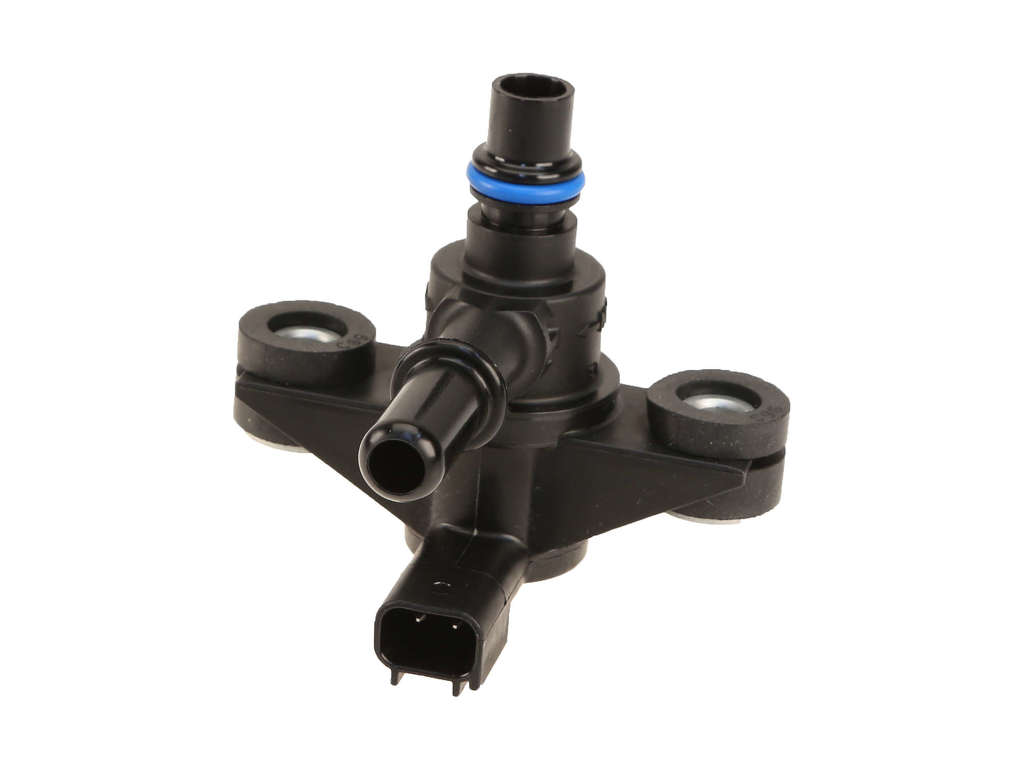
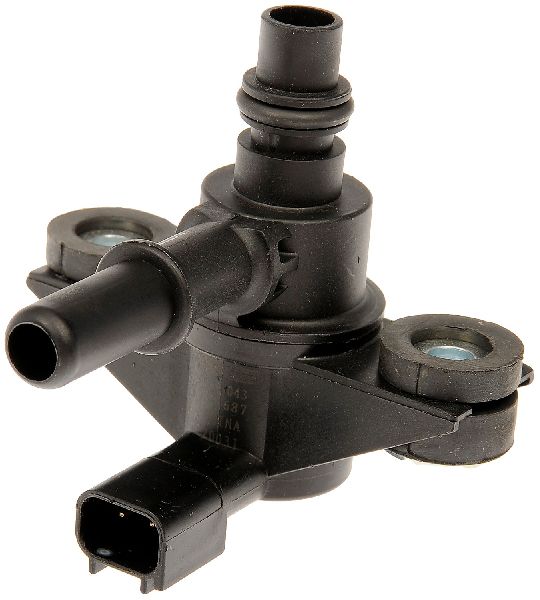
- Canister Purge Valve / Solenoid
(OEM #AU5Z-9C915-E)— This is the most common failure point for code P0496 on this vehicle, as it gets stuck open and allows fuel vapor to flow when it is not commanded by the ECU. This part number supersedes previous versions AU5Z-9C915-A, AU5Z-9C915-B, AU5Z-9C915-C, and AU5Z-9C915-D. The Motorcraft service part number may be listed as CX-2695.
Trusted brands: Motorcraft (OEM), Bosch, Delphi, Dorman, Standard Motor Products
OEM price range: $60-$90
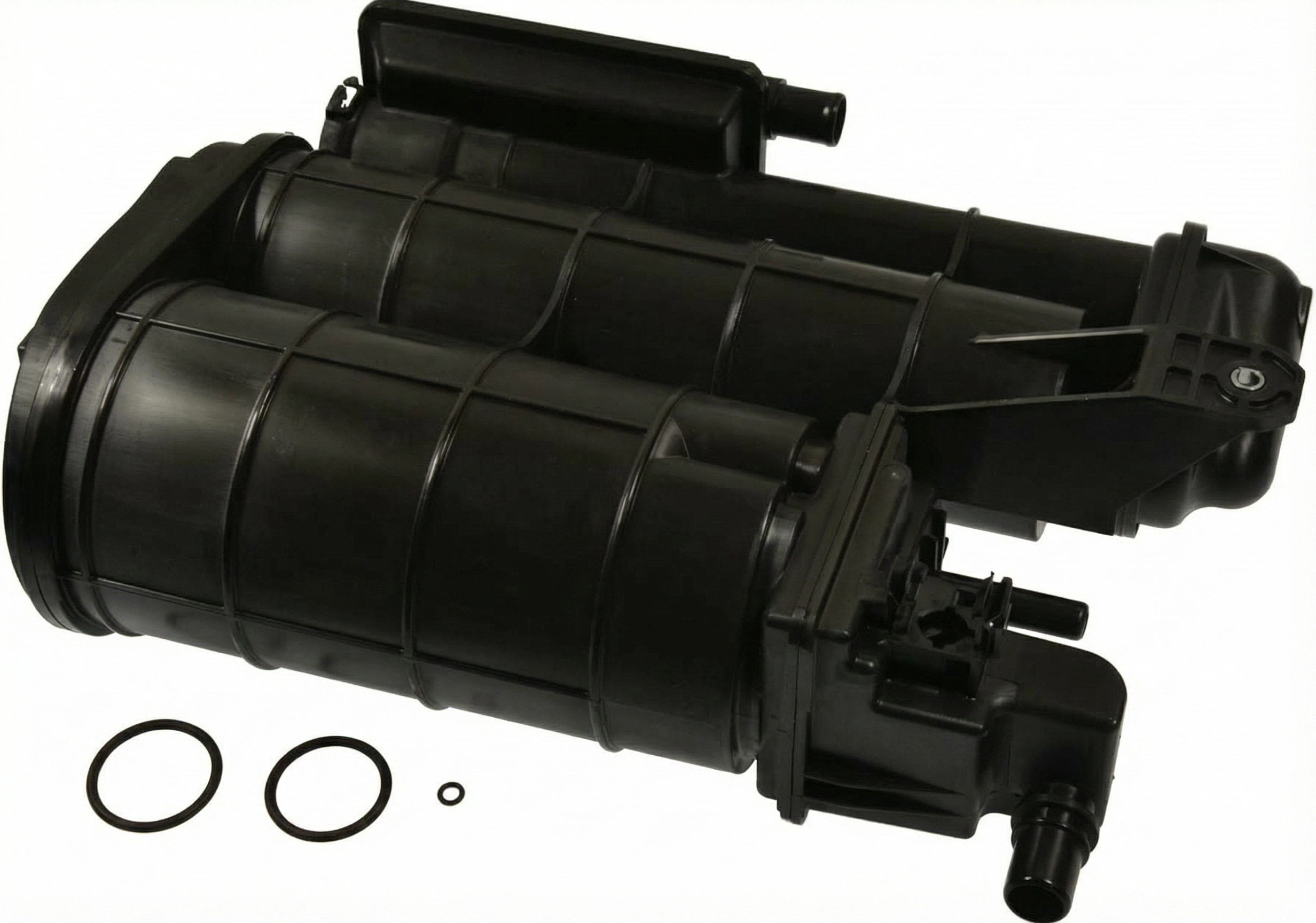
Aftermarket price range: $35-$70 - Vapor Canister (Charcoal Canister) — In some instances where P0496 and P0456 are both present, a dealership may recommend replacing both the Vapor Management Valve (VMV) and the charcoal canister along with a software reprogram (NHTSA ODI #11537486).
Related Codes That Often Appear With This One
- P1450 — Stands for 'Unable to Bleed Up Fuel Tank Vacuum.' This code is very frequently seen with P0496 because a stuck-open purge valve creates a constant vacuum on the fuel tank that the system cannot release. They are often caused by the exact same failed part, as noted in TSB 19-2207.
- P0172 / P0175 — These codes mean 'System Too Rich.' A stuck-open purge valve allows extra, un-metered fuel vapors into the engine, which can create a rich running condition as the engine's computer tries to compensate, especially after a hot start.
- P0456 — A very small EVAP leak code. NHTSA ODI #11537486 describes a case where both P0496 and P0456 were found together, requiring a valve replacement and canister inspection.
Technical Service Bulletins (TSBs) & Recalls
- TSB 19-2207: Specifically for 2013-2017 C-MAX (and others), this TSB identifies a faulty canister purge valve (CPV) as the cause for various EVAP codes including P1450 and P0456. The fix is to replace the valve and reprogram the PCM.
- SSM 48301: This Special Service Message notes that P0496 can appear with other EVAP codes on Ford hybrid platforms and directs technicians to a specific diagnostic pinpoint test, acknowledging a pattern of related faults.
- Bulletin #SSM 51247: This bulletin notes that P0496, along with codes like P04F0, P008A, P0451, P0455, P0456, and P018C, may be due to a wiring harness connection issue at connector C1198 located on the driver's side lower frame area.
Platform-Specific Known Issues
- This platform shares a known issue with the Ford Fusion and Lincoln MKZ where the canister purge valve fails, often leading to P0496 and/or P1450 codes. Ford TSB 19-2207 specifically addresses this for the C-MAX.
- Prolonged driving with a stuck-open purge valve can potentially lead to fuel tank deformation due to constant vacuum being applied, which in rare cases can affect fuel gauge accuracy or even cause stalling.
- Owners of similar Ford platforms have reported that a stuck-open purge valve can cause the vehicle to feel as if it is not getting gas, followed by a check engine light for P0496 (NHTSA ODI #11558036).
Mechanic-Grade Diagnostic Values
- Fuel Tank Pressure (FTP) Sensor Voltage at KOEO — expected: 2.4 - 2.8 Volts (at atmospheric pressure). Failure: A voltage significantly outside this range suggests a biased or faulty sensor.
- Canister Purge Valve Solenoid Coil Resistance — expected: 10 - 60 Ohms. Failure: A reading outside this range, or an open/shorted reading, indicates a faulty solenoid coil.
- Canister Vent Valve Solenoid Resistance — expected: 12 - 80 Ohms. Failure: A reading outside this range indicates a faulty solenoid coil.
- Scan Tool Live Data: EVAP Purge Commanded (EVAP_PCT) — expected: 0% at idle with engine cold. Failure: If the value is greater than 0% when a non-purge condition is expected, it could indicate a PCM issue, though a mechanical fault in the valve is more likely.
- Scan Tool Live Data: Fuel Tank Pressure (FTP) — expected: Near 0 inches of water (inH2O) at idle with purge commanded off.. Failure: A persistent negative reading (vacuum) of more than 10 inches of water indicates un-commanded flow is occurring, triggering P0496.
Scan Tool Commands That Help
- Ford IDS, FORScan, or equivalent bidirectional scanner: EVAP System Test — This is a comprehensive, automated test that commands the purge and vent valves to cycle while monitoring the FTP sensor to check the entire system's integrity, including its ability to hold vacuum and release it. It's the dealer-level method to verify a repair.
- Ford IDS, FORScan, or equivalent bidirectional scanner: Purge Solenoid Activation Test / Output State Control — This allows a technician to manually command the canister purge valve on and off (e.g., from 0% to 100% duty cycle) while the engine is running. You should hear the valve click and see a corresponding change in fuel trims and FTP sensor readings. This directly tests the valve's electronic and mechanical function.
- Ford IDS: PCM Reprogram — Used after replacing the canister purge valve, as specified in TSB 19-2207. This updates the PCM software with revised strategies for EVAP system monitoring, which may have more tolerance or different testing parameters to prevent false codes with the new part.
Wiring & Ground Locations
- Canister Purge Valve Connector — On top of the engine, mounted to the intake area, with a 2-pin connector.. This is the connection point for the faulty component. Pin 1 is typically the 12V power supply (VPWR) and Pin 2 is the control signal (ground-side) from the PCM. Verifying 12V at Pin 1 with Key On is a primary electrical check.
- G104 — Located at the rear of the transmission housing.. This is a critical ground point for the engine and transmission assembly. A poor connection here can introduce electrical noise and cause erratic behavior in various powertrain sensors and solenoids, including the EVAP system components.
- G105 — Located on the left side of the engine compartment.. This is a primary chassis ground for the engine bay. A loose or corroded connection at G105 can cause intermittent and unpredictable electrical issues for multiple systems controlled by the PCM, potentially affecting the purge valve's operation or the FTP sensor's reading.
- Powertrain Control Module (PCM) — Located at the front of the left front wheelwell.. This is the computer that controls the purge valve and monitors the FTP sensor. All wiring for the EVAP system ultimately terminates here. A fault is rarely with the PCM itself, but wiring damage near the PCM could be a cause.
Real Owner Repair Stories
- Reddit user on r/fordfusion (2019 Ford Fusion SEL, 40,000 miles (shares powertrain and EVAP components)) — Check Engine Light with code P0496, very poor city MPG (18.5), and took 5 attempts to start the engine after refueling.
❌ Tried (didn't work) The user was in the process of diagnosing, but the symptoms perfectly match the classic failure pattern.
✅ What actually fixed it The user was advised by others that replacing the canister purge valve is the definitive fix for this exact set of symptoms, which is a common DIY repair. - Reddit user on r/FordFiesta (2019 Ford Fiesta ST-Line (different vehicle, but similar EVAP component behavior)) — While driving, RPMs fluctuated wildly, car felt like it was lunging/stalling. It eventually died at a stop sign and would not restart. Code P0496 was present.
✅ What actually fixed it The owner replaced the purge valve, which cleared the P0496 code. However, they later reported that after refueling, the car would still idle weirdly and RPMs would drop, suggesting a possible secondary issue or the need for a PCM software update/relearn procedure after the part replacement. - NHTSA ODI #11606854 — An owner reported experiencing a rough start after filling the gas tank. A scanner revealed code P0496, which was related to the canister purge valve remaining stuck open.
- NHTSA ODI #11727824 — An owner reported that after fueling, code P0496 would show and the car would struggle to start or not start at all. The vehicle also experienced stalling on the freeway and a rough idle.
OEM Part Supersession History
AU5Z-9C915-A, -B, -C, -D→AU5Z-9C915-E— The original valve design had insufficient sealing capability, leading to vacuum leaks that would trigger P0496 and P1450. The updated part has improved internal seals to correct this known flaw, as addressed in TSB 19-2207.
Heads up: The older part numbers (A, B, C, D) should be avoided as they are prone to the original failure. AU5Z-9C915-E is the correct and most current replacement. The Motorcraft service part numbers CX-2409 and CX-2470 were also superseded by CX-2695, which corresponds to the -E revision.
Diagnostic Flowchart
Real Owner Stories
Aggregated from forums and TSBs cited above. Mileages and costs reflect what owners reported in those sources.
2014 Ford C-max SEL
Symptoms: Check engine light was on; an OBD scan at Auto Zone identified the Canister Purge Valve.
What fixed it: The owner reported the light turned off on its own after a couple of days, though a commenter noted a dealer quote for the repair was $750.
Cost: $20-$750
Source hint: Reddit - r/cmaxhybrid
2013 Ford C-Max
Symptoms: Check engine light illuminated.
What fixed it: DIY replacement of the purge valve. The owner bought the part and did it himself, noting the dealer recommended a PCM software update after installation.
Cost: $36-$300
Source hint: YouTube - 'Replaced the purge valve on 2013 Ford C-Max for much cheaper!'
2019 Ford Fusion 2.0L
Symptoms: Check engine light illuminated and the car took 5 tries to start after refueling.
What fixed it: Replaced the canister purge valve.
Source hint: Reddit - r/fordfusion - 'Canister Purge Valve Replacement.... (PO496)'
2017 Ford Fiesta S Model Sedan, 1.6L — 45000 miles
Symptoms: Check engine light with code P1450. After each fill-up, the car wouldn't start without pumping the gas pedal.
What fixed it: Replaced the purge valve 5 times, but the problem kept returning after about a week. A commenter suggested the issue might actually be a vent valve stuck closed.
Source hint: Reddit - r/Ford
2009 GMC Yukon XL 5.3 Gas — 234000 miles
Symptoms: Code P0496. Always had trouble starting after fueling, requiring the owner to pump gas to get it to start. Idled erratically then smoothed out.
What fixed it: Changed Vapor Canister Valve Solenoid (purge valve) which was tested and found stuck open, but replacing it did not fix the hard start issue. Another user suggested a bad vent valve on the EVAP canister.
Source hint: Tahoe Yukon Forum
Ford Fusion Owner (NHTSA ODI #11537486)
Symptoms: Struggling to turn the vehicle on after a fill-up. Diagnostic codes P0496 and P0456 were found.
What fixed it: The dealership quoted a replacement of the VMV (Vapor Management Valve) and charcoal canister, along with reprogramming.
Related OBD-II Codes
Frequently Asked Questions
Does Ford have a TSB for the P0496 code on my 2013-2017 C-MAX?
Why does my C-MAX struggle to start right after I put gas in it?
Can driving with a P0496 code damage my C-MAX?
How much does it cost to fix the P0496 code on a C-MAX?
How can I test if the purge valve is bad on my 2.0L engine?
Are there any other codes that usually show up with P0496 on the C-MAX?
Helpful Videos

Used OEM Parts in Stock
New Aftermarket Parts Available


The information in this article is provided for general reference and educational purposes only. Vehicle specifications, procedures, and part compatibility can vary by production date, trim level, and region. Always consult your vehicle's factory service manual and verify part numbers before purchasing or performing repairs. Safety-critical components such as airbags, seat belts, and braking systems should be installed by a qualified professional.
- Ford C-MAX:
- 🎬 Helpful Videos
- 🛍️ Shop This Part
- What's Unique About the 2013-2017 Ford C-MAX
- Symptoms You May Notice
- Most Likely Causes
- Rare But Worth Checking
- Diagnosis Steps
- Parts You'll Likely Need
- Related Codes That Often Appear With This One
- Technical Service Bulletins (TSBs) & Recalls
- Platform-Specific Known Issues
- Mechanic-Grade Diagnostic Values
- Scan Tool Commands That Help
- Wiring & Ground Locations
- Real Owner Repair Stories
- OEM Part Supersession History
- Diagnostic Flowchart
- Real Owner Stories
- 2014 Ford C-max SEL
- 2013 Ford C-Max
- 2019 Ford Fusion 2.0L
- 2017 Ford Fiesta S Model Sedan, 1.6L — 45000 miles
- 2009 GMC Yukon XL 5.3 Gas — 234000 miles
- Ford Fusion Owner (NHTSA ODI #11537486)
- Related OBD-II Codes
- Frequently Asked Questions
- 🎟️ Get 5% Off