

P0463 on 2007-2014 GMC Yukon: Fuel Level Sensor Circuit High Input Causes and Fixes
On a 2007-2014 GMC Yukon, code P0463 almost always means the fuel level sensor has failed. This sensor is part of the fuel pump module inside the gas tank. The most common fix is to replace the entire fuel pump module, which can cost between $1,256 and $1,552 at a shop. The failure is extremely common on this platform and its siblings (Tahoe, Escalade, Silverado).
- P0463 on a 2007-2014 Yukon points directly to a problem in the fuel level sensor circuit, most often an open circuit.
- The most probable cause is a failed fuel level sending unit, which is part of the fuel pump module in the tank.
- While a wiring issue is possible, the sending unit itself is a notoriously high-failure part on this platform.
- The repair requires dropping the fuel tank, making it a difficult DIY job, but replacing the entire fuel pump module is the most reliable fix.
What's Unique About the 2007-2014 GMC Yukon
The GMT900 platform, which includes the 2007-2014 Yukon, Tahoe, Silverado, and Escalade, has a well-documented history of fuel level sensor failures. The contacts on the sensor's resistor card are known to wear out, break, or get contaminated by sulfur and ethanol in modern gasoline, leading to an open circuit and triggering the P0463 code. Because of this extremely common failure pattern, the issue is far more often the sending unit itself rather than a simple wiring problem elsewhere in the vehicle. Some owners report the gauge working intermittently before failing completely. One owner reported that after using about 5 gallons of fuel, the gauge would fluctuate from full to empty every few minutes before the check engine light illuminated with code P0463 (NHTSA ODI #10551564).
Symptoms You May Notice
- Check Engine Light is on
- Fuel gauge reads empty, full, or fluctuates erratically
- Low fuel warning light stays on
- "Service Fuel System" message may appear on the Driver Information Center (DIC)
- Sudden loss of power in traffic, which some owners have reported in conjunction with this and related codes (NHTSA ODI #10362931)
- Replacing the instrument cluster. The P0463 code is generated by the PCM based on the signal it receives from the tank, not an issue within the gauge itself.
- Replacing the fuel pump without diagnosing the circuit. While the sensor is part of the pump module, a simple wiring issue could be the actual cause, and replacing the whole module would be unnecessary.
Most Likely Causes
- Faulty Fuel Level Sending Unit 🔴 High Probability The contacts on the variable resistor card inside the sending unit are known to wear out or break off, creating an open circuit. This is a very common failure on GMT900 trucks due to material wear and fuel composition. The spring-loaded fingers that ride on the resistor card can break off. As noted in NHTSA ODI #10371391, the P0463 error indicates the variable resistor is showing a high input instead of a typical small value, suggesting an open circuit or high resistance.
How to confirm: With the sensor connected, use a scan tool to observe the fuel level voltage. A steady 5-volt reading points to an open circuit in the sensor or its wiring. The ultimate confirmation is testing the sensor's resistance with a multimeter while moving the float arm; an open or infinite resistance reading (O.L.) confirms a failed sensor. A good sensor should show a smooth change in resistance, typically from around 40 ohms (empty) to 250 ohms (full) for this platform.
Typical fix: Replace the entire fuel pump module, as the sending unit is integrated into it. While the sensor is sometimes sold separately, replacing the whole module is recommended as the fuel pump may be near the end of its service life.
Est. part cost: $250-$500 for aftermarket, $600-$1100 for OEM - Damaged Wiring or Corroded Connector 🟡 Medium Probability The main electrical connector on top of the fuel tank is exposed to the elements and can become corroded or damaged, especially in regions with harsh winters. The wiring harness can also chafe against the frame or driveshaft. A specific problem area is the harness section above the transmission.
How to confirm: Visually inspect the wiring harness and the 4-pin connector on top of the fuel tank for corrosion, broken wires, or loose pins. The signal wire is typically purple, and the ground is orange/black or black/white. Perform a voltage drop test on the ground and signal wires to check for high resistance. A broken dark green/white wire in the harness near the transmission has also been identified as a cause.
Typical fix: Clean the connector terminals or repair/replace the damaged section of the wiring harness. Sometimes the connector pigtail needs to be replaced.
Est. part cost: $20-$50 for a pigtail connector
Rare But Worth Checking
- Faulty Instrument Cluster: While rare, GM trucks of this era can have issues with the stepper motors in the instrument cluster, causing gauges to behave erratically. However, a faulty cluster typically does not set a P0463 code, which points to a circuit issue read by the PCM, not a gauge failure.
- Faulty Powertrain Control Module (PCM): A PCM failure is extremely unlikely to be the cause of this specific code. All other diagnostic steps should be exhausted before considering the PCM as the culprit.
Diagnosis Steps
- Read the trouble codes with an OBD-II scanner to confirm P0463 is present.
- Use the scanner's live data function to view the 'Fuel Level Sensor Voltage'. A reading stuck at or near 5 volts indicates a high/open circuit.
- Gain access to the top of the fuel tank. This officially requires lowering the tank. On SUVs, some owners cut an access hole in the cargo floor above the pump.
- Inspect the main electrical connector (4-pin) on the fuel pump module for any signs of corrosion, moisture, or damaged wires.
- With the key on, back-probe the connector. Check for a 5-volt reference on the signal wire (typically purple) and a good ground (typically orange/black or black/white). A good ground should read near 0 volts.
- If voltage and ground are good at the connector, the issue is almost certainly the sending unit itself.
- If voltage or ground is missing, trace the wiring harness back towards the PCM to find the break or short. Pay close attention to the area above the transmission and along the frame rail.
- To definitively confirm a bad sending unit, remove it from the tank and measure its resistance with a multimeter while moving the float arm. The resistance should change smoothly from approximately 40 ohms to 250 ohms. An open circuit (infinite resistance) confirms it's faulty.
Parts You'll Likely Need
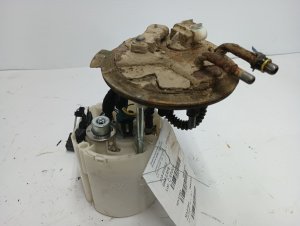
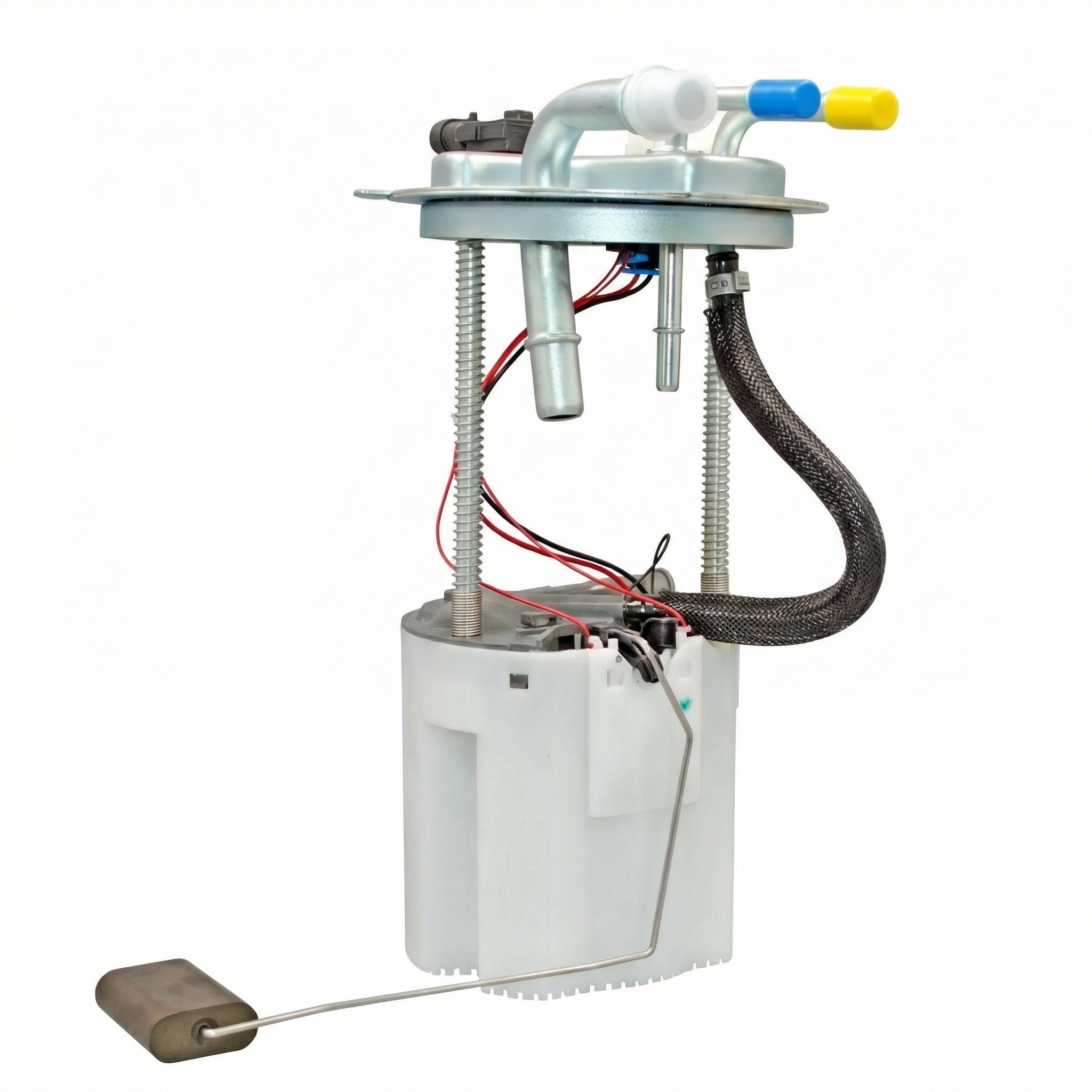
- Fuel Pump Module Assembly
(OEM #ACDelco MU2102 (GM 19369886) or ACDelco MU1639 (GM 19256621) - verify by VIN)— This is the most common failure point. The fuel level sensor is integrated into the module, and replacing the entire assembly also renews the fuel pump and in-tank filter, which is preventative maintenance.
Trusted brands: ACDelco (OEM), Delphi, Spectra Premium
OEM price range: $600-$1100
Aftermarket price range: $250-$500
Technical Service Bulletins (TSBs) & Recalls
- 17-NA-204: Addresses inaccurate fuel gauge readings and related DTCs, including P0463, for specific 2011-2018 models with dual fuel tanks, where a front sender failure can cause the rear tank to overfill.
- 07-08-49-019B: While not directly for P0463, this TSB addresses erratic fuel gauge readings on various GM vehicles due to sulfur contamination on the sending unit contacts. It recommends cleaning with a specific GM Fuel System Treatment PLUS, though most owners find replacement is the only long-term solution.
Documented NHTSA Reports
- NHTSA ODI #10520340 describes an inaccurate fuel reading on a GMC vehicle where the code produced was P0463, requiring professional repairs.
- NHTSA ODI #10513803 notes a situation where a check engine light was found to be a failed fuel sending unit (Code P0463) after the vehicle would not turn on.
Platform-Specific Known Issues
- A GM Technical Service Bulletin (TSB 17-NA-204) exists for some 2011-2014 models that mentions P0463 in relation to a failing front level sender in a dual-tank system, which could cause the main tank to overfill. This is specific to certain chassis cab configurations and not the standard single-tank Yukon.
- Owners on TahoeYukonForum.com frequently report this code. In one thread titled 'Code P0463 Fuel Gauge no worky', a user with a '07 Yukon Denali describes the classic symptoms of the gauge reading erratically before failing, with the consensus pointing to a sending unit replacement.
- A DIY shortcut popular on forums involves cutting an access panel in the floor of the vehicle under the rear seats/cargo area to access the fuel pump without dropping the tank. This is an unofficial repair but widely documented by owners.
Mechanic-Grade Diagnostic Values
- Fuel Level Sensor Resistance — expected: Approximately 40 Ohms (Empty) to 250 Ohms (Full). Resistance should sweep smoothly when moving the float arm.. Failure: An infinite resistance reading (O.L. on multimeter) or erratic jumps in resistance indicate a failed sensor.
- Scan Tool Live Data: Fuel Level Sensor Voltage — expected: A variable voltage, typically between ~0.7V (Empty) and ~2.5V (Full).. Failure: A fixed reading at or near 5.0 volts indicates an open in the signal circuit, which is the classic P0463 condition.
- DTC Trigger Condition — expected: Fuel Level Sensor voltage must remain below 2.9 volts.. Failure: The PCM will set code P0463 if the sensor voltage is above 2.9 volts for 2 minutes.
- Sensor Ground Wire Voltage (at module connector) — expected: Near 0.0 volts (less than 0.1V).. Failure: A reading of 5.0 volts on the ground wire (Orange/Black) indicates a bad ground connection, not a faulty sending unit.
Hidden / Shadow Codes Worth Checking
- P1635 / P1639: While not hidden codes, if P1635 (5 Volt Reference 1 Circuit) or P1639 (5 Volt Reference 2 Circuit) are present alongside P0463, it strongly indicates the fuel level signal circuit is shorted to a voltage source. (see via Standard OBD-II scanner.)
Wiring & Ground Locations
- Fuel Pump Module Connector — On top of the fuel pump module, which is accessed from the top of the fuel tank.. This 4-pin connector is the primary test point. Pin assignments are typically: Purple (Level Sensor Signal), Orange/Black (Sensor Ground), Gray (Pump Power), Black (Pump Ground). Corrosion or damage here is a common cause of failure.
- G300 — Underneath the vehicle, bolted to the frame on a body mount near the driver's door.. This is a primary chassis ground point for harnesses running to the rear of the vehicle. A corroded or loose G300 can cause an open in the fuel level sensor's ground circuit, leading to a high voltage reading and a P0463 code.
Real Owner Repair Stories
- YouTube video 'Trouble Code P0463 - Potentially Easy Fix, Try THIS First' (Chevrolet Silverado (GMT900 platform sibling)) — P0463 code, fuel gauge went to empty and stopped working.
❌ Tried (didn't work) Adding a bottle of Techron fuel system cleaner, as suggested by a GM service bulletin for cleaning sulfur deposits.
✅ What actually fixed it The Techron treatment did not work. The owner confirmed in the video description that the sensor's contact was physically broken, requiring the replacement of the fuel pump module assembly. - PerformanceTrucks.net forum thread 'Ohm range for fuel level sending unit?' (GM Truck (Silverado/Sierra family)) — Fuel gauge worked fine unless the tank was completely full, at which point it would read 'bone dry empty'.
✅ What actually fixed it The user diagnosed the sending unit as faulty, specifically failing at the top of its range. He confirmed the fix was to replace the sending unit while performing a separate fuel pump upgrade.
OEM Part Supersession History
Varies by original module→Varies by replacement module— Connector design change on the fuel pump module.
Heads up: Some replacement fuel pump modules, including OEM/ACDelco, may come with a new pigtail connector. This requires cutting the original vehicle-side connector off and splicing the new one on to match the updated plug on the new pump module.19206481, 19259394→19299715— Part revision/update.
Heads up: This specific supersession applies to some 5.3L Flex Fuel models from 2009-2014. Always verify by VIN.
Model Year Variations Within This Range
- 2007: The 2007 model year was a transition year. The older 'Classic' body style (GMT800) and the 'New Body Style' (GMT900) were both sold. They use completely different fuel pump modules. Part number MU1639 is for the GMT800 'Classic', while parts like MU2102 are for the GMT900. VIN verification is absolutely essential for a 2007 model to ensure the correct part is ordered.
- 2007-2014: Vehicles equipped with Flex Fuel (E85) capability may require a different fuel pump module than gasoline-only models due to material compatibility with higher ethanol content. Part numbers are often specific to the fuel type. The vehicle's RPO code or VIN must be used to confirm the correct module.
Diagnostic Flowchart
Other Known Issues on This Vehicle
Issues unrelated to this code that are worth knowing about as an owner of this generation:
- Cracked Dashboard 🟠 Medium — Extremely common, especially on vehicles exposed to sun/heat. Cracks typically appear on the driver's side near the instrument panel or over the passenger airbag.
- Active Fuel Management (AFM) Lifter Failure 🔴 High — Common on 5.3L and 6.2L V8 engines, typically occurring between 80,000 and 150,000 miles. A stuck/collapsed lifter can cause misfires (P0300), a ticking noise, and may lead to camshaft damage if not addressed.
- Excessive Oil Consumption 🟠 Medium — Widespread on 5.3L V8 engines. Caused by issues with piston rings and the PCV system, leading to oil burning. GM considers consumption of 1 quart per 2,000 miles to be 'acceptable' under certain conditions. (Ref: Multiple TSBs exist, including 10-06-01-008G and 19-NA-036, which outline diagnosis and repair procedures.)
- Door Lock Actuator Failure 🟡 Low — Very common. One or more doors may fail to lock or unlock electronically. The actuator is part of the door latch assembly.
- Broken Interior/Exterior Door Handles 🟡 Low — Common failure. The chrome on interior handles can peel and create a sharp edge, while plastic exterior handles can break away from their mounts.
Used vs. New Parts: Buying Guide for This Vehicle
When a used part is the smart pick: A used part is only advisable for a wiring harness pigtail connector if the original is damaged. The complete fuel pump module is a significant wear item and buying used is a high-risk gamble due to the extensive labor required for replacement.
Donor-vehicle mileage cap: roughly under 50000 miles for the part to have meaningful remaining life.
What to inspect on the donor part:
- Inspect the electrical connector pins for any green or white powder (corrosion).
- Ensure the plastic top hat of the module is not brittle, faded, or cracked from age and heat.
- Verify the part number and that it came from a vehicle with the identical engine and fuel type (Flex Fuel vs. Gas).
OEM-only on this vehicle (don't cheap out):
- Fuel Pump Module Assembly
Aftermarket brands forum-validated for this vehicle:
- ACDelco (OEM)
- Delphi (often the original equipment manufacturer)
Brands owners have reported issues with on this vehicle:
- Generic, unbranded, or suspiciously low-priced units from online marketplaces are frequently reported to have high premature failure rates, making the labor-intensive job necessary again in a short time.
Real Owner Stories
Aggregated from forums and TSBs cited above. Mileages and costs reflect what owners reported in those sources.
2007 Yukon Denali
Symptoms: The fuel gauge was reading erratically, showing 7/8 full when the tank was actually half full, and then dropping to empty immediately after a fill-up.
What fixed it: Replacement of the fuel pump/sender module.
Source hint: TahoeYukonForum.com - 'Code P0463 Fuel Gauge no worky'
2007-2014 GMC Yukon
Symptoms: The vehicle threw codes P0230 and P0463 simultaneously.
What fixed it: Repairing a broken dark green with a white stripe wire in the wiring harness located on top of the transmission.
Source hint: YouTube - 'GMC Yukon/Chevrolet Tahoe: EASY P0230 P0463 Fix' by 'Last Detail'
Related OBD-II Codes
Frequently Asked Questions
Does TSB 17-NA-204 regarding the fuel sender apply to my standard GMC Yukon?
Can I use a fuel additive to fix the erratic fuel gauge on my 2007 Yukon?
Is it possible to replace just the fuel level sensor instead of the whole pump module?
I've heard about cutting a hole in the floor to fix this; is that an official GMC repair?
What are the typical resistance values I should see when testing the Yukon's fuel sender?
Helpful Videos
Used OEM Parts in Stock




New Aftermarket Parts Available



The information in this article is provided for general reference and educational purposes only. Vehicle specifications, procedures, and part compatibility can vary by production date, trim level, and region. Always consult your vehicle's factory service manual and verify part numbers before purchasing or performing repairs. Safety-critical components such as airbags, seat belts, and braking systems should be installed by a qualified professional.
- GMC Yukon:
- 🎬 Helpful Videos
- 🛍️ Shop This Part
- What's Unique About the 2007-2014 GMC Yukon
- Symptoms You May Notice
- Most Likely Causes
- Rare But Worth Checking
- Diagnosis Steps
- Parts You'll Likely Need
- Technical Service Bulletins (TSBs) & Recalls
- Documented NHTSA Reports
- Platform-Specific Known Issues
- Mechanic-Grade Diagnostic Values
- Hidden / Shadow Codes Worth Checking
- Wiring & Ground Locations
- Real Owner Repair Stories
- OEM Part Supersession History
- Model Year Variations Within This Range
- Diagnostic Flowchart
- Other Known Issues on This Vehicle
- Used vs. New Parts: Buying Guide for This Vehicle
- Real Owner Stories
- 2007 Yukon Denali
- 2007-2014 GMC Yukon
- Related OBD-II Codes
- Frequently Asked Questions
- 🎟️ Get 5% Off