

P0462 on 2003-2026 Chevrolet Express: Fuel Level Sensor Circuit Low Causes and Fixes
P0462 on a Chevrolet Express almost always means the fuel level sensor in the gas tank has failed. This sensor is typically part of the complete fuel pump module. Expect to pay $250-$500 for an OEM module and $150-$300 for aftermarket. The repair requires dropping the fuel tank and is moderately difficult for a DIYer. Before replacing parts, consider using a fuel system cleaner like Techron, as sulfur contamination can sometimes cause this issue. Also, check for corroded ground wires on the fram
- P0462 on your Express van means the fuel level sensor circuit has a fault, almost always pointing to a bad sensor in the fuel tank.
- The most common symptom is a fuel gauge that is stuck on empty or behaves erratically.
- The fix is to replace the fuel level sensor, which is usually sold as part of the complete fuel pump module.
- This repair requires dropping the fuel tank, which can be difficult and hazardous. Professional repair is recommended if you are not experienced.
- Before replacing parts, always inspect the wiring harness and connector at the fuel tank for corrosion or damage, as this can cause the same code.
What's Unique About the 2003-2026 Chevrolet Express
The Chevrolet Express has been a workhorse van for decades, with the second generation running since 2003. This long production run means the core issue is well-documented: the fuel level sending unit is a common failure point. Because these vans are often used commercially, they accumulate high mileage and are exposed to harsh conditions, which can accelerate wear on the fuel pump module and its wiring connectors. The connector on top of the fuel tank is particularly vulnerable to corrosion from road salt and moisture in rust-belt states. A critical failure point on these vans is the main fuel pump ground connection located on the driver's side frame rail, which can corrode and cause a variety of fuel system issues, including P0462.
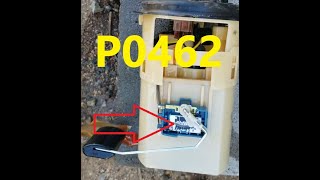
🎬 Watch this guide on diagnosing and fixing the P0462 codeGeneration note: The 2003-2026 range covers the second generation of the Chevrolet Express. While there have been numerous engine and electronic updates over the years, the fundamental design of the in-tank fuel pump module and sending unit has remained conceptually similar. The primary causes and repair procedures for P0462 are consistent across this generation. Notably, GM vehicles from this era typically use a 40-250 Ohm sensor. A key variation exists for 2003-2007 models, which are highly susceptible to instrument cluster stepper motor failures that can mimic P0462 symptoms.
Symptoms You May Notice
- Check Engine Light is on.
- Fuel gauge reads empty or is stuck in one position, regardless of the actual fuel level.
- Fuel gauge behaves erratically, fluctuating between full and empty.
- Low fuel warning light stays on.
- Fuel gauge drops to empty immediately after starting the vehicle.
- Replacing the fuel pump when only the sending unit has failed. However, since they are sold as a single module, this is often unavoidable and sometimes recommended on high-mileage vehicles.
- Replacing the instrument cluster before properly diagnosing the sensor and wiring. A scan tool showing the correct fuel level percentage from the PCM can help rule out the sender and point towards the cluster.
- Replacing the fuel level sensor when the actual problem is a corroded connector or a simple fix like a fuel additive could have resolved sulfur contamination.
Most Likely Causes
- Failed Fuel Level Sensor/Sending Unit 🔴 High Probability This is a very common failure item on GM vehicles of this era, including the Express van. The resistive strip or contacts on the sensor wear out or become contaminated over time, causing it to send an incorrect signal. Sulfur in some fuel blends can build up on the sensor contacts, causing erratic readings.
How to confirm: After confirming the wiring is intact, test the resistance of the sending unit's circuit at the fuel pump connector. For most GM vehicles of this era, the resistance should be approximately 40 ohms when empty and 250 ohms when full. If the resistance is out of spec, does not change smoothly as the float is moved, or reads open/shorted, the unit is bad.
Typical fix: Replace the fuel level sensor. On the Express, this sensor is almost always integrated into the fuel pump module, so the entire module assembly is typically replaced. As a first step, some owners have success pouring a bottle of Chevron Techron Fuel System Cleaner into the tank, as recommended in some service bulletins for sulfur contamination.
Est. part cost: $150-$500 - Wiring Harness or Connector Issue 🟡 Medium Probability As a commercial vehicle, the Express's underbody and wiring are exposed to more wear, moisture, and potential damage. The main 4-wire connector on top of the fuel tank is a notorious spot for corrosion, especially in the rust belt, leading to poor connections or a short to ground. The primary fuel pump ground on the driver's side frame rail is a very common point of corrosion and failure.
How to confirm: Visually inspect the wiring harness leading to the fuel tank for any chafing, breaks, or corrosion, paying close attention to the main connector on the fuel pump module and the ground point on the frame. A mechanic can test for a short to ground in the signal wire (typically a purple wire on these models) or check for voltage drops.
Typical fix: Repair the damaged section of wire or replace the corroded connector pigtail. Clean the frame ground connection to bare metal and re-secure it, applying dielectric grease to prevent future corrosion.
Est. part cost: $20-$150
Rare But Worth Checking
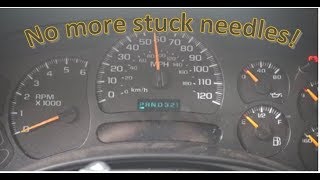
- Faulty Instrument Cluster: While less likely to set a P0462 code on its own, a faulty instrument cluster is a very common problem on 2003-2007 GM trucks and vans. The small stepper motors that control the gauge needles fail, causing the fuel gauge (and others) to become stuck, pegged, or erratic. If the gauge is acting up but the sensor and wiring test good, a failing stepper motor in the cluster is a strong possibility. 🎬 Watch how to replace faulty instrument cluster stepper motors This is often seen with other gauge issues.
- Faulty Powertrain Control Module (PCM): This is very rare. The PCM should only be considered a potential cause after all other possibilities, including the sensor, all related wiring, and the instrument cluster, have been exhaustively tested and ruled out.
Diagnosis Steps
- Scan the vehicle's computer for P0462 and any other related codes.
- Check for any relevant Technical Service Bulletins (TSBs). GM has issued bulletins regarding this issue. [⭐ MANUFACTURER TSB — highest authority]
- Observe the fuel gauge with the key on. Note if it is stuck on empty, full, or moves erratically.
- As a low-cost first step, consider adding a bottle of Chevron Techron Fuel System Cleaner to the fuel tank and filling it up. This can sometimes clean sulfur deposits from the sensor contacts.
- Inspect the main fuel system ground connection. On many Express vans, this is located on the driver's side frame rail, often near the wheel well. Check for rust and corrosion, clean to bare metal, and re-secure.
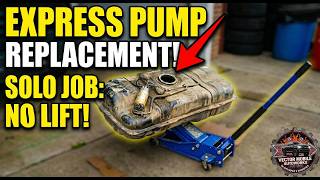
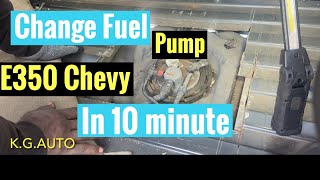
- Gain access to the fuel pump module electrical connector on top of the fuel tank. This will likely require safely lowering the tank. 🎬 Watch a step-by-step walkthrough for dropping the tank and replacing the fuel pump
- Inspect the connector and wiring harness for visible damage, corrosion (green or white crust), or loose pins. This is a common failure point.
- With the key on, use a multimeter to check for reference voltage and ground at the connector. The two sensor wires are typically purple (signal) and black/white (ground).
- Test the fuel level sensor's resistance through the connector pins. The resistance should be around 40 ohms at empty and 250 ohms at full. An open circuit (infinite resistance) or a short (near-zero resistance) confirms a failed sensor.
- If the sensor and wiring both test good, the problem may lie with the instrument cluster (especially on 2003-2007 models) or, very rarely, the PCM.
Parts You'll Likely Need
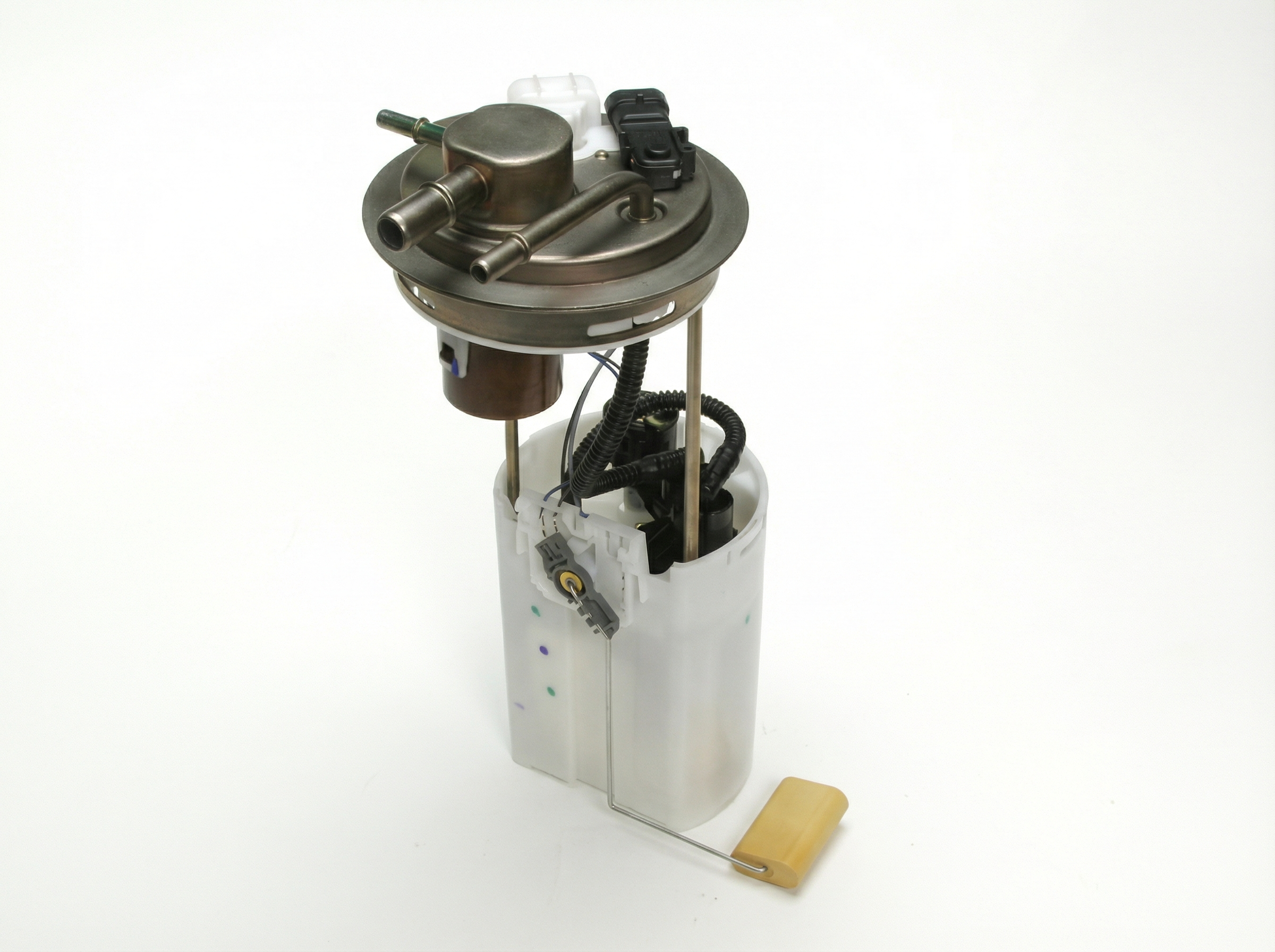
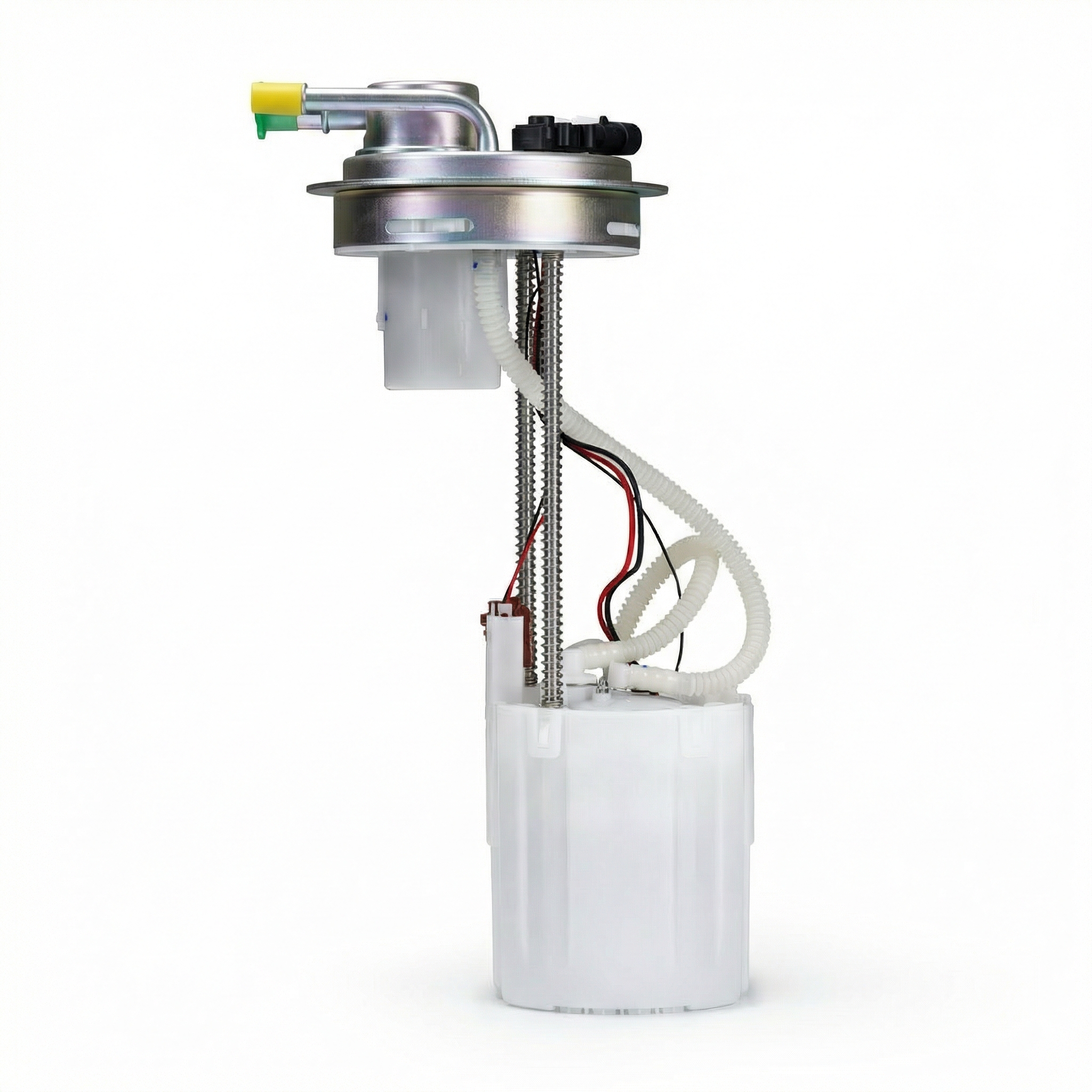
- Fuel Pump and Sender Assembly
(OEM #ACDelco MU1783 (example, verify by VIN))— The fuel level sensor (sender) is integrated into the fuel pump module. It is the most common cause of P0462 and is typically replaced as a complete unit, especially on higher mileage vans.
Trusted brands: ACDelco, Delphi, Spectra Premium
OEM price range: $250-$500
Aftermarket price range: $150-$300 - Fuel Level Sensor Kit
(OEM #Varies by year (e.g., 22709333 in older TSBs))— In some cases, a separate sensor kit is available, allowing replacement without buying the entire pump module. This was more common in the past and availability depends on the specific year and model.
Trusted brands: ACDelco
OEM price range: $90-$220
Aftermarket price range: $70-$150 - Fuel Pump Module Connector Pigtail
(OEM #Not typically sold by GM, aftermarket required.)— If the connector on the body harness side is melted or corroded, it must be replaced. This is a common repair in areas with heavy road salt usage.
Trusted brands: Dorman, ACDelco PT2713 (example)
OEM price range: N/A
Aftermarket price range: $25-$60
Related Codes That Often Appear With This One
- P0463 — P0463 is 'Fuel Level Sensor 'A' Circuit High'. It's common to see both high and low circuit codes logged if the sensor is failing erratically or has an intermittent connection, such as a corroded connector.
- P0461 — P0461 is 'Fuel Level Sensor 'A' Circuit Range/Performance'. This code indicates the signal is irrational or not changing as expected (e.g., not changing after a fill-up), which is another symptom of a failing sensor or wiring issue.
Technical Service Bulletins (TSBs) & Recalls
- 17-NA-204: This GM bulletin for Express and Savana vans directly addresses inaccurate fuel gauge readings and lists DTCs P0461, P0462, and P0463 as potential symptoms caused by a failing fuel level sender.
- GM TSB 01-06-04-008C (superseded): An older bulletin that specifically addressed the corrosive effects of sulfur in fuel on sending units.
- 20NA042: A bulletin for other Chevrolet models that mentions DTC P0462 in relation to erratic fuel gauge readings, indicating a common diagnostic pattern across the brand. [⭐ MANUFACTURER TSB — highest authority]
Platform-Specific Known Issues
- It is a widely documented common failure for the fuel level sensor to read incorrectly on Chevrolet Express vans, requiring replacement of the sensor.
- The fuel pump ground on the driver's side frame rail is highly susceptible to corrosion from moisture and road salt, often being the true cause of the 'circuit low' fault.
- On 2003-2007 models, do not rule out a faulty instrument cluster stepper motor, which causes identical fuel gauge symptoms.
Mechanic-Grade Diagnostic Values
- Fuel Level Sensor Resistance — expected: Approx. 40 Ohms (Empty) to 250 Ohms (Full). Failure: An open circuit (infinite resistance) or a short (near-zero resistance) indicates a failed sensor.
- Fuel Level Sensor Signal Voltage (at PCM) — expected: Approx. 0.5V (Empty) to 4.5V (Full) on a 5V reference circuit.. Failure: A voltage reading consistently below 0.39V for more than 2 minutes will typically set code P0462.
- Fuel Pump Ground Circuit Resistance — expected: Less than 1.0 Ohm between the ground wire at the pump connector and a clean chassis ground.. Failure: High resistance indicates a corroded or broken ground connection, a common issue on these vans.
Scan Tool Commands That Help
- GM Tech 2 / GDS2: Fuel Gauge Sweep Test — Use this command to isolate the problem. If the gauge sweeps correctly during the test, the instrument cluster and gauge motor are likely good, pointing the diagnosis towards the sending unit or wiring. If it fails to sweep, the problem is in the cluster itself. The command path is typically: Body > Instrument Panel Cluster > Special Functions > IPC Gauges.
Wiring & Ground Locations
- Fuel Pump Ground — On the driver's side frame rail, often located inside or near the wheel well.. This is a critical and very common failure point. Corrosion at this ground point creates high resistance, which can cause a low voltage condition in the sender circuit, directly triggering P0462 or causing erratic fuel pump operation.
- Fuel Pump Connector (at tank) — Top of the fuel pump module, accessed by lowering the fuel tank.. The four primary wires are typically: Gray (12V+ pump power), Black (pump ground), Purple (sender signal), and Black/White (sender ground). A short between the Purple and Black/White wires or corrosion in the connector can cause a P0462.
- GM Ground Numbering System — Vehicle-wide. GM grounds are numbered based on location: G1xx (engine bay/front), G2xx (front cabin), G3xx (rear cabin), G4xx (rear of vehicle). The fuel pump ground is often designated as G402, indicating its location at the rear of the chassis.
Real Owner Repair Stories
- YouTube video from a vehicle owner (2005 Chevrolet Express 3500) — Crank no-start, fuel pump intermittently not working.
❌ Tried (didn't work) Replacing the fuel pump.
✅ What actually fixed it The problem was traced to a bad ground. The owner found a corroded body ground point behind the driver's side front tire. After running a temporary jumper wire from that ground point to the battery, the van started immediately. The permanent fix was cleaning the ground connection point on the frame to bare metal and re-securing it. A broken engine-to-frame ground strap was also noted.
Model Year Variations Within This Range
- 2003-2007 (early): These model years used substandard stepper motors in the instrument panel cluster (IPC) that are known to fail at a high rate. This can cause the fuel gauge to stick, read inaccurately, or move erratically, creating symptoms identical to a P0462 fault. GM issued a recall for some trucks/SUVs but not all affected vehicles. In 2007, a revised stepper motor was introduced, making the problem less common on later models.
Diagnostic Flowchart
Other Known Issues on This Vehicle
Issues unrelated to this code that are worth knowing about as an owner of this generation:
- 4L60E/4L80E Transmission Failure 🔴 High — Common on high-mileage examples, particularly those used for heavy hauling or towing. Symptoms include slipping, harsh shifts, or being locked in 3rd gear.
- ABS Module Failure 🟠 Medium — The ABS control module can fail, causing an ABS and Brake warning light. This is often an electronic failure within the module itself.
- Intake Manifold Gasket Leaks 🟠 Medium — Particularly on the Vortec V6 and V8 engines, the intake manifold gaskets are known to fail, causing coolant leaks (either externally or internally into the oil) and vacuum leaks.
- Instrument Cluster Stepper Motor Failure 🟡 Low — Widespread on 2003-2007 GM trucks and vans. The stepper motors that drive the needles for the speedometer, tachometer, and fuel gauge fail, causing gauges to stick, read incorrectly, or stop working entirely. (Ref: There was a special coverage program, but it has long since expired for most vehicles.)
- Reduced Engine Power (Throttle Body/APP Sensor) 🟠 Medium — The 'Reduced Engine Power' message can appear due to failures in the electronic throttle body or the Accelerator Pedal Position (APP) sensor, often related to wiring issues. (Ref: TSB #07-06-04-019 addresses wiring connector issues for the APP sensor.)
- Fuel Pump Driver Module (FPDM) Failure 🟠 Medium — On later models, the FPDM, located near the spare tire, is exposed to the elements and can fail, causing a crank-no-start condition that can be misdiagnosed as a bad fuel pump.
- Broken Interior/Exterior Door Handles 🟡 Low — The plastic components inside the door handles are known to break, making it difficult to open the doors from the inside or outside. This is a very common annoyance.
Used vs. New Parts: Buying Guide for This Vehicle
When a used part is the smart pick: A used instrument cluster from a junkyard can be a cost-effective fix for the common 2003-2007 stepper motor issue, but it's a gamble as it may have the same problem. Opt for a professionally rebuilt cluster with upgraded stepper motors and a warranty for better reliability.
Donor-vehicle mileage cap: roughly under 80000 miles for the part to have meaningful remaining life.
What to inspect on the donor part:
- For an instrument cluster, ask if it has been tested or if the stepper motors have been replaced.
- Avoid fuel pump modules from vehicles that have been sitting for a long time, as rust can seize the components.
- Check the electrical connector on any used part for signs of melting, corrosion, or pushed-out pins.
OEM-only on this vehicle (don't cheap out):
- While not strictly 'OEM-only', using a complete, quality fuel pump module (like ACDelco or Delphi) is highly recommended over a cheap, no-name unit. The labor to drop the tank is significant, and you don't want to do it twice due to a premature failure of a low-quality pump.
Aftermarket brands forum-validated for this vehicle:
- ACDelco (OEM)
- Delphi
- Spectra Premium
- Dorman (for connector pigtails)
Brands owners have reported issues with on this vehicle:
- Generic, unbranded 'white box' fuel pump assemblies from online marketplaces are frequently reported to have high failure rates.
Real Owner Stories
Aggregated from forums and TSBs cited above. Mileages and costs reflect what owners reported in those sources.
2019 Chevrolet Express
Symptoms: The owner damaged the fuel pump connector while attempting a pump replacement, noting the fragility of the part.
What fixed it: Replacement of the fuel pump connector pigtail (sourced from a junkyard or aftermarket as GM does not sell the connector alone).
Source hint: Chevrolet Forum thread titled 'Need replacement fuel pump connector - Chevrolet Forum'
2011 Chevrolet Express 1500
Symptoms: Vehicle would crank but not start; electrical issues in the fuel system circuit.
What fixed it: Repairing a burned pin in the underhood fuse box for the fuel pump circuit.
Source hint: Chevrolet Forum thread titled '2011 Express 1500 cranks won\'t start - Chevrolet Forum'
2003 Chevrolet Express (GMT800-era)
Symptoms: Non-functional gauges and classic symptoms of instrument cluster failure, including potential parasitic battery drain.
What fixed it: Repair or replacement of the instrument cluster stepper motors.
Source hint: Chevy Talk thread titled 'Instrument Cluster, Battery Drain, RPM gauge bad - Chevy Talk'
Related OBD-II Codes
Frequently Asked Questions
Does GM TSB 17-NA-204 apply to my Chevrolet Express if my fuel gauge is reading inaccurately?
My 2005 Express fuel gauge is stuck on empty; could this be the instrument cluster instead of the sensor?
Is there a specific ground point I should check on my Express for a P0462 'circuit low' fault?
Can I use a fuel additive to fix the P0462 code on my Chevy Express?
What are the specific resistance values I should look for when testing the Express fuel sending unit?
Is the fuel level sensor a separate part on the Chevrolet Express?
Helpful Videos
We Have This Part in Stock



The information in this article is provided for general reference and educational purposes only. Vehicle specifications, procedures, and part compatibility can vary by production date, trim level, and region. Always consult your vehicle's factory service manual and verify part numbers before purchasing or performing repairs. Safety-critical components such as airbags, seat belts, and braking systems should be installed by a qualified professional.
- Chevrolet Express:
- 🎬 Helpful Videos
- 🛍️ Shop This Part
- What's Unique About the 2003-2026 Chevrolet Express
- Symptoms You May Notice
- Most Likely Causes
- Rare But Worth Checking
- Diagnosis Steps
- Parts You'll Likely Need
- Related Codes That Often Appear With This One
- Technical Service Bulletins (TSBs) & Recalls
- Platform-Specific Known Issues
- Mechanic-Grade Diagnostic Values
- Scan Tool Commands That Help
- Wiring & Ground Locations
- Real Owner Repair Stories
- Model Year Variations Within This Range
- Diagnostic Flowchart
- Other Known Issues on This Vehicle
- Used vs. New Parts: Buying Guide for This Vehicle
- Real Owner Stories
- 2019 Chevrolet Express
- 2011 Chevrolet Express 1500
- 2003 Chevrolet Express (GMT800-era)
- Related OBD-II Codes
- Frequently Asked Questions
- 🎟️ Get 5% Off