

P0457 on 2003-2008 Subaru Forester 2.5L: EVAP Leak Causes & Fixes
This code means a large leak in the evaporative emissions system, often flagged as a loose gas cap. On this Forester, the most common causes are a faulty gas cap, a rusted-out fuel filler neck, or a failed charcoal canister vent valve located in the rear wheel well. Start by checking the gas cap, but suspect rust on the filler neck or vent valve if a new cap doesn't fix it.
- P0457 is a large EVAP leak code, most often blamed on the gas cap.
- For a 2003-2008 Forester, always suspect a faulty OEM gas cap first.
- If a new gas cap doesn't fix it, the next most likely culprits are a rusted-out fuel filler neck or a failed canister vent valve (part of the charcoal canister) in the rear driver's side wheel well.
- A professional smoke test is the fastest way to diagnose the leak if it's not one of the common, visible causes.
- This code will not leave you stranded but must be fixed to pass an emissions test.
What's Unique About the 2003-2008 Subaru Forester
While the code's definition points to the gas cap, the 2003-2008 Forester is particularly susceptible to two other common failures that trigger P0457. The first is severe rust on the fuel filler neck, creating a leak where the cap seals or pinholes along the pipe itself. The second, and equally common, is the failure of the EVAP canister vent valve due to rust and corrosion, which on these models is often integrated into the charcoal canister assembly, requiring replacement of the entire unit.
Symptoms You May Notice
- Check Engine Light is on.
- Flashing 'CRUISE' light on the dashboard (a standard Subaru feature when the Check Engine Light is active).
- A noticeable smell of gasoline, particularly around the rear of the vehicle near the fuel filler or driver's side rear wheel.
- Difficulty starting the engine immediately after refueling (this symptom points more specifically to a faulty purge control valve).
- Automatic failure of a state emissions inspection.
- Replacing the gas cap and assuming the problem is fixed without checking for other common issues like the rusted filler neck or canister vent valve.
- Replacing the front purge solenoid in the engine bay when the more common failure point is the rear canister vent valve.
- Using a cheaper aftermarket gas cap which fails to seal properly, leading the owner to chase other non-existent problems.
Most Likely Causes


- Loose or Faulty Gas Cap 🔴 High Probability This is the most common trigger for any vehicle. The cap's rubber O-ring seal can dry out, crack, or get dirty over time, preventing a proper seal. Using a non-OEM cap can also cause issues.
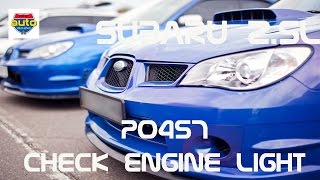
How to confirm: Inspect the gas cap for any visible cracks or damage to the seal. Ensure it is tightened until it clicks multiple times. If the seal is worn, replacement is the best confirmation. Always try an OEM cap first. 🎬 Watch: A quick guide to diagnosing and fixing the P0457 code.
Typical fix: Clean the cap and filler neck sealing surfaces. If that fails, replace the gas cap with a genuine OEM Subaru part to ensure a perfect fit.
Est. part cost: $20-$45 - Failed Canister Vent Valve / Charcoal Canister Assembly 🔴 High Probability The vent valve is located in the rear driver's side wheel well, where it is exposed to road salt and moisture, causing it to rust and fail (either stuck open or closed). On many 2003-2008 Foresters, this valve is integrated into the charcoal canister and cannot be replaced separately.
How to confirm: Visually inspect the canister and valve assembly for heavy rust and corrosion. A mechanic can command the valve with a scan tool. For DIY, you can often remove the valve/solenoid and test it by applying power from a 9V battery; you should hear a distinct click as it actuates. A smoke test will show a large leak from the valve if it is stuck open.
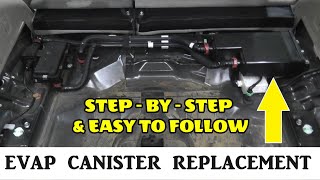
Typical fix: Replace the entire charcoal canister assembly. The part is located behind the driver's side rear wheel, accessible after removing the wheel and inner fender liner. 🎬 Watch: How to easily replace the charcoal canister assembly.
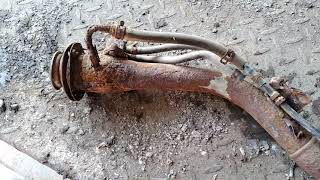
Est. part cost: $150-$350 - Rusted or Cracked Fuel Filler Neck 🟡 Medium Probability Subarus from this era are known for rust issues, and the fuel filler neck is a common victim, especially in regions that use road salt. The metal rusts through, creating pinhole leaks or a poor sealing surface for the gas cap.
How to confirm: Visually inspect the entire length of the fuel filler neck (the pipe the gas pump nozzle goes into) for rust, flaking metal, and pinholes. This may require removing the plastic splash shield in the passenger side rear wheel well. A smoke test will quickly reveal a leak from this area.
Typical fix: The rusted fuel filler neck must be replaced. This involves removing the rear wheel and splash guards to access the clamps and bolts holding it in place. 🎬 See this step-by-step walkthrough for replacing a rusted filler neck.
Est. part cost: $100-$250 - Cracked or Disconnected EVAP Hoses ⚪ Low Probability Over 15+ years, the rubber hoses in the EVAP system can become brittle and crack, or a connection can come loose, particularly the lines around the canister and filler neck.
How to confirm: Visually inspect all accessible EVAP lines running from the canister to the engine bay. A smoke test is the most effective way to find a small crack or loose connection.
Typical fix: Replace the specific section of cracked hose or re-secure the connection.
Est. part cost: $10-$50
Rare But Worth Checking
- Faulty EVAP Purge Control Solenoid: This part is located in the engine bay, near the alternator. While it can cause EVAP codes, it's less commonly the source for a large leak code like P0457 compared to the rear canister components. It's more likely to cause a P0442 (small leak) or starting issues after fueling.
Diagnosis Steps

- Read the code with an OBD-II scanner to confirm P0457 is present.
- Inspect the gas cap. Remove it, check the seal for cracks or brittleness, and clean any debris from the seal and filler neck rim. Reinstall and tighten until it clicks several times. Clear the code and drive for a few days to see if it returns. If it does, consider buying an OEM Subaru cap before proceeding.
- If the code returns, perform a thorough visual inspection of the fuel filler neck (behind the passenger rear wheel). Look for any signs of heavy rust, flaking, or holes.
- Raise the rear of the vehicle and remove the driver's side rear wheel. Inspect the charcoal canister and the attached vent valve for heavy rust, cracks, or loose hoses.
- If the vent valve solenoid is accessible, disconnect it and apply 9V from a battery to its terminals. A healthy solenoid will make an audible 'click'. Lack of a click indicates failure.
- Inspect the EVAP hoses in the engine bay and under the car for any obvious cracks, disconnections, or brittleness.
- If no obvious cause is found, the most effective next step is to have a professional perform a smoke test. This test fills the EVAP system with a harmless, visible smoke, and any leaks will be immediately obvious as smoke escapes from the faulty component.
Parts You'll Likely Need

- Fuel Cap
(OEM #42038FE030 (Verify with VIN))— This is the most frequent and simplest fix. The original cap's seal fails over time. An OEM cap is strongly recommended.
Trusted brands: Subaru (OEM), Stant
OEM price range: $30-$45
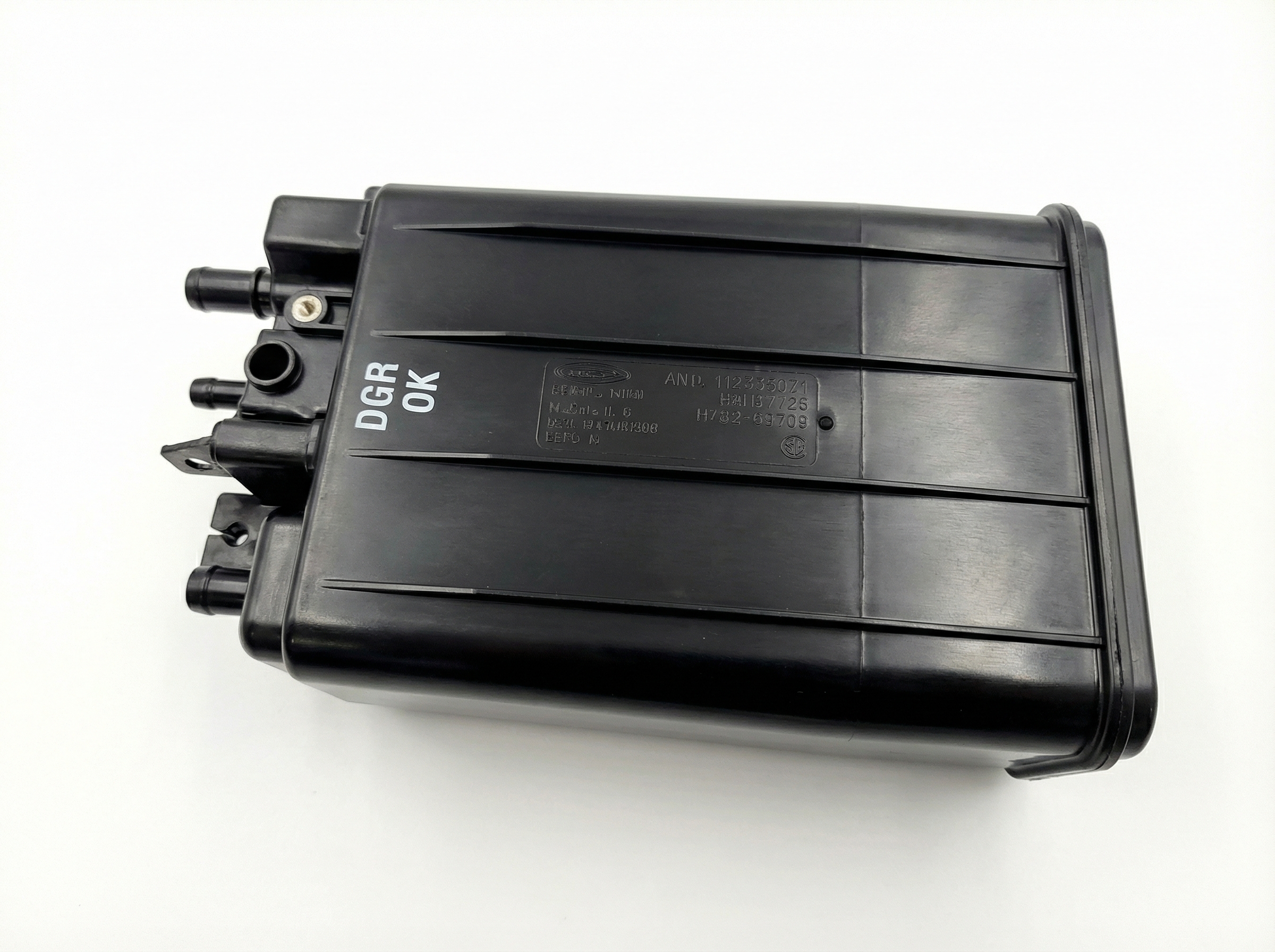
Aftermarket price range: $15-$25 - Charcoal Canister Assembly
(OEM #42035SA000)— A very common failure on this Forester. The integrated vent valve rusts and fails, requiring replacement of the whole assembly.
Trusted brands: Subaru (OEM), Dorman
OEM price range: $250-$380
Aftermarket price range: $150-$220 - Fuel Filler Neck
(OEM #42066SA001 (Verify with VIN))— Prone to rusting through in salt-belt states, causing a large, un-sealable leak at the gas cap interface or along the pipe itself.
Trusted brands: Subaru (OEM), Spectra Premium (FF669), Dorman
OEM price range: $150-$250
Aftermarket price range: $80-$150
Related Codes That Often Appear With This One
- P0455 — P0455 indicates a 'Gross EVAP Leak'. P0457 is a more specific subset of P0455, often triggered by the same hardware failures but flagged by the ECU's logic as being related to the fuel cap.
- P0442 — This code indicates a 'Small EVAP Leak'. Sometimes a deteriorating component like a rusting filler neck can initially cause a small leak (P0442) before it worsens into a large leak (P0457).
Technical Service Bulletins (TSBs) & Recalls
- While no TSBs directly address P0457, a major safety recall for the front lower control arms (NHTSA Campaign ID: 11V464000, Subaru Recall WVX-34) highlights the platform's severe susceptibility to rust in salt-belt states, which is the root cause of many P0457 issues like the filler neck and canister failure.
Platform-Specific Known Issues
- The placement of the charcoal canister and vent valve in the rear wheel well makes it highly susceptible to corrosion from road salt and water, leading to a high failure rate for this component.
- The fuel filler neck is a well-documented rust point on this generation, often causing EVAP leaks that are misdiagnosed as a bad gas cap.
Mechanic-Grade Diagnostic Values
- EVAP Canister Vent Valve/Solenoid Coil Resistance — expected: 10 - 100 Ohms. A more specific range of 48 - 65 Ohms is also cited.. Failure: Infinite resistance (open circuit) or near-zero resistance (short circuit).
- EVAP Purge Control Solenoid (in engine bay) Resistance — expected: 30 - 38 Ohms at room temperature.. Failure: A reading far outside this range indicates a faulty coil.
- Voltage at Canister Vent Valve Connector — expected: ~12V (Battery Voltage) on the power supply wire with Key On, Engine Off.. Failure: No voltage indicates a break in the power supply circuit, a blown fuse, or a bad relay.
Scan Tool Commands That Help
- Subaru Select Monitor (SSM) or equivalent professional scan tool: EVAP System Leak Test / Actuation Test — To command the canister vent valve and purge solenoid to open or close. This allows a technician to verify the component's function by listening for a 'click' and to seal the system for a smoke or pressure test.
Wiring & Ground Locations
- Gb-1 — At the left (driver's side) kick panel, inside the cabin.. This is a primary body ground point. A poor connection here can cause a variety of unpredictable electrical issues for systems grounded through the chassis.
- Gb-3 — At the right (passenger's side) kick panel, inside the cabin.. This is another primary body ground point. Ensuring it is clean and tight is crucial for overall vehicle electrical health.
- EVAP Canister Vent Valve Connector — At the charcoal canister assembly, located behind the driver's side rear wheel well liner.. This is the direct electrical connection for the most common failure part besides the gas cap. Checking for ~12V power here is a key diagnostic step before condemning the valve itself.
Real Owner Repair Stories
- YouTube channel 'Ask My Auto Mechanic' (2003-2008 Subaru with 2.5L engine) — Check Engine Light with code P0457.
❌ Tried (didn't work) Replacing the gas cap (is the first step, but didn't fix this specific car).
✅ What actually fixed it The entire charcoal canister assembly was replaced because the integrated drain valve had failed. The mechanic confirmed the check engine light did not return after 500 miles of driving. - Reddit user on r/SubaruForester (2008 Subaru Forester) — P0457 code, difficulty filling the gas tank completely.
❌ Tried (didn't work) Replaced the canister vent valve.
✅ What actually fixed it The user discovered the lower hose from the canister was completely full of charcoal granules. The canister was disintegrating internally, which likely caused the new valve to fail. The fix was to empty the charcoal from the hoses and then shake the remaining loose charcoal out of the canister itself to prevent it from ruining another new valve.
OEM Part Supersession History
42035SA000→42035SA000— N/A
Heads up: This part number appears to be consistent for the 2003-2008 Forester (non-turbo and some turbo models). No problematic supersessions were noted in research. Always verify with VIN.
Model Year Variations Within This Range
- 2003-2008: Some vehicles were built to PZEV (Partial Zero Emissions Vehicle) standards, primarily for sale in California and other states following its regulations. PZEV models have a more complex EVAP system to achieve zero evaporative emissions. This can mean different part numbers for the charcoal canister, valves, and sensors. It is critical to identify if the vehicle is PZEV or non-PZEV (Federal/50-state emissions) when ordering replacement EVAP parts.
- 2003-2008: On some Subaru models of this era, the canister drain/vent valve could be purchased separately from the canister. However, on many Foresters, the valve is integrated into the canister assembly (PN 42035SA000) and must be replaced as a single unit. Calling a dealer with the VIN is the only way to be certain which configuration a specific vehicle has.
Diagnostic Flowchart
Other Known Issues on This Vehicle
Issues unrelated to this code that are worth knowing about as an owner of this generation:
- Head Gasket Failure 🔴 High — Very common, particularly on the 2.5L SOHC EJ25 engine after 100,000 miles. Can present as external oil leaks (most common) or internal coolant/combustion gas leaks.
- Front Lower Control Arm Rust 🔴 High — Widespread in 'salt belt' states, leading to a major safety recall. The control arm can rust and fracture, causing a loss of vehicle control. (Ref: NHTSA Campaign ID: 11V464000 (Subaru Recall WVX-34))
- External Oil Leaks 🟠 Medium — Common at higher mileage from multiple sources. Besides head gaskets, leaks from valve cover gaskets, the oil separator plate (a difficult repair), and oil pressure switches are frequently reported.
- Excessive Oil Consumption 🟡 Low — Many 2.5L engines from this era consume oil, sometimes as much as a quart between oil changes. While considered 'normal' by some standards, it requires owners to check oil levels frequently.
Used vs. New Parts: Buying Guide for This Vehicle
When a used part is the smart pick: A used fuel filler neck from a vehicle in a dry, rust-free region is an excellent, cost-effective option. A complete charcoal canister assembly can also be a good used part if sourced from a low-mileage, non-rusted donor vehicle.
Donor-vehicle mileage cap: roughly under 100000 miles for the part to have meaningful remaining life.
What to inspect on the donor part:
- For filler necks, inspect for any bubbling paint, flaking, or surface rust, especially around the gas cap sealing surface and mounting brackets.
- For charcoal canisters, ensure the metal body of the vent valve is not heavily corroded.
- Check that plastic hose nipples on the canister are not brittle or cracked.
- Gently shake the canister; if it rattles loudly like a maraca, the internal charcoal has likely broken down and the part should be avoided.
OEM-only on this vehicle (don't cheap out):
- Fuel Cap - Aftermarket caps are notorious for improper sealing, which can cause the P0457 code to persist even after replacement. Using a genuine Subaru OEM cap is strongly recommended as the first step.
Aftermarket brands forum-validated for this vehicle:
- Dorman (For charcoal canister assembly / vent valve)
- Spectra Premium (For fuel filler neck)
Real Owner Stories
Aggregated from forums and TSBs cited above. Mileages and costs reflect what owners reported in those sources.
2003-2008 Subaru Forester 2.5L
Symptoms: The owner experienced hard starting after refueling along with the P0457 check engine light.
What fixed it: Replacing the purge valve solved the hard starting symptom, but the P0457 code remained. The owner then suspected the charcoal canister assembly was the root cause of the code.
Source hint: subaruforester.org - Thread: 'Forester P0457 not gas cap'
2008 Subaru Forester 2.5L
Symptoms: The owner was getting a P0457 code and discovered that the fuel filler neck was 'rusted to hell.'
What fixed it: The owner identified the heavily rusted fuel filler neck as the source of the P0457 code, a diagnosis confirmed by multiple other users as a common failure on this vehicle.
Source hint: Reddit r/SubaruForester - Thread: 'Found out that the filler neck on my '08 is rusted to hell. Could this be the source of the P0457 code I'm getting?'
Related OBD-II Codes
Frequently Asked Questions
I have a P0457 code on my Forester. Is it safe to just replace the gas cap and see if that fixes it?
Where is the charcoal canister located on a 2003-2008 Subaru Forester?
I live in a state that uses road salt. Does this make my Forester more likely to get a P0457 code?
Can I replace just the canister vent valve, or do I need the whole canister assembly?
My Forester is hard to start right after I get gas. Is this related to the P0457 code?
What is a smoke test and why would I need one for a P0457 code?
Helpful Videos
Used OEM Parts in Stock
New Aftermarket Parts Available




The information in this article is provided for general reference and educational purposes only. Vehicle specifications, procedures, and part compatibility can vary by production date, trim level, and region. Always consult your vehicle's factory service manual and verify part numbers before purchasing or performing repairs. Safety-critical components such as airbags, seat belts, and braking systems should be installed by a qualified professional.
- Subaru Forester:
- 🎬 Helpful Videos
- 🛍️ Shop This Part
- What's Unique About the 2003-2008 Subaru Forester
- Symptoms You May Notice
- Most Likely Causes
- Rare But Worth Checking
- Diagnosis Steps
- Parts You'll Likely Need
- Related Codes That Often Appear With This One
- Technical Service Bulletins (TSBs) & Recalls
- Platform-Specific Known Issues
- Mechanic-Grade Diagnostic Values
- Scan Tool Commands That Help
- Wiring & Ground Locations
- Real Owner Repair Stories
- OEM Part Supersession History
- Model Year Variations Within This Range
- Diagnostic Flowchart
- Other Known Issues on This Vehicle
- Used vs. New Parts: Buying Guide for This Vehicle
- Real Owner Stories
- 2003-2008 Subaru Forester 2.5L
- 2008 Subaru Forester 2.5L
- Related OBD-II Codes
- Frequently Asked Questions
- 🎟️ Get 5% Off