

P0457 on 2007-2018 Jeep Wrangler: Gas Cap and EVAP Leak Causes & Fixes
On a 2007-2018 Jeep Wrangler, code P0457 is almost always caused by a loose, worn, or incorrect gas cap. If a new OEM gas cap doesn't fix it, the next most likely cause is a failed EVAP System Integrity Module (ESIM), a common and inexpensive-to-fix issue on this platform. Many owners replace the ESIM as a preventative measure or after a new gas cap fails to resolve the code.
- P0457 on your Wrangler almost always points to a problem with the gas cap.
- Always start by tightening your current gas cap. If the light returns, buy a new OEM Mopar gas cap.
- If a new gas cap doesn't fix the issue, the next most likely culprit is the EVAP System Integrity Module (ESIM), a known weak point.
- This code will not cause driving problems but will result in a failed emissions test.
- Do not replace the fuel tank pressure sensor; it is almost never the cause of the leak.
What's Unique About the 2007-2018 Jeep Wrangler

The 2007-2018 Jeep Wrangler (JK generation) is known for two very common failure points that trigger this code. While the gas cap is the primary suspect, the EVAP System Integrity Module (ESIM), also called a leak detection pump, has a high failure rate on many Chrysler, Dodge, and Jeep products from this era, including the Wrangler. Owners often find that even when the code suggests a gas cap issue, the underlying problem is actually a faulty ESIM. This part is so prone to failure that some owners on forums recommend buying them in multiples.
Generation note: The 2007-2018 model year range covers the entire 'JK' generation of the Jeep Wrangler. While the all-new 'JL' generation was also introduced in 2018, this guide's information is specific to the JK platform, which was sold alongside the JL for that model year. The ESIM component is a known failure point across the entire JK generation.
Symptoms You May Notice
- Check Engine Light is on
- A 'GASCAP' message may appear on the instrument cluster display.
- A faint smell of fuel near the rear of the vehicle (less common).
- Inability to fill the fuel tank completely; the pump may click off prematurely. One owner noted this issue was resolved after replacing the ESIM.
- Replacing the fuel tank pressure sensor. The sensor is usually doing its job correctly by reporting the leak; it is rarely the cause of the leak itself.
Most Likely Causes

- Loose, Damaged, or Incorrect Gas Cap 🔴 High Probability The gas cap seal is a simple rubber O-ring that degrades over time, losing its ability to create an airtight seal. Aftermarket caps often do not seal as effectively as the OEM part, leading to persistent codes.
How to confirm: First, ensure the cap is tight (clicked at least three times). Inspect the rubber seal on the cap for cracks, stiffness, or tearing. Check the fuel filler neck for rust or debris that could prevent a good seal. Some owners have had success cleaning the seal with a lubricant like WD-40 as a temporary measure.
Typical fix: Replace the gas cap with a new OEM Mopar part. This is the cheapest and most common first step in diagnosis.
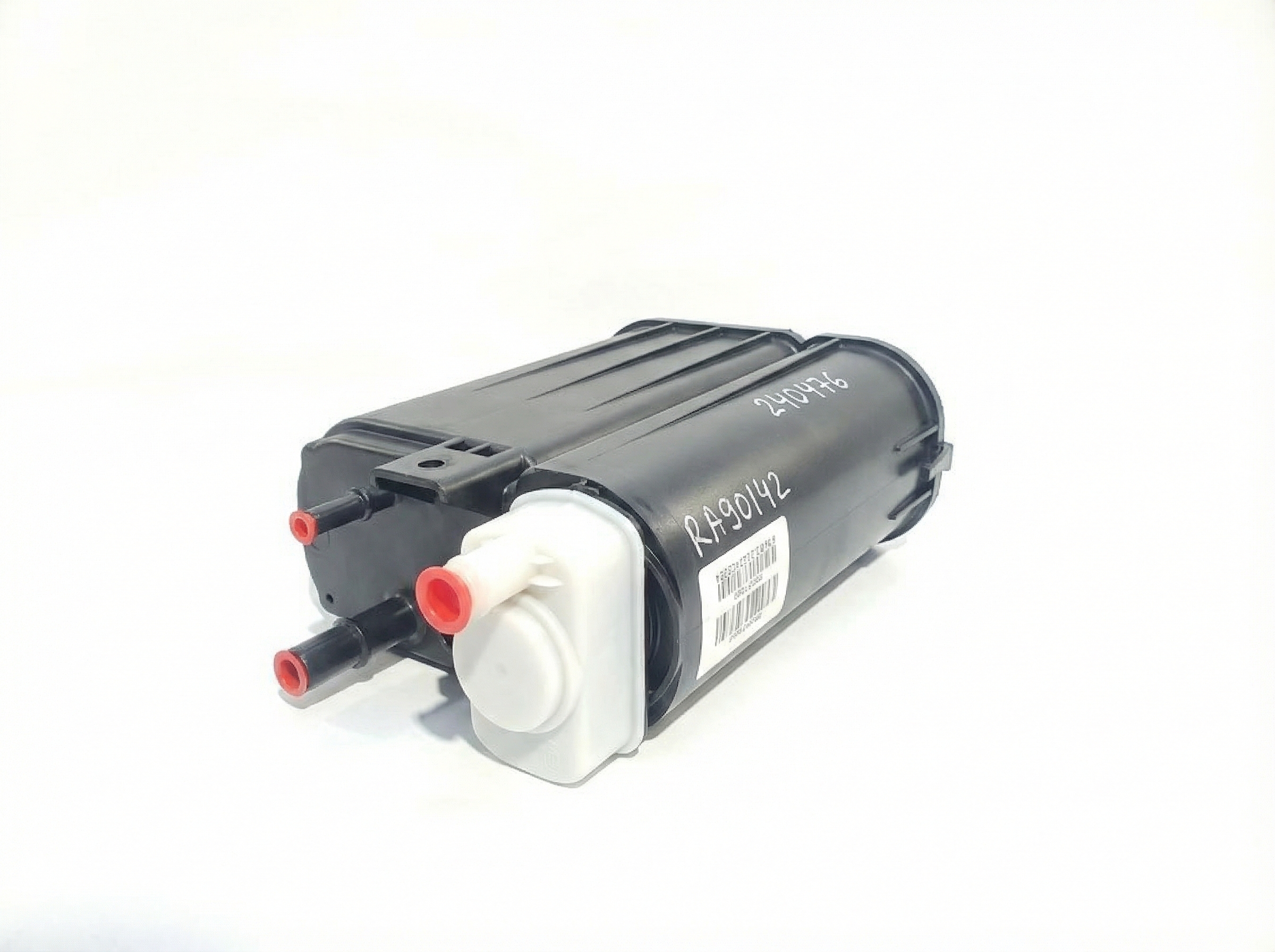
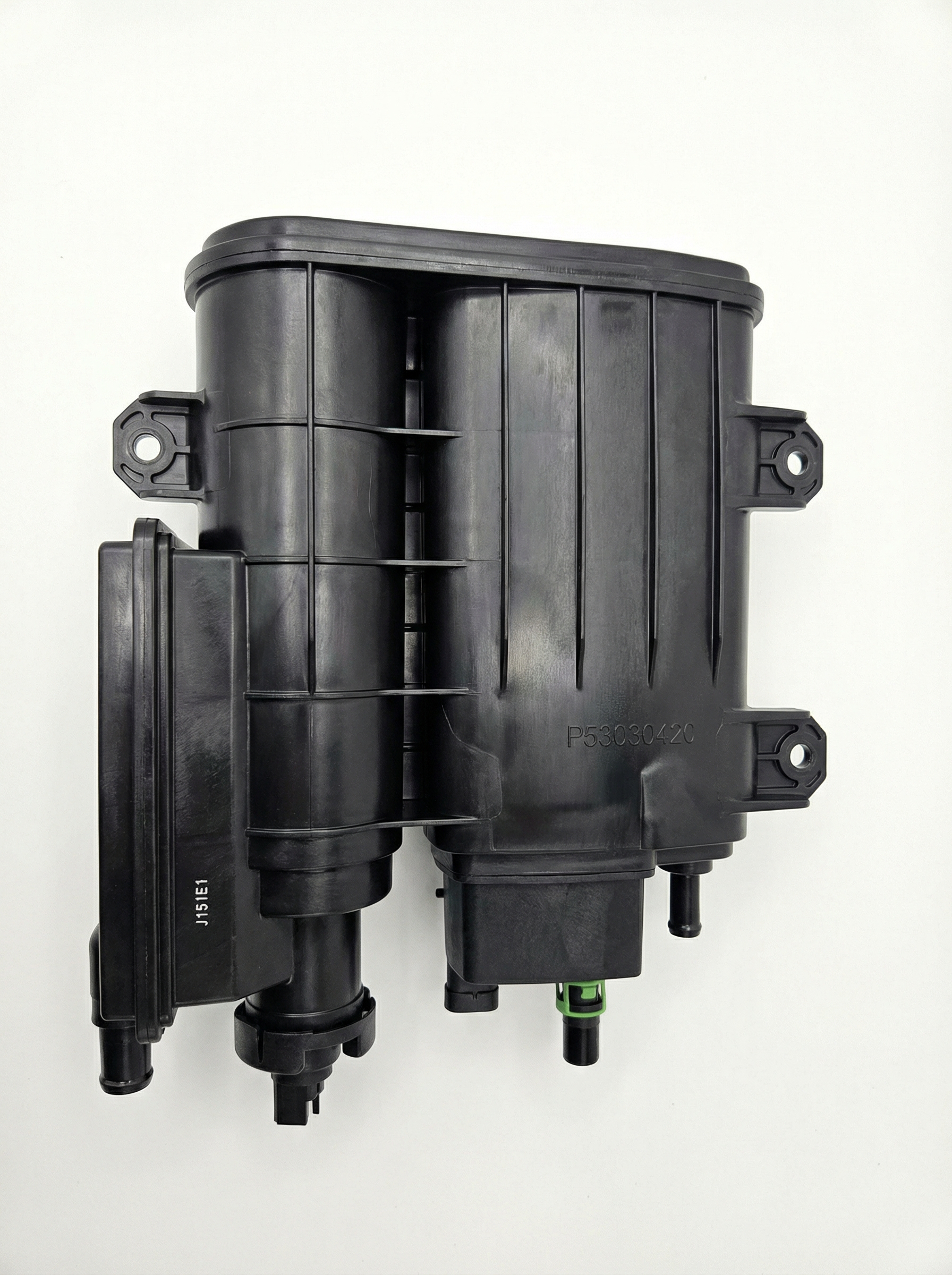
Est. part cost: $15-$30 - Faulty EVAP System Integrity Module (ESIM) 🟡 Medium Probability This component, also known as the leak detection pump, is a known high-failure part on many Chrysler/Jeep/Dodge vehicles of this era. It is a small plastic module with an internal weighted switch that can fail, preventing the EVAP system from sealing properly during its self-test. Its location on the charcoal canister makes it susceptible to dirt and moisture.
How to confirm: If a new gas cap does not resolve the code, the ESIM is the next logical part to suspect. Diagnosis without replacement involves a smoke test or a high-end scan tool, but given the high failure rate and low cost, many owners opt to replace it as a likely culprit. A smoke test confirmed a bad ESIM for one owner after multiple gas cap replacements failed to fix the issue.
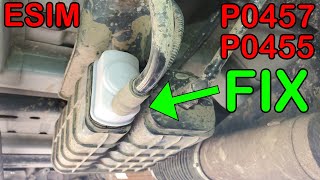
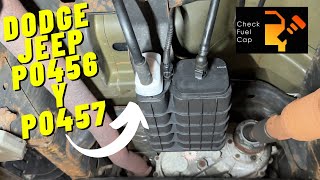
Typical fix: Replace the ESIM and its associated seal. It is located on the charcoal canister near the fuel tank (driver's side) and is held in place with a simple quarter-turn twist, making it a 10-minute DIY job. 🎬 See this walkthrough on replacing the ESIM leak detection pump.
Est. part cost: $25-$50 - Cracked or Disconnected EVAP Hoses ⚪ Low Probability Rubber hoses become brittle with age and exposure to the elements. Off-roading can put stress on these lines or cause them to be snagged and disconnected. A common failure point is a small hose near the purge solenoid in the engine bay, which can crack at the end.
How to confirm: A visual inspection may reveal an obvious crack or disconnected hose, particularly in the engine bay near the battery or on the lines connected to the charcoal canister. The most effective method is to have a professional perform a smoke test, which fills the EVAP system with visible vapor to pinpoint the exact location of any leaks.
Typical fix: Replace the damaged section of hose or the entire hose assembly. In some cases, simply trimming a cracked end and re-securing with a clamp is sufficient.
Est. part cost: $10-$60
Rare But Worth Checking
- Faulty Purge Valve/Solenoid: This valve, typically located in the engine bay, can get stuck open, creating a constant leak in the EVAP system. It's less common for this specific code than the gas cap or ESIM, but can be a culprit if other fixes fail.
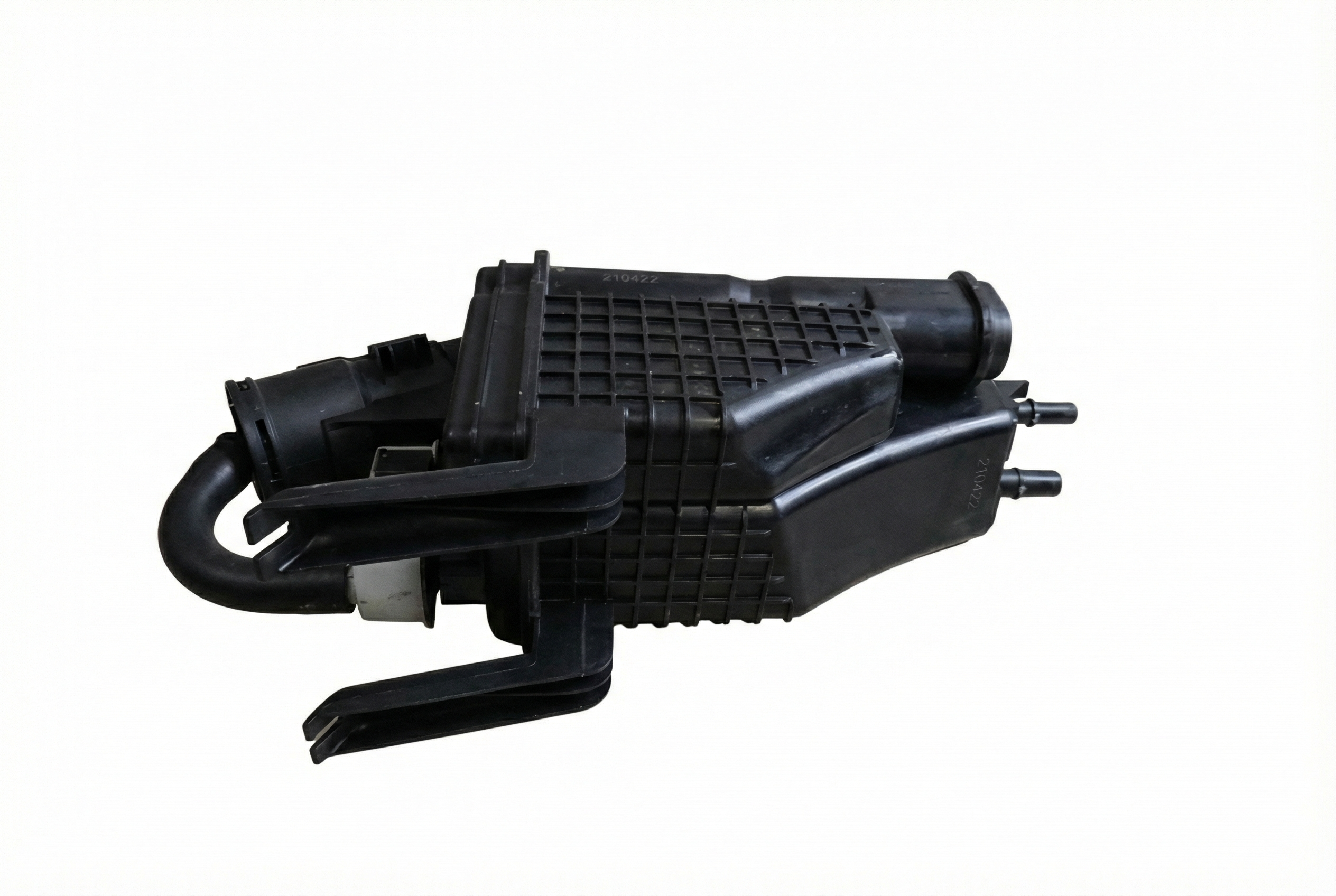
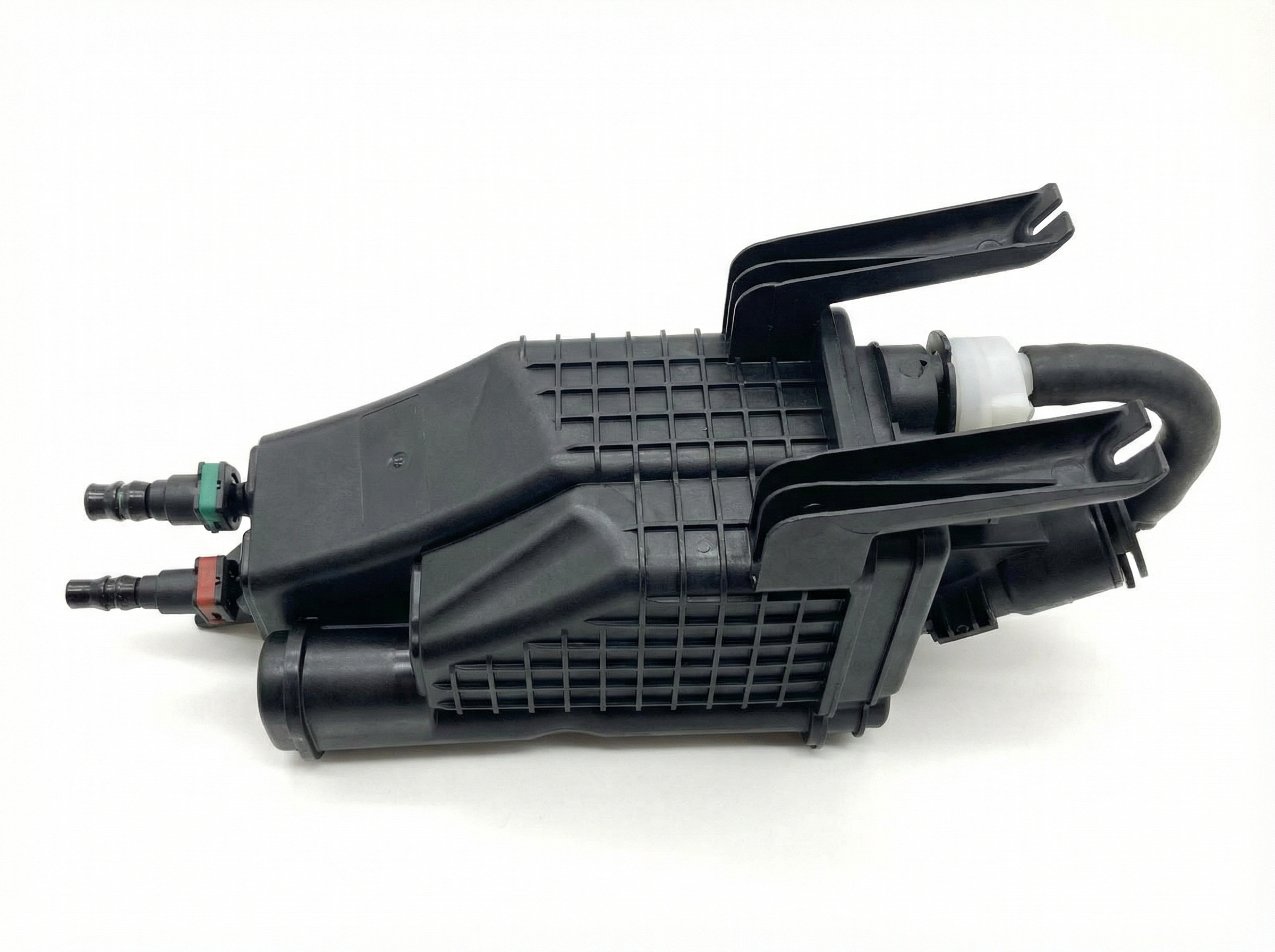
- Cracked EVAP Charcoal Canister: The canister itself can develop a crack, especially from an impact during off-roading. This is usually a more expensive repair and is best diagnosed with a smoke test. Relocating the canister for off-road clearance can sometimes lead to leaks if not done carefully.
Diagnosis Steps

- Read the code with an OBD-II scanner to confirm P0457 is present.
- Check for a 'GASCAP' message on the dashboard.
- Ensure the gas cap is tightened until it clicks several times. Clear the code with a scanner. Note: On some Jeeps, the code will not clear immediately and must pass a system self-test over several drive cycles (one full tank of gas is a good rule of thumb). Some owners report that only a battery disconnect will fully clear a stubborn 'GASCAP' light.
- If the code returns, carefully inspect the gas cap's rubber O-ring for any signs of cracking, drying, or damage. Also, inspect the lip of the fuel filler neck for rust or debris.
- If the cap looks worn, replace it with a new OEM Mopar gas cap. Aftermarket caps are a frequent source of EVAP codes.
- If a new gas cap does not solve the issue, locate the EVAP System Integrity Module (ESIM) on the charcoal canister under the vehicle, on the driver's side. Inspect it for visible damage and ensure its electrical connector and hose are secure.
- Consider replacing the ESIM and its O-ring. This is a very common failure point, an inexpensive part, and a simple DIY replacement that often solves the problem.
- If the problem persists, perform a detailed visual inspection of all EVAP hoses from the engine bay to the fuel tank for cracks, especially at connection points.
- For leaks that are not obvious, the most definitive diagnostic tool is a smoke test. This involves injecting pressurized smoke into the EVAP system (often through the purge valve line or a special gas cap adapter) to visually identify where the smoke escapes. 🎬 Watch: Using a smoke test to find stubborn EVAP leaks.
Parts You'll Likely Need

- Fuel Cap
(OEM #52030377AB)— This is the most common cause of P0457. The seal wears out over time, causing a leak that the system detects. An OEM cap is strongly recommended.
Trusted brands: Mopar (OEM)
OEM price range: $20-$30
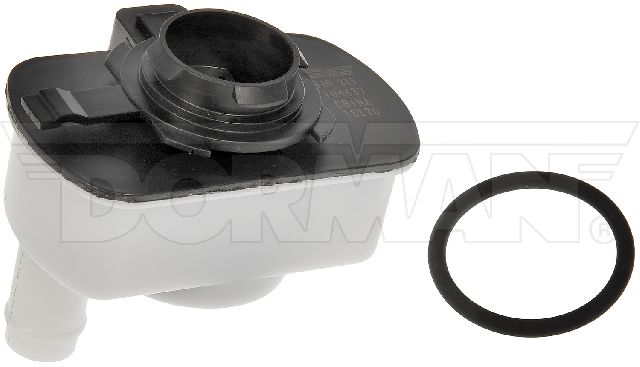
Aftermarket price range: $10-$20 - EVAP System Integrity Module (ESIM) / Leak Detection Pump
(OEM #4861962AB)— This is the second most common failure point on a JK Wrangler for this code. It's a known weak point in the Chrysler EVAP system of this era and a frequent fix for persistent P0457 codes.
Trusted brands: Mopar (OEM), Bosch, Dorman, Delphi
OEM price range: $40-$60
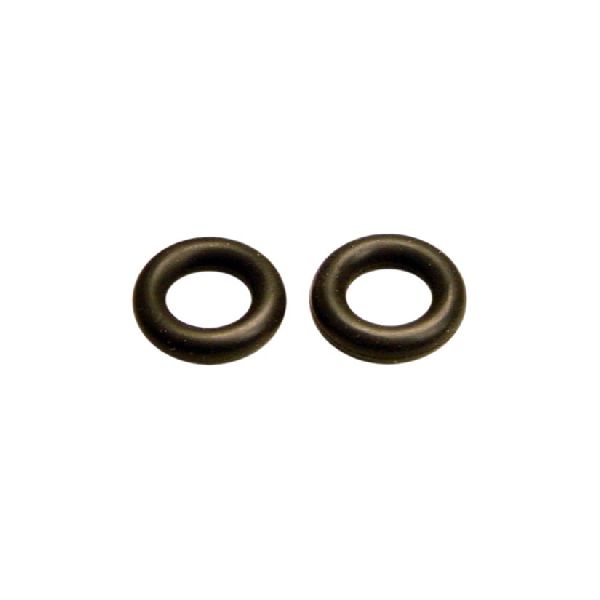
Aftermarket price range: $25-$45 - ESIM to Canister Seal
(OEM #52129436AA)— This rubber seal should always be replaced when replacing the ESIM to ensure a proper seal against the charcoal canister. New ESIM kits often include this seal.
Trusted brands: Mopar (OEM)
OEM price range: $5-$10
Aftermarket price range: $3-$8
Related Codes That Often Appear With This One
- P0455 — P0455 indicates a 'Gross EVAP Leak'. P0457 is a more specific version of this code, often triggered by the same physical leak but with computer logic pointing specifically to the gas cap as the likely cause after a refueling event.
- P0456 — P0456 indicates a 'Small EVAP Leak'. A failing component like the ESIM can sometimes produce different leak sizes at different times, causing P0456, P0457, or P0455 to appear. One owner reported P0456 and P0457 codes recurring together until the ESIM was replaced.
Technical Service Bulletins (TSBs) & Recalls
- TSB Bulletin #S2008000112 — This manufacturer bulletin addresses instances where the Malfunction Indicator Lamp (MIL) is illuminated with DTCs P0441, P0456, P0457, and P0440, providing diagnostic guidance for these related evaporative emission system faults.
Platform-Specific Known Issues
- The instrument cluster displaying 'GASCAP' is a very common symptom for this code on the JK Wrangler, but it can be misleading as the ESIM is often the true cause.
- Owners who relocate the EVAP canister for improved off-road clearance sometimes induce a P0457 leak if the hoses are not perfectly sealed or if the ESIM is not clocked in its original orientation.
Mechanic-Grade Diagnostic Values
- Fuel Tank Pressure (FTP) Sensor Voltage — expected: Approximately 2.5V with key on, engine off (representing atmospheric pressure). Voltage should decrease with vacuum and increase with pressure.. Failure: Voltage stuck high (e.g., 5.0V) or low (e.g., 0V), or not changing when the system is tested.
- ESIM (Leak Detection Pump) Switch Continuity — expected: With the ESIM removed, a multimeter set to continuity should show an open circuit (no beep). Applying light pressure (blowing) into the port should close one switch (beep). Applying light vacuum (sucking) on the port should close the other switch (beep).. Failure: The switch does not change state (from open to closed) when pressure or vacuum is applied, or is stuck closed (beeps) with no pressure/vacuum.
Scan Tool Commands That Help
- Chrysler wiTECH or equivalent high-end scanner: EVAP System Test / Purge System Test — This function allows a technician to command the purge valve and vent valve (ESIM) to close, sealing the system. The scan tool can then monitor the fuel tank pressure sensor to see if the system holds pressure or vacuum, confirming a leak without a smoke machine. It can also be used to command the purge valve open to check for flow.
Wiring & Ground Locations
- G102 — Located in the engine bay, just to the left (driver's side) of the passenger side headlamp assembly, near the power steering reservoir.. This is a primary engine bay ground. A poor connection here could potentially affect the operation of the EVAP Purge Solenoid, which is controlled by the PCM.
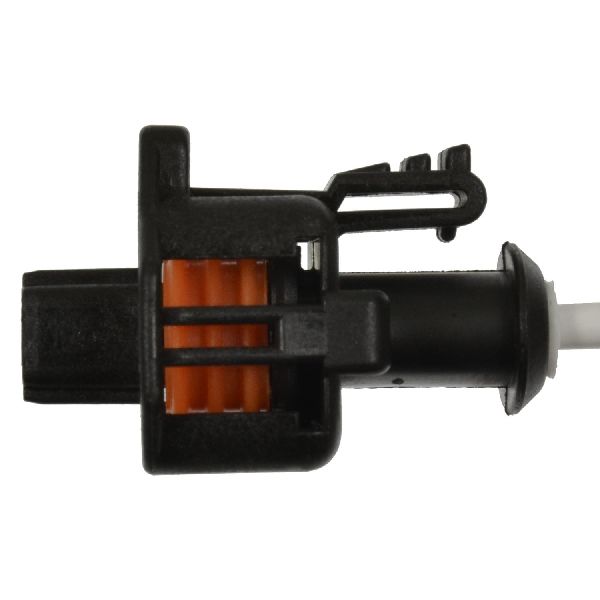
- ESIM Connector — On the ESIM module itself, attached to the EVAP canister on the driver's side, near the rear axle.. Corrosion or a loose connection at this plug is a common point of failure, especially in salt-belt regions. It can prevent the ESIM from operating correctly, mimicking a failed part. A visual inspection for green crust or damage is critical.
Real Owner Repair Stories
- Reddit user Royal-Screen128 / ZeroCoolJK (2017 Jeep Wrangler 3.6L) — Immediate 'GASCAP' message and codes P0456/P0457 on startup. Codes returned instantly after clearing.
❌ Tried (didn't work) Replaced gas cap twice with OEM parts, Replaced EVAP canister, Replaced ESIM / Leak Detection Pump, Replaced Purge Valve, Two professional smoke tests that found no leaks, Checked fuses M7, M19, and M25
✅ What actually fixed it The vehicle was taken to a Jeep dealer who traced the fault to a short in the wiring harness. - YouTube channel JMG ENTERPRISES (Jeep Wrangler JK (year not specified)) — Check engine light with code P0457.
❌ Tried (didn't work) Replacing the gas cap., Checking the hose connection above the gas tank.
✅ What actually fixed it Replacing the EVAP System Integrity Module (ESIM). The video notes this was the second time the part had failed and been replaced on the same vehicle.
"I Checked Everything" — The Actual Cause
- In multiple owner accounts, a professional smoke test came back clean, showing no physical leaks in the hoses or canister. The root cause for the persistent P0457 code was an internally failed EVAP System Integrity Module (ESIM). The ESIM's internal switch mechanism can fail without creating an external leak that a smoke test would find. In a more extreme case, after all common parts were replaced and multiple smoke tests were clean, the final cause was a short circuit within the vehicle's wiring harness, which required dealer-level diagnostics to trace.
OEM Part Supersession History
4861962AA, 4861962AB, 4861962AC→04861962AD— Standard part revision by the manufacturer, consolidating previous versions.
Heads up: This is the standard replacement ESIM for the JK Wrangler. Some sources also list 4891685AA and 4891685AB as being replaced by this part number.
Model Year Variations Within This Range
- 2007-2011 (3.8L) vs 2012-2018 (3.6L): The location and orientation of the EVAP Purge Solenoid in the engine bay differs between the 3.8L and 3.6L Pentastar engines. On the 3.8L, the purge valve is more centrally located, while on the 3.6L it is typically found on the side of the intake manifold. The function is identical, but its service location changes.
Diagnostic Flowchart
Other Known Issues on This Vehicle
Issues unrelated to this code that are worth knowing about as an owner of this generation:
- Front Axle 'Death Wobble' 🔴 High — Common, especially on lifted vehicles, but can occur on stock models. Triggered by hitting a bump at speeds typically over 45 mph. Caused by worn front-end components, most commonly the track bar.
- Cracked Oil Filter Housing / Cooler Assembly (3.6L Pentastar) 🟠 Medium — Very common on the 3.6L V6 engine, typically occurring after 60,000 miles. Overtightening the oil filter cap is a suspected cause. Leads to significant oil leaks into the engine valley. (Ref: While not a recall, TSB 09-003-24 addresses diagnosing oil leaks in this area, advising against unnecessary replacement of the entire assembly when only gaskets are needed.)
- Totally Integrated Power Module (TIPM) Failure 🔴 High — Widespread issue affecting 2007-2015 models. Causes a wide range of bizarre electrical problems, including engine stalling, fuel pump issues, random horn/wiper activation, and no-start conditions. (Ref: A recall was issued for the 2007 Wrangler for a TIPM timing error that could cause stalling, but broader TIPM issues were not fully recalled.)
- Water Leaks (Freedom Top / Doors) 🟡 Low — Extremely common across the entire JK generation. Water typically leaks in from the A-pillar area or where the Freedom Top panels meet the windshield header or door seals.
- Clogged Heater Core 🟠 Medium — A common problem resulting in poor or no heat from the vents. Caused by casting sand from the engine block clogging the heater core. Repair is labor-intensive as it requires removing the dashboard.
Used vs. New Parts: Buying Guide for This Vehicle
When a used part is the smart pick: For this specific repair, buying used parts is generally not recommended. The primary failure components (gas cap, ESIM) are inexpensive, wear-prone items. A used gas cap will have a used seal, and a used ESIM will have an unknown amount of life left on a part known for frequent failure.
Donor-vehicle mileage cap: roughly under 30000 miles for the part to have meaningful remaining life.
What to inspect on the donor part:
- If considering a used EVAP canister, inspect thoroughly for cracks or damage from off-roading impacts.
- Check the electrical connector on any used electronic part for corrosion or bent pins.
- Avoid parts from vehicles in salt-belt regions, as corrosion is a major factor in EVAP component failure.
OEM-only on this vehicle (don't cheap out):
- Fuel Cap: Aftermarket gas caps are a very common cause of persistent EVAP codes on this platform. Stick with the Mopar (OEM) part.
- EVAP System Integrity Module (ESIM): While some aftermarket brands like Dorman or Bosch are available, the OEM Mopar part is widely recommended by forum users for best results and longevity, despite its known failure rate.
Brands owners have reported issues with on this vehicle:
- Generic/no-name aftermarket gas caps.
Real Owner Stories
Aggregated from forums and TSBs cited above. Mileages and costs reflect what owners reported in those sources.
2007-2018 Jeep Wrangler JK
Symptoms: Recurring P0456/P0457 codes with a 'GASCAP' message, and the fuel tank would not fill completely.
What fixed it: After replacing the gas cap annually without success, a smoke test identified a bad ESIM (Leak Detection Pump). Replacing the ESIM permanently resolved the codes and the fueling issue.
Source hint: JK-Forum.com - Thread 'Recurring P0456/P0457 (GASCAP) & Regular Gas Cap replacement (FIXED)'
2012 Jeep Wrangler JK
Symptoms: The vehicle has thrown a few EVAP codes.
What fixed it: According to the owner, 'every single time...it was a dead ESIM.' They recommend keeping spares because the part fails so frequently.
Source hint: r/JeepWrangler on Reddit - Thread 'Code P0457'
Related OBD-II Codes
Frequently Asked Questions
My 2012 Wrangler is showing a 'GASCAP' message, but I already replaced the cap. What else could it be?
Is it okay to use a cheap aftermarket gas cap from an auto parts store for my Jeep?
I replaced the part, but the P0457 code and 'GASCAP' light are still on. How do I clear it?
Where is the ESIM located on a JK Wrangler and is it difficult to replace?
Could my off-roading hobby be causing the P0457 code on my Wrangler?
My Jeep's fuel pump clicks off before the tank is full. Is this related to the P0457 code?
Helpful Videos
Used OEM Parts in Stock

New Aftermarket Parts Available


The information in this article is provided for general reference and educational purposes only. Vehicle specifications, procedures, and part compatibility can vary by production date, trim level, and region. Always consult your vehicle's factory service manual and verify part numbers before purchasing or performing repairs. Safety-critical components such as airbags, seat belts, and braking systems should be installed by a qualified professional.
- Jeep Wrangler:
- 🎬 Helpful Videos
- 🛍️ Shop This Part
- What's Unique About the 2007-2018 Jeep Wrangler
- Symptoms You May Notice
- Most Likely Causes
- Rare But Worth Checking
- Diagnosis Steps
- Parts You'll Likely Need
- Related Codes That Often Appear With This One
- Technical Service Bulletins (TSBs) & Recalls
- Platform-Specific Known Issues
- Mechanic-Grade Diagnostic Values
- Scan Tool Commands That Help
- Wiring & Ground Locations
- Real Owner Repair Stories
- "I Checked Everything" — The Actual Cause
- OEM Part Supersession History
- Model Year Variations Within This Range
- Diagnostic Flowchart
- Other Known Issues on This Vehicle
- Used vs. New Parts: Buying Guide for This Vehicle
- Real Owner Stories
- 2007-2018 Jeep Wrangler JK
- 2012 Jeep Wrangler JK
- Related OBD-II Codes
- Frequently Asked Questions
- 🎟️ Get 5% Off