

P0456 on 2001-2010 Chrysler PT Cruiser: EVAP Small Leak Causes and Fixes
For a 2001-2010 PT Cruiser, code P0456 almost always means you have a very small leak in the emissions system. The most likely cause is a worn-out or loose gas cap; always use a Mopar OEM cap for replacement as aftermarket ones are known to fail. If that's not it, check for cracked rubber EVAP hoses (especially small elbows) or a faulty purge solenoid. A new OEM gas cap is under $30 and is the best place to start.
- Always check the gas cap first for code P0456. Ensure it's tight and the seal is not cracked. This solves the problem more than half the time.
- If the gas cap isn't the issue, the next most likely causes are cracked EVAP vacuum hoses or a faulty purge solenoid.
- A professional smoke test is the fastest and most accurate way to find the leak if it's not obvious.
- The location of the purge valve is different on turbo vs. non-turbo models, which is important to know for DIY replacement.
- This code will not affect how your car drives, but it will cause it to fail an emissions inspection.
What's Unique About the 2001-2010 Chrysler PT Cruiser

On the PT Cruiser, this code is a very common sign of aging rubber and plastic components. While it shares the same general causes as other vehicles, owner forums and mechanic videos specifically point to the gas cap seal failing from age and the EVAP purge solenoid sticking as the two most frequent culprits. It's also important to know that the location of the purge solenoid differs between the naturally aspirated and turbo models, which can affect the difficulty of diagnosis and repair. Furthermore, Chrysler utilized different EVAP self-test systems during this period, starting with a Leak Detection Pump (LDP) and later switching to an Evaporative System Integrity Monitor (ESIM) around 2007, which can affect diagnosis.
Symptoms You May Notice
- Check Engine Light is on
- A faint fuel smell may be noticeable, especially after refueling or around the gas cap area.
- Slight decrease in fuel economy over a long period (rarely noticed)
- Replacing the purge valve when the actual problem is a simple cracked vacuum line elbow connected to it.
- Immediately assuming a complex leak when the gas cap was simply not tightened correctly after refueling.
- Using a cheap aftermarket gas cap which fails to seal properly, leading the owner to believe the cap is not the problem.
Most Likely Causes


- Loose or Faulty Gas Cap 🔴 High Probability The rubber O-ring seal on the gas cap hardens, cracks, and deteriorates over time, preventing a proper seal. Aftermarket caps are a notorious cause of this code on Chrysler vehicles, as they often don't seal with the same precision as the OEM part.
How to confirm: First, ensure the cap is tightened until it clicks several times. If the light returns, remove the cap and visually inspect the rubber seal for any cracks, stiffness, or damage. A smoke test will definitively show a leak from the cap area. Many owners suggest applying a thin layer of petroleum jelly to the seal as a temporary test.
Typical fix: Replace the gas cap. It is highly recommended to use an OEM Mopar part, as many aftermarket caps are known to have sealing issues that continue to trigger the P0456 code.
Est. part cost: $15-$30 - Cracked or Disconnected EVAP Hoses 🟡 Medium Probability After many years and heat cycles, the small rubber and plastic vacuum lines that make up the EVAP system become brittle and can develop hairline cracks, especially at connection points and elbows.
How to confirm: Visually inspect all EVAP lines running from the engine bay to the charcoal canister near the fuel tank. Pay close attention to rubber elbows and T-fittings. A smoke test is the most effective way to find the exact location of a small hose leak. A common failure point is a cracked vacuum 'T' fitting in the EVAP line.
Typical fix: Replace the cracked section of hose. In some cases, a small piece of bulk vacuum hose can be used. For pre-formed plastic lines, the entire assembly may need to be replaced.
Est. part cost: $5-$50 - Faulty EVAP Purge Solenoid 🟡 Medium Probability This solenoid is a common failure item on many Chrysler products of this era. It can get stuck slightly open or have a weak internal seal, creating a small, constant leak path from the EVAP system to the intake manifold.
How to confirm: Remove the solenoid. With it unplugged, try to blow through the port that leads to the charcoal canister (often marked 'CAN' or with a 'C'). If any air passes through, the valve is leaking internally and is faulty.
Typical fix: Replace the purge solenoid. The location varies between turbo (top of engine) and non-turbo (lower engine bay) models.
Est. part cost: $30-$90 - Faulty Leak Detection Pump (LDP) or ESIM ⚪ Low Probability The LDP (pre-2007) or ESIM (2007+) is located near the charcoal canister and is exposed to road debris and moisture, which can cause it to fail over time. The internal diaphragm can fail or the unit can get stuck.
How to confirm: This is more difficult to test without a bi-directional scan tool to command the valve closed. A smoke test will often show smoke exiting a faulty LDP or ESIM vent. On older LDP systems, a stuck valve was a common issue.
Typical fix: Replace the Leak Detection Pump or ESIM assembly. The ESIM must be installed vertically to function correctly due to its internal weighted design.
Est. part cost: $50-$120
Rare But Worth Checking
- Cracked Charcoal Canister: While more likely to cause a large leak (P0455), a hairline crack in the plastic body of the canister can sometimes cause a small leak code. This is usually found with a smoke test.
- Leaking Fuel Tank Filler Neck: Rust or corrosion on the filler neck where the gas cap seals can create an imperfect surface, leading to a small leak. Inspect this area when you check the gas cap. Some owners have had success lightly sanding the corrosion off the filler neck 🎬 Watch: Why aftermarket caps fail and how to fix filler necks. rim to ensure a good seal.
Diagnosis Steps

- Check the Gas Cap: Remove the gas cap, inspect the rubber seal for cracks or damage, and clean the sealing surfaces on the cap and filler neck. Reinstall the cap, ensuring it clicks at least 3-4 times. Clear the code and drive for a few days. The EVAP monitor often runs after the car sits overnight with the fuel tank between 15-85% full.
- Visual Inspection: Carefully inspect all visible EVAP hoses and lines in the engine bay and near the rear axle/fuel tank. Look for any that are cracked, disconnected, or appear swollen or brittle. Pay special attention to rubber elbows and T-fittings.
- Test the Purge Solenoid: 🎬 See how to diagnose a P0456 code and test the system. Locate the purge solenoid. Disconnect its electrical connector and hoses. Try to blow air through the port that connects to the EVAP canister (often marked 'CAN'). It should be completely sealed when not powered. If air passes through, it needs to be replaced.
- Professional Smoke Test: 🎬 Watch: A professional walkthrough of diagnosing a PT Cruiser small leak. If the simple checks do not reveal the issue, the most effective next step is to have a smoke test performed. A mechanic will inject low-pressure smoke into the EVAP system via the service port (often has a green cap). The smoke will escape from the point of the leak, making even the smallest crack easy to find.
- Inspect Rear Components: If a smoke test is not possible, visually inspect the charcoal canister (located near the fuel tank) and its associated hoses and the Leak Detection Pump (LDP) or ESIM for any visible cracks or damage.
Parts You'll Likely Need

- Fuel Cap
(OEM #5278632AG (or 52030377AB))— This is the most common cause of P0456 on the PT Cruiser due to the seal wearing out over time. It's the cheapest and easiest part to replace first. Using an OEM Mopar cap is critical.
Trusted brands: Mopar (OEM), Stant
OEM price range: $20-$30
Aftermarket price range: $10-$20 - Vapor Canister Purge Solenoid
(OEM #4891396AB (Non-Turbo), 4669210 (Turbo))— A very common failure point on Chrysler vehicles of this era. It gets stuck partially open, causing a persistent small leak.
Trusted brands: Mopar (OEM), Standard Motor Products, Dorman
OEM price range: $60-$90
Aftermarket price range: $30-$60 - EVAP System Hoses/Lines — Rubber and plastic lines become brittle with age and heat, leading to hairline cracks that are perfect for causing a small leak code.
OEM price range: $20-$100 (depending on the assembly)
Aftermarket price range: $5-$20 (for bulk hose) - Evaporative System Integrity Monitor (ESIM)
(OEM #04861963AD (Common for later models))— For 2007 and later models, this component replaced the LDP. It can fail and cause persistent leak codes.
Trusted brands: Mopar (OEM)
OEM price range: $40-$70
Aftermarket price range: $30-$50
Related Codes That Often Appear With This One
- P0442 — P0442 indicates a 'medium' EVAP leak. These codes are closely related and sometimes a leak can be on the borderline between small and medium, or the fault can worsen over time, causing the code to change from P0456 to P0442.
- P0455 — P0455 indicates a 'large' EVAP leak. If you see this with P0456, it could mean there are multiple leaks of different sizes or the system is having trouble accurately diagnosing the leak size. A very loose or missing gas cap is the most common cause of P0455.
Technical Service Bulletins (TSBs) & Recalls
- TSB 18-028-03 (July 25, 2003): Addresses an erroneous P0456 code on 2001-2003 models that could be triggered by driving on steep downgrades. The fix, if no leak was found, was a PCM replacement. This is likely only relevant if all other physical causes are ruled out.
- Bulletin #1809223: A manufacturer service bulletin notes that a technician may find P0456 set alongside P0455, P0440, and P0441, and involves reprogramming the PCM.
- Bulletin #18-089-24: This bulletin indicates that if P0456 is present, technicians should use the wiTECH Small Leak Verification test (SLVT) to determine if a leak is present in the system.
- Bulletin #1804823: This manufacturer record also highlights the use of the wiTECH Small Leak Verification Test (SLVT) specifically for diagnosing P0456 EVAP system small leaks.
Platform-Specific Known Issues
- On some 2003 models, a persistent P0456 code with no detectable leak could be caused by faulty PCM logic, especially if the vehicle is frequently driven on steep grades. TSB 18-028-03 addressed this, though it is an old bulletin.
- A user on ChryslerForums.com with a 2003 Turbo model detailed a long diagnostic process for P0456 that involved replacing a cracked vacuum 'T' fitting, then the NVLD (similar to LDP), and finally the gas cap, which resolved the issue for a time. This highlights the multi-step process often required.
- The transition from Leak Detection Pump (LDP) systems to Evaporative System Integrity Monitor (ESIM) systems occurred around 2007. LDP systems (pre-2007) use a small pump, while ESIM systems (2007+) use a weighted switch to detect pressure changes. They are not interchangeable and are diagnosed differently.
Mechanic-Grade Diagnostic Values
- EVAP Canister Purge Valve Resistance — expected: 30 to 38 ohms (when engine is cool). Failure: A reading far outside this range, or an open/infinite reading, indicates a faulty solenoid coil.
- Short-Term Fuel Trim (Live Data) at Idle — expected: Close to 0%. Failure: Consistently high negative fuel trims (e.g., -8.6% as seen in one case) can indicate that un-metered fuel vapor is leaking past a faulty purge solenoid into the intake manifold, causing a rich condition that the PCM is trying to correct.
Scan Tool Commands That Help
- DRB III or equivalent modern scan tool: EVAP Purge Solenoid Actuator Test — This bidirectional control allows a technician to command the purge solenoid to open and close. You should hear an audible click from the solenoid. This confirms the PCM can control the solenoid and that the wiring is intact. If it clicks but still leaks (confirmed via vacuum or smoke test), the valve's mechanical seal is bad.
- DRB III or equivalent modern scan tool: EVAP Monitor Test / Small Leak Verification Test — After a repair, instead of waiting for multiple drive cycles, a technician can use this function to force the vehicle's computer to run the EVAP leak test immediately. This provides a quick pass/fail result to verify the fix was successful.
- DRB III or equivalent modern scan tool: Close Vent Solenoid/Valve — This command is the first step before performing a smoke test. The vent valve must be commanded shut to seal the EVAP system, allowing the smoke machine to build pressure and reveal leaks.
Wiring & Ground Locations
- G104 — At the front of the right front fender.. This is a primary ground point for components in the engine bay. A corroded or loose G104 ground can cause erratic behavior or failure of various sensors and solenoids, including those in the EVAP system.
- G105 — On the left front inner fender.. Similar to G104, this is another crucial engine bay ground point. Ensuring it is clean and tight is a key step in diagnosing any electrical fault in the engine compartment.
- EVAP/Purge Solenoid Connector — On the non-turbo, it's located on the lower rear of the engine compartment. On the turbo, it's higher up and more accessible.. This is the connector where voltage and resistance tests are performed on the purge solenoid. Knowing its location is critical for diagnosis. For a 2004 Turbo model, the white wire is negative and the red is positive.
Real Owner Repair Stories
- Chrysler Forums user 'Garner Miller' (2002 PT Cruiser) — Intermittent, then persistent, Check Engine Light with code P0456. Slightly worse fuel economy.
❌ Tried (didn't work) Ensuring the gas cap was tight.
✅ What actually fixed it A professional diagnosis with a smoke test revealed a leak from the gas cap area itself, even though it was tight. The cause was a worn-out seal on the cap. Replacing the gas cap with a new one resolved the code. - YouTube channel 'Eli TheOBDTech' (2006 Chrysler PT Cruiser) — Check Engine Light with code P0456. Freeze frame data showed a short-term fuel trim of -8.6%, indicating a rich condition.
❌ Tried (didn't work) Visual inspection of the gas cap and filler neck showed no obvious damage.
✅ What actually fixed it The technician tested the EVAP purge solenoid by applying vacuum with a hand pump to the canister port. The solenoid could not hold a vacuum, indicating it was leaking internally. After replacing the purge solenoid with a new part, the new solenoid held vacuum perfectly, confirming the fix. - NHTSA ODI #11281463 — An owner reported a fuel leak with a gasoline odor and a check engine light showing code P0456 when starting the vehicle.
- NHTSA ODI #11076128 — One driver reported the engine light was on for code P0456 and stated that the car shuts down, despite not seeing any visible leaks.
Model Year Variations Within This Range
- 2001-2006 vs 2007-2010: The EVAP leak detection system changed around 2007. Earlier models use a Leak Detection Pump (LDP) system. Later models (approx. 2007+) use an Evaporative System Integrity Monitor (ESIM). These parts are not interchangeable and are diagnosed differently. The ESIM relies on weighted valves and must be installed vertically, whereas the LDP is an electronic pump.
- All years: The location of the EVAP Purge Solenoid is different on naturally aspirated vs. turbo models. On turbo models, it is typically located in an easy-to-access position on the top/front of the engine. On non-turbo models, it is often on the lower rear of the engine compartment, making it more difficult to access.
Diagnostic Flowchart
Real Owner Stories
Aggregated from forums and TSBs cited above. Mileages and costs reflect what owners reported in those sources.
2006 Chrysler PT Cruiser
Symptoms: Check Engine Light with code P0456. Freeze frame data showed short-term fuel trim at -8.6%, suggesting a rich condition from extra fuel vapor. A fuel cap pressure test was performed three times and passed, ruling out the gas cap.
What fixed it: Replaced the EVAP purge solenoid valve, which was leaking past the seal. The new valve held a vacuum test, confirming the fix.
Source hint: YouTube comment by Eli TheOBDTech on video '(Chrysler PT) Diagnosing a P0456 Evap Emissions System Leak Detected (small leak)'
2003 Chrysler PT Cruiser Turbo
Symptoms: Persistent P0456 engine light that required a long, multi-step diagnostic process to fully resolve.
What fixed it: Replaced a cracked vacuum 'T' fitting found via a smoke test, then replaced a faulty NVLD valve, and finally replaced the gas cap.
Source hint: ChryslerForum.com thread titled '2003 pt cruiser engine light' (URL: https://www.chryslerforum.com/forum/chrysler-pt-cruiser-15/2003-pt-cruiser-engine-light-13797/)
2002 Chrysler PT Cruiser
Symptoms: Check Engine Light illuminated with a P0456 small EVAP leak code.
What fixed it: Replaced the gas cap after a smoke test revealed a bad gas cap seal.
Source hint: ChryslerForums.com (2004 thread)
2007 Chrysler PT Cruiser
Symptoms: Check Engine Light on with code P0456.
What fixed it: Applied petroleum jelly to the gas cap seal as a test. When that temporarily resolved the issue, the owner replaced the cap with an OEM part.
Source hint: CarTalk Community (2009)
Related OBD-II Codes
Frequently Asked Questions
Does TSB 18-028-03 apply to my PT Cruiser?
Should I buy an aftermarket gas cap to fix the P0456 code on my PT Cruiser?
What is the difference between the LDP and ESIM on the PT Cruiser?
Is there a quick way to test if my gas cap is causing the P0456 code?
Where is the EVAP purge solenoid located on my PT Cruiser?
Are there specific EVAP hoses that fail frequently on the PT Cruiser?
Helpful Videos
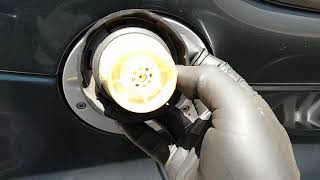
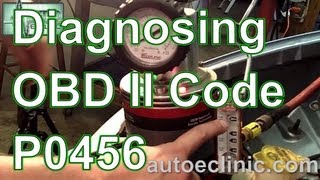
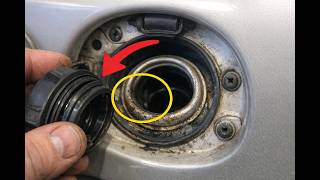
We Have This Part in Stock

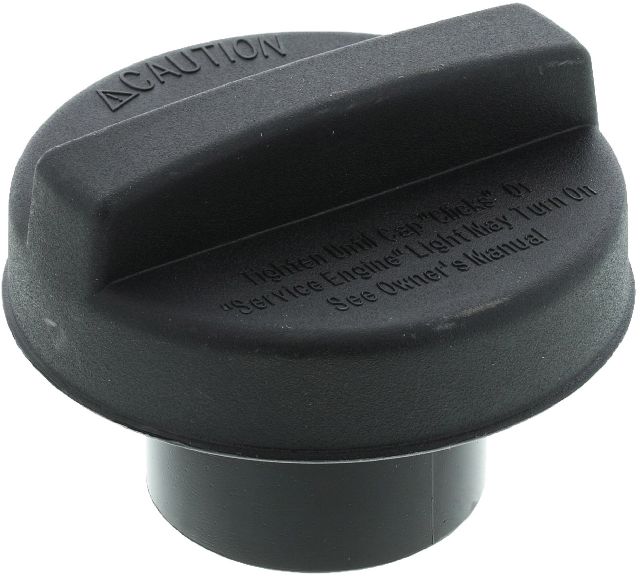

The information in this article is provided for general reference and educational purposes only. Vehicle specifications, procedures, and part compatibility can vary by production date, trim level, and region. Always consult your vehicle's factory service manual and verify part numbers before purchasing or performing repairs. Safety-critical components such as airbags, seat belts, and braking systems should be installed by a qualified professional.
- Chrysler PT Cruiser:
- 🎬 Helpful Videos
- 🛍️ Shop This Part
- What's Unique About the 2001-2010 Chrysler PT Cruiser
- Symptoms You May Notice
- Most Likely Causes
- Rare But Worth Checking
- Diagnosis Steps
- Parts You'll Likely Need
- Related Codes That Often Appear With This One
- Technical Service Bulletins (TSBs) & Recalls
- Platform-Specific Known Issues
- Mechanic-Grade Diagnostic Values
- Scan Tool Commands That Help
- Wiring & Ground Locations
- Real Owner Repair Stories
- Model Year Variations Within This Range
- Diagnostic Flowchart
- Real Owner Stories
- 2006 Chrysler PT Cruiser
- 2003 Chrysler PT Cruiser Turbo
- 2002 Chrysler PT Cruiser
- 2007 Chrysler PT Cruiser
- Related OBD-II Codes
- Frequently Asked Questions
- 🎟️ Get 5% Off