

P0456 on 2012-2019 BMW 3-Series: Causes and Fixes for a Very Small EVAP Leak
On a 2012-2019 BMW 3-Series (F30), code P0456 is most often caused by a worn-out gas cap seal (Part No. 16117222391). If a new OEM gas cap (~$30) doesn't fix it, the next most likely culprit is a faulty DMTL pump (Bosch No. 0261222018), which may be covered by an extended warranty (SIB 16 01 15) on certain N20/N26 engine models.
- P0456 is a non-critical code for a very small emissions leak; your car is safe to drive.
- Always start with the simplest fix: inspect and tighten the gas cap. If it's old, replace it with an OEM part for about $30.
- If a new gas cap doesn't solve the issue, the DMTL pump is the next most likely cause on a 2012-2019 3-Series.
- Before replacing the DMTL pump, check with a BMW dealer if your vehicle's VIN is covered by the extended warranty for this part.
- Do not replace multiple parts randomly. A smoke test is the most efficient way to accurately locate the leak if it's not the gas cap.
What's Unique About the 2012-2019 BMW 3-Series

The F30 generation (2012-2019) 3-Series, like many modern BMWs, uses a sophisticated leak detection system involving a DMTL (Diagnostic Module for Tank Leakage) pump. This pump is a notoriously common failure point and a frequent cause of the P0456 code, sometimes more so than the gas cap. For some models equipped with the N20 or N26 engine, BMW issued an extended warranty on this specific component (and the related NVLD pressure switch) under Service Information Bulletin (SIB) 16 01 15, so it's crucial to check with a dealer before paying for a replacement. Unlike many other vehicles where a gas cap is almost always the fix, on this platform, the DMTL pump should be considered a high-probability cause if a new cap doesn't resolve the issue.
Generation note: The 2012-2019 year range primarily covers the F30/F31/F34 generation of the BMW 3-Series. The causes and diagnostic methods are very similar to the preceding E90 generation, with components like the DMTL pump being a common issue on both platforms, indicating a long-standing pattern with this BMW system design.
Symptoms You May Notice
- Check Engine Light is illuminated.
- No noticeable impact on engine performance or fuel economy.
- A faint fuel odor may be present near the rear of the car in some cases.
- Difficulty refueling, such as the pump nozzle clicking off repeatedly, can occur if the system is not venting properly, though this is less common for a very small leak.
- Replacing other EVAP components before properly testing. Because the code indicates a 'system' leak, people may replace the purge valve or canister when the issue is simply a worn gas cap or a faulty DMTL pump. A smoke test is crucial to avoid unnecessary parts replacement.
- Assuming the gas cap is good after only a visual inspection. A forum user noted their light came back months after replacing the cap, only to be fixed by replacing the DMTL pump, highlighting the need for methodical diagnosis. 🎬 Watch this before paying a mechanic for EVAP repairs.
Most Likely Causes


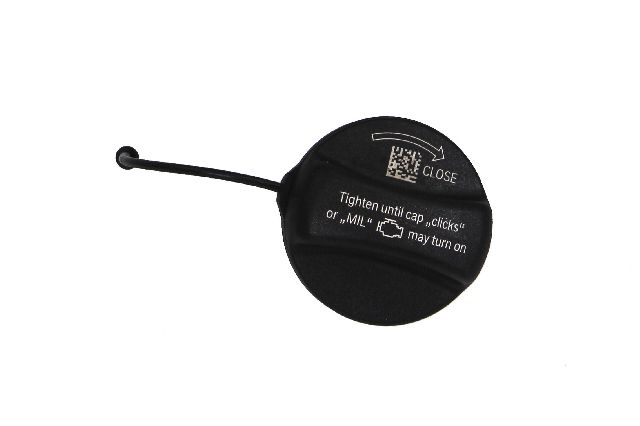
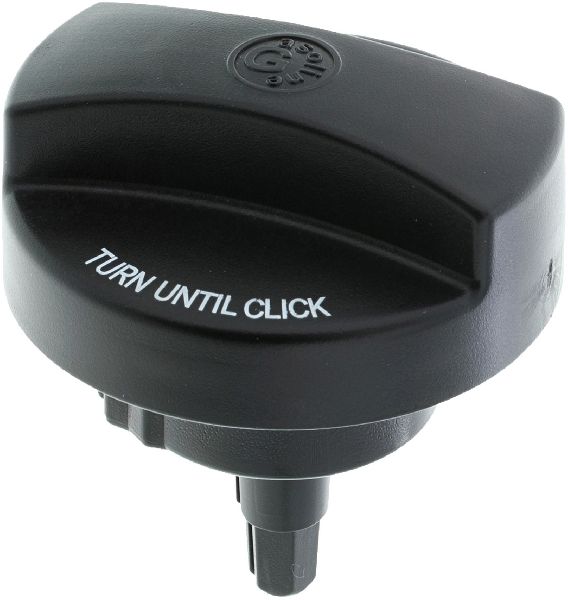
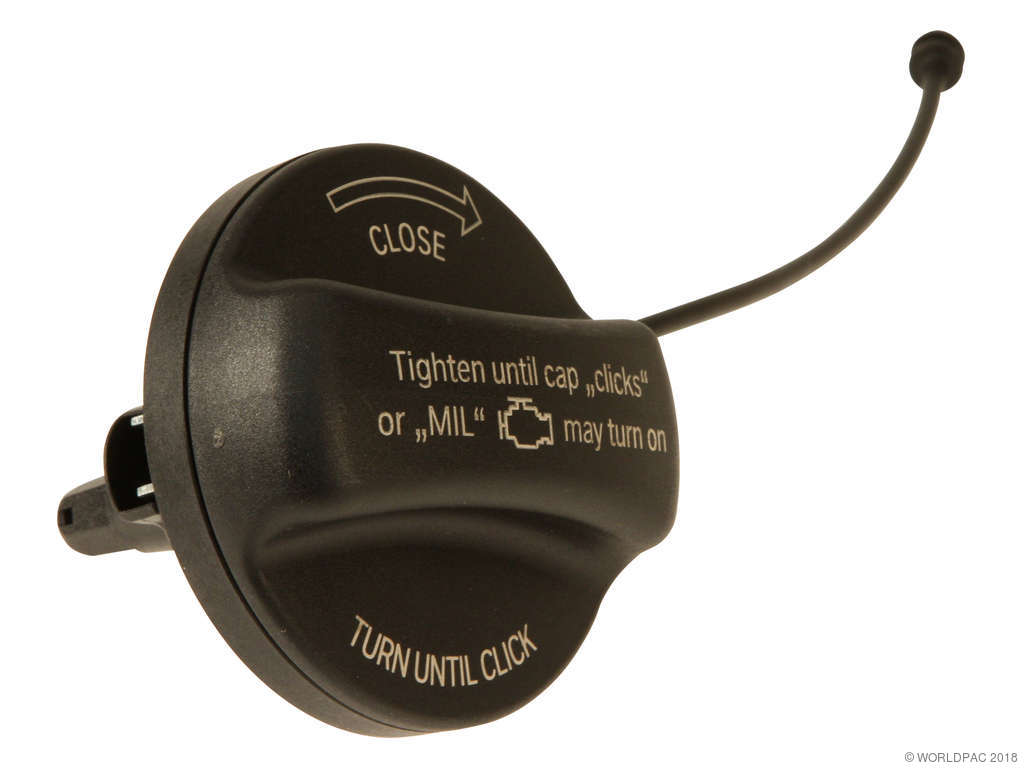
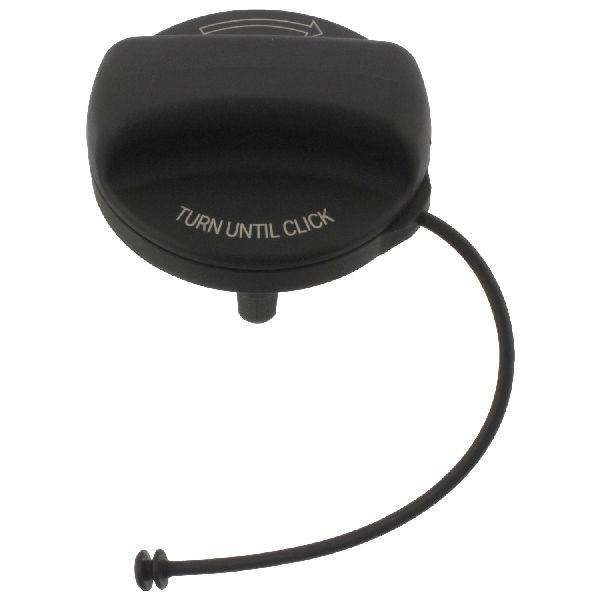
- Loose or Faulty Gas Cap 🔴 High Probability The rubber O-ring on the gas cap hardens and cracks over time, preventing a perfect seal. This is a common wear item. Multiple owners on forums report this as the first and often successful fix.
How to confirm: Inspect the gas cap's rubber seal for cracks, stiffness, or damage. Ensure the cap is tightened until it clicks. Some owners have had temporary success by flipping the O-ring over.
Typical fix: Replace the gas cap with a new, genuine BMW part (OEM P/N: 16117222391). Aftermarket caps can sometimes cause sealing issues.
Est. part cost: $25-$40 - Faulty DMTL Pump (Leak Diagnosis Pump) 🔴 High Probability This component is a known weak point on modern BMWs. The internal pump can fail, or the plastic housing can develop hairline cracks, causing a leak. It is located in the rear passenger-side wheel well area, behind the liner.
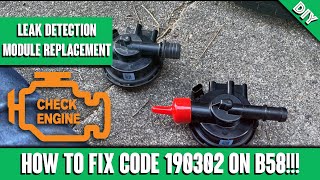
How to confirm: A smoke test is the most effective method. Smoke is introduced into the EVAP system, and if the DMTL pump is leaking, smoke will be seen emerging from the pump assembly. A BMW-specific scan tool can also command the pump to run for testing. A DIY replacement is possible in about 30 minutes. 🎬 See this walkthrough for replacing the leak detection module.
Typical fix: Replace the DMTL pump and its associated filter. Check with a BMW dealer about potential extended warranty coverage for this part on N20/N26 engines before purchasing. The OEM part is made by Bosch.
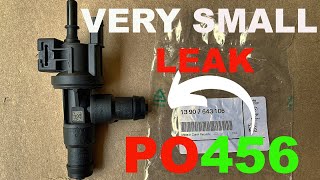
Est. part cost: $100-$200 - Faulty Fuel Tank Vent Valve (Purge Valve) 🟡 Medium Probability Located in the engine bay, this valve is exposed to heat cycles which can cause it to fail over time, typically by sticking partially open. This is a common failure on F30s with B46, B48, and B58 engines as well.
How to confirm: Remove the valve and try to blow through it. When not energized, it should be closed and not allow air to pass. If you can blow through it, it's faulty. A faulty valve may not affect driveability but will keep the code present.
Typical fix: Replace the fuel tank vent valve. For some engines, this part is also covered under a 15-year/150,000-mile extended emissions warranty.
Est. part cost: $40-$90 - Cracked or Disconnected EVAP Hoses ⚪ Low Probability Plastic and rubber hoses become brittle with age and exposure to engine heat and vibrations, leading to hairline cracks. This is especially true for the lines connecting to the purge valve in the engine bay and the DMTL pump in the rear.
How to confirm: A visual inspection may reveal obvious cracks, but a smoke test is the definitive way to find a small hose leak. Smoke will escape from the cracked portion of the hose.
Typical fix: Replace the damaged section of hose.
Est. part cost: $20-$60
Rare But Worth Checking
- Rodent Damage to Wiring: Forum users have reported finding chewed wires for the DMTL pump, which prevents the system from operating correctly and can trigger a leak code. This is worth considering if you park outdoors and have found other signs of rodents.
- Cracked Charcoal Canister: The canister itself can develop cracks. This is often caused by physical damage or by consistently overfilling the fuel tank, which forces liquid fuel into the canister and degrades it. One owner on Reddit reported a dealer diagnosing a faulty canister after a new gas cap didn't solve the P0456 code.
- Leaking Fuel Tank: While rare, the plastic fuel tank itself can develop a leak. BMW issued a limited emissions warranty extension for the fuel tank to 15 years/150,000 miles for some models with B58, N20, N55, and S55 engines under SIB 01 03 22.
Diagnosis Steps

- Read the code with an OBD-II scanner to confirm it is P0456.
- Inspect the gas cap for any visible cracks or damage to the seal. Tighten it until it clicks several times.
- If the cap looks old or worn, replace it with a genuine OEM BMW part (P/N: 16117222391). This is the most common and cheapest first step.
- Clear the code with the scanner. Drive the vehicle for several days. The EVAP monitor runs under specific conditions (e.g., certain fuel level, ambient temperature), so it may take time for the light to return if the problem is not fixed.
- If the code returns, contact a BMW dealer with your VIN to check for eligibility under extended warranties for the DMTL pump (SIB 16 01 15), fuel tank vent valve, or the fuel tank itself (SIB 01 03 22), especially if you have an N20/N26 engine or live in a SULEV state.
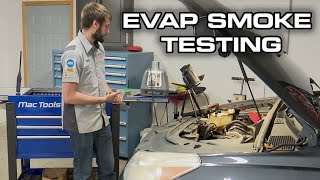
- If not covered by warranty, perform a smoke test. This involves injecting low-pressure smoke into the EVAP service port. 🎬 Watch: How to perform a professional EVAP smoke test.
- Visually inspect the entire EVAP system for smoke, paying close attention to the DMTL pump (located behind the rear passenger-side wheel well liner), the fuel tank vent valve (in the engine bay), and all connecting hoses.
- Once the source of the smoke is found, replace the corresponding faulty component.
- If a smoke test is not possible, and the gas cap has been replaced, the DMTL pump is the next most probable cause, followed by the fuel tank vent valve.
Parts You'll Likely Need

- Gas Cap
(OEM #16117222391)— This is the most frequent cause of a P0456 code due to the seal wearing out. It's the first part to check and replace.
Trusted brands: BMW (OEM)
OEM price range: $25-$40
Aftermarket price range: $15-$30 - DMTL Pump (Leak Diagnosis Pump)
(OEM #16137333301 (supersedes older numbers), Bosch P/N: 0261222018)— A very common failure point on this platform that causes a P0456 code when it can no longer pressurize the system correctly or develops a crack.
Trusted brands: Bosch (OEM), BMW (OEM)
OEM price range: $150-$200
Aftermarket price range: $85-$150 - Fuel Tank Vent Valve (Purge Valve)
(OEM #13907636156 (supersedes 13902366609))— This valve can stick open, creating a constant small leak path from the EVAP system to the engine intake.
Trusted brands: Bosch, BMW (OEM)
OEM price range: $60-$90
Aftermarket price range: $40-$70
Related Codes That Often Appear With This One
- P0442 — P0442 indicates a 'small leak,' while P0456 indicates a 'very small leak.' They point to the same type of problem, just a different leak size threshold. A leak may start as a P0456 and worsen to a P0442 over time.
- 190302 — This is a BMW-specific fault code for 'Fuel tank ventilation and purge air system micro leak leakage greater than 0.5 mm,' which is the manufacturer's equivalent of the generic P0456 code.
Technical Service Bulletins (TSBs) & Recalls
- SIB 16 01 15: Details the extended warranty for the NVLD module/pressure switch on certain models, a direct cause of P0456.
- SIB 01 03 22: Extends the warranty on the plastic fuel tank itself to 15 years/150,000 miles for leakage on certain engine types, which could cause an EVAP code.
- SIB 16 01 20: A related bulletin concerning the fuel tank leak diagnosis system.
Platform-Specific Known Issues
- There is a known extended warranty for the Fuel Tank Leak Diagnostic Module (DMTL/NVLD) for some models with N20 and N26 engines. Owners should verify with a dealer if their vehicle is covered before purchasing the part.
Hidden / Shadow Codes Worth Checking
- 190302: Tank ventilation and purge air system, micro-leakage (leakage greater than 0.5 mm). This is the direct BMW manufacturer code for P0456. (see via BMW-specific scan tools like ISTA, BimmerLink, or a high-end professional scanner.)
- 118002: Mixture control: Mixture too rich. This can sometimes appear alongside EVAP codes if the fuel tank vent valve is malfunctioning and causing unmetered fuel vapors to enter the intake. (see via BMW-specific scan tools like ISTA or BimmerLink.)
- 190F08: Fuel tank ventilation valve: Malfunction. This code points directly to a problem with the purge valve in the engine bay and can be a root cause for a P0456 leak code. (see via BMW-specific scan tools like ISTA or BimmerLink.)
Scan Tool Commands That Help
- ISTA (Rheingold): DMTL System Test / EVAP System Test — This is the official BMW diagnostic function to command the DMTL pump to run a full system leak test. It seals the EVAP system and uses the DMTL pump to measure for a pressure drop, confirming the presence of a leak and often identifying its size (small vs. large). This should be run after replacing a component to verify the repair.
Wiring & Ground Locations
- DMTL Pump Connector — Located behind the passenger-side rear wheel well liner, attached to the charcoal canister assembly.. The wiring harness to the pump can become damaged or corroded from road debris and moisture, leading to an open circuit or short that prevents the pump from running. This can trigger a fault even if the pump itself is good. A user on a forum noted that a wiring issue can cause intermittent problems.
- Main Engine Ground Strap — On N55 engines, a primary ground strap is located on the rear of the cylinder head, on the driver's side. On other F30s, a major ground strap connects the chassis to the transmission.. While not a direct cause of P0456, a poor engine or chassis ground can cause a wide range of bizarre electrical issues and seemingly unrelated fault codes. Ensuring all grounds are clean and tight is a fundamental step in diagnosing any electrical fault on a BMW.
- Rear Chassis Ground Points — There are several factory ground bolts in the trunk area, often near the battery (right side) and the fuse box, that can be used for testing or securing components.. When testing the DMTL pump circuit, a known-good ground is essential for accurate voltage and resistance readings. These points provide a reliable reference.
Real Owner Repair Stories
- Reddit user on r/BmwTech (2016 BMW X1 (platform shares EVAP components with F30)) — Persistent P0456 Check Engine Light.
❌ Tried (didn't work) Replacing the gas cap.
✅ What actually fixed it Replacing the fuel tank breather valve (purge valve) in the engine bay finally resolved the code. - Bimmerpost forum user (2013 BMW X3 35i (N55 engine, shares EVAP components)) — P0456 code, preventing passing of smog test.
❌ Tried (didn't work) Replacing the gas cap with an aftermarket one.
✅ What actually fixed it The issue was a faulty NVLD (Natural Vacuum Leak Detection) pressure switch, which is integrated with the DMTL pump assembly on this platform. Replacing the entire DMTL/NVLD unit resolved the code. - YouTube video by 'No Clutch Garage' (BMW F30 340i (B58 engine)) — Persistent Check Engine Light with a BMW-specific code for a leak > 0.5mm (equivalent to P0456).
❌ Tried (didn't work) Clearing the code, which would always return.
✅ What actually fixed it Replacing the DMTL pump, located in the passenger side rear wheel well, fixed the problem. The video provides a full DIY walkthrough of the replacement.
"I Checked Everything" — The Actual Cause
- In some cases, a P0456 can be triggered not by a physical leak but by a faulty sensor or component that performs the test. If a smoke test reveals no leaks, the DMTL pump (or its integrated NVLD pressure switch) is highly suspect. The pump may be unable to generate the required pressure/vacuum for the test, or the sensor may be misreading the pressure, causing the system to fail the self-test even without a physical hole in a line.
OEM Part Supersession History
16137274147, 16137448091→16137333301— Component revision and consolidation by BMW for the DMTL pump/leak diagnosis module.
Heads up: The newest part number (16137333301) is the correct replacement for the specified vehicle range and is backwards compatible with the older numbers.16136752551, 16136764191→16137193479— Supersession chain for the DMTL pump on the preceding E90 generation, which is often confused with the F30 part. These are generally not interchangeable.
Heads up: While the function is similar, using an E90-generation pump on an F30 is not recommended as the mounting and electrical connections may differ. Always verify the part number for the specific F30 chassis.
Model Year Variations Within This Range
- 2012-2016 (approx.): Models in this range primarily used the N20/N26 four-cylinder engine. These engines have a known timing chain guide issue that is unrelated to P0456 but is a major reliability concern for the engine itself. The EVAP system components are largely the same as later models, but the extended warranty for the DMTL pump (SIB 16 01 15) specifically targets these engines.
- 2016-2019 (approx.): Later models switched to the B46/B48 four-cylinder engine. The B48 is considered significantly more reliable than the N20, featuring a more robust closed-deck block design and improved timing chain components. While the EVAP system design and common P0456 causes (gas cap, DMTL pump, vent valve) remain the same, the underlying engine is different.
Diagnostic Flowchart
Other Known Issues on This Vehicle
Issues unrelated to this code that are worth knowing about as an owner of this generation:
- N20/N26 Timing Chain Guide Failure 🔴 High — Common on 2012-2015 models, typically surfacing between 70,000-100,000 miles. A distinct whining noise is a key symptom. (Ref: SIB 11 03 17 (Limited Warranty Extension to 7 years/70,000 miles).)
- Oil Filter Housing Gasket (OFHG) Leak 🟠 Medium — Very common across all engines (N20, N55, B48, B58) after 60,000-80,000 miles. Leaking oil can drip onto the serpentine belt, causing it to slip or shred, potentially leading to engine damage.
- Valve Cover Gasket (VCG) Leak 🟠 Medium — Common on most engines after 70,000 miles due to heat cycles making the gasket brittle. Can cause a burning oil smell as oil drips onto the hot exhaust manifold.
- Electric Water Pump Failure 🔴 High — Common failure point on N55 and other engines, often occurring between 60,000-100,000 miles with little warning, leading to rapid overheating.
- N55 High-Pressure Fuel Pump (HPFP) Failure 🟠 Medium — A known weak point on the 335i models, causing long cranks, rough idle, and limp mode. Many were replaced under warranty. (Ref: Prior warranty extensions existed, but most are now expired.)
Used vs. New Parts: Buying Guide for This Vehicle
When a used part is the smart pick: For this specific repair, buying used parts is generally not recommended. The primary culprits (gas cap seal, DMTL pump, vent valve) are wear items with plastic and rubber components that degrade over time. A used part may have very little life left or could be the reason the donor car was in the junkyard in the first place.
Donor-vehicle mileage cap: roughly under 60000 miles for the part to have meaningful remaining life.
What to inspect on the donor part:
- If forced to buy used (e.g., a charcoal canister), look for a donor vehicle with the lowest possible mileage.
- Inspect plastic components for any signs of cracking, brittleness, or heat stress.
- Check rubber hoses and seals to ensure they are still pliable and not hardened or cracked.
OEM-only on this vehicle (don't cheap out):
- Gas Cap: Aftermarket gas caps are notorious for not sealing correctly and causing the very code you are trying to fix. Always use a genuine BMW cap.
- DMTL Pump: This is a sensitive emissions component. While the OEM part is made by Bosch, it's safest to get the genuine BMW or OEM Bosch part to ensure compatibility and proper function.
Aftermarket brands forum-validated for this vehicle:
- Bosch: Bosch is the Original Equipment Manufacturer (OEM) for many of these EVAP components, including the DMTL pump and fuel tank vent valve. Buying a Bosch-branded part is often identical to the dealer part without the BMW logo and price markup.
Brands owners have reported issues with on this vehicle:
- Unbranded/No-Name eBay/Amazon parts: For sensitive emissions components, avoid generic, unbranded parts. They often use lower-quality materials that fail quickly or don't meet the precise tolerances required by the BMW leak detection system.
Real Owner Stories
Aggregated from forums and TSBs cited above. Mileages and costs reflect what owners reported in those sources.
2013 BMW 320i
Symptoms: Confirmed P0456 code and sought DIY instructions for the DMTL pump; noted that the warranty extension available in the US did not apply in Canada.
What fixed it: DMTL pump replacement (DIY)
Source hint: f30.bimmerpost.com - Thread 'p00456, leak detection module, Canada'
2014 BMW 335i
Symptoms: Check engine light with code P0456; the code returned intermittently even after initial attempts to fix it.
What fixed it: Replaced the gas cap twice and then the DMTL pump.
Source hint: f30.bimmerpost.com - Thread 'CEL Error code P0456'
2013 BMW 328i
Symptoms: Received the P0456 engine code.
What fixed it: Inspecting/replacing the gas cap O-ring.
Source hint: reddit.com/r/F30 - Thread 'P0456 engine code'
2017 BMW 330i
Symptoms: P0456 code persisted after the owner replaced the gas cap without success.
What fixed it: Evap Canister Vent Valve (purge valve) replacement.
Cost: $600-$600
Source hint: reddit.com/r/F30 - Thread 'P0456 Code'
Related OBD-II Codes
Frequently Asked Questions
Is there an extended warranty for the DMTL pump on my 2012-2019 BMW 3-Series?
Can a cracked fuel tank cause the P0456 code on my F30?
What is the specific BMW part number for a replacement gas cap to fix P0456?
Where is the DMTL (Leak Diagnosis Pump) located on the 3-Series?
Is the Fuel Tank Vent Valve covered under warranty for the B46 or B58 engines?
Can I DIY the DMTL pump replacement to clear the P0456 code?
Helpful Videos
Used OEM Parts in Stock


New Aftermarket Parts Available


The information in this article is provided for general reference and educational purposes only. Vehicle specifications, procedures, and part compatibility can vary by production date, trim level, and region. Always consult your vehicle's factory service manual and verify part numbers before purchasing or performing repairs. Safety-critical components such as airbags, seat belts, and braking systems should be installed by a qualified professional.
- BMW 3-Series:
- 🎬 Helpful Videos
- 🛍️ Shop This Part
- What's Unique About the 2012-2019 BMW 3-Series
- Symptoms You May Notice
- Most Likely Causes
- Rare But Worth Checking
- Diagnosis Steps
- Parts You'll Likely Need
- Related Codes That Often Appear With This One
- Technical Service Bulletins (TSBs) & Recalls
- Platform-Specific Known Issues
- Hidden / Shadow Codes Worth Checking
- Scan Tool Commands That Help
- Wiring & Ground Locations
- Real Owner Repair Stories
- "I Checked Everything" — The Actual Cause
- OEM Part Supersession History
- Model Year Variations Within This Range
- Diagnostic Flowchart
- Other Known Issues on This Vehicle
- Used vs. New Parts: Buying Guide for This Vehicle
- Real Owner Stories
- 2013 BMW 320i
- 2014 BMW 335i
- 2013 BMW 328i
- 2017 BMW 330i
- Related OBD-II Codes
- Frequently Asked Questions
- 🎟️ Get 5% Off