

OBD-II Code P1435: Comprehensive Diagnostic & Repair Guide
An Expert Guide to Understanding, Diagnosing, and Fixing P1435 Faults Across All Major Brands
- Code P1435 is manufacturer-specific, meaning it points to a $1,800+ hybrid battery failure on a Honda, but a $450 Secondary Air Injection pump issue on a Volkswagen.
- Inspect the Eolys additive pump wiring harness for corrosion first on PSA diesels, as a $10 electrical cleaner fix often resolves the fault without replacing the $500 pump.
- Do not drive more than 500 miles with an active P1435 code on a diesel vehicle, as the disabled regeneration system will permanently clog the Diesel Particulate Filter (DPF).
- Replacing a PSA Eolys pump or Nissan DPF requires a professional-level scanner to program the ECU and reset fluid counters; a standard $20 code reader cannot clear the P1435 fault.
What Does P1435 Mean?

P1435 is a manufacturer-specific code. Its definition changes depending on your vehicle's make, most commonly relating to emissions control. **German Brands (Audi, BMW, VW, Mercedes-Benz, Porsche):** Fault in the Secondary Air Injection (SAI) system. The system pumps fresh air into the exhaust during cold starts to heat the catalytic converter. **PSA Group (Peugeot, Citroën):** Fault in the diesel particulate filter (DPF) additive system (Eolys). Indicates a failed additive pump, low fluid, or a CAN bus communication error. **Honda Hybrids (Civic, Insight):** "Charge/Discharge Balance Malfunction" within the Integrated Motor Assist (IMA) system, pointing to a failing high-voltage battery pack. **Nissan Diesels (Qashqai, X-Trail):** "DPF Regeneration Not Completed." The ECU exceeded the maximum attempts to automatically clean the DPF. **Ford, Lincoln, Hyundai:** A/C Evaporator Temperature Sensor range or performance fault.
Technical definition: The formal definition of P1435 varies by manufacturer: - **Volkswagen/Audi:** Secondary Air Injection Pump Relay Circuit Short to Ground - **Peugeot/Citroën:** Multiplexed Additive Pump: CAN Network Fault or Pump Fault - **Ford/Hyundai:** A/C Refrigerant Temperature Circuit Range/Performance - **Honda:** Charge/Discharge Balance Malfunction - **Mitsubishi:** Fuel Additive-ECU Fail - **Nissan:** Particulate Filter - Number of Regeneration Attempts Exceeded
Can I Drive With P1435?
Yes, But With Caution. You can drive with a P1435 code, but do not exceed 500 miles. Your vehicle will fail an emissions test. For PSA/Nissan diesels, continued driving permanently clogs the DPF, forcing an $1,800+ repair. For Honda hybrids, the fault prevents the 12V battery from charging, leaving you stranded without warning.
Common Causes

- Faulty or Empty Diesel Additive (Eolys) Pump/Tank (Very Common) — The pump that injects Eolys fluid fails, or the additive tank is empty. This is the primary cause for Peugeot and Citroën diesels. The pump motor seizes or internal electronics fail due to moisture ingress.
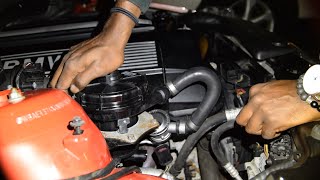
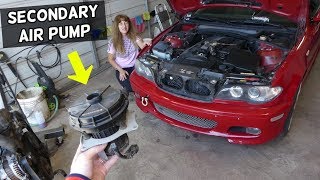
- Faulty Secondary Air Injection (SAI) Pump (Very Common) — The electric pump that pushes air into the exhaust fails from age or moisture intrusion. This is the primary cause for German vehicles (VW, Audi, BMW).
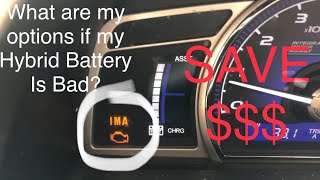
- Failing Hybrid IMA Battery Pack (Common) — On Honda hybrids, this code points directly to a failing high-voltage battery pack. An imbalance between individual cell sticks triggers the fault.
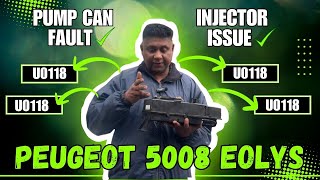
- Wiring and Connector Issues (Common) — Corroded, broken, or shorted wires in the affected circuit. On PSA vehicles, the Eolys pump connector sits under the car and is highly susceptible to water damage, causing communication faults (U0118). 🎬 Watch: Troubleshooting PSA diesel additive pump communication and wiring faults.
- Faulty A/C Evaporator Temperature Sensor (Common) — The sensor monitoring the A/C evaporator temperature sends incorrect readings to the ECU. Specific to Ford and Hyundai vehicles.
- Faulty Relay or Blown Fuse (Less Common) — The relay powering the SAI pump (German) or Eolys pump (PSA) fails, or a fuse blows. Always check this before replacing an expensive pump.
- Blocked Eolys Additive Injector or Lines (Less Common) — On PSA vehicles, Eolys fluid crystallizes and clogs the injector nozzle or lines. Using the wrong generation of additive fluid causes these blockages.
- Failed Secondary Air Check Valve (Rare) — The valve controlling airflow from the SAI pump gets stuck open or closed, causing incorrect airflow and allowing exhaust moisture to destroy the pump.
- Faulty Fuel Cap Sensor (Rare) — PSA Eolys systems dose additive after detecting refueling via a sensor in the filler neck. If this sensor fails, the system stops dosing and triggers P1435.
- Faulty Engine Control Module (ECM/PCM) (Very Rare) — The ECM suffers an internal failure. Only consider this after exhaustively ruling out all other mechanical and electrical possibilities.
Symptoms
- Check Engine Light On — The most common and often the only symptom the driver notices for all variations of this code.
- Warning Message on Dash — Peugeot/Citroën vehicles display "Risk of Clogging Particulate Filter" or "Additive System Fault". Nissan vehicles illuminate a dedicated DPF warning light.
- Failed Emissions Test — Because P1435 relates to emissions systems on most vehicles, the car automatically fails an OBD-II smog check.
- IMA Warning Light & Erratic Battery Gauge — On Honda hybrids, the IMA light illuminates, the battery charge level suddenly drops to empty then jumps to full (recalibration), and the 12V battery stops charging.
- Reduced Power and Fuel Economy — On diesels, a clogged DPF increases exhaust backpressure, causing sluggish performance. On Honda hybrids, a failing IMA battery provides less electric assist, forcing the gas engine to work harder.
- Rough Idle or Loud Noise on Cold Start — On German vehicles, the engine runs rough for the first minute after a cold start. A failing SAI pump sounds like a loud vacuum cleaner for 60-90 seconds after startup.
- A/C System Not Cooling Properly — On Ford and Hyundai vehicles, the air conditioning stops blowing cold air or functions erratically.
- Imbalanced Battery Cell Voltages (scan-tool only — no driver-felt sign) — Visible only with an advanced scan tool, showing individual cells within the Honda IMA battery pack have significantly different voltage readings.
Diagnostic Flowchart
Tap your situation to follow the diagnostic path that matches what you're seeing on this code.
Common Fixes & Costs
- Replace Diesel Additive (Eolys) Tank/Pump Assembly
— Parts: $150 - $900, Labor: $150 - $300, ~1.5 hr book time
(Professional)
: OEM - Replace IMA Hybrid Battery Pack
— Parts: $1800 - $3500, Labor: $300 - $500, ~2.5 hr book time
(Professional)
: OEM - Replace Secondary Air Injection (SAI) Pump
— Parts: $300 - $700, Labor: $150 - $400, ~1.8 hr book time
(Intermediate)
: OEM - Repair Damaged Wiring or Connectors — Parts: $10 - $30, Labor: $120 - $350, ~2.0 hr book time (Intermediate)
- Force DPF Regeneration and Reset ECU — Parts: $0, Labor: $100 - $250, ~1.0 hr book time (Professional)
- Replace A/C Evaporator Temperature Sensor — Parts: $25 - $80, Labor: $150 - $400, ~4.5 hr book time (Professional)
Used vs. New Parts: Buying Guide
When a used part is worth it: For electronic components like SAI pumps, a used part from a low-mileage vehicle is cost-effective. For Honda IMA batteries, a professionally reconditioned battery is a viable alternative to a new OEM unit.
Donor-vehicle mileage cap: roughly under 75000 miles for the part to have meaningful remaining life.
Donor quality checklist:
- Verify the donor vehicle's mileage and reason for being scrapped.
- For IMA batteries, demand proof of testing/balancing and warranty terms.
- Match the OEM part number exactly to ensure software compatibility.
Decision logic:
- If The part is a high-voltage hybrid battery → Buy a professionally reconditioned unit with a warranty. Untested junkyard batteries are too risky.
- If The part is a simple electro-mechanical pump (SAI/Eolys) and the vehicle is over 10 years old → A tested used part is a reasonable choice to save money, provided it has a 90-day warranty.
- If The part requires complex software programming (newer Eolys pumps) → Buy new to ensure compatibility, unless the seller guarantees the used part is from an identical model and year.
Warranty tradeoff: Salvage yards offer 30-90 days. Reconditioned hybrid batteries offer 1-3 years. New aftermarket parts offer 1-year to lifetime warranties.
Worst-case if a used part fails: $500-1500 if a used part fails after the warranty period, requiring repeat labor and parts costs.
What Happens If You Wait — Timeline
- 0-2 weeks: Diesel: 'Risk of Filter Clogging' message appears; automatic regeneration stops. Hybrid: IMA light on, occasional recalibration. SAI: Light on, no symptoms. (MPG impact: 0-5%% · Added cost: $0)
- 2 weeks - 2 months: Diesel: DPF 50-70% clogged; sluggish performance. Hybrid: Daily recalibrations; sluggish acceleration; 12V battery struggles. SAI: No change. (MPG impact: 5-15%% · Added cost: $150 (Potential cost of a new 12V battery for Hybrid))
- 2-4 months: Diesel: DPF >80% blocked; vehicle enters limp mode. Hybrid: Car is difficult to drive; high risk of being stranded. SAI: Catalytic converter begins degrading. (MPG impact: 15-30%% · Added cost: $250-500 (Forced regeneration and diagnostics))
- 4+ months: Diesel: DPF irreversibly clogged; requires replacement. Hybrid: IMA battery completely non-functional. SAI: Catalytic converter substrate cracks. (MPG impact: 25-50%% · Added cost: $1800-$4000 (New DPF or IMA battery))
Cost of Not Fixing It
- Immediate: Failed emissions test. The vehicle automatically fails any OBD-II smog inspection. (Added cost: $50 (cost of re-test))
- 1-3 months (Diesel): On PSA/Nissan diesels, the DPF becomes irreversibly clogged with soot and ash. The vehicle enters limp mode. (Added cost: $1800 - $4000 (DPF replacement))
- 1-6 months (Honda Hybrid): A failing IMA battery strains the 12V charging system, leading to a dead 12V battery and leaving you stranded. (Added cost: $150 - $300 (New 12V battery and tow))
- 6+ months (German SAI): A non-functional SAI system causes premature failure of the catalytic converter due to incorrect cold-start temperatures. (Added cost: $1200 - $2800 (Catalytic converter replacement))
Diagnosis Steps

- Identify Your Vehicle's System
Determine what P1435 means for your specific vehicle. Check if you drive a German brand (SAI system), a PSA diesel (Eolys system), a Ford/Hyundai (A/C system), a Honda Hybrid (IMA system), or a Nissan diesel (DPF regeneration).
Tools: Vehicle Owner's Manual, Google Search (Beginner) - Read Freeze Frame & Related DTCs
Use an OBD-II scanner to read freeze frame data and check for other codes. On PSA vehicles, P1435 pairs with P1434 or U0118, pointing to the additive pump. On Hondas, P1570 confirms battery cell imbalance.
Tools: OBD-II Scanner (Beginner) - Visual Inspection
Inspect the relevant system. For SAI systems, look for cracked hoses or loose wires on the air pump. For PSA Eolys systems, inspect the pump connector near the rear axle for green corrosion. Check for crystallized fluid around the additive tank.
Tools: Flashlight, Jack and Jack Stands (Beginner) - Check Fuses and Relays
Locate the fuse and relay for the Secondary Air Pump (German) or Additive Pump (PSA) in the fuse box. Check for a blown fuse and test the relay's function by swapping it with a known good relay of the same type.
Tools: Owner's Manual, Multimeter, Fuse Puller (Intermediate) - Activate Components with a Bi-Directional Scanner
Command the suspect component to activate. Command the SAI pump or Eolys pump to turn on. You should hear it run and feel it vibrate. If it doesn't activate but has power and ground, the component has failed internally.
Tools: Bi-directional Scan Tool (Professional) - Pro Tip: Test Eolys Pump Circuit (PSA)
Back-probe the Eolys pump electrical connector. With the ignition on, verify a 12V supply, a good ground (<0.1 Ω resistance), and a LIN bus communication wire. The LIN wire must show a toggling voltage; a flat line indicates a broken wire or BSI module fault.
Tools: Multimeter, T-pins for back-probing (Advanced) - Pro Tip: Test SAI Pump Circuit (German)
After an overnight cold soak, connect a multimeter to the SAI pump connector. Start the engine. You must see battery voltage (12V+) for 30-120 seconds. If no voltage, the relay or wiring is faulty. If voltage is present but the pump doesn't run, the motor has failed.
Tools: Multimeter, Long Probe Leads (Advanced) - Pro Tip: Check Honda IMA Live Data
View live data for the IMA battery. Look for 'battery module voltage'. A healthy pack shows all cell block voltages within 0.1-0.2V of each other. A failing pack shows one or more blocks with a significantly different voltage.
Tools: Advanced Scan Tool (Honda HDS or equivalent) (Professional) - Pro Tip: Test Eolys Injector Pressure (PSA)
Disconnect the hose from the pump outlet and connect a hand pressure pump. Pressurize the line. A good injector opens at 200-300 mbar. If pressure builds above 400 mbar without dropping, the line or injector is blocked.
Tools: Hand Vacuum/Pressure Pump with Gauge (Advanced) - Pro Tip: Test A/C Evaporator Sensor (Ford/Hyundai)
Disconnect the sensor and measure its resistance. It must correlate with ambient temperature (e.g., 1.71-2.05 kΩ at 68°F). An open circuit (infinite resistance) or short (zero resistance) indicates a failed sensor.
Tools: Multimeter, Temperature-Resistance Chart (Advanced)
When This Code Triggers (Freeze-Frame Conditions)
- Engine Coolant Temp: Below 122°F (50°C) (During a cold start. The Secondary Air Injection (SAI) monitor on German vehicles runs specifically when the engine is cold to aid catalyst light-off.)
- Fuel Level: 25-75% (For PSA Eolys systems, a fault logs after a refueling event if the system fails to dose the additive correctly, relying on the fuel cap sensor.)
- System Voltage: Varies (e.g., 1.0V difference between IMA modules) (For Honda IMA systems, the code sets when the Battery Control Module detects a significant voltage imbalance between individual battery sticks.)
- Time Since DTC Clear: Varies (For Nissan DPF faults, the code sets after a specific number of failed automatic regeneration attempts over several drive cycles.)
Related Codes
- P1434 — Frequently seen with P1435 on PSA vehicles. P1434 specifically points to an 'Additive Pump Fault'. If both are present, the pump/tank assembly is the cause.
- P1570 — On Honda hybrids, P1570 confirms the ECU detected an unacceptable voltage difference between individual cell sticks within the high-voltage battery pack.
- U0118 — On PSA vehicles, means 'Lost Communication with Additive Pump'. Indicates a corroded connector, broken wire, or failed internal control board.
- P0410 / P0411 — Generic codes for SAI System Malfunction. P1435 points to an electrical fault (relay), while P0411 suggests a flow problem (blockage).
Climate & Environmental Factors
- Cold Climates: Increases failure rate of SAI pumps on German vehicles. Exhaust moisture condenses in the pump, freezes, and destroys the internal motor.
- High Humidity / Water Exposure: The primary cause of electrical failures in the PSA Eolys system. The pump's under-vehicle connector corrodes from moisture and road salt.
- Short Trip Driving: Exacerbates DPF issues on diesels by preventing the exhaust from reaching regeneration temperatures. Contributes to moisture buildup in SAI systems.
How to Talk to a Mechanic About This Code
Say this: "I have a P1435 fault code. My car is a [Make/Model]. Based on my research, the issue is with the [Eolys additive system / IMA hybrid battery / Secondary Air Injection system]. I need a diagnostic focused on this specific system."
Tells the shop you are informed, helps them assign the right technician, and prevents a generic, wide-ranging diagnostic fee.
Avoid saying:
- 'My check engine light is on.'
- 'Just fix whatever is wrong.'
- 'My friend said it's probably the...'
Questions to ask before authorizing the repair:
- For PSA Diesels: 'Did you inspect the pump's electrical connector for corrosion before recommending a full pump replacement?'
- For Honda Hybrids: 'Can you show me the live data from the scan tool that shows the voltage imbalance between the battery cells?'
- For German Vehicles: 'Did you confirm the fuse and relay for the secondary air pump are good before quoting a new pump?'
- For any repair: 'Is this part new OEM, aftermarket, or used? What is the warranty on both the part and the labor?'
Where to Take It: Dealer vs Independent vs Chain
- Dealer:
Best for: Vehicles under warranty, Complex programming (newer PSA Eolys pumps), Mandatory resets (Nissan DPF), High-voltage hybrid battery work (Honda IMA)
Downsides: Highest labor rates, Replaces entire assemblies rather than repairing wiring (Typical cost: +50% vs. baseline) - Independent Shop:
Best for German SAI faults. For Honda, use a hybrid specialist. For modern PSA/Nissan diesels, ensure they have the required software before booking.
Best for: Out-of-warranty vehicles, Common repairs with known fixes (German SAI pump), Wiring and connector repairs
Downsides: May lack expensive, manufacturer-specific tools for programming (PSA/Nissan) (Typical cost: +0% vs. baseline) - Chain Shop:
AVOID. The manufacturer-specific nature of P1435 makes chain shops a poor choice.
Best for: Simple jobs like tires and oil changes.
Downsides: High pressure to upsell, Lacks specific software for PSA/Nissan/Honda resets (Typical cost: -10% vs. baseline)
When to Walk Away From the Repair
If the estimated repair cost exceeds 40-50% of the car's private-party value, sell or trade in the vehicle instead of repairing it.
- Car worth $3000, fix is $2400: Walk away. A $2,400 IMA battery replacement on a $3,000 Honda Civic Hybrid is a poor investment.
- Car worth $10000, fix is $1100: Fix it. A $1,100 secondary air pump repair on a $10,000 BMW is well below the threshold.
- Car worth $4500, fix is $1500: Borderline. A $1,500 Eolys pump and DPF service on a $4,500 Peugeot is significant. Get a second opinion to confirm a cheaper wiring repair isn't the real issue.
What Scan Tool You Need for This Code
Minimum: A scanner that reads manufacturer-specific codes and views live sensor data. A basic $20 code reader is insufficient.
A basic reader only shows the P1435 code exists. It cannot see Honda IMA cell voltages, PSA additive pump communication status, or activate components for testing.
Budget: BlueDriver Pro (~$100) — Reads manufacturer-specific codes and views live data streams to check IMA cell imbalance. Cannot perform programming/resets.
Mid-range: Foxwell NT510 Elite (~$180) — Offers bi-directional control to command an Eolys or SAI pump to turn on for testing. Performs basic service resets.
Professional: Autel MaxiCOM MK808 (~$450) — Required for a complete DIY fix on PSA or Nissan vehicles. Programs a new Eolys pump, resets additive counters, and forces DPF regeneration.
Rent vs buy: Buy. Renting a basic scanner from an auto parts store is insufficient as it will only read the code, not diagnose the specific sub-system.
How to Clear the Code After You Fix It
- Use an OBD-II scan tool to clear all fault codes. Note: PSA Eolys systems and Nissan DPFs require a manufacturer-specific tool for programming before codes will clear.
- Ensure the fuel tank is between 1/4 and 3/4 full.
- Perform a complete drive cycle to allow all readiness monitors to run.
Drive cycle (~30 minutes): A generic drive cycle includes a cold start (sitting for 8+ hours), 2-3 minutes of idling, followed by a mix of city and highway driving. Maintain a steady 55 mph for at least 10 minutes.
Readiness monitors affected: Secondary Air System, Catalyst, Oxygen Sensor, EVAP
Before emissions retest: drive at least 100 miles to fully set monitors.
Watch out for:
- Clearing the code with a basic scanner fails on PSA systems, which require a programming reset procedure.
- Not completing the full drive cycle leaves monitors 'Not Ready', resulting in an emissions test failure.
- The code returns immediately if the underlying mechanical fault is not repaired.
Will This Fail Emissions / State Inspection?
Yes — this code typically fails an OBD-II emissions inspection.
- California: Automatic failure if the Check Engine light is on. After repairs, a full drive cycle must set all readiness monitors to 'Ready' before passing a re-test.
- New York: An illuminated Check Engine Light is an automatic failure. The vehicle must be driven through a complete drive cycle to set readiness monitors.
- Texas: An active P1435 code causes an OBD-II test failure. The Secondary Air monitor must be ready to pass.
Most Commonly Affected Vehicles

- Peugeot / Citroën 308, 3008, 5008, C4 Picasso, Berlingo (2010-2018) — Extremely common for Eolys additive system faults. Models from 2017+ require an online connection via DiagBox to program a new pump.
- Honda Civic Hybrid, Insight (2003-2011) — Indicates a failing IMA battery pack. Honda extended the IMA battery warranty for many of these models.
- BMW 3 Series (E46), 5 Series (E39), X5 (E53) (1998-2006) — Prone to SAI system faults. The pump itself is the most common failure point, followed by the check valve.
- Volkswagen Golf (Mk4), Jetta (Mk4), Passat (B5) (1999-2005) — Frequently logs P1435 for SAI pump or relay issues. The relay is a common and inexpensive failure point.
- Nissan Qashqai, X-Trail (dCi models) (2007-2014) — Indicates the DPF failed to regenerate. Requires a dealer-level tool to clear after fixing the underlying issue.
- Ford Focus, Mondeo, Galaxy (2000-2007) — Points to the A/C refrigerant temperature sensor. Part numbers vary by model year.
- Mercedes-Benz C-Class (W203), E-Class (W211) (2001-2007) — Indicates a fault within the Secondary Air Injection (SAI) system.
- Porsche 911 (996), Boxster (986) (1999-2005) — Points to a problem in the Secondary Air Injection (SAI) system, often the pump or check valve.
Manufacturer-Specific Notes
- Peugeot / Citroën: The pump and tank are a single unit requiring programming with a dealer-level tool (DiagBox) after replacement.
- Honda (Hybrid): Indicates a fault in the high-voltage IMA system. Repairs must be done by a qualified hybrid technician due to lethal voltage levels.
- Nissan (Diesel): A 'hard code' that cannot be cleared with standard OBD-II tools. Requires a dealer-level tool to tell the ECU a 'new' DPF was fitted.
- BMW / VW / Audi: Points to the SAI system. Always check the fuse and relay first. Do not confuse with VW ABS fault code 01435 (brake pressure sensor).
- Ford / Lincoln: Related to the A/C system's evaporator temperature sensor. The sensor is difficult to access, requiring dashboard removal.
Real Owner Stories
2012 Peugeot 308 SW with 1500+ miles on fault
Check engine light and "Risk of filter clogging" message. Mechanic refilled additive fluid and forced regeneration, but P1435 returned.
What they tried:
- Refilled Eolys fluid.
- Forced DPF regeneration with a scan tool.
Outcome: The issue was a corroded electrical connector for the additive pump. Cleaning the connector resolved the fault without replacing the pump.
Lesson: On PSA diesels, always inspect the Eolys pump wiring for corrosion before condemning the pump. A $10 cleaning can save a $500 repair.
2004 Honda Civic Hybrid with P1435 & P1570
IMA light on. Dealer quoted $3000 for the Motor Control Module and $3000 for the IMA battery.
What they tried:
- Received dealer quote.
- Contacted an independent hybrid repair shop.
Outcome: The independent shop confirmed only the battery failed. The owner saved thousands by installing a reconditioned battery.
Lesson: Always get a second opinion from an independent hybrid specialist. Dealers often default to replacing multiple expensive components.
2017 Citroen Spacetourer with P1434 & P1435
Check engine light with "Engine fault repair needed". Generic scanner showed P1434 and P1435.
What they tried:
- Replaced additive pump and refilled fluid.
- Used an offline DiagBox tool to reset the ECU, but codes remained.
Outcome: The fix required the official, online version of DiagBox to authenticate with manufacturer servers and complete the reset.
Lesson: For newer PSA vehicles (2016+), DIY replacement of the Eolys pump is impossible without subscription-based diagnostic software.
2001 GMC Jimmy with repeat SAI pump failures
Owner replaced the SAI pump three times in a year because it kept filling with water and seizing.
What they tried:
- Repeatedly replaced the SAI pump.
Outcome: The root cause was a faulty check valve allowing moist exhaust gas into the pump. Replacing the check valve solved the issue.
Lesson: When replacing a failed SAI pump, always replace the check valve. Failure to do so guarantees the new pump will also fail.
How to Prevent This Code From Triggering
- For Diesels: Perform a weekly highway drive (Once per week) — Driving 20-30 minutes at highway speeds allows the exhaust to get hot enough for passive DPF regeneration, burning off soot.
- For German SAI: Allow the pump to finish its cycle on cold starts (Every cold start) — Letting the pump run for 60-120 seconds evaporates moisture. Shutting the engine off mid-cycle traps moisture, which freezes and destroys the pump.
- For Honda Hybrids: Practice smooth driving habits (Daily habit) — Avoiding aggressive acceleration reduces strain on the IMA battery, minimizing heat generation and prolonging cell life.
- For PSA Diesels: Use the correct generation of Eolys fluid (During additive refill) — Using the wrong fluid type causes crystallization in the tank and lines, leading to blockages and pump failure.
- For Diesels: Use high-quality, low-ash engine oil (Every oil change) — Incorrect oil increases incombustible ash that permanently clogs the DPF, straining the entire emissions system.
Frequently Asked Questions
Why does my P1435 code have a different meaning than my friend's?
P1435 is a 'manufacturer-specific' code. Unlike generic codes that mean the same thing for all cars, P1xxx codes are defined differently by each car maker.
Can I fix the P1435 code myself?
Simple fixes like replacing a fuse are DIY-friendly. However, replacing an Eolys pump, an A/C sensor, or any hybrid component requires professional tools and training.
Why won't the P1435 code clear on my Peugeot after I refilled the Eolys fluid?
The car's computer estimates fluid levels and doesn't physically measure it. You must use a diagnostic tool (DiagBox) to reset the counter and prime the pump.
My Honda has P1435 and P1570. Do I need a new battery and control module?
It is highly likely only the high-voltage battery pack needs replacement. Get a second opinion from an independent hybrid specialist to avoid unnecessary module replacements.
I have a VW and my scanner shows a '01435' fault. Is this the same as P1435?
No. Engine code P1435 relates to the Secondary Air Injection system. ABS code 01435 refers to a failure of the G201 Brake Pressure Sensor.
What happens if I ignore a P1435 code on my diesel?
Ignoring the code prevents the DPF from regenerating. Soot rapidly builds up until the DPF is permanently clogged, forcing an $1,800+ repair.
Can a bad fuel cap cause a P1435 code on my Peugeot?
Yes. The Eolys system detects refueling using a magnetic sensor in the filler neck. If this sensor fails, the system won't dose additive, triggering P1435.
Key Takeaways
- Code P1435 is manufacturer-specific, meaning it points to a $1,800+ hybrid battery failure on a Honda, but a $450 Secondary Air Injection pump issue on a Volkswagen.
- Inspect the Eolys additive pump wiring harness for corrosion first on PSA diesels, as a $10 electrical cleaner fix often resolves the fault without replacing the $500 pump.
- Do not drive more than 500 miles with an active P1435 code on a diesel vehicle, as the disabled regeneration system will permanently clog the Diesel Particulate Filter (DPF).
- Replacing a PSA Eolys pump or Nissan DPF requires a professional-level scanner to program the ECU and reset fluid counters; a standard $20 code reader cannot clear the P1435 fault.
Helpful Videos


The information in this article is provided for general reference and educational purposes only. Vehicle specifications, procedures, and part compatibility can vary by production date, trim level, and region. Always consult your vehicle's factory service manual and verify part numbers before purchasing or performing repairs. Safety-critical components such as airbags, seat belts, and braking systems should be installed by a qualified professional.
- 🎬 Helpful Videos
- What Does P1435 Mean?
- Can I Drive With P1435?
- Common Causes
- Symptoms
- Diagnostic Flowchart
- Common Fixes & Costs
- Used vs. New Parts: Buying Guide
- What Happens If You Wait — Timeline
- Cost of Not Fixing It
- Diagnosis Steps
- When This Code Triggers (Freeze-Frame Conditions)
- Related Codes
- Climate & Environmental Factors
- How to Talk to a Mechanic About This Code
- Where to Take It: Dealer vs Independent vs Chain
- When to Walk Away From the Repair
- What Scan Tool You Need for This Code
- How to Clear the Code After You Fix It
- Will This Fail Emissions / State Inspection?
- Most Commonly Affected Vehicles
- Manufacturer-Specific Notes
- Real Owner Stories
- 2012 Peugeot 308 SW with 1500+ miles on fault
- 2004 Honda Civic Hybrid with P1435 & P1570
- 2017 Citroen Spacetourer with P1434 & P1435
- 2001 GMC Jimmy with repeat SAI pump failures
- How to Prevent This Code From Triggering
- Frequently Asked Questions
- Why does my P1435 code have a different meaning than my friend's?
- Can I fix the P1435 code myself?
- Why won't the P1435 code clear on my Peugeot after I refilled the Eolys fluid?
- My Honda has P1435 and P1570. Do I need a new battery and control module?
- I have a VW and my scanner shows a '01435' fault. Is this the same as P1435?
- What happens if I ignore a P1435 code on my diesel?
- Can a bad fuel cap cause a P1435 code on my Peugeot?
- Key Takeaways
- 🎟️ Get 5% Off