

P0455 on 2015-2019 Subaru Outback: EVAP Large Leak Causes and Fixes
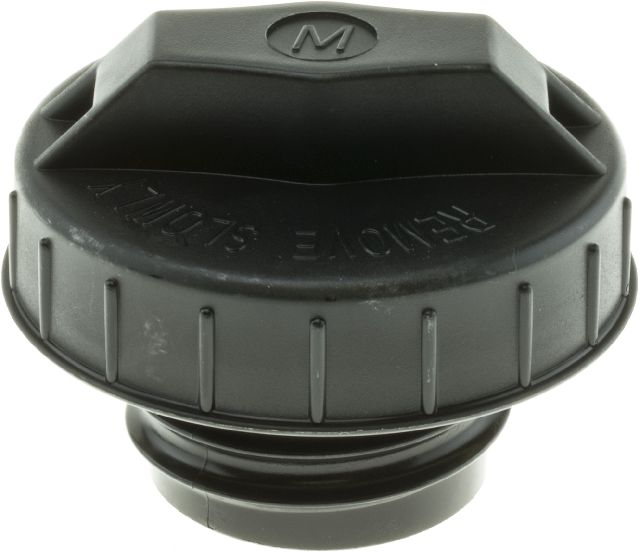
On a 2015-2019 Subaru Outback, the P0455 code is most often caused by a loose or faulty gas cap. Before buying any parts, check that the cap is tight and clicks several times. A new OEM gas cap (Part No. 42031FJ001) is an inexpensive first step if the light returns, costing around $25-$40. This code will also disable safety features like EyeSight and cruise control until resolved.
- Always check your gas cap first for a P0455 code. Ensure it is tight and the seal is in good condition.
- On a 2015-2019 Outback, an EVAP code will also disable systems like EyeSight and cruise control; this is normal and will resolve when the check engine light is cleared.
- Driving with a P0455 code is not harmful to your engine, but it will cause you to fail an emissions test.
- If a new gas cap doesn't fix the issue, the next most likely culprits are the purge valve (in the engine bay) or a cracked hose.
- A professional smoke test is the fastest way to accurately diagnose a leak if it isn't obvious.
What's Unique About the 2015-2019 Subaru Outback

On the 5th generation Subaru Outback (2015-2019), any check engine light, including one for an EVAP code like P0455, will typically cause the vehicle to disable other systems like EyeSight, cruise control, and RAB (Reverse Automatic Braking) as a safety precaution. The dashboard will light up with multiple warnings, which can be alarming but is normal behavior for this platform designed to get the driver's attention. These systems will be restored once the underlying check engine light fault is corrected and cleared. This generation also uses a sensitive Electronic Leak Check Module (ELCM) that performs vacuum-based self-tests, making diagnosis different from older, pressure-based systems.
Symptoms You May Notice
- Check Engine Light is on
- Multiple other warning lights: EyeSight disabled, RAB off, flashing cruise control, Vehicle Dynamics Control warning
- A faint to strong smell of gasoline, especially around the rear of the vehicle or after refueling
- Audible 'click' from the gas cap when tightening may be missing if the cap is worn
- Difficulty filling the fuel tank (gas pump nozzle clicks off repeatedly) can indicate a vent-side blockage rather than a leak
- Replacing the O2 sensors. Oxygen sensors are part of the exhaust system and have no connection to the EVAP system.
- Replacing the catalytic converter. This is an expensive exhaust component that is unrelated to the P0455 code.
Most Likely Causes


- Loose, Damaged, or Incorrect Gas Cap 🔴 High Probability This is the most common cause for a P0455 code on any vehicle, including the Outback, due to user error (not tightening enough) or simple wear and tear of the cap's seal over time. Many owner reports on forums like subaruoutback.org and Reddit confirm this is the first and most frequent fix.
How to confirm: Remove the gas cap and inspect the rubber O-ring for cracks, dirt, or stiffness. Ensure it is the correct OEM cap for the vehicle. Reinstall it and turn it until it clicks multiple times (at least 3 clicks are recommended). Clear the code and see if it returns after a few drive cycles.
Typical fix: Tighten the cap or replace it with a new OEM part (Subaru P/N: 42031FJ001).
Est. part cost: $25-$40 - Faulty Purge Control Solenoid/Valve 🟡 Medium Probability This valve is located in the engine bay and cycles frequently, leading to eventual failure where it can stick open, creating a large leak path directly to the engine intake.
How to confirm: With the engine off, you can remove the valve and try to blow through it; it should be closed and not allow air to pass. A mechanic can command it open and closed with a scan tool to test its function or use a smoke machine to see if smoke passes through it when commanded closed.
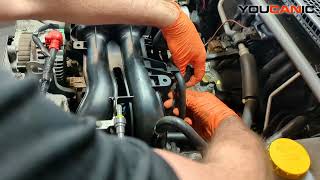
Typical fix: Replace the purge control solenoid. 🎬 Watch: How to replace the purge valve solenoid For 2.5L engines, use P/N 16131AA060. For 3.6L engines, use P/N 16102AA500.
Est. part cost: $40-$90 - Cracked or Disconnected EVAP Hoses 🟡 Medium Probability Rubber hoses throughout the EVAP system can become brittle and crack over time due to age and exposure to engine heat and outdoor elements, particularly at connection points near the engine or the rear canister.
How to confirm: Visually inspect all accessible EVAP lines, from the engine bay to the charcoal canister at the rear. Look for obvious cracks, loose connections, or disconnections. A smoke test is the most effective way to find a leak in a hose that isn't visually obvious.
Typical fix: Replace the damaged section of hose or reconnect it.
Est. part cost: $10-$50 - Faulty Canister Vent Valve/Solenoid ⚪ Low Probability This valve, located near the charcoal canister at the rear of the car, can fail and get stuck open, preventing the system from sealing for its pressure test. On this generation Outback, the vent valve is often integrated with the charcoal canister and may be serviced as a single assembly.
How to confirm: This valve is normally open and closes when commanded by the ECM. Diagnosis typically requires a bi-directional scan tool to command the valve shut and see if it holds a vacuum, or a smoke test to see if smoke escapes through it when it should be closed.
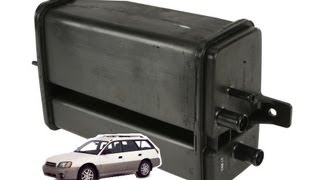
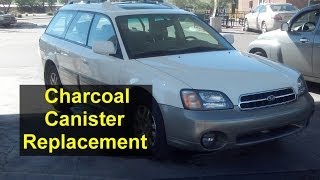
Typical fix: Replace the vent valve or the entire charcoal canister assembly 🎬 Watch: Step-by-step charcoal canister replacement walkthrough if integrated.
Est. part cost: $50-$120 (if separate), $250-$400 (for canister assembly) - Cracked Charcoal Canister ⚪ Low Probability The plastic canister (P/N: 42035AL04A), located under the rear of the car, can be damaged by road debris or become saturated and internally blocked from consistently over-filling the fuel tank past the first click. This saturation can damage the canister and associated valves.
How to confirm: Visually inspect the canister for any visible cracks or damage. If you frequently 'top off' your tank after the pump clicks off, the canister may be fuel-saturated, which can sometimes be detected by a strong, persistent fuel smell near the canister itself.
Typical fix: Replace the charcoal canister assembly.
Est. part cost: $200-$350
Rare But Worth Checking
- Leaking Fuel Filler Neck: Rust or corrosion on the metal tube leading to the gas tank can create perforations, causing a large leak. This is more common in regions that use road salt and can often be found with a smoke test.
- Spider Webs in Vent Hose: Certain types of spiders are attracted to gasoline vapors and have been known to build nests inside EVAP vent hoses. This creates a blockage, not a leak, but can sometimes trigger EVAP codes like P0455 or, more commonly, restriction codes like P1449. This is a known, if quirky, issue on various Subaru models.
- Damaged Fuel Tank: While very rare, damage to the fuel tank itself 🎬 See how the charcoal canister works in this system can cause an EVAP leak. This would likely be accompanied by a strong fuel smell and potentially visible fuel leakage.
Diagnosis Steps

- Check the Gas Cap: This is the number one cause. Remove the cap, inspect the seal for damage, and retighten it until it clicks at least 3 times.
- Clear the Code: Use an OBD-II scanner to clear the P0455 code. Many auto parts stores offer this service for free.
- Drive the Vehicle: Drive for a few days (several drive cycles) to allow the car's computer to run its EVAP system self-test. If the light does not return, the gas cap was the issue.
- Visual Inspection: If the light returns, visually inspect the EVAP system. Check the purge valve under the hood and all visible hoses for obvious cracks, damage, or loose connections.
- Inspect Under the Vehicle: Safely raise the vehicle and inspect the charcoal canister (near the rear suspension) and the attached vent valve and hoses for any signs of damage or spider webs in the vent line outlet.
- Perform a Smoke Test: If no visual issues are found, the most reliable way to find the leak is with a smoke machine. This involves feeding low-pressure smoke into the EVAP system (usually via a service port) and watching where it escapes. This is often best left to a professional but is the definitive diagnostic step.
- Test Components: If a smoke test reveals no leaks, a mechanic can use a professional bi-directional scan tool to command the purge and vent valves to open and close, verifying their electrical function.
Parts You'll Likely Need
- Fuel Cap
(OEM #42031FJ001 (supersedes 42031FJ000))— This is the most frequent cause of a P0455 code. The seal wears out over time or the cap is not tightened properly.
Trusted brands: Subaru (OEM)
OEM price range: $25-$40
Aftermarket price range: $15-$30 - Vapor Canister Purge Valve
(OEM #16131AA060 (for 2.5L) / 16102AA500 (for 3.6L))— This valve can get stuck open, creating a permanent leak path from the EVAP system to the engine intake.
Trusted brands: Denso, Bosch, Subaru (OEM)
OEM price range: $60-$110
Aftermarket price range: $40-$90 - Vapor Canister Assembly
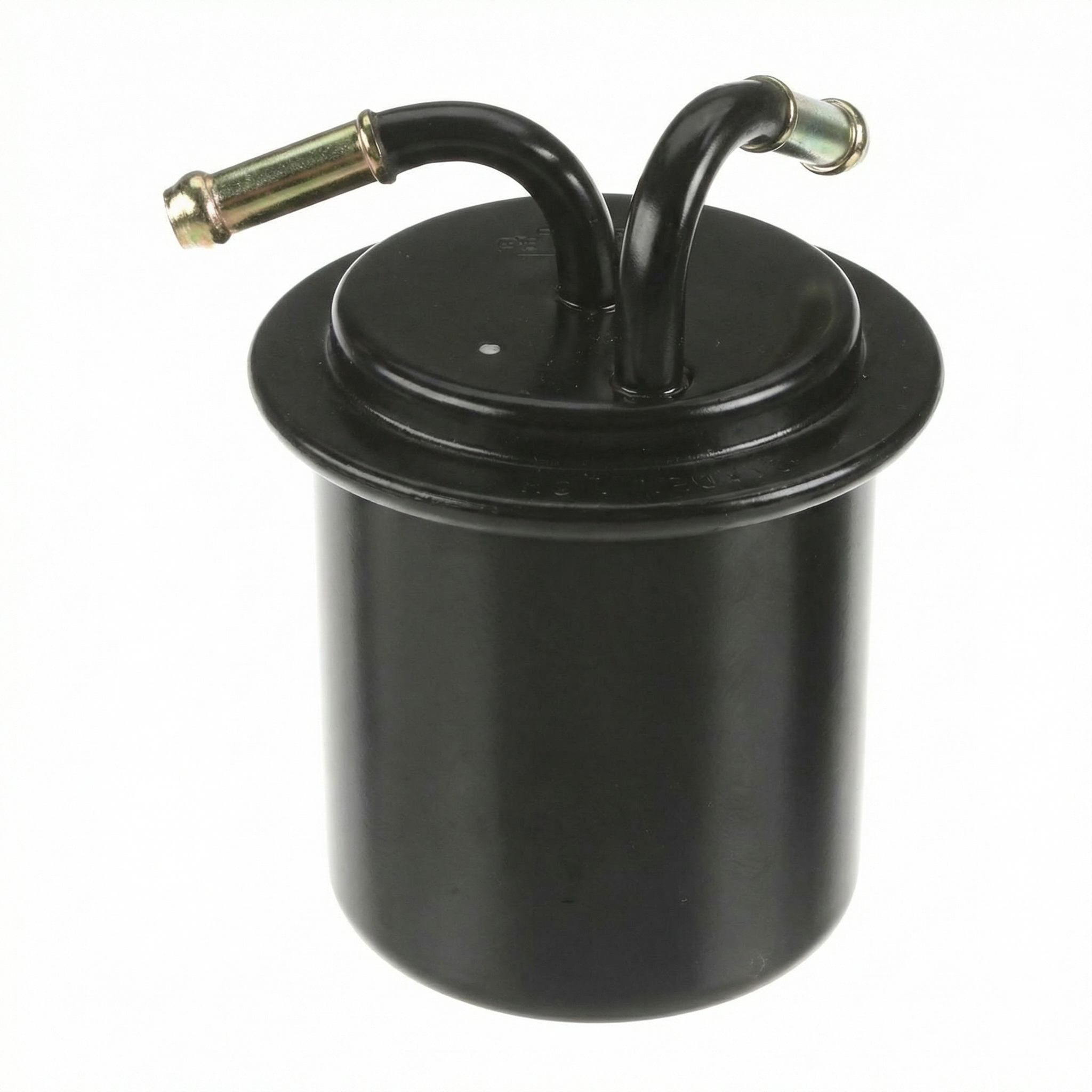
(OEM #42035AL04A)— Used to fix a cracked canister or a failed integrated vent valve. Located at the rear of the car, the vent valve can fail to close when the system runs its self-test, causing the test to fail.
Trusted brands: Subaru (OEM)
OEM price range: $250-$400
Aftermarket price range: $180-$300
Related Codes That Often Appear With This One
- P0457 — This code specifically indicates a leak detected due to a loose or missing fuel cap, which is a common cause of P0455.
- P0442 — This indicates a small EVAP leak. Sometimes a problem can be intermittent or on the threshold between a small and large leak, causing either or both codes to appear.
Technical Service Bulletins (TSBs) & Recalls
- TSB 11-176-17: While not a direct fix for P0455, this TSB was issued for 2015-2016 models to reprogram the ECM to optimize battery charging logic. If you are experiencing strange electrical issues or a dead battery in conjunction with a P0455, it's worth checking if this update has been performed, as a stable electrical system is crucial for all vehicle modules.
Platform-Specific Known Issues
- Spider Nests: Subarus are somewhat known for spiders building webs in the EVAP canister vent hose, which can cause a blockage and trigger various EVAP codes. While this typically causes a restriction code (P1449), it's worth inspecting the vent outlet.
Mechanic-Grade Diagnostic Values
- EVAP Purge Control Solenoid Resistance — expected: 30-38 ohms (general spec). Failure: A reading significantly outside this range, or an open/short circuit, indicates a faulty solenoid.
- EVAP Canister Vent Solenoid Resistance — expected: 25-50 ohms (based on older Subaru models). Failure: A reading outside the expected range suggests a problem with the solenoid's coil.
- ELCM (Electronic Leak Check Module) Self-Test — expected: A specific graph shape showing the system pulling down to a target vacuum level and holding it. The test runs in phases, comparing the sealed system to a reference orifice to check for leaks.. Failure: The SSM4 tool will show a graph of the EVAP system pressure. If the system fails to pull a vacuum, or the vacuum decays too quickly, it indicates a leak. The shape of the graph helps diagnose the fault type.
Hidden / Shadow Codes Worth Checking
- P2404: Evap System Leak Detection Pump Sensor Circuit Range/Performance. While not a sub-code for P0455, this code can be triggered on 2016-2019 models due to a related ELCM issue. (see via Standard OBD-II scanner. TSB 09-109-23 addresses this code, noting that condensation can build up in the leak check module, requiring an ECM software update to add a 'cleaning mode'.)
Scan Tool Commands That Help
- Subaru Select Monitor 4 (SSM4): EVAP System Line Test (ELCM Forced Self-Test) — This is the primary diagnostic step for any EVAP code on this vehicle, to be used BEFORE a smoke test. It forces the ELCM to perform its vacuum-based self-test with the engine off. The test takes 15-30 minutes and the resulting data graph is used to determine the location and nature of the leak, or if the ELCM itself is faulty.
Wiring & Ground Locations
- Engine Block Grounds — On top of the engine block, often near the intake manifold. There are typically several ring terminals stacked on a single bolt.. These ground points are for the main engine wiring harness, which includes circuits for EVAP system components like the purge solenoid. A corroded or loose ground can cause intermittent electrical issues with these components, leading to fault codes.
- Chassis to Engine Ground Strap — A braided metal strap connecting the engine block to the vehicle's frame/chassis, often low down on the passenger side.. While less likely to cause a specific EVAP code, a poor main ground strap can cause a host of unpredictable electrical issues throughout the vehicle's systems. It's a foundational check for any electrical problem.
"I Checked Everything" — The Actual Cause
- On this generation of Subaru Outback, the diagnostic approach is inverted. Subaru explicitly warns technicians NOT to use a smoke machine as the first step for EVAP codes. The system uses a sensitive Electronic Leak Check Module (ELCM) that operates on vacuum and can be contaminated by the oil in smoke machine vapor. The correct procedure is to use the Subaru Select Monitor (SSM4) to run a forced self-test. A scenario equivalent to 'smoke test clean' would be running the SSM4 test and having it fail in a specific way. The resulting graph of the system's vacuum level over time provides the real diagnosis, pointing to issues like a faulty ELCM pump, a stuck valve, or a leak that the test can quantify, even if a smoke test would show nothing.
OEM Part Supersession History
42031FJ000→42031FJ001— Standard part revision/update by the manufacturer.
Model Year Variations Within This Range
- 2015-2019: Subaru produced these vehicles with two different emissions systems: standard Federal (LEV2) and Partial Zero Emissions Vehicle (PZEV). The vapor canisters are different between the two. You must verify which system your vehicle has via the underhood emissions sticker before ordering a replacement canister.
- 2016-2019: These model years are specifically mentioned in TSB 09-109-23 regarding potential condensation issues in the Electronic Leak Check Module (ELCM) that can trigger code P2404. The fix is a dealer-installed software update.
Diagnostic Flowchart
Real Owner Stories
Aggregated from forums and TSBs cited above. Mileages and costs reflect what owners reported in those sources.
Subaru Outback
Symptoms: P0455 code appeared.
What fixed it: The dealer replaced the gas cap and cleared the code, which solved the problem.
Source hint: subaruoutback.org - Thread: 'P0455 Code - What to do?'
2021 Subaru Forester
Symptoms: Check Engine Light on, EyeSight off, and a blinking 'S' mode.
What fixed it: The dealer performed a vacuum leak check and purge valve test, found no issues, and concluded the gas cap was the likely culprit.
Source hint: reddit.com/r/SubaruForester - Thread: 'P0455 Code'
Subaru Outback
Symptoms: P0455 code persisted even after installing a brand new OEM gas cap.
What fixed it: Owners recommended proceeding with a smoke test to find the leak elsewhere in the EVAP system.
Source hint: reddit.com/r/Subaru_Outback - Thread: 'Code P0455 - Gas cap is not the issue. Brand new OEM cap'
Documented NHTSA Reports
Subaru Forester (Cross-Model Reference)
Symptoms: An owner reported a diagnosis of error code P0455 after taking the vehicle to a dealership.
What fixed it: According to NHTSA ODI #11637451, the technician found that the gas cap was secured, reset the code, and test drove the car to verify the repair.
Source hint: NHTSA ODI #11637451
Related OBD-II Codes
Frequently Asked Questions
Why did my EyeSight and cruise control turn off when the P0455 code appeared on my Outback?
What is the correct OEM gas cap part number for my 2015-2019 Outback?
Does TSB 11-176-17 apply to my P0455 code?
I have a 3.6R Outback. What is the part number for the purge control solenoid?
Could spider webs really cause an EVAP code on my Subaru?
I replaced the gas cap but the P0455 code came back. What is the next step for my Outback?
Helpful Videos
Used OEM Parts in Stock
New Aftermarket Parts Available


The information in this article is provided for general reference and educational purposes only. Vehicle specifications, procedures, and part compatibility can vary by production date, trim level, and region. Always consult your vehicle's factory service manual and verify part numbers before purchasing or performing repairs. Safety-critical components such as airbags, seat belts, and braking systems should be installed by a qualified professional.
- Subaru Outback:
- 🎬 Helpful Videos
- 🛍️ Shop This Part
- What's Unique About the 2015-2019 Subaru Outback
- Symptoms You May Notice
- Most Likely Causes
- Rare But Worth Checking
- Diagnosis Steps
- Parts You'll Likely Need
- Related Codes That Often Appear With This One
- Technical Service Bulletins (TSBs) & Recalls
- Platform-Specific Known Issues
- Mechanic-Grade Diagnostic Values
- Hidden / Shadow Codes Worth Checking
- Scan Tool Commands That Help
- Wiring & Ground Locations
- "I Checked Everything" — The Actual Cause
- OEM Part Supersession History
- Model Year Variations Within This Range
- Diagnostic Flowchart
- Real Owner Stories
- Subaru Outback
- 2021 Subaru Forester
- Subaru Outback
- Documented NHTSA Reports
- Subaru Forester (Cross-Model Reference)
- Related OBD-II Codes
- Frequently Asked Questions
- 🎟️ Get 5% Off