

The Definitive Guide to OBD-II Code P1449 (2026 Update)
Why P1449 is More Than Just an EVAP Code: A Deep Dive for BMW, Subaru, Honda & More
- Always verify your vehicle's specific P1449 definition, as it means a failed DMTL pump on a BMW, a clogged vent filter on a Subaru, or a failing high-voltage battery on a 2000-2006 Honda Hybrid.
- You can safely drive with a P1449 code, but you will automatically fail state emissions tests and experience premature gas pump shutoffs during refueling.
- Do not authorize a $150+ EVAP smoke test until a mechanic physically inspects the vent filter and tests the specific pump or solenoid indicated by the code.
- Diagnosing a P1449 electrical fault requires a bi-directional scanner to command the DMTL pump or vent solenoid on, checking for a current draw spike above 30mA.
- Stop topping off your gas tank; forcing extra fuel past the first click saturates the charcoal canister, turning a $40 filter replacement into a $700 repair.
What Does P1449 Mean?

P1449 is a manufacturer-specific diagnostic trouble code (DTC) indicating your car's Engine Control Unit (ECU) detected a fault within the Evaporative Emission Control (EVAP) system's diagnostic or venting circuit. The EVAP system tests your fuel system for vapor leaks. Unlike a generic leak code, P1449 points to a specific component failure—such as a clogged filter, a seized test pump, or a malfunctioning valve—that prevents the EVAP self-test from running.
Technical definition: Because P1449 is manufacturer-specific, its exact definition changes by vehicle brand. For BMW, it means 'Diagnostic Module Tank Leakage (DMTL) Pump Current Too High,' indicating a seized or clogged test pump. For Subaru, it means 'EVAP System Air Filter Clogged,' pointing to a physical blockage in the vent path. For 1998-2005 Hondas, it indicates a failed 'EVAP Canister Vent Solenoid Valve'. For 2000-2006 Honda Hybrids, it signifies a critical 'Battery Module Overheating' issue. On certain Kia models, it bizarrely refers to a 'Power Seat Slide Motor Pulse Error,' completely unrelated to the engine.
Can I Drive With P1449?
Yes, But With Caution. Yes, you can drive your vehicle, but repair it within a few weeks. The code indicates an emissions system fault that will not disable your engine. However, ignoring it guarantees an automatic failure on state emissions tests. For vehicles like Subaru, a persistent clog forces liquid fuel into the charcoal canister, turning a $40 filter replacement into a $700+ repair. A noticeable fuel smell indicates escaping vapors, creating a mild safety hazard. Prolonged driving (over 500 miles) with a malfunctioning EVAP system alters fuel trims and damages the catalytic converter.
Common Causes

- Seized DMTL Pump (BMW/Mini) (Very Common) — The small electric motor inside the Diagnostic Module Tank Leakage (DMTL) pump fails electrically or clogs with debris. This causes it to draw excessive current (>30mA), triggering the code.
- Clogged EVAP Vent Filter (Subaru) (Very Common) — Spiders build webs and nests inside the EVAP system's vent hose or filter box, creating a physical blockage. This is so prevalent that Subaru issued TSBs with redesigned, protected parts.
- Failed Vent Solenoid (Honda/GM) (Common) — This electrically-operated valve controls fuel vapor flow. It sticks open or closed, or the internal solenoid coil fails entirely, preventing the system from venting.
- Leaking Gas Cap (Common) — A gas cap with a cracked or missing seal disrupts the EVAP system's pressure test. Always verify the gas cap is tight and sealed before replacing complex parts.
- Fuel-Saturated Charcoal Canister (Less Common) — Consistently overfilling the gas tank (topping off after the pump clicks) forces liquid gasoline into the vapor-only charcoal canister. This saturates the charcoal, creating a clog that destroys the canister and causes repeat DMTL pump failures.
- Ice Intrusion in Vent Hoses (Less Common) — On Subarus in cold climates, ice and snow clog the EVAP drain separator (addressed in TSB 11-123-12). High-pressure underbody car washes also force water into the vent system, causing temporary blockages.
- Corroded Wiring Harness (Rare) — Wires leading to the DMTL pump or vent solenoid corrode, fray, or suffer rodent damage. This causes a short circuit ('current too high') or open circuit.
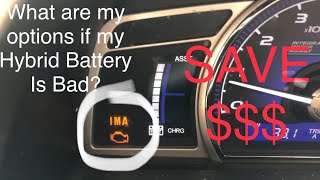
- Overheating IMA Battery (Honda Hybrid) (Rare) — Uniquely on 2000-2006 Honda Insight and Civic Hybrids, P1449 indicates 'Battery Module Overheating' or 'Battery Module Deterioration' within the high-voltage IMA battery pack, requiring immediate specialist attention.
Symptoms

- Difficulty Refueling — The fuel pump nozzle clicks off repeatedly and prematurely. A clog in the EVAP vent path prevents displaced air from escaping the tank as fuel enters.
- Raw Fuel Smell — A distinct smell of raw gasoline near the rear of the vehicle occurs as trapped or leaking fuel vapors escape the pressurized system.
- Failed Emissions Test — The vehicle automatically fails state emissions or smog inspections because the EVAP monitor cannot complete its self-test.
- Check Engine Light is On (also visible on scanner) — The primary symptom. On Subarus, this is accompanied by flashing ABS, traction control, cruise control, and EyeSight warning lights—a normal ECU safety protocol.
Diagnostic Flowchart
Tap your situation to follow the diagnostic path that matches what you're seeing on this code.
Common Fixes & Costs
- Replace DMTL Pump (BMW/Mini) — Parts: $85-$230, Labor: $150-$250, ~1.2 hr book time (Intermediate)
- Replace EVAP Vent Filter (Subaru) — Parts: $30-$60, Labor: $100-$250, ~1.5 hr book time (DIY)
- Replace EVAP Canister Vent Solenoid (GM/Honda) — Parts: $40-$120, Labor: $75-$150, ~1 hr book time (Intermediate)
- Replace Gas Cap — Parts: $15-$60, Labor: $0, ~0.1 hr book time (DIY)
- Replace Saturated Charcoal Canister — Parts: $200-$500, Labor: $150-$600, ~2 hr book time (Intermediate)
- Replace High-Voltage IMA Battery (Honda Hybrid) — Parts: $2,000-$8,000+, Labor: $500-$800, ~4.5 hr book time (Professional)
Used vs. New Parts: Buying Guide
When a used part is worth it: For simple mechanical parts like brackets or hoses, a used part is acceptable. For complex electronic components like a DMTL pump or vent solenoid, buying new is mandatory.
Donor-vehicle mileage cap: roughly under 60000 miles for the part to have meaningful remaining life.
Donor quality checklist:
- Verify the donor vehicle was not scrapped for an emissions-related failure.
- Avoid parts from regions with heavy road salt usage.
- Match the part number exactly; superseded parts may not function correctly.
Decision logic:
- If The part is electronic (DMTL pump, solenoid) and costs < $250 new → Always buy new. The risk of a used part failing due to unknown history is too high.
- If The part is a charcoal canister and the vehicle has > 100K miles → Used is a gamble. Canisters are a wear item. Only consider from a very low-mileage wreck.
- If The part is a simple filter or hose → Buy new. These parts are inexpensive and critical to proper function.
Warranty tradeoff: Salvage yards offer a 30-90 day warranty. New aftermarket parts have a 1-year to limited lifetime warranty. New OEM parts carry a 1-2 year warranty.
Worst-case if a used part fails: $300-$600 if a used electronic part fails after the warranty period, requiring a second repair.
What Happens If You Wait — Timeline
- 0-1 month: Code P1449 is stored. The car is drivable but fails OBD-II emissions tests. The gas pump clicks off during refueling. (MPG impact: 0-2%% · Added cost: $0)
- 1-6 months: Difficulty refueling becomes frequent. A faint fuel smell is noticeable near the rear of the car. The clogged vent path stresses other components. (MPG impact: 1-5%% · Added cost: $20-$80 in wasted fuel and failed emissions re-test fees.)
- 6-12 months: A persistent clog forces fuel vapors to find other escape routes, saturating the charcoal canister with liquid fuel and permanently damaging it. (MPG impact: 3-8%% · Added cost: $400-$1000 (Cost to replace a saturated charcoal canister).)
- 12+ months: A non-functional EVAP system leads to long-term incorrect fuel mixtures, overheating and damaging the catalytic converter. (MPG impact: 5-15%% · Added cost: $1500-$3000 (Cost to replace a damaged catalytic converter and EVAP parts).)
Cost of Not Fixing It
- 0-3 months: Automatic failure of any state emissions test. Noticeable fuel smell and difficulty refueling. (Added cost: $50-$100 (Failed test fees and re-tests))
- 3-12 months: A persistent clog forces liquid fuel to saturate the charcoal canister, destroying it. This turns a simple filter fix into an expensive canister replacement. (Added cost: $400-$1000)
- 12+ months: A completely non-functional EVAP system alters fuel mixtures, eventually overheating and damaging the catalytic converter. (Added cost: $1200-$2800)
Diagnosis Steps
- Verify the Code Definition
Use an OBD-II scanner capable of reading manufacturer-specific codes. Confirm the exact definition for your vehicle's make and model. A P1449 on a Honda Hybrid (battery issue) requires a completely different approach than on a Subaru (EVAP clog).
Tools: OEM-level OBD-II Scanner (Beginner) - Check the Gas Cap
Inspect the gas cap seal for cracks. Reinstall it and turn until you hear several clicks. Clear the code and drive for a day. This is a mandatory first step for any EVAP code.
Tools: None (Beginner) - Visual Inspection of EVAP Components
Look under the car near the gas tank and charcoal canister. Check for cracked, disconnected, or chewed rubber hoses and electrical wires. On a Subaru, inspect the vent filter box near the rear passenger wheel for spider webs.
Tools: Flashlight, Jack and Jack Stands (Beginner) - Inspect and Replace the Vent Filter (Subaru)
Locate the EVAP drain/vent filter assembly near the rear passenger-side wheel. Disconnect the hose and inspect for blockages. Replace the filter (Part #42085FL00B) rather than cleaning it, as debris lodges deep inside the housing.
Tools: Pliers, Socket Set (Intermediate) - Test the DMTL Pump Circuit (BMW/Mini)
Use a bi-directional scan tool to command the DMTL pump on. Monitor live data for pump current. A healthy pump draws under 30mA. A current spike confirms the motor is jammed. If the pump doesn't run, use a multimeter to verify 12V power at the connector with the key on.
Tools: Bi-directional OBD-II Scanner, Multimeter (Advanced) - Test the Vent Solenoid (Honda/GM)
Disconnect the electrical connector. Set a multimeter to Ohms (Ω) and measure resistance between the solenoid pins (typically 20-30 Ohms). An infinite reading (OL) means an open coil. Next, apply 12V and ground directly to the pins using jumper wires; a seized solenoid will not 'click'.
Tools: Multimeter, Jumper Wires (Advanced) - Analyze Fuel Tank Pressure (FTP) Data
Monitor the FTP sensor PID with a graphing scan tool. With the engine off, it should read 0 in-H2O. When the EVAP monitor runs, pressure changes. A system unable to release pressure/vacuum and return to 0 in-H2O when commanded open confirms a physical clog.
Tools: Graphing OBD-II Scanner (Advanced) - Perform a Smoke Test
If a clog is suspected but invisible, fill the EVAP system with visible smoke under low pressure (less than 1.0 PSI). If the system is clogged, smoke will not flow through the vent path, pinpointing internal blockages in the charcoal canister.
Tools: EVAP Smoke Machine (Professional)
When This Code Triggers (Freeze-Frame Conditions)
- Engine Coolant Temp: 170-220°F (77-104°C) (Engine must be fully warmed up for most EVAP tests to run.)
- Fuel Level: 15-85% (The EVAP monitor will not run on a full or nearly empty tank to ensure consistent test results.)
- Ambient Air Temp: 40-95°F (4-35°C) (The test is disabled in extreme cold or hot temperatures.)
- Vehicle Speed: 45-65 mph (The test often runs during steady-state highway cruising.)
Related Codes
- P1447 — Sister Code (BMW): P1449 is 'DMTL Pump Current Too High' (jammed motor), while P1447 is 'DMTL Pump Current Too Low' (open circuit). Both point to the DMTL pump.
- P0449 — Related Fault (GM): The generic equivalent for 'EVAP Vent Solenoid Circuit Malfunction'. On GM vehicles, this is the more common code for the same failed part.
- P0442 — Differentiation: P1449 is a component fault (bad pump/clog), while P0442 indicates a 'Small EVAP Leak'. A bad DMTL pump prevents the leak test from running, triggering false leak codes.
- P0441 — Differentiation: P1449 relates to the venting/self-test side. P0441 ('Incorrect Purge Flow') points to a problem with vapor flow to the engine intake, usually a faulty purge valve.
Climate & Environmental Factors
- Cold Weather / Snow: On Subaru Foresters, heavy snow and ice clog the EVAP drain separator and vent hoses, directly causing a P1449 code. Subaru issued TSB 11-123-12 with a hose kit to prevent this.
- Geographic Location (Spiders): The spider web clog in Subaru vent filters is prevalent in regions with high populations of Yellow Sac Spiders, which are attracted to gasoline vapors.
- High Dust Environments: Driving frequently on dusty or gravel roads accelerates the clogging of the EVAP vent filter, especially on Subarus where the filter inlet is exposed.
- High Humidity: High humidity contributes to corrosion on electrical connectors for EVAP components like the DMTL pump or vent solenoid, leading to circuit-related fault codes.
How to Talk to a Mechanic About This Code
Say this: "I have a P1449 code on my [Make/Model]. Based on the vehicle, I suspect it's the [DMTL pump / clogged vent filter / vent solenoid]. I'd like to schedule a diagnostic to confirm the specific component failure. Do not perform a smoke test until you physically test the specific component."
This signals you understand P1449 is a component-specific code, not a random leak. It prevents the shop from starting with an unnecessary $150 smoke test and protects you from premature charcoal canister replacements.
Avoid saying:
- 'My check engine light is on, can you look at it?' (Invites a broad, expensive diagnostic process.)
- 'I think I have an EVAP leak.' (P1449 is a component fault, not a leak; this leads them down the wrong path.)
- 'Just fix whatever is wrong.' (Gives the shop a blank check.)
Questions to ask before authorizing the repair:
- Did you test the specific component? (e.g., 'Did you command the DMTL pump on and check the current draw?')
- If you recommend a charcoal canister replacement, can you show me evidence it is saturated with fuel?
- Is the replacement part OEM or aftermarket, and what is the warranty?
Where to Take It: Dealer vs Independent vs Chain
- Dealer:
Recommended for warranty work or TSBs. For out-of-warranty P1449 issues, an independent shop is more cost-effective.
Best for: Vehicles under emissions warranty., Complex issues like the Honda Hybrid battery fault., Applying TSBs, like the redesigned Subaru vent filter.
Downsides: Significantly higher labor rates., Prone to replacing entire assemblies (like the charcoal canister) when only a small part failed. (Typical cost: +60% vs. baseline) - Independent Shop:
Best fit for most P1449 scenarios, especially if you find a shop specializing in your car's make.
Best for: Out-of-warranty vehicles with documented P1449 causes (Subaru vent filters, BMW DMTL pumps)., Lower labor costs.
Downsides: Quality varies; ensure the shop has access to manufacturer-specific diagnostic tools. (Typical cost: +0% vs. baseline) - Chain Shop:
AVOID for P1449 diagnosis. The risk of misdiagnosis is high due to the code's manufacturer-specific nature.
Best for: Simple repairs like a gas cap replacement.
Downsides: Technician experience is inconsistent., Lacks the bi-directional scan tools needed to diagnose component-level EVAP faults. (Typical cost: -10% vs. baseline)
When to Walk Away From the Repair
If the estimated repair cost for the P1449 fault exceeds 50% of your car's private-party value, consider selling or trading in the vehicle.
- Car worth $4000, fix is $350: Fix it. This is a minor cost that restores full function.
- Car worth $3000, fix is $2500: Walk away. This applies to the Honda Hybrid battery failure scenario, where repair costs are prohibitive.
- Car worth $8000, fix is $1200: Borderline. Occurs if a saturated canister destroyed a DMTL pump. Get a second opinion.
What Scan Tool You Need for This Code

Minimum: A scanner that reads manufacturer-specific code definitions.
A generic $20 code reader says 'manufacturer-specific code' without specifying if it's a BMW DMTL pump, a Subaru clog, or a Honda Hybrid battery.
Budget: BlueDriver Pro (~$100) — Reads manufacturer-specific P1449 definitions, views live fuel tank pressure data, and checks EVAP readiness monitors.
Mid-range: Foxwell NT510 Elite / Innova 5610 (~$150-350) — Provides bi-directional control to command the DMTL pump or vent solenoid on/off, confirming component function and avoiding guesswork.
Professional: Autel MaxiCOM MK808 / Launch X431 Series (~$450-600) — Offers dealer-level bidirectional control, performs system-wide EVAP leak tests, and provides advanced live data graphing.
Rent vs buy: Auto parts stores rent basic code readers, but these rarely provide the specific definition for P1449. Investing in a mid-range scanner with bi-directional control is mandatory for DIY diagnosis.
How to Clear the Code After You Fix It
- Use an OBD-II scan tool to clear the diagnostic trouble codes.
- Perform a complete drive cycle to allow the EVAP readiness monitor to run.
- Verify the monitor status has changed to 'Ready' or 'Complete' using the scan tool.
Drive cycle (~30 minutes): A generic drive cycle includes a cold start (after an 8+ hour soak), 2-3 minutes of idling, 5-10 minutes of city driving (25-45 mph), and 15 minutes of steady highway driving (50-65 mph).
Readiness monitors affected: EVAP System, Catalyst Monitor, O2 Sensor Monitor
Before emissions retest: drive at least 100 miles to fully set monitors.
Watch out for:
- Disconnecting the battery clears the code but resets all readiness monitors, requiring a lengthy drive cycle to pass an emissions test.
- The EVAP monitor is notoriously difficult to set and requires several cold-start drive cycles over multiple days.
- The code returns immediately if the underlying mechanical or electrical fault is not repaired.
Will This Fail Emissions / State Inspection?
Yes — this code typically fails an OBD-II emissions inspection.
- California: An active P1449 is an automatic test failure. While CA allows a vehicle to pass with the EVAP monitor 'Not Ready', an active fault code is an immediate fail.
- New York: Any active Diagnostic Trouble Code that illuminates the Check Engine Light, including P1449, results in an automatic failure.
- Texas: In the 17 counties requiring emissions testing, an illuminated Check Engine Light for P1449 causes the vehicle to fail the OBD portion of the inspection.
Most Commonly Affected Vehicles
- BMW 3-Series (E46, E90), 5-Series, X3, X5 (2002-2013) — Extremely prone to DMTL pump failure due to internal motor seizure. The OEM part is made by Bosch (Part #0261222018).
- Subaru Crosstrek, Impreza, Forester, WRX, Ascent (2013-2024) — Frequently suffer clogged EVAP vent filters from spider webs. Subaru issued TSB #11-205-25R with a redesigned filter (Part #42085FL00B).
- Honda Accord, Civic (1998-2005) — Commonly caused by a failed EVAP canister vent solenoid (Part #17310-S5A-L31) located near the charcoal canister.
- Chevrolet / GMC Silverado, Sierra, Tahoe, Suburban (2004-2014) — Triggered by a failed EVAP vent valve solenoid. GM released an updated part that relocates the filter to a less exposed area.
- Toyota Corolla, Camry (2014-2023) — Defined as 'EVAP System Purge Flow Fault,' typically caused by a faulty purge flow sensor or a cracked purge hose.
- Volkswagen Golf, Jetta, Passat (2005-2015) — On some models, it means 'Catalyst Temperature Sensor 2 Circuit Open/Short', completely unrelated to the EVAP system.
- Kia Sorento, Optima (2011-2018) — Can indicate a standard EVAP fault or a 'Power Seat Slide Motor Pulse Error'. Verify with a professional scan tool.
- Honda Insight, Civic Hybrid (2000-2006) — Indicates a critical high-voltage battery problem ('Battery Module Overheating'). Requires immediate attention from a hybrid specialist.
Manufacturer-Specific Notes

- BMW / Mini: The code almost always means the DMTL pump failed. A common mistake is replacing the pump without checking for a fuel-saturated charcoal canister, which causes the new pump to fail prematurely.
- Subaru: The cause is famously a spider web clog in the EVAP vent filter. A common diagnostic mistake is replacing the entire $500 canister assembly when only the $40 vent filter is clogged.
- Honda (Hybrid): On early hybrids, P1449 indicates a problem with the high-voltage IMA battery module, not the EVAP system. This requires a hybrid specialist and can lead to total IMA system failure.
- Kia: This code has two completely different meanings: an EVAP system fault or a 'Power Seat Slide Motor Pulse Error'. Careful verification with a high-quality scan tool is mandatory.
Real Owner Stories
2014 Subaru Crosstrek with P1449
Check Engine Light and dash lights illuminated. The gas pump nozzle clicked off repeatedly during refueling.
What they tried:
- Tightened the gas cap and reset the code, but the light returned.
- The dealership replaced the charcoal canister, but the code came back.
Outcome: On the third visit, a technician found a spider web blocking a valve in the EVAP system. After cleaning the blockage, the code was cleared permanently.
Lesson: On a Subaru, P1449 is frequently caused by spider webs in the vent hose. Do not replace the expensive charcoal canister before thoroughly inspecting the vent lines for obstructions.
2011 BMW 328i with recurring P1449
Check Engine Light with code P1449. Gas pumps cut off prematurely. The DMTL pump had been replaced twice in 23,000 miles.
What they tried:
- Replaced the DMTL pump multiple times.
- Ordered a new gas cap.
Outcome: The root cause was a fuel-saturated charcoal canister from the previous owner 'topping off' the tank. The saturated canister overworked the DMTL pump, causing repeated failures. The fix required replacing both the canister and the pump.
Lesson: Repeated failure of a DMTL pump suggests an underlying issue. On BMWs, a fuel-saturated charcoal canister is the primary cause of recurring P1449 codes.
2003 Honda Civic Hybrid with P1449
IMA light and Check Engine Light illuminated while driving uphill with the A/C running.
What they tried:
- The dealership identified the code as P1449, indicating a battery overheating issue.
Outcome: The owner learned that on early Honda Hybrids, P1449 points to a serious problem with the high-voltage IMA battery pack, not a standard EVAP fault.
Lesson: The definition of P1449 is critical. On an early Honda Hybrid, this code signifies a high-voltage battery problem requiring immediate, specialized attention.
How to Prevent This Code From Triggering
- Never 'top off' your fuel tank. (Every fill-up.) — Forcing extra fuel in pushes liquid gasoline into the charcoal canister. This saturates the charcoal, causing clogs (P1449) and destroying the $500+ canister.
- Inspect and clean the EVAP vent filter inlet. (Annually, or after driving in dusty/muddy conditions.) — On Subarus, the vent inlet is exposed. Cleaning away spider webs and dust prevents the clog that triggers P1449.
- Use a high-quality, OEM-spec gas cap. (When replacing.) — Cheap universal gas caps have poor seals that disrupt the EVAP system's pressure tests. OEM caps ensure the system seals correctly.
Frequently Asked Questions
Can I fix P1449 by just tightening my gas cap?
It is possible, but less likely than with a pure leak code. A loose gas cap disrupts the system's ability to seal. Always tighten it and clear the code as a first step.
What is a DMTL pump?
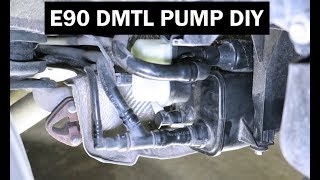
A DMTL (Diagnostic Module for Tank Leakage) pump is a small electric pump used by German automakers to pressurize the fuel tank and check for leaks. P1449 on a BMW means this pump is drawing too much electricity because its internal motor is seized.
Why do spiders cause this code on Subarus?
Yellow Sac Spiders are attracted to the hydrocarbons in gasoline vapors. They crawl into the EVAP system's vent hose and build webs, creating a physical blockage that triggers the P1449 clog code.
What are common mistakes when diagnosing P1449?
On Subarus, replacing the expensive charcoal canister when only the cheap vent filter is clogged. On BMWs, replacing the DMTL pump without checking if a fuel-saturated canister caused the failure. On any car, performing a smoke test before testing the specific component indicated by the code.
My Subaru has a P1449 and the whole dashboard is lit up. Is everything broken?
No, this is normal. When the Check Engine Light illuminates for an emissions code, the Subaru ECU disables cruise control, traction control, and EyeSight as a precaution. Fixing the single P1449 fault clears all the lights.
Will a fuel additive or cleaner fix a P1449 code?
No. P1449 is caused by a mechanical or electrical fault in the EVAP hardware or a physical blockage. No chemical additive can repair these issues.
I replaced the part but the P1449 code came back. What now?
If the code returns after replacing the DMTL pump or vent solenoid, check for a fuel-saturated charcoal canister causing repeat failures. Verify the wiring harness is intact and the connector is secure. Occasionally, cheap aftermarket parts are faulty out of the box.
How much does a smoke test cost?
An EVAP smoke test at a repair shop typically costs between $100 and $200. This diagnostic fee is separate from the cost of the actual repair.
Key Takeaways
- Always verify your vehicle's specific P1449 definition, as it means a failed DMTL pump on a BMW, a clogged vent filter on a Subaru, or a failing high-voltage battery on a 2000-2006 Honda Hybrid.
- You can safely drive with a P1449 code, but you will automatically fail state emissions tests and experience premature gas pump shutoffs during refueling.
- Do not authorize a $150+ EVAP smoke test until a mechanic physically inspects the vent filter and tests the specific pump or solenoid indicated by the code.
- Diagnosing a P1449 electrical fault requires a bi-directional scanner to command the DMTL pump or vent solenoid on, checking for a current draw spike above 30mA.
- Stop topping off your gas tank; forcing extra fuel past the first click saturates the charcoal canister, turning a $40 filter replacement into a $700 repair.
Helpful Videos



The information in this article is provided for general reference and educational purposes only. Vehicle specifications, procedures, and part compatibility can vary by production date, trim level, and region. Always consult your vehicle's factory service manual and verify part numbers before purchasing or performing repairs. Safety-critical components such as airbags, seat belts, and braking systems should be installed by a qualified professional.
- 🎬 Helpful Videos
- What Does P1449 Mean?
- Can I Drive With P1449?
- Common Causes
- Symptoms
- Diagnostic Flowchart
- Common Fixes & Costs
- Used vs. New Parts: Buying Guide
- What Happens If You Wait — Timeline
- Cost of Not Fixing It
- Diagnosis Steps
- When This Code Triggers (Freeze-Frame Conditions)
- Related Codes
- Climate & Environmental Factors
- How to Talk to a Mechanic About This Code
- Where to Take It: Dealer vs Independent vs Chain
- When to Walk Away From the Repair
- What Scan Tool You Need for This Code
- How to Clear the Code After You Fix It
- Will This Fail Emissions / State Inspection?
- Most Commonly Affected Vehicles
- Manufacturer-Specific Notes
- Real Owner Stories
- 2014 Subaru Crosstrek with P1449
- 2011 BMW 328i with recurring P1449
- 2003 Honda Civic Hybrid with P1449
- How to Prevent This Code From Triggering
- Frequently Asked Questions
- Can I fix P1449 by just tightening my gas cap?
- What is a DMTL pump?
- Why do spiders cause this code on Subarus?
- What are common mistakes when diagnosing P1449?
- My Subaru has a P1449 and the whole dashboard is lit up. Is everything broken?
- Will a fuel additive or cleaner fix a P1449 code?
- I replaced the part but the P1449 code came back. What now?
- How much does a smoke test cost?
- Key Takeaways
- 🎟️ Get 5% Off