

P0455 on 2014-2024 Porsche Macan: EVAP Large Leak Causes and Fixes
For a Porsche Macan, a P0455 code most often means you have a loose gas cap. Check that first. If the cap is tight, the next most likely culprit is a failed EVAP Leak Detection Pump (LDP), a common issue on this platform. Replacing the LDP can cost between $150 and $300 for the part.
- Always check the gas cap first. Ensure it is tight and the seal is in good condition before attempting any other repairs.
- If the gas cap is not the issue, the EVAP Leak Detection Pump (LDP) is the next most likely cause of a P0455 code on a Porsche Macan.
- A professional smoke test is the fastest and most accurate way to diagnose the exact location of the leak.
- Owners of 2015-2017 Macans should check if their vehicle is affected by the recall for a cracking fuel filter flange, especially if a strong fuel smell is present.
What's Unique About the 2014-2024 Porsche Macan

The Porsche Macan shares its underlying platform (Audi MLB platform) with the Audi Q5, and as a result, they share many similar EVAP system components and failure patterns. While a loose gas cap is a universal cause, Macan and other Porsche models show a higher-than-average tendency for the EVAP Leak Detection Pump (LDP) to fail, either mechanically or electronically. Additionally, some earlier model years were subject to a recall for a cracking fuel filter flange, which can produce a fuel smell, a symptom that often accompanies EVAP codes.
Generation note: The 2014-2024 Porsche Macan is considered a single generation (Type 95B), but it received significant facelifts in 2019 and 2021. Currently, there is no evidence to suggest major differences in the EVAP system or the causes of code P0455 across these model years. The core EVAP components and their locations remain consistent.
Symptoms You May Notice
- Check Engine Light is on.
- A noticeable smell of gasoline, especially around the rear of the vehicle or after refueling.
- Vehicle will fail an emissions inspection.
- In rare cases, a slight decrease in fuel economy due to escaping vapors.
- Replacing the fuel tank pressure sensor without proper diagnosis. This sensor rarely causes a large leak code on its own and will typically set its own specific fault codes if it fails.
Most Likely Causes

- Loose or Faulty Gas Cap 🔴 High Probability This is the most common cause for a P0455 code on any vehicle, including the Macan. The seal can wear out, get dirty, or the cap may not have been tightened correctly after refueling until it clicks.
How to confirm: Ensure the gas cap is tightened until it clicks at least once. Inspect the rubber O-ring on the cap for cracks, dirt, or signs of wear. A simple test involves creating a temporary seal with a plastic bag over the filler neck under the cap, clearing the code, and seeing if it returns after a few days.
Typical fix: Tighten or replace the gas cap. After doing so, the code may need to be cleared with a scan tool for the light to go off immediately, though it may turn off on its own after several drive cycles.
Est. part cost: $25-$60 - Failed EVAP Leak Detection Pump (LDP) 🟡 Medium Probability The LDP is a known failure point on modern Porsche and VW/Audi group vehicles. It can fail electronically (triggering codes like P2402) or mechanically, causing it to report a leak when there isn't one or fail to seal the system for the test. The pump is responsible for pressurizing the system to check for leaks.
How to confirm: Diagnosis often requires a bi-directional scan tool (like the Porsche PIWIS) to command the pump to run and seal the system. A smoke test is the definitive way to confirm if the pump itself or its seals are leaking. The LDP is located in the rear passenger-side wheel well area, often attached to the charcoal canister.
Typical fix: Replace the leak detection pump. This involves removing the rear passenger wheel and wheel well liner for access.
Est. part cost: $150-$300 - Stuck-Open EVAP Purge Valve (N80 Valve) 🟡 Medium Probability This solenoid valve controls the flow of stored vapors from the charcoal canister to the engine intake manifold. It can get stuck open due to carbon buildup or mechanical failure, creating a constant vacuum leak into the EVAP system that the computer interprets as a large leak.
How to confirm: Remove the valve (usually located in the engine bay, on or near the intake manifold). With no power applied, it should be closed. If you can blow air through it, it's stuck open and needs to be replaced.
Typical fix: Replace the purge valve solenoid. 🎬 See this walkthrough for diagnosing and replacing the purge valve.
Est. part cost: $50-$120 - Cracked or Disconnected EVAP Hoses ⚪ Low Probability Over time, the plastic and rubber hoses in the EVAP system can become brittle from heat cycles and age, leading to cracks. A large leak code often points to a hose that has become completely disconnected from a component like the purge valve or charcoal canister.
How to confirm: A thorough visual inspection of all accessible EVAP lines between the engine bay and the fuel tank area may reveal obvious damage. A smoke test is the most effective method to find hidden cracks or disconnections.
Typical fix: Replace the damaged section of hose or re-secure a disconnected line.
Est. part cost: $20-$100
Rare But Worth Checking
- Cracked Fuel Filter Flange: A recall (NHTSA #17V-289, Porsche Campaign AH06) was issued for 2015-2017 Macan models for hairline cracks on the fuel filter flange. This is caused by material degradation from fuel and oxidation over time. It can cause a fuel smell and a liquid fuel leak, which is a fire risk. While it may not always set a P0455 code, the overlapping symptom of a fuel odor makes it a critical check for affected model years. The fix involves inspection and either replacing the flange or applying a protective film.
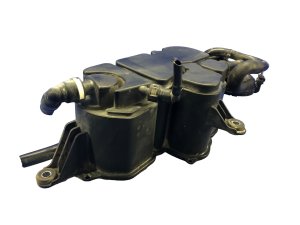
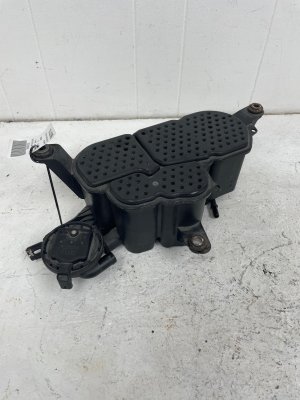
- Cracked Charcoal Canister: The canister that stores fuel vapors can develop a crack from road debris impact or age, creating a large leak. This is usually found during a smoke test. The canister is located near the rear passenger wheel well.
- Damaged Fuel Filler Neck: Rust or physical damage to the metal or plastic filler neck can prevent the gas cap from sealing properly, causing a persistent P0455 code even with a new cap.
Diagnosis Steps

- Check the Gas Cap: Remove and reinstall the gas cap, ensuring it clicks shut several times. Inspect the cap's seal for any cracks or damage. If it looks worn, replace it. This is the most common and cheapest fix.
- Visual Inspection: Inspect all visible EVAP hoses in the engine bay and under the vehicle for obvious cracks, disconnections, or damage. Pay close attention to the lines connecting to the purge valve and charcoal canister.
- Scan for Other Codes: Use an OBD-II scanner to check for any other pending or stored codes that could point to a specific component like the purge valve (P0441) or LDP (P2402).
- Test the Purge Valve: Locate the purge valve in the engine bay. Disconnect it and test if it's stuck open by attempting to blow through it. It should be sealed when unpowered.
- Perform a Smoke Test: This is the most reliable method for finding leaks. A mechanic will inject pressurized, UV-dyed smoke into the EVAP system. The smoke will escape from the point of the leak, making it easy to identify the failed component, be it a hose, the canister, the LDP, or the filler neck.
Parts You'll Likely Need

- Fuel Cap
(OEM #9P1-201-550)— This is the most frequent and simplest fix. The seal wears out over time, preventing the system from holding pressure.
Trusted brands: Porsche (OEM), Blau
OEM price range: $40-$60
Aftermarket price range: $25-$40 - EVAP Leak Detection Pump (LDP)
(OEM #958-906-243-A (supercedes 7L0906243A))— A common failure item on Porsche/Audi vehicles that causes EVAP leak codes. It is responsible for pressurizing the system for the self-test.
Trusted brands: Bosch (OEM supplier, P/N 0261222019), Porsche (Genuine)
OEM price range: $250-$350
Aftermarket price range: $150-$220 - EVAP Canister Purge Valve
(OEM #948-110-020-21)— This valve often gets stuck open, creating a permanent leak path that triggers the P0455 code.
Trusted brands: Bosch (OEM supplier), Porsche (Genuine)
OEM price range: $80-$120
Aftermarket price range: $50-$80
Related Codes That Often Appear With This One
- P0456 — This code is for a 'small' EVAP leak. Sometimes a problem can be intermittent or on the border between a small and large leak, causing either code to appear. A failing LDP can also cause either code.
- P0441 — This code indicates 'Incorrect Purge Flow,' which often points directly to a faulty EVAP purge valve (N80 valve), a common cause of P0455.
- P2402 — This code indicates a short circuit or other electrical fault in the EVAP Leak Detection Pump (LDP) control circuit, pointing directly to a failed LDP.
Platform-Specific Known Issues
- NHTSA Recall 17V-289 (Porsche Campaign AH06): Affects 2015-2017 Macan, Macan S, Macan GTS, and Macan Turbo models. The fuel filter flange on the fuel pump can develop hairline cracks, leading to a fuel leak and strong fuel odor. Owners should check with a Porsche dealer to see if their VIN is affected. The remedy involves inspection and either replacement of the flange or application of a protective film.
- NHTSA Recall AG06 (different from fuel leak): Affects a small number of 2017 Macan models. Defective front anti-roll bar links could cause rattling and, in extreme cases, oversteer. While unrelated to P0455, it's a known issue for this model year.
Mechanic-Grade Diagnostic Values
- EVAP Purge Valve (N80) Resistance — expected: 15 to 25 Ohms (per VW/Audi spec). Some real-world measurements on working units show ~34 Ohms.. Failure: A reading significantly outside of this range (open circuit or short) indicates a failed solenoid coil.
- EVAP Purge Valve (N80) Connector Voltage (Key On) — expected: ~12V at Pin 1 of the connector.. Failure: Low or no voltage (e.g., 1.25V) points to a wiring issue or a problem with the power supply from the DME/ECM.
- EVAP Purge Valve (N80) Vacuum Test (Engine Idling) — expected: 0 PSI / 0 inHg (no vacuum).. Failure: Any vacuum reading indicates the valve is stuck partially or fully open, allowing un-commanded vapor flow.
Hidden / Shadow Codes Worth Checking
- P2402: EVAP Leak Detection Pump (LDP) Control Circuit Short Circuit. This code specifically points to an electrical failure of the LDP. (see via Most standard OBD-II scanners. It often accompanies a general P0455 code.)
- 1441 (Porsche-specific): EVAP Purge Valve Stuck Open. This is a manufacturer-specific code providing a more precise diagnosis than the generic P0441. (see via Porsche-specific diagnostic tools like PIWIS or Durametric.)
Scan Tool Commands That Help
- Porsche PIWIS, Durametric, or advanced bidirectional scanner: EVAP Purge Valve (N80) Activation — To manually command the purge valve solenoid to open and close. A clicking sound should be audible, confirming the solenoid is mechanically responding to electrical commands.
- Porsche PIWIS or equivalent (e.g., VCDS for VW/Audi): EVAP System Leak Test (Basic Settings, Channel 070 on VCDS) — To initiate the complete, automated system self-test on demand. The tool will command the vent valve and LDP to seal and pressurize the system, then report back if the test passes or fails.
- Porsche PIWIS / ODIS: Guided Fault Finding for N80 Valve — This is a dealer-level, step-by-step diagnostic plan that walks the technician through a series of tests to definitively confirm the operational status of the purge valve and its circuit.
Wiring & Ground Locations
- Ground Pin 43 — On LHD vehicles, this ground point is located in the driver's side footwell area, accessible when performing work near the A-pillar.. While documented in an exhaust installation, many electronic modules share common ground points. A loose or corroded ground here could cause intermittent electrical issues for various components, including EVAP solenoids or sensors that may be grounded on the same circuit.
- Main Engine/Chassis Grounds — Key grounding points are typically found in the engine compartment near the firewall, behind the headlights, and under the dashboard near the steering column. Porsche typically uses brown wires for grounds.. The DME/ECM, which controls the EVAP system, and the EVAP components themselves rely on clean, solid ground connections. A faulty main ground can cause unpredictable behavior and fault codes across multiple systems.
Real Owner Repair Stories
- Reddit user Davidon666 (2023 Porsche Macan S) — Check Engine Light.
❌ Tried (didn't work) Clearing the code with a scanner; the code returned.
✅ What actually fixed it The scanner revealed code P2402 (EVAP leak detection pump short circuit). The dealer confirmed the diagnosis and replaced the leak detection pump under warranty, which resolved the issue. - RennTech.org user royxaxa (2009 Porsche Cayenne CTTS (shares EVAP components with Macan)) — P0455 EVAP large leak code.
❌ Tried (didn't work) Replacing the gas tank cap.
✅ What actually fixed it After more research, the owner replaced the mechanical vacuum pump located at the rear of the passenger side engine bank. This fixed the P0455 code.
"I Checked Everything" — The Actual Cause
- In a case on a related Porsche platform (Cayenne), a P0455 code persisted even after a professional smoke test found no external leaks in the EVAP system. The issue was ultimately resolved by another owner who replaced the engine's mechanical vacuum pump. This is a critical edge case because a standard EVAP smoke test only checks the integrity of the sealed fuel system (hoses, canister, valves); it does not test the functionality of the vacuum pump that provides the motive force for the Leak Detection Pump (LDP) to perform its own diagnostic cycle. A weak or failing vacuum pump can prevent the LDP from operating correctly, causing the DME to log an EVAP fault, even with no physical leak present.
- A stuck-open purge valve (N80) can sometimes be missed in a smoke test if the test is not performed correctly. If the valve is stuck open, it creates a leak path into the intake manifold. A technician might mistake this for a normal system path if they don't specifically isolate and test the valve's closed state first.
OEM Part Supersession History
7L0-906-243-A→958-906-243-A— Part revision and update by the manufacturer.
Model Year Variations Within This Range
- 2014-2024: No significant variations in the core EVAP system components or common causes for P0455 have been identified across the 95B.1, 95B.2, and 95B.3 facelifts. The primary failure points (gas cap, LDP, purge valve) remain consistent.
Diagnostic Flowchart

Other Known Issues on This Vehicle
Issues unrelated to this code that are worth knowing about as an owner of this generation:
- Transfer Case Failure 🔴 High — Common on 2015-2018 models. Symptoms include shuddering, jerking, or a binding sensation at low speeds, especially during turns. Can occur at relatively low mileage (e.g., 30k-60k miles). (Ref: Porsche issued a TSB and extended the warranty to 7 years for this issue on many vehicles. The fix can range from a fluid change to a full replacement.)
- Timing Cover Oil Leak 🔴 High — Prevalent on V6 models (S, GTS, Turbo) around 2017-2018. Caused by aluminum timing cover bolts stretching and snapping, leading to a significant oil leak at the front of the engine. Often appears around 50,000+ miles. (Ref: Porsche TSB #1902 addresses this issue. The repair is labor-intensive, often costing thousands of dollars as it requires accessing the front of the engine.)
- PDK Transmission Faults 🟠 Medium — Not widespread but can be extremely expensive. Issues include rough shifting, getting stuck in gear, or total failure. Problems can stem from faulty sensors or the mechatronic unit, especially if not serviced properly or subjected to heavy stop-and-go traffic. (Ref: No specific recall, but Porsche's official policy is often to replace the entire transmission, which can cost over $15,000-$20,000. Independent specialists can sometimes repair internal components for much less.)
Used vs. New Parts: Buying Guide for This Vehicle
When a used part is the smart pick: For purely mechanical and non-wear items, a used part can be a cost-effective option. This includes components like the fuel filler neck or specific plastic/metal EVAP lines, provided they are inspected for cracks, rust, or damage. A charcoal canister from a low-mileage, non-corroded donor vehicle is also a viable used part.
Donor-vehicle mileage cap: roughly under 50000 miles for the part to have meaningful remaining life.
What to inspect on the donor part:
- Check for hairline cracks, especially around hose connection nipples on plastic parts.
- For filler necks, ensure there is no rust or deformation on the sealing surface where the gas cap sits.
- Verify the donor vehicle is from a dry climate to minimize the risk of corrosion and brittle plastic.
- Ensure all connectors and hose fittings are intact and not broken during removal.
OEM-only on this vehicle (don't cheap out):
- Fuel Cap: This is an inexpensive wear item. The seal is critical, and the cost savings of a used cap are negligible compared to the risk of it not sealing properly. Always buy new.
- EVAP Leak Detection Pump (LDP): This is a known high-failure-rate electronic and mechanical part. A used pump has an unknown remaining lifespan and is not worth the labor to install it twice. Buy new from a reputable brand.
- EVAP Purge Valve (N80): Similar to the LDP, this is an electromechanical valve that fails with use and age. Given its relatively low cost, a new part is strongly recommended over a used one.
Aftermarket brands forum-validated for this vehicle:
- Bosch: Bosch is the original equipment manufacturer (OEM) for many Porsche EVAP components, including the Leak Detection Pump and Purge Valve. Choosing Bosch-branded parts often provides OEM quality at a lower price than Genuine Porsche-branded parts.
Brands owners have reported issues with on this vehicle:
- Unbranded, no-name electronic components from online marketplaces. While tempting due to low cost, these parts have a high rate of premature failure and may not meet the precise specifications required by the Porsche engine management system.
Real Owner Stories
Aggregated from forums and TSBs cited above. Mileages and costs reflect what owners reported in those sources.
2011 Porsche Cayenne S
Symptoms: Check engine light with a P0455 code persisted even after the gas cap was replaced.
What fixed it: Replacing the vacuum pump.
Source hint: Rennlist.com: 'Check Engine and P0455 Code solved'
Porsche Panamera
Symptoms: P0455 Large Leak code; a smoke test was performed which initially led to an incorrect identification of the vapor canister as the culprit.
What fixed it: Thorough diagnosis beyond the initial smoke test results to ensure the correct component was identified.
Source hint: 6SpeedOnline.com: 'P0455 Large Leak'
Porsche (Model Unspecified)
Symptoms: P0455 code remained active after a gas cap replacement failed to resolve the light.
What fixed it: Traced the issue to a leaking vacuum pump.
Source hint: RennTech.org member report
Related OBD-II Codes
Frequently Asked Questions
I have a 2015-2017 Macan and smell gasoline; is there a specific recall I should check?
Can I use a standard OBD-II scanner to diagnose the Leak Detection Pump (LDP) on my Macan?
Where is the Leak Detection Pump located on the Macan if I need to inspect it?
Is the P0455 code on my Macan related to the common transfer case issues?
How can I test the N80 Purge Valve on my Macan at home?
Does the Macan share EVAP components with other vehicles that might have similar P0455 issues?
Helpful Videos

We Have This Part in Stock




The information in this article is provided for general reference and educational purposes only. Vehicle specifications, procedures, and part compatibility can vary by production date, trim level, and region. Always consult your vehicle's factory service manual and verify part numbers before purchasing or performing repairs. Safety-critical components such as airbags, seat belts, and braking systems should be installed by a qualified professional.
- Porsche Macan:
- 🎬 Helpful Videos
- 🛍️ Shop This Part
- What's Unique About the 2014-2024 Porsche Macan
- Symptoms You May Notice
- Most Likely Causes
- Rare But Worth Checking
- Diagnosis Steps
- Parts You'll Likely Need
- Related Codes That Often Appear With This One
- Platform-Specific Known Issues
- Mechanic-Grade Diagnostic Values
- Hidden / Shadow Codes Worth Checking
- Scan Tool Commands That Help
- Wiring & Ground Locations
- Real Owner Repair Stories
- "I Checked Everything" — The Actual Cause
- OEM Part Supersession History
- Model Year Variations Within This Range
- Diagnostic Flowchart
- Other Known Issues on This Vehicle
- Used vs. New Parts: Buying Guide for This Vehicle
- Real Owner Stories
- 2011 Porsche Cayenne S
- Porsche Panamera
- Porsche (Model Unspecified)
- Related OBD-II Codes
- Frequently Asked Questions
- 🎟️ Get 5% Off