

P0455 on 2008-2020 Dodge Grand Caravan: EVAP Large Leak Causes and Fixes
For a P0455 code on a 2008-2020 Dodge Grand Caravan, the most common cause is a loose or faulty gas cap. If the cap is secure, the next most likely culprits are a failed EVAP System Integrity Monitor (ESIM) pump near the rear wheel or cracked/disconnected EVAP hoses, particularly at the charcoal canister where the plastic clips break.
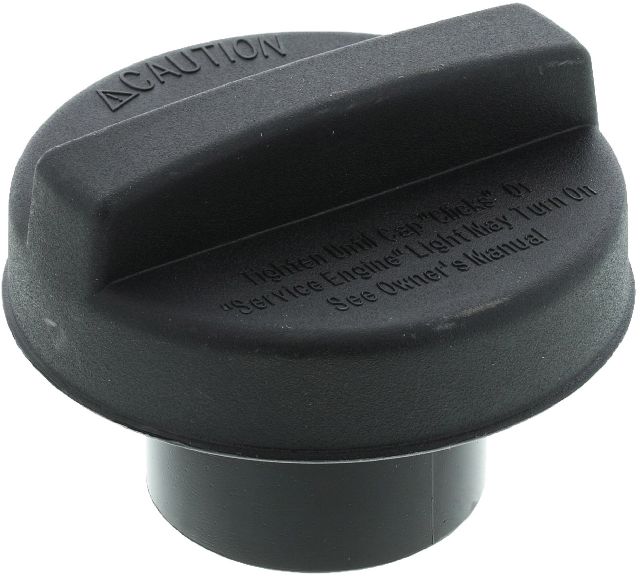
- Always check the gas cap first for code P0455. Ensure it's tight and the seal is in good condition. Using an OEM Mopar cap is highly recommended.
- If the gas cap isn't the issue, the most likely culprit is the EVAP System Integrity Monitor (ESIM) located near the driver's side rear wheel, or a cracked/disconnected hose.
- A visual inspection of the hoses in the engine bay (around the purge valve) and under the vehicle (around the charcoal canister) can often reveal the source of a large leak without special tools.
- The vehicle is safe to drive with this code, but it will not pass an emissions test until the leak is repaired.
- If the leak isn't obvious, a professional smoke test is the fastest and most accurate way to locate the source of the problem.
What's Unique About the 2008-2020 Dodge Grand Caravan

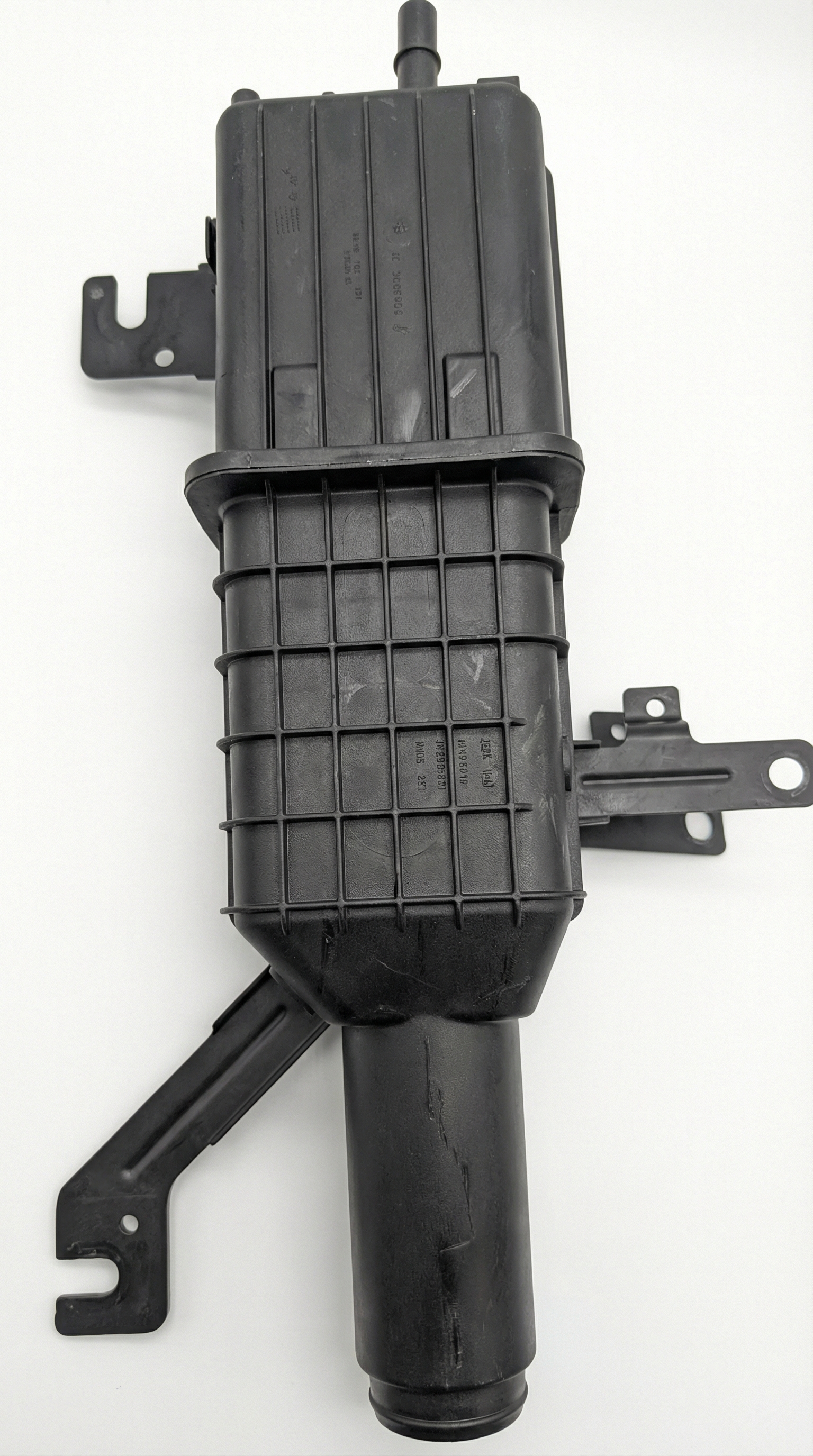
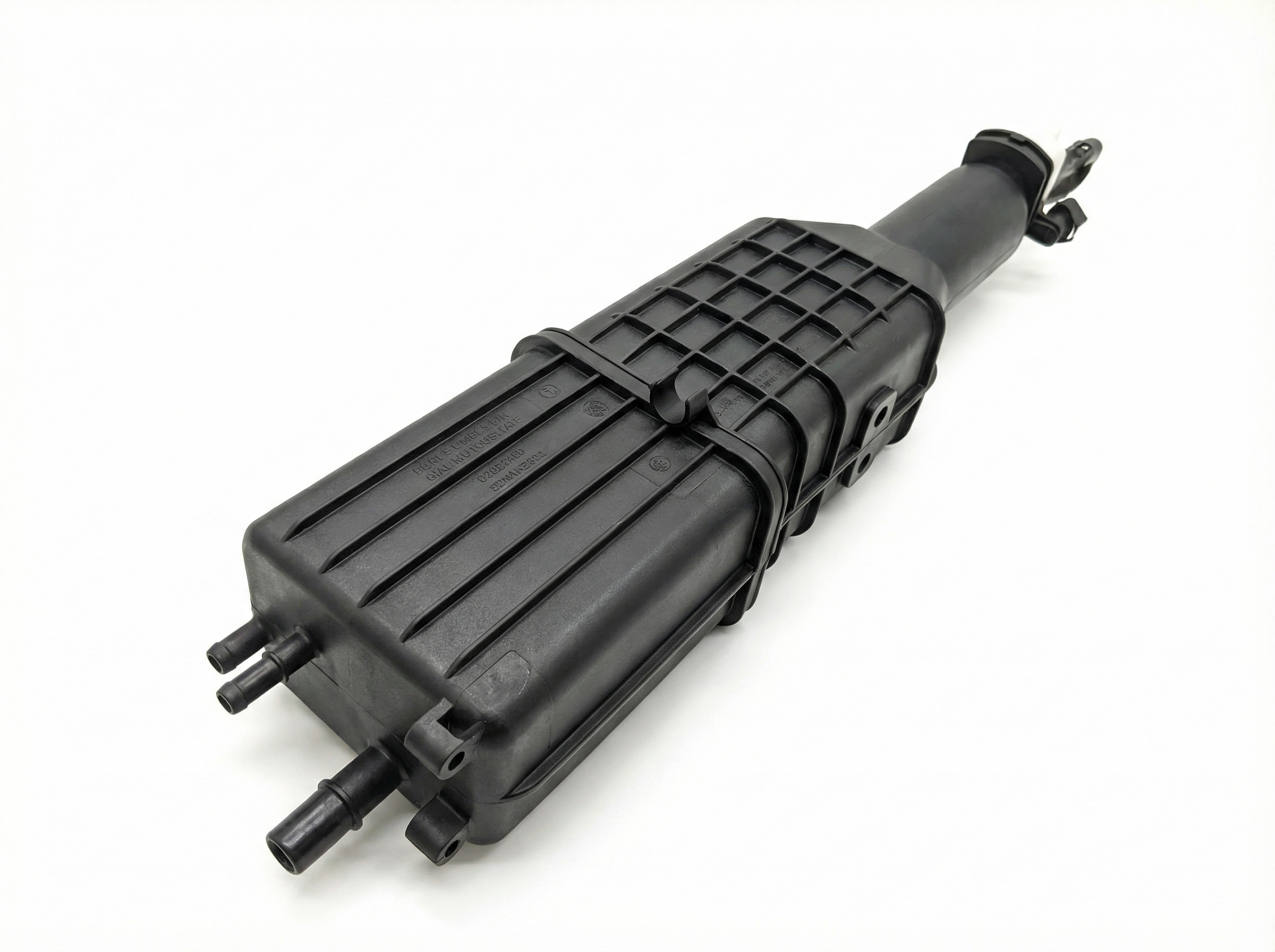
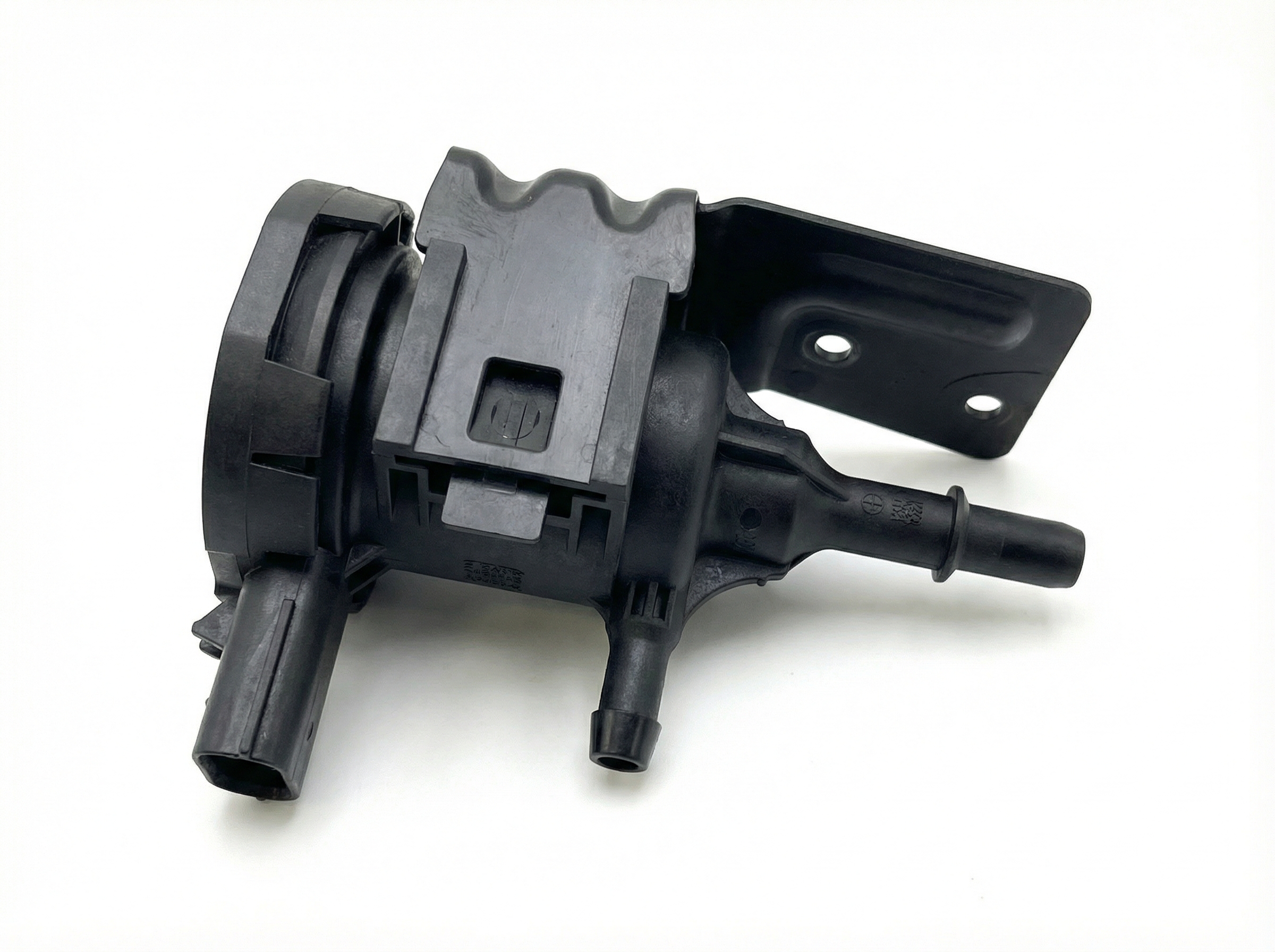
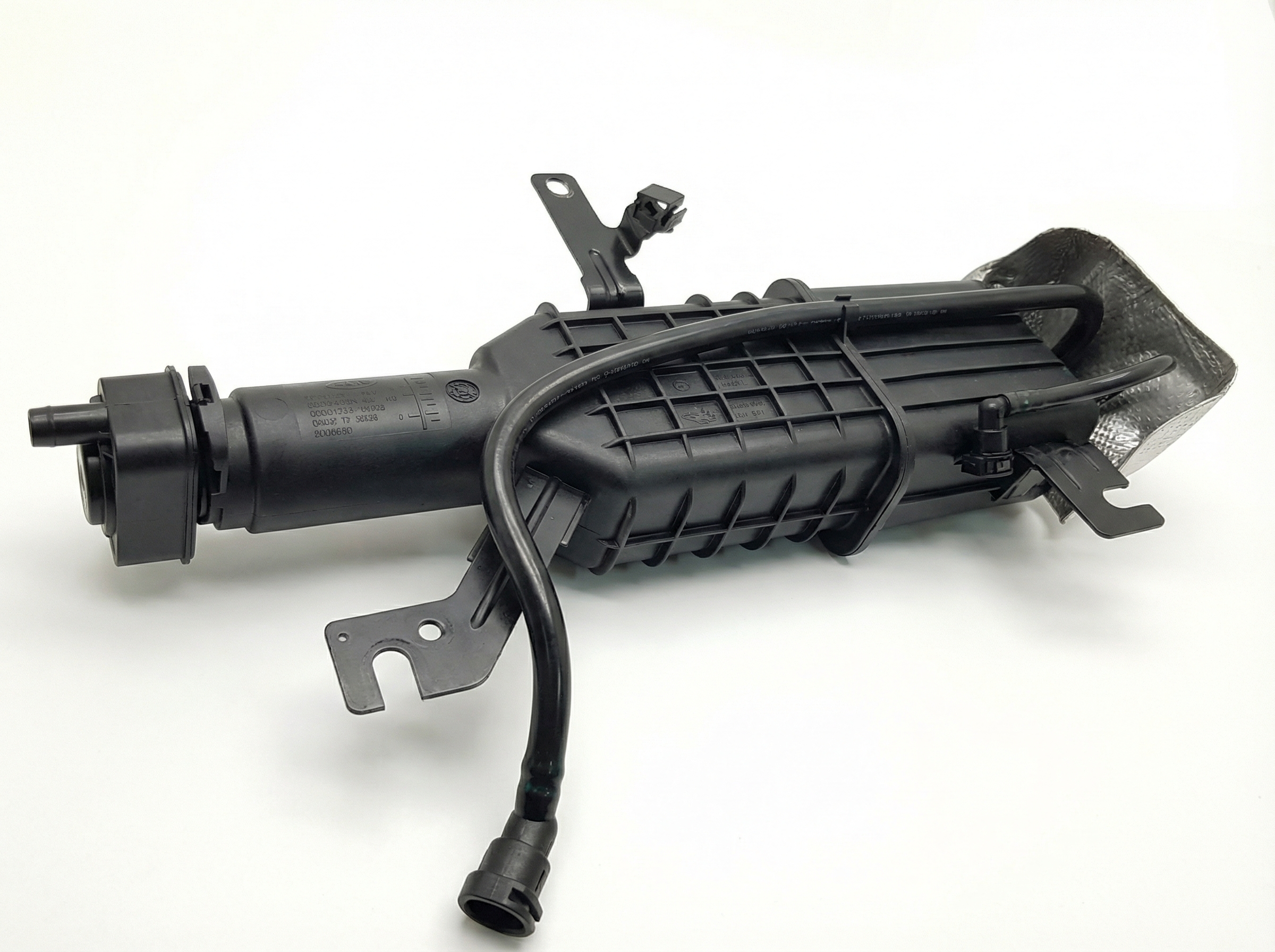
On this generation of Grand Caravan, the EVAP system uses a component called an Evaporative System Integrity Monitor (ESIM), also known as a leak detection pump, mounted to the charcoal canister. This part has a notably high failure rate and is a frequent cause of EVAP leak codes after the gas cap has been ruled out. Additionally, the plastic and rubber hoses throughout the system, particularly near the purge valve in the engine bay and around the canister in the rear, are known to become brittle and crack. The small white plastic clips securing hoses to the canister are especially prone to breaking, often resulting in a completely disconnected hose that is visibly obvious.
Symptoms You May Notice
- Check Engine Light is on
- A "gascap" message may appear on the dashboard
- Possible fuel smell, especially near the rear of the vehicle or after refueling.
- Replacing the purge valve or canister when the actual problem is a simple cracked or disconnected hose or a bad gas cap.
- Using a cheap aftermarket gas cap, which often fails to seal properly and causes the code to return.
Most Likely Causes


- Loose, Damaged, or Incorrect Gas Cap 🔴 High Probability The gas cap seal is a simple rubber part that degrades over time. Aftermarket caps often have poor sealing performance compared to the OEM part, leading to recurring codes.
How to confirm: Remove the gas cap and inspect the rubber O-ring for cracks, stiffness, or damage. Ensure you hear several clicks when tightening. If the seal looks worn or the cap is not from the original manufacturer, it's suspect.
Typical fix: Replace the gas cap with a new OEM part.
Est. part cost: $15-$35 - Faulty EVAP System Integrity Monitor (ESIM) / Leak Detection Pump 🔴 High Probability This component has a high failure rate on Dodge/Chrysler vehicles of this era. It contains a switch and a weighted valve that can fail, causing the system to report a leak even when none exists or to fail to seal the system for testing.
How to confirm: The ESIM is located on the charcoal canister, in front of the driver's side rear wheel, accessible after removing the wheel and inner fender liner. Diagnosis often involves a smoke test to see if the valve is leaking, or replacement based on its high failure probability after ruling out the gas cap and visible hose leaks.
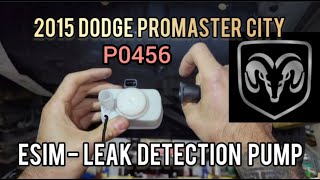
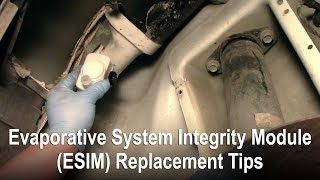
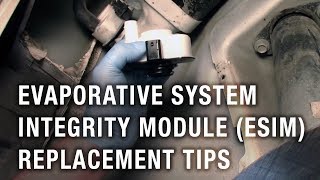
Typical fix: Replace the ESIM. It twists a quarter-turn into the charcoal canister. 🎬 See this walkthrough on replacing the ESIM leak detection pump.
Est. part cost: $25-$60 - Cracked or Disconnected EVAP Hoses 🟡 Medium Probability Over time, engine heat and exposure to the elements cause the rubber and plastic hoses to become brittle and crack. The white plastic clips holding hoses to the canister are a known weak point and often break, causing a large, visible disconnection. In NHTSA ODI #11204850, an owner of a similar Dodge model reported a P0455 specifically caused by a cracked EVAP purge hose.
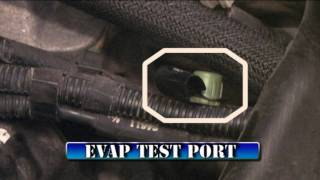
How to confirm: Visually inspect all accessible EVAP hoses. A large leak is often visible as a completely disconnected or badly cracked hose. Key areas are the lines connected to the purge solenoid in the engine bay and the hoses connected to the charcoal canister and ESIM in the rear. A common DIY fix for broken clips is to use zip ties to secure the hose. A smoke test is the definitive way to find a hidden leak. 🎬 Watch: How to find an EVAP leak without a smoke machine.
Typical fix: Replace the cracked section of hose or reconnect a disconnected line. If the original plastic clip is broken, a zip tie can be used as a substitute clamp.
Est. part cost: $5-$50 - Faulty Purge Valve / Solenoid 🟡 Medium Probability The purge valve, located in the engine bay, can get stuck open, creating a permanent leak path from the EVAP system to the engine intake.
How to confirm: With the engine off, remove the purge valve and try to blow through it. It is a normally closed valve, so if air passes through, it is defective and needs to be replaced. The valve is located behind the air filter box on 3.6L models. 🎬 Watch: Step-by-step guide to replacing the purge valve solenoid.
Typical fix: Replace the purge valve solenoid.
Est. part cost: $25-$75 - Cracked Fuel Filler Neck ⚪ Low Probability The metal filler neck can rust and perforate over time, especially in regions that use road salt. This is a known issue confirmed by owners.
How to confirm: A visual inspection may reveal rust and holes. A smoke test is the definitive method and will show smoke exiting from the rusted area of the filler neck.
Typical fix: Replace the fuel filler neck.
Est. part cost: $100-$200
Rare But Worth Checking
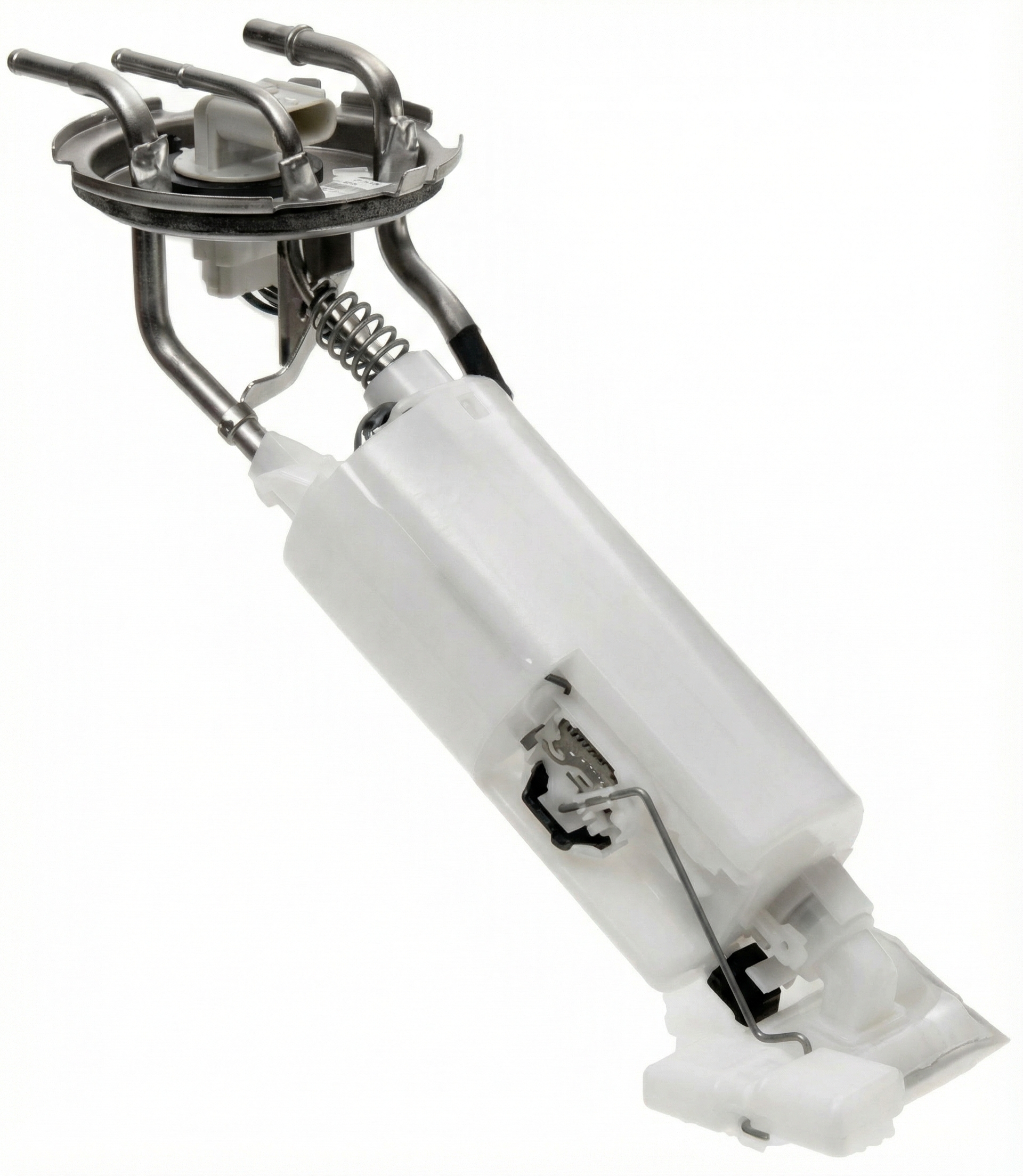
- Cracked Fuel Pump Module: A user on a Reddit forum reported that the ultimate fix for their P0455 on a 2008 Grand Caravan was a crack in the plastic fuel pump module assembly on top of the fuel tank. This was only found after a second smoke test by a different shop. This is a known issue on some Chrysler minivans and requires dropping the fuel tank to inspect and replace, making it a costly repair.
- Cracked Charcoal Canister: While less common than hose or valve failures, the plastic body of the canister itself can be damaged by road debris or age, causing a large leak. A smoke test would confirm this by showing smoke exiting the canister body.
Diagnosis Steps

- Check the Gas Cap: This is the most common cause. Remove the cap, inspect the seal for cracks or damage, and clean the sealing surface on the filler neck. Reinstall the cap, ensuring it clicks multiple times. Clear the code and drive for a few days to see if it returns.
- Visual Inspection (Engine Bay): Open the hood and locate the purge solenoid (behind the airbox on the 3.6L). Inspect the rubber and plastic hoses connected to it for any obvious cracks, breaks, or loose connections.
- Visual Inspection (Under Vehicle): A large leak can often be found visually. Safely raise the vehicle. Locate the charcoal canister and ESIM assembly, typically located in front of the driver's side rear wheel. Inspect all attached hoses for cracks or disconnections, paying close attention to the connection points where brittle white clips may have failed.
- Test the Purge Solenoid: Disconnect the purge solenoid. If you can blow air through it, it is stuck open and must be replaced.
- Perform a Smoke Test: If no obvious issues are found, the most effective diagnostic step is to use an automotive smoke machine. The machine fills the EVAP system with a low-pressure, visible smoke. The leak will be found wherever smoke is escaping. This is the best method for finding cracked filler necks, canister leaks, or non-obvious hose leaks.
- Inspect Fuel Tank Top: If a smoke test reveals smoke coming from the top of the fuel tank, the tank may need to be lowered to inspect the fuel pump module and its seal for cracks, which is a known, albeit rare, failure point.
- Verify Fix with Scan Tool: After a repair, instead of waiting for a full drive cycle, a capable scan tool can be used to command the onboard EVAP leak test to run, providing a pass/fail result in minutes to confirm the fix.
Parts You'll Likely Need
- Gas Cap
(OEM #5278632AG)— This is the most frequent cause of P0455. The seal wears out, and an OEM cap provides the most reliable seal.
Trusted brands: Mopar
OEM price range: $25-$40
Aftermarket price range: $10-$25 - EVAP System Integrity Monitor (ESIM) / Leak Detection Pump
(OEM #4861962AD)— This is the second most common failure point on this platform after the gas cap. It is responsible for sealing and testing the system. This part number supersedes 4861962AA, 4861962AB, and 4861962AC.
Trusted brands: Mopar, Dorman, Standard Motor Products
OEM price range: $40-$70
Aftermarket price range: $25-$50 - Vapor Canister Purge Valve / Solenoid
(OEM #4891735AC)— This valve can stick open, creating a large, permanent leak path to the engine.
Trusted brands: Mopar, Bosch, Dorman
OEM price range: $50-$80
Aftermarket price range: $25-$50
Related Codes That Often Appear With This One
- P0456 — P0456 indicates a small EVAP leak. Sometimes a component is in the process of failing and may trigger both small and large leak codes at different times.
- P0441 — Indicates incorrect purge flow. This can be triggered along with P0455 if a stuck-open purge valve is the root cause of the large leak.
- P0442 — This is an older code for a medium-sized leak, functionally similar to P0456. It can appear alongside P0455 if the system's leak detection is borderline between medium and large.
Technical Service Bulletins (TSBs) & Recalls
- 18-037-17: This TSB involves a Powertrain Control Module (PCM) software update for 2013+ models. It is primarily intended to fix false P0456 (EVAP System Small Leak) codes caused by the diagn
- TSB Bulletin #1809423: This manufacturer bulletin notes that a technician may find P0455, P0456, P0440, or P0441 set upon investigation of a check engine light.
- TSB Bulletin #1400522REVB: This record indicates that P0455 and P0456 are often found together, along with P04EC (Large Leak Detected - Fuel Tank Side).
- TSB Bulletin #1807422: This bulletin describes scenarios where P0455 is set alongside P0452 (EVAP Pressure Switch Stuck Closed) and P0440.
Platform-Specific Known Issues
- The white plastic clips that secure EVAP hoses to the charcoal canister become brittle and fail, leading to a hose disconnecting completely. This is a common cause for a P0455 and is often repairable with a simple zip tie in place of the broken clip.
Mechanic-Grade Diagnostic Values
- EVAP Purge Solenoid Coil Resistance — expected: 15 to 30 ohms. Failure: A reading far outside this range indicates a damaged internal circuit in the valve.
- ESIM Switch Signal Voltage (Key On, Engine Off) — expected: Approximately 5.0 volts or 12.0 volts (depending on PCM type) when the connector is unplugged (open circuit). Should drop to near 0 volts when the switch is closed (grounded).. Failure: If the voltage does not change when a vacuum is applied to the ESIM or when manually grounded, it indicates a problem with the switch, wiring, or PCM. A reading of 1.7-1.8 volts with the connector plugged in can indicate a functioning system holding steady.
Scan Tool Commands That Help
- Professional Scan Tool (e.g., wiTECH for Chrysler): EVAP System Test / Leak Detection Monitor Test — After performing a repair, a technician can use a bidirectional scan tool to command the vehicle's onboard EVAP monitor to run immediately. This provides a 'Pass' or 'Fail' result in about 5 minutes, confirming if the leak has been fixed without needing to complete a full, multi-day drive cycle. As noted in TSB Bulletin #1807422, if P0456 is present, the wiTECH Small Leak Verification test should be used.
- Professional Scan Tool: Command EVAP Purge Solenoid OFF and EVAP Vent Valve ON (Closed) — To test for a mechanically stuck-open purge valve. With the engine running, commanding the purge valve 'off' and the vent valve 'on' (which closes it) should seal the system. If the fuel tank pressure PID begins to show a vacuum (pressure drops), it confirms the purge valve is leaking vacuum from the engine into the EVAP system when it should be closed.
Wiring & Ground Locations
- Engine Ground Strap (Part # 4685816AA) — On 3.6L and 4.0L engines, this braided strap connects the engine block to the vehicle frame, often near the passenger side engine mount and accessory belt area.. While not directly part of the EVAP circuit, a corroded or broken main engine ground can cause a host of intermittent electrical issues and incorrect sensor readings across the vehicle. Ensuring all main grounds are intact is a foundational step before diagnosing complex electronic faults.
- G303 / G304 — Wiring diagrams for 2008 models show multiple ground distribution points. Specific grounds for EVAP components like the ESIM and purge solenoid are routed through main harnesses that terminate at chassis ground points, such as those located in the engine bay near the wheel wells.. The ESIM and purge solenoid rely on a solid ground connection to function. Corrosion at these chassis ground points can cause high resistance, leading to incorrect operation and fault codes even if the components themselves are good.
Real Owner Repair Stories
- Reddit user 'Onilakon' in r/MechanicAdvice (2008 Dodge Grand Caravan, 4.0L, 228k miles) — P0455 code, intermittent fuel smell at the rear of the van.
❌ Tried (didn't work) A first mechanic performed a smoke test and replaced a leaking valve in the rear, but the code returned.
✅ What actually fixed it The owner took it to a second shop. The final fix was replacing the fuel pump, as the plastic fuel pump module itself was found to be cracked on top. This was only discovered after another diagnostic effort. - NHTSA ODI #10561465 — An owner reported a P0455 code where the dealer ran an ESIM test and vacuum test with no results, initially suggesting a loose gas cap was the culprit.
"I Checked Everything" — The Actual Cause
- On Chrysler products with a Natural Vacuum Leak Detection (NVLD) or ESIM system, it is possible to have a P0455/P0456 code even if the system passes a smoke test. The failure is not a physical leak, but a malfunction of the switch inside the ESIM/NVLD unit. The switch fails to correctly report the pressure changes (or lack thereof) to the computer, causing the PCM to believe there is a leak when the system is actually sealed.
OEM Part Supersession History
4861962AA, 4861962AB, 4861962AC, 4891685AA, 4891685AB→04861962AD— Standard part evolution to improve reliability or manufacturing.
Heads up: The part 04861962AD is the correct service replacement for a wide range of Chrysler/Dodge/Jeep vehicles from roughly 2007 to 2024. The older part numbers have been superseded and should no longer be used.
Model Year Variations Within This Range
- 2008-2010 (approx): Earlier models in this generation may have used a Leak Detection Pump (LDP) system which operates differently from the later ESIM system, though they serve the same purpose. The diagnostic approach can vary slightly. The ESIM became the standard across most Chrysler platforms during this period.
- 2011-2020: The introduction of the 3.6L Pentastar V6 in 2011 changed the engine bay layout. The purge solenoid is located behind the air filter box on these models, whereas on the older 3.3L/3.8L/4.0L engines, its location may differ slightly.
Diagnostic Flowchart
Real Owner Stories
Aggregated from forums and TSBs cited above. Mileages and costs reflect what owners reported in those sources.
2008 Dodge Grand Caravan 4.0L — 228000 miles
Symptoms: Intermittent fuel smell in the rear of the van. The code returned even after a mechanic replaced a leaking valve in the rear following an initial smoke test.
What fixed it: Replaced a cracked fuel pump module on top of the tank, which was confirmed by performing a second smoke test.
Source hint: Reddit - r/MechanicAdvice - '2008 Grand Caravan P0455'
Dodge Grand Caravan
Symptoms: Check engine light illuminated with a P0455 code.
What fixed it: Replaced a corroded fuel filler pipe that had rusted through, which was discovered by performing a smoke test.
Source hint: DodgeForum.com - 'where to look engine code p0455'
Dodge Grand Caravan
Symptoms: Check engine light on for a large EVAP leak. Visual inspection revealed a hose completely disconnected from the charcoal canister.
What fixed it: Reconnected the hose and used zip ties to secure the connection, as the original white plastic retaining clips had broken off.
Source hint: YouTube - 'P0455 Large evap leak FIXED. How to find evap leak without a smoke machine'
Related OBD-II Codes
Frequently Asked Questions
Does TSB 18-037-17 apply to my P0455 code on my Dodge Grand Caravan?
I found a disconnected hose near the rear driver's side wheel. How do I fix the broken white plastic clips?
Where is the ESIM located on my Dodge Grand Caravan?
How can I test the purge valve on my 3.6L engine?
I have a P0455 and smell fuel near the rear of the van. What should I check?
Can an aftermarket gas cap cause a P0455 on this vehicle?
Helpful Videos
![2013 Dodge Caravan Evap Leak [P0456 P0455]](https://img.youtube.com/vi/oag3XTZdOYA/mqdefault.jpg)
Used OEM Parts in Stock

New Aftermarket Parts Available


The information in this article is provided for general reference and educational purposes only. Vehicle specifications, procedures, and part compatibility can vary by production date, trim level, and region. Always consult your vehicle's factory service manual and verify part numbers before purchasing or performing repairs. Safety-critical components such as airbags, seat belts, and braking systems should be installed by a qualified professional.
- Dodge Grand Caravan:
- 🎬 Helpful Videos
- 🛍️ Shop This Part
- What's Unique About the 2008-2020 Dodge Grand Caravan
- Symptoms You May Notice
- Most Likely Causes
- Rare But Worth Checking
- Diagnosis Steps
- Parts You'll Likely Need
- Related Codes That Often Appear With This One
- Technical Service Bulletins (TSBs) & Recalls
- Platform-Specific Known Issues
- Mechanic-Grade Diagnostic Values
- Scan Tool Commands That Help
- Wiring & Ground Locations
- Real Owner Repair Stories
- "I Checked Everything" — The Actual Cause
- OEM Part Supersession History
- Model Year Variations Within This Range
- Diagnostic Flowchart
- Real Owner Stories
- 2008 Dodge Grand Caravan 4.0L — 228000 miles
- Dodge Grand Caravan
- Dodge Grand Caravan
- Related OBD-II Codes
- Frequently Asked Questions
- 🎟️ Get 5% Off