

P0455 on 2004-2008 Acura TL: EVAP Large Leak Causes and Fixes
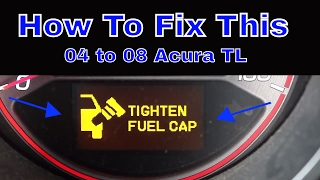
For a 2004-2008 Acura TL, code P0455 is most often caused by a loose or faulty gas cap. If tightening or replacing the cap (~$25) doesn't fix it, the next most likely culprits are a failed EVAP Purge Valve in the engine bay or the EVAP Vent Solenoid at the rear of the car. Many owners report the "Tighten Gas Cap" message appearing on the dash before the Check Engine Light illuminates.
- Always check the gas cap first. Ensure it's tight and the seal is intact before spending money on parts.
- If the gas cap isn't the issue, the EVAP purge valve in the engine bay is the next most likely and accessible part to inspect.
- A professional smoke test is the fastest way to find the leak if it's not the gas cap or an obvious cracked hose.
- This code will not leave you stranded, but it will prevent you from passing an emissions inspection.
What's Unique About the 2004-2008 Acura TL
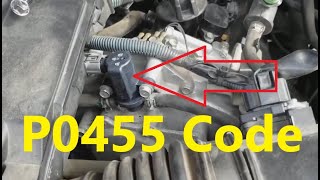
The 2004-2008 Acura TL (third generation) has a fairly standard EVAP system for its era, with components that are common failure points across many Honda/Acura J-series V6 platforms. Owner experiences on forums like Acurazine frequently point towards three main culprits for a P0455 code: a simple loose gas cap, a faulty EVAP canister purge valve located on the intake manifold in the engine bay, or a failed EVAP vent solenoid near the charcoal canister at the rear of the car. The vent solenoid is particularly susceptible to rust and debris due to its location under the car, behind the driver's side rear wheel. Unlike newer Acuras, this generation does not have a capless fuel filler 🎬 Watch: Overview of P0455 causes and common fixes, so TSBs related to those systems do not apply.
Symptoms You May Notice
- Check Engine Light is on.
- "Tighten Gas Cap" message on the Multi-Information Display (MID), which often appears for a few days before the Check Engine Light.
- A faint smell of fuel, especially around the rear of the car or near the driver's side rear wheel.
- A 'whoosh' sound of air when opening the gas cap.
- In some cases, a rough idle, shaking, or hesitation immediately after refueling. This strongly suggests the EVAP purge valve is stuck open, allowing un-metered fuel vapor into the intake manifold.
- Replacing the oxygen sensors. O2 sensors are not part of the EVAP system and will not cause a P0455 code.
- Replacing the fuel injectors. While a bad injector can cause performance issues, it is unrelated to the sealed EVAP system.
- Assuming an aftermarket gas cap is as good as OEM. Many forum users report that only a genuine Acura gas cap solved their P0455 issue after an aftermarket one failed to seal properly.
Most Likely Causes
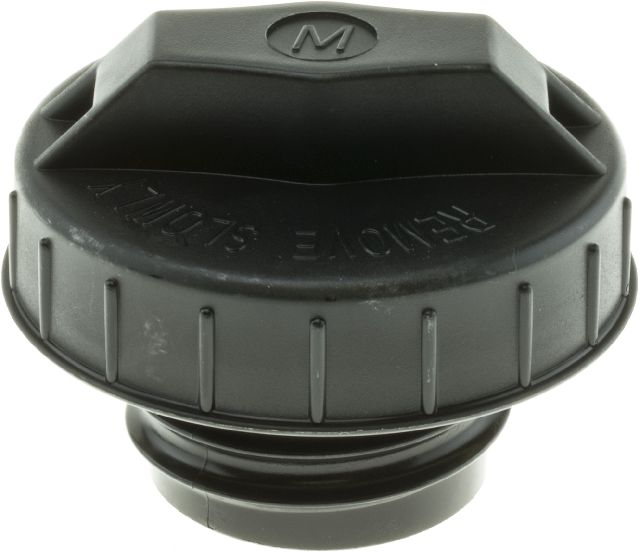
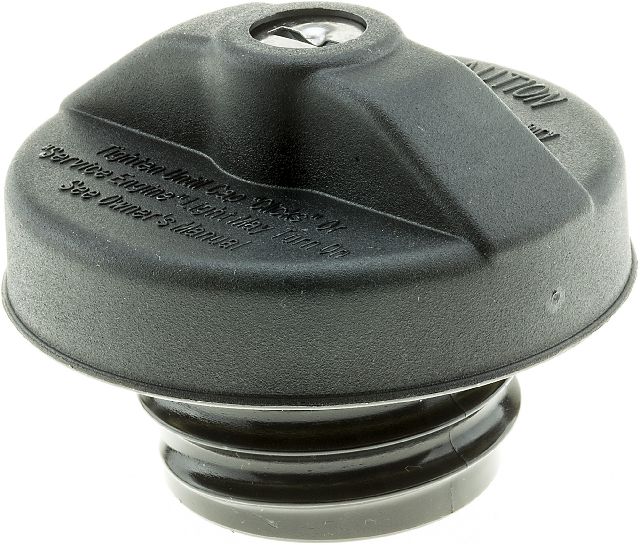
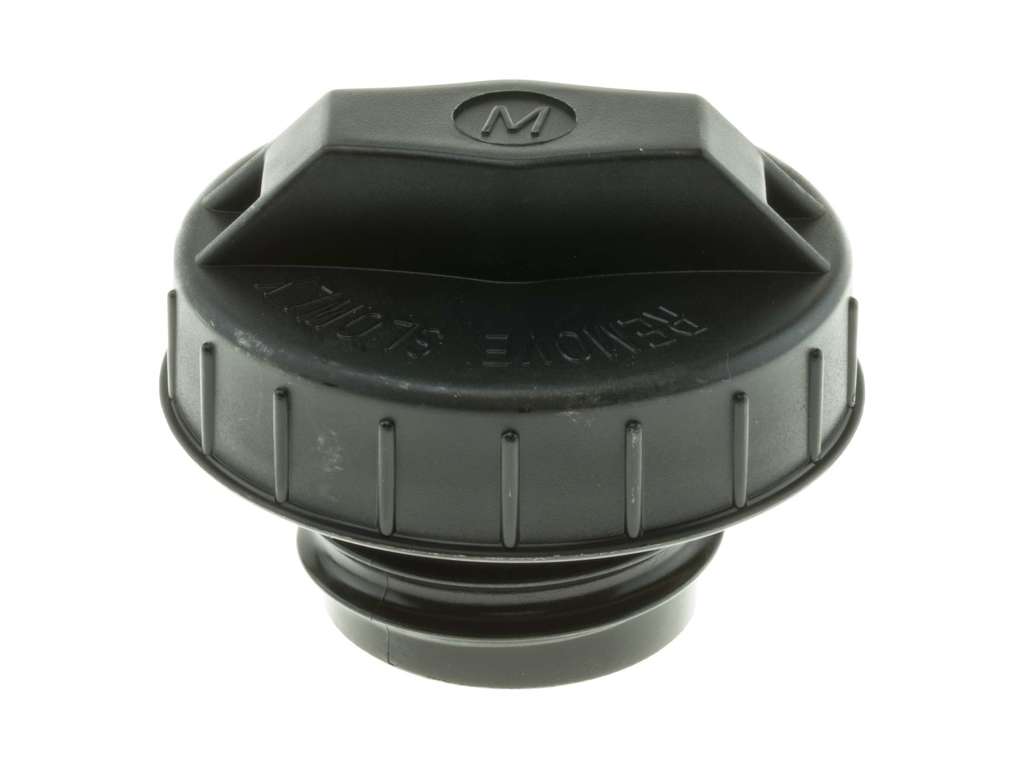
- Loose or Faulty Gas Cap 🔴 High Probability This is the most common cause for a P0455 on any vehicle. The rubber gasket on the cap can crack, stiffen, or degrade over time, preventing a proper seal. Owners often report that an aftermarket cap fails to solve the problem and that only an OEM Acura cap will work.
How to confirm: Ensure the gas cap is tightened until it clicks at least once. Inspect the rubber O-ring on the cap for cracks, stiffness, or damage. If the "Tighten Gas Cap" message persists or the P0455 code returns, replacing the cap with a genuine OEM part is an inexpensive and effective diagnostic step.
Typical fix: Tighten or replace the gas cap, preferably with an OEM part.
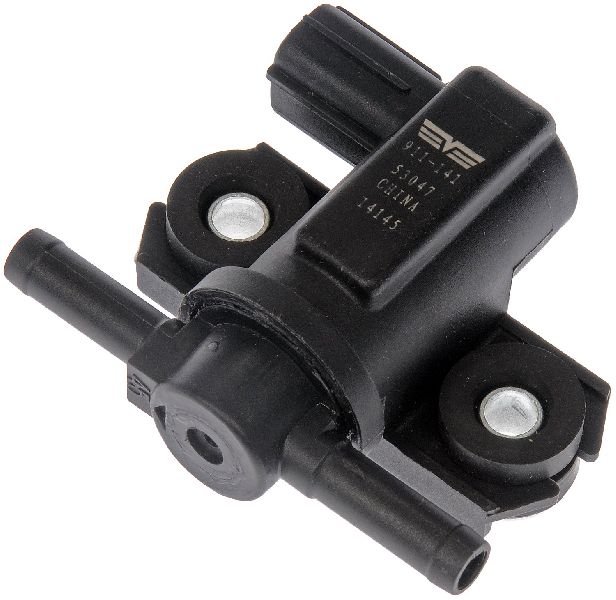
Est. part cost: $20-$40 - EVAP Canister Purge Valve Failure 🟡 Medium Probability This solenoid valve is a common failure item on many Honda/Acura products of this era, including the TL. It can get stuck open, creating a constant large leak that the system detects. A key symptom is a rough idle after getting gas.
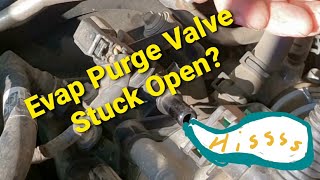
How to confirm: The purge valve is located in the engine bay, mounted on the intake manifold, making it easy to access. With the engine off, disconnect the valve's electrical connector and the two hoses. Try to blow through the valve. If air passes through, it is stuck open and has failed. It is a normally-closed valve. 🎬 See this quick test for a stuck open purge valve
Typical fix: Replace the EVAP canister purge valve. This is a 15-30 minute job with basic tools (10mm socket, pliers).
Est. part cost: $50-$190 - EVAP Canister Vent Solenoid (CVS) Failure 🟡 Medium Probability Located under the car near the charcoal canister (just behind the driver's side rear wheel), this valve is exposed to road salt, water, and debris, causing it to corrode and fail. The mounting screws are notorious for rusting and breaking during removal.
How to confirm: The vent solenoid is normally open. A capable scan tool can command it to close for testing. A definitive diagnosis often requires a smoke test to see if smoke escapes from the valve when it should be closed. A common failure is for it to get stuck open, preventing the system from sealing for its pressure test.
Typical fix: Replace the EVAP canister vent solenoid. This is more difficult than the purge valve, as it requires jacking up the car and removing the rear wheel and splash shields for access. It's recommended to purchase new mounting screws (Honda P/N: 93893-05010-08) beforehand as the old ones will likely be seized.
Est. part cost: $40-$110 - Cracked or Disconnected EVAP Hoses ⚪ Low Probability Rubber hoses become brittle and crack with age and exposure to engine heat and the elements. Rodents can also chew through the plastic and rubber lines.
How to confirm: Visually inspect all accessible EVAP hoses in the engine bay and under the car for obvious cracks or loose connections. The most effective way to find a hidden hose leak is with a smoke test, which a professional shop can perform.
Typical fix: Replace the cracked section of hose.
Est. part cost: $5-$30
Rare But Worth Checking
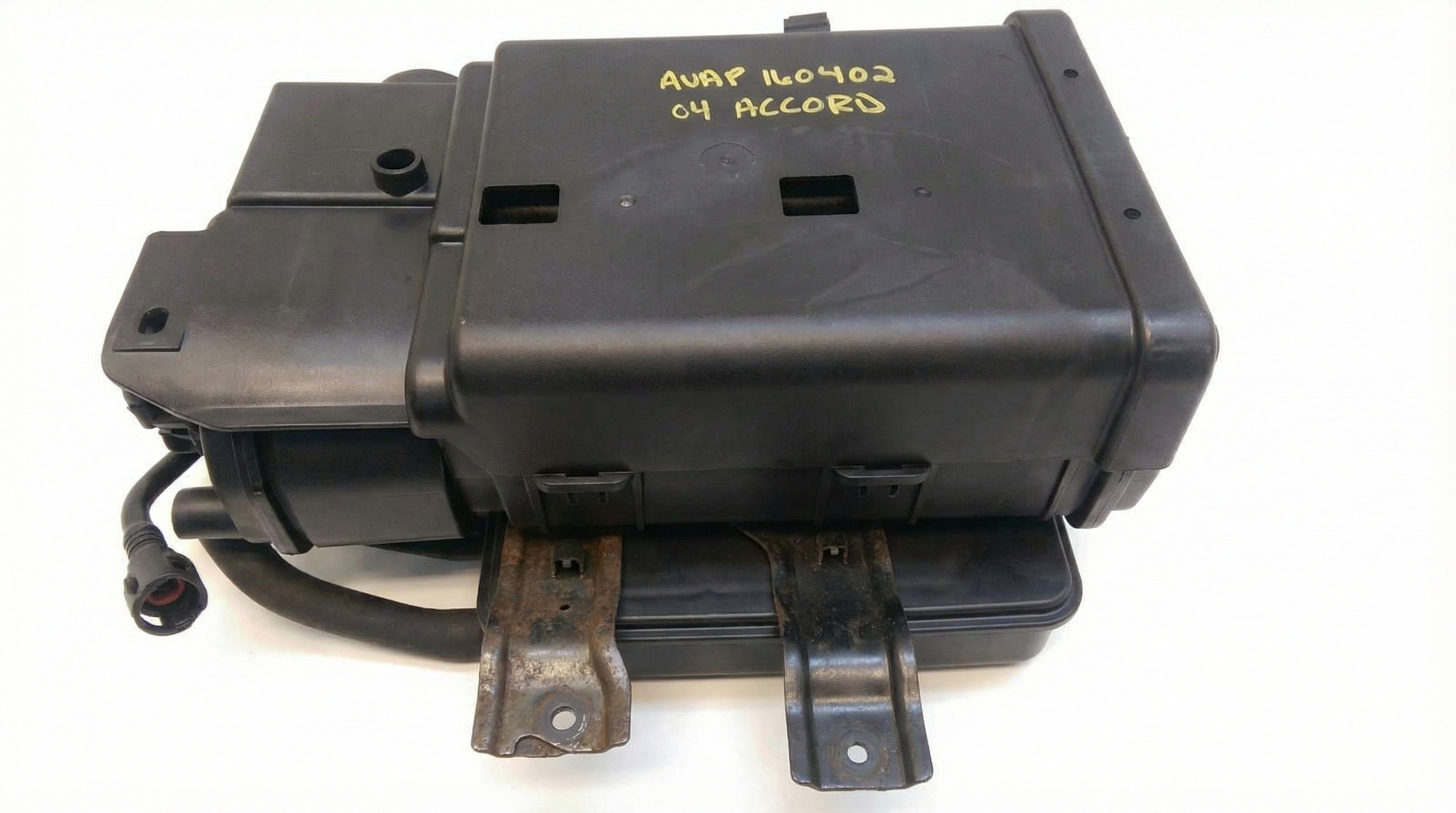
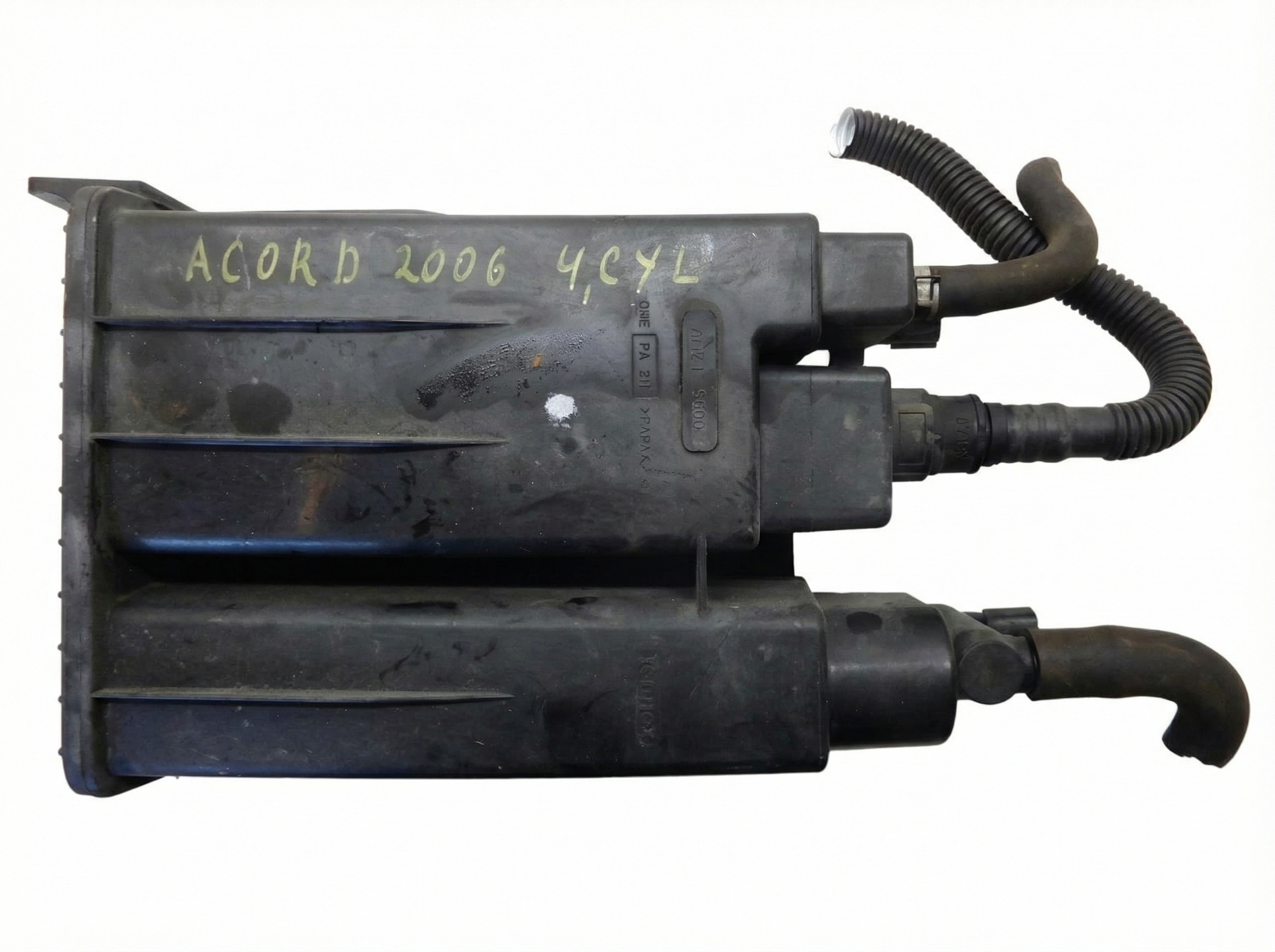
- Cracked Charcoal Canister: The plastic canister itself, located under the car near the driver's side rear wheel, can be damaged by road debris or a hard impact, leading to a large crack and a P0455 code. This is usually found during a visual inspection or a smoke test.
- Faulty Fuel Tank Pressure (FTP) Sensor: While less common for this specific code, the sensor that monitors system pressure can fail and send incorrect data to the ECM, falsely triggering a leak code. This is often accompanied by other FTP-specific codes (e.g., P0451, P0452, P0453).
Diagnosis Steps
- Check the Gas Cap: This is the first and easiest step. Remove the cap, inspect the seal for damage, and reinstall it, making sure it clicks several times. Many owners recommend using only an OEM replacement cap. Clear the codes and drive for a few days to see if the light returns.
- Visual Inspection: Look over the EVAP hoses in the engine bay connected to the purge valve on the intake manifold. Then, safely raise the vehicle and inspect the hoses and the charcoal canister assembly under the car, located forward of the driver's side rear wheel, for any obvious cracks, damage, or disconnections.
- Test the Purge Valve: Locate the purge valve in the engine bay. It's held on by two 10mm nuts. Disconnect the electrical plug and hoses. Try to blow air through it. It is a normally-closed valve, so if air passes through, it's stuck open and needs to be replaced.
- Perform a Smoke Test: If the leak is not obvious, the most effective diagnostic procedure is a smoke test. A machine injects low-pressure, vaporous smoke into the EVAP service port. The leak will be revealed by the escaping smoke. This is the best way to find cracked hoses, a bad vent valve, or a leaking canister.
Parts You'll Likely Need
- Gas Cap
(OEM #17670-SJA-013)— The seal on the gas cap is the most frequent failure point leading to a large EVAP leak code. Many owners insist on OEM for a proper seal.
Trusted brands: Acura (OEM), Stant
OEM price range: $25-$40
Aftermarket price range: $15-$25 - Vapor Canister Purge Solenoid Valve
(OEM #36162-RDV-J01)— This valve is a known failure point on this platform and will cause a P0455 if it gets stuck open. It is located on the intake manifold in the engine bay.
Trusted brands: Acura (OEM), Dorman, Standard Motor Products (SMP), Duralast (PV479)
OEM price range: $170-$200
Aftermarket price range: $50-$90 - Vapor Canister Vent Solenoid
(OEM #36160-SDA-A01)— This valve gets stuck open or closed due to its location under the car, exposed to the elements. It's part of the canister assembly. Its failure is a common cause for P0455 and the Honda-specific P1457 code.
Trusted brands: Acura (OEM), Dorman (911-764), Standard Motor Products (SMP)
OEM price range: $70-$110
Aftermarket price range: $40-$80
Related Codes That Often Appear With This One
- P0456 — A P0456 (Small Leak) might appear alongside a P0455 if there are multiple leaks of different sizes or if a component is failing intermittently, causing the leak size to vary.
- P1456 / P1457 — These are Honda/Acura specific codes that also relate to the EVAP system. Their presence can help narrow down the leak's location. P1456 indicates a leak in the fuel tank side of the system, while P1457 points to a leak on the canister side (where the vent solenoid is). TSB 03-001 addresses P1457 caused by corrosion in EVAP components.
- P0497 — This code for 'EVAP System Low Purge Flow' often points directly to a problem with the EVAP Purge Valve, making it a strong companion code to P0455 when that specific part is the culprit.
Technical Service Bulletins (TSBs) & Recalls
- Acura TSB 03-001: While not directly for P0455, this TSB addresses the related code P1457 on many Honda/Acura models of the era, including the Integra. It notes that internal corrosion from water intrusion can cause the EVAP bypass solenoid valve to fail and potentially damage the PCM. This highlights the known issue of corrosion on under-car EVAP components for this manufacturer.
Platform-Specific Known Issues
- Rust on Vent Solenoid: Due to its location under the car, the vent solenoid and its mounting hardware are highly prone to rust, especially in regions that use road salt. The mounting screws often break off during removal, so it is highly advisable to have replacements on hand before starting the job.
Mechanic-Grade Diagnostic Values
- EVAP Canister Purge Valve Resistance — expected: Approximately 33-36 Ohms at room temperature.. Failure: A reading of infinity (open circuit) or zero Ohms (short circuit) indicates a failed solenoid.
- EVAP Canister Vent Solenoid Resistance — expected: Approximately 20-30 Ohms.. Failure: A reading significantly outside this range, or completely open, indicates the valve's electromagnet has failed.
- Fuel Tank Pressure (FTP) Sensor Voltage (Key On, Engine Off) — expected: Approximately 1.5V with the gas cap off (atmospheric pressure). Voltage will change as pressure/vacuum is applied.. Failure: Voltage stuck at 0V, 5V, or not changing when pressure changes indicates a faulty sensor or wiring issue.
- EVAP Purge Valve Connector Voltage (Key On, Engine Running) — expected: One pin should have constant battery voltage (approx. 12V). The other pin is a ground controlled by the PCM, which will show a fluctuating voltage or on/off signal (duty cycle) when tested with a multimeter or power probe.. Failure: Absence of battery voltage points to a fuse or wiring issue. Absence of the PCM ground signal could mean a wiring or PCM driver fault.
Scan Tool Commands That Help
- Honda Diagnostic System (HDS) or equivalent professional scanner: EVAP System Functional Test — This is a comprehensive, automated test that commands the purge and vent valves to open and close in sequence while monitoring the FTP sensor to check the entire system's integrity. It's used to confirm a leak exists and to verify a repair has been successful.
- Honda Diagnostic System (HDS) or equivalent bidirectional scanner: EVAP Canister Vent Shut Valve ON/OFF — This command manually closes the normally-open vent valve. It is essential for performing a smoke test, as it seals the system, allowing smoke to build pressure and reveal leaks.
- Honda Diagnostic System (HDS) or equivalent bidirectional scanner: EVAP Canister Purge Valve ON/OFF (or Duty Cycle Control) — This command manually opens the normally-closed purge valve. A technician can use this to check if the valve is physically stuck by listening for a click or feeling for vacuum. It also helps diagnose flow issues (like P0497) by commanding it open and checking for vacuum at the intake port.
Wiring & Ground Locations
- EVAP Purge Valve Connector — In the engine bay, on the intake manifold. It's a 2-pin connector.. One wire is the Black/Yellow wire which should have battery voltage with the key on. The other is the Red/Yellow wire, which is the ground signal from the PCM. Verifying power and signal here is a key step in diagnosing a faulty valve versus a wiring problem.
- G101 — On the left side of the engine.. This is a primary engine ground. A poor connection here can cause a variety of issues with engine sensors and actuators, including those in the EVAP system.
- G503 / G505 — G503 is under the middle of the dash; G505 is under the center console.. These are interior ground points. The ECM/PCM, which controls the EVAP system, is located behind the center of the dash and relies on these grounds. A loose or corroded ground here could potentially affect PCM operation and its ability to control the EVAP solenoids.
Real Owner Repair Stories
- Reddit user on r/Acura (2008 Acura TL) — Check Engine Light. Hard starting after refueling (engine keeps cranking unless the gas pedal is pressed). RPMs fluctuate when the gas cap is removed or during refueling.
❌ Tried (didn't work) Replacing the EVAP Canister Purge Valve (this cleared the initial P0455 but a new code, P1454, appeared)., Replacing the Fuel Tank Pressure (FTP) sensor (the P1454 code returned).
✅ What actually fixed it The user's issue pointed towards a complex EVAP system fault where replacing individual components did not solve the underlying problem, suggesting a potential wiring harness or PCM issue as the next diagnostic step. The key takeaway is that for symptoms like rough idle after fill-up, the purge valve is a strong suspect, but if codes persist, the FTP sensor and its circuit are the next logical step.
OEM Part Supersession History
36162-RDM-A01→36162-RDV-J01— Standard part revision and update by the manufacturer.
Heads up: A user on Reddit noted that the EVAP Purge Valve from a Honda Odyssey (Part No. 36162-RJA-A01) is physically identical and functions correctly in the 3rd Gen TL, often at a significantly lower cost than the Acura-branded part.17670-SJA-A01, 17670-SJA-A02→17670-SJA-013, which is now superseded by 17670-T3W-A01— Multiple revisions by the manufacturer for the gas cap assembly.
Heads up: While multiple part numbers exist, for the 2004-2008 TL, the key is to use a cap designed for this specific generation. The part number 17670-SHJ-A31 is listed for 2005-2008 models specifically.
Diagnostic Flowchart
Real Owner Stories
Aggregated from forums and TSBs cited above. Mileages and costs reflect what owners reported in those sources.
2007 Acura TL
Symptoms: The 'tighten fuel cap' message appeared on the display for several days before the Check Engine Light finally came on with codes P0455 and P0456.
What fixed it: Identified the Purge Valve Solenoid as the culprit and replaced it with an OEM part.
Source hint: Acurazine.com - 'Pressure issues (Codes P0108 P0455 P0456 C1555)'
2007 Acura TL
Symptoms: The car felt sluggish and would shake specifically on the first start immediately after getting gas, accompanied by P0455 and P0456 codes.
What fixed it: Replaced a faulty purge valve. The owner noted that a previous replacement purge valve had also failed, showing that even replacement parts can go bad.
Source hint: Acurazine.com - 'Evap p0455 and p0456'
Acura 2G CL
Symptoms: Needed to replace the EVAP canister and shut valve located under the driver's side of the car.
What fixed it: Replaced the canister and vent valve. The owner specifically noted that the original mounting screws were completely rusted and useless, requiring replacement.
Source hint: Acurazine.com - 'DIY: EVAP Canister & Shut Valve Replacement'
Honda Accord V6
Symptoms: Received a 'Check fuel cap' warning that eventually resulted in a P0455 code.
What fixed it: Replaced the purge valve. A mechanic recommended this as a cheap and easy first step after checking the gas cap, but warned to be careful not to drop the mounting washers into the engine bay during the swap.
Source hint: Reddit.com/r/Honda - '“Check fuel cap” turned out to be P0455, what now?'
Related OBD-II Codes
Frequently Asked Questions
Why does my 2004-2008 Acura TL show a 'Tighten Gas Cap' message before the P0455 code appears?
My TL shakes and idles rough right after I get gas. Is this related to P0455?
I replaced my gas cap with an aftermarket one, but the P0455 code came back. What should I do?
Does Acura TSB 03-001 apply to my P0455 code?
I'm replacing the EVAP canister vent solenoid on my TL. Are there any specific parts I need besides the valve?
How can I easily test the purge valve on my 3G Acura TL?
Helpful Videos
Used OEM Parts in Stock
New Aftermarket Parts Available


The information in this article is provided for general reference and educational purposes only. Vehicle specifications, procedures, and part compatibility can vary by production date, trim level, and region. Always consult your vehicle's factory service manual and verify part numbers before purchasing or performing repairs. Safety-critical components such as airbags, seat belts, and braking systems should be installed by a qualified professional.
- Acura TL:
- 🎬 Helpful Videos
- 🛍️ Shop This Part
- What's Unique About the 2004-2008 Acura TL
- Symptoms You May Notice
- Most Likely Causes
- Rare But Worth Checking
- Diagnosis Steps
- Parts You'll Likely Need
- Related Codes That Often Appear With This One
- Technical Service Bulletins (TSBs) & Recalls
- Platform-Specific Known Issues
- Mechanic-Grade Diagnostic Values
- Scan Tool Commands That Help
- Wiring & Ground Locations
- Real Owner Repair Stories
- OEM Part Supersession History
- Diagnostic Flowchart
- Real Owner Stories
- 2007 Acura TL
- 2007 Acura TL
- Acura 2G CL
- Honda Accord V6
- Related OBD-II Codes
- Frequently Asked Questions
- 🎟️ Get 5% Off