

P0449 on 2007-2014 Cadillac Escalade: EVAP Vent Valve Circuit Causes and Fixes
On a 2007-2014 Escalade, P0449 is almost always caused by a failed EVAP vent valve solenoid located above the spare tire. This is an electrical circuit code, not a leak code. Replacing the solenoid, and often an adapter harness, is the most common fix. Expect to pay $40-$80 for the parts for a DIY repair.
- P0449 on a 2007-2014 Escalade almost always points to the EVAP vent solenoid located above the spare tire.
- A key symptom, besides the Check Engine Light, is the gas pump nozzle repeatedly shutting off when you try to refuel.
- The fix is straightforward for a DIYer: lower the spare tire and replace the solenoid. Be prepared to also need a wiring adapter (Part No. 19257603) for the updated solenoid (Part No. 23481275).
- Before replacing parts, always check the EVAP fuse and visually inspect the wiring to the solenoid for corrosion or damage.
What's Unique About the 2007-2014 Cadillac Escalade

On this generation of GM trucks and SUVs (GMT900 platform), P0449 is an extremely common and well-documented issue. The original EVAP vent solenoid's location above the spare tire makes it highly susceptible to water, dirt, and road salt kicked up by the rear wheels, leading to corrosion and premature electrical failure. GM acknowledged this design flaw by releasing an updated, better-sealed vent valve assembly and issuing Technical Service Bulletin 09-06-04-028D. This TSB details a procedure to replace the valve and relocate the fresh air intake vent hose to a cleaner, drier location near the fuel filler neck to prevent repeat failures.
Symptoms You May Notice
- Check Engine Light is on
- Difficulty filling the gas tank (fuel pump nozzle clicks off repeatedly)
- Remote start system is disabled
- A faint smell of fuel around the vehicle
- Replacing the gas cap. A bad gas cap typically causes EVAP leak-related codes like P0455 or P0442, not a circuit code like P0449.
- Replacing the EVAP Purge Solenoid. The purge solenoid is a different part located in the engine bay and is associated with its own circuit code, P0443.
Most Likely Causes

- Failed EVAP Vent Valve Solenoid 🔴 High Probability The original part is poorly protected from road debris and moisture, causing the internal solenoid coil to fail electrically (open circuit) or the valve to seize. This is the most common failure on the GMT900 platform.
How to confirm: After confirming power and ground at the connector, the solenoid is the default failure point. You can test its internal resistance with a multimeter; a good solenoid should have a resistance of around 21 ohms, while a failed one will show an open circuit (infinite resistance). You can also try applying 12V directly to the solenoid's pins; a good valve will make an audible 'click'.
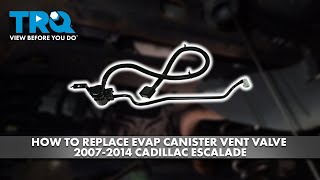
Typical fix: Replace the EVAP vent valve solenoid. 🎬 Watch: Step-by-step guide to replacing the vent valve solenoid. It is located above the spare tire. It's highly recommended to use the updated GM part and the corresponding adapter harness if needed. Many owners opt for the full kit which includes the hose for the relocation described in the TSB.
Est. part cost: $30-$60 - Corroded or Broken Wiring/Connector 🟡 Medium Probability The wiring harness to the vent solenoid is exposed to the elements under the truck, making it vulnerable to corrosion from road salt, especially in northern climates. Wires can break at the connector or further up the harness.
How to confirm: Visually inspect the two wires leading to the vent solenoid connector for green corrosion, chafing, or breaks. Use a multimeter to test for 12V power on the power wire (often pink) with the key on. Then check the continuity of the control wire (often white) back to the ECM.
Typical fix: Repair the broken wire(s) using solder and heat-shrink tubing or replace the connector pigtail if the corrosion is at the pins.
Est. part cost: $5-$25 - Blown EVAP Fuse ⚪ Low Probability
How to confirm: Check the fuse box under the hood for a blown fuse labeled for the EVAP system. On a 2007 model, this is reportedly fuse #14 (10A). Consult your owner's manual for the exact fuse location for your model year.
Typical fix: Replace the blown fuse. If the fuse blows again immediately, it indicates a short circuit in the wiring to the solenoid that must be found and repaired.
Est. part cost: $1-$5
Rare But Worth Checking
- Faulty Engine Control Module (ECM): This is extremely rare. The ECM should only be considered as the cause after the solenoid, wiring, and fuses have all been thoroughly tested and confirmed to be good.
Diagnosis Steps

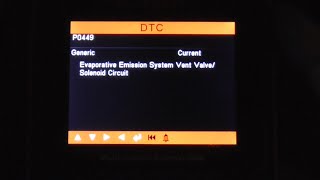
- Read the trouble codes with an OBD-II scanner to confirm P0449 is present.
- Check the EVAP fuse in the under-hood fuse block (e.g., 10A fuse #14 on some models).
- Safely raise the rear of the vehicle. Locate the spare tire winch access hole in the rear bumper and use the vehicle's jack tools to turn the winch counter-clockwise and lower the spare tire to the ground. Remove the tire for access. 🎬 Watch this full diagnosis and repair on an Escalade ESV.
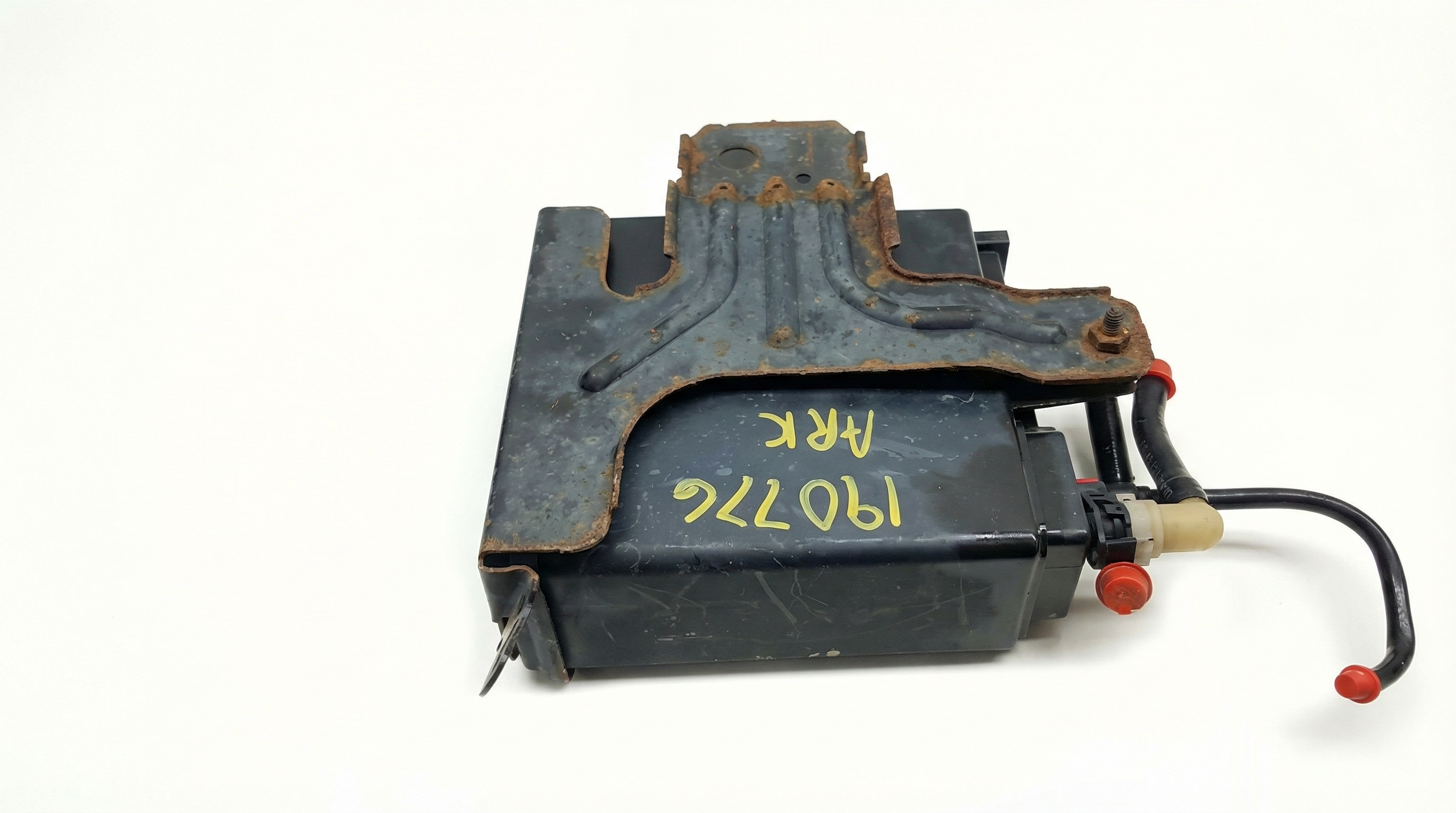
- Locate the vent valve solenoid. It is mounted on or next to the charcoal canister, which is a black plastic box above where the spare tire sits.
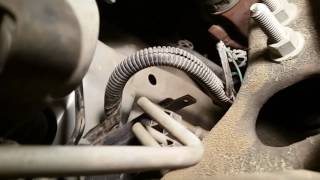
- Carefully inspect the electrical connector and wiring going to the solenoid for any signs of damage, corrosion (green crust), or breaks.
- With the ignition on (engine off), disconnect the connector and use a multimeter to verify that one of the pins in the connector has 12 volts (battery voltage).
- If power is present, the solenoid is the most likely cause. Test the solenoid's resistance between its two pins. A reading of ~20-30 Ohms is good; an open circuit (OL) means the solenoid is bad.
- Replace the vent valve solenoid. It is highly recommended to also purchase the adapter harness, as the new part often has an updated connector design.
- If power is not present at the connector, trace the power wire (often pink) back towards the front of the vehicle to find the break or short circuit.
- After the repair, clear the codes with the scanner and perform a drive cycle to ensure the Check Engine Light does not return.
Parts You'll Likely Need

- EVAP Vapor Canister Vent Valve Solenoid
(OEM #23481275 (supercedes older numbers like 19207763))— This is the component that fails most frequently, either electrically or mechanically, causing the P0449 code.
Trusted brands: ACDelco (OEM), Dorman (e.g., 911-070), Standard Motor Products
OEM price range: $45-$70
Aftermarket price range: $30-$55 - EVAP Vent Valve Solenoid Connector Adapter
(OEM #19257603)— GM updated the vent solenoid design, and the new part has a different electrical connector than the original. This adapter harness is often required to connect the new solenoid to the existing vehicle harness, particularly on 2010 and earlier models.
Trusted brands: ACDelco, Dorman
OEM price range: $15-$25
Aftermarket price range: $10-$20
Related Codes That Often Appear With This One
- P0446 — This code indicates an EVAP Vent Control System Performance issue. It is often triggered by the same faulty vent solenoid that causes P0449 and is listed in the same TSB.
- P0455 — This indicates a large EVAP leak. While often a bad gas cap, a vent solenoid that is mechanically stuck open can also be interpreted by the system as a large leak.
Technical Service Bulletins (TSBs) & Recalls
- 09-06-04-028D: Details the cause of P0449 (and related codes) as water/debris intrusion into the vent valve. It provides an updated part and a detailed repair procedure to relocate the vent filter to a less exposed area near the fuel filler pipe to prevent recurrence.
- Bulletin #PIE0528: While issued for a different Cadillac model, this engineering informational bulletin notes that technicians may find P0449 set alongside other EVAP codes like P0442, P0455, and P0446, and requests field information regarding canister assembly performance.
Platform-Specific Known Issues
- GM issued Technical Service Bulletin 09-06-04-028D for this issue. The official fix involves replacing the original vent solenoid with an updated, sealed design and installing a new vent hose with a filter box. This hose is routed up and secured to the fuel filler neck, moving the air intake to a cleaner, drier location to prevent repeat failures from water intrusion.
Mechanic-Grade Diagnostic Values
- EVAP Vent Valve Solenoid Resistance — expected: ~20-30 Ohms. Failure: Open circuit (OL or infinite resistance) indicates a failed internal coil.
- EVAP Vent Valve Solenoid Current Draw (when activated) — expected: ~590 milliamps (0.59 Amps). Failure: 0 amps indicates an open circuit or no power; significantly higher amps would indicate a short.
- Voltage on Control Wire at Solenoid Connector (Key On, Engine Off, Solenoid NOT commanded) — expected: Battery Voltage (~12V). Failure: A lower voltage (e.g., ~10V) indicates high resistance in the solenoid coil, which will trigger P0449. 0V indicates an open in the power feed or a short to ground.
Scan Tool Commands That Help
- Tech 2 / GDS2 / Professional Aftermarket Scanners: EVAP Service Bay Test — This function allows the technician to force the EVAP system to run its self-test procedure while the vehicle is stationary. It commands the vent valve closed and the purge valve open to create a vacuum and test system integrity, confirming a repair without needing a full drive cycle.
- Tech 2 / GDS2 / Professional Aftermarket Scanners: Vent Valve Solenoid On/Off Command — This bidirectional control allows you to manually command the vent solenoid on and off to verify its operation. You should hear an audible click from the solenoid and see a change in current draw if it is working correctly.
Wiring & Ground Locations
- EVAP Vent Solenoid Connector — Above the spare tire, plugged into the vent solenoid which is attached to or near the charcoal canister.. This is the primary point for electrical testing. One pin should have ~12V with key-on (power feed), and the other is the control wire that the ECM grounds to activate the solenoid.
- Engine Control Module (ECM) — Located in the engine compartment, on the left (driver's) side.. The ECM provides the ground signal to the control wire for the vent solenoid. A failure of the ECM's internal driver circuit is a rare but possible cause for P0449 if the wiring and solenoid are good.
Real Owner Repair Stories
- YouTube - 'GM Diagnostic for code P0449' by Angry Mechanic (GM Truck (GMT900 platform)) — Check Engine Light with code P0449, which would return immediately after clearing.
❌ Tried (didn't work) Clearing the code without fixing the part.
✅ What actually fixed it The mechanic demonstrated that plugging a test light into the vehicle's harness connector would allow the code to stay cleared, proving the wiring and ECM were good. Plugging the old solenoid back in caused the code to return instantly. The final fix was replacing the faulty EVAP vent valve solenoid. - YouTube - '2008 Escalade ESV - P0449 Code (Canister Vent Valve) Diagnosis and Repair' (2008 Cadillac Escalade ESV) — Check Engine Light with code P0449.
❌ Tried (didn't work) Initially suspected the purge valve in the engine bay, but confirmed it was unrelated to the P0449 code.
✅ What actually fixed it The owner tested the resistance of the original vent solenoid and found it was an open circuit ('OL' on the multimeter). A new solenoid showed a correct resistance reading (0.21 k-ohms in the video). Replacing the entire vent valve assembly resolved the code.
OEM Part Supersession History
Multiple, including 19207763, 25932566, 20995472, and others.→23481275— The original design was prone to failure from water and debris intrusion. The updated part is better sealed to improve longevity, as outlined in TSB 09-06-04-028D.
Heads up: The updated part (23481275) uses a different connector than early models. Vehicles from 2010 and earlier typically require adapter harness PN 19257603 to connect the new solenoid to the factory wiring.
Model Year Variations Within This Range
- 2007-2010: These model years came from the factory with an older style electrical connector for the EVAP vent solenoid. When replacing with the updated OEM part (23481275), they require an adapter harness, part number 19257603.
- 2011-2014: These later models likely came equipped with the updated connector from the factory and typically do not require the adapter harness when replacing the vent solenoid.
Diagnostic Flowchart
Other Known Issues on This Vehicle
Issues unrelated to this code that are worth knowing about as an owner of this generation:
- Active Fuel Management (AFM) Lifter Failure 🔴 High — Common, especially on higher-mileage vehicles or those with infrequent oil changes. Can occur anytime after 60,000 miles. (Ref: Multiple TSBs exist acknowledging lifter issues.)
- Cracked Dashboard 🟠 Medium — Extremely common across all GMT900 trucks and SUVs, regardless of mileage or climate. Cracks typically form near the passenger airbag and instrument cluster. (Ref: No recall, but subject of class-action lawsuits.)
- Failing Door Lock Actuators 🟡 Low — A very common annoyance where one or more door locks stop responding to the remote or interior switch.
- Peeling Interior Button Finishes 🟡 Low — Widespread cosmetic issue where the coating on radio and climate control buttons wears off, revealing the white plastic underneath.
- Air Ride Suspension Compressor Failure 🟠 Medium — The air compressor for the rear auto-leveling suspension is prone to failure from age and moisture, causing a 'Service Suspension System' message and a sagging rear end.
Used vs. New Parts: Buying Guide for This Vehicle
When a used part is the smart pick: For this specific repair, buying a used part from a junkyard is NOT recommended. The failure is due to a well-known design flaw and exposure to the elements. A used part carries a very high risk of either being already faulty or failing shortly after installation, making the labor of dropping the spare tire pointless for the minimal cost savings.
OEM-only on this vehicle (don't cheap out):
- While not strictly 'OEM-only', the highest-confidence repair involves using the ACDelco (OEM) updated vent valve (23481275) and the associated relocation kit described in the TSB to prevent repeat failures.
Aftermarket brands forum-validated for this vehicle:
- Dorman (part # 911-070 is a common alternative)
- Standard Motor Products (SMP)
Brands owners have reported issues with on this vehicle:
- No specific brands are consistently cited as problematic for this part, but due to the low cost of reliable brands, unknown or 'white-box' parts from online marketplaces should be avoided.
Real Owner Stories
Aggregated from forums and TSBs cited above. Mileages and costs reflect what owners reported in those sources.
2008 Escalade ESV
Symptoms: Check Engine Light on with code P0449.
What fixed it: Diagnosed a bad canister vent valve by testing the old and new solenoids with a multimeter and replaced the faulty part.
Source hint: YouTube - '2008 Escalade ESV - P0449 Code (Canister Vent Valve) Diagnosis and Repair'
2007-2014 GM Truck/SUV (GMT900 Platform)
Symptoms: Check Engine Light on, requiring replacement of the evaporative emission vent valve solenoid.
What fixed it: Replaced the vent valve solenoid, following the detailed DIY guide which confirms the information in the official TSB.
Source hint: GM-Trucks.com - 'How-To: Replace Evaporative Emission Vent Valve Solenoid for GMT900'
2007-2009 GM Truck/SUV
Symptoms: Check Engine Light on with code P0449.
What fixed it: Performed a DIY replacement of the EVAP vent solenoid.
Source hint: Truck-Forums.com - 'P0449-How To Replace Evap. Vent Solenoid'
Related OBD-II Codes
Frequently Asked Questions
Is there an official GM fix or TSB for the P0449 code on my Escalade?
Where is the EVAP vent valve solenoid located on a 2007-2014 Cadillac Escalade?
My remote start stopped working when the check engine light came on. Is this related to P0449?
I'm having trouble filling my gas tank; the pump keeps clicking off. Could this be caused by the P0449 code?
When buying a replacement vent solenoid, do I need any other parts?
How can I test the vent solenoid myself to confirm it's bad?
Are other GM trucks like the Tahoe or Silverado also prone to this P0449 problem?
Helpful Videos

Used OEM Parts in Stock
New Aftermarket Parts Available


The information in this article is provided for general reference and educational purposes only. Vehicle specifications, procedures, and part compatibility can vary by production date, trim level, and region. Always consult your vehicle's factory service manual and verify part numbers before purchasing or performing repairs. Safety-critical components such as airbags, seat belts, and braking systems should be installed by a qualified professional.
- Cadillac Escalade:
- 🎬 Helpful Videos
- 🛍️ Shop This Part
- What's Unique About the 2007-2014 Cadillac Escalade
- Symptoms You May Notice
- Most Likely Causes
- Rare But Worth Checking
- Diagnosis Steps
- Parts You'll Likely Need
- Related Codes That Often Appear With This One
- Technical Service Bulletins (TSBs) & Recalls
- Platform-Specific Known Issues
- Mechanic-Grade Diagnostic Values
- Scan Tool Commands That Help
- Wiring & Ground Locations
- Real Owner Repair Stories
- OEM Part Supersession History
- Model Year Variations Within This Range
- Diagnostic Flowchart
- Other Known Issues on This Vehicle
- Used vs. New Parts: Buying Guide for This Vehicle
- Real Owner Stories
- 2008 Escalade ESV
- 2007-2014 GM Truck/SUV (GMT900 Platform)
- 2007-2009 GM Truck/SUV
- Related OBD-II Codes
- Frequently Asked Questions
- 🎟️ Get 5% Off