

P0448 on 2005-2012 Nissan Pathfinder: EVAP Vent Control Valve Circuit Short Causes and Fixes
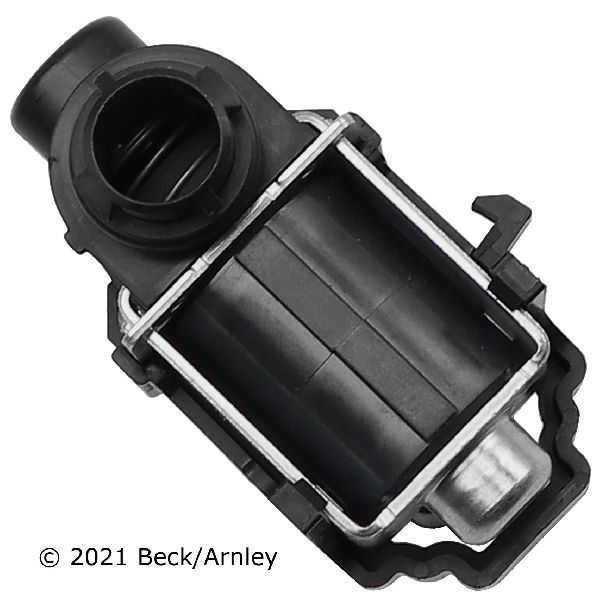
On a 2005-2012 Pathfinder, code P0448 is almost always caused by a failed or dust-clogged EVAP canister vent control valve, located at the rear of the vehicle on the charcoal canister. It often gets stuck or shorts out due to dirt and moisture intrusion, a known design issue. Replacing the valve (and sometimes cleaning or replacing the canister) is the most common fix, costing around $40-$100 for the part.
- P0448 on a 2005-2012 Pathfinder almost always points to the EVAP canister vent control valve.
- The most common symptom, besides the Check Engine Light, is the gas pump constantly clicking off when you try to refuel.
- The valve is located at the rear of the vehicle on the charcoal canister and fails due to exposure to dirt and moisture.
- Replacing the vent valve is a simple, DIY-friendly job that usually takes less than an hour.
- Before buying parts, inspect the valve's electrical connector for corrosion and the canister port for dirt, as cleaning these may solve the issue.
What's Unique About the 2005-2012 Nissan Pathfinder

The third-generation (R51) Pathfinder, along with its platform-mates the Frontier and Xterra, is highly susceptible to P0448. This is due to the design and location of its EVAP system components. The vent control valve and charcoal canister are mounted at the rear of the vehicle, where they are exposed to road debris, water, and salt. A significant design flaw allows fine dust and dirt, often kicked up near the fuel filler area, to be ingested into the EVAP system's air intake. This debris clogs the vent valve and the charcoal canister, leading to the valve sticking or shorting out. This is a well-documented issue in Nissan forums, and Nissan addressed it for the Frontier with TSB NTB15-079d, which involves replacing the valve, canister, and adding a foam seal to the fuel filler pipe to block dust.
Generation note: The 2005-2012 year range covers the third generation (R51) of the Nissan Pathfinder. This guide is specific to this generation, which shares its F-Alpha platform and this particular EVAP system vulnerability with the D40 Frontier and N50 Xterra.
Symptoms You May Notice

- Check Engine Light is on
- Difficulty filling the fuel tank (gas pump nozzle shuts off repeatedly).
- A faint fuel odor near the rear of the vehicle
- "Loose Gas Cap" message on the dashboard in some cases
- Replacing the gas cap. A bad gas cap typically causes a leak-related code (like P0455 or P0456), not a circuit-shorted code like P0448.
- Replacing the EVAP purge valve/solenoid. The purge valve is located in the engine bay and has its own set of diagnostic codes (e.g., P0443). P0448 specifically points to the vent control circuit at the rear of the vehicle.
Most Likely Causes

- Failed or Clogged EVAP Canister Vent Control Valve 🔴 High Probability The valve is located in a vulnerable position at the rear of the vehicle, exposed to road grime, water, and debris. A design flaw allows dust to be sucked into the system, clogging the valve mechanism and causing it to stick closed or short out internally.
How to confirm: Locate the valve on the charcoal canister behind the driver's side rear wheel. Inspect the connector for corrosion. Use a multimeter to check for resistance across the valve's terminals (an open or shorted reading indicates failure). Apply 12V power to the valve's terminals; a healthy valve will make an audible click. No click means the solenoid is dead. 🎬 Watch: How to test the solenoid and clear the code
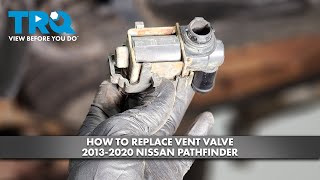
Typical fix: Replace the EVAP canister vent control valve. This is a simple twist-off, twist-on part, though access can be tight. Ensure the new part is the updated design. 🎬 See this easy walkthrough for replacing the vent valve
Est. part cost: $40-$100 - Clogged or Saturated EVAP Charcoal Canister 🟡 Medium Probability The same dust and dirt that clogs the vent valve also accumulates inside the charcoal canister, restricting airflow. This is often the root cause of repeat vent valve failures.
How to confirm: After removing the vent valve, inspect the port on the canister. If it is full of fine dust or dirt, the canister is clogged. In a forum post on TheNissanPath.com, a user described removing the canister and blowing a large puff of fine dust out of the vent valve port to fix the code.
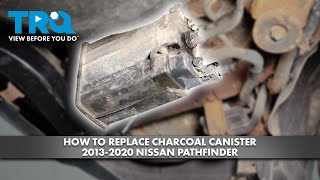
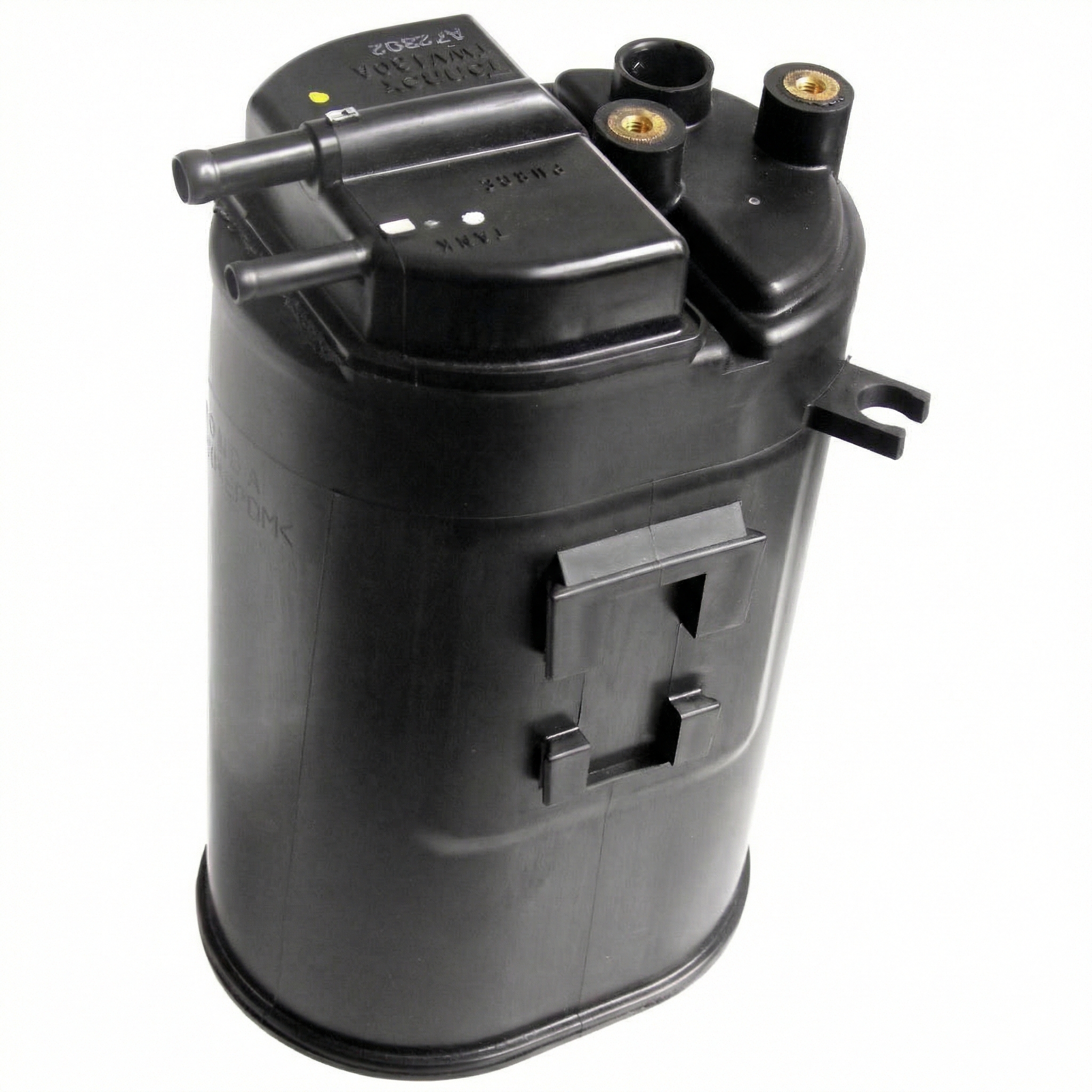
Typical fix: Replace the entire EVAP charcoal canister assembly. Some owners have successfully cleaned the canister by removing it and blowing it out with compressed air, but this may be a temporary solution. Replacement is the more reliable long-term fix, especially if charcoal pellets are loose.
Est. part cost: $150-$300 - Damaged Wiring or Corroded Connector ⚪ Low Probability The wiring harness for the vent control valve is in the same exposed location as the valve itself, making it susceptible to damage from road debris and corrosion from water and salt, especially in rust-belt regions.
How to confirm: Visually inspect the wiring harness and the electrical connector going to the vent control valve for any breaks, chafing, or green/white corrosion on the pins. Use a multimeter to confirm 12V power at the connector with the key on.
Typical fix: Repair the damaged section of wire or replace the corroded connector pigtail.
Est. part cost: $15-$40
Rare But Worth Checking
- Failed Powertrain Control Module (PCM): This is very rare. Before suspecting the PCM, all other possibilities, including the valve, canister, and wiring, must be thoroughly ruled out. Manufacturer service bulletin #P9328_P9343_P934 notes that due to calibration errors, the ECM may improperly store a permanent diagnostic trouble code for P0448, requiring a software reprogram.
Diagnosis Steps

- Read the Code: Confirm P0448 is the primary code. Note if P0447 is also present.
- Inspect the Gas Cap: While not a likely cause, ensure the gas cap is tight and the seal is intact.
- Locate the EVAP Canister and Vent Valve: Find the charcoal canister assembly at the rear of the vehicle, behind the driver's side rear wheel. You may need to remove the spare tire for better access.
- Inspect the Electrical Connector: Unplug the vent valve's electrical connector. Check for moisture, dirt, or corrosion on the pins. Clean with electrical contact cleaner as necessary.
- Test the Vent Valve: With the valve removed from the canister, apply 12V power and a ground to its two terminals. A healthy valve will make a distinct 'click' sound. No click indicates a failed solenoid requiring replacement.
- Check the Circuit: Use a multimeter to check for battery voltage (approx. 12V) at the power wire in the connector (with the ignition key on). Check the ground wire for continuity to the chassis.
- Inspect the Canister and Hoses: With the vent valve removed, visually inspect the port on the canister for blockages from fine dust or debris. A significant amount of dirt indicates the canister is clogged. Check all connected rubber hoses for cracks or blockages.
- Clear Code and Test Drive: If a part is replaced or cleaned, clear the code with a scan tool and perform a complete drive cycle to ensure the Check Engine Light does not return.
Parts You'll Likely Need

- EVAP Canister Vent Control Valve (Solenoid)
(OEM #14935-JF00E (Updated part), supersedes 14935-JF00A, 14935-JF00B, 14935-JF00C, 14935-JF00D)— This is the most common failure point for P0448. The solenoid shorts out internally or the valve gets stuck from debris and moisture exposure. Nissan has released several updated versions of this part.
Trusted brands: Nissan (OEM), Dorman (e.g., 911-503), SKP, Wells
OEM price range: $80-$110
Aftermarket price range: $40-$70 - EVAP Charcoal Canister Assembly
(OEM #14950-EA20B (Example for 2008 Pathfinder, check VIN for exact fit))— Needed if the canister is clogged with dust or saturated with fuel/water, which is a common root cause of repeated vent valve failure.
Trusted brands: Nissan (OEM)
OEM price range: $200-$300
Aftermarket price range: $150-$220
Related Codes That Often Appear With This One
- P0447: This code for "EVAP Vent Control Circuit Open" is the counterpart to P0448 and can sometimes appear alongside it, pointing to the same general fault area.
Technical Service Bulletins (TSBs) & Recalls

- NTB15-079d (for Nissan Frontier): Addresses P0448 by replacing the EVAP canister, vent valve, and modifying the fuel filler pipe with a foam seal to prevent dust intrusion.
- NTB19-037 (for Nissan Titan): A similar TSB for P0448 caused by water in the EVAP filter, requiring replacement of multiple EVAP components.
- NTB07-060a: Recommends installing a filter kit on the EVAP canister vent hose to prevent clogging from dust, which can cause P0448 and other EVAP codes.
- TSB Bulletin #NTB19-045b: This bulletin addresses instances where the MIL is on with DTC P0448 for vehicles registered outside of California.
- TSB Bulletin #NTB19-045a: A manufacturer bulletin identifying P0448 as a cause for the Check Engine Light being illuminated.
Platform-Specific Known Issues
- Nissan issued Technical Service Bulletins for platform-mates like the Frontier (NTB15-079d) and Titan (NTB19-037) for P0448. The fix for the Frontier is extensive, involving replacing the canister, vent valve, fuel filler pipe, and adding an EPT foam seal around the filler pipe to prevent the dust intrusion that causes the code. While not officially for the Pathfinder, this highlights the known design weakness.
- An older TSB, NTB07-060a, also mentions installing a filter kit (P/N 14953-ZP80C) on the vent hose for various EVAP codes, including P0448, further acknowledging the dust intrusion problem.
Mechanic-Grade Diagnostic Values
- EVAP Canister Vent Control Valve Solenoid Coil Resistance — expected: 20 - 50 Ohms. Failure: A reading of 0 Ohms (dead short) or infinite/OL (open circuit) indicates a failed solenoid coil.
- Voltage at Vent Control Valve Connector (Power Pin) — expected: ~12V (Battery Voltage) with ignition key in the ON position.. Failure: No voltage suggests a break in the power supply circuit, such as a blown fuse or a broken wire leading to the valve.
Scan Tool Commands That Help
- Nissan CONSULT or advanced bidirectional scanner (e.g., Autel, Launch): EVAP System Vent Valve Active Test / Actuation Test — This command allows the technician to manually cycle the vent valve solenoid on and off. It is used to audibly confirm if the solenoid is clicking, which verifies the integrity of the circuit and the solenoid's mechanical function without having to remove the part.
- Nissan CONSULT or advanced bidirectional scanner: EVAP System Leak Test — After a repair (like replacing the valve or canister), this service function commands the EVAP system to seal itself and run a self-test to confirm the fix and ensure no other leaks are present before completing a full drive cycle.
Wiring & Ground Locations

- EVAP Canister Vent Control Valve Connector — On the vent control valve itself, which is mounted to the EVAP charcoal canister located behind the driver's side rear wheel.. This 2-pin connector is the primary point for electrical testing. One pin receives ~12V power with the key on, and the other is the ground side controlled by the ECM. Corrosion or damage here is a direct cause of P0448.
- M57, M61, M79 — These are main body ground points located behind the dashboard kick panels (M57 left, M61/M79 right).. While not the direct ground for the vent valve, a poor body ground in this area can cause a variety of unpredictable electrical issues and floating voltages in circuits controlled by the BCM and ECM, which could potentially contribute to circuit codes. They are a secondary check if direct circuit testing is inconclusive.
Real Owner Repair Stories
- TheNissanPath.com forum user (Nissan Pathfinder (R51 generation)) — Persistent P0448 code that would return within a day or two of being reset.
❌ Tried (didn't work) Replacing the EVAP canister vent control valve ($40+ part)
✅ What actually fixed it The owner removed the entire charcoal canister assembly (requiring dropping the spare tire for access), removed the vent valve, and blew a large amount of fine dust out of the canister's ports with compressed air. After reinstalling the original, cleaned components, the P0448 code was permanently resolved. - YouTube channel 'PistonShack' (2012 Nissan Pathfinder 4.0L) — Check Engine Light with codes P0448 and P0447.
✅ What actually fixed it The video demonstrates testing the circuit (found good 12V power) and then replacing the faulty EVAP vent control valve. The replacement of the valve resolved the codes. The video highlights the common failure of the valve itself.
"I Checked Everything" — The Actual Cause
- For code P0448, a smoke test is generally not the primary diagnostic step, as the code indicates an electrical circuit short, not a system leak. However, if the valve is physically stuck closed due to debris, the system would be sealed, and a smoke test would show no leaks, potentially misleading a technician. The true cause, as found in forum posts, is often the internal clogging of the canister or valve with fine dust, which prevents proper valve operation and can lead to the circuit fault being detected by the ECM.
When the Usual Fixes Don't Work
- While replacing the EVAP vent control valve is the most common fix, there are numerous owner-documented cases where this does not solve the problem. The code often returns because the root cause is not the valve itself, but rather the entire EVAP canister being clogged with fine dust. This dust restricts airflow, causing the new valve to stick or the ECM to detect an abnormal condition, re-triggering the P0448 code. The truly successful, long-term repair in these cases often involves either thoroughly cleaning the canister with compressed air or replacing the entire canister assembly along with the valve.
OEM Part Supersession History
14935-JF00A, 14935-JF00B, 14935-JF00C, 14935-JF00D→14935-JF00E— Progressive design updates by Nissan to improve durability and resistance to failure.14935-JF00E→14935-JF02C— Latest revision of the part from Nissan, intended to be the most robust version.
Heads up: 14935-JF02C is the current recommended OEM replacement for all previous versions.
Diagnostic Flowchart
Other Known Issues on This Vehicle
Issues unrelated to this code that are worth knowing about as an owner of this generation:
- Radiator/Transmission Cooler Leak ('SMOD') 🔴 High — Very common on 2005-2010 models with automatic transmissions. An internal breach in the radiator allows coolant and transmission fluid to mix, leading to catastrophic transmission failure. (Ref: Nissan extended the warranty to 8 years/80,000 miles but no formal recall was issued.)
- Secondary Timing Chain Tensioner/Guide Wear 🔴 High — Common on the VQ40DE V6 engine. The plastic faces of the tensioners and guides wear down from the timing chains, causing a distinct whining or buzzing noise on startup, which can lead to catastrophic engine damage if ignored. (Ref: Nissan issued a TSB regarding the noise and eventually released updated parts.)
- Inaccurate Fuel Gauge/Sending Unit Failure 🟠 Medium — Very common across 2005-2010 models. The fuel level sending unit in the tank fails, causing the gauge to read empty or inaccurately, often showing 1/4 tank when empty. (Ref: A voluntary safety recall campaign (PC042 / NTB10-031) was issued for some 2006 and 2008 models to replace the fuel level sending unit.)
- Cracked Exhaust Manifolds (V8 Only) 🟠 Medium — Affects models with the optional VK56DE V8 engine. The manifolds are prone to cracking from heat cycles, causing an exhaust leak, ticking noises, and exhaust fumes in the cabin.
- IPDM E/R (Intelligent Power Distribution Module) Failure 🟠 Medium — Common on earlier models (approx. 2005-2007). A faulty ECM relay within the IPDM can cause intermittent no-crank/no-start conditions or stalling. (Ref: A recall was issued for some early models to address the faulty relay.)
Used vs. New Parts: Buying Guide for This Vehicle
When a used part is the smart pick: A used EVAP charcoal canister assembly might be a cost-effective option if the vent valve is being replaced separately with a new part. However, it's only advisable if the donor vehicle has low mileage and comes from a dry, non-dusty climate to minimize the risk of the canister being clogged.
Donor-vehicle mileage cap: roughly under 75000 miles for the part to have meaningful remaining life.
What to inspect on the donor part:
- Visually inspect all ports on the canister for any signs of fine dust, dirt, or moisture. If any debris is visible, do not buy it.
- Gently shake the canister. If you hear loose charcoal pellets rattling inside, the internal structure has failed, and the part is useless.
- Ensure all plastic hose fittings and mounting tabs are intact and not brittle or cracked.
OEM-only on this vehicle (don't cheap out):
- EVAP Canister Vent Control Valve. Due to the high failure rate and sensitivity of the system, using a Genuine Nissan part (specifically the latest revision, 14935-JF02C) is strongly recommended over aftermarket or used valves to prevent the code from returning.
Aftermarket brands forum-validated for this vehicle:
- Dorman (e.g., 911-503) is a widely available aftermarket alternative, though forum consensus often leans toward OEM for longevity.
Brands owners have reported issues with on this vehicle:
- Avoid unbranded, no-name parts from online marketplaces, as their internal solenoids and seals may not meet the precise specifications required by the Nissan EVAP system, leading to quick failure.
Real Owner Stories
Aggregated from forums and TSBs cited above. Mileages and costs reflect what owners reported in those sources.
2005-2012 Nissan Pathfinder
Symptoms: The P0448 code returned even after replacing the vent valve.
What fixed it: The owner removed the EVAP canister after dropping the spare tire for access and fixed the issue by blowing a significant amount of fine dust out of the canister's ports.
Cost: $0-$0
Source hint: TheNissanPath.com thread titled 'How I fixed P0448 for free (dust clogged EVAP cannister)'
2005-2012 Nissan Pathfinder
Symptoms: Check Engine Light was on with codes P0448 and P0447.
What fixed it: The vent control valve was tested by applying 12V power from a battery. It failed the test (no click) and was replaced, which resolved the codes.
Source hint: YouTube - PistonShack Channel - 'We Fixed It! P0448 P0447 EVAP VENT CONTROL CIRCUIT... NISSAN PATHFINDER, FRONTIER, XTRERRA'
Related OBD-II Codes
Frequently Asked Questions
I see Technical Service Bulletins for the Frontier and Titan mentioned. Do they apply to my 2005-2012 Pathfinder?
I replaced the EVAP canister vent control valve, but my P0448 Check Engine Light came back. What should I check next?
Is there a kit or preventative measure I can install to stop the vent valve from clogging again?
Where exactly is the EVAP canister and vent valve located on my Pathfinder?
My gas pump nozzle keeps clicking off every few seconds when I try to fill up. Is this related to code P0448?
How can I test the vent valve myself to see if it's bad?
Helpful Videos

Used OEM Parts in Stock



New Aftermarket Parts Available


The information in this article is provided for general reference and educational purposes only. Vehicle specifications, procedures, and part compatibility can vary by production date, trim level, and region. Always consult your vehicle's factory service manual and verify part numbers before purchasing or performing repairs. Safety-critical components such as airbags, seat belts, and braking systems should be installed by a qualified professional.
- Nissan Pathfinder:
- 🎬 Helpful Videos
- 🛍️ Shop This Part
- What's Unique About the 2005-2012 Nissan Pathfinder
- Symptoms You May Notice
- Most Likely Causes
- Rare But Worth Checking
- Diagnosis Steps
- Parts You'll Likely Need
- Related Codes That Often Appear With This One
- Technical Service Bulletins (TSBs) & Recalls
- Platform-Specific Known Issues
- Mechanic-Grade Diagnostic Values
- Scan Tool Commands That Help
- Wiring & Ground Locations
- Real Owner Repair Stories
- "I Checked Everything" — The Actual Cause
- When the Usual Fixes Don't Work
- OEM Part Supersession History
- Diagnostic Flowchart
- Other Known Issues on This Vehicle
- Used vs. New Parts: Buying Guide for This Vehicle
- Real Owner Stories
- 2005-2012 Nissan Pathfinder
- 2005-2012 Nissan Pathfinder
- Related OBD-II Codes
- Frequently Asked Questions
- 🎟️ Get 5% Off