

P0448 on 2003-2008 Infiniti G35: EVAP Vent Control Circuit Shorted Causes and Fixes
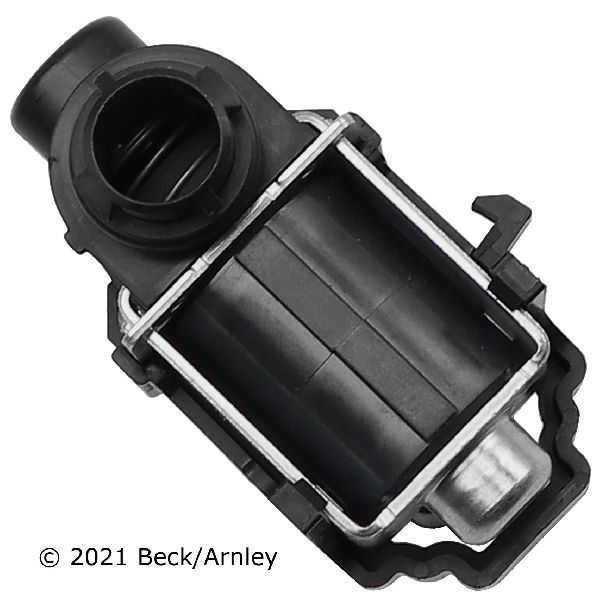
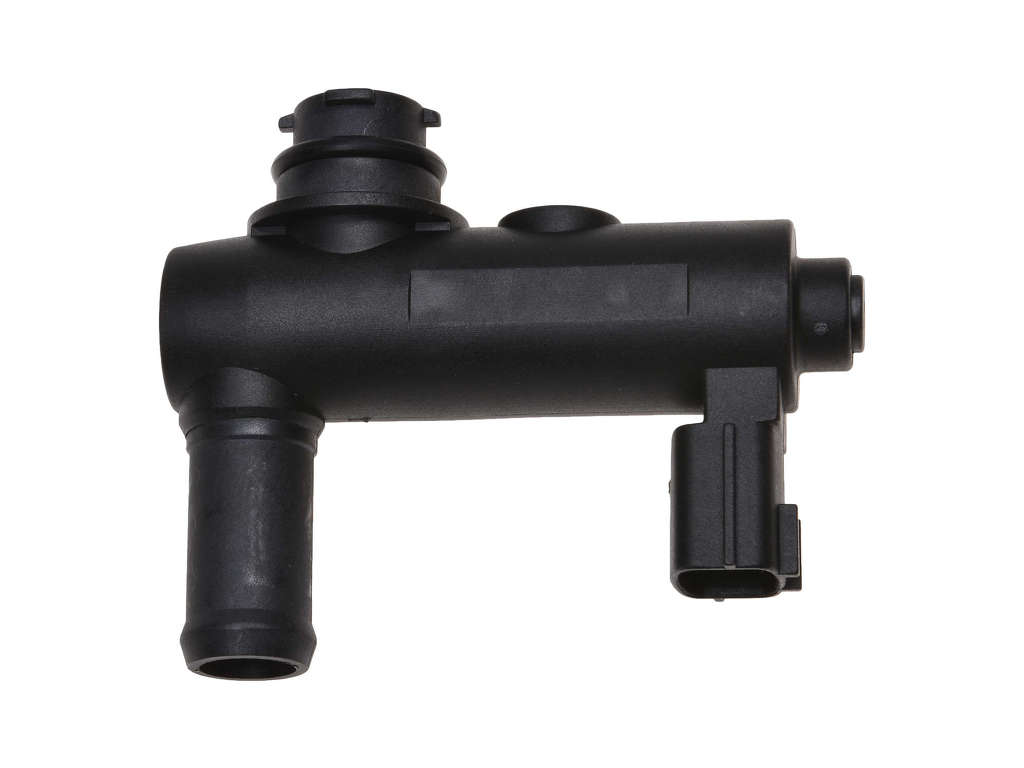
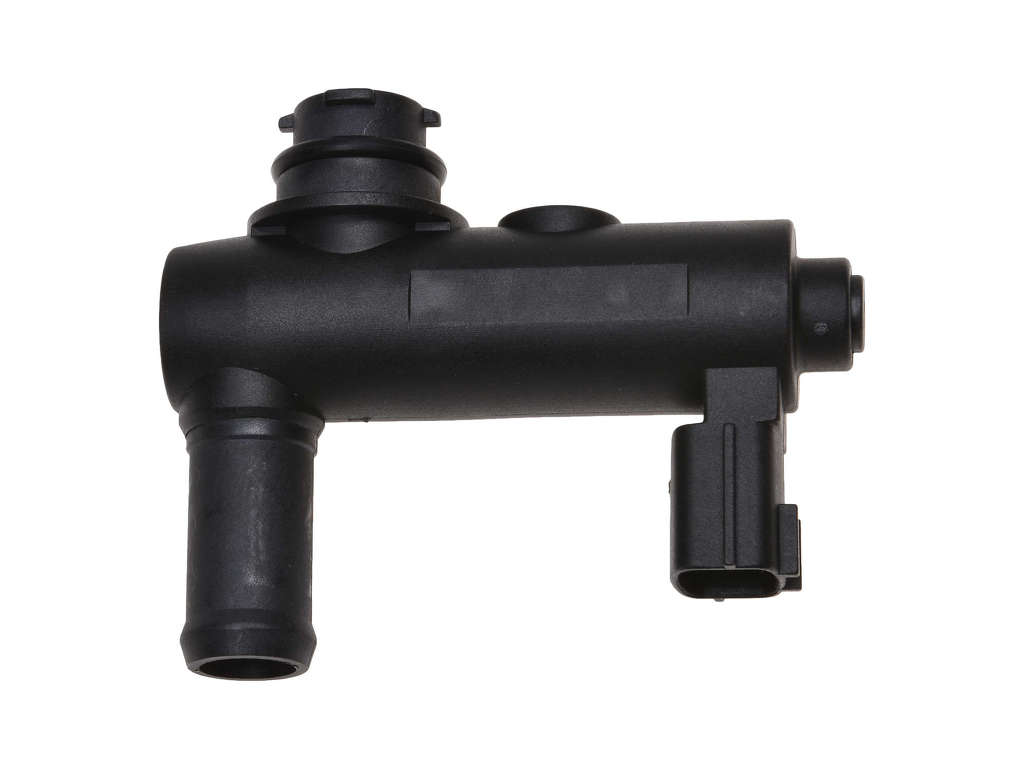
On a 2003-2008 Infiniti G35, code P0448 almost always points to a failed EVAP Canister Vent Control Valve (or vent solenoid). This part is known to fail from dirt and corrosion. Replacing the valve, located at the rear of the car on the charcoal canister, is the most common fix. Expect to pay $40-$90 for the part. In some cases, the canister itself can be clogged with dust, and cleaning it may resolve the code.
- P0448 on a G35 means there's an electrical short in the EVAP vent valve circuit.
- The most likely cause by a wide margin is a failed EVAP Canister Vent Control Valve, located at the rear of the car.
- A dust-clogged charcoal canister is also a common cause and can often be cleaned with compressed air as a free fix.
- Do not replace the gas cap or the purge valve in the engine bay for this specific code.
- The repair is DIY-friendly and involves replacing the valve, which typically costs under $100.
- After replacing the part, clear the code with a scanner. The Check Engine Light should remain off.
What's Unique About the 2003-2008 Infiniti G35
On this generation of Infiniti G35 (and related Nissan products like the 350Z), the EVAP canister vent control valve is a notoriously common failure item. The valve is located at the rear of the vehicle, exposed to road debris and moisture, which causes it to clog with dirt or for its internal solenoid to short out. Over the years, Nissan/Infiniti has released multiple revised versions of this part to improve its durability. Unlike in some newer Infiniti models which may require a software update for similar codes, the problem on the G35 is almost always the physical valve or its wiring.
Generation note: The 2003-2008 range covers the first generation (V35) G35 sedan (2003-2006) and coupe (2003-2007), as well as the second generation (V36) sedan (2007-2008). While the part design has been updated over the years, the fundamental cause, location, and repair procedure for P0448 are very similar across both generations covered in this guide. The issue is also prevalent on the Nissan 350Z, which shares the same platform.
Symptoms You May Notice
- Check Engine Light is on
- Slight fuel odor, especially around the rear of the vehicle
- Difficulty refueling (gas pump nozzle clicks off repeatedly)
- Vehicle will fail an emissions inspection
- A high-pitched ringing noise upon startup has been reported by some owners.
- Replacing the gas cap. A faulty gas cap typically causes an EVAP leak code (like P0455 or P0456), not a circuit short code like P0448.
- Replacing the EVAP Purge Valve. The purge valve is a different component located in the engine bay and has its own set of diagnostic codes (e.g., P0443). P0448 points specifically to the vent control circuit 🎬 Watch: A complete guide to fixing the P0448 circuit short. at the rear of the car.
Most Likely Causes
- Failed EVAP Canister Vent Control Valve 🔴 High Probability The original valve design is highly susceptible to failure from dirt, dust, and corrosion due to its location under the rear of the car. The internal solenoid shorts out or the valve gets mechanically stuck.
How to confirm: The valve is located on the charcoal canister near the rear driver's side wheel (Sedan) or passenger's side wheel (Coupe). Inspect the valve and its connector for obvious corrosion or damage. You can test the valve by applying 12V power to its terminals; a healthy valve will make an audible click. If it doesn't click, it has failed. The valve can be difficult to remove from the canister due to a tight O-ring seal and requires a specific rotational angle (approx. 45-90 degrees counter-clockwise) to release.
Typical fix: Replace the EVAP canister vent control valve. It twists into the charcoal canister. Ensure the new O-ring is installed correctly.
Est. part cost: $40 - $90 - Damaged Wiring or Connector 🟡 Medium Probability The wiring to the vent control valve is routed underneath the car and can be damaged by road debris or suffer from corrosion, leading to a short circuit.
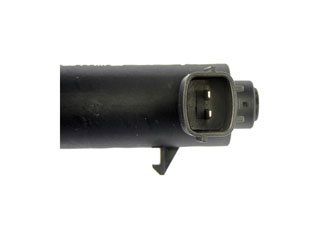
How to confirm: Visually inspect the wiring harness leading to the vent control valve for any breaks, chafing, or corrosion in the connector pins. Use a multimeter to check for ~12V power at the connector with the key on. The computer typically supplies a constant 12V and controls the ground side to activate the valve. On V36 models, this circuit is often powered by a 15A fuse (Fuse #50) in the IPDM E/R (engine bay fuse box).
Typical fix: Repair the damaged section of wiring or replace the connector pigtail.
Est. part cost: $10 - $30 - Clogged EVAP Charcoal Canister 🟡 Medium Probability Due to the vent valve's location, dust and dirt can be drawn into the canister over time, clogging the internal passages and the valve itself. This can mimic a valve failure and set a P0448 code.
How to confirm: After removing the vent valve, inspect the port on the canister for heavy dirt accumulation. If the canister is full of dirt, it is the likely cause.
Typical fix: Remove the canister from the vehicle, remove the vent valve, and use compressed air to blow the dust and debris out of the canister's ports. Some owners have successfully cleaned the canister without replacing it. Nissan issued a TSB (NTB07-060a) for other models suggesting a filter kit be added to the vent hose to prevent this, which may be adaptable.
Est. part cost: $0 - $20 (for filter kit)
Rare But Worth Checking
- Failed Engine Control Module (ECM): This is very rare. Before condemning the ECM, you must exhaustively rule out a bad vent valve and any wiring issues. An ECM failure can cause a P0448 code if the internal driver circuit for the vent valve fails.
- Saturated Charcoal Canister (Fuel): If the charcoal canister is saturated with fuel (often from repeatedly overfilling the gas tank), it can cause the vent valve to malfunction. Usually, this will be accompanied by other EVAP codes and a strong fuel smell.
Diagnosis Steps
- Read the code with an OBD-II scanner to confirm P0448 is present.
- Locate the EVAP canister and vent control valve at the rear of the vehicle. For Sedans, it is typically centered under the trunk. For Coupes, it is behind the rear passenger-side wheel. 🎬 Watch: This walkthrough shows you how to access the canister.
- Visually inspect the vent valve's electrical connector and nearby wiring for any signs of corrosion, damage, or loose connections.
- Disconnect the valve. With the ignition on, use a multimeter to check for battery voltage at the power pin on the harness connector. The other pin is the ground, which is controlled by the ECM.
- If power is present, the issue is likely the valve or a clogged canister. Remove the valve (turn approx. 45-90 degrees CCW and pull firmly).
- Test the valve by applying 12V directly to its pins. A healthy valve will make an audible click. Also test resistance across the pins; a good valve should read between 16 and 50 Ohms.
- While the valve is out, inspect the canister port for dirt. If it's heavily clogged, try cleaning it with compressed air before installing the new valve. Also inspect the vent hose for blockages, including spider webs.
- If no power is found at the connector, check the 15A fuse (#50 on V36 models) in the IPDM E/R (engine bay fuse box) and trace the wiring back towards the front of the vehicle to find the break or short in the circuit.
- If the valve and wiring are confirmed to be good, the fault may lie within the ECM, but this is extremely unlikely.
Parts You'll Likely Need
- EVAP Canister Vent Control Valve
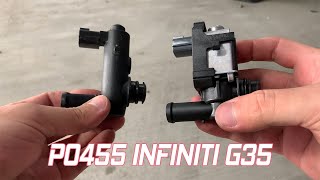
(OEM #14935-JF00A, 14935-AM60A, 14935-AM60B, 14935-JF00B, 14935-JF00C, 14935-JF00D, 14935-JF00E, 14935-JF02C)— This is the most common failure point for code P0448 on the G35. The original design was prone to getting stuck or shorting out from dirt and moisture. The part has been revised multiple times; it is best to source the latest available part number.
Trusted brands: Hitachi, Dorman, Standard Motor Products, Genuine Nissan/Infiniti
OEM price range: $70-$110
Aftermarket price range: $40-$90
Technical Service Bulletins (TSBs) & Recalls
- NTB07-060a: While not directly for the G35, this Nissan TSB acknowledges that dust and debris entering the EVAP canister vent hose can cause several EVAP codes, including P0448. It prescribes the installation of a filter kit (p/n 14953‐ZP80C) on the vent hose to prevent recontamination, a principle that applies directly to the G35's issue.
- Bulletin #ITB22-042: A manufacturer service bulletin for related Infiniti models confirms that the MIL may illuminate with DTC P0448 (Vent Control Valve) stored in the ECM.
- Bulletin #ITB19-012a: This amended bulletin notes that the Check Engine Light may be on specifically due to DTC P0448.
- Bulletin #P9329_P9344_P934: A manufacturer bulletin notes that due to calibration errors, the ECM may improperly store a permanent diagnostic trouble code for P0448.
- Bulletin #ITB19-027a: This bulletin addresses instances where the MIL is on with DTC P0448 for vehicles registered outside of California.
- Bulletin #ITB19-027: A manufacturer service bulletin confirms that an applied vehicle may have DTC P0448 stored in the ECM.
Platform-Specific Known Issues
- DIY Repair Story: Cleaning the Canister: A user on TheNissanPath.com with a P0448 code chose to clean the charcoal canister before buying a new one. After removing the canister and vent valve, they blew compressed air through the ports to clear out a significant amount of accumulated dust, which resolved the code. This suggests that a clogged canister, not just a failed valve, can be the root cause.
- DIY Video: Cleaning vs. Replacing: A YouTube video demonstrates removing the canister and valve, showing it caked with dirt. The creator tested the original solenoid with a 12V source and found it still functional after cleaning. After blowing out the canister and solenoid and reinstalling, the code did not return after 3,000 miles, confirming a free fix is possible.
Mechanic-Grade Diagnostic Values
- EVAP Canister Vent Control Valve Solenoid Resistance — expected: 16 - 50 Ohms. Failure: A reading of 0 Ohms (short circuit) or infinite/OL (open circuit).
- Voltage at Vent Control Valve Harness Connector — expected: ~12V (Battery Voltage) on the power supply pin with ignition ON.. Failure: No voltage indicates a wiring issue, blown fuse, or IPDM fault. Voltage on both pins may indicate a short to power on the ground side.
Scan Tool Commands That Help
- Infiniti CONSULT-II / Professional Bidirectional Scanner: VENT CONTROL/V (in ACTIVE TEST mode) — Use this command to manually cycle the vent control valve. Listen for an audible click from the valve each time it is commanded ON/OFF. This confirms the ECM, wiring, and valve solenoid are all capable of functioning. Lack of a click points to a failure in the valve or circuit.
Wiring & Ground Locations
- Fuse #50 (V36 Models) — Located in the IPDM E/R (Intelligent Power Distribution Module Engine Room), the main fuse/relay box in the engine bay.. This 15A fuse provides power to the EVAP Canister Vent Control Valve. If there is no power at the valve's connector, this fuse should be the first place to check for a potential circuit-wide fault.
- ECM Switched Ground — The ground signal originates from the Engine Control Module (ECM), located behind the right-side kick panel on the 2008 Coupe.. The ECM activates the vent valve by providing a path to ground. A short in this wire to ground would cause the valve to be energized constantly, while a short to power would prevent it from activating and could damage the ECM driver.
Real Owner Repair Stories
- YouTube channel 'Gears & Queers' (2007 Infiniti G35 Sedan (V36)) — P0455 (Gross EVAP Leak), a code often related to the same components as P0448.
❌ Tried (didn't work) Initial replacement of the vent control valve.
✅ What actually fixed it After replacing the valve, the owner received a new code, P0447 (Vent Control Circuit Open). The final fix was discovering the electrical connector for the new valve had not been fully seated. This is a critical lesson for P0448 as well, as a poorly seated connector can cause intermittent shorts or opens. Ensuring the connector clicks into place is essential.
OEM Part Supersession History
14935-AM600→14935-AM60A, then 14935-AM60B— Improved durability and resistance to contamination. The original parts were highly prone to failure.14935-JF00A / B / C / D / E→14935-JF01C, then 14935-JF02C— Further design revisions to improve the valve's resistance to dirt, moisture, and internal shorting. The physical appearance of the valve changed significantly with these revisions.
Heads up: All revisions are generally backward-compatible, but it is always recommended to install the latest available part number for maximum longevity.
Model Year Variations Within This Range
- 2003-2007 Coupe vs. 2003-2008 Sedan: The location of the EVAP charcoal canister and vent valve is different. On Coupes (and the related Nissan 350Z), the canister is located behind the rear passenger-side wheel. On Sedans, the canister is located more towards the center of the vehicle, under the trunk floor, just ahead of the rear bumper.
Diagnostic Flowchart
Other Known Issues on This Vehicle
Issues unrelated to this code that are worth knowing about as an owner of this generation:
- Excessive Oil Consumption (VQ35DE 'Rev-Up' Engine) 🔴 High — Very common on 2005-2007 models with the 6-speed manual transmission ('Rev-Up' engine). Can consume over 1 quart per 1,000 miles. (Ref: Infiniti issued a TSB (ITB08-001a, superseding earlier versions) to address the issue, which could lead to engine replacement under warranty if consumption was severe enough.)
- Cracked Dashboard 🟠 Medium — Widespread issue, especially on 2005-2007 models, where the dashboard material becomes brittle and develops cracks, particularly around vents and passenger airbag areas, often due to sun/heat exposure.
- Failing Window Motors 🟠 Medium — Extremely common across all 2003-2008 models. The motors weaken over time, causing slow operation or the window getting stuck. The driver's side often fails first due to more frequent use.
- Premature Timing Chain Guide/Tensioner Wear 🔴 High — Owners report rattling noises from the timing chain area. The plastic guides and tensioners can wear out prematurely, causing chain slack. If left unaddressed, pieces of the guides can fall into the oil pan, potentially causing oil starvation.
- Failing Camshaft/Crankshaft Position Sensors 🟠 Medium — A common failure item causing stalling, no-start conditions, and loss of power. Nissan issued recalls for certain model years due to manufacturing defects in these sensors. (Ref: Yes, multiple recalls were issued by Nissan/Infiniti for this issue. (e.g., NHTSA 03V-455))
Used vs. New Parts: Buying Guide for This Vehicle
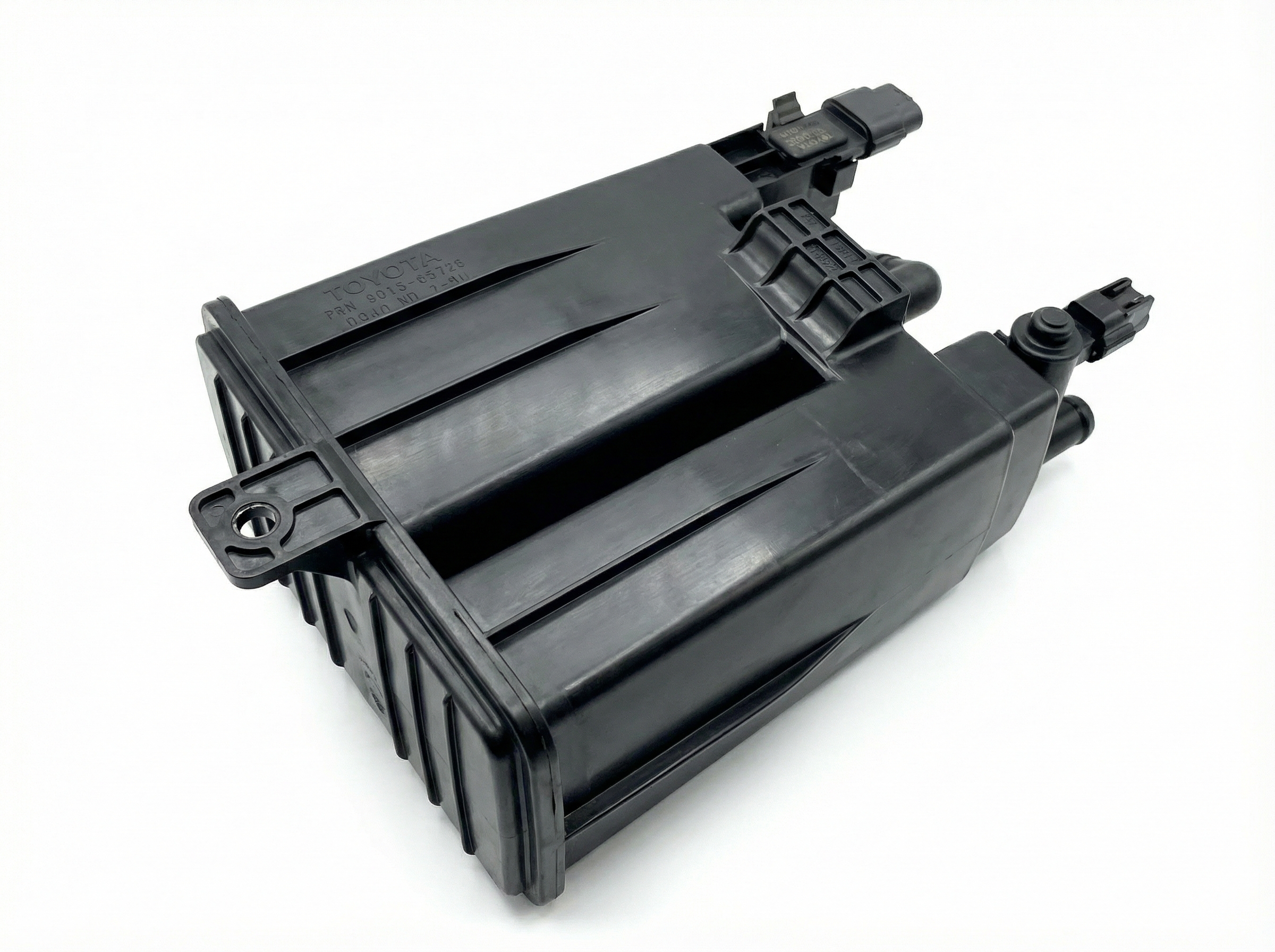
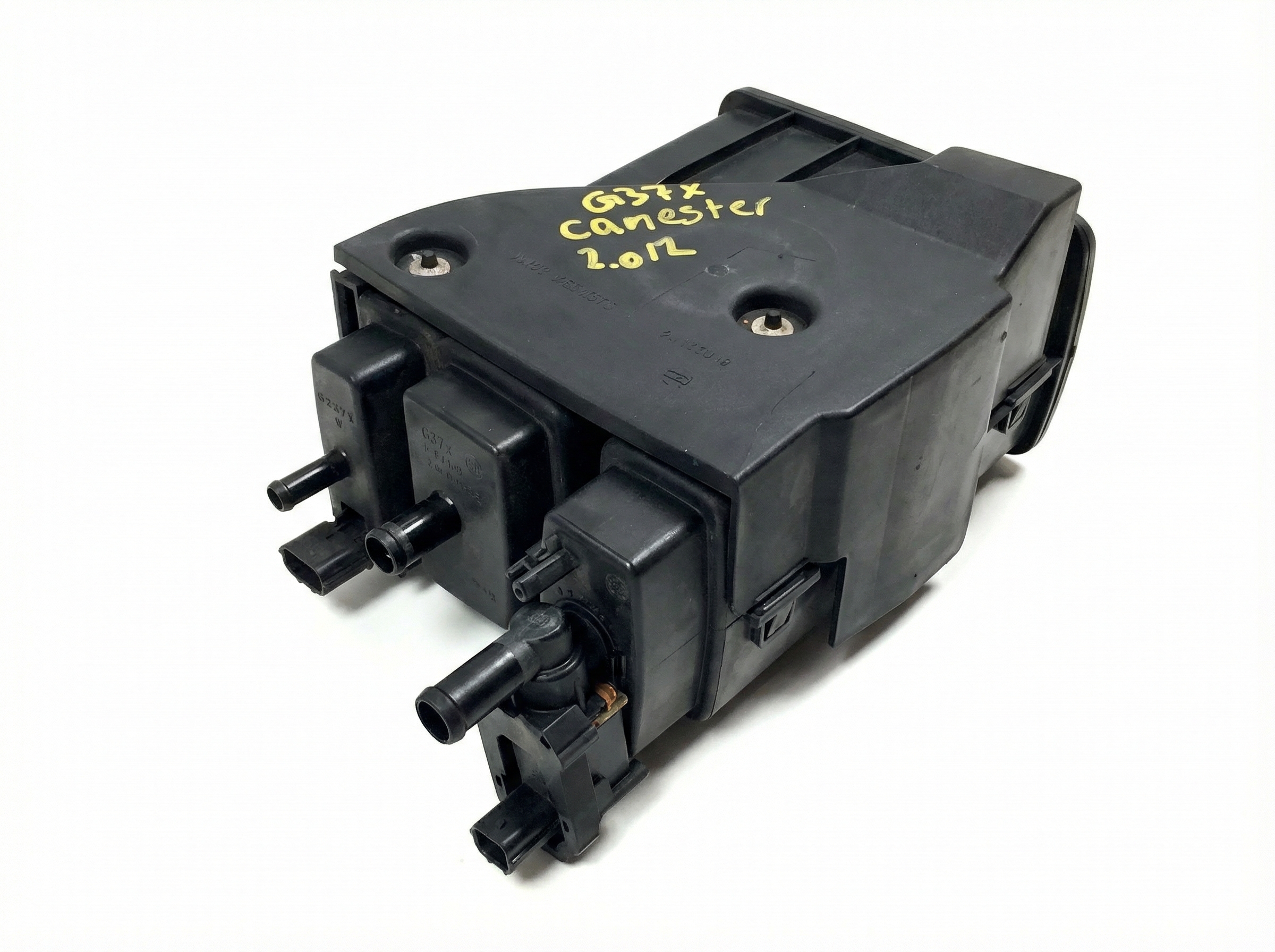
When a used part is the smart pick: For this specific repair, a used part is almost never a smart choice for the vent valve itself. However, a used charcoal canister from a junkyard can be a cost-effective option if your original canister is physically cracked or damaged, but it should be thoroughly cleaned with compressed air before installation.
Donor-vehicle mileage cap: roughly under 80000 miles for the part to have meaningful remaining life.
What to inspect on the donor part:
- For a used canister, inspect for any cracks or broken hose ports.
- Avoid parts from vehicles in the rust belt, as corrosion is a primary failure mode for the valve.
- Ensure the donor vehicle was not in a severe rear-end collision that could have damaged the canister.
OEM-only on this vehicle (don't cheap out):
- While not strictly 'OEM-only', it is highly recommended to avoid used EVAP vent control valves. The part is a known high-failure item that has been redesigned multiple times. A used part is likely to be an older, failure-prone design that will not last.
Aftermarket brands forum-validated for this vehicle:
- Hitachi (often the OEM manufacturer)
- Dorman
- Standard Motor Products (SMP)
Brands owners have reported issues with on this vehicle:
- No-name, unbranded parts from online marketplaces should be avoided, as their internal solenoid quality and durability are highly questionable.
Real Owner Stories
Aggregated from forums and TSBs cited above. Mileages and costs reflect what owners reported in those sources.
2003-2008 Infiniti G35
Symptoms: Check Engine Light with code P0448.
What fixed it: The owner removed the charcoal canister and vent valve, then used compressed air to blow a significant amount of accumulated dust out of the ports. This cleaning resolved the code without replacing any parts.
Source hint: TheNissanPath.com: A detailed post titled 'How I fixed P0448 for free (dust clogged EVAP cannister)'
2003-2008 Infiniti G35
Symptoms: P0448 code was present and the EVAP canister and valve were found to be caked with dirt.
What fixed it: The owner tested the original solenoid with a 12V source and confirmed it was still functional. They blew out the canister and solenoid with compressed air and reinstalled them. The code did not return after 3,000 miles.
Source hint: YouTube video demonstrating cleaning vs. replacing the canister and valve
2003-2009 Nissan 350Z
Symptoms: A user with a P0448 code also reported a high-pitched ringing noise at startup, linking the sound to the EVAP system fault.
What fixed it: The source corroborates the symptom but does not state the specific repair performed by this owner.
Source hint: my350Z.com forum post
Related OBD-II Codes
Frequently Asked Questions
Where is the EVAP canister vent valve located on my Infiniti G35?
I hear a high-pitched ringing noise when I start my G35. Is this related to the P0448 code?
My gas pump keeps clicking off when I try to refuel. Is this a symptom of P0448?
Can I just clean the EVAP canister instead of replacing it to fix P0448?
What fuse should I check for the P0448 code on my G35?
Is there a TSB from Infiniti that addresses the P0448 code?
Is the P0448 code also a common problem on the Nissan 350Z?
Helpful Videos
Used OEM Parts in Stock



New Aftermarket Parts Available


The information in this article is provided for general reference and educational purposes only. Vehicle specifications, procedures, and part compatibility can vary by production date, trim level, and region. Always consult your vehicle's factory service manual and verify part numbers before purchasing or performing repairs. Safety-critical components such as airbags, seat belts, and braking systems should be installed by a qualified professional.
- Infiniti G35:
- 🎬 Helpful Videos
- 🛍️ Shop This Part
- What's Unique About the 2003-2008 Infiniti G35
- Symptoms You May Notice
- Most Likely Causes
- Rare But Worth Checking
- Diagnosis Steps
- Parts You'll Likely Need
- Technical Service Bulletins (TSBs) & Recalls
- Platform-Specific Known Issues
- Mechanic-Grade Diagnostic Values
- Scan Tool Commands That Help
- Wiring & Ground Locations
- Real Owner Repair Stories
- OEM Part Supersession History
- Model Year Variations Within This Range
- Diagnostic Flowchart
- Other Known Issues on This Vehicle
- Used vs. New Parts: Buying Guide for This Vehicle
- Real Owner Stories
- 2003-2008 Infiniti G35
- 2003-2008 Infiniti G35
- 2003-2009 Nissan 350Z
- Related OBD-II Codes
- Frequently Asked Questions
- 🎟️ Get 5% Off