

P0446 on 2006-2018 Toyota RAV4: EVAP Vent Circuit Causes and Fixes
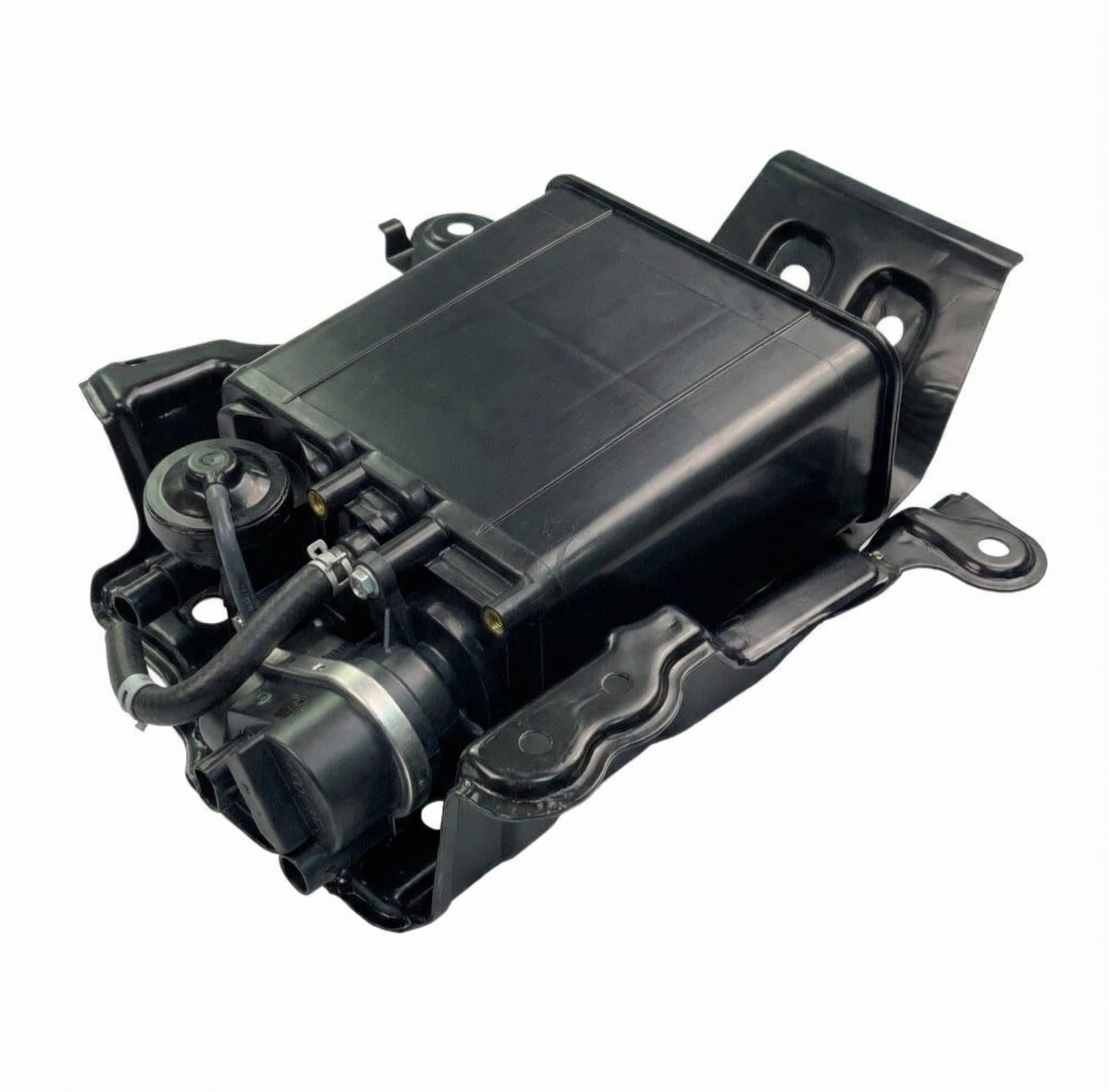
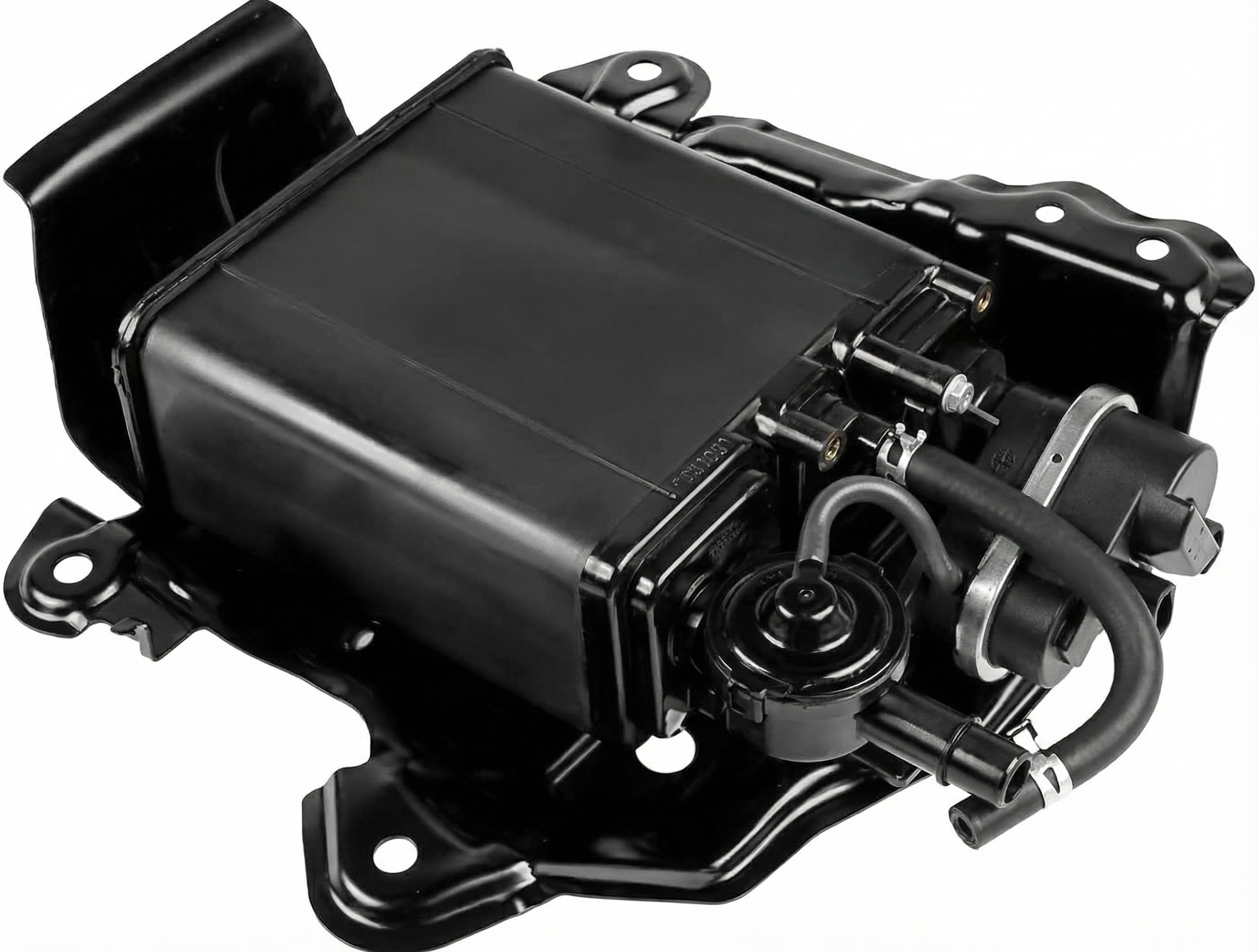
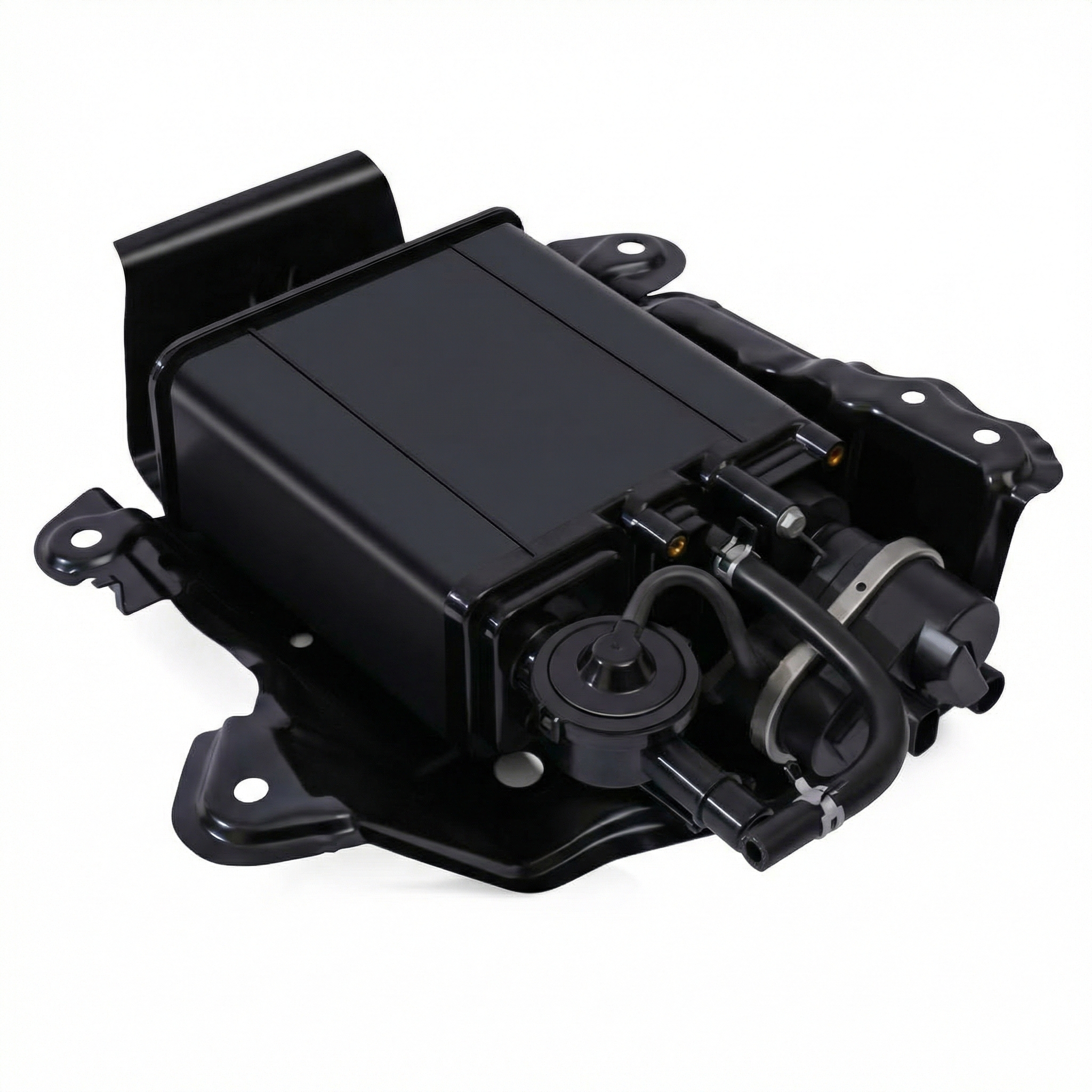
On a 2006-2018 Toyota RAV4, code P0446 is most often caused by a failed charcoal canister assembly, which includes the vent valve. Internal charcoal can break down and clog the system. Replacing the entire canister assembly is the most common and reliable fix, costing between $400-$600 for an OEM part.
- P0446 on a 2006-2018 RAV4 almost always points to a problem with the charcoal canister assembly.
- The most likely cause is the canister itself failing and clogging the integrated vent valve with charcoal pellets.
- The most reliable fix is to replace the entire charcoal canister assembly with an OEM part.
- Before ordering parts, inspect the gas cap and visually check the canister and hoses for obvious damage.
- A symptom of this failure can be the gas pump repeatedly shutting off when you try to refuel.
What's Unique About the 2006-2018 Toyota RAV4
On this generation of Toyota RAV4, the P0446 code is very frequently tied to the entire charcoal canister assembly located under the vehicle, near the fuel tank. A common failure mode is the activated charcoal inside the canister breaking down over time. These small charcoal pellets then travel into and clog the integrated vent valve, causing the malfunction. While the code points to a 'circuit' issue, it's most often a mechanical blockage caused by the failing canister itself, making a complete assembly replacement the standard, effective repair.
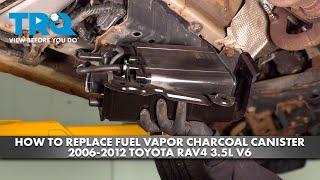
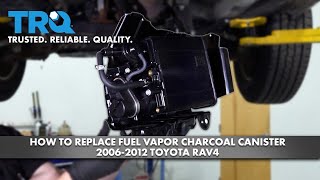
Generation note: This guide covers the 3rd generation (XA30, 2006-2012) and 4th generation (XA40, 2013-2018). The fundamental cause—a faulty charcoal canister assembly—is common to both. However, the specific part numbers and exact removal procedures differ slightly. 🎬 Watch: Step-by-step charcoal canister replacement for 2006-2012 models. For 2006-2012 models, the relevant part number is 77740-0R010 (which supersedes 77740-42090). For 2013-2018 models, part number 77740-0R020 is commonly used. Always verify the part number with your vehicle's VIN before ordering.
Symptoms You May Notice
- Check Engine Light is on
- Difficulty filling the fuel tank (gas pump nozzle clicks off repeatedly)
- A faint smell of fuel (less common)
- Slightly reduced fuel economy
- Replacing only the purge valve (located in the engine bay). While part of the EVAP system, the purge valve is a separate component and typically sets different codes (like P0441) when it fails.
- Replacing only the vent valve solenoid if it can be purchased separately. If the charcoal canister has failed and is shedding material, a new vent valve will quickly become clogged and fail again.
Most Likely Causes
- Failed Charcoal Canister Assembly (with integrated Vent Valve) 🔴 High Probability The charcoal media inside the canister can degrade over time, releasing pellets that clog the vent valve and associated lines. This is a well-documented failure pattern on many Toyota models from this era.
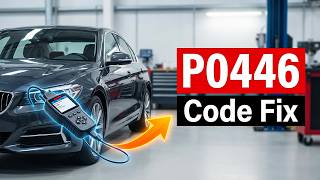
How to confirm: A smoke test may show the vent valve is not sealing or venting correctly. A technician may also use a scan tool to command the vent valve to open and close; a lack of response or audible click can indicate failure. 🎬 See this video for a breakdown of P0446 causes and fixes. Visually inspecting the vent valve inlet/outlet for black, sand-like charcoal pellets is a definitive confirmation. Shaking a removed canister and hearing a rattling sound also indicates broken internal media.
Typical fix: Replace the entire charcoal canister assembly. It is highly recommended to use an OEM part, as some aftermarket units have reported reliability issues or may use lower-quality charcoal that fails sooner. Ensure all connected hoses are blown out and cleared of any charcoal debris during replacement.
Est. part cost: $400-$600 - Faulty Gas Cap ⚪ Low Probability
How to confirm: Visually inspect the gas cap's seal for cracks or damage. Ensure it clicks when tightened. A faulty gas cap more commonly causes large or small leak codes (like P0455 or P0442), but it's a simple and cheap item to check first.
Typical fix: Replace the gas cap with a new OEM part, as aftermarket caps can sometimes cause sealing issues.
Est. part cost: $20-$40 - Damaged EVAP Hoses or Wiring ⚪ Low Probability Hoses and wiring are located under the vehicle and are exposed to road debris, corrosion, and potential rodent damage.
How to confirm: Visually inspect all vacuum and vapor hoses running to and from the charcoal canister for cracks, brittleness, or disconnections. Inspect the wiring harness connected to the vent valve for any signs of damage or corrosion.
Typical fix: Repair the damaged section of the wiring harness or replace the cracked/broken hose.
Est. part cost: $10-$50
Rare But Worth Checking
- Cracked Fuel Pump Housing: On a 2014 RAV4, a P0446 code was traced back to a crack in the plastic flange of the fuel pump assembly on top of the gas tank. This allowed fuel vapors to escape, which was detected by the EVAP system's self-test. This requires dropping the fuel tank to diagnose and repair.
- Spider Nest or Debris in Vent Hose: Spiders, particularly mud daubers, have been known to build nests inside the EVAP vent hose's outlet, creating a blockage. This prevents the system from venting to the atmosphere when the vent valve opens, which the ECU interprets as a vent control malfunction, triggering P0446. This can be checked by disconnecting the hose from the canister and attempting to blow through it.
Diagnosis Steps
- Read the code with an OBD-II scanner to confirm P0446 is present. Note any other codes, especially P0441, P0442, or leak detection pump codes.
- Inspect the gas cap. Ensure it is tight and the rubber seal is in good condition. A loose or worn cap is a simple but sometimes overlooked cause.
- Visually inspect the charcoal canister, vent valve, and all associated hoses underneath the vehicle (typically located near the rear axle/fuel tank). Look for obvious cracks, damage, or loose connections.
- Inspect the electrical connector and wiring going to the vent valve solenoid for damage, corrosion, or breaks.
- If a capable scan tool is available, command the vent valve to close. Listen for an audible click from the solenoid. You can also monitor the fuel tank pressure sensor to see if the system holds a vacuum as expected.
- If the valve doesn't respond or the system doesn't seal, the next step is to test the valve directly. Apply 12V power to the solenoid terminals to see if it actuates.
- If the valve works when tested directly but not when commanded by the ECU, check for power and ground at the connector. If power is present, the issue may be in the ECU's driver circuit (rare).
- If the valve seems to be the issue, remove it and check its ports for black, sand-like charcoal pellets. If pellets are present, the entire charcoal canister must be replaced to prevent a repeat failure.
- Check the vent hose for blockages, such as spider webs or mud dauber nests, by disconnecting it and blowing air through it.
- If no obvious cause is found, a professional smoke test is the most effective way to find blockages or hard-to-see leaks in the system.
Parts You'll Likely Need
- Vapor Canister Assembly
(OEM #77740-0R010 (2006-2012); 77740-0R020 (2013-2018). Always verify by VIN.)— This is the most common failure point for code P0446 on this vehicle, as the integrated vent valve becomes clogged by deteriorating charcoal from within the canister itself.
Trusted brands: Toyota (OEM)
OEM price range: $400-$600
Aftermarket price range: $250-$450
Related Codes That Often Appear With This One
- P0441 — Evaporative Emission System Incorrect Purge Flow. This often appears with P0446 when a clogged canister or vent valve disrupts the entire system's flow during a test cycle.
- P0442 — Evaporative Emission System Leak Detected (Small Leak). Can be triggered alongside P0446 if the vent valve is stuck partially open or if the system integrity is compromised.
- P2401, P2402, P043E, P043F — These codes are related to the EVAP system's leak detection pump, which is often integrated into or located near the charcoal canister assembly on RAV4 models. A failure of the canister can sometimes affect the pump's operation or sensors, triggering these codes simultaneously.
Platform-Specific Known Issues
- A known issue involves the activated charcoal within the canister breaking apart, sending small black pellets into the vent valve and hoses, causing a blockage that triggers P0446.
Documented NHTSA Reports
While the RAV4 is the primary focus, several reports on other Toyota models highlight the persistent nature of this code across the manufacturer's lineup. NHTSA ODI #11190106 describes an owner noticing the check engine light while driving normally, while NHTSA ODI #11133326 notes that this specific code is a recurring problem discussed across multiple owner forums. In some instances, the code exhibits seasonal behavior; NHTSA ODI #10125378 reports a case where the P0446 and P0441 codes appeared in the summer but disappeared during the winter months. For those performing repairs, NHTSA ODI #10086188 mentions a technician tracing the fault to a vent control malfunction and requiring a VSV control replacement, while NHTSA ODI #10735783 confirms a successful repair by replacing a clogged charcoal canister and leaking VSV and purge valves.
Mechanic-Grade Diagnostic Values
- EVAP Canister Vent Solenoid (VSV) Coil Resistance — expected: 48 to 65 Ohms. Failure: A reading outside this range, or an open (infinite) or shorted (near zero) reading, indicates a failed solenoid coil.
- Fuel Tank Pressure (FTP) Sensor Voltage (Key On, Engine Off) — expected: 1.3 to 1.7 Volts. Failure: Voltage significantly outside this range at atmospheric pressure suggests a faulty sensor or wiring issue.
- Vapor Pressure Sensor (VPS) Signal at Atmospheric Pressure — expected: ~3.33 Volts. Failure: If the sensor does not read approximately 3.33V when vented to atmosphere (e.g., gas cap off), the sensor may be faulty.
- Vent Valve Solenoid Power Supply — expected: Battery Voltage (~12V). Failure: No voltage at the power pin of the connector with the key in the ON position indicates a wiring or fuse issue upstream of the valve.
Hidden / Shadow Codes Worth Checking
- Mode $06, Test ID (TID) / Component ID (CID): While not a 'shadow code,' Mode $06 data provides results from the ECU's last self-test cycle for non-continuously monitored systems like EVAP. A failed test result can pinpoint a component malfunction (like a valve not responding) even before a full-blown DTC is set. For example, a failed test labeled 'TBP' (Tank Bypass) was noted on a Toyota Prius, indicating a specific valve failure. (see via A professional scan tool capable of displaying Mode $06 data is required. Toyota's Techstream software provides the most detailed access.)
Scan Tool Commands That Help
- Toyota Techstream: Evaporative System Check (Utility) — This is a powerful bidirectional test used to force the EVAP monitor to run without waiting for the natural 'cold soak' period. It commands the valves to open and close and monitors pressure changes, allowing a technician to confirm if the vent valve is responding, if the system can hold a vacuum, and to potentially trigger a pending code, confirming the fault.
- Toyota Techstream: Active Test: Control the VSV (for EVAP) — This command allows the user to directly turn the vent valve solenoid ON and OFF while listening for an audible click from the component. This is a quick way to verify if the solenoid coil is energizing and if the valve's plunger is attempting to move, helping to isolate an electrical fault from a mechanical blockage.
Wiring & Ground Locations
- Rear Body Ground Points — The EVAP canister and its components are located at the rear of the vehicle, near the fuel tank. Key ground points are located on the body and subframe in this area. A common, robust ground location is the body brace located in the rear cargo area, to the side of the spare tire well, accessible after removing interior trim panels.. The vent valve solenoid is activated when the ECU provides a ground path. A corroded or loose ground connection in this circuit can cause intermittent or total failure of the valve to operate, directly triggering a P0446 'circuit malfunction' code. Verifying a clean, tight ground is a critical step in electrical diagnosis.
- Vent Valve Connector Pins — The 2-pin electrical connector on the charcoal canister assembly's vent valve solenoid.. One pin should receive battery voltage (~12V) when the ignition is on. The other pin is the control wire that the ECU grounds to activate the valve. Testing for voltage at the power pin and checking for continuity to ground on the control wire are essential for diagnosing a circuit fault vs. a failed component.
"I Checked Everything" — The Actual Cause
- In some cases, the EVAP system may pass a smoke test (indicating no leaks), yet the P0446 code persists. This often occurs when the issue is not a leak but a blockage or a faulty sensor providing bad data. One forum discussion for a similar vehicle pointed to a faulty Fuel Tank Pressure (FTP) sensor as the likely cause after a smoke test came back clean, as the sensor was incorrectly reporting pressure values to the ECU during the self-test.
OEM Part Supersession History
77740-42090→77740-0R010— Standard part revision and update by the manufacturer.
Model Year Variations Within This Range
- 2013-2018 (XA40 Generation): The charcoal canister part number changes to 77740-0R020. Additionally, the 3.5L V6 engine was discontinued, and the 4-speed/5-speed automatic was replaced by a 6-speed automatic transmission. The rear door was changed from a side-hinge to a top-hinge liftgate.
- 2006-2012 (XA30 Generation): Uses charcoal canister part number 77740-0R010. Offered both a 4-cylinder and an optional 3.5L V6 engine. Features a side-hinged rear door with an external spare tire.
Diagnostic Flowchart
Other Known Issues on This Vehicle
Issues unrelated to this code that are worth knowing about as an owner of this generation:
- Excessive Oil Consumption (2.4L 2AZ-FE Engine) 🔴 High — Very common on 2006-2008 models with the 2.4L 2AZ-FE engine. Caused by a piston ring design flaw. Can start as early as 70,000 miles, with many reports around 100k-120k miles. (Ref: Toyota issued a warranty enhancement (ZE7) for this issue, but it has since expired. The fix involved replacing pistons and rings.)
- Steering Intermediate Shaft Clunk 🟠 Medium — Common on 2006-2012 models. A clunking or popping noise is heard and felt in the steering wheel during low-speed turns. (Ref: T-SB-0318-08 addresses this issue for 2006-2008 models by replacing the intermediate steering shaft.)
- Torque Converter Shudder 🟠 Medium — Affects 2013-2015 models, typically felt as a brief shudder or vibration under light acceleration between 25-50 mph. (Ref: Toyota issued T-SB-0023-15 and a warranty extension program (ZH1) to address this. The fix involves replacing the torque converter and reprogramming the ECM.)
- Battery Hold-Down Short Circuit Risk 🔴 High — Affects 2013-2018 models. Using certain replacement 12V batteries that don't fit perfectly can cause a short circuit and potential fire if the battery contacts the hold-down bracket. (Ref: NHTSA Campaign ID: 23V708000 (Recall). Toyota dealers will replace the battery hold-down clamp, battery tray, and positive terminal cover.)
Used vs. New Parts: Buying Guide for This Vehicle
When a used part is the smart pick: Due to the common failure mode of internal charcoal degradation over time, purchasing a used vapor canister is highly discouraged. A used part is likely to have the same issue or fail soon after installation. It should only be considered if it is from a verified, very low-mileage donor vehicle (e.g., a recent wreck with under 30,000 miles).
Donor-vehicle mileage cap: roughly under 30000 miles for the part to have meaningful remaining life.
What to inspect on the donor part:
- Shake the canister vigorously; any rattling sound indicates broken internal charcoal and the part should be rejected.
- Inspect all hose ports for black, sand-like charcoal dust. The presence of any dust is a sign of failure.
- Check the plastic housing for any cracks, especially around the mounting tabs and hose connections.
- Verify the part number on the used unit matches the required part for your vehicle's model year.
OEM-only on this vehicle (don't cheap out):
- Vapor Canister Assembly: This is the strongest recommendation for OEM-only. The quality of the activated charcoal and the integrated valves in aftermarket units can be inconsistent, leading to premature failure and the return of the P0446 code.
Brands owners have reported issues with on this vehicle:
- While brands like Dorman and Standard Motor Parts are available, they lack strong, consistent positive reviews from Toyota owner forums to be considered 'known-good' alternatives to OEM for this specific, high-failure part. Some owners express hesitation due to concerns about longevity compared to the original Toyota part.
Real Owner Stories
Aggregated from forums and TSBs cited above. Mileages and costs reflect what owners reported in those sources.
2011 Toyota RAV4 2.5L (2AR-FE)
Symptoms: The day after purchase, the 4wd light, slip indicator light, and check engine light came on. A mechanic noted codes matching a bulletin regarding charcoal pellets clogging the purge valve.
What fixed it: The mechanic recommended replacing the charcoal canister and updating the ECU.
Cost: $750-$750
Source hint: reddit r/Toyota
2007 Toyota RAV4 V6
Symptoms: Check Engine, VSC, and 4WD lights were illuminated with codes P0446, P0441, and P0442.
What fixed it: Replacing the charcoal canister (Part #77740-0R010) and clearing the lines of charcoal dust.
Source hint: rav4world.com thread titled 'P0446, P0441, P0442 - Check Engine, VSC, 4WD lights'
1999 Toyota RAV4
Symptoms: P0446 code present.
What fixed it: Replacement of the charcoal canister with valves.
Source hint: reddit r/MechanicAdvice
Related OBD-II Codes
Frequently Asked Questions
Why is my 2011 RAV4 showing the 4WD and Slip Indicator lights along with the P0446 code?
Is there a specific part number I should look for when replacing the charcoal canister on my 2007 RAV4 V6?
Can I just replace the vent valve, or do I need the whole canister assembly?
Is the P0446 code related to the oil consumption issues on my 2006-2008 RAV4?
Could a bad gas cap be the reason for my P0446 code?
Why does the gas pump nozzle keep clicking off when I try to fill my RAV4?
Helpful Videos

Used OEM Parts in Stock
New Aftermarket Parts Available


The information in this article is provided for general reference and educational purposes only. Vehicle specifications, procedures, and part compatibility can vary by production date, trim level, and region. Always consult your vehicle's factory service manual and verify part numbers before purchasing or performing repairs. Safety-critical components such as airbags, seat belts, and braking systems should be installed by a qualified professional.
- Toyota RAV4:
- 🎬 Helpful Videos
- 🛍️ Shop This Part
- What's Unique About the 2006-2018 Toyota RAV4
- Symptoms You May Notice
- Most Likely Causes
- Rare But Worth Checking
- Diagnosis Steps
- Parts You'll Likely Need
- Related Codes That Often Appear With This One
- Platform-Specific Known Issues
- Documented NHTSA Reports
- Mechanic-Grade Diagnostic Values
- Hidden / Shadow Codes Worth Checking
- Scan Tool Commands That Help
- Wiring & Ground Locations
- "I Checked Everything" — The Actual Cause
- OEM Part Supersession History
- Model Year Variations Within This Range
- Diagnostic Flowchart
- Other Known Issues on This Vehicle
- Used vs. New Parts: Buying Guide for This Vehicle
- Real Owner Stories
- 2011 Toyota RAV4 2.5L (2AR-FE)
- 2007 Toyota RAV4 V6
- 1999 Toyota RAV4
- Related OBD-II Codes
- Frequently Asked Questions
- 🎟️ Get 5% Off