

P0446 on 1997-2006 Toyota Camry: EVAP Vent Control Circuit Fixes
On a 1997-2006 Toyota Camry, code P0446 is most often caused by a failed charcoal canister assembly, which includes the integrated vent valve. Replacing the canister assembly is the most common fix. Expect to pay $200-$350 for the part. A clogged vent hose, often by spider nests, is another frequent cause.
- P0446 on a 1997-2006 Camry almost always points to a problem with the EVAP canister assembly or a blocked vent line.
- The most common repair is replacing the entire charcoal canister because the vent valve is integrated into it.
- Before replacing parts, always check the vent hose for blockages, as spider nests are a surprisingly common cause.
- The location of the canister varies by year; know whether to look in the engine bay (early models) or under the rear of the car (later models).
- Platform mates like the Toyota Solara and Lexus ES300/ES330 share this exact problem and solution.
What's Unique About the 1997-2006 Toyota Camry

For this generation of Toyota Camry, the P0446 code very commonly points to a failure of the entire charcoal canister assembly, not just a single component. This is because Toyota often integrated the vent valve (also called a Vacuum Switching Valve or VSV) directly into the canister. When the valve fails, the entire unit must be replaced. The location of this canister also differs between the two generations covered, with earlier models having it in the engine bay and later models having it near the rear of the vehicle, making it more susceptible to road debris, rust, and corrosion.
Generation note: This guide covers the XV20 (1997-2001) and XV30 (2002-2006) generations of the Toyota Camry. The primary difference regarding this code is the location of the charcoal canister. On some early XV20 models (like the 1997 2.2L), the canister is located in the engine bay under the master cylinder. On most later XV20 (like a 1999 model) and all XV30 models, the canister is located under the rear of the vehicle, near the fuel tank and rear suspension, making it more exposed to the elements.
Symptoms You May Notice
- Check Engine Light is on
- A slight fuel odor may be noticeable
- Difficulty refueling (gas pump clicks off prematurely)
- A 'whoosh' sound when opening the gas cap
- Hearing a rattling sound from the old canister when shaken, indicating broken internal charcoal elements.
- Vehicle jerking while accelerating, as if it is not receiving fuel, which an owner reported in NHTSA ODI #10606848 alongside this code.
- Replacing the gas cap without checking other components. While easy, it's less likely to be the root cause for P0446 specifically.
- Replacing the purge valve in the engine bay first. The vent valve/canister at the rear of the car (or in the engine bay on early XV20s) is a much more common failure point for this specific code on this vehicle.
Most Likely Causes

- Failed Charcoal Canister Assembly 🔴 High Probability On many models in this year range, the vent valve (VSV) is integrated into the canister. When the valve fails electrically or mechanically (gets stuck), the entire assembly must be replaced. The rear-mounted location on most of these models exposes the unit to rust and damage from road debris, which can crack the plastic housing or corrode the valve. NHTSA ODI #10735783 confirms a case where a clogged canister and leaking VSV/purge valves required a full canister replacement to resolve P0446.
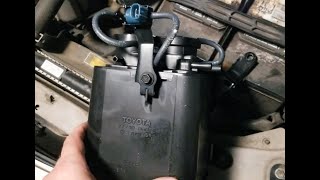
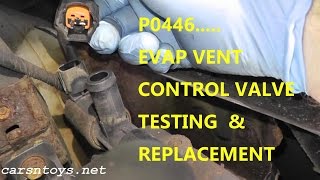
How to confirm: Perform a bench test on the canister's integrated vent valve. Apply 12V power from a battery or power probe to the valve's electrical connector; a healthy valve will make an audible 'click'. No click indicates the solenoid has failed. 🎬 Watch: How to bench test the vent control valve Also, check the canister and hoses for cracks or physical damage. Shaking the canister can also reveal if the internal charcoal media has broken apart, which can cause blockages.
Typical fix: Replace the entire charcoal canister assembly.
Est. part cost: $200 - $400 - Clogged or Blocked EVAP Vent Hose 🟡 Medium Probability The fresh air vent hose outlet, which is often just a small tube open to the atmosphere near the canister, is a common place for spiders to build nests and lay egg sacs. This creates a blockage that prevents the system from venting properly, triggering the P0446 code. Mud and dirt can also cause clogs.
How to confirm: Visually inspect the vent hoses connected to the charcoal canister. Disconnect the main vent hose from the canister and attempt to blow low-pressure compressed air through it to check for blockages. If air doesn't pass freely, the hose is clogged.
Typical fix: Clean the hose with compressed air or a flexible brush. If the clog is severe or the hose is damaged, replace it.
Est. part cost: $10 - $50 - Damaged Wiring or Connector ⚪ Low Probability
How to confirm: Visually inspect the wiring harness and connector going to the vent valve/charcoal canister for any signs of corrosion, breaks, or loose pins. Use a multimeter to check for 12V battery voltage at the connector with the key in the 'ON' position. A broken tab on the connector can also cause a poor connection.
Typical fix: Repair the damaged section of the wiring harness or replace the connector pigtail.
Est. part cost: $5 - $25
Rare But Worth Checking
- Faulty Gas Cap: While a bad gas cap typically triggers other EVAP codes like P0455 (large leak), it can sometimes contribute to a P0446. It's a very cheap and easy part to replace as a first step, but it is not the most likely cause for this specific code.
- Faulty Purge Valve: A stuck-open purge valve (located in the engine bay) can sometimes cause the system to fail its pressure test in a way that sets P0446, though it more commonly sets a P0441 (Incorrect Purge Flow) code.
Diagnosis Steps

- Check for other codes. If P0441 or P0440 are also present, it strongly reinforces the likelihood of a canister/vent valve issue.
- Inspect the gas cap. Ensure it is tight and the seal is not cracked or worn. This is an easy, though less likely, fix.
- Locate the charcoal canister. On early XV20 models (approx. 1997-1998), check the engine bay near the firewall, under the master cylinder and airbox. On later XV20 and all XV30 models, look under the rear of the car, near the fuel tank.
- Visually inspect the canister, vent valve, and all connected hoses for cracks, damage, or blockages from debris. Pay special attention to the vent hose outlet for spider webs or mud.
- Test the vent valve (VSV). Disconnect the electrical connector. Apply 12V from a battery source or power probe to the two pins on the valve. You should hear a distinct 'click'. No click means the solenoid is dead and the canister assembly needs replacement.
- If the valve clicks, check the wiring. With the key in the 'ON' position (engine off), use a multimeter to verify that one pin on the vehicle's harness connector has battery voltage.
- If the valve and wiring are good, check for a blockage. Disconnect the vent hose from the canister and use compressed air at a low pressure to check for airflow. If blocked, clean or replace the hose.
- If the valve is bad or the canister is cracked or internally damaged (rattles when shaken), the most common and effective solution is to replace the entire charcoal canister assembly.
Parts You'll Likely Need
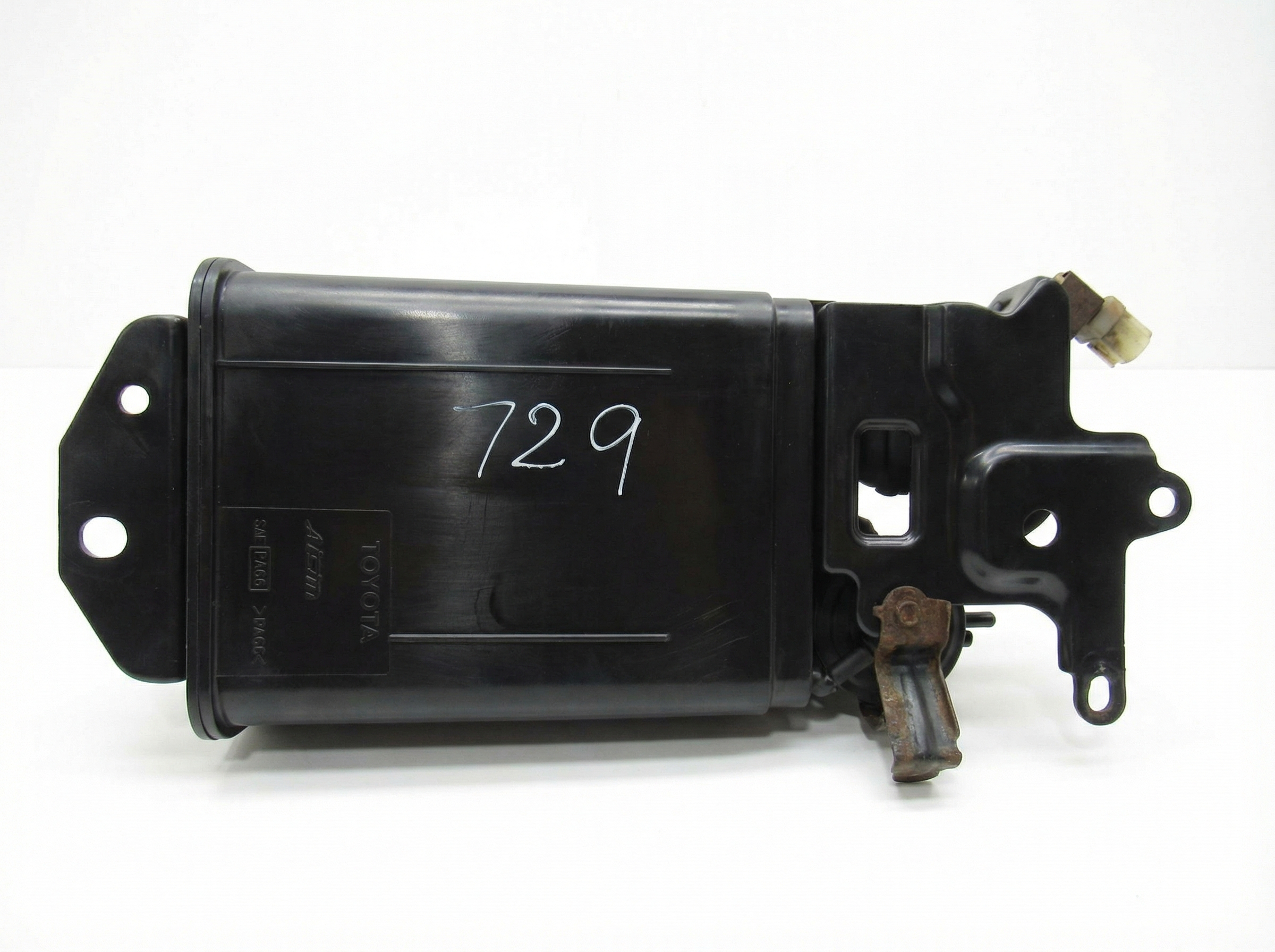
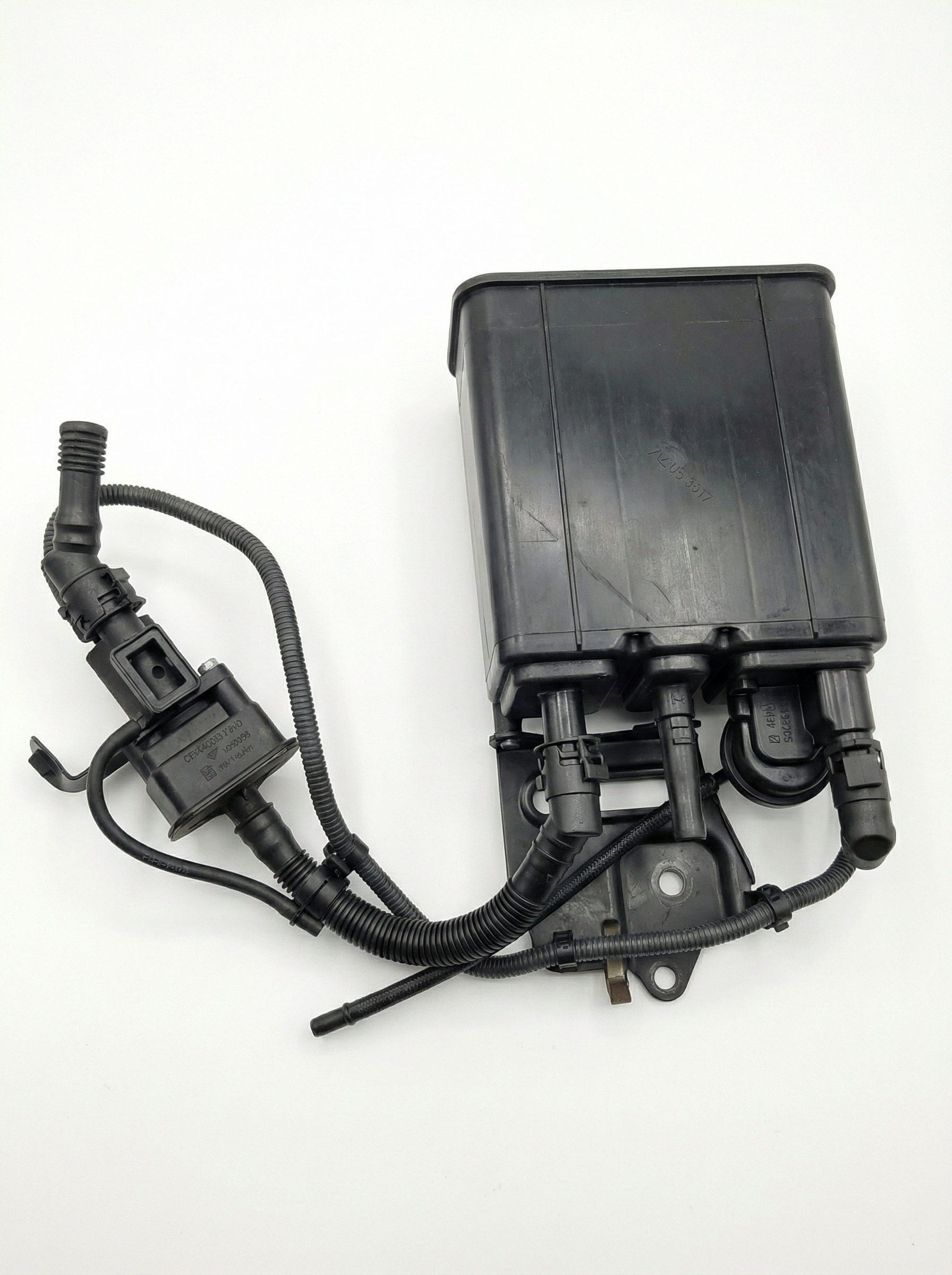
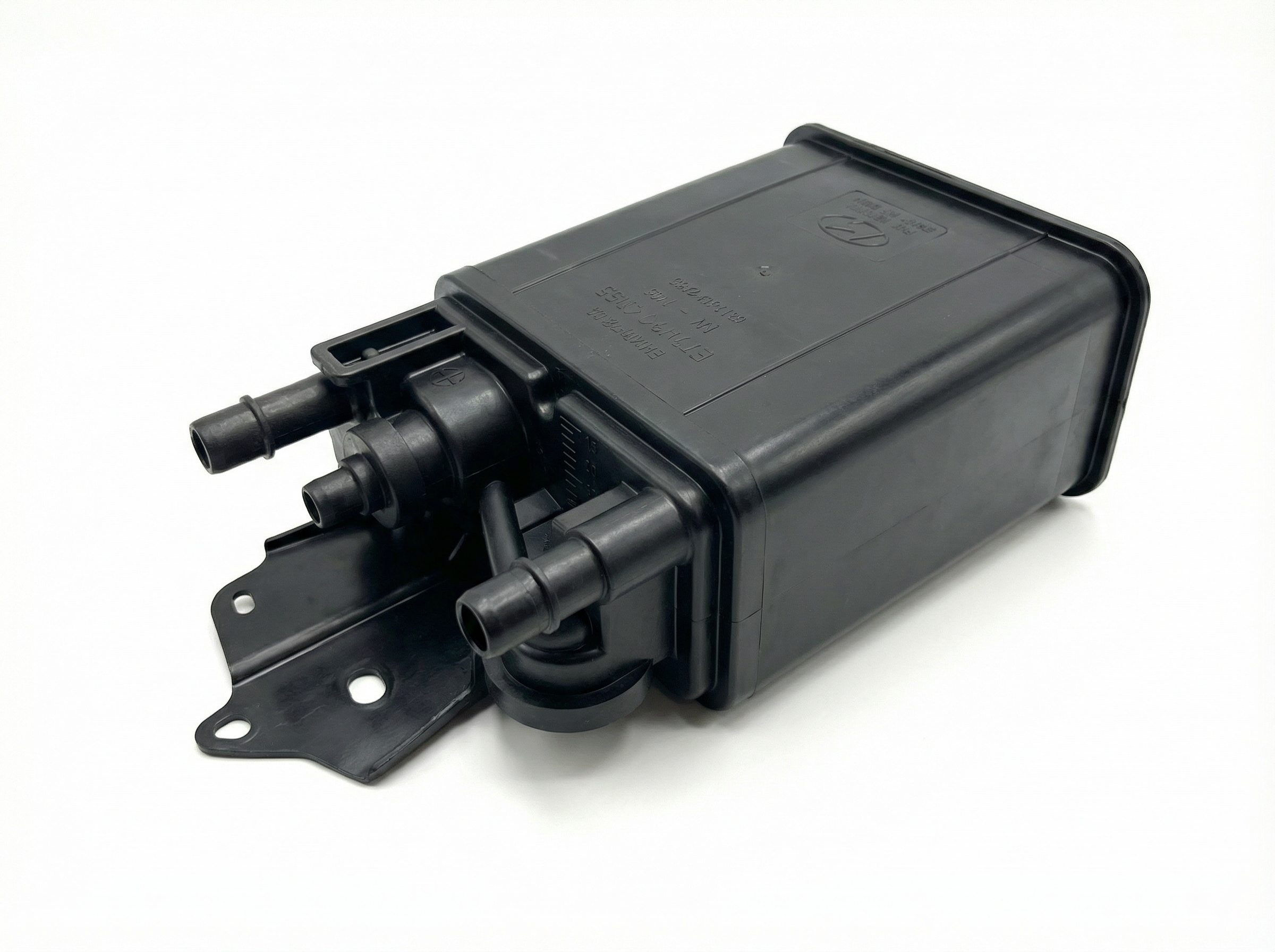
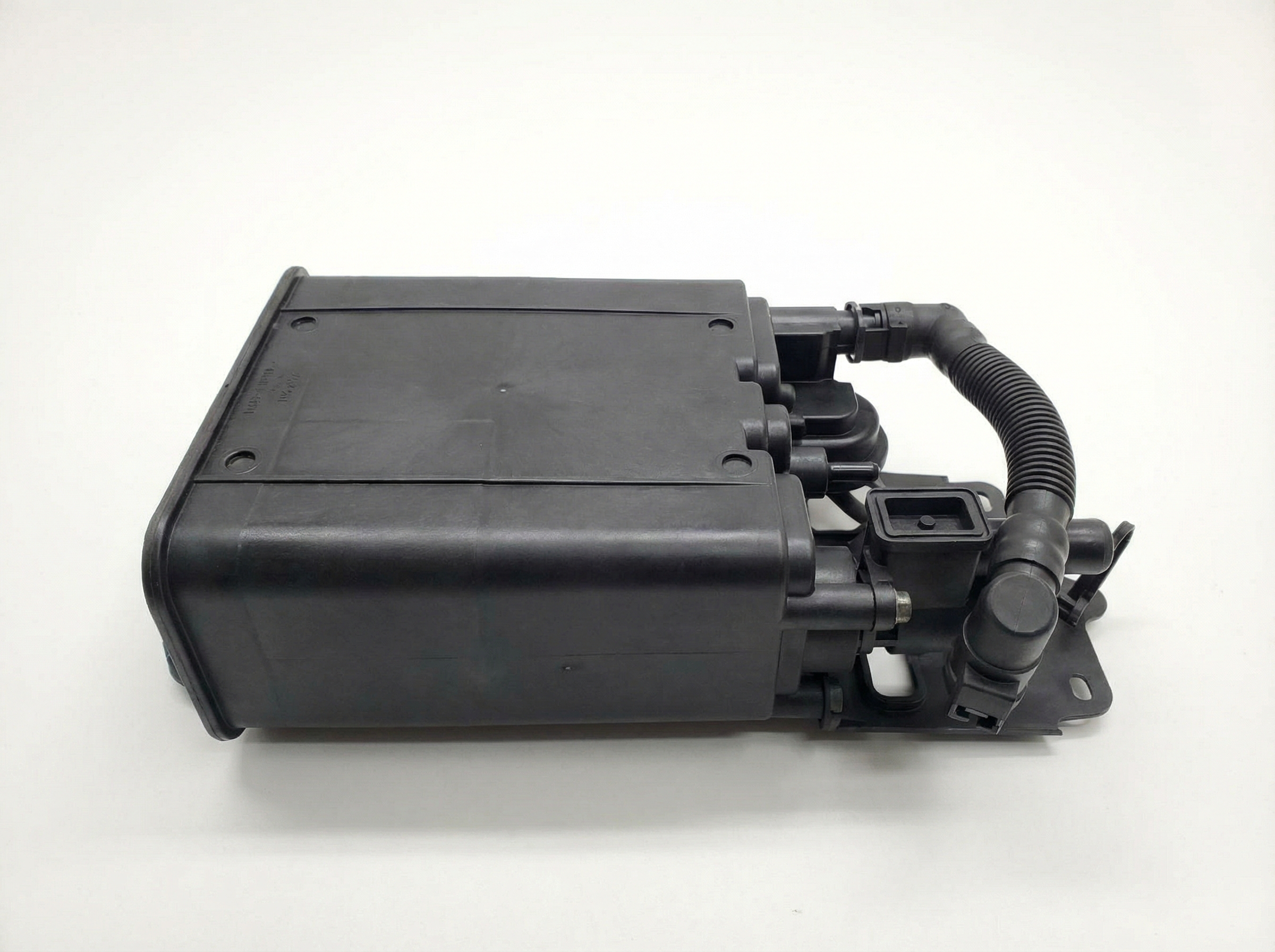
- Charcoal Canister Assembly
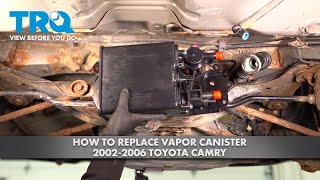
(OEM #Varies by year/build location. Examples: 77740-06042 (1997-1998), 77740-07020 (1999-2001), 🎬 Watch: 1997-2001 Camry charcoal canister replacement guide 77740-06160 (2004-2006 Japan-built), 77740-06111 (2004-2006 USA-built). Always verify with VIN.)— This is the most common failure for P0446 on this vehicle, as the vent valve is typically integrated into the canister. Part numbers are specific to year ranges and manufacturing location (USA vs. Japan built).
Trusted brands: Toyota (OEM), Denso, Aisin, Standard Motor Products (SMP), Dorman
OEM price range: $300-$450
Aftermarket price range: $200-$350
Related Codes That Often Appear With This One
- P0441 — P0441 (Incorrect Purge Flow) often appears with P0446. P0446 indicates a vent side problem, while P0441 indicates a purge flow problem. When the vent valve fails or is blocked, it can disrupt the entire system's ability to manage vapor flow, triggering both codes.
- P0440 — P0440 (EVAP System Malfunction) is a more general EVAP system code that can accompany P0446. TSB EG014-03 lists all three codes (P0440, P0441, P0446) as resulting from a failed Canister Closed Valve VSV.
Technical Service Bulletins (TSBs) & Recalls
- EG014-03 (October 16, 2003): Addresses inoperative Canister Closed Valve VSV on 2000-2003 Camry, Solara, and Avalon models, leading to codes P0440, P0441, and P0446. Confirms that replacing the canister assembly is the standard repair.
Platform-Specific Known Issues
- TSB EG014-03: A Technical Service Bulletin was issued for 2000-2003 Camry, Solara, and Avalon models for an inoperative canister closed valve VSV causing P0440, P0441, and/or P0446. The fix is to test and replace the valve/canister assembly.
- Engine Bay vs. Rear Mount Location: Early XV20 models (approx. 1997-1998) often have the canister in the engine bay, which is more protected but harder to access. Later models have it at the rear, which is easier to access but more prone to damage from the elements.
Mechanic-Grade Diagnostic Values
- Canister Close Valve (CCV) / Vent Valve VSV Solenoid Resistance — expected: 25 – 30 Ω at 20°C (68°F). Failure: No continuity (open circuit) or a reading significantly outside the expected range indicates a failed solenoid coil.
- Voltage at CCV / Vent Valve Harness Connector — expected: Battery voltage (~12V) on one of the two pins with the ignition key in the 'ON' position (engine off).. Failure: No voltage suggests a problem with the power supply from the EFI relay or a break in the wiring harness.
Hidden / Shadow Codes Worth Checking
- Mode 6, Test ID "TBP": On some Toyota platforms, a failed test labeled 'TBP' may appear in scan tool data (Mode 6 or live data utilities). This is believed to stand for 'Tank Bypass' and can be related to the purge flow side of the EVAP system, which can fail in conjunction with the vent side, triggering a P0446. (see via Toyota Techstream software, under 'Engine and ECT Live' data or the 'EVAP System Check' utility.)
Scan Tool Commands That Help
- Toyota Techstream: Active Test: 'Control the CCV' — This bidirectional command allows a technician to manually open and close the Canister Close Valve (Vent Valve). You should hear an audible click from the valve. This directly tests the solenoid's operation and the integrity of the control circuit from the ECM.
- Toyota Techstream: Utility: 'EVAP System Check (Manual)' — This function runs a guided test of the EVAP system, commanding valves to open and close while graphing the vapor pressure sensor readings. It can help visualize if the system is able to seal and hold pressure/vacuum when the vent valve is commanded closed, which is the core function tested by the P0446 monitor.
- Professional Aftermarket Scan Tools (e.g., Autel): Vent Solenoid Bidirectional Control — Many high-end scan tools can also command the vent solenoid on/off. This is useful for confirming the solenoid clicks and for sealing the system during a smoke test. However, some users report that automated EVAP self-test routines on aftermarket tools may fail to run to completion on these vehicles.
Wiring & Ground Locations
- CCV / Vent Valve Connector — On the charcoal canister assembly, located either in the engine bay (early models) or under the rear of the vehicle near the fuel tank (later models).. This 2-pin connector provides power and ground control to the vent valve solenoid. Corrosion or damage here is a common cause of an electrical circuit fault for P0446. On 1999 models, this connector is often blue.
Real Owner Repair Stories
- BobIsTheOilGuy forum user 'KB1' (1999 Toyota Camry) — Persistent P0446 code that returned immediately after reset.
❌ Tried (didn't work) Replacing the rear VSV (solenoid) with an aftermarket (NAPA) part.
✅ What actually fixed it The user acquired a used canister from a 2001 Camry, which did not fit. However, they tested the components on their original canister and found that a large, secondary valve (not the main VSV solenoid) was leaking slightly when it should have been sealed. They swapped this secondary valve from the junkyard canister onto their original one, which permanently fixed the code and allowed the car to pass a smog test.
"I Checked Everything" — The Actual Cause
- A well-documented case on a 2005 Camry showed that even when the vent and purge solenoids work via scan tool commands, and a smoke test shows the system holds pressure with no visible leaks, the P0446 code can still persist. The ECM's diagnostic logic for setting the code is very specific: it commands the vent valve open and looks for a change in tank pressure. If it doesn't see the expected pressure change (i.e., a return to atmospheric pressure), it concludes the valve is 'stuck closed' even if it's electrically and mechanically functional under other tests. This can happen due to a subtle internal restriction in the canister or a partially clogged vent path that a low-pressure smoke test might not reveal.
OEM Part Supersession History
N/A→25852-20010— To correct a false P0446 trouble code on certain 1999 models.
Heads up: This part, a 'Valve, Vacuum Control with Hoses', was released via TSB EG004-99 specifically to address false codes and may differ from the original factory-installed parts.
Model Year Variations Within This Range

- 1999: This model year has known issues with 'false' P0446 codes, addressed by TSB EG004-99. Additionally, there are at least two different versions of the rear VSV/canister assembly, one with two hose ports and one with three. An aftermarket VSV for one version will not work on the other.
- 1999 vs. 2001: The charcoal canister assembly from a 2001 Camry is not a direct fit for a 1999 model. The hose sizes and VSV configurations are different, confirming part changes occurred within the XV20 generation.
Diagnostic Flowchart
Real Owner Stories
Aggregated from forums and TSBs cited above. Mileages and costs reflect what owners reported in those sources.
1999 Toyota Camry LE 4-cyl
Symptoms: Check Engine Light with code P0446 that comes back immediately after resetting.
What fixed it: Replaced the charcoal canister with a junkyard unit from a 2001 Camry. Initially tried replacing just the rear VSV solenoid, but the code returned because the large valve mounted to the canister with the fresh air hose attached was leaking.
Source hint: BobIsTheOilGuy forum
1998 Lexus ES300
Symptoms: P0446 Evaporative Emission Control System Vent Control Malfunction.
What fixed it: Discovered a cracked canister via a smoke test and replaced the canister assembly.
Source hint: ClubLexus.com thread 'P0446 Evaporative Emission Control System Vent Control Malfunction'
1999 Lexus ES300
Symptoms: P0446 code present.
What fixed it: Replaced the entire vapor canister assembly after initial attempts to patch the old canister failed.
Source hint: YouTube user 'Rick Troutner'
Documented NHTSA Reports
NHTSA ODI #10165478
Symptoms: The check engine light illuminated repeatedly with code P0446 even after the owner attempted to have the vehicle repaired twice.
NHTSA ODI #10086188
Symptoms: A diagnostic trace for a vent control malfunction confirmed code P0446 was present, requiring a special order VSV control for installation.
Related OBD-II Codes
Frequently Asked Questions
Does TSB EG014-03 apply to my Camry for code P0446?
Where is the charcoal canister located on my 1997-2006 Camry?
Why does the gas pump keep clicking off prematurely when I try to refuel?
Can I just replace the vent valve (VSV) instead of the whole canister?
I hear a rattling sound when I shake my old charcoal canister. What does this mean?
Could spiders really be causing my P0446 code?
Helpful Videos

Used OEM Parts in Stock

New Aftermarket Parts Available


The information in this article is provided for general reference and educational purposes only. Vehicle specifications, procedures, and part compatibility can vary by production date, trim level, and region. Always consult your vehicle's factory service manual and verify part numbers before purchasing or performing repairs. Safety-critical components such as airbags, seat belts, and braking systems should be installed by a qualified professional.
- Toyota Camry:
- 🎬 Helpful Videos
- 🛍️ Shop This Part
- What's Unique About the 1997-2006 Toyota Camry
- Symptoms You May Notice
- Most Likely Causes
- Rare But Worth Checking
- Diagnosis Steps
- Parts You'll Likely Need
- Related Codes That Often Appear With This One
- Technical Service Bulletins (TSBs) & Recalls
- Platform-Specific Known Issues
- Mechanic-Grade Diagnostic Values
- Hidden / Shadow Codes Worth Checking
- Scan Tool Commands That Help
- Wiring & Ground Locations
- Real Owner Repair Stories
- "I Checked Everything" — The Actual Cause
- OEM Part Supersession History
- Model Year Variations Within This Range
- Diagnostic Flowchart
- Real Owner Stories
- 1999 Toyota Camry LE 4-cyl
- 1998 Lexus ES300
- 1999 Lexus ES300
- Documented NHTSA Reports
- NHTSA ODI #10165478
- NHTSA ODI #10086188
- Related OBD-II Codes
- Frequently Asked Questions
- 🎟️ Get 5% Off