

P0446 on 2012-2018 Audi A6: EVAP Vent Control Circuit Malfunction Causes and Fixes
This code points to an electrical problem with the EVAP system's vent control circuit, not a system leak. The most likely cause is a faulty leak detection pump (LDP), which includes the vent valve, or its wiring. Expect to pay $150-$300 for a replacement LDP.
- P0446 is an electrical circuit code, not a leak code. Do not start by looking for leaks with a smoke machine.
- The most likely culprit is the Leak Detection Pump (LDP) located in the rear passenger-side wheel well area.
- Before replacing the LDP, always inspect its electrical connector and nearby wiring for corrosion or damage, as this is a common and cheaper fix.
- Do not confuse this with the N80 purge valve in the engine bay; P0446 relates to the vent circuit at the rear of the car.
- You can continue to drive the car, but you will fail an emissions test and may have trouble refueling.
What's Unique About the 2012-2018 Audi A6
The 2012-2018 Audi A6 (C7 generation) uses a sophisticated Leak Detection Pump (LDP) that integrates the vent valve function. Unlike simpler systems where the vent valve is a standalone solenoid, on this A6 the entire LDP assembly is often the point of failure for a P0446 code. The LDP is located in the rear passenger-side wheel well area, making it susceptible to corrosion and damage from road debris and moisture over time, which can affect its internal components and electrical connector. This location is consistent across many vehicles on the VW MLB platform.
Symptoms You May Notice
- Check Engine Light is on.
- Difficulty refueling (the gas pump nozzle clicks off repeatedly before the tank is full).
- A faint fuel odor near the rear of the vehicle.
- A whooshing sound of pressure releasing when opening the gas cap.
- Replacing the gas cap. While a bad gas cap can cause other EVAP codes (like P0455 or P0457 for leaks), it is not the cause of a P0446 circuit malfunction code.
- Replacing the N80 Purge Valve. The purge valve is located in the engine bay and controls vapor flow to the engine. P0446 specifically relates to the vent circuit at the rear of the vehicle, not the purge valve. A faulty purge valve typically sets a P0441 code.
Most Likely Causes
- Faulty Leak Detection Pump (LDP) 🔴 High Probability The LDP is located in the rear passenger-side wheel well, exposing it to road salt, water, and debris, which can lead to internal failure of the solenoid motor or the integrated pressure switch.
How to confirm: Using a capable scan tool (like VCDS for VW/Audi), attempt to activate the LDP/vent valve. If it does not respond (no clicking or humming sound) and power/ground are confirmed at the connector, the LDP has failed. The pump should have 12V power with the key on.
Typical fix: Replace the entire Leak Detection Pump assembly. This is often a plug-and-play repair once the wheel well liner is removed for access.
Est. part cost: $150-$300 - Damaged Wiring or Corroded Connector 🟡 Medium Probability The wiring to the LDP is routed under the vehicle and can be damaged by road debris or chafing. The connector itself is highly prone to moisture intrusion and corrosion due to its location in the wheel well.
How to confirm: Visually inspect the wiring harness leading to the LDP for any breaks, chafing, or signs of damage. Unplug the connector and check for green or white corrosion on the pins. Use a multimeter to test for 12V power and a good ground at the connector with the key on.
Typical fix: Repair the damaged section of wiring. Clean the connector pins with a specialized brush and electrical contact cleaner or replace the connector pigtail if corrosion is severe.
Est. part cost: $10-$50 - Blown Fuse ⚪ Low Probability
How to confirm: Consult the owner's manual or a fuse diagram to locate the fuse for the EVAP system/Leak Detection Pump. Visually inspect the fuse or test for continuity with a multimeter.
Typical fix: Replace the blown fuse. If the new fuse blows immediately, it indicates a short circuit in the wiring that must be traced.
Est. part cost: $1-$5 - Clogged LDP Filter or Vent Hose ⚪ Low Probability The LDP's fresh air intake hose and filter can become clogged with dirt, mud, or even insect nests, preventing the system from venting properly and triggering a circuit/performance code.
How to confirm: Remove the LDP and inspect its air inlet port and any attached filter/hose for blockages. Attempt to blow air through the filter; if it's restricted, it's clogged.
Typical fix: Clean or replace the LDP filter and ensure the vent hose is clear.
Est. part cost: $20-$40
Rare But Worth Checking
- Faulty Engine Control Module (ECM): This is extremely rare. The ECM should only be considered after all other possibilities, including the LDP and its entire circuit, have been thoroughly tested and ruled out. A failed ECM driver for the vent circuit is possible but unlikely.
Diagnosis Steps
- Read the code using an OBD-II scanner and note any other codes present. A VCDS (VAG-COM) tool is preferred for detailed diagnostics on Audi vehicles.
- Check the fuse for the EVAP system/Leak Detection Pump in the vehicle's fuse panel.
- Safely raise the vehicle and remove the rear passenger-side wheel and wheel well liner to access the Leak Detection Pump (LDP) assembly.
- Visually inspect the LDP, its connector, and the wiring harness for any obvious signs of physical damage, corrosion, or loose connections. Pay close attention to the connector pins for green/white residue.
- With the ignition on, use a multimeter to verify that there is battery voltage (~12V) on the power wire of the LDP connector.
- Use a capable bidirectional scan tool to command the LDP vent valve to activate. Listen for a clicking or humming sound from the pump assembly.
- If the pump does not activate, check for a proper ground signal from the ECM on the control wire while commanding it with the scan tool.
- If power and ground are present when commanded but the pump does not operate, the Leak Detection Pump is faulty and needs to be replaced.
- If power or ground is missing, the fault lies in the wiring between the LDP and the fuse box/ECM, and the circuit must be traced to find the break or short.
- While the LDP is removed, inspect the air inlet filter for blockages from dirt or debris.
Parts You'll Likely Need
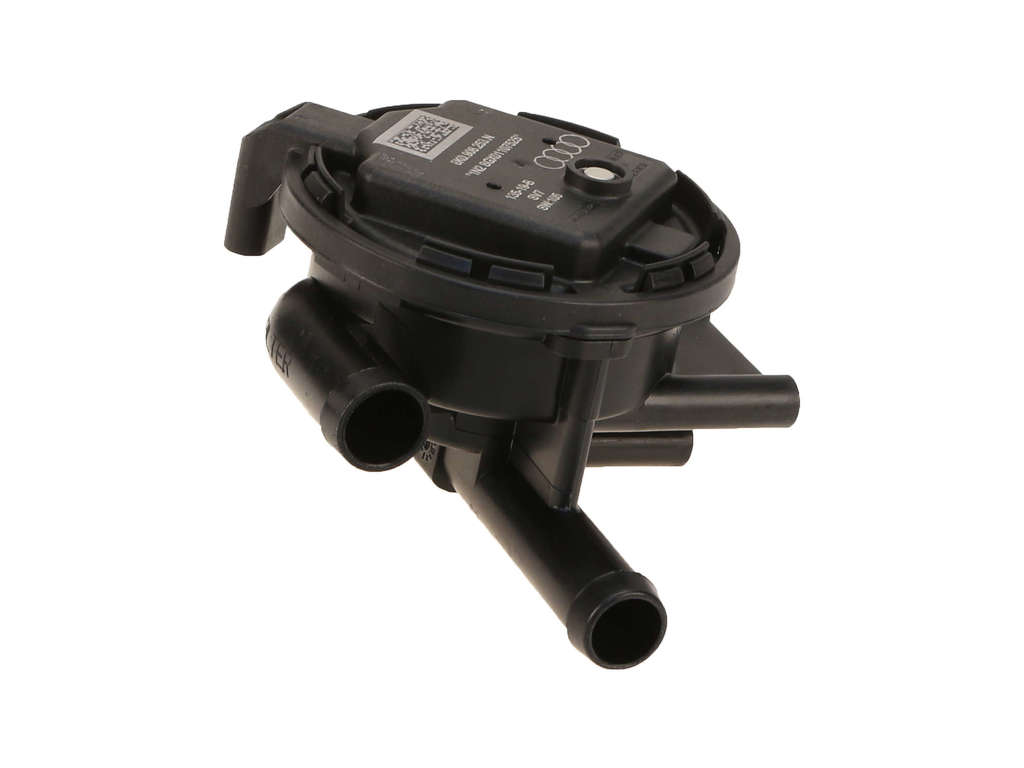
- Leak Detection Pump (LDP)
(OEM #8K0906253N (supersedes 8K0906253M, 8K0906253L, 8K0906253H))— This assembly contains the vent valve solenoid and motor that is the subject of the P0446 circuit code. Internal failure of the solenoid or motor is the most common cause.
Trusted brands: Bosch, VDO, Genuine Audi, URO Parts
OEM price range: $250-$350
Aftermarket price range: $110-$250
Platform-Specific Known Issues
- Corrosion at LDP Connector: Owners on forums like AudiWorld and Audizine frequently report that the root cause of their P0446 was not the pump itself, but heavy corrosion on the electrical connector pins due to its exposed location in the rear wheel well. Cleaning the pins or replacing the connector pigtail often resolves the issue for a fraction of the cost of a new pump.
Mechanic-Grade Diagnostic Values
- Leak Detection Pump (LDP) Solenoid Resistance — expected: A Technical Service Bulletin (TSB) for a related code on a similar platform suggests a target resistance of 640 to 720 ohms. Another source indicates a range of 15-17 Ohms between pins 2 and 3.. Failure: A reading significantly outside the specified range, or an open/short circuit (infinite or zero ohms), indicates a faulty LDP solenoid coil.
- LDP Connector Voltage (Key On, Engine Off) — expected: Pin 3 (Power) should show battery voltage (~12V). Pin 2 (Control) should show battery voltage when the pump is not being commanded by the ECM.. Failure: No voltage on Pin 3 indicates a power supply issue (fuse, wiring). Voltage on Pin 2 that does not drop close to 0V when commanded ON by a scan tool points to a wiring issue or a failed ECM driver.
Scan Tool Commands That Help
- VCDS (VAG-COM): Output Test for EVAP Leak Detection Pump (LDP) - V144 — This command is used to directly activate the LDP's internal solenoid and motor. A technician can listen for a 'click' or humming sound to confirm the pump is receiving the command. A test light connected between the power and control pins should flash during this test, confirming the ECM is sending the signal.
- VCDS (VAG-COM): Basic Settings - Group 070 / 071 — This function initiates a full EVAP system self-test, which includes cycling the LDP to pressurize the system and check for leaks. While P0446 is a circuit code, running this test can help verify the overall function of the system after a repair. The results will show as 'System OK' or indicate a leak size.
Wiring & Ground Locations
- LDP Connector (3-pin) — Behind the rear passenger-side wheel well liner, connected to the Leak Detection Pump.. This is the primary point for testing. Pin 3 is 12V power, Pin 2 is the control signal from the ECM, and Pin 1 is for the internal sense circuit. Corrosion here is a very common cause of P0446.
- ECM Connector T94, Pin 69 — On the Engine Control Module (ECM), located in the electronics box in the plenum chamber at the base of the windshield.. This is the specific pin on the ECM that sends the control signal to the LDP. A continuity test between this pin and Pin 2 at the LDP connector can confirm if the control wire is intact.
- Ground Point 646 — On the bulkhead on the right side of the engine compartment.. While not the direct ground for the LDP (which is controlled via the ECM), this is a major chassis ground point for systems in that area. Verifying it is clean and tight is good practice when diagnosing any electrical fault.
Real Owner Repair Stories
- AudiWorld Forums User (2005 Audi A6 (C6 generation, but relevant LDP system)) — EVAP trouble code (P2404, a related LDP code)
❌ Tried (didn't work) Bench testing the LDP showed it would click but the motor wouldn't run consistently., Ohm tests on the pump were within spec., Running VCDS output test was intermittent.
✅ What actually fixed it The user concluded the ECM was not providing the ground signal to the LDP. The final fix was replacing the Engine Control Module (ECM). This was determined after confirming the LDP and wiring were good.
OEM Part Supersession History
8K0906253A, 8K0906253C, 8K0906253E, 8K0906253G, 8K0906253H, 8K0906253J, 8K0906253L→8K0906253N— Standard part evolution for improved reliability or manufacturing changes.
Heads up: All listed previous part numbers are superseded by and interchangeable with 8K0906253N for this application.
Diagnostic Flowchart
Other Known Issues on This Vehicle
Issues unrelated to this code that are worth knowing about as an owner of this generation:
- 3.0T Timing Chain Tensioner Rattle 🔴 High — Commonly heard on cold starts, especially on pre-facelift (2012-2015) models. Can occur from 60,000 miles onwards. If ignored, can lead to timing jump and catastrophic engine damage. (Ref: Audi TSB 2039995/2 addresses a rattling noise and provides part numbers for updated tensioners.)
- 3.0T Water Pump & Thermostat Failure 🟠 Medium — The plastic housings for the water pump and thermostat are prone to cracking with age and heat cycles, causing coolant leaks. Failures are common between 50,000 and 100,000 miles. (Ref: A class-action lawsuit settlement provided extended warranty coverage for some owners, but it has since expired. TSB 2070349 provides diagnostic guidance for coolant leaks.)
- PCV Valve (Oil Separator) Failure 🟠 Medium — Common across many Audi engines, including the 3.0T. Failure leads to excessive crankcase pressure, causing oil leaks (especially at the rear main seal), rough idle, and increased oil consumption. Often occurs after 60,000 miles.
- Engine Mount Failure 🟡 Low — The fluid-filled electronic engine mounts can leak and fail, leading to increased vibration at idle and during acceleration. This is more common on higher-mileage cars (80,000+ miles).
- Carbon Buildup on Intake Valves 🟠 Medium — A universal issue for all direct-injection engines (TFSI). Carbon deposits accumulate on the back of intake valves over time, restricting airflow and causing misfires, hesitation, and a gradual loss of performance. Typically requires cleaning every 60,000-80,000 miles.
Used vs. New Parts: Buying Guide for This Vehicle
When a used part is the smart pick: For this specific part, a used LDP is generally not recommended. Given its location in the wheel well, it is highly susceptible to water, salt, and debris, leading to corrosion and internal wear. The risk of a used part failing soon after installation is high.
Donor-vehicle mileage cap: roughly under 40000 miles for the part to have meaningful remaining life.
What to inspect on the donor part:
- Inspect the electrical connector pins for any signs of green or white corrosion.
- Check the plastic housing for cracks or physical damage.
- If possible, ask for the donor vehicle's region; parts from dry, non-salt-belt states are preferable.
- Ensure the air filter nipple is intact and not clogged with mud.
OEM-only on this vehicle (don't cheap out):
- Engine Control Module (ECM)
Aftermarket brands forum-validated for this vehicle:
- Bosch
- VDO (Continental)
Brands owners have reported issues with on this vehicle:
- Generic 'white-box' or unbranded parts from online marketplaces may have a high failure rate or poor fitment for this component.
Real Owner Stories
Aggregated from forums and TSBs cited above. Mileages and costs reflect what owners reported in those sources.
Audi A6 (C6 Platform)
Symptoms: Check engine light icon showed up on the dash.
What fixed it: The discussion involved a P2404 code which is closely related to the LDP sense circuit.
Source hint: AudiWorld forum thread titled 'Engine light icon shows up on dash'
Audi A6 (C5 Platform)
Symptoms: Hard starts after refueling and fuel smells near the vehicle.
What fixed it: EVAP system failure diagnostics (classic symptoms accompanying EVAP codes).
Source hint: AudiWorld forum thread titled 'EVAP canister purge valve'
2012-2018 Audi A6
Symptoms: P0446 code triggered; inspection revealed heavy corrosion on the electrical connector pins in the rear wheel well.
What fixed it: Cleaning the pins or replacing the connector pigtail rather than replacing the entire pump.
Source hint: vehicle_specific_issues: Corrosion at LDP Connector
Related OBD-II Codes
Frequently Asked Questions
Where is the Leak Detection Pump (LDP) located on my Audi A6?
Why is my A6 having difficulty refueling and clicking the gas pump nozzle off?
Is there a specific scan tool recommended for diagnosing P0446 on an Audi?
Could the P0446 code be caused by something other than a broken pump?
Does my Audi A6 have a TSB for the 3.0T engine regarding noises that might be confused with EVAP issues?
Are there other Audi models that share this specific LDP failure?
Helpful Videos

We Have This Part in Stock


The information in this article is provided for general reference and educational purposes only. Vehicle specifications, procedures, and part compatibility can vary by production date, trim level, and region. Always consult your vehicle's factory service manual and verify part numbers before purchasing or performing repairs. Safety-critical components such as airbags, seat belts, and braking systems should be installed by a qualified professional.
- Audi A6:
- 🎬 Helpful Videos
- 🛍️ Shop This Part
- What's Unique About the 2012-2018 Audi A6
- Symptoms You May Notice
- Most Likely Causes
- Rare But Worth Checking
- Diagnosis Steps
- Parts You'll Likely Need
- Platform-Specific Known Issues
- Mechanic-Grade Diagnostic Values
- Scan Tool Commands That Help
- Wiring & Ground Locations
- Real Owner Repair Stories
- OEM Part Supersession History
- Diagnostic Flowchart
- Other Known Issues on This Vehicle
- Used vs. New Parts: Buying Guide for This Vehicle
- Real Owner Stories
- Audi A6 (C6 Platform)
- Audi A6 (C5 Platform)
- 2012-2018 Audi A6
- Related OBD-II Codes
- Frequently Asked Questions
- 🎟️ Get 5% Off