

P0443 on 2015-2022 GMC Canyon 3.6L V6: EVAP Purge Valve Circuit Causes and Fixes
For a 2015-2022 GMC Canyon with a 3.6L V6, code P0443 almost always indicates a failed EVAP Purge Solenoid Valve. This is a very common issue and a simple DIY fix, with the part costing between $25 for an aftermarket replacement and about $60 for an OEM ACDelco part. The code points to an electrical circuit fault, not a leak.
- P0443 on your GMC Canyon almost certainly means the EVAP Purge Solenoid Valve has failed.
- This is an electrical circuit code; do not waste money on a new gas cap.
- The repair is very simple (DIY-friendly) and involves replacing a single part on top of the engine held by one bolt.
- Crucially, you must buy the correct part for your engine: 2015-2016 models (LFX engine) use a different valve than 2017-2022 models (LGZ engine).
What's Unique About the 2015-2022 GMC Canyon
The second-generation GMC Canyon and its sibling, the Chevrolet Colorado, are well-known for frequent failures of the EVAP purge solenoid valve. The issue is common on the 3.6L V6 engine across the entire 2015-2022 year range. While P0443 is an electrical circuit code, the root cause is most often the solenoid component itself failing internally. This is a different part from the EVAP vent solenoid, which is located near the fuel tank. On the LFX engine (2015-2016), the valve is easily accessible on top of the engine, while on the LGZ engine (2017-2022), its location can be more difficult to access under the intake manifold cover.
Generation note: The 2015-2022 model years cover the second generation of the GMC Canyon but include two different 3.6L V6 engines. The 2015-2016 models use the LFX engine, while the 2017-2022 models use the LGZ engine. The EVAP Purge Valve is a different part number for each engine, so it is critical to buy the correct one for your specific year.
Symptoms You May Notice
- Check Engine Light is on.
- Slightly rough or unstable idle.
- Difficulty starting immediately after refueling (this is more common with a P0496 code, but can occur if the valve is failing intermittently or stuck open).
- A slight ticking noise from the engine bay when the valve is operating, which may become absent if it fails.
- A faint smell of fuel in some rare cases if the valve is stuck open.
- Replacing the gas cap. A loose or faulty gas cap will cause EVAP leak codes (like P0455 or P0457), not a P0443 circuit code.
- Replacing the EVAP Vent Solenoid or Charcoal Canister. P0443 points specifically to the purge valve circuit in the engine bay, not the components located near the fuel tank.
Most Likely Causes
- Faulty EVAP Purge Solenoid Valve 🔴 High Probability This is a widely documented high-failure-rate component on this GM engine platform, to the point where GM issued a special warranty extension for the 2015 model year for a related condition. Manufacturer Bulletin #PIP5552 specifically notes that engineering has investigated conditions where the MIL illuminates with code P0443 or P0459.
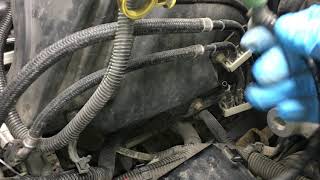
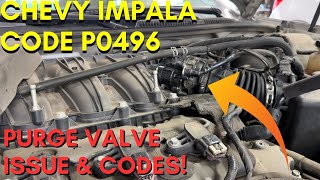
How to confirm: Disconnect the valve and measure the resistance between its two electrical pins with a multimeter. A healthy solenoid should read between 15-30 Ohms. A reading of infinite resistance (OL) indicates an open circuit and a bad solenoid. 🎬 See how to test and replace a faulty GM purge solenoid. Alternatively, use a scan tool to command the valve to open and close; you should hear an audible click.
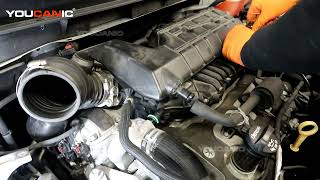
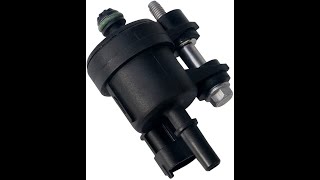
Typical fix: Replace the EVAP Purge Solenoid Valve. It is located on top of the engine, typically held by a single 10mm bolt, and has two hose connections and one electrical connector.
Est. part cost: $25-$70 - Damaged Wiring or Connector 🟡 Medium Probability The wiring harness in the engine bay is exposed to heat and vibration, which can lead to chafing or broken wires over time. The connector itself can become brittle and the locking tab can break.
How to confirm: Visually inspect the wiring harness leading to the purge valve for any signs of cracking, melting, or chafing. Check the connector for corrosion, moisture, or backed-out pins. With the key on, engine off, use a multimeter or test light to check for 12V power on one wire (typically a pink or purple wire on GM vehicles). The other wire is the ground control wire from the ECM.
Typical fix: Repair the damaged section of wire or replace the connector pigtail.
Est. part cost: $10-$30 - Blown Fuse ⚪ Low Probability
How to confirm: Locate the fuse for the emissions system (often labeled 'EMISS' or similar) in the under-hood fuse box. Visually inspect the fuse to see if it is blown. Manufacturer Bulletin #PIT5336 notes that a technician may find the Emission 1 Fuse open in conjunction with P0443 and recommends inspecting for damaged wires on the engine harness.
Typical fix: Replace the blown fuse. If the fuse blows again immediately, it indicates a short circuit in the wiring that must be diagnosed.
Est. part cost: $1-$5
Rare But Worth Checking
- Faulty Engine Control Module (ECM): This is very rare. The ECM should only be considered after all other possibilities (valve, wiring, fuses) have been definitively ruled out. A Reddit user confirmed continuity from the valve connector to the ECM pin, proving the wiring was good, which is a necessary step before suspecting the ECM. A failed driver circuit inside the ECM is possible but highly unlikely.
Diagnosis Steps
- Read the codes with an OBD-II scanner and confirm P0443 is present. 🎬 Watch this quick walkthrough on fixing the P0443 GMC code. Note any other codes, especially P0458 or P0496.
- Check the fuse for the emissions system in the under-hood fuse block. Replace if blown.
- Locate the EVAP Purge Solenoid Valve on the driver's side of the engine, near the intake manifold.
- Visually inspect the electrical connector and wiring harness for obvious damage, melting, or corrosion.
- Disconnect the electrical connector. With the ignition on (engine off), use a multimeter to verify that one pin has 12V power.
- With the connector still disconnected, measure the resistance across the two pins on the purge valve itself. A healthy solenoid will have a specific resistance (typically 15-30 ohms). An 'OL' or infinite reading means the solenoid's internal coil is broken and the part must be replaced.
- If the solenoid resistance is good and power is present at the connector, the issue may be in the ground control wire running back to the ECM or the ECM itself. Check for continuity on the ground wire between the connector and the correct ECM pin (X2, pin 51 for 2016 3.6L).
- If a new purge valve was installed and the code returns, re-test the new part. It is possible for replacement parts to be faulty out of the box.
Parts You'll Likely Need
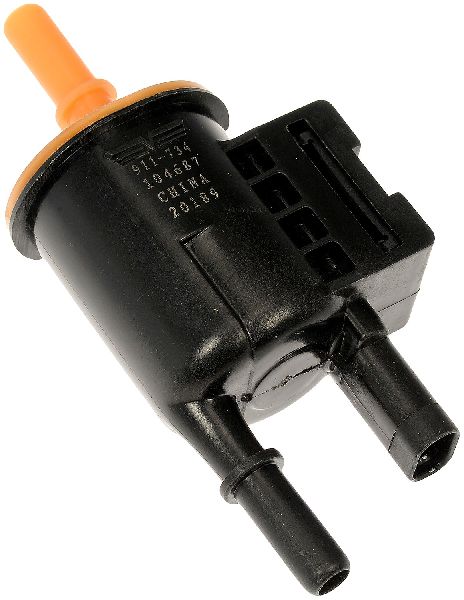
- EVAP Vapor Canister Purge Solenoid Valve (2015-2016 LFX Engine)
(OEM #12690512)— This is the most common failure point for code P0443 on the 2015-2016 models with the LFX V6 engine. This part may have been superseded by other numbers like 12610560, always verify with VIN.
Trusted brands: ACDelco (GM Genuine), Dorman, Standard Motor Products
OEM price range: $40-$60
Aftermarket price range: $25-$45 - EVAP Vapor Canister Purge Solenoid Valve (2017-2022 LGZ Engine)
(OEM #12630282)— This is the most common failure point for code P0443 on the 2017-2022 models with the updated LGZ V6 engine.
Trusted brands: ACDelco (GM Genuine), Dorman (911-082), Standard Motor Products
OEM price range: $45-$70
Aftermarket price range: $30-$50
Related Codes That Often Appear With This One
- P0458 — This code for 'EVAP Purge Control Circuit Low' often appears with P0443 as both point to an electrical issue within the same circuit. A short to ground in the control circuit can trigger this code.
- P0496 — This code for 'EVAP Flow During a Non-Purge Condition' indicates the purge valve is stuck open. While P0443 is an electrical code, a valve that is failing electrically can sometimes also get stuck, triggering both codes. This is the primary code addressed by GM's Special Coverage 18029.
Technical Service Bulletins (TSBs) & Recalls
- Special Coverage Adjustment 18029: Covers inoperative purge solenoid on certain 2015 models, extending warranty coverage to 10 years/120,000 miles for symptoms like hard starting after refueling.
- Bulletin #PIP5552: Communicates a concern regarding the Malfunction Indicator Lamp (MIL) illuminating with codes P0443 or P0459, noting that engineering has investigated this condition.
- Bulletin #PIT5336: A cross-manufacturer reference for GM vehicles noting that P0443 may be accompanied by an open Emission 1 Fuse, requiring technicians to inspect and repair damaged wires on the engine harness.
- TSB 18-NA-355: Addresses transmission shudder on 8-speed automatic models by recommending a specific fluid flush and fill procedure. (Related platform issue, not for P0443).
Platform-Specific Known Issues
- General Motors issued Special Coverage Adjustment 18029 for 2015 models, which extended the warranty on the EVAP purge solenoid to 10 years or 120,000 miles. This was primarily for conditions causing code P0496 (improper flow), such as hard starting after refueling, but it acknowledges the high failure rate of the part on this platform. If you have a 2015 model, check with a GM dealer to see if your vehicle is covered, even if the code is P0443.
- The location of the purge valve is slightly different between the LFX (2015-16) and LGZ (2017-22) engines. On the LFX, it is more exposed and easier to access. On the LGZ, it is tucked further under the intake manifold cover, making it slightly more difficult to reach.
Mechanic-Grade Diagnostic Values
- EVAP Purge Solenoid Coil Resistance — expected: 15 to 30 Ohms at room temperature.. Failure: A reading of infinite resistance (OL) or zero ohms indicates a failed coil.
- Voltage at Purge Solenoid Connector (Power Wire) — expected: Battery Voltage (12V+) with Key On, Engine Off.. Failure: 0V indicates a blown fuse or a break in the power supply wire.
- Voltage at Purge Solenoid Connector (Control Wire) — expected: The ECM supplies a ground to this wire to activate the solenoid. It is a pulse-width modulated (PWM) signal, so a multimeter may show a fluctuating or intermediate voltage when active.. Failure: A constant ground or no ground when commanded ON by a scan tool points to a wiring or ECM driver issue.
Scan Tool Commands That Help
- GDS2 / Professional Scan Tool: EVAP Purge Solenoid Valve Command — This bidirectional control allows a technician to command the purge valve to open and close (typically in percentage increments, e.g., 0% to 100%). This is used to verify if the solenoid clicks audibly and if the control circuit is functioning. You can monitor fuel tank pressure or short-term fuel trims while commanding the valve open to see if the engine reacts as expected.
Wiring & Ground Locations
- EVAP Purge Valve Connector — On the driver's side of the engine, near the intake manifold. On LGZ (2017+) engines, it is tucked under the engine cover and may require removing the battery for easier access.. This is the primary point for electrical testing. One wire (often pink or purple) is the 12V+ supply, and the other (green on a 2016 model) is the ground-side control wire from the ECM.
- ECM Connector X2, Pin 51 — On the Engine Control Module (ECM).. For a 2016 3.6L V6 (LFX), this is the specific pin for the EVAP Purge Solenoid Control circuit. Technicians test for continuity between this pin and the valve's connector to rule out a broken wire before suspecting a faulty ECM.
Real Owner Repair Stories
- Reddit r/chevycolorado user 'mexxmann' (2016 GMC Canyon SLT 3.6L V6) — Check Engine Light with codes P0443 and P0458.
❌ Tried (didn't work) Cleaning the gas cap., Initial replacement of the purge valve fixed a P0442 code, but P0443/P0458 appeared months later.
✅ What actually fixed it The user diagnosed a bad replacement part. After confirming 12V power and good continuity on the control wire to the ECM (Pin X2-51), they measured the resistance of the recently installed purge valve and found it was infinite (open circuit). Replacing the faulty new valve a second time resolved the codes.
OEM Part Supersession History
12610560→12690512— Standard part evolution and updates by the manufacturer.
Heads up: Part number 12690512 is the correct replacement for the LFX (2015-2016) engine.
Model Year Variations Within This Range
- 2015-2016 (LFX Engine): Uses purge solenoid part number 12690512. The valve is located in a more accessible position on top of the engine.
- 2017-2022 (LGZ Engine): Uses purge solenoid part number 12630282. The valve is located further under the intake manifold cover, and some owners remove the battery to gain better access for replacement.
Diagnostic Flowchart
Other Known Issues on This Vehicle
Issues unrelated to this code that are worth knowing about as an owner of this generation:
- 8-Speed Transmission Shudder (TCC Shudder) 🟠 Medium — Very common on 2017-2019 models with the 8-speed automatic. Owners describe it as driving over rumble strips at light throttle. (Ref: TSB 18-NA-355: Recommends a specific transmission fluid exchange procedure with Mobil 1 Synthetic LV ATF HP fluid to resolve the issue.)
- Active Fuel Management (AFM) / Dynamic Fuel Management (DFM) Lifter Failure 🔴 High — Can occur on the LGZ (2017+) engines. A failed lifter on an AFM cylinder (2 or 5) can cause misfires, a ticking noise, and in severe cases, catastrophic engine damage. (Ref: TSB #21-NA-036 notes that a faulty AFM Oil Control Valve can cause misfires on cylinders 2 and 5.)
- Torque Converter Failure 🔴 High — Affects some models, leading to jerking, hesitation, or complete transmission failure. Often occurs outside of the standard warranty period. (Ref: Multiple TSBs exist, including TSB 19NA153 for DTC P0741 (TCC Stuck Off), related to torque converter issues.)
- Loss of Power Steering 🔴 High — Some 2015 models were recalled for poor electrical connections in the power steering system. Other model years have also had reports of sudden power steering loss. (Ref: Recall on some 2015 models for torque sensor wiring harness connector issues.)
- Oil Leaks 🟡 Low — Some owners have reported oil leaks from high-pressure lines or other engine seals at relatively low mileage.
Used vs. New Parts: Buying Guide for This Vehicle
When a used part is the smart pick: A used part is generally not recommended for this specific repair. The EVAP purge solenoid is a known high-failure-rate electronic component. The cost savings of a used part (which may have significant wear) are minimal compared to the price of a new aftermarket or OEM part, and the risk of premature failure is high.
Donor-vehicle mileage cap: roughly under 30000 miles for the part to have meaningful remaining life.
What to inspect on the donor part:
- Ensure the plastic housing is free of cracks or heat damage.
- Check that the electrical connector pins are straight and free of corrosion.
- If possible, test the resistance with a multimeter before purchase; it should be between 15-30 ohms.
Aftermarket brands forum-validated for this vehicle:
- ACDelco (GM Genuine/Original Equipment is the gold standard).
- Standard Motor Products (SMP) is a reputable alternative.
- Dorman is widely available and often used, with many positive reviews, though some forums express a preference for OEM for electronic components.
Brands owners have reported issues with on this vehicle:
- Unbranded, no-name parts from online marketplaces should be avoided, as quality control can be inconsistent, leading to out-of-the-box failures.
Real Owner Stories
Aggregated from forums and TSBs cited above. Mileages and costs reflect what owners reported in those sources.
2016 GMC Canyon 3.6L V6
Symptoms: Owner observed P0443 and P0458 codes. Previously had P0442 and found the valve had suction even when the wiring harness was disconnected.
What fixed it: The owner diagnosed a brand-new replacement valve as faulty after measuring infinite resistance between the two pins on the valve itself.
Source hint: Reddit r/chevycolorado (Thread: 'GMC Canyon 2016 SLT - Code P0443')
2015 GMC Canyon 3.6L V6
Symptoms: Experienced P0443 and P0458 codes shortly after purchasing the vehicle.
What fixed it: Replacement of the EVAP purge solenoid, though the owner noted the possibility of receiving a faulty new part.
Source hint: GM-Trucks.com (Thread: 'Check Engine Codes P0443 and P0458')
Related OBD-II Codes
Frequently Asked Questions
Is there a warranty extension for the EVAP purge solenoid on my 2015 GMC Canyon?
I just replaced the purge valve on my 3.6L Canyon but P0443 returned immediately. Could the new part be the problem?
Where is the purge solenoid located on the 2017-2022 LGZ engine compared to the older LFX?
My Canyon has a rough idle and P0443. Could this be related to the 8-speed transmission shudder?
What electrical values should I see when testing the P0443 circuit on my Canyon?
Can a blown fuse cause the P0443 code on this vehicle?
Helpful Videos
Used OEM Parts in Stock

New Aftermarket Parts Available


The information in this article is provided for general reference and educational purposes only. Vehicle specifications, procedures, and part compatibility can vary by production date, trim level, and region. Always consult your vehicle's factory service manual and verify part numbers before purchasing or performing repairs. Safety-critical components such as airbags, seat belts, and braking systems should be installed by a qualified professional.
- GMC Canyon:
- 🎬 Helpful Videos
- 🛍️ Shop This Part
- What's Unique About the 2015-2022 GMC Canyon
- Symptoms You May Notice
- Most Likely Causes
- Rare But Worth Checking
- Diagnosis Steps
- Parts You'll Likely Need
- Related Codes That Often Appear With This One
- Technical Service Bulletins (TSBs) & Recalls
- Platform-Specific Known Issues
- Mechanic-Grade Diagnostic Values
- Scan Tool Commands That Help
- Wiring & Ground Locations
- Real Owner Repair Stories
- OEM Part Supersession History
- Model Year Variations Within This Range
- Diagnostic Flowchart
- Other Known Issues on This Vehicle
- Used vs. New Parts: Buying Guide for This Vehicle
- Real Owner Stories
- 2016 GMC Canyon 3.6L V6
- 2015 GMC Canyon 3.6L V6
- Related OBD-II Codes
- Frequently Asked Questions
- 🎟️ Get 5% Off