

OBD-II Code P0458: EVAP Purge Control Valve Circuit Low
What P0458 means, why it triggers, and how to fix it
- P0458 is strictly an electrical circuit code, meaning you must diagnose the wiring, fuse, or purge valve solenoid rather than searching for a physical EVAP leak.
- Replacing a faulty EVAP purge solenoid resolves the P0458 code in over 70% of cases, costing between $105 and $300 at a repair shop.
- You can safely drive with a P0458 code, but expect a 5-10% drop in fuel economy, a persistent gas smell, and an automatic emissions test failure.
- Always test the purge valve with a multimeter before replacing it; a healthy solenoid typically reads between 20 and 60 Ohms of resistance.
- Check for Technical Service Bulletins (TSBs) before starting repairs, as 2019+ GM trucks and many Subaru models have known factory wiring flaws that trigger this exact code.
What Does P0458 Mean?

The P0458 code means the Powertrain Control Module (PCM) detects a voltage signal from the EVAP purge valve's control circuit that is lower than the manufacturer's specified range. This points directly to an electrical fault—such as a shorted wire, a faulty valve solenoid, a blown fuse, or a bad connection—rather than a physical leak in the EVAP system.
Technical definition: P0458 stands for "Evaporative Emission System Purge Control Valve Circuit Low". The PCM sets this diagnostic trouble code (DTC) when the control circuit for the EVAP purge valve drops below the specified threshold (typically under 3.0 volts) for a continuous period. This condition strongly indicates a short to ground in the control wire or an internally shorted purge solenoid.
Can I Drive With P0458?
Yes, But With Caution. Yes, you can drive with a P0458 code, as it does not affect core engine operation or safety. Short-distance driving is permissible, but long-term neglect causes a 5-10% decrease in fuel economy, failed emissions tests, and a persistent fuel smell. In rare cases, an underlying short circuit stresses the alternator or PCM. Fix the issue within a few weeks to pass emissions inspections and prevent drivability issues like a rough idle.
Common Causes

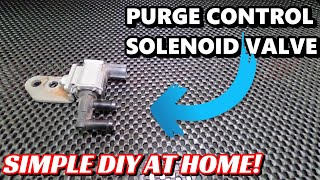
- Faulty EVAP Purge Solenoid/Valve (Very Common) — This is the primary cause. The solenoid is an electronic valve with an internal coil that fails or shorts out over time, causing a low voltage reading and triggering the code. 🎬 Watch: How to test and replace the purge solenoid at home.
- Wiring or Connector Issue (Common) — Damaged, frayed, or corroded wires leading to the purge valve create high resistance or short to ground. Water intrusion in the connector or wiring harnesses chafing against engine components frequently cause this fault.
- Blown Fuse (Common) — The EVAP purge valve operates on a fuse-protected circuit. If this fuse blows due to a short or overload, it cuts power to the circuit and triggers the P0458 code.
- Poor Battery Voltage or Ground Issues (Less Common) — A weak battery, failing alternator, or a poor chassis ground lowers the overall system voltage. This causes the PCM to misinterpret a normal signal from the purge valve circuit as being too low.
- Faulty Powertrain Control Module (PCM) (Rare) — The internal PCM driver circuit controlling the purge valve fails, causing a persistent low voltage reading. Consider this only after exhausting all other electrical possibilities.
- Damaged or Clogged Charcoal Canister (Rare) — A severely clogged charcoal canister causes abnormal system pressures. While it primarily triggers flow codes like P0441, extreme cases stress related electrical components.
Symptoms
- Check Engine Light is On — This is the primary and often the only symptom you will notice.
- Fuel Smell — You will notice a gasoline smell around the vehicle because fuel vapors escape the EVAP system instead of routing to the engine.
- Decreased Gas Mileage — The EVAP system burns fuel vapors to improve efficiency. When it malfunctions, fuel economy drops by 5-10%.
- Rough Idle or Engine Hesitation — A valve stuck open creates a vacuum leak. This disrupts the air-fuel mixture, causing a rough idle, sputtering, or hesitation during acceleration.
- Difficulty Starting After Refueling — A stuck-open purge valve floods the engine with excess fuel vapor immediately after filling the gas tank, requiring extended cranking to start the car.
Diagnostic Flowchart

Tap your situation to follow the diagnostic path that matches what you're seeing on this code.
Common Fixes & Costs
- Replace EVAP Purge Solenoid/Valve — Parts: $30-$150, Labor: $75-$150, ~1 hr book time (DIY)
- Repair Damaged Wiring or Connector — Parts: $10-$30, Labor: $100-$250, ~1.5 hr book time (Intermediate)
- Replace Blown Fuse — Parts: $1-$5, Labor: $0-$25, ~0.1 hr book time (DIY)
- Replace/Reprogram Powertrain Control Module (PCM) — Parts: $500-$1500, Labor: $150-$300, ~2 hr book time (Professional)
- Replace Charcoal Canister — Parts: $200-$600, Labor: $100-$200, ~1.2 hr book time (Professional)
DIY vs Professional
- Replace EVAP Purge Solenoid/Valve — Beginner: Yes
Tools: Basic hand tools (socket set, pliers for hose clamps), flashlight. - Replace Blown Fuse — Beginner: Yes
Tools: Fuse puller, owner's manual. - Repair Damaged Wiring or Connector — Beginner: No
Tools: Multimeter, wire strippers, crimpers, heat shrink tubing, soldering iron, vehicle-specific wiring diagrams. - Replace/Reprogram Powertrain Control Module (PCM) — Beginner: No
Tools: Advanced diagnostic tools, professional scan tool for VIN programming and security relearn procedures.
Used vs. New Parts: Buying Guide
When a used part is worth it: Buying a used purge valve is not recommended. The savings are minimal compared to the risk of receiving a part near the end of its service life.
Donor-vehicle mileage cap: roughly under 50000 miles for the part to have meaningful remaining life.
Donor quality checklist:
- Match the part number exactly. Parts that look identical have different internal resistance values.
- Avoid parts from regions with heavy road salt use to prevent connector corrosion.
- Ask for a functional warranty (30-90 days is typical for used parts).
Decision logic:
- If The cost of a new OEM or reputable aftermarket part is under $150. → Buy new. The peace of mind and longer warranty are worth the small price difference.
- If The vehicle is very old and budget is the absolute primary concern. → A used part from a low-mileage vehicle is a viable option, but test it with a multimeter for correct resistance before installation.
- If The part is part of a larger, more expensive assembly. → Consider a used assembly from a trusted recycler, but the risk of premature failure remains.
Warranty tradeoff: Used parts offer a 30-90 day warranty. New aftermarket parts come with a 1-year to limited lifetime warranty. New OEM parts carry a 1-2 year warranty.
Worst-case if a used part fails: $100-$200 if a used part fails after installation, requiring repeat labor costs plus the cost of another part.
What Happens If You Wait — Timeline
- 0-1 month: Check Engine Light is on. The code is set, but there are no other noticeable symptoms. The vehicle automatically fails an emissions test. (MPG impact: 0-2%% · Added cost: $0)
- 1-6 months: A faint fuel smell becomes noticeable, especially after parking in an enclosed space. A slight decrease in fuel economy (2-5%) occurs. (MPG impact: 2-5%% · Added cost: $20-75 in wasted fuel)
- 6-12 months: If the fault is a stuck-open valve, rough idling or difficulty starting after refueling becomes frequent. The constant short circuit puts continuous stress on the PCM's driver circuit. (MPG impact: 5-10%% · Added cost: $75-150 in wasted fuel, plus increased risk to other components.)
- 12+ months: The electrical short worsens and damages the driver circuit within the Powertrain Control Module (PCM), turning a simple repair into a costly one. (MPG impact: 5-10%% · Added cost: $500-$1500 if the PCM requires replacement.)
Cost of Not Fixing It
- 0-3 months: Guaranteed failure of any OBD-II emissions test. A 5-10% decrease in fuel economy and a persistent fuel smell. (Added cost: Negligible, other than wasted fuel.)
- 3-12 months: Continued operation with a shorted circuit puts minor, long-term stress on the PCM's driver circuit or the vehicle's charging system. A stuck-open valve leads to chronic hard starting after refueling. (Added cost: Minimal, but risk of PCM damage increases over time.)
- 12+ months: An intermittent short in the main harness worsens and affects unrelated circuits, leading to complex electrical diagnosis. A stressed PCM eventually fails, requiring costly replacement. (Added cost: $500-$1500 if the PCM driver fails and requires replacement.)
Diagnosis Steps

- Read Codes and Freeze Frame Data
Use an OBD-II scanner to confirm P0458 is active. Review freeze-frame data to see the engine conditions when the code was set and note any other related codes.
Tools: OBD-II Scanner (Beginner) - Perform a Visual Inspection
Locate the EVAP purge valve near the engine's intake manifold. Inspect its electrical connector and wiring harness for chafing, melting, corrosion, or loose connections.
Tools: Flashlight (Beginner) - Check the Associated Fuse
Consult your owner's manual to find the fuse powering the EVAP system. A blown fuse is an easy fix but indicates an underlying short circuit that caused it to blow.
Tools: Owner's Manual, Fuse Puller (Beginner) - Test the Purge Valve's Resistance
With the connector unplugged, set your multimeter to Ohms (Ω). Measure the resistance across the two pins on the purge valve. Compare the reading to the manufacturer's specification (typically 20-60 ohms). A reading near zero indicates a shorted coil, while an infinite reading (OL) means an open circuit.
Tools: Multimeter, Vehicle-Specific Repair Manual (Intermediate) - Test for Power at the Connector
Disconnect the purge valve's electrical connector. Turn the ignition to the 'On' position (engine off). Use a multimeter set to DC volts to check for battery voltage (~12V) at the power supply wire in the connector. No voltage points to a wiring problem between the fuse box and the valve.
Tools: Multimeter (Intermediate) - Check Control Wire for Short to Ground
With the valve and PCM disconnected, set your multimeter to Ohms. Check for continuity between the control wire terminal at the valve connector and a good chassis ground. A continuity reading (beep or low ohms) confirms the control wire is shorted to ground in the harness.
Tools: Multimeter (Advanced) - Command the Solenoid with a Scan Tool
Using a bi-directional scan tool, command the purge valve to open and close while the engine is running. Listen for an audible 'click' from the valve. This confirms the PCM sends the signal and the valve mechanically responds.
Tools: Bi-Directional Scan Tool (Advanced) - Analyze Live Data & Voltage Thresholds
Observe the live data PID for the EVAP Purge Valve circuit voltage. Normal operating voltage fluctuates between 9V-14V when the engine runs. A reading consistently held near zero volts while the valve is commanded OFF proves a persistent short to ground.
Tools: Advanced Scan Tool (Professional) - Analyze with a Lab Scope
For intermittent issues, connect a lab scope to the control wire. With the engine running, observe the waveform. A flat line near zero volts confirms the circuit is held low (shorted), proving the fault is active.
Tools: Automotive Oscilloscope (Lab Scope) (Professional)
When This Code Triggers (Freeze-Frame Conditions)
- Engine Coolant Temp: 170-210°F (Engine is at full operating temperature.)
- RPM: Idle - 2500 RPM (The PCM continuously monitors the circuit while the engine is running.)
- Engine Load: 20-50% (Steady cruise or light acceleration.)
- Battery Voltage: 10V - 16.5V (The system requires normal battery voltage to run the self-test.)
Related Codes
- P0459 — This is the opposite code, 'Circuit High'. P0458 indicates a short to ground (low voltage), while P0459 indicates an open circuit or a short to power (high voltage).
- P0443 — A generic code for 'Purge Control Valve Circuit Malfunction'. P0443 triggers for a high, low, or general performance fault, whereas P0458 specifically points to a 'low' voltage condition.
- P0441 — This code means 'Incorrect Purge Flow'. P0441 indicates a functional problem (mechanically stuck valve or blocked hose), not an electrical one.
- P0442 — Indicates a 'Small Leak Detected'. P0442 requires a smoke machine to find physical leaks, while P0458 requires a multimeter to find electrical faults.
Climate & Environmental Factors
- Humidity and Road Salt: In regions with high humidity or where road salt is used, moisture and corrosive agents penetrate wiring harnesses and connectors. This corrosion creates a short circuit to ground, directly causing the P0458 code.
- Extreme Cold: Cold temperatures make wire insulation brittle and prone to cracking if disturbed, exposing bare wire and leading to a short circuit.
How to Talk to a Mechanic About This Code
Say this: "I have a P0458 code, which I know is for the EVAP Purge Valve Circuit Low. I'd like to book a diagnostic appointment. Please have the technician focus on testing the circuit for shorts, checking for power at the connector, and testing the resistance of the purge solenoid before recommending a part replacement."
This signals that you understand P0458 is an electrical code, not a leak. It directs the technician to perform a proper diagnosis instead of just replacing the most common part, saving you money if the problem is a bad wire or fuse.
Avoid saying:
- 'My check engine light is on, can you look at it?' (This is too vague and invites a costly, broad inspection.)
- 'I think I have an EVAP leak.' (This is incorrect for P0458 and leads the shop to waste time on a smoke test.)
- 'Just replace the purge valve.' (This is guessing, and you pay for the part and labor even if it doesn't fix the problem.)
Questions to ask before authorizing the repair:
- Did you find the specific cause of the low voltage? Was it a shorted wire, a bad fuse, or a failed solenoid?
- If the solenoid is bad, what was its resistance reading? (This confirms they tested it.)
- If the wiring is bad, can you show me where the damage is?
- What is the warranty on the parts and labor for this repair?
Where to Take It: Dealer vs Independent vs Chain
- Dealer:
Recommended only if the vehicle is under warranty or has a known, complex TSB. Otherwise, it is not cost-effective for this common code.
Best for: Vehicles still under the bumper-to-bumper warranty., Complex electrical issues where a Technical Service Bulletin (TSB) points to a PCM reflash., Newer GM trucks where the known harness chafing issue (TSB 21-NA-149) is covered.
Downsides: Highest labor rates, often 1.5-2x more than independent shops., May recommend replacing an entire wiring harness when a simple wire repair suffices. (Typical cost: +50% vs. baseline) - Independent Shop:
Best fit. A reputable independent shop with good electrical diagnostic skills is the ideal choice for diagnosing and fixing a P0458 code efficiently and affordably.
Best for: Out-of-warranty vehicles where cost is a factor., Straightforward electrical diagnosis and part replacement., Vehicles like Subaru, Jeep, or VW where purge valve failure is a well-understood issue.
Downsides: Shop quality and diagnostic skill vary. Vet shops based on reviews and ASE certifications. (Typical cost: +0% vs. baseline) - Chain Shop:
Use with caution. Acceptable if you are certain the purge valve is the problem and just need it replaced. AVOID for initial diagnosis, as they may misdiagnose it or sell you unnecessary parts.
Best for: Simple, clear-cut part replacements like a blown fuse or an easily accessible purge valve if you have already diagnosed the issue yourself.
Downsides: Technician skill varies dramatically., Lacks the advanced diagnostic tools or experience for tracing electrical shorts in a harness., High pressure to upsell services. (Typical cost: -10% vs. baseline)
When to Walk Away From the Repair
If the estimated repair cost for the P0458 code exceeds 40-50% of your car's private-party value, consider your options.
- Car worth $3000, fix is $450: Fix it. This repair is well below the threshold and is necessary to pass emissions.
- Car worth $4000, fix is $1800: Borderline. The P0458 fault has likely led to a PCM failure. Get a second opinion before authorizing, as this cost approaches 50% of the car's value.
- Car worth $2000, fix is $1500: Walk away. Spending 75% of the car's value on a single repair for an older vehicle is not a sound investment.
What Scan Tool You Need for This Code
Minimum: A code reader that displays live data for circuit voltage and has a bidirectional function to command the purge valve solenoid on and off.
A basic $20 scanner only tells you the P0458 code exists. It cannot help you determine if the cause is the valve, the wiring, or the PCM. You need to see live voltage data and command the part to work to properly diagnose this electrical code.
Budget: BlueDriver Pro Bluetooth Scanner (~$100) — Reads and clears the code, provides freeze-frame data, and graphs live data for the EVAP purge command and circuit voltage, helping you see the electrical fault in real-time.
Mid-range: Foxwell NT530/NT650 Elite or XTOOL D7S (~$250-400) — Includes full bidirectional control. This allows you to command the purge valve to click on and off from the scanner, which is the definitive test to see if the valve and the PCM's driver are working.
Professional: Autel MaxiCOM MK808/MK900 or Innova 5610 (~$450-800) — Offers full bidirectional control, advanced EVAP system-specific tests, and access to wiring diagrams and repair suggestions directly on the tool.
Rent vs buy: For a one-time diagnosis, use the free loaner tool program at a store like AutoZone. Buy a scanner only if you plan to do your own car diagnostics more than once a year.
How to Clear the Code After You Fix It
- Fix the underlying electrical fault (e.g., replace valve, repair wiring).
- Use an OBD-II scan tool to clear the diagnostic trouble codes.
- Perform a complete EVAP drive cycle to allow the readiness monitor to run.
Drive cycle (~30 minutes): Start with a cold engine (sat for 8+ hours) and fuel tank between 30-70% full. Let the engine idle for 2-3 minutes. Drive at a steady speed around 35 mph for 5 minutes. Accelerate to and maintain a steady speed of 55-60 mph for 3-5 minutes. Let the vehicle coast down to 20 mph or less without braking. Repeat the highway cruise and coast-down portion if necessary.
Readiness monitors affected: EVAP System Monitor, Catalyst Monitor, O2 Sensor Monitor
Before emissions retest: drive at least 100 miles to fully set monitors.
Watch out for:
- Disconnecting the battery clears the code but resets all readiness monitors, causing an immediate smog test failure.
- The code returns immediately if the root electrical fault isn't properly repaired.
- Failing to meet specific conditions for the EVAP monitor (e.g., fuel level, ambient temperature) prevents the monitor from setting to 'Ready'.
Will This Fail Emissions / State Inspection?
Yes — this code typically fails an OBD-II emissions inspection.
- California: A P0458 code causes an automatic failure of the smog check. The Check Engine Light must be off, and the EVAP readiness monitor must be set to 'Ready'. For 2010 and newer vehicles, a permanent code stored in memory causes a failure even if the light is off.
- New York: The NYS DMV vehicle inspection includes an OBD-II scan. An active P0458 code and illuminated Check Engine Light results in an emissions test failure.
- Texas: In the 17 Texas counties requiring emissions testing, a vehicle with an active P0458 code fails the OBD-II portion of the inspection.
Most Commonly Affected Vehicles
- Subaru Impreza, WRX, Forester, Outback (2008-2018) — Commonly cited for P0458 due to a worn-out purge solenoid. The solenoid is duty-cycled by the ECM and fails over time.
- Chevrolet / GMC Silverado, Sierra 1500 (2019-2023) — Often related to a chafed engine wiring harness. Technical Service Bulletin (TSB) 21-NA-149 addresses this issue, where the harness rubs against chassis components.
- Ford F-150 (3.5L EcoBoost), Focus (2015-2022) — On the F-150, this is caused by a shorted circuit or a software glitch in the PCM requiring an update.
- Jeep Compass, Renegade (2014-2020) — The 2.4L Multiair engine triggers P0458 frequently due to a faulty purge solenoid. Replacement is a highly effective fix.
- Volkswagen Golf, Tiguan, Passat (2015-2023) — Prone to P0458 due to a faulty purge control valve (part number varies by year, e.g., 28910-2S000).
- BMW 3-Series (E90, E92) (2006-2013) — The purge valve is located under the plenum/throttle body, making access difficult. Replacement requires removing the airbox and intake components.
- Toyota Camry (2.5L) (2018-2024) — Issues link directly to a faulty solenoid or corroded wiring for the purge valve. The replacement procedure is straightforward.
- Honda Civic (1.5L Turbo), Accord (2016-2023) — A damaged wiring harness or a loose connector is the primary cause. Inspect the wiring near the purge valve before replacing the part.
Manufacturer-Specific Notes

- Chevrolet/GMC: TSB 21-NA-149 details how the engine wiring harness chafes on the vehicle frame on 2019+ trucks, causing a short to ground that triggers P0458. GM also issued Special Coverage N242441120 for some 2019-2020 models for a faulty EVAP purge pump.
- Subaru/Ford: These brands have known issues and active Technical Service Bulletins (TSBs) for the P0458 code. Always check for TSBs before starting diagnosis to find model-year-specific repair instructions.
- European (Audi, BMW, VW): Causes are frequently related to the purge valves themselves or corrosion in the wiring harness connectors due to their specific design and placement in the engine bay.
- All Brands - Warranty Coverage: The EVAP purge valve is NOT covered under the long-term 8-year/80,000-mile federal emissions warranty. It is covered only by the shorter bumper-to-bumper or 2-year/24,000-mile emissions defect warranty.
Real Owner Stories
2014 Subaru WRX with P0458 & P0441
Check Engine Light came on during the drive home, disabling traction control and cruise control as a safety measure.
What they tried:
- Initially had a P0172 (System Too Rich) code the week prior, which was fixed by cleaning the MAF sensor and reconnecting a loose vacuum hose.
Outcome: The owner inspected the engine bay and found the electrical connectors for the purge valve and another component. After cleaning the contacts on both the male and female ends of the connectors, the codes cleared and did not return.
Lesson: Before replacing parts for an electrical circuit code, perform a thorough visual inspection of the wiring and connectors. A simple, no-cost fix like cleaning corroded contacts is often all that is needed.
2019 Chevy Silverado 5.3L with P0458
Vehicle had trouble starting after refueling, and the Check Engine Light came on with code P0458.
What they tried:
- Took the truck to the dealership, where they replaced the EVAP purge valve solenoid for $180.
Outcome: The problem and the code persisted after the part replacement. The owner was quoted another $175 for further diagnostics.
Lesson: Replacing the purge valve is the most common fix, but it is not always the correct one. Proper electrical diagnosis (checking for power, ground, and shorts) prevents wasting money on unnecessary parts.
2011 Subaru Impreza 2.5i at 41K miles
Check Engine Light appeared with P0458 and other EVAP codes. No noticeable symptoms.
What they tried:
- Cleared the code and tightened the gas cap, but the light returned two days later.
Outcome: An independent shop quoted ~$300 for a solenoid replacement. The underlying issue was the purge solenoid failing prematurely.
Lesson: P0458 is very common on Subarus and is frequently caused by a worn-out purge solenoid. An independent shop performs this common repair for significantly less than a dealership.
2020 Volkswagen Passat at 62K miles
P0458 code appeared after a routine fuel fill-up. No drivability issues were present, only the Check Engine Light.
What they tried:
- Checked the gas cap.
- Used a multimeter to test the purge valve's resistance, which read 35 ohms, confirming the electrical side was okay.
- Used a hand vacuum pump to test the valve mechanically and found it would not hold a vacuum, indicating it was stuck open.
Outcome: Replaced the purge valve (part # 28910-2S000), cleared the code, and resolved the issue.
Lesson: A part can be electrically sound but mechanically failed. The resistance test showed the solenoid coil was intact, but the vacuum test proved the valve was broken. Perform both electrical and mechanical tests for a complete diagnosis.
How to Prevent This Code From Triggering
- Apply Dielectric Grease to Connectors (During any repair or inspection) — Applying dielectric grease to the purge valve connector creates a barrier that seals out moisture and oxygen, preventing the corrosion that leads to 'circuit low' faults.
- Inspect and Secure Wiring Harnesses (Every oil change) — Visually inspect the wiring harness leading to the purge valve for chafing or melting. Use zip ties to secure loose wiring away from potential damage points, preventing shorts to ground.
- Avoid Overfilling the Fuel Tank (Every fill-up) — Topping off your gas tank forces liquid fuel into the charcoal canister and EVAP lines. This saturates and damages EVAP components over time, including valves.
- Regularly Wash the Undercarriage (Monthly during winter) — In areas that use road salt, washing the undercarriage removes corrosive salt and brine that accelerates the degradation of wiring insulation and connector pins.
Frequently Asked Questions
Can a loose gas cap cause a P0458 code?
No. A loose gas cap causes a physical leak in the EVAP system, triggering leak-related codes like P0455 or P0457. P0458 is strictly an electrical circuit code indicating low voltage and is never caused by a loose cap.
What are common misdiagnosis mistakes for P0458?
The most common mistake is replacing the purge valve without performing electrical tests first. Always check the fuse, test the wiring for power, and check for a short to ground before replacing parts. Confusing this electrical code with a system leak code and wasting time with a smoke machine is another frequent error.
Can a bad battery or alternator cause P0458?
Yes. The P0458 code sets when the PCM detects voltage lower than expected. A weak battery, failing alternator, or poor ground connection causes low overall system voltage, leading the PCM to misinterpret the purge valve circuit signal.
What does the EVAP purge valve do?
The purge valve is a small, electronically controlled solenoid. It opens at specific times to pull stored fuel vapors from the charcoal canister into the engine for combustion, preventing atmospheric pollution.
Will the P0458 code clear itself?
No, the code will not clear itself until the underlying electrical problem is repaired. After the repair, clear the code with an OBD-II scanner. The Check Engine Light turns off after several drive cycles if the PCM's self-test confirms the fix, but the code remains stored in memory until manually cleared.
Where is the purge valve located?
The purge valve is almost always located in the engine bay, situated on or near the intake manifold. It has an electrical connector and at least two vacuum hoses attached to it.
How much does it cost to fix a P0458 code?
Costs range from $5 for a DIY fuse replacement to over $700 for a dealership to replace a faulty PCM. The most common repair—replacing the purge solenoid—typically costs between $105 and $300 at a professional shop.
Key Takeaways
- P0458 is strictly an electrical circuit code, meaning you must diagnose the wiring, fuse, or purge valve solenoid rather than searching for a physical EVAP leak.
- Replacing a faulty EVAP purge solenoid resolves the P0458 code in over 70% of cases, costing between $105 and $300 at a repair shop.
- You can safely drive with a P0458 code, but expect a 5-10% drop in fuel economy, a persistent gas smell, and an automatic emissions test failure.
- Always test the purge valve with a multimeter before replacing it; a healthy solenoid typically reads between 20 and 60 Ohms of resistance.
- Check for Technical Service Bulletins (TSBs) before starting repairs, as 2019+ GM trucks and many Subaru models have known factory wiring flaws that trigger this exact code.
Helpful Videos

The information in this article is provided for general reference and educational purposes only. Vehicle specifications, procedures, and part compatibility can vary by production date, trim level, and region. Always consult your vehicle's factory service manual and verify part numbers before purchasing or performing repairs. Safety-critical components such as airbags, seat belts, and braking systems should be installed by a qualified professional.
- 🎬 Helpful Videos
- What Does P0458 Mean?
- Can I Drive With P0458?
- Common Causes
- Symptoms
- Diagnostic Flowchart
- Common Fixes & Costs
- DIY vs Professional
- Used vs. New Parts: Buying Guide
- What Happens If You Wait — Timeline
- Cost of Not Fixing It
- Diagnosis Steps
- When This Code Triggers (Freeze-Frame Conditions)
- Related Codes
- Climate & Environmental Factors
- How to Talk to a Mechanic About This Code
- Where to Take It: Dealer vs Independent vs Chain
- When to Walk Away From the Repair
- What Scan Tool You Need for This Code
- How to Clear the Code After You Fix It
- Will This Fail Emissions / State Inspection?
- Most Commonly Affected Vehicles
- Manufacturer-Specific Notes
- Real Owner Stories
- 2014 Subaru WRX with P0458 & P0441
- 2019 Chevy Silverado 5.3L with P0458
- 2011 Subaru Impreza 2.5i at 41K miles
- 2020 Volkswagen Passat at 62K miles
- How to Prevent This Code From Triggering
- Frequently Asked Questions
- Can a loose gas cap cause a P0458 code?
- What are common misdiagnosis mistakes for P0458?
- Can a bad battery or alternator cause P0458?
- What does the EVAP purge valve do?
- Will the P0458 code clear itself?
- Where is the purge valve located?
- How much does it cost to fix a P0458 code?
- Key Takeaways
- 🎟️ Get 5% Off