

P0442 on 2010-2014 Subaru Outback 2.5L: EVAP Small Leak Causes and Fixes
For a 2010-2014 Subaru Outback, code P0442 is most often caused by a loose or failing gas cap. If a new OEM gas cap (~$35) doesn't fix it, the next likely culprits are a cracked EVAP hose in the engine bay or a faulty purge valve. A smoke test is the most effective way to find the exact source of the leak.
- Start your diagnosis with the gas cap. It's the most common cause and the cheapest fix. Use an OEM cap for best results.
- If the gas cap doesn't solve the issue, carefully inspect the small rubber EVAP hoses in the engine bay for cracks, especially the one near the intake manifold.
- The P0442 code will not stop you from driving the car, but it will cause an automatic failure on an emissions test.
- While you can replace parts one by one (gas cap, then purge valve, etc.), the most efficient way to find a persistent leak is a professional smoke test, which can save you from buying unnecessary parts.
What's Unique About the 2010-2014 Subaru Outback
While the previous generation Outback (2005-2009) is famous for P0442 being caused by a rusted-through fuel filler neck, this is less of a primary suspect on the 2010-2014 models, though still possible in rust-prone areas. For this generation, owners and technicians more frequently point to specific rubber hoses in the engine bay that become brittle and crack, or to a failing purge control solenoid. Always check the simple things first, but be aware of these common Subaru-specific failure points. A critical distinction exists within this generation: 2010-2012 models use the EJ253 SOHC engine, while 2013-2014 models use the newer FB25 DOHC engine, which can affect part numbers and locations for EVAP components.
Symptoms You May Notice
- Check Engine Light is on
- Flashing cruise control light (a common Subaru trait when the Check Engine Light is on)
- A faint smell of fuel, especially after parking in an enclosed space like a garage or after a cold start.
- Difficulty starting the car immediately after refueling (long crank time), which can point to a stuck-open purge valve.
- Replacing the O2 sensors. O2 sensors are not related to the EVAP system.
- Immediately replacing the charcoal canister. The canister is expensive and usually fails due to a faulty valve, not the canister body itself. Always perform a smoke test first.
Most Likely Causes
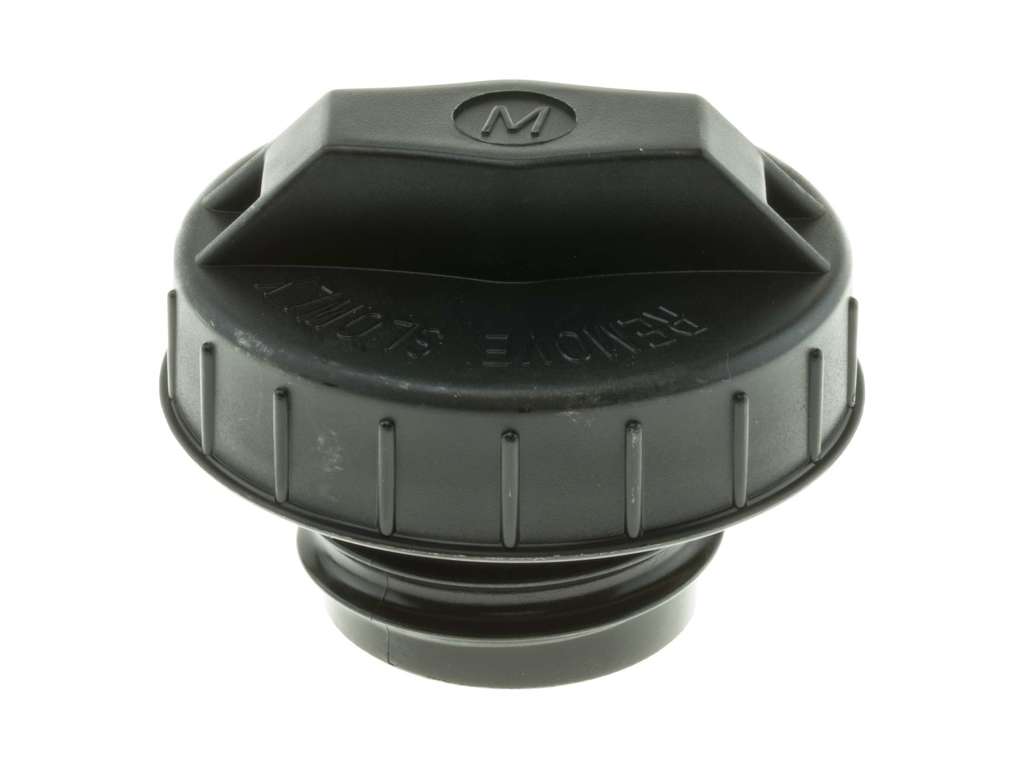
- Loose or Faulty Gas Cap 🔴 High Probability This is the most common cause for P0442 on any vehicle. The rubber O-ring seal on the cap degrades over time, losing its ability to create a perfect seal.
How to confirm: Inspect the gas cap's rubber seal for cracks, stiffness, or damage. Ensure the cap is tightened until it clicks several times. Even if it looks okay, it can still be faulty.
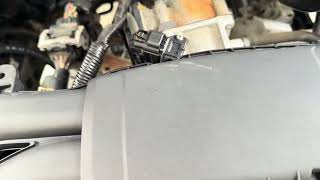
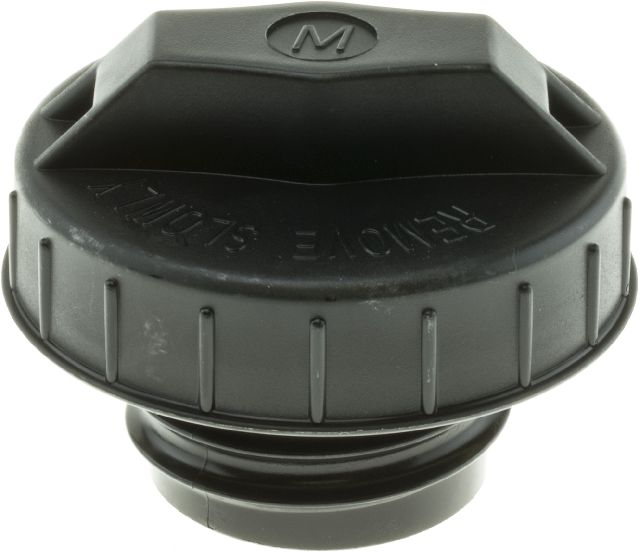
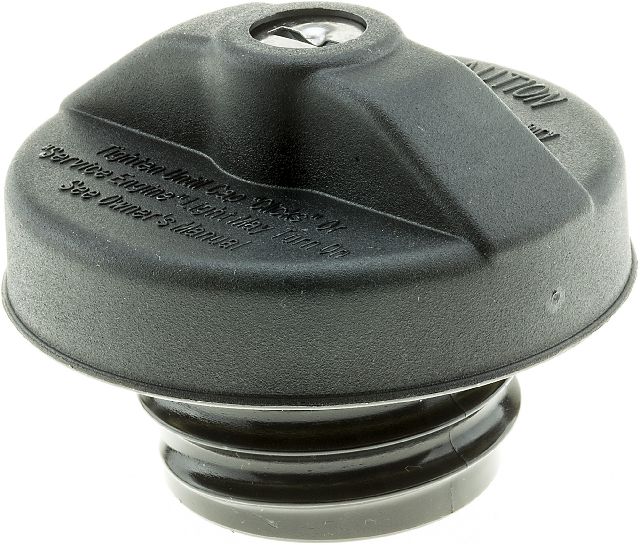
Typical fix: Replace the gas cap. It is highly recommended to use an OEM Subaru cap, as some aftermarket caps are known to cause EVAP codes. The correct OEM part number is typically 🎬 Watch: A quick overview of common P0442 causes and fixes. 42031FJ001 (replaces 42031FJ000).
Est. part cost: $25-$40 - Cracked EVAP Hose in Engine Bay 🟡 Medium Probability A specific short rubber hose running from the intake manifold to the fuel pressure regulator is known to become hard, brittle, and crack from engine heat and age. A Subaru technician also noted that short rubber fuel lines under the intake manifold are a common failure point.
How to confirm: Visually inspect the small rubber hoses around the top of the engine, near the intake manifold. Bend them slightly to reveal any hidden cracks. The hose from the intake to the fuel regulator is a primary suspect.
Typical fix: Replace the cracked section of hose with a new, appropriately-sized fuel/vapor-rated hose.
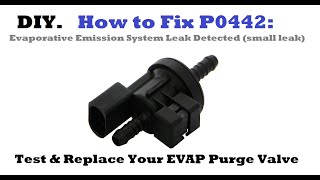
Est. part cost: $5-$15 - Faulty Purge Control Solenoid Valve 🟡 Medium Probability This valve controls the flow of fuel vapors to the engine. It can fail mechanically by getting stuck slightly open, creating a permanent small leak. This is a frequently reported repair for P0442 on this model.
How to confirm: With the engine off, the valve should be closed. You can remove the valve and try to blow through it; if air passes, it has failed. A long crank after refueling is a strong symptom. A professional can command it open and closed with a scan tool to verify function. A multimeter can be used to check resistance; a healthy valve should read between 30 and 38 ohms when the engine is cool.
Typical fix: Replace the purge control solenoid valve, which is typically located on or near the intake manifold. The OEM part number for the 2010-2012 Outback 2.5L SOHC is 16102AA080.
Est. part cost: $40-$90 - Faulty Canister Vent Valve / Solenoid ⚪ Low Probability Located at the rear of the car near the charcoal canister, this valve can get stuck open or fail to close completely, especially if exposed to road salt and debris. Spiders have also been known to build webs in the vent hose, causing a restriction.
How to confirm: This is more difficult to access and test. A smoke test is the best way to confirm a leak at the vent valve. A scan tool can also be used to command the valve closed for testing. Resistance should be between 48 and 65 ohms.
Typical fix: Replace the vent valve assembly. On some Subarus, this valve is integrated into the charcoal canister and may require replacing the entire unit.
Est. part cost: $50-$250
Rare But Worth Checking
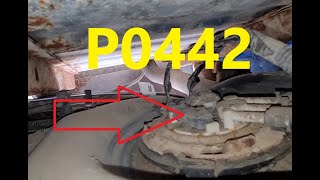
- Rusted Fuel Filler Neck: While extremely common on the older 2005-2009 models, it's less common but still possible on 2010-2014 Outbacks, especially in the 'salt belt'. A visual inspection behind the right rear wheel is warranted if other fixes fail.
- Corroded Fuel Tank Seams: While documented on other Subaru models like the Forester, a strong gas smell and a P0442 code can sometimes be traced to steel tanks rusting where the seam of the tank is, as noted in NHTSA ODI #11535637.
- Cracked Charcoal Canister: The plastic body of the canister itself can be damaged by road debris or develop stress fractures over time, creating a leak. This is often a result of overfilling the gas tank, which forces liquid fuel into the canister designed only for vapor.
- Leaking Fuel Tank Gasket: The gasket under the fuel pump access cover (often located under the rear seat) can fail or not seal properly after being disturbed, causing a leak that is difficult to diagnose without a smoke machine.
Diagnosis Steps
- Read the code with an OBD-II scanner to confirm P0442 is the primary code.
- Inspect the gas cap. Remove it, check the seal for cracks, and ensure it is an OEM or high-quality aftermarket cap. Tighten it until it clicks at least three times.
- Clear the code with the scanner. Drive for a few days to see if the code returns. If it doesn't, the cap was the issue.
- If the code returns, perform a thorough visual inspection of the engine bay. Focus on the small rubber vacuum and vapor hoses, especially the one running from the intake to the fuel regulator.
- Inspect the purge control solenoid valve in the engine bay. Check for any visible cracks on its housing. Test for a long crank time after refueling, which points to a stuck-open purge valve. Test the solenoid's resistance with a multimeter; it should be 30-38 ohms.
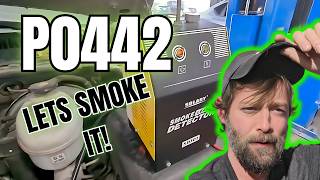
- If no obvious issues are found, the most effective next step is to have a professional perform a smoke test. This will inject vaporous smoke into the EVAP system, and the leak will be visible as smoke escapes 🎬 See how to find a hidden leak using a smoke machine. from the cracked hose, faulty valve, or bad gasket.
- Based on the smoke test results, replace the identified faulty component. Leaks on top of the fuel tank are rare but require extensive labor to access.
Parts You'll Likely Need
- Gas Cap
(OEM #42031FJ001)— This is the most frequent and cheapest fix. The seal wears out over time. Using an OEM cap is strongly recommended to ensure a proper seal.
Trusted brands: Subaru (OEM)
OEM price range: $25-$40
Aftermarket price range: $15-$30 - Vapor Canister Purge Valve / Solenoid
(OEM #16102AA080 (for 2010-2012 2.5L SOHC))— A common failure point on many vehicles, including this Outback. It gets stuck open, creating a constant small leak path from the EVAP system to the intake manifold.
Trusted brands: Denso, Dorman, Subaru (OEM)
OEM price range: $70-$110
Aftermarket price range: $40-$90 - EVAP Vapor Hose — Rubber hoses in the engine bay are exposed to extreme heat, causing them to become brittle and crack over time.
Trusted brands: Continental, Gates
OEM price range: $15-$30
Aftermarket price range: $5-$15
Related Codes That Often Appear With This One
- P0457 — This code specifically means 'Evap Leak Detected (Fuel Cap Loose/Off)'. It often appears for the same reasons as P0442, such as a bad cap seal or a filler neck issue preventing a seal.
- P0455 — This indicates a large EVAP leak. Sometimes a component fails in such a way that a small leak (P0442) can turn into a large leak (P0455) over time.
- P0456 — This indicates a 'very small' EVAP leak. It shares all the same potential causes as P0442, but was triggered by a smaller leak threshold during the system's self-test.
Platform-Specific Known Issues
- Cracked Hose from Intake to Fuel Regulator: A specific short hose in the engine bay is frequently cited by owners and mechanics as the source of a P0442 leak. It becomes brittle from heat and age and develops small cracks.
- Owner Experience: Intermittent P0442: On subaruoutback.org and Reddit, owners often report chasing an intermittent P0442 code for months. After replacing the gas cap, the next most successful DIY fix reported is locating and replacing a cracked vacuum hose in the engine bay, followed by replacing the purge solenoid. A smoke test is frequently the ultimate solution.
Mechanic-Grade Diagnostic Values
- Purge Control Solenoid Valve Resistance — expected: 30 - 38 Ohms (at cool engine temperature). Failure: A reading of 0 Ohms (short circuit) or infinite/OL (open circuit).
- Canister Vent Valve / Solenoid Resistance — expected: 48 - 65 Ohms. Failure: A reading outside this range indicates a faulty solenoid coil.
- Purge Control Solenoid Connector Voltage — expected: Battery voltage (approx. 12V) with key on, engine off.. Failure: Low or no voltage suggests a wiring issue or problem with the ECM power supply.
Scan Tool Commands That Help
- Subaru Select Monitor (SSMIII/SSM4): Evaporative System Leak Test — This is a dealer-level function that forces the EVAP system self-test to run, allowing a technician to confirm a leak exists without waiting for the natural drive cycle conditions to be met. It can also be used to command specific valves (like the vent valve) closed to isolate parts of the system for smoke testing.
- Professional Bidirectional Scan Tool (e.g., Autel, THINKCAR): Vent Valve Activation Test — To command the normally-open vent valve to close. This seals the system for a smoke test. The technician can listen for an audible click from the valve, confirming the solenoid is activating. If the valve clicks but smoke still escapes, the valve's internal seal is bad.
Wiring & Ground Locations
- Engine Ground (Intake Manifold) — Two ground wires are typically bolted to the top of the intake manifold on the EJ25 engine.. The Subaru ECU gets its primary ground reference from the intake manifold. A poor or corroded ground here can cause erratic behavior from all engine sensors and actuators, including the EVAP solenoids, leading to false codes.
- Purge Control Solenoid Valve Connector — On or near the intake manifold, typically a 2-pin connector.. This is the connection point for testing voltage supply and resistance of the purge valve. For the 2013 FB25 engine, wiring diagrams show it located at the right rear of the engine.
- ECM (Engine Control Module) — Located under the front passenger's side floor/kick panel area.. All EVAP solenoid control signals originate here. In very rare cases of persistent, undiagnosable EVAP codes, a faulty driver in the ECM could be the cause, but all other possibilities must be eliminated first.
Real Owner Repair Stories
- YouTube user 'Car Repair SoCar Garage' (Subaru (model unspecified, but with EJ-series engine)) — Check Engine Light with code P0442.
✅ What actually fixed it The user identified a small, hard-to-see crack in the short rubber hose running from the intake manifold to the fuel pressure regulator. The hose had become hard and brittle from engine heat. Replacing this small section of fuel line resolved the code. - NHTSA ODI #11535637 (Subaru Forester) — An owner reported a strong gas smell and a P0442 code. Upon inspection, it was discovered that the steel fuel tank was leaking gasoline when driven on an incline due to rust at the tank seam.
"I Checked Everything" — The Actual Cause
- In some cases, a smoke test may not reveal a leak if the leak only occurs under specific vacuum or temperature conditions. A very common 'phantom leak' is a purge solenoid that is not fully seating closed but holds against the low pressure of a smoke machine. It only leaks when engine vacuum is applied during the purge cycle. This can be diagnosed by applying vacuum with a hand pump to the valve to see if it holds, or by observing symptoms like a long crank after refueling.
OEM Part Supersession History
16102AA080→16102AA380— Part consolidation and minor design updates. However, fitment can be confusing.
Heads up: Part number 16102AA380 is often listed for TURBO models (WRX, Forester XT) but gets cross-referenced for naturally aspirated models, causing confusion. The 16102AA080 is the correct part for the 2010-2012 NA Outback. Always verify with VIN at a dealership, as using a turbo-spec valve on an NA car can cause issues.
Model Year Variations Within This Range
- 2010-2012: These models use the SOHC EJ253 engine. The purge control solenoid is part number 16102AA080 and is located directly on the intake manifold, making it relatively easy to access after removing the main air intake duct.
- 2013-2014: These models use the DOHC FB25 engine. The EVAP system components and their locations may differ. For example, wiring diagrams for the 2013 model place the purge control solenoid at the 'right rear of engine'. Part numbers will likely be different from the earlier EJ-powered models. This engine change is a critical factor in sourcing the correct replacement parts.
Diagnostic Flowchart
Other Known Issues on This Vehicle
Issues unrelated to this code that are worth knowing about as an owner of this generation:
- Excessive Oil Consumption 🔴 High — Common on 2011-2014 models with the FB25 engine (which began replacing the EJ25 in this generation). Less common on the 2010 EJ25. Can manifest early, with some owners reporting oil lights between changes. (Ref: TSB #02-157-14R. This bulletin revised the repair from replacing piston rings to replacing the entire engine short block for verified consumption issues.)
- CVT Transmission Failure / Shudder 🔴 High — Widespread enough that Subaru extended the CVT warranty. Problems include shuddering, stalling when stopping, and complete failure. Issues can appear from 60,000 miles onwards. (Ref: Subaru extended the CVT warranty to 10 years/100,000 miles for 2010-2015 models. TSB #16-90-13R addresses a torque converter issue causing stalling.)
- Faulty Airbag Inflators (Takata Recall) 🔴 High — Part of the massive Takata airbag recall. Affects 2010-2014 models. The inflator can rupture, sending metal fragments into the cabin. (Ref: Multiple NHTSA recalls. This is a critical safety recall requiring replacement of the airbag inflator at a dealership.)
- Head Gasket Leaks 🟠 Medium — While less frequent than on prior EJ25 engine generations, the 2010-2012 models with the SOHC EJ25 can still experience external oil and coolant leaks from the head gaskets, typically after 100,000 miles.
- Melting Headlight Housings 🟡 Low — Reported on 2010-2011 models, where the heat from the daytime running lights/high beams can cause the chrome reflector bowls to melt or bubble over time, reducing light output.
Used vs. New Parts: Buying Guide for This Vehicle
When a used part is the smart pick: For this repair, used parts are generally not recommended. The primary failure components (rubber hoses, gas cap seal, solenoid valves) fail due to age, heat, and wear. A used part from a junkyard is likely to have similar age and wear, offering little to no advantage and a high risk of premature failure.
Donor-vehicle mileage cap: roughly under 15000 miles for the part to have meaningful remaining life.
What to inspect on the donor part:
- If considering a used part, it should only be from a very low-mileage, late-model year wreck.
- Visually inspect rubber hoses for any signs of cracking or hardening.
- For solenoids, there are no reliable visual cues; it's a gamble.
OEM-only on this vehicle (don't cheap out):
- Gas Cap
Aftermarket brands forum-validated for this vehicle:
- Denso (often the OEM supplier for solenoids)
- Gates (for bulk EVAP/vacuum hose)
Brands owners have reported issues with on this vehicle:
- Unnamed 'white box' parts from online marketplaces. Forum discussions frequently mention that cheap aftermarket gas caps and purge valves fail to seal correctly or have incorrect flow rates, causing the code to return.
Real Owner Stories
Aggregated from forums and TSBs cited above. Mileages and costs reflect what owners reported in those sources.
2012 Subaru Outback 2.5L
Symptoms: Engine light is on with a P0442 code.
What fixed it: The owner was investigating the purge valve and EVAP system components in the engine bay.
Source hint: youtube_comment from DIYNORTHCAROLINIAN
2010-2014 Subaru Outback 2.5L
Symptoms: Intermittent P0442 code that persisted for months.
What fixed it: Locating and replacing a cracked vacuum hose in the engine bay after a gas cap replacement failed to clear the code.
Source hint: subaruoutback.org and Reddit r/subaru
Subaru Owner Report
Symptoms: Strong gas smell and a P0442 "evap leak small" fault code.
What fixed it: As described in NHTSA ODI #11535637, the owner found that the steel fuel tank was leaking gasoline when driven on an incline due to rust where the seam of the tank is located.
Related OBD-II Codes
Frequently Asked Questions
Why is my cruise control light flashing along with the Check Engine Light on my 2012 Outback?
What is the correct OEM gas cap part number for my 2010-2014 Outback to fix P0442?
My 2011 Outback has a long crank time only after I fill up the gas tank. Is this related to P0442?
Is there a specific hose I should check on my EJ25 engine for this leak?
What should the resistance be for the purge control solenoid on a 2010-2012 Outback 2.5L?
Does the CVT warranty extension cover EVAP system repairs like P0442?
Helpful Videos
Used OEM Parts in Stock
New Aftermarket Parts Available


The information in this article is provided for general reference and educational purposes only. Vehicle specifications, procedures, and part compatibility can vary by production date, trim level, and region. Always consult your vehicle's factory service manual and verify part numbers before purchasing or performing repairs. Safety-critical components such as airbags, seat belts, and braking systems should be installed by a qualified professional.
- Subaru Outback:
- 🎬 Helpful Videos
- 🛍️ Shop This Part
- What's Unique About the 2010-2014 Subaru Outback
- Symptoms You May Notice
- Most Likely Causes
- Rare But Worth Checking
- Diagnosis Steps
- Parts You'll Likely Need
- Related Codes That Often Appear With This One
- Platform-Specific Known Issues
- Mechanic-Grade Diagnostic Values
- Scan Tool Commands That Help
- Wiring & Ground Locations
- Real Owner Repair Stories
- "I Checked Everything" — The Actual Cause
- OEM Part Supersession History
- Model Year Variations Within This Range
- Diagnostic Flowchart
- Other Known Issues on This Vehicle
- Used vs. New Parts: Buying Guide for This Vehicle
- Real Owner Stories
- 2012 Subaru Outback 2.5L
- 2010-2014 Subaru Outback 2.5L
- Subaru Owner Report
- Related OBD-II Codes
- Frequently Asked Questions
- 🎟️ Get 5% Off