

P0442 on 2010-2013 Mazda 3: Causes and Fixes for a Small EVAP Leak
For a 2010-2013 Mazda 3, a P0442 code is most often caused by a loose or faulty gas cap. Always check the gas cap first, and use an OEM replacement if needed, as aftermarket caps are known to cause issues. If that's not the issue, the purge solenoid valve in the engine bay is the next most likely culprit, costing around $85-$175 for the part. A difficult-to-access canister vent solenoid at the rear of the car is also a common failure point.
- Always start with the simplest fix: check that your gas cap is tight and the seal is not cracked. Replacing a faulty gas cap resolves P0442 a significant amount of the time.
- The second most likely cause is a failed purge solenoid valve in the engine bay, which is an affordable and accessible part for DIY replacement.
- If the gas cap and purge valve are good, a smoke test is the best way to find the leak.
- Be aware that the canister vent solenoid at the rear of the car is a possible cause, but its replacement is a difficult job that requires lowering the rear subframe and may be best for a professional.
What's Unique About the 2010-2013 Mazda 3

The 2010-2013 Mazda 3 (second generation) is susceptible to common EVAP issues like a faulty gas cap or purge valve, similar to many other vehicles. However, a notable issue for this platform is the canister vent solenoid located at the rear of the car. While not always the first part to fail, it is notoriously difficult to access, as it is mounted above the rear subframe. This makes its replacement a much more labor-intensive job compared to the easily accessible purge valve in the engine bay. Many owners and mechanics on forums confirm this job requires lowering the subframe, turning a simple part swap into a multi-hour ordeal.
Symptoms You May Notice
- Check Engine Light is on
- A faint smell of fuel (less common)
- Slightly reduced fuel economy (rare)
- Difficulty refueling (gas pump clicks off repeatedly), which can point to a blocked canister or stuck-closed vent solenoid.
- Replacing the O2 sensors. O2 sensors are not related to the EVAP system and will not fix a P0442 code.
- Replacing the canister vent solenoid before checking the gas cap and purge valve. The vent solenoid is much harder and more expensive to replace, so simpler causes should always be ruled out first.
- Using a cheap aftermarket gas cap. Many forum users report that only a genuine OEM Mazda cap will solve the problem.
Most Likely Causes


- Loose or Faulty Gas Cap 🔴 High Probability The rubber O-ring on the gas cap seal degrades, hardens, and cracks over time, preventing a proper seal. This is a common failure point on all vehicles. Numerous forum posts from owners confirm that using an aftermarket gas cap often fails to fix the code, and an OEM Mazda cap is required.
How to confirm: Ensure the cap is tightened until it clicks several times. Remove the cap and visually inspect the rubber seal for cracks, stiffness, or deformities. Check the fuel filler neck for rust or debris. A smoke test or a dedicated gas cap tester can definitively confirm a leak.
Typical fix: Tighten the cap. If the seal is visibly damaged or the cap is old, replace the entire gas cap with a genuine OEM part.
Est. part cost: $25-$45 - Faulty EVAP Purge Solenoid Valve 🟡 Medium Probability This valve is located in the engine bay and cycles frequently, leading to wear over time. It can get stuck partially open, creating a small leak path that the ECU detects.
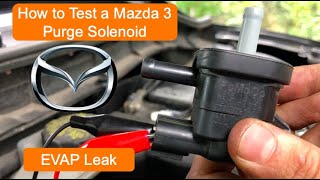
How to confirm: With the engine off, disconnect the hose leading from the valve to the intake manifold and try to blow through it. If air passes through, the valve is stuck open and faulty. 🎬 Watch: How to test the purge solenoid yourself. It should be normally closed. A scan tool can also be used to command the valve and check its response.
Typical fix: Replace the purge solenoid valve. It is located on the intake manifold and is relatively easy to access and replace with basic tools.
Est. part cost: $85-$175 - Faulty Canister Vent Solenoid 🟡 Medium Probability This valve, located at the rear of the car, can fail and get stuck, preventing the EVAP system from sealing properly for its self-test. This is a very common failure point according to owner forums.
How to confirm: This part is extremely difficult to access. Diagnosis typically involves commanding the valve closed with a scan tool and seeing if the system holds a vacuum. A definitive test involves applying 12V to see if it actuates and holds a seal. Due to the difficulty in accessing it, this is often diagnosed after easier causes are ruled out or with a smoke test that shows smoke exiting the vent hose.
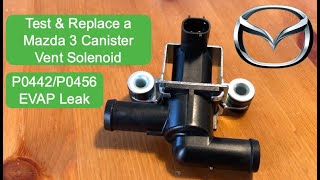
Typical fix: Replacement of the canister vent solenoid. This is a difficult DIY job as it requires lowering the rear subframe for access. A YouTube video demonstrates this process, which involves removing six subframe bolts and two shock bolts. 🎬 See this walkthrough for replacing the canister vent solenoid. Some owners have resorted to cutting an access hole in the trunk floor as a 'hack'.
Est. part cost: $70-$150 - Cracked or Disconnected EVAP Hoses ⚪ Low Probability Rubber hoses can become brittle and crack with age and exposure to heat, especially in the engine bay or above the rear subframe where they are exposed to the elements. One Reddit user's dealer found a hose with dry rot above the subframe during a smoke test.
How to confirm: Visually inspect all accessible EVAP lines between the engine, charcoal canister, and fuel tank for cracks, loose connections, or damage. A smoke test is the most effective way to find small hose leaks.
Typical fix: Replace the damaged section of hose or reconnect it securely.
Est. part cost: $10-$50
Rare But Worth Checking
- Cracked Charcoal Canister: Less common than valve or hose failures, but the plastic housing of the canister itself can develop hairline cracks over time, causing a leak. This part is also located in the difficult-to-access area above the rear subframe.
- Leaking Fuel Tank Gasket / Lock Ring: While a cracked lock ring is a very common issue on the first-generation Mazda 3 (2004-2009), it's less frequently reported for the 2010-2013 models. However, the gasket can still fail and create a leak. A Reddit user with a 2012 model suggested checking the fuel pump retaining ring under the rear seats after exhausting all other options. A strong fuel smell near the rear seat is a key indicator. NHTSA ODI #11439442 notes that a failed fuel pump lock ring on a related Mazda platform caused both P0442 and P0455 codes, accompanied by a strong smell of gasoline fumes around the rear of the car.
Diagnosis Steps

- Read the code with an OBD-II scanner to confirm P0442 is present.
- Inspect the gas cap. Remove it, check the seal for cracks or damage, and reinstall it, ensuring it clicks at least three times. Clear the code and drive for a few days to see if it returns. Many owners on forums like Reddit report this is the first and most crucial step.
- If the code returns, consider replacing the gas cap with a genuine OEM Mazda part, even if it looks okay. Aftermarket caps are a known source of recurring EVAP codes.
- If a new OEM cap doesn't fix it, perform a visual inspection of all accessible EVAP hoses in the engine bay for obvious cracks or disconnections.
- Locate the purge solenoid valve in the engine bay (typically on the right side of the engine). With the engine off, disconnect the hoses and attempt to blow through the valve. If air passes, it is faulty and needs replacement.
- If the purge valve is good, the next step is a smoke test. This involves injecting pressurized smoke into the EVAP system to visually identify where the leak is coming from. 🎬 Watch: A professional diagnostic and smoke test on a Mazda 3. This is the most reliable way to find small leaks in hoses, the charcoal canister, or the canister vent valve. Manufacturer Bulletin #01-002-18-3417 outlines using a specific repair procedure to determine the location of the evaporative system leak when codes P0441, P0442, P0455, or P0456 are stored.
- If a smoke test points to the canister vent solenoid at the rear of the car, prepare for a difficult replacement that involves lowering the rear subframe.
- If no leaks are found after multiple smoke tests, some owners have reported intermittent issues that are hard to track down, sometimes leading them to check the fuel pump retaining ring under the rear seat as a last resort.
Parts You'll Likely Need
- Fuel Filler Cap
(OEM #BBM2-42-250B (Verify with VIN))— The seal on the gas cap is the most common and simplest cause of a P0442 code. It degrades over time, preventing the system from sealing. Using an OEM cap is highly recommended.
Trusted brands: Mazda (OEM)
OEM price range: $25-$45
Aftermarket price range: $15-$25 - EVAP Purge Solenoid Valve
(OEM #LF82-18-740 (For 2.0L/2.5L, non-Skyactiv, verify with VIN). Skyactiv engines may use PE01-18-751.)— This is a common failure point that gets stuck open, causing a small leak. It's located in the engine bay and is relatively easy to replace.
Trusted brands: Mazda (OEM), Dorman, Standard Motor Products
OEM price range: $85-$120
Aftermarket price range: $50-$90 - Canister Vent Solenoid
(OEM #GS1D-42-950 (Verify with VIN))— This valve can fail, preventing the EVAP system from sealing for its leak test. It is a known issue but is significantly harder to replace than the purge valve.
Trusted brands: Mazda (OEM), Dorman (P/N: 911-711), Standard Motor Products
OEM price range: $120-$190
Aftermarket price range: $40-$80
Related Codes That Often Appear With This One
- P0456 — P0456 indicates a 'Very Small Leak,' which is a slightly smaller leak threshold than P0442. They often appear together and point to the same set of failing components, most commonly the gas cap.
- P0455 — P0455 indicates a 'Large Leak.' If a component like a purge valve or vent valve fails intermittently, it might sometimes cause a small leak (P0442) and other times a large one (P0455). All three codes are mentioned in Mazda TSB 01-020/10 regarding faulty gas caps.
Technical Service Bulletins (TSBs) & Recalls
- TSB 01-020/10: This bulletin addresses loose or faulty fuel filler caps causing EVAP codes P0442, P0455, and P0456. It recommends replacing the cap with a modified/improved part if issues persist. This TSB is referenced by other, broader EVAP diagnostic TSBs.
- Bulletin #01-002-18-3417: This manufacturer bulletin notes that some vehicles may experience MIL illumination with DTCs P0441, P0442, P0455, or P0456 stored in memory and provides a specific repair procedure to locate the leak.
Platform-Specific Known Issues

- Accessing the canister vent solenoid on the 2010-2013 Mazda 3 is notoriously difficult, requiring the rear subframe to be lowered for clearance. This turns a simple part swap into a multi-hour
Mechanic-Grade Diagnostic Values
- EVAP Purge Solenoid Resistance — expected: 15 to 30 Ohms is a typical range for many vehicles; one source quotes a good reading at 36 Ohms at 55-60°F.. Failure: A reading far outside the expected range, or an open circuit (OL), indicates a faulty solenoid coil.
- Canister Vent Solenoid Continuity — expected: Continuity should be present across the two pins of the solenoid.. Failure: No continuity (an open circuit) indicates the internal coil is broken and the solenoid is faulty.
Scan Tool Commands That Help
- Mazda IDS / M-MDS / Professional Scan Tool: EVAP System Leak Test — This is an automated test sequence run by the factory scan tool to check the integrity of the EVAP system. It may not run if the fuel level is below 15% or above 85%.
- Professional Scan Tool with Bidirectional Control: Evaporative Emissions Vent Valve Command (On/Off) — Used during a smoke test to confirm if the vent solenoid is the source of a leak. The technician commands the valve closed (energized) and watches for smoke exiting the vent. If smoke appears, the valve is leaking internally.
- Professional Scan Tool with Bidirectional Control: Evaporative Emissions Purge Valve Command (0-100%) — Used to verify the purge valve is functioning. A technician can command it open while monitoring short-term fuel trims; a functioning valve will cause a rich condition. It can also be used to seal the system during a vacuum or pressure test.
Wiring & Ground Locations
- BCM (Body Control Module) — Under the driver's side dash, above the driver's kick panel.. The BCM is involved in the control logic for various vehicle systems and can be a central point for diagnosing electrical faults.
- G03 — Behind the right (passenger side) headlight.. A common ground point in the engine bay. A poor connection here could potentially affect front-mounted components like the purge solenoid.
- G08 / G09 — Under the left (driver's side) end of the dash.. These are primary interior ground points. A fault here could affect the BCM or other control modules that command the EVAP system.
- G13 — Located at the left 'C' pillar (rear of the vehicle).. A key ground point for rear-mounted components. A corroded or loose G13 ground could cause issues with the canister vent solenoid or fuel tank pressure sensor located at the back of the car.
Real Owner Repair Stories
- Mazdas247 Forum User 'dougsey' (2012 Mazda 5 (shares platform components with Mazda 3)) — P0442 Small EVAP Leak code.
❌ Tried (didn't work) Checking the gas cap.
✅ What actually fixed it The canister vent solenoid was faulty. Even though it clicked when 12V was applied, the user found they could still blow a tiny amount of air through it in the 'closed' position. Replacing it with a Dorman 911-711 part resolved the code. - Reddit User 'NickRMX6' (2010 Mazda 3 2.0 hatchback manual, ~162,000 km) — P0455 (Large Leak) and P0442 (Small Leak) codes.
✅ What actually fixed it The user oiled the gas cap O-ring and ensured it was screwed down tightly after every fill-up. This simple, no-cost action made the codes go away and not return. - NHTSA ODI #11187055 — An owner reported that their vehicle could not pass inspection because the P0442 small leak code kept returning, noting it as a common problem they wanted the manufacturer to correct.
OEM Part Supersession History
GS1D-42-250A→GS3L-42-250B— Likely a minor revision to the fuel filler cap design or seal material.
Heads up: The newer part number (GS3L-42-250B) is listed as the correct replacement for 2010-2013 models.
Model Year Variations Within This Range
- 2012-2013: The 2.0L Skyactiv-G engine was introduced as an option in 2012. This engine is a direct-injection design with a much higher compression ratio (12.0:1) and different fuel system components compared to the standard MZR 2.0L and 2.5L port-injected engines. The EVAP purge solenoid part number is different for Skyactiv engines (PE01-18-751) versus the non-Skyactiv MZR engines (LF82-18-740). The rest of the EVAP system, including the canister and vent solenoid at the rear, is largely the same.
Diagnostic Flowchart
Other Known Issues on This Vehicle
Issues unrelated to this code that are worth knowing about as an owner of this generation:
- Melting / Sticky Dashboard 🟠 Medium — Very common, especially in warmer climates. The dashboard surface degrades, becoming sticky and creating a dangerous glare on the windshield. (Ref: Mazda issued a warranty extension for this issue, but it has likely expired for most vehicles. Some owners reported getting free dealer replacements years ago.)
- Premature Clutch Failure (Manual Transmission) 🔴 High — Widely reported, with failures occurring at unusually low mileage (sometimes under 40,000 miles). Attributed to defective release levers, bearings, and pins. (Ref: A class-action lawsuit was filed regarding this issue for 2010-2015 models.)
- Automatic Transmission Control Module (TCM) Failure 🟠 Medium — A known issue causing harsh shifting, AT light illumination, and communication error codes (U0101).
- Rusted Automatic Transmission Shifter Lever 🟡 Low — The external lever on the transmission can rust, causing the car to start in Neutral but not in Park. A relatively inexpensive part to fix.
Used vs. New Parts: Buying Guide for This Vehicle
When a used part is the smart pick: For electronic components like the purge solenoid or vent solenoid, a used part from a low-mileage donor car can be a cost-effective option. Since these parts are not subject to the same wear as mechanical items, a used OEM part can be more reliable than a new, cheap aftermarket alternative.
Donor-vehicle mileage cap: roughly under 80000 miles for the part to have meaningful remaining life.
What to inspect on the donor part:
- Check for the absence of heavy corrosion on electrical connectors.
- Ensure plastic housings are not cracked or brittle.
- If possible, test the solenoid with a 12V source to confirm it clicks before purchasing.
OEM-only on this vehicle (don't cheap out):
- Fuel Filler Cap: This is the most critical part to buy as a new, genuine OEM Mazda part. Forum and mechanic consensus strongly indicates that aftermarket gas caps often fail to seal correctly on this system, leading to a recurring P0442 code.
Aftermarket brands forum-validated for this vehicle:
- Dorman (for Canister Vent Solenoid, P/N 911-711)
- Standard Motor Products (for Purge Solenoid and other EVAP components)
Brands owners have reported issues with on this vehicle:
- No-name or white-box gas caps from online marketplaces are frequently reported as ineffective.
Real Owner Stories
Aggregated from forums and TSBs cited above. Mileages and costs reflect what owners reported in those sources.
2012 Mazda 3
Symptoms: Check engine light with codes P0442 and P0456. The owner tried an aftermarket gas cap first.
What fixed it: The owner replaced the aftermarket cap with an OEM cap, but the issue persisted; a subsequent smoke test found no leaks, illustrating the potential for intermittent EVAP issues.
Source hint: Reddit r/mazda3 - "Help! 2012 Mazda 3 with check engine light. Codes P0442 and P0456"
2012 Mazda 3 2.5L
Symptoms: Check engine light for P0442 leak.
What fixed it: A dealer smoke test identified a leaking canister purge vent valve and a dry-rotted hose located above the subframe.
Cost: $900-$1000
Source hint: Reddit r/mazdaspeed3 - "Has anyone diagnosed a p0442 evap leak?"
2010-2013 Mazda 3
Symptoms: P0442 and P0456 codes present; owner needed to replace the canister vent solenoid.
What fixed it: Lowering the rear subframe by removing six subframe bolts and two shock bolts to access and replace the vent solenoid.
Source hint: YouTube - "How to Diagnose and Replace a Mazda 3 Canister Vent Solenoid P0442 P0456"
Related OBD-II Codes
Frequently Asked Questions
Does TSB 01-020/10 apply to my 2010-2013 Mazda 3 regarding the P0442 code?
Can I use an aftermarket gas cap to fix the P0442 code on my Mazda 3?
Why is the canister vent solenoid repair so expensive on the 2010-2013 Mazda 3?
Is there a 'hack' to replace the vent solenoid without lowering the subframe?
How can I tell if my P0442 code is caused by the purge solenoid valve in the engine bay?
Could my difficulty at the gas pump be related to the P0442 code?
Helpful Videos

Used OEM Parts in Stock


New Aftermarket Parts Available


The information in this article is provided for general reference and educational purposes only. Vehicle specifications, procedures, and part compatibility can vary by production date, trim level, and region. Always consult your vehicle's factory service manual and verify part numbers before purchasing or performing repairs. Safety-critical components such as airbags, seat belts, and braking systems should be installed by a qualified professional.
- Mazda 3:
- 🎬 Helpful Videos
- 🛍️ Shop This Part
- What's Unique About the 2010-2013 Mazda 3
- Symptoms You May Notice
- Most Likely Causes
- Rare But Worth Checking
- Diagnosis Steps
- Parts You'll Likely Need
- Related Codes That Often Appear With This One
- Technical Service Bulletins (TSBs) & Recalls
- Platform-Specific Known Issues
- Mechanic-Grade Diagnostic Values
- Scan Tool Commands That Help
- Wiring & Ground Locations
- Real Owner Repair Stories
- OEM Part Supersession History
- Model Year Variations Within This Range
- Diagnostic Flowchart
- Other Known Issues on This Vehicle
- Used vs. New Parts: Buying Guide for This Vehicle
- Real Owner Stories
- 2012 Mazda 3
- 2012 Mazda 3 2.5L
- 2010-2013 Mazda 3
- Related OBD-II Codes
- Frequently Asked Questions
- 🎟️ Get 5% Off