

P0442 on 1997-2006 Jaguar XK: EVAP Small Leak Causes and Fixes
For a 1997-2006 Jaguar XK, a P0442 code is most often caused by a loose or worn-out gas cap. Always check that it's tight and the seal is intact before looking at other parts. If a new OEM gas cap (part JLM21500, ~$30-$60) doesn't fix it, the next likely causes are a faulty canister close valve (CCV) or a small, cracked U-shaped EVAP hose at the rear of the car near the charcoal canister. A smoke test is the best way to find non-cap related leaks.
- Always start by checking or replacing the gas cap with an OEM part; it's the most likely and cheapest fix.
- If the gas cap doesn't solve it, the problem is likely a cracked rubber hose or a faulty valve at the rear of the car.
- A professional smoke test is the fastest and most accurate way to find the leak without guessing and replacing unnecessary parts.
- For 2000-2001 models, be aware of TSB 303-46, which points directly to a faulty Canister Close Valve as a probable cause.
What's Unique About the 1997-2006 Jaguar XK
On the first-generation Jaguar XK (X100), the EVAP system components are known to be susceptible to age-related failures. While the gas cap is a universal weak point, these specific models have documented issues with valves and hoses. A Technical Service Bulletin (TSB 303-46) was issued for 2000-2001 models (VIN range A00083-A13691) due to a vapor pipe corroding and sending rust particles into the Canister Close Valve (CCV), causing it to stick open and trigger codes P0442, P0455, or P0446. Owners frequently report finding brittle, cracked rubber hoses, especially a small U-shaped hose at the rear of the car near the charcoal canister that is not sold separately from the dealer. The EVAP system architecture also changed significantly during the production run; model year 2003 and later vehicles use a 'returnless' fuel system, which altered the EVAP component layout compared to earlier models.
Symptoms You May Notice
- Check Engine Light is on
- A faint smell of fuel, particularly around the rear of the car or the driver's side front wheel well.
- A 'Check Fuel Cap' message may appear on the instrument cluster.
- Audible clicking sound from the front left (driver's side) wheel well, indicating a failing purge valve.
- A 'whoosh' of air entering the tank when removing the gas cap, indicating a vacuum is being held, which points to a vent-side blockage rather than a leak.
- Replacing the purge valve or charcoal canister before checking the gas cap. Always start with the simplest and most common fix.
- Replacing components without performing a smoke test. A smoke test can prevent unnecessary parts replacement by pinpointing the exact leak location.
Most Likely Causes
- Loose, Worn, or Incorrect Gas Cap 🔴 High Probability The gas cap seal is a simple rubber part that degrades over time, losing its ability to create a perfect seal. Aftermarket caps are a frequent source of issues, and it's highly recommended to use a genuine OEM part.
How to confirm: First, ensure the cap is tightened until it clicks several times. Inspect the rubber O-ring on the cap for cracks, stiffness, or damage. Check the fuel filler neck for rust or debris that could prevent a good seal.
Typical fix: Replace the gas cap with a new, genuine OEM part (JLM21500 for later models). This is the cheapest and easiest first step.
Est. part cost: $30-$60 - Cracked or Disconnected EVAP Hoses 🟡 Medium Probability After many years and heat cycles, the rubber and plastic hoses in the EVAP system become brittle and develop small cracks. Forum users frequently find leaks in a small U-shaped hose near the charcoal canister or splits hidden under hose clamps. This specific hose is not sold separately and requires sourcing a generic equivalent.
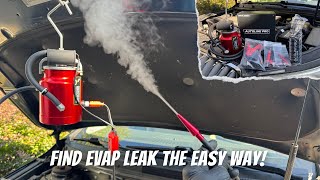
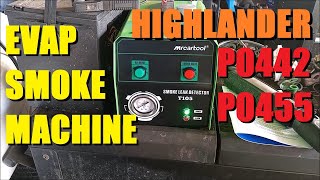
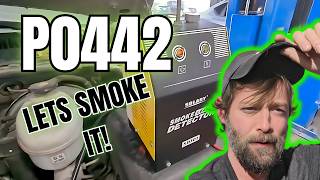
How to confirm: A visual inspection may reveal obvious cracks, especially on hoses near the charcoal canister at the rear of the car. The most reliable method is a smoke test, which forces smoke through the EVAP system, making even tiny leaks visible. 🎬 See how a smoke machine pinpointed these EVAP leaks.
Typical fix: Replace the cracked section of hose. For the common U-shaped hose, a standard-diameter fuel/vacuum hose from an auto parts store must be used as a substitute for the unavailable OEM part.
Est. part cost: $10-$100 - Faulty Canister Close Valve (CCV) / Vent Valve 🟡 Medium Probability This valve, located near the charcoal canister(s) at the rear of the car, can fail by sticking open. TSB 303-46 specifically notes that on 2000-2001 models, rust from an adjacent vapor pipe can contaminate and jam the valve, preventing the system from sealing.
How to confirm: The valve can be tested by applying 9V or 12V power to its terminals; it should click open or closed. When not powered, it should be in its default state (typically open to the atmosphere). A smoke test is the most definitive way to confirm if it's leaking when it should be closed.
Typical fix: Replace the Canister Close Valve. If performing the fix from TSB 303-46, the associated vapor pipe must also be replaced to prevent repeat failure.
Est. part cost: $70-$150 - Faulty Canister Purge Valve ⚪ Low Probability This valve meters fuel vapor into the engine. It can fail internally, causing a leak in the system. Owners sometimes report a clicking sound from the front left wheel well when it fails.
How to confirm: The purge valve is located in the front left wheel well, behind the plastic liner. It can be tested for leaks with a hand-held vacuum pump or during a smoke test. It can also be tested for function by applying 9V or 12V power to its terminals to hear it click.
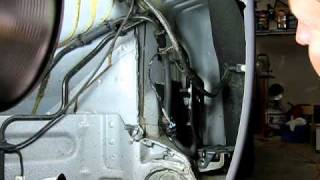
Typical fix: Replace the canister purge valve. 🎬 Watch: Step-by-step guide to replacing the purge valve.
Est. part cost: $80-$120
Rare But Worth Checking
- Cracked Charcoal Canister: The plastic body of the charcoal canister itself can develop a hairline crack, leading to a leak. In some cases, a leaking battery vent tube can drip acid onto the canister, damaging the plastic housing. In very rare instances, the canister can become saturated with fuel and leak.
- Leaking Fuel Pump Sealing Ring: The large gasket that seals the fuel pump assembly to the top of the fuel tank can fail, creating an EVAP leak. This is more likely if the fuel pump has been recently replaced. A smoke test or a fuel smell after filling the tank can point to this issue.
- Leaking O-rings at Canister Connections: The O-rings where hoses connect to the charcoal canister(s) can dry out and crack, causing a small leak that is difficult to spot visually. One owner reported this as the final fix after a year of diagnosis.
Diagnosis Steps
- Check the gas cap. Ensure it is tight and clicks when closed. Remove it and inspect the rubber seal for any signs of cracking, tearing, or hardening. If in doubt, replace it with an OEM cap.
- Clear the code with an OBD-II scanner and drive the vehicle for a few days to see if the code returns. The EVAP monitor only runs under specific conditions (e.g., fuel level between 15-85% and specific ambient temperatures).
- If the code returns, perform a thorough visual inspection of all accessible EVAP hoses, especially around the fuel filler neck and at the rear of the car near the charcoal canister(s). Pay close attention to the small U-shaped hose near the canister.
- The most effective next step is to have a professional smoke test performed. This test fills the EVAP system with a harmless, visible smoke under low pressure. The smoke will escape from any leak point, making it easy to identify the source, whether it's a hose, valve, or canister.
- Based on the smoke test results, test the specific component. The Canister Purge Valve (in the front wheel well) can be tested with a vacuum pump. The Canister Close Valve (at the rear) can be tested by applying voltage to see if it actuates. 🎬 Watch: How to test the CCV and purge valve.
- Replace the confirmed faulty component. Be aware that some hoses may not be available individually and may require sourcing a generic equivalent.
Parts You'll Likely Need
- Fuel Filler Cap
(OEM #JLM21500 (For models from VIN A11051))— This is the most frequent cause of P0442. The seal wears out over time, causing a small leak. Using a genuine Jaguar part is highly recommended as aftermarket caps are known to cause issues.
Trusted brands: Jaguar (OEM)
OEM price range: $30-$60
Aftermarket price range: $15-$30 - Canister Close Valve (CCV) / Vent Solenoid — A common failure point on the X100 platform, often due to contamination or age as detailed in TSB 303-46. It gets stuck open, preventing the system from sealing for its pressure test.
Trusted brands: Bosch, Jaguar (OEM)
OEM price range: $100-$150
Aftermarket price range: $70-$110 - Canister Purge Valve
(OEM #LJB1515AB)— Located in the front driver's side wheel well, this valve can fail and cause a leak. While less common than the CCV, it's a known issue.
Trusted brands: Jaguar (OEM)
OEM price range: $80-$120
Aftermarket price range: $50-$90
Related Codes That Often Appear With This One
- P0455 — P0455 indicates a 'Gross Leak Detected'. If the component causing the P0442 'Small Leak' fails completely, it can become a large leak, triggering P0455. TSB 303-46 lists both codes as possible outcomes of a faulty Canister Close Valve.
- P0456 — P0456 indicates a 'Very Small Leak Detected'. These three codes (P0442, P0455, P0456) all point to the same system, just with different leak size thresholds. The root cause is often the same.
- P0446 — P0446 indicates an 'EVAP System Vent Control Circuit Malfunction'. This code is specifically mentioned in TSB 303-46 alongside P0442 and P0455 as a direct result of the Canister Close Valve sticking open due to rust contamination.
Technical Service Bulletins (TSBs) & Recalls
- 303-46 - Check Engine MIL Illuminated – DTC P0442, P0455, P0446 – Replace Canister Control Valve.
- Bulletin #JTB00436NAS1 - Manufacturer service bulletin notes that during diagnosis, a technician may find P0442-00 stored in the Engine Control Module (ECM) along with various other EVAP-related codes.
- Bulletin #JTB00436NAS2 - An updated manufacturer bulletin confirms that P0442-00 may be found stored in the ECM during vehicle diagnosis.
Platform-Specific Known Issues
- TSB 303-46: Affects 2000-2001 models (VIN A00083 to A13691). Internal corrosion of a vapor pipe sends rust particles into the Canister Close Valve (CCV), causing it to stick open. This can trigger codes P0442, P0455, and P0446. The fix requires replacing both the CCV and the vapor pipe.
- Brittle U-Shaped Hose: Owners frequently discover a small, cracked 'U' shaped hose near the rear charcoal canister. Jaguar does not sell this hose individually, requiring owners to find a generic fuel/vacuum hose from an auto parts store as a substitute.
Mechanic-Grade Diagnostic Values
- Canister Purge Valve Drive Circuit Resistance — expected: Less than 5 ohms. Failure: A resistance greater than 5 ohms indicates high resistance in the wiring between the ECM and the purge valve.
Scan Tool Commands That Help
- Jaguar WDS / IDS: EVAP System Leak Test — This is a guided diagnostic function. As part of the test, the tool commands the Canister Close Valve (CCV) to close, sealing the system. This allows a technician to use a smoke machine or monitor pressure decay to find a leak without having to manually power the valve.
Wiring & Ground Locations
- EC63, Pin 02 (UY) — The electrical connector for the Canister Purge Valve, located in the front left wheel well behind the liner. The wire is color-coded UY (Blue/Yellow).. This is the specific pin at the purge valve used for checking circuit integrity back to the ECM. High resistance on this circuit can prevent the valve from operating correctly.
- PI01, Pin 66 (UY) — The main engine control module (ECM) electrical connector. The specific location of the ECM can vary but is typically in the engine bay plenum area.. This is the corresponding pin at the ECM for the purge valve drive circuit. A technician would measure resistance between this pin and the pin at the valve connector (EC63) to diagnose a wiring fault.
Real Owner Repair Stories
- Jaguar Forums user 'daro31' (2004 XK8) — Persistent P0442 code.
❌ Tried (didn't work) Replacing the gas cap.
✅ What actually fixed it Found a very hard-to-see crack in a small 'U' shaped hose that connects to the EVAP check valve behind the differential. The hose was cracked right near the clamp. The dealer did not sell the hose separately, so a generic equivalent had to be sourced. - Jaguar Forums user 'cyber3d' (2000 XK8) — P0442 code that persisted for over a year.
❌ Tried (didn't work) Implied multiple previous attempts to diagnose and fix.
✅ What actually fixed it A torn O-ring at the connection to the charcoal canister. The user replaced it with an equivalent size O-ring from a hardware store for less than a dollar, which resolved the code. - Jaguar Forums user 'CanJag' (Jaguar S-Type (similar EVAP components)) — P0442 and P0456 codes, continuous clicking sound from purge valve.
❌ Tried (didn't work) Replacing the gas cap.
✅ What actually fixed it Replacing the canister purge valve completely resolved the issue. The successful fix was confirmed when the car's onboard Evaporative System test ran and passed.
OEM Part Supersession History
LJB1515AA→LJB1515AB— Standard part revision or supplier change.
Heads up: LJB1515AB is the correct replacement for the earlier part.
Model Year Variations Within This Range
- 1997 - approx. 2002: These models used a fuel system with a return line from the engine. On some early models, the charcoal canister and purge valve were located in the front left wheel arch area.
- approx. 2003 - 2006: These models switched to a 'returnless' fuel system. The EVAP system components, particularly the charcoal canister(s) and Canister Close Valve, are located at the rear of the vehicle, near the differential and fuel tank.
- 2000 - 2001 (VIN A00083-A13691): These specific model years are subject to TSB 303-46, which identifies a problem with a corroding vapor pipe that contaminates the Canister Close Valve (CCV) with rust, causing it to stick open and trigger P0442.
Diagnostic Flowchart
Real Owner Stories
Aggregated from forums and TSBs cited above. Mileages and costs reflect what owners reported in those sources.
2000-2001 Jaguar XK
Symptoms: Check Engine Light illuminated with codes P0442, P0455, and P0446 stored in the module.
What fixed it: Replaced the Canister Close Valve (CCV) and the adjacent vapor pipe, as internal corrosion from the pipe had sent rust particles into the valve, causing it to stick open.
Cost: $70-$150
Source hint: TSB 303-46 - Check Engine MIL Illuminated
1997-2006 Jaguar XK
Symptoms: Check Engine Light on for a small EVAP leak. Visual inspection revealed a cracked hose near the rear charcoal canister.
What fixed it: Replaced a small, brittle 'U' shaped hose near the rear charcoal canister using a generic piece of fuel/vacuum hose from an auto parts store.
Cost: $10-$100
Source hint: https://www.jaguarforums.com/forum/xk8-xkr-x100-17/p0442-error-code-small-evap-leak-146118/
1997-2006 Jaguar XK
Symptoms: Check Engine Light on with an audible clicking sound coming from the front left (driver's side) wheel well.
What fixed it: Replaced the faulty canister purge valve located behind the plastic wheel well liner.
Cost: $80-$120
Source hint: https://www.jaguarforums.com/forum/xk8-xkr-x100-17/evaporative-emissions-problem-46726/
Related OBD-II Codes
Frequently Asked Questions
Does TSB 303-46 apply to my Jaguar XK for code P0442?
I hear a clicking sound from the front driver's side wheel well. Is this related to my EVAP leak?
Where can I buy the small U-shaped EVAP hose near the rear charcoal canister?
What gas cap should I use to fix a P0442 code on my XK?
Why do I hear a 'whoosh' of air when I remove my gas cap?
If I replace the Canister Close Valve (CCV) under TSB 303-46, do I need to replace anything else?
Helpful Videos
We Have This Part in Stock


The information in this article is provided for general reference and educational purposes only. Vehicle specifications, procedures, and part compatibility can vary by production date, trim level, and region. Always consult your vehicle's factory service manual and verify part numbers before purchasing or performing repairs. Safety-critical components such as airbags, seat belts, and braking systems should be installed by a qualified professional.
- Jaguar XK:
- 🎬 Helpful Videos
- 🛍️ Shop This Part
- What's Unique About the 1997-2006 Jaguar XK
- Symptoms You May Notice
- Most Likely Causes
- Rare But Worth Checking
- Diagnosis Steps
- Parts You'll Likely Need
- Related Codes That Often Appear With This One
- Technical Service Bulletins (TSBs) & Recalls
- Platform-Specific Known Issues
- Mechanic-Grade Diagnostic Values
- Scan Tool Commands That Help
- Wiring & Ground Locations
- Real Owner Repair Stories
- OEM Part Supersession History
- Model Year Variations Within This Range
- Diagnostic Flowchart
- Real Owner Stories
- 2000-2001 Jaguar XK
- 1997-2006 Jaguar XK
- 1997-2006 Jaguar XK
- Related OBD-II Codes
- Frequently Asked Questions
- 🎟️ Get 5% Off