

P0442 on 2008-2016 Ford F-250 Super Duty: EVAP Small Leak Causes and Fixes
The P0442 code on a 2008-2016 Ford F-250 Super Duty indicates a small leak in the evaporative emissions system. The most common fix is tightening or replacing the gas cap. If that doesn't work, suspect a cracked EVAP hose (especially on top of the fuel tank), a rusted fuel filler neck, or a faulty purge or vent valve.
- P0442 is a minor issue that won't stop you from driving, but it will cause you to fail an emissions test.
- Always start with the simplest and cheapest fix: check that your gas cap is tight and the seal is in good condition.
- If a new gas cap doesn't solve the problem, visually inspect the EVAP hoses for obvious cracks, especially under the truck.
- The canister purge valve (under the hood) and vent solenoid (near the spare tire) are the next most likely culprits.
- Don't be surprised if a smoke test is needed to find the leak; on a large truck, small hose leaks can be very difficult to spot visually.
What's Unique About the 2008-2016 Ford F-250 Super Duty

For the Ford F-250 Super Duty, a work truck often used in harsh conditions, the EVAP system's long network of hoses running the length of the chassis is particularly vulnerable to damage from road debris or corrosion. Owners on forums frequently report that finding the source of a P0442 code often requires a smoke test to locate a cracked hose on top of the fuel tank or along the frame, which can be more common than on smaller passenger cars. Additionally, the fuel filler neck is prone to rusting, which prevents the gas cap from creating a proper seal.
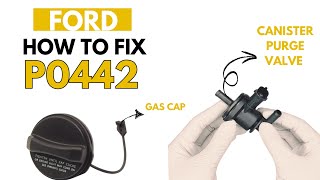
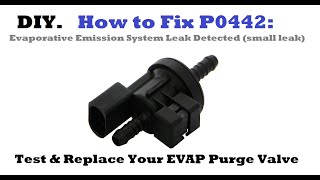
Generation note: This range covers two generations of the Ford F-250 Super Duty: the second generation (2008-2010) and the third generation (2011-2016). While the function of the EVAP system is identical, the exact location and part numbers for components like the purge valve and vent solenoid may differ slightly. For example, the purge valve on a 2011+ 6.2L V8 is located on the intake manifold 🎬 Watch: Locate the purge valve on a 6.2L engine, while the vent solenoid is typically located near the charcoal canister by the spare tire on most models. The 6.7L PowerStroke diesel also has an EVAP system to test for fuel vapor leaks, though its component layout differs from the gas engines.
Symptoms You May Notice
- Check Engine Light is on.
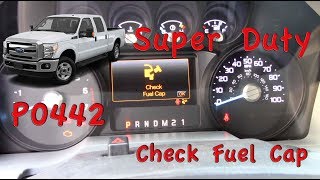
- A "Check Fuel Cap" message may appear on the instrument cluster display.
- A faint fuel odor may be noticeable around the truck, particularly near the rear.
- Slight decrease in fuel economy over time.
- Replacing the O2 sensors. Oxygen sensors are not part of the EVAP system and will not cause a P0442 code.
- Replacing the catalytic converter. This is an exhaust component and is unrelated to the fuel vapor system.
- Assuming a vacuum leak for the ESOF (Electronic Shift-On-the-Fly) 4WD system is related. The ESOF vacuum system is isolated from the EVAP system and a leak there will not cause a P0442.
Most Likely Causes


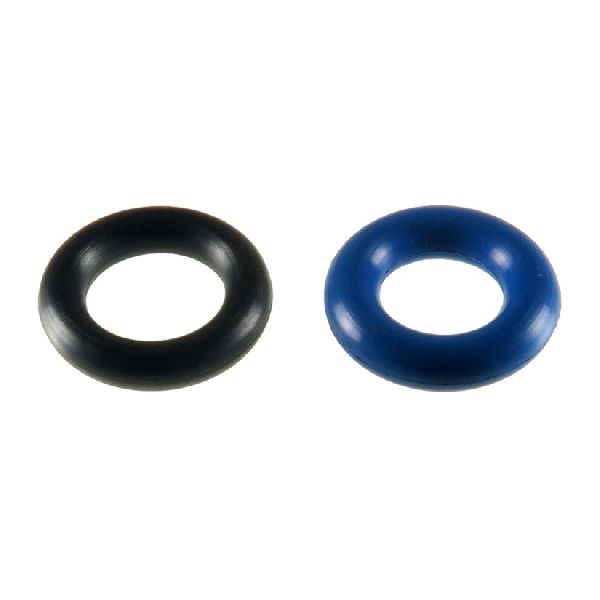
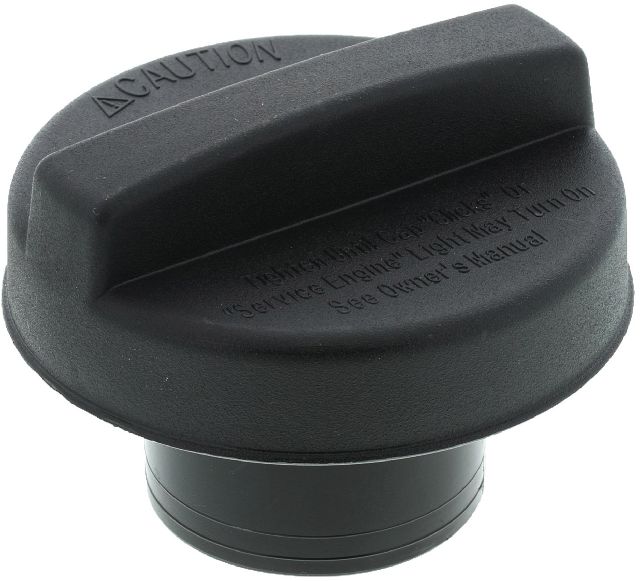
- Loose or Worn Gas Cap 🔴 High Probability The gas cap is the most frequently moved part of the EVAP system. The rubber O-ring seal can dry out, crack, or become contaminated with dirt, preventing a proper seal.
How to confirm: Ensure the cap is tightened until it clicks several times. Inspect the rubber seal on the cap for cracks, dirt, or signs of wear. A visual comparison between an old, hardened seal and a new, pliable one often reveals the problem.
Typical fix: Tighten or replace the gas cap. An OEM Motorcraft cap is strongly recommended as some aftermarket caps (like Stant) have been reported by owners to not fit the tethering retainer correctly, even if they seal.
Est. part cost: $15-$40 - Cracked or Disconnected EVAP Hose 🟡 Medium Probability Due to the truck's long wheelbase, EVAP hoses run a significant distance under the vehicle, exposing them to road debris, weather, and chassis flex. Hoses on top of the fuel tank are a common failure point, becoming brittle and cracking where they connect to fittings. A manufacturer service bulletin for other Ford models, TSB Bulletin #TSB 25-2308, notes that P0442 can be caused by a chaffing or rubbing condition between the fuel vapor canister line and the air vent hose.
How to confirm: Visually inspect all accessible EVAP lines from the engine bay to the charcoal canister. A smoke test is the most effective way to find a small leak that isn't visually obvious. Owners often find leaks in hard-to-see places, such as the hoses on top of the fuel tank, which may require lowering the tank to access and repair.
Typical fix: Replace the damaged section of hose. In some cases, the entire hose assembly may need to be replaced.
Est. part cost: $10-$100 - Faulty EVAP Canister Purge Valve 🟡 Medium Probability The purge valve is an electromechanical part that cycles frequently and can fail by sticking partially open, creating a small leak path. This is a common failure item on many Ford vehicles. NHTSA ODI #11540072 describes a case where a check engine light for code P0442 was caused by a faulty purge valve.
How to confirm: The purge valve is typically located on the engine's intake manifold. With the engine off, it should be closed. You can test it by removing the valve, and trying to blow through it; no air should pass. A hand vacuum pump can also be used to see if it holds vacuum when not energized.
Typical fix: Replace the canister purge valve. This is generally a simple repair involving disconnecting two hoses and an electrical connector.
Est. part cost: $30-$80 - Faulty EVAP Canister Vent Solenoid/Valve ⚪ Low Probability Located near the charcoal canister under the truck (often near the spare tire), this part is exposed to dirt, moisture, and road salt, which can cause it to fail or get stuck with debris, preventing it from sealing during the EVAP test.
How to confirm: The vent solenoid is normally open and closes when the PCM tests the system. It can be tested by applying 12V to see if the valve closes. Often, the solenoid itself gets stuck due to corrosion or debris. A smoke test may show smoke exiting the vent valve when it should be commanded closed.
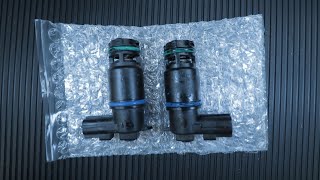
Typical fix: Replace the vent solenoid. It is often attached to the charcoal canister and may require dropping the spare tire for access. 🎬 See this easy vent valve solenoid replacement walkthrough
Est. part cost: $40-$120 - Rusted Fuel Filler Neck 🟡 Medium Probability Common in regions that use road salt, the metal fuel filler neck where the gas cap seals can corrode and develop pits. This rough, rusty surface prevents the gas cap's rubber O-ring from creating an airtight seal, causing a P0442.
How to confirm: Remove the gas cap and thoroughly inspect the metal lip of the filler neck for rust, bubbling paint, or pitting. Run your finger along the sealing surface; it should be perfectly smooth.
Typical fix: Clean the rust off with sandpaper or a wire brush as a temporary measure. The long-term solution is to replace the fuel filler neck assembly.
Est. part cost: $100-$250
Rare But Worth Checking
- Cracked Charcoal Canister: Physical damage to the canister housing from road debris or a large impact can cause a leak. This is uncommon but possible on a truck used off-road or in rough conditions. Manufacturer service bulletin SSM #49313 notes that P0442 can be due to damage to the carbon canister which may have occurred during vehicle transportation.
- Leaking Fuel Tank Gasket: The seal around the fuel pump assembly on top of the tank can degrade and cause a vapor leak, which would require a smoke test to find and dropping the tank to fix.
Diagnosis Steps

- Check the gas cap. Remove it, inspect the seal for damage, and reinstall it, ensuring you hear it click several times. Clear the code and drive for a few days to see if it returns.
- Inspect the fuel filler neck. With the cap off, carefully examine the metal lip of the filler neck for any signs of rust, pitting, or corrosion that could compromise the seal.
- If the code returns, perform a thorough visual inspection of all visible EVAP hoses and lines under the hood and along the truck's frame rail, leading back to the charcoal canister.
- Locate and test the canister purge valve. It is normally closed. With the valve removed from the vehicle, you should not be able to blow air through it.
- Locate and test the canister vent solenoid near the charcoal canister (usually by the spare tire). It is normally open but can get stuck with dirt or fail to close when commanded by the PCM during a system test.
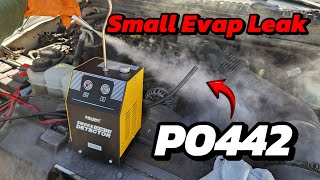
- If no obvious issues are found, the most reliable method to find the leak is to have a smoke test performed. This involves injecting low-pressure (typically under 1 PSI) smoke into the EVAP system and watching for where it escapes. Common, hard-to-see leak points revealed by a smoke test are the hoses on top of the fuel tank.
Parts You'll Likely Need
- Fuel Cap
(OEM #Motorcraft FC1088 (verify by VIN))— This is the most common cause due to frequent use and seal degradation. It's the cheapest and easiest part to replace first.
Trusted brands: Motorcraft, Stant
OEM price range: $25-$40
Aftermarket price range: $15-$25 - Canister Purge Valve / Solenoid
(OEM #Motorcraft CX2349 (for 6.2L, verify by VIN))— This valve cycles frequently and can get stuck, causing a persistent small leak. It's a common failure point on many Ford vehicles.
Trusted brands: Motorcraft, Dorman, Standard Motor Products
OEM price range: $50-$80
Aftermarket price range: $30-$60 - Canister Vent Solenoid / Valve
(OEM #Motorcraft CX2418 (verify by VIN))— Its location under the truck makes it susceptible to corrosion and dirt, which can cause it to stick or fail to seal properly during the system test.
Trusted brands: Motorcraft, Dorman
OEM price range: $70-$120
Aftermarket price range: $40-$90
Related Codes That Often Appear With This One
- P0456 — P0456 indicates a 'very small leak'. It's very similar to P0442, and which code is triggered depends on the precise leak size detected by the PCM. The causes and diagnosis are nearly identical.
- P0455 — P0455 indicates a 'gross leak'. If you have a P0442, and the leak worsens over time (e.g., a small crack in a hose becomes larger), it may eventually trigger a P0455.
Platform-Specific Known Issues
- A common failure point confirmed by multiple owners is a cracked EVAP hose on top of the fuel tank. A smoke test is often required to find this, and the repair may involve lowering the fuel tank for access.
- On trucks used in the salt belt, rust on the fuel filler neck is a very frequent cause of P0442, as it prevents the gas cap from sealing. Sanding the rust off is a temporary fix, but replacement of the filler neck is often necessary for a permanent solution.
Mechanic-Grade Diagnostic Values
- EVAP Canister Purge Valve Resistance — expected: 30 to 38 Ohms. Failure: A reading of 0 Ohms (short) or infinite/OL (open) indicates a failed coil.
- EVAP Canister Vent Solenoid Resistance — expected: 48 to 65 Ohms. Failure: A reading outside this range indicates a faulty solenoid coil.
- Fuel Tank Pressure (FTP) Sensor Voltage (Key On, Engine Off, system vented) — expected: ~2.6 Volts. Failure: A significantly different static voltage may indicate a faulty sensor or wiring issue.
- Fuel Tank Pressure (FTP) Sensor Voltage (during EVAP test / vacuum applied) — expected: Drops to 1.0 Volts or less. Failure: If the voltage fails to drop, it indicates the system is not pulling a vacuum. If it drops and then rises quickly, it confirms a leak.
Scan Tool Commands That Help
- Ford IDS (or equivalent professional scanner): EVAP System Leak Test — This is a comprehensive, automated test that commands the purge and vent solenoids and monitors the FTP sensor to confirm if a leak exists and its relative size (small, large, etc.). It's the first step after a visual inspection to confirm the fault is present before manual testing.
- Ford IDS (or equivalent professional scanner): Canister Vent (CV) Solenoid - ON/OFF Command — This bidirectional control is essential for performing a smoke test. The vent solenoid is normally open, so it must be commanded closed to seal the system and allow it to build pressure for the smoke test.
- Ford IDS (or equivalent professional scanner): Vapor Management Valve (Purge Valve) - Duty Cycle Control — Allows a technician to manually command the purge valve open and closed to check its mechanical function. With the engine running and the valve commanded closed (0%), there should be no vacuum felt at the hose port; if there is, the valve is leaking internally.
Wiring & Ground Locations
- G101 / G103 — G101 is located on the right front of the engine compartment. G103 is on the left front of the engine compartment.. These are primary engine compartment grounds. A poor connection at these points can cause erratic behavior or incorrect readings from various sensors and solenoids in the EVAP system, including the purge valve.
- G402 — Located on the frame near the rear of the vehicle.. This is a key ground point for components located at the rear of the truck, such as the canister vent solenoid and the Fuel Tank Pressure sensor. Corrosion or a loose connection here can cause a P0446 (vent control circuit) code, which is often related to P0442.
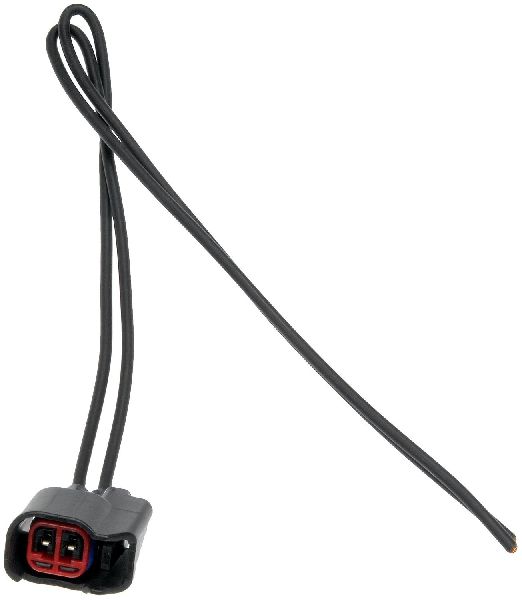
- EVAP Canister Vent Solenoid Connector — On the vent solenoid itself, located near the charcoal canister by the spare tire.. This connector is exposed to road spray and corrosion. Damage to the connector or its wiring can prevent the vent solenoid from closing, creating a permanent leak path that the PCM will detect during its self-test.
Real Owner Repair Stories
- Ford Truck Enthusiasts Forum (2009 Ford F-250 5.4L) — Check Engine Light with code P0442.
❌ Tried (didn't work) Resetting the code., Replacing the gas cap with an aftermarket Stant cap.
✅ What actually fixed it A smoke test revealed a leak from the vent tube on top of the fuel tank. The tube was replaced, which resolved the code. - Ford Truck Enthusiasts Forum (2020 F-250 7.3L Gas (newer model, but same principle)) — EVAP very small leak code.
❌ Tried (didn't work) Initial visual inspection.
✅ What actually fixed it A smoke test combined with using FORScan to command valves closed located a leak at the Fuel Vapor Valve where the hose attaches on top of the fuel tank. The owner repaired the cracked plastic fitting with JB Weld epoxy as a replacement part was not available separately from the tank. - YouTube - AUTO TUB3 (2002 Ford F-250 Super Duty (older model, but demonstrates common issue)) — P0442 check engine code.
❌ Tried (didn't work) Replacing one bad EVAP hose found during an initial smoke test.
✅ What actually fixed it After the code returned, a second smoke test was performed after dropping the fuel tank. Another worn-out hose on top of the tank was found to be leaking where the clamp could no longer seal it. Replacing this second hose finally resolved the code. - NHTSA ODI #10351913 — An owner reported that their check engine light came on with code P0442 indicating an EVAP emission control system small leak. A mechanic performed a smoke test and found a severed fuel line on top of the tank.
- NHTSA ODI #10852382 — An owner reported that the check engine light came on with code P0442 and the scent of gas was present. They changed the fuel cap, but the issue remained.
"I Checked Everything" — The Actual Cause
- In some Ford vehicles, a faulty Power Steering Pressure (PSP) sensor can short internally and send a higher-than-expected voltage back on a shared signal return wire. The PCM can misinterpret this incorrect voltage as a rise in fuel tank pressure, falsely triggering a P0442 code even when no leak exists. A diagnostic step is to disconnect the PSP sensor and see if the FTP sensor voltage returns to a normal range.
Model Year Variations Within This Range
- 2008-2010: The canister purge valve for the 5.4L V8 and 6.8L V10 engines in these years is a different part (e.g., Dorman 911-350, Motorcraft CX-2675) than the one used on the 2011+ 6.2L V8.
- 2011-2016: The 6.2L V8 engine became the standard gasoline engine. Its canister purge valve (e.g., Motorcraft CX2349) is located on the intake manifold behind the throttle body.
Diagnostic Flowchart
Other Known Issues on This Vehicle
Issues unrelated to this code that are worth knowing about as an owner of this generation:
- Front End "Death Wobble" 🔴 High — Common on both stock and lifted trucks, often triggered by hitting a bump at highway speeds (40+ mph). Can occur at various mileages but is often linked to worn steering components like the track bar, ball joints, or a weak OEM steering stabilizer. (Ref: Ford has issued customer satisfaction programs and updated steering damper parts to address this, but it remains a persistent issue.)
- 6.7L PowerStroke Turbocharger Failure (2011-2014) 🔴 High — Early 2011-2012 models with the Garrett GT32 SST turbo were particularly prone to failure due to the use of ceramic ball bearings, which could disintegrate. Failure often occurs between 80,000-150,000 miles. Later models (2015+) switched to a more reliable Garrett GT37 with steel bearings.
- 6.7L PowerStroke CP4 High-Pressure Fuel Pump Failure 🔴 High — A notorious issue where the Bosch CP4 pump can fail, sending metal debris throughout the entire fuel system, leading to catastrophic and expensive repairs often exceeding $10,000. This is a known weakness across many diesel trucks that use this pump.
- 6.2L V8 Broken Valve Springs 🟠 Medium — An issue primarily affecting earlier model year (approx. 2010-2012) 6.2L engines where a valve spring can break, causing a misfire. If not addressed, the valve can drop into the cylinder, causing severe engine damage. While not extremely widespread, it is a well-documented failure mode.
- Radiator Coolant Leaks (6.7L PowerStroke) 🟠 Medium — Leaks can develop from the primary radiator or the secondary cooling system's radiator. Faulty EGR valves can also cause coolant leaks, resulting in white smoke from the exhaust.
Used vs. New Parts: Buying Guide for This Vehicle
When a used part is the smart pick: For this repair, used parts are generally not recommended for solenoids or hoses. However, a complete fuel filler neck assembly from a junkyard can be a cost-effective solution, provided it comes from a dry, non-salt-belt region and is free of rust.
Donor-vehicle mileage cap: roughly under 100000 miles for the part to have meaningful remaining life.
What to inspect on the donor part:
- For a fuel filler neck, inspect the sealing surface where the gas cap sits for any pitting, bubbling paint, or rust. It must be perfectly smooth.
- Check the donor vehicle's location history if possible; avoid parts from the 'rust belt'.
- For any electronic part like a solenoid, there is no reliable way to inspect its remaining life, making used a gamble.
OEM-only on this vehicle (don't cheap out):
- Fuel Cap: While aftermarket caps exist, many owners report fitment issues with the tether or improper sealing. Given the low cost, a Motorcraft OEM cap is the most reliable first step to avoid misdiagnosis.
Aftermarket brands forum-validated for this vehicle:
- Dorman: Offers direct replacement purge valves and vent solenoids that are widely available and considered a reliable alternative to OEM.
- Standard Motor Products (SMP): A well-regarded aftermarket manufacturer for EVAP system components like purge and vent valves.
Brands owners have reported issues with on this vehicle:
- Stant (for Fuel Cap): Some owners have reported that while the cap may seal, the tethering mechanism does not fit the Ford filler neck correctly, which can be an annoyance.
Real Owner Stories
Aggregated from forums and TSBs cited above. Mileages and costs reflect what owners reported in those sources.
2009 Ford F-250
Symptoms: The owner replaced the gas cap, but the P0442 code persisted.
What fixed it: A smoke test identified a leak from the vent tube on top of the fuel tank. Replacing the tube resolved the issue.
Source hint: ford-trucks.com: Thread 'P0442' (2013)
2011 Ford F-250 6.2L
Symptoms: Check Engine Light and 'Check Gas Cap' message.
What fixed it: The repair involved cleaning significant rust off the fuel filler neck and replacing the gas cap to ensure a proper seal.
Source hint: YouTube: 'Ford F250 F350 Check Gas Cap Diagnostic and Fix P0442' by 'Pro-claimed' (2018)
2002 Ford F-250 Super Duty
Symptoms: Small EVAP leak code P0442.
What fixed it: Used a smoke machine to locate a small, cracked hose on top of the fuel tank. The fix required dropping the fuel tank to access and replace the damaged hose.
Source hint: YouTube: 'DIY How to Fix p0442 Check Engine Code Small EVAP Leak 2002 Ford F-250 Super Duty' by 'AUTO TUB3' (2022)
Related OBD-II Codes
Frequently Asked Questions
Can I use an aftermarket gas cap like a Stant on my F-250 to fix the P0442 code?
Why does my F-250 instrument cluster say 'Check Fuel Cap' when the code is P0442?
I live in the salt belt; could rust be causing my P0442 code?
Where is the EVAP canister vent solenoid located on my 2008-2016 F-250?
Is a smoke test really necessary for a small leak on these trucks?
How do I test the purge valve on my F-250's intake manifold?
Helpful Videos

Used OEM Parts in Stock


New Aftermarket Parts Available


The information in this article is provided for general reference and educational purposes only. Vehicle specifications, procedures, and part compatibility can vary by production date, trim level, and region. Always consult your vehicle's factory service manual and verify part numbers before purchasing or performing repairs. Safety-critical components such as airbags, seat belts, and braking systems should be installed by a qualified professional.
- Ford F-250 Super Duty:
- 🎬 Helpful Videos
- 🛍️ Shop This Part
- What's Unique About the 2008-2016 Ford F-250 Super Duty
- Symptoms You May Notice
- Most Likely Causes
- Rare But Worth Checking
- Diagnosis Steps
- Parts You'll Likely Need
- Related Codes That Often Appear With This One
- Platform-Specific Known Issues
- Mechanic-Grade Diagnostic Values
- Scan Tool Commands That Help
- Wiring & Ground Locations
- Real Owner Repair Stories
- "I Checked Everything" — The Actual Cause
- Model Year Variations Within This Range
- Diagnostic Flowchart
- Other Known Issues on This Vehicle
- Used vs. New Parts: Buying Guide for This Vehicle
- Real Owner Stories
- 2009 Ford F-250
- 2011 Ford F-250 6.2L
- 2002 Ford F-250 Super Duty
- Related OBD-II Codes
- Frequently Asked Questions
- 🎟️ Get 5% Off