

P0442 on 2011-2019 Ford Explorer: Causes and Fixes for a Small EVAP Leak
For a 2011-2019 Ford Explorer, code P0442 is most often caused by a faulty canister purge valve located on the engine. Before replacing it, check the capless fuel filler neck for debris. The purge valve is a relatively inexpensive part (around $30-$60) and is easy to replace for most DIYers. A rough start after refueling is a strong indicator that the purge valve has failed and is stuck open.
- P0442 on a 2011-2019 Explorer indicates a small leak in the emissions system.
- Don't look for a gas cap; instead, check and clean the seal on the capless fuel filler neck.
- The most likely part to have failed is the canister purge valve on the engine, which is a common and accessible DIY repair.
- A key symptom of a failed purge valve is the engine running rough or having trouble starting right after getting gas.
- The issue will not prevent you from driving the vehicle, but it will cause an emissions test failure.
What's Unique About the 2011-2019 Ford Explorer

The 2011-2019 Ford Explorer uses a capless fuel filler system, so a 'loose gas cap' isn't the cause. Instead, the seal on the internal flap of the filler neck can get dirty or fail, causing a leak. However, the most widely reported failure point on this specific platform is the canister purge valve (also called a purge solenoid), which is conveniently located on top of the engine and is a common DIY replacement. This part is known to fail by sticking open, which can also cause difficulty starting the vehicle immediately after refueling.
Symptoms You May Notice
- Check Engine Light is on
- A faint smell of fuel around the vehicle (less common). In NHTSA ODI #10852382, an owner reported that the check engine light was accompanied by a persistent scent of gas.
- Difficulty starting or rough running immediately after refueling (a strong indicator of a stuck-open purge valve)
- Slightly reduced fuel economy
- Replacing the O2 sensors. P0442 is strictly an EVAP system code and has no relation to the oxygen sensors.
- Looking for a gas cap to tighten. This vehicle does not have a traditional, removable gas cap.
Most Likely Causes

- Faulty Canister Purge Valve/Solenoid 🔴 High Probability This specific part is a very common failure item on this generation of Explorer and other contemporary Ford models sharing the same engines. The internal valve can get stuck open or fail to seal properly, creating a small leak that the system detects. NHTSA ODI #11540072 notes a case where a faulty purge valve triggered the P0442 code even on a vehicle previously subject to a related recall.
How to confirm: With the engine off, disconnect the purge valve and try to blow through it. If air passes through, the valve is stuck open and has failed, as it should be normally closed. Another strong symptom is the engine struggling to start or running rough right after you fill the gas tank.
Typical fix: Replace the canister purge valve. It is located on top of the engine, secured by two 8mm bolts, making it very accessible for DIY replacement in about 15-30 minutes.
Est. part cost: $30-$60 - Debris or Failure of the Capless Fuel Filler Neck Seal 🟡 Medium Probability Instead of a traditional gas cap, these vehicles have a spring-loaded flap with a seal. Dirt, grime, or wear can prevent the flap from sealing correctly after refueling. The internal locking tabs can also break, preventing a good seal.
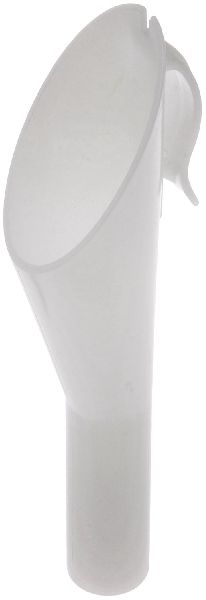
How to confirm: Visually inspect the capless filler opening for any debris. Clean it carefully with a rag and some carburetor cleaner. The included plastic funnel (usually stored with the spare tire tools) can be used to open the flap for cleaning and inspection. Check if the flap springs back and seals tightly.
Typical fix: Clean the sealing area thoroughly. If cleaning doesn't work and the seal is damaged or the mechanism is broken, the entire fuel filler neck assembly must be replaced.
Est. part cost: $5-$15 for cleaning supplies, $100-$200 for a new filler neck assembly. - Cracked or Disconnected EVAP Hose ⚪ Low Probability Rubber hoses and plastic lines can become brittle with age and exposure to engine heat, leading to small cracks or loose connections. A manufacturer service bulletin for other Ford models, TSB Bulletin #TSB 25-2308, notes that P0442 can be caused by a chaffing or rubbing condition between the fuel vapor canister line and the air vent hose.
How to confirm: Perform a visual inspection of all accessible EVAP lines, especially around the engine and charcoal canister. A smoke test is the most effective way to find a leak that isn't obvious. In NHTSA ODI #10351913, a mechanic performed a smoke test and discovered a severed fuel line on top of the system.
Typical fix: Replace the cracked hose or re-secure the connection. Small sections of rubber hose are inexpensive.
Est. part cost: $5-$25
Rare But Worth Checking
- Faulty EVAP Vent Solenoid: The vent solenoid, located near the charcoal canister under the vehicle, can fail and get stuck open. It's less common than the purge valve for this code but is still a possibility.
- Cracked Charcoal Canister: Physical damage or saturation from repeatedly overfilling the fuel tank can cause the canister itself to crack and leak. Manufacturer Bulletin #SSM 49313 indicates that damage to the carbon canister, sometimes occurring during vehicle transportation, can trigger P0442.
- Leaking Fuel Tank Gasket: The gasket for the fuel pump/sending unit on top of the fuel tank can degrade and cause a small leak, though this is less common.
Diagnosis Steps

- Read the Code: Confirm P0442 is present. Note any other codes like P0455, P0456, or P1450, as they can help pinpoint the issue.
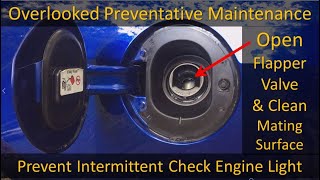
- Inspect and Clean Fuel Filler Neck: Carefully inspect the capless fuel filler opening for debris. Use the funnel from your vehicle's tool kit to operate the flap and clean the sealing surface with a clean cloth. 🎬 Watch: How to properly clean your capless fuel filler seal. Ensure the flap closes securely.
- Test the Purge Valve: The easiest test is to observe engine behavior. Does it run rough or stall after refueling? If so, the purge valve is likely stuck open. For a definitive test, remove the valve from the engine (two 8mm bolts). Try to blow through it. If any air passes, it is faulty and must be replaced.
- Clear Code and Drive: If you only cleaned the filler neck, clear the code with a scanner and perform a few drive cycles to see if the light returns. An EVAP monitor can take several days of normal driving to run and confirm a fix.
- Visually Inspect EVAP Hoses: Check all visible EVAP hoses in the engine bay and under the vehicle for obvious cracks, damage, or loose connections, particularly near the purge valve and canister.
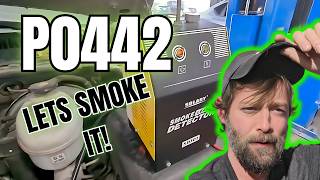
- Perform a Smoke Test: If the steps above do not reveal the issue, the most reliable way to find the leak is to introduce smoke into the EVAP system using a smoke machine. 🎬 See how to find a small EVAP leak using smoke. This will quickly show the exact source of any small leak from a hose, the canister, or a gasket.
Parts You'll Likely Need

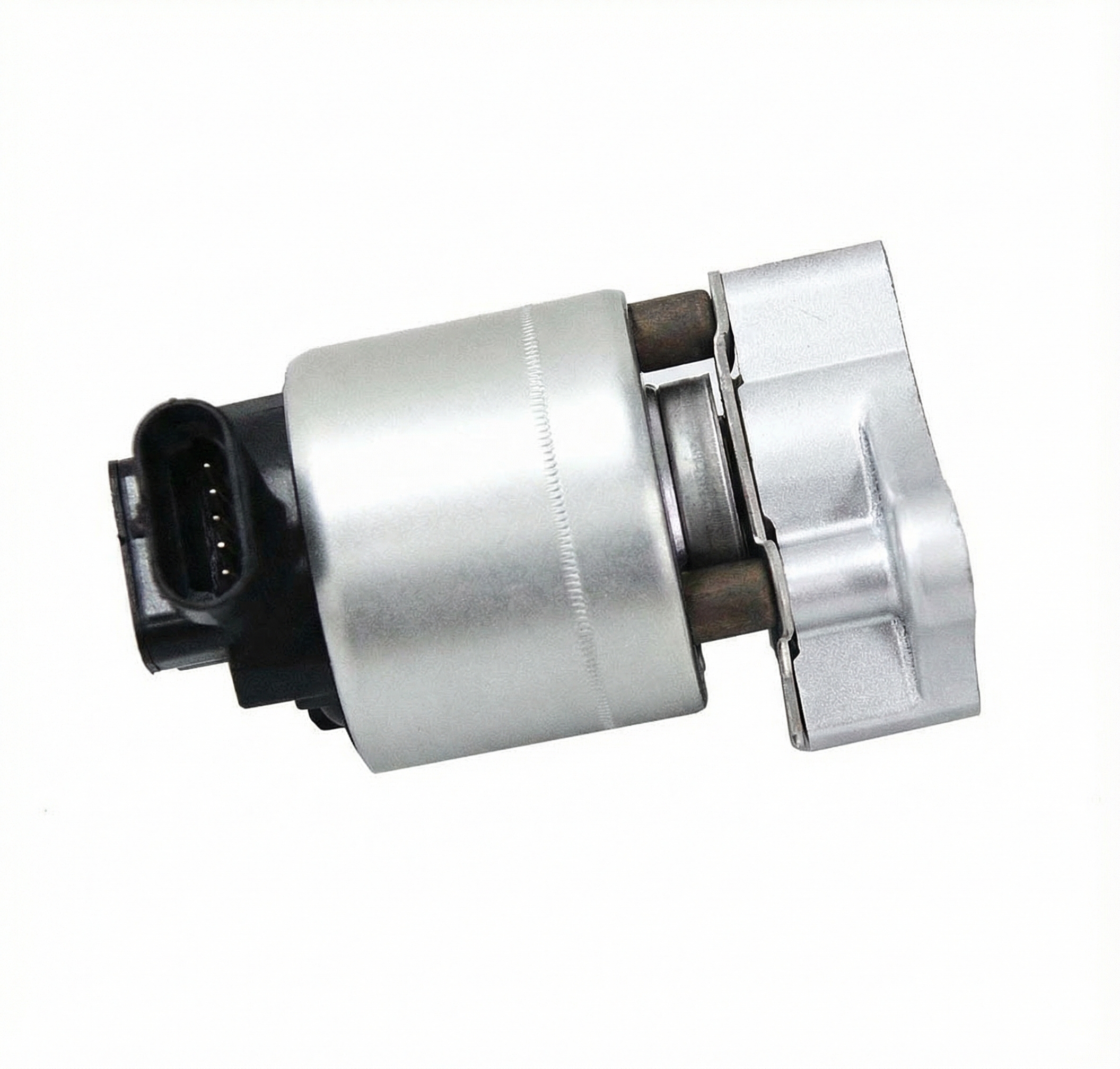
- Canister Purge Valve / Solenoid
(OEM #AU5Z-9C915-B (Motorcraft CX-2443). Also superseded by AU5Z-9C915-E. Verify by VIN.)— This is the most common failure part for P0442 on this generation of Ford Explorer. It's an easy and relatively cheap fix.
Trusted brands: Motorcraft, Dorman (P/N 911-222), Bosch, Standard Motor Products
OEM price range: $40-$60
Aftermarket price range: $25-$50 - Fuel Filler Neck Assembly
(OEM #DA8Z-9002-A (Varies by year, verify by VIN))— If the seal on the capless system is damaged and cleaning doesn't fix the leak, the entire assembly needs to be replaced.
Trusted brands: Motorcraft, Genuine Ford
OEM price range: $100-$200
Aftermarket price range: $70-$150
Related Codes That Often Appear With This One
- P0455 — Indicates a large EVAP leak. If both appear, it could point to a component that has failed completely, like a disconnected hose or a very bad purge valve.
- P0456 — Indicates a very small EVAP leak. Seeing this with P0442 suggests the leak size is borderline between the two thresholds, or the issue is intermittent.
- P1450 — Indicates 'Unable to Bleed Up Fuel Tank Vacuum'. This code is strongly associated with a stuck-open purge valve, which is the most common cause of P0442 on this platform.
Platform-Specific Known Issues
- Recall 18S32 / NHTSA 18V735: While not directly for a P0442 code, this recall addresses a purge valve that can get stuck open, creating excessive vacuum that could deform the plastic fuel tank. The fix was a PCM software update. This highlights the frequency of purge valve issues on this platform.
Mechanic-Grade Diagnostic Values
- Fuel Tank Pressure (FTP) Sensor Voltage (KOEO) — expected: ~2.6 Volts. Failure: A reading that immediately drops upon starting the engine indicates a stuck-open purge valve pulling vacuum when it should not be.
- Canister Purge Valve Solenoid Resistance — expected: 20-38 Ohms (general Ford specification). Failure: A reading significantly outside this range (e.g., open circuit or shorted) indicates a failed solenoid coil.
- Canister Vent Solenoid Resistance — expected: 20-50 Ohms (common range). Failure: A reading outside this range suggests the solenoid winding is damaged.
Scan Tool Commands That Help
- Ford IDS, FORScan, or equivalent bidirectional scanner: EVAP System Test / Purge/Vent Solenoid Command — This is the definitive test for a mechanically stuck-open purge valve. With the engine running, command the purge valve to 0% (off) and the vent valve to ON (closed). Monitor the Fuel Tank Pressure (FTP) sensor PID. If the pressure begins to drop (vacuum increases), it proves the purge valve is leaking engine vacuum into the sealed EVAP system and must be replaced.
Wiring & Ground Locations
- EVAP System Fuses (2011-2015) — In the main engine fuse box on the driver's side.. Fuse F67 (20A) and F86 (7.5A) provide power for the EVAP system components. A blown fuse would typically cause control circuit codes, but should be checked during electrical diagnosis.
- Connector C213 (Vent Solenoid) — Behind the driver's side left kick panel.. This is an intermediate connector for the EVAP vent solenoid circuit. A poor connection here can cause vent solenoid control issues. The control wire (Green/Violet) passes through pin 57.
- Connector C3053 (Vent Solenoid) — Under the vehicle, below the 2nd-row seats.. This connector is in the harness for the EVAP vent solenoid and is exposed to the elements, making it a potential point of corrosion or damage that could interrupt the circuit.
Real Owner Repair Stories
- YouTube - 'How to repair P1450 Trouble Code / 2016 Ford Explorer' (2016 Ford Explorer 3.5L V6) — Check Engine Light with code P1450 (Unable to Bleed Up Fuel Tank Vacuum), which is commonly associated with a faulty purge valve.
❌ Tried (didn't work) The video proceeds directly to testing the most likely cause.
✅ What actually fixed it The owner removed the original purge valve and confirmed it was stuck open by being able to suck air through it. A new valve (Duralast PV637) did not allow air to pass. Replacing the purge valve resolved the issue.
"I Checked Everything" — The Actual Cause
- A rare but documented cause for a false P0442 is an internal short in the Power Steering Pressure (PSP) sensor. On some models, the PSP sensor shares a signal return wire with the Fuel Tank Pressure (FTP) sensor. A short in the PSP sensor can increase the voltage on this shared wire, which the PCM misinterprets as a pressure change in the EVAP system, falsely triggering the code. The diagnostic step is to disconnect the PSP sensor and see if the FTP voltage reading stabilizes and the code can be cleared.
OEM Part Supersession History
AU5Z-9C915-B→AU5Z-9C915-E— Standard OEM part revision. The new part is a direct replacement.
Heads up: No incompatibility is noted; AU5Z-9C915-E is the correct current service part.
Model Year Variations Within This Range
- 2011-2015 vs 2016-2019: The Ford Explorer received a major facelift for the 2016 model year. While the root cause of P0442 (purge valve) is consistent across the generation, fuse box layouts and wiring harness routing may differ. The fuse locations cited (F67, F86) are specifically for 2011-2015 models. Always verify wiring diagrams specific to the vehicle's model year during advanced electrical diagnosis.
Diagnostic Flowchart
Real Owner Stories
Aggregated from forums and TSBs cited above. Mileages and costs reflect what owners reported in those sources.
2017 Ford Explorer — 181606 miles
Symptoms: Check engine light on with EVAP codes P0442 and P0456.
What fixed it: Found an EVAP line disconnected and leaking. Reconnected the line.
Source hint: Caldwell Automotive: Auto Repair Caldwell, ID | Expert Mechanics
2011 Ford Explorer
Symptoms: Check engine light with P0442 code.
What fixed it: Replaced the Evap Purge Solenoid Valve with a Dorman aftermarket part (911-222).
Source hint: Clearing Ford Code PO442 | Replacing Evap Purge Solenoid Valve on Escape, Explorer & Edge - YouTube
2017 Ford Explorer
Symptoms: Rough starts after refueling accompanied by P1450 and P0442 codes.
What fixed it: Replaced the canister purge valve.
Source hint: explorerforum.com thread '2017 P1450 and P0442 after refueling'
Ford Explorer
Symptoms: Check engine light with a related EVAP large leak code (P0455).
What fixed it: Required a complete fuel filler neck replacement.
Cost: $460
Source hint: reddit.com/r/AskMechanics thread 'Quoted 460 for fuel fill neck repair fair'
Related OBD-II Codes
Frequently Asked Questions
Does Recall 18S32 apply to my P0442 code on the Ford Explorer?
My Explorer runs rough and struggles to start right after I get gas. Is this related to the P0442 code?
How do I clean the capless fuel filler neck to fix a P0442 code?
What part numbers are recommended for replacing the purge valve on my 3.5L Explorer?
Can I replace the canister purge valve myself, and how long does it take?
Helpful Videos
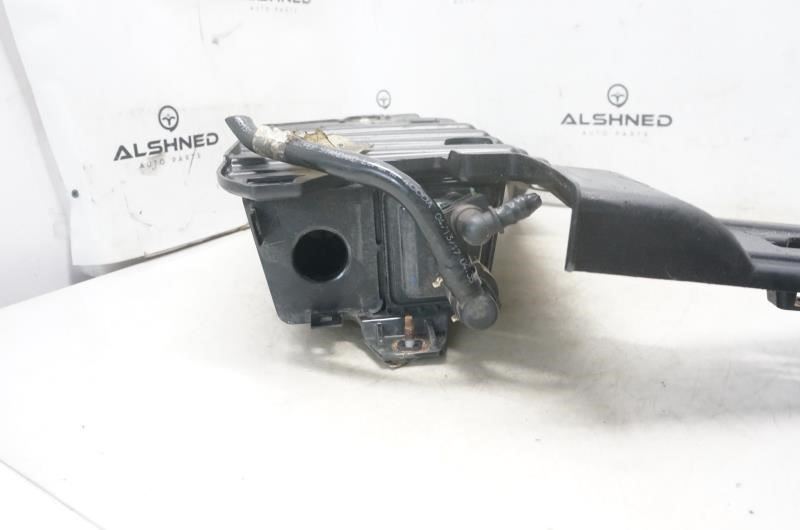
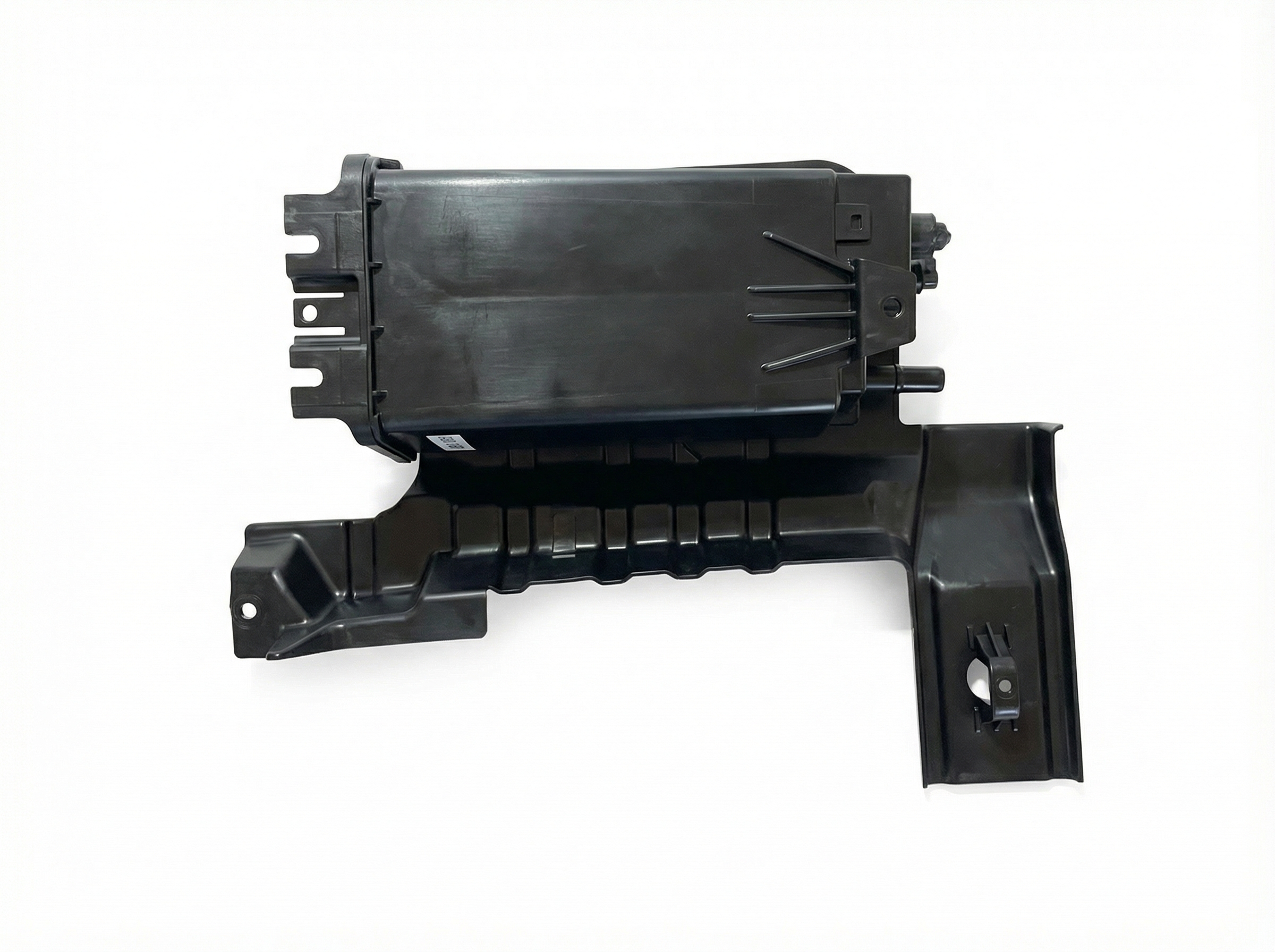
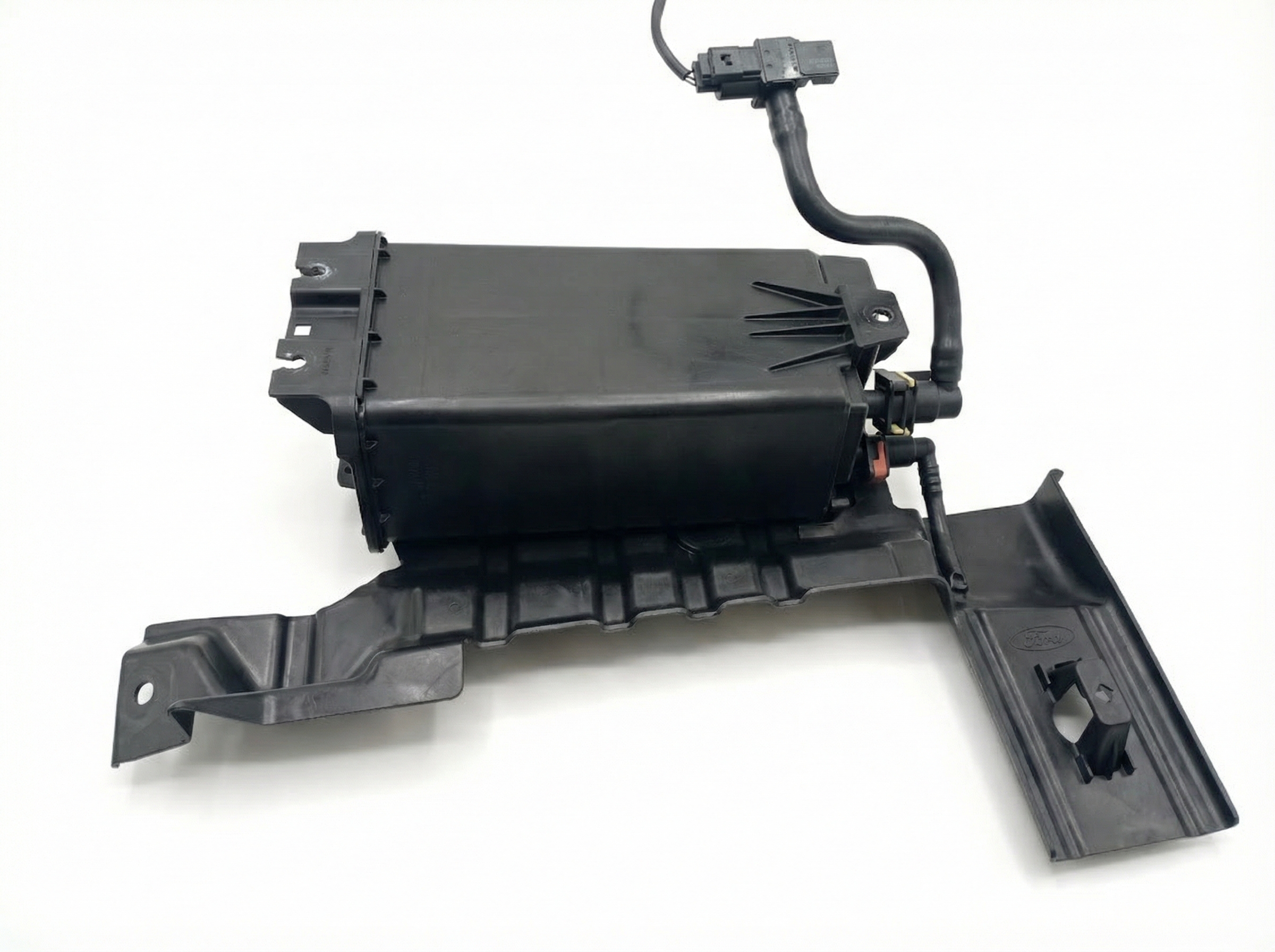
Used OEM Parts in Stock
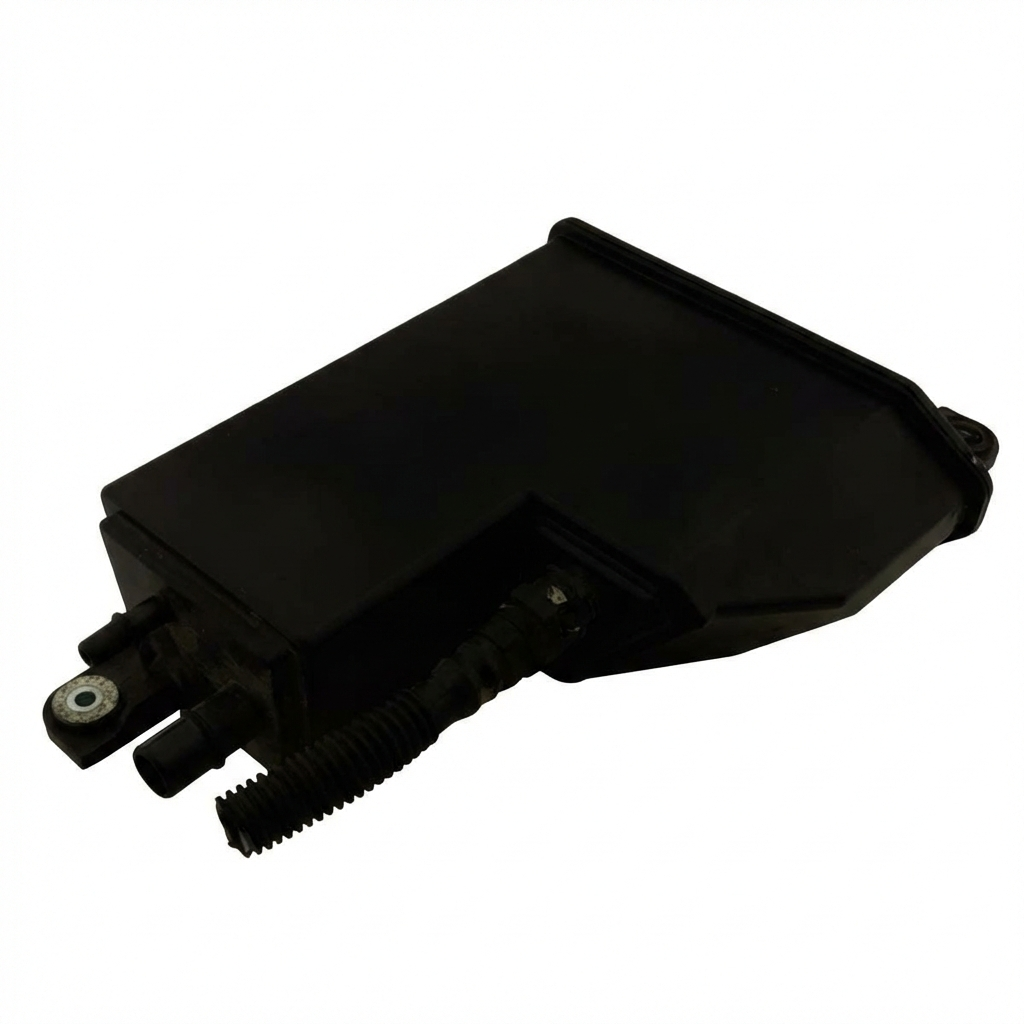
New Aftermarket Parts Available


The information in this article is provided for general reference and educational purposes only. Vehicle specifications, procedures, and part compatibility can vary by production date, trim level, and region. Always consult your vehicle's factory service manual and verify part numbers before purchasing or performing repairs. Safety-critical components such as airbags, seat belts, and braking systems should be installed by a qualified professional.
- Ford Explorer:
- 🎬 Helpful Videos
- 🛍️ Shop This Part
- What's Unique About the 2011-2019 Ford Explorer
- Symptoms You May Notice
- Most Likely Causes
- Rare But Worth Checking
- Diagnosis Steps
- Parts You'll Likely Need
- Related Codes That Often Appear With This One
- Platform-Specific Known Issues
- Mechanic-Grade Diagnostic Values
- Scan Tool Commands That Help
- Wiring & Ground Locations
- Real Owner Repair Stories
- "I Checked Everything" — The Actual Cause
- OEM Part Supersession History
- Model Year Variations Within This Range
- Diagnostic Flowchart
- Real Owner Stories
- 2017 Ford Explorer — 181606 miles
- 2011 Ford Explorer
- 2017 Ford Explorer
- Ford Explorer
- Related OBD-II Codes
- Frequently Asked Questions
- 🎟️ Get 5% Off