

P0442 on 2001-2007 Dodge Grand Caravan 3.3L: EVAP Small Leak Causes and Fixes
For a P0442 code on a 2001-2007 Dodge Grand Caravan, the most likely causes are a loose or faulty gas cap, or cracked EVAP vacuum hoses, especially the ones near the purge solenoid under the air filter box. Start by checking the gas cap; if that doesn't fix it, a visual inspection of the hoses is next. Many owners find replacing small, cracked rubber hose sections solves the problem.
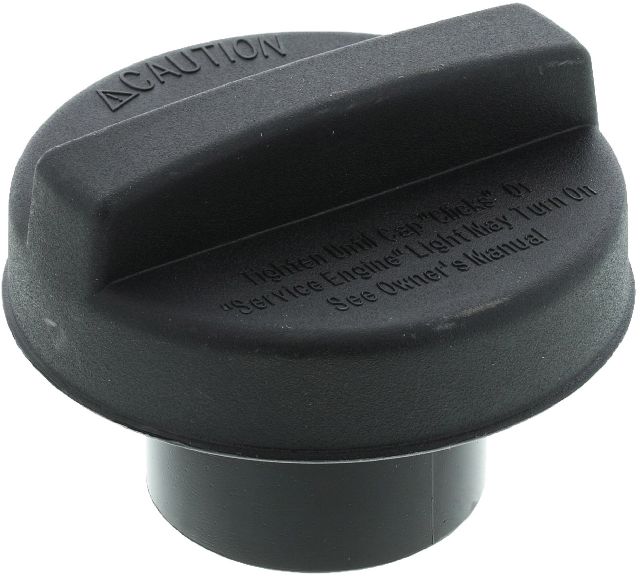
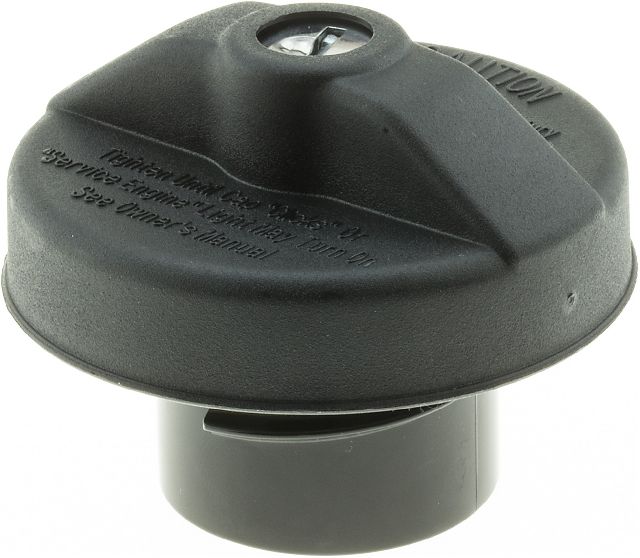
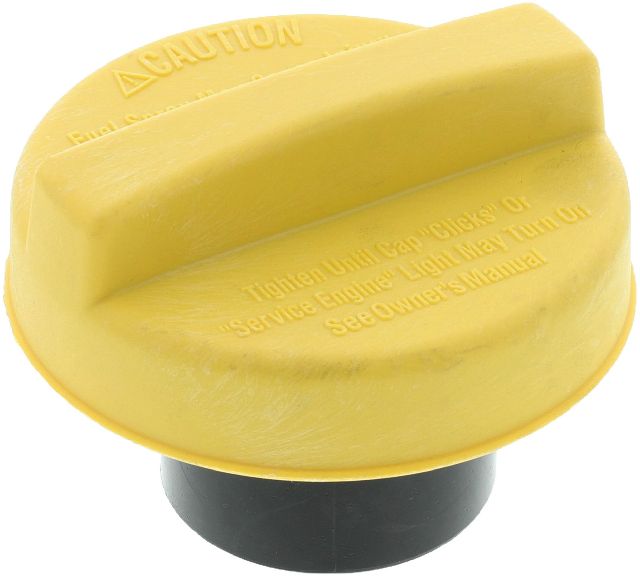
- Always start with the simplest fix: check that your gas cap is tight and its seal is intact. If in doubt, a new OEM Mopar cap (p/n 52124517AA) is a cheap and effective first step.
- The second most likely culprit on this specific van is a cracked rubber EVAP hose. Thoroughly inspect the hoses under the air filter box and the short hoses on top of the charcoal canister.
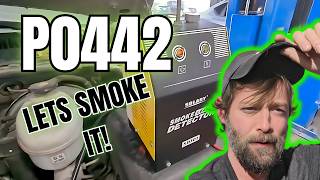
- A smoke test is the most reliable way to find a leak that isn't obvious from a visual inspection.
- If you experience long cranking times immediately after refueling, the purge solenoid is a strong suspect.
What's Unique About the 2001-2007 Dodge Grand Caravan
On this generation of Grand Caravan (and its Chrysler siblings), the EVAP hoses, particularly the rubber sections under the air cleaner box leading to the purge solenoid, are a known weak point and tend to crack over time. While the gas cap is a universal first check for any vehicle with this code, owners of these specific vans frequently find the problem lies in these aged rubber hoses. A thorough visual inspection of these lines is a critical and often successful diagnostic step.
Symptoms You May Notice
- Check Engine Light is on.
- A faint fuel smell may be noticeable, though this is not always present.
- No noticeable impact on drivability.
- In some cases, if the purge valve is stuck open, you may experience a long crank time after refueling.
- Replacing the purge solenoid or charcoal canister before thoroughly checking the gas cap and all EVAP hoses. Hoses are a more frequent and cheaper failure point.
- Using an aftermarket gas cap which may not seal as well as the OEM Mopar part.
Most Likely Causes
- Loose or Faulty Gas Cap 🔴 High Probability This is the most common cause for P0442 on almost any vehicle. The rubber seal on the cap can degrade over time, or the cap may simply not have been tightened correctly after refueling. Aftermarket caps are frequently reported to cause issues, making an OEM cap a recommended replacement.
How to confirm: Ensure the gas cap is tightened until it clicks several times. Inspect the rubber O-ring on the cap for cracks, stiffness, or damage. If the seal is damaged, the cap needs replacement. It is often recommended to use an OEM Mopar cap, as some aftermarket caps may not seal correctly. Also, inspect the fuel filler neck for rust or debris that could prevent a good seal.
Typical fix: Tighten or replace the gas cap.
Est. part cost: $15-$40 - Cracked EVAP Hoses 🔴 High Probability The rubber hoses in the EVAP system become brittle and crack with age and exposure to engine heat. On these vans, a common failure point is the hose leading to the purge solenoid, located under the air filter housing. Another common failure point is the 5/16" hose on top of the charcoal canister.
How to confirm: Visually inspect all accessible EVAP hoses for cracks, especially at connection points and bends. Pay close attention to the hoses around the purge solenoid in the engine bay. A smoke test is the most definitive way to find a small leak if a visual inspection is inconclusive.
Typical fix: Replace the cracked section of the hose. This may involve a pre-formed hose or a generic vacuum hose of the correct diameter (e.g., 5/16").
Est. part cost: $10-$50 - Faulty EVAP Purge Solenoid (or Purge Valve) 🟡 Medium Probability
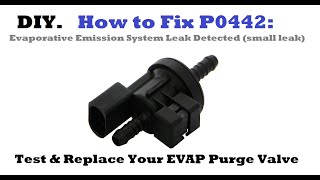
How to confirm: The purge solenoid, located in the engine bay near the radiator support, can get stuck open or closed, or develop a leak. A stuck-open valve can sometimes cause a long crank time after refueling. It can be tested with a handheld vacuum pump to see if it holds vacuum when de-energized, or by applying 12V to see if it clicks open and closed. If you can blow through it when it's de-energized, it has failed.
Typical fix: Replace the purge solenoid.
Est. part cost: $30-$70 - Leaking Leak Detection Pump (LDP) ⚪ Low Probability
How to confirm: The Leak Detection Pump (LDP) is part of the system used to pressurize the EVAP system for leak testing. It is located under the van, behind the steering gear. It can develop leaks itself. A smoke test is the best way to confirm a leak at the LDP.
Typical fix: Replace the Leak Detection Pump.
Est. part cost: $50-$100
Rare But Worth Checking
- Cracked Charcoal Canister: The plastic housing of the charcoal canister (located underneath the vehicle near the fuel tank) can develop cracks from age or impact, causing a leak. Hoses connecting to the canister are a more common failure point than the canister itself.
- Rusted Fuel Filler Neck: In regions where road salt is used, the metal fuel filler neck can rust through, creating a leak in the EVAP system. This is usually accompanied by a P0455 (large leak) code but can start as a small leak. The surface where the gas cap seals can also become rusted and prevent a proper seal.
Diagnosis Steps
- Read the code with an OBD-II scanner to confirm P0442 is present.
- Inspect the gas cap. Remove it, check the seal for cracks or damage, and reinstall it, ensuring it clicks multiple times. Clear the code and drive for a few days to see if it returns. Consider replacing with an OEM Mopar cap if in doubt.
- If the light returns, remove the air cleaner assembly to get a clear view of the purge solenoid and its connecting hoses. Visually inspect these rubber lines for cracks, especially at the bends and connection points.
- Trace and inspect other EVAP hoses, including the lines running to and from the charcoal canister underneath the vehicle, near the fuel tank. A common failure is a short 5/16" hose on top of the canister.
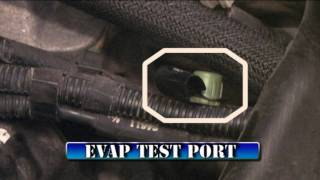
- If no visible leaks are found, the most effective next step is to have a smoke test performed. This involves injecting pressurized smoke into the EVAP system's test port (or disconnecting the purge solenoid line) and watching for where it escapes.
- If the smoke test reveals a leak, replace the faulty component (hose, canister, filler neck, etc.).
- If no leaks are found with the smoke test, suspect a faulty component like the purge solenoid or LDP. The purge solenoid can be tested for leaks with a hand vacuum pump or by checking for long crank times after refueling.
Parts You'll Likely Need
- Gas Cap
(OEM #52124517AA (supersedes 52030433AA))— This is the most frequent cause of a P0442 code due to a worn seal or improper tightening. Using an OEM (Mopar) cap is often recommended for a reliable seal.
Trusted brands: Mopar, Stant, Gates
OEM price range: $25-$40
Aftermarket price range: $15-$25 - EVAP System Hoses/Lines
(OEM #Varies by location; often replaced with generic 5/16" or similar vacuum hose.)— Rubber hoses become brittle and crack over time, especially those exposed to engine heat near the purge solenoid and on top of the charcoal canister.
Trusted brands: Mopar, Dorman, Gates
OEM price range: $20-$60 (for specific sections)
Aftermarket price range: $5-$20 (for bulk hose) - EVAP Purge Solenoid
(OEM #4891741AA (also cross-references to 4669569))— This valve controls the flow of fuel vapors to the engine and can fail by sticking open or developing a leak.
Trusted brands: Mopar, Bosch, Standard Motor Products (SMP)
OEM price range: $50-$90
Aftermarket price range: $30-$70
Related Codes That Often Appear With This One
- P0455 — Indicates a large EVAP leak. The same component failure (like a cracked hose or bad gas cap) can be interpreted as a small or large leak by the PCM depending on the severity. It's common to see both codes together.
- P0456 — Indicates a very small EVAP leak. This is a more sensitive version of P0442, and the causes and diagnostic procedures are nearly identical.
Platform-Specific Known Issues
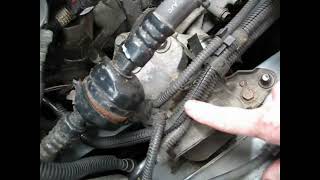
- Cracked Hoses Under Air Box: A known common leak point is the rubber EVAP hose that connects to the purge solenoid, which is located under the air cleaner assembly. The hose cracks from age and heat. A video from Wells Vehicle Electronics specifically identified this as a leak source on a 2002 Caravan. 🎬 Watch: Wells Vehicle Electronics demonstrates this specific Caravan EVAP repair.
- Cracked Hoses at Charcoal Canister: A forum user on DodgeForum.com detailed a successful fix for P0442/P0455 by replacing a cracked 5/16" hose on top of the charcoal canister, which is located under the vehicle.
Mechanic-Grade Diagnostic Values
- EVAP Purge Solenoid Coil Resistance — expected: 14-22 Ohms. Failure: A reading of infinite resistance (open circuit) or zero resistance (short circuit) indicates a failed solenoid coil.
- Leak Detection Pump (LDP) Reed Switch Voltage — expected: 12V (system voltage) when diaphragm is down (switch closed), 0V when diaphragm is up (switch open).. Failure: If the voltage does not change as the pump cycles, or is always 0V or 12V, the internal reed switch is faulty. This is a P1494 code but can be related to a P0442.
Scan Tool Commands That Help
- DRB III or equivalent advanced scanner: EVAP System Test / Forced Monitor — This command initiates the vehicle's onboard EVAP leak test sequence on demand. The scanner will command the purge and vent solenoids and monitor the LDP to determine if the system can seal and hold pressure, providing a pass/fail result without needing to complete a full drive cycle.
- Advanced Bidirectional Scanner: Vent Valve Control (On/Off) — The vent valve is normally open. To perform a smoke test, a technician must command the vent valve closed to seal the system. If the valve doesn't close when commanded, it is faulty and is the source of the leak.
- Advanced Bidirectional Scanner: Purge Valve Control (On/Off or PWM %) — Used to test if the purge valve is stuck open. With the engine running, command the purge valve closed (0%). If a vacuum is still pulled on the EVAP system (monitored via the Fuel Tank Pressure sensor), the valve is mechanically stuck open and must be replaced.
Wiring & Ground Locations
- G101 — On the engine block, near or above the starter motor.. This is a primary engine ground. A poor connection here can cause erratic behavior in various sensors and solenoids controlled by the PCM, including the EVAP system components. While not a direct cause of a leak, a bad ground can cause faulty readings or component operation, potentially leading to incorrect codes.
- EVAP Purge Solenoid Connector — On the purge solenoid, located in the engine bay, typically on the right side of the engine compartment.. This 2-pin connector provides power and control. One pin receives 12V with the ignition on, and the other is a duty-cycled ground provided by the PCM to open the valve. Checking for voltage and a control signal here is a key step in diagnosing a non-responsive purge solenoid.
- Engine Ground Strap — A braided strap connecting the engine block (often near an engine mount) to the vehicle's chassis/frame.. These straps can corrode and break, especially in rust-belt regions. A broken main ground strap can lead to a host of electrical issues, including intermittent problems with PCM-controlled systems like the EVAP solenoids and pumps.
Real Owner Repair Stories
- CarKiller Forum User (2000 Dodge Grand Caravan 3.8L) — Persistent P0442 code.
❌ Tried (didn't work) Replaced gas cap, Replaced vapor canister purge valve solenoid, Replaced dirty vapor canister detection filter, Performed multiple smoke tests with no visible leaks found
✅ What actually fixed it The user did not post a final fix, but the story is valuable because it highlights a scenario where multiple common fixes and even a smoke test failed to resolve the issue, pointing towards a more obscure cause like a faulty LDP or a pinhole in a metal line. - NHTSA ODI #746191 — An owner of a related Dodge vehicle reported taking the vehicle to the dealer three times for the same P0442 error code. Despite the dealer replacing "quite a few emission parts," the persistent nature of the code highlights how difficult this small leak can be to resolve.
"I Checked Everything" — The Actual Cause
- A common scenario where a smoke test shows no leaks is a faulty Leak Detection Pump (LDP) itself. The LDP has an internal diaphragm and seals that are used to pump air and test the system. If the internal diaphragm has a small tear or the internal vent valve doesn't seal properly, it can cause a leak code without showing any external smoke. The smoke test seals the system *externally* but doesn't always verify the internal integrity of the pump itself. A bench test of the LDP is required to confirm this type of failure.
OEM Part Supersession History
52030433AA→52124517AA— Design improvement for better sealing and durability.
Diagnostic Flowchart
Real Owner Stories
Aggregated from forums and TSBs cited above. Mileages and costs reflect what owners reported in those sources.
2003 Dodge Grand Caravan Sport 3.8L
Symptoms: Check Engine Light with code P0442.
What fixed it: Replaced two cracked/dry-rotted hoses (#14 and #15 in a diagram) leading to the EVAP canister located under the driver's seat.
Cost: $13
Source hint: P0442 - Small Evap Leak - DodgeForum.com
2002 Dodge Caravan 3.3L — 104000 miles
Symptoms: Check Engine Light with codes P0442 (small leak) and P0455 (large leak).
What fixed it: A smoke test identified a leaking gas cap and a leak in the hose leading to the purge solenoid under the air cleaner box.
Source hint: WellsVE YouTube comment
Dodge Caravan
Symptoms: P0455 and P0442 codes remained after trying other common fixes.
What fixed it: Replaced a small, split 5/16" hose on top of the charcoal canister.
Source hint: DodgeForum.com - P0455 P0442 evap evaporative emissions leak fix (user 'serge')
Related OBD-II Codes
Frequently Asked Questions
Why does my 2001-2007 Dodge Grand Caravan have a long crank time after refueling with a P0442 code?
Should I buy an aftermarket gas cap to fix the P0442 code on my Caravan?
Where are the most common EVAP hose leaks located on the 3.3L V6 Grand Caravan?
What is the Leak Detection Pump (LDP) and where is it on my Dodge Caravan?
Will a P0442 code affect how my 3.3L Dodge Grand Caravan drives?
Are there other Chrysler vehicles that share this exact P0442 issue?
Helpful Videos
Used OEM Parts in Stock

New Aftermarket Parts Available


The information in this article is provided for general reference and educational purposes only. Vehicle specifications, procedures, and part compatibility can vary by production date, trim level, and region. Always consult your vehicle's factory service manual and verify part numbers before purchasing or performing repairs. Safety-critical components such as airbags, seat belts, and braking systems should be installed by a qualified professional.
- Dodge Grand Caravan:
- 🎬 Helpful Videos
- 🛍️ Shop This Part
- What's Unique About the 2001-2007 Dodge Grand Caravan
- Symptoms You May Notice
- Most Likely Causes
- Rare But Worth Checking
- Diagnosis Steps
- Parts You'll Likely Need
- Related Codes That Often Appear With This One
- Platform-Specific Known Issues
- Mechanic-Grade Diagnostic Values
- Scan Tool Commands That Help
- Wiring & Ground Locations
- Real Owner Repair Stories
- "I Checked Everything" — The Actual Cause
- OEM Part Supersession History
- Diagnostic Flowchart
- Real Owner Stories
- 2003 Dodge Grand Caravan Sport 3.8L
- 2002 Dodge Caravan 3.3L — 104000 miles
- Dodge Caravan
- Related OBD-II Codes
- Frequently Asked Questions
- 🎟️ Get 5% Off