

P0442 on 2014-2018 BMW X5: EVAP Small Leak Causes and Fixes
For a 2014-2018 BMW X5 (F15), a P0442 code is most often caused by a faulty fuel tank vent valve (purge valve) or a failing DMTL pump. While a loose gas cap is a common cause on many cars, on this BMW platform, these other components are more frequent culprits. A professional smoke test is the best way to confirm the leak's location, with a common failure point being a cracked EVAP hose in the rear passenger wheel well.
- P0442 on a 2014-2018 X5 indicates a small leak in the EVAP (emissions) system.
- The most common causes are a faulty fuel tank vent (purge) valve, a failing DMTL pump, or a cracked hose in the rear passenger wheel well.
- A loose gas cap is a less frequent cause on this model but is an easy first check.
- A professional smoke test is the most reliable method for pinpointing the leak's exact location.
- The vehicle is safe to drive, but the issue should be fixed to pass emissions testing and prevent environmental impact.
What's Unique About the 2014-2018 BMW X5
Unlike many vehicles where a loose gas cap is the primary cause for EVAP codes, modern BMWs like the F15 X5 use a more complex system for leak detection called the Diagnostic Module Tank Leakage (DMTL) pump. 🎬 Watch: Learn how the BMW DMTL system detects micro leaks. This system includes a small pump that pressurizes the fuel system to check for leaks when the vehicle is off. The DME (engine computer) monitors the electrical current drawn by the pump; a leak is inferred if the pump has to work harder than expected to maintain pressure. As a result, while a faulty gas cap is possible, issues with components like the DMTL pump itself, the fuel tank vent valve (purge valve), or cracked EVAP hoses are more common sources for a P0442 code on this specific platform.
Generation note: The 2014-2018 BMW X5 belongs to a single generation, the F15. The diagnostic principles and common parts are consistent across this year range and also apply to its platform-mate, the F16 X6.
Symptoms You May Notice
- Check Engine Light is on
- A faint smell of fuel, particularly around the rear of the vehicle or when parked in a garage (less common).
- Difficulty starting the engine immediately after refueling (indicative of a stuck-open purge valve).
- Rough or unstable idle (can be caused by a vacuum leak from a faulty purge valve).
- "Check fuel filler cap" message on the iDrive screen.
- Immediately replacing the gas cap without inspection. While it's a possible cause, on the F15 X5 it's less likely to be the root problem than the vent valve or DMTL pump.
- Replacing parts without performing a smoke test. A smoke test is the most definitive way to locate the physical source of a leak and can save hundreds of dollars in unnecessary parts.
Most Likely Causes
- Faulty Fuel Tank Vent Valve (Purge Valve) 🔴 High Probability This valve is electronically controlled and cycles frequently to purge stored fuel vapors into the engine for combustion. Over time, it can fail to seal completely, creating a small leak path that the DMTL system detects. It can get stuck open or closed.
How to confirm: A technician can command the valve to close with a diagnostic tool and then use a smoke machine to see if smoke passes through it. It can also be removed and tested manually by applying voltage to see if it clicks and by trying to blow through it when de-energized (it should be closed). A stuck-open valve often causes difficulty starting after filling the gas tank.
Typical fix: Replacement of the fuel tank vent valve. It is typically located in the engine bay near the intake manifold.
Est. part cost: $50-$100 - Faulty DMTL Pump 🟡 Medium Probability The DMTL pump is a small electric motor and pump assembly located near the charcoal canister, typically in the rear driver's side wheel well area. The pump motor can fail, or the assembly can develop a crack in its housing, leading to either a direct leak or an inability to perform the EVAP test correctly.
How to confirm: Diagnosis requires a BMW-specific scan tool (like ISTA) to run the EVAP system test. If the pump fails to build pressure, its internal self-test fails, or the current draw is out of specification, it will often set a specific DMTL-related fault code in addition to the generic P0442. A smoke test can also reveal a cracked pump housing.
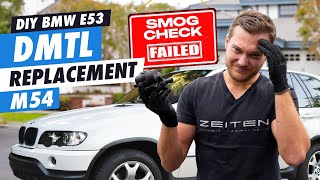
Typical fix: Replacement of the DMTL pump assembly. This is often a straightforward DIY job once the wheel and fender liner are removed. 🎬 See this walkthrough for replacing the DMTL pump assembly.
Est. part cost: $100-$200 - Cracked or Disconnected EVAP Hoses 🟡 Medium Probability Plastic and rubber hoses become brittle with age and exposure to heat cycles. A very common failure point on the F15 X5 is a specific plastic EVAP line located in the rear passenger-side wheel well area, which is prone to developing hairline cracks.
How to confirm: The most effective method is a smoke test. A technician injects smoke into the EVAP system and looks for where it escapes. Visual inspection of the hose in the rear passenger wheel well is highly recommended, as this is a known failure point.
Typical fix: Replacement of the specific cracked hose or line. In some cases, a temporary repair can be made with tape, but replacement is the correct long-term solution.
Est. part cost: $20-$80 - Worn or Loose Fuel Cap ⚪ Low Probability While less common on BMWs with DMTL systems than other makes, the rubber O-ring on the gas cap can dry out, crack, and fail to create a perfect seal over time. It's also possible the cap was not tightened correctly (until it clicks) after refueling.
How to confirm: First, ensure the cap is tightened until it clicks at least once. Inspect the rubber seal for cracks, dirt, or damage. Replacing the cap with a genuine OEM part is an inexpensive and easy diagnostic step before moving to more complex procedures.
Typical fix: Replacement of the fuel cap.
Est. part cost: $25-$50
Rare But Worth Checking
- Cracked Charcoal Canister: The charcoal canister, located in the rear of the vehicle, can be damaged by road debris or develop hairline cracks from age, creating a leak. This is usually found during a smoke test if other more common components check out.
- Leaking Fuel Tank Sending Unit Gasket: The seal at the top of the fuel tank where the fuel pump/sending unit is installed can degrade and cause a small EVAP leak. This is often accompanied by a strong fuel smell inside or outside the car, especially after filling the tank.
- Corroded Fuel Filler Neck: In regions with heavy road salt use, the metal surface where the gas cap O-ring seals can corrode, creating an uneven surface that prevents a proper seal.
Diagnosis Steps
- Read the codes with a BMW-compatible OBD-II scanner to confirm P0442 and check for any other related codes, especially DMTL-specific ones.
- Inspect the fuel cap. Remove it, check that the seal is pliable and free of cracks, and clean the sealing surface. Reinstall and tighten until it clicks. Clear codes and drive for a few days to see if the light returns.
- Perform a visual inspection of all accessible EVAP hoses. Pay special attention to the rear passenger-side wheel well area for a known-to-fail plastic line.
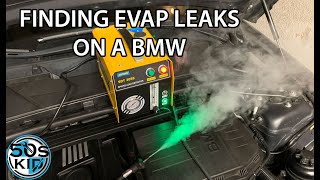
- The most effective next step is to have a professional perform a smoke test. This involves injecting vaporized smoke into the EVAP system (usually via a port near the purge valve in the engine bay) to quickly and accurately find the source of the leak.
- Using a BMW-compatible scan tool, a technician can actuate the fuel tank vent valve (purge valve) and the DMTL pump to test their function individually. This can identify a faulty valve or pump motor.
- If a faulty purge valve is suspected (e.g., hard starting after refueling), remove it and test manually. It should be closed and hold vacuum/pressure when not energized.
- Based on the results of the smoke test and component tests, replace the faulty part. It is recommended to use OEM or high-quality OEM-supplier parts (like Bosch) for these components.
- After the repair, clear the codes and perform a complete EVAP drive cycle to allow the system to self-test and confirm the fix. This may take several days of normal driving.
Parts You'll Likely Need
- Fuel Tank Vent Valve (Purge Valve)
(OEM #13907621174)— This valve is a common failure point for small EVAP leaks on this platform due to its constant use. A newer part number may be 13907636156.
Trusted brands: Bosch, Genuine BMW, Vemo
OEM price range: $70-$110
Aftermarket price range: $40-$70 - EVAP Leak Detection Pump (DMTL)
(OEM #16137193479)— The pump itself can fail or develop leaks, causing it to incorrectly report a system leak. This part number has superseded older versions like 16136764191 and 16136752551.
Trusted brands: Bosch, Genuine BMW
OEM price range: $150-$200
Aftermarket price range: $90-$140 - Fuel Filler Cap
Related Codes That Often Appear With This One
- P0456 — P0456 indicates a 'very small leak', while P0442 indicates a 'small leak'. They are closely related and point to the same set of potential failures, just a different leak rate detected by the system. It's common to see one or the other for the same root cause.
- 2A15, 2A16, 2A17, P1447 — These are BMW-specific fault codes related to the DMTL system. 2A15/2A16 correspond to small leaks, while 2A17 or P1447 can indicate a DMTL module or pump failure (e.g., pump current too high), which helps pinpoint the DMTL pump as the cause.
- P0440 — This is a general EVAP system malfunction code. It can appear alongside P0442, indicating a general fault in addition to the detected small leak.
Technical Service Bulletins (TSBs) & Recalls
- While no specific TSB for the F15 X5 and P0442 was found, general EVAP diagnostic bulletins like GM's 21-NA-124 provide universal advice applicable here: verify all connections, check for damage, and use a smoke machine, as some leaks only appear under pressure or vacuum.
Platform-Specific Known Issues
- Cracked EVAP Hose in Rear Passenger Wheel Well: A specific hard plastic EVAP line located in the upper portion of the rear passenger-side wheel well is a very common failure point. It becomes brittle over time and develops a small crack, which is often found easily with a smoke test. A user on Bimmerpost (xbimmers) confirmed this was the cause of their P0442 after a smoke test revealed the crack.
Mechanic-Grade Diagnostic Values
- Fuel Tank Vent Valve (Purge Valve) Solenoid Resistance — expected: Approximately 27-29 Ohms.. Failure: A significantly higher reading, such as 190 Ohms or an open circuit (OL), indicates a bad valve solenoid.
- DMTL Pump Current Draw — expected: The DME monitors the pump's current draw during the test cycle. A specific value is not published, as the DME compares the measured current to a reference value for a known 0.5mm leak.. Failure: If the current draw is too high or too low compared to the expected value for a sealed system, it indicates a leak or a faulty pump. This will trigger a DMTL-specific fault code.
Hidden / Shadow Codes Worth Checking
- 190302: Tank ventilation and purge air system, fine leak: Leakage greater than 0.5 mm. This is a BMW-specific code that directly corresponds to the generic P0442 code. (see via BMW-specific diagnostic software like ISTA or advanced aftermarket scanners (e.g., BimmerLink, Foxwell for BMW).)
- 190F08: Tank ventilation system, major leak detected. While this often points to a larger leak (like P0455), it can sometimes be triggered alongside or instead of a small leak code depending on the exact test conditions and failure mode. (see via BMW-specific diagnostic software like ISTA or advanced aftermarket scanners.)
Scan Tool Commands That Help
- ISTA (Integrated Service Technical Application): EVAP system test plan (ABL) — This is the dealership-level procedure to diagnose EVAP leaks. The test plan automatically commands the DMTL pump to run, closes the appropriate valves, and analyzes the system's ability to hold pressure, providing a pass/fail result and often suggesting the next steps.
- ISTA or advanced bidirectional scanner: Activate Tank Vent Valve (Purge Valve) — Used during a smoke test to manually close the purge valve, isolating the rest of the EVAP system. If smoke passes through the valve when commanded closed, the valve is faulty.
- ISTA or advanced bidirectional scanner: Activate DMTL pump changeover valve — During a smoke test, the system's main vent is normally open. To seal the system for the test, the changeover valve on the DMTL pump must be commanded closed. This is a critical step; without it, smoke will simply exit the vent, and no leak can be found.
Wiring & Ground Locations
- DMTL Pump Connector — On the DMTL pump itself, located in the rear driver's side wheel well area, near the charcoal canister.. Corrosion or damage to this connector or its wiring can prevent the DMTL pump from running its test, leading to DMTL-specific fault codes that may accompany P0442.
- Fuel Tank Vent Valve (Purge Valve) Connector — In the engine bay, connected to the purge valve which is typically mounted on or near the intake manifold.. A poor connection here can cause a P0444 (Purge Control Circuit) code, but intermittent connection issues could also prevent the valve from sealing properly, contributing to a P0442 leak code.
Real Owner Repair Stories
- Bimmerpost user on F15/F16 Forum (2015-2018 BMW X5 (F15), over 100k miles) — Check Engine Light with P0442 code.
❌ Tried (didn't work) Replacing the gas cap.
✅ What actually fixed it A smoke test revealed a small crack in a plastic/rubber EVAP hose located in the upper rear passenger-side wheel well. The hose was temporarily repaired with tape to confirm the fix before replacement. - Bimmerpost user on 3-Series (E90) Forum (BMW E90 (similar EVAP system design)) — P0442 code.
❌ Tried (didn't work) Replacing the gas cap., Inspecting common hose chafe points.
✅ What actually fixed it A smoke test revealed a hole chewed through the fuel breather hose by a mouse that had built a nest above the wheel well liner. The user patched the hose to resolve the issue.
"I Checked Everything" — The Actual Cause
- In a case involving a similar BMW platform (F25 X3), a user reported a persistent 190F08 code (related to EVAP) even after replacing the purge valve, DMTL pump, and gas cap, with smoke tests showing no leaks. The final root cause was discovered to be the electrical connectors for two differential pressure sensors being swapped. The connectors were identical and located near each other, making this an easy mistake to make during a previous repair. Swapping them back to their correct sensors resolved the fault.
OEM Part Supersession History
16136764191, 16136752551→16137193479— Component revision and standardization across multiple BMW platforms.
Diagnostic Flowchart
Real Owner Stories
Aggregated from forums and TSBs cited above. Mileages and costs reflect what owners reported in those sources.
2014-2018 BMW X5 (F15)
Symptoms: Got sick of the P0442 code repeatedly popping up.
What fixed it: A smoke test revealed a small crack in a hard plastic EVAP hose located in the rear passenger upper wheel well. Replacing this specific line resolved the issue.
Source hint: Bimmerpost.com (xbimmers F15/F16 Forum) - user 'EDWYER' thread titled 'FIXED! CEL- Small evap leak (P0442)'
BMW E90
Symptoms: Received a gas cap warning message, which was later followed by the P0442 check engine light code.
What fixed it: Replaced the DMTL pump assembly after the gas cap warning progressed to a hard code.
Source hint: Bimmerpost.com (E90 Forum) thread detailing diagnostic journey
Related OBD-II Codes
Frequently Asked Questions
Is there a specific EVAP hose that commonly fails on the 2014-2018 BMW X5 causing P0442?
My F15 X5 is hard to start right after I put gas in it, and I have a P0442 code. What does this mean?
I'm getting a 'Check fuel filler cap' message on my iDrive screen along with the check engine light. Should I just replace the cap?
Are there any specific TSBs for the P0442 code on the F15 BMW X5?
Where is the DMTL pump located on my 2014-2018 BMW X5?
What brand of replacement parts should I use for the purge valve or DMTL pump on my X5?
Helpful Videos
Used OEM Parts in Stock


New Aftermarket Parts Available



The information in this article is provided for general reference and educational purposes only. Vehicle specifications, procedures, and part compatibility can vary by production date, trim level, and region. Always consult your vehicle's factory service manual and verify part numbers before purchasing or performing repairs. Safety-critical components such as airbags, seat belts, and braking systems should be installed by a qualified professional.
- BMW X5:
- 🎬 Helpful Videos
- 🛍️ Shop This Part
- What's Unique About the 2014-2018 BMW X5
- Symptoms You May Notice
- Most Likely Causes
- Rare But Worth Checking
- Diagnosis Steps
- Parts You'll Likely Need
- Related Codes That Often Appear With This One
- Technical Service Bulletins (TSBs) & Recalls
- Platform-Specific Known Issues
- Mechanic-Grade Diagnostic Values
- Hidden / Shadow Codes Worth Checking
- Scan Tool Commands That Help
- Wiring & Ground Locations
- Real Owner Repair Stories
- "I Checked Everything" — The Actual Cause
- OEM Part Supersession History
- Diagnostic Flowchart
- Real Owner Stories
- 2014-2018 BMW X5 (F15)
- BMW E90
- Related OBD-II Codes
- Frequently Asked Questions
- 🎟️ Get 5% Off