

P0441 on 2004-2020 Toyota Sienna: EVAP Incorrect Purge Flow Causes and Fixes
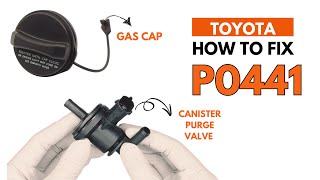
On a 2004-2020 Toyota Sienna, code P0441 is most often caused by a faulty purge valve (VSV) in the engine bay or a loose/worn gas cap. The purge valve is a relatively inexpensive part and a common DIY fix. For 2004-2007 models, this code often appears with P0442 and P0446, pointing directly to the purge valve per a Toyota TSB.
- P0441 on a Toyota Sienna almost always points to a problem with either the gas cap or the purge valve (VSV) in the engine bay.
- Before buying any parts, check that your gas cap is tight and the seal is in good condition.
- The purge valve is relatively easy to access and test. A failure to 'click' when voltage is applied or being stuck open/closed are signs it needs replacement.
- If you also have codes P0442 and P0446, the purge valve is the extremely likely cause, especially on 2004-2007 models.
- Avoid replacing the expensive charcoal canister unless it has been confirmed to be cracked, clogged, or a smoke test points directly to it.
What's Unique About the 2004-2020 Toyota Sienna

On the Toyota Sienna, particularly the 2004-2010 generation, the P0441 code is very frequently caused by a sticking purge valve, also known as a Vacuum Switching Valve (VSV), located in the engine compartment. While other components like the charcoal canister can fail, the purge valve is a well-documented weak point and should be one of the first components tested. Toyota issued Technical Service Bulletin (TSB) EG048-07 for 2004-2007 Siennas, which specifically states that when codes P0441, P0442, and P0446 appear together, the cause is likely a sticking purge VSV.
Generation note: This guide covers the second generation (XL20; 2004-2010) and third generation (XL30; 2011-2020) of the Toyota Sienna. The most common causes are consistent across both generations, but the charcoal canister assembly and some hose routing differ. A technical service bulletin (TSB EG048-07) was issued for the 2004-2007 models specifically pointing to the purge VSV as the cause for P0441, P0442, and P0446 codes appearing together. For 2007 models, there was a mid-year part split for the vapor canister, requiring owners to check their vehicle's manufacturing date.
Symptoms You May Notice
- Check Engine Light is on
- A slight fuel odor may be noticeable in rare cases.
- No noticeable impact on drivability in most cases.
- Slightly rough or surging idle in some cases if the purge valve is stuck open.
- Difficulty starting the engine right after refueling.
- Loss of power or a sensation similar to the transmission switching gears (reported in NHTSA ODI #10314949).
- Abnormal noises from the fuel pump area (reported in NHTSA ODI #11331260).
- Replacing the expensive charcoal canister when the actual fault is the inexpensive purge valve in the engine bay. Always check for charcoal pellets in the lines before condemning the canister.
- Replacing other EVAP components without first checking for a loose or faulty gas cap.
- Chasing a vacuum leak with a smoke machine when the purge valve itself is simply stuck and not leaking externally.
Most Likely Causes

- Faulty Purge Valve (VSV - Vacuum Switching Valve) 🔴 High Probability This specific valve is a known failure point on many Toyota models of this era, including the Sienna. It can get stuck open or closed over time due to internal wear or contamination from a failing charcoal canister.
How to confirm: Locate the valve in the engine bay. With the engine off, disconnect the valve and try to blow through it; it should be closed (no air passes). Apply 12V directly to the valve's two pins; you should hear a distinct 'click' and now be able to blow through it. If it fails either test, it is faulty. A user on SiennaChat.com noted this test took only 10 minutes to confirm the bad valve.
Typical fix: Replace the purge valve. It is typically mounted to the engine or firewall with one or two bolts and has two vacuum lines and an electrical connector. This is a common DIY repair that can be done in under 30 minutes.
Est. part cost: $30-$90 - Loose or Faulty Gas Cap 🟡 Medium Probability The gas cap seal can degrade over time, preventing the EVAP system from holding a proper seal. While this more commonly causes leak codes (P0455/P0456), the ECU can sometimes interpret the resulting pressure behavior during a purge cycle as a flow fault.
How to confirm: Inspect the gas cap for cracks in the plastic or a dry, brittle O-ring seal. Ensure it is tightened until it clicks multiple times. If in doubt, it's an inexpensive part to replace as a first step. A Reddit user with a P0441 on a Highlander tried replacing the gas cap first as a cheap diagnostic step.
Typical fix: Replace the gas cap with a new OEM or high-quality aftermarket part. Avoid cheap, unbranded caps as they often have poor seals.
Est. part cost: $15-$35 - Cracked or Disconnected EVAP Hoses ⚪ Low Probability The rubber vacuum hoses, especially those in the engine bay connected to the purge valve, can become brittle and crack due to age and heat cycles, causing vacuum leaks that disrupt purge flow. On a 2005 Sienna, a technician found that heat had caused all the EVAP lines near the engine to become brittle and crumble.
How to confirm: Visually inspect all accessible EVAP vacuum lines between the purge valve, intake manifold, and the lines running to the rear of the vehicle. A smoke test is the most effective way to find small cracks or leaks that are not visible to the naked eye.
Typical fix: Replace the cracked or broken section of hose. Hoses can be purchased by the foot from auto parts stores.
Est. part cost: $5-$20 - Failed Charcoal Canister Assembly ⚪ Low Probability The canister can become saturated with fuel if the gas tank is habitually over-filled ('topped off'). This can clog the canister or, more critically, cause charcoal pellets to break loose and travel down the purge line, jamming the purge valve open or closed.
How to confirm: This is usually diagnosed after all other components have been checked. A key sign is finding small black charcoal pellets inside the vacuum lines or the purge valve itself during inspection. If pellets are present, the canister must be replaced.
Typical fix: Replace the entire charcoal canister assembly. This part is located near the fuel tank, under the vehicle. All EVAP lines should be blown out with compressed air to clear any stray charcoal pellets before installing the new parts.
Est. part cost: $250-$450
Rare But Worth Checking
- Faulty EVAP Vent Valve/Solenoid: This valve is part of the charcoal canister assembly on most Siennas. If it fails, it usually sets a P0446 code, but it can sometimes contribute to a P0441 if it affects the system's ability to test the purge flow correctly.
- Faulty Fuel Tank Pressure (FTP) Sensor: The ECM uses the FTP sensor to verify that purge is occurring by monitoring for a change in tank pressure. If the sensor is faulty and not reporting pressure changes correctly, the ECM may falsely conclude there is a flow problem and set P0441. This will usually be accompanied by other pressure sensor-specific codes (e.g., P0450-P0454).
- Engine Control Module (ECM): In rare instances, the ECM itself may fail to process EVAP signals correctly. NHTSA ODI #10314949 describes a case where P0441 was resolved by replacing the Engine Control Module.
Diagnosis Steps

- Read the code with an OBD-II scanner to confirm P0441 and check for any other related EVAP codes like P0442, P0446, or P0455.
- Inspect the gas cap. Ensure it is tightened properly (until it clicks) and check the rubber seal for cracks or damage. If it looks worn, replace it with an OEM cap.
- Clear the codes and drive the vehicle for a few days to see if the light returns. If it does, proceed with further diagnosis.
- Locate the purge valve (VSV) in the engine compartment. It's a small black valve with an electrical connector and two vacuum hoses, typically on top of the engine.
- Disconnect the vacuum hose from the purge valve that comes from the charcoal canister. Inspect the hose and the valve's port for black charcoal pellets. If found, the charcoal canister has failed and must be replaced along with the purge valve.
- Test the purge valve. With the engine off, disconnect the hose coming from the canister and try to blow through the valve; it should be closed. Apply 12V to the electrical pins; you should hear a click and be able to blow through it. If it fails either test, it needs replacement.
- If the purge valve tests good and no charcoal is found, inspect the vacuum hoses connected to the purge valve and the surrounding area for any obvious cracks, disconnections, or brittleness.
- If the valve and hoses are good, the next step is a smoke test to check the entire EVAP system for leaks that may not be visible, including the lines to the canister and the canister itself.
- If no leaks are found, the charcoal canister or its integrated valves may be faulty, though this is less common for a P0441 code alone. Note that replacing the leak detection pump and purge solenoid does not always resolve the issue if other leaks persist (NHTSA ODI #11415574).
Parts You'll Likely Need

- Vapor Canister Purge Valve / Solenoid (VSV)
(OEM #90910-12276 (Superseded by 90910-TC001))— This is the most common failure part for code P0441 on the Toyota Sienna. It gets stuck open or closed, causing the incorrect purge flow. The original part 90910-12276 has been replaced by the updated part 90910-TC001.
Trusted brands: Toyota (OEM), Denso, Standard Motor Products (SMP)
OEM price range: $60-$90
Aftermarket price range: $30-$60 - Fuel Cap
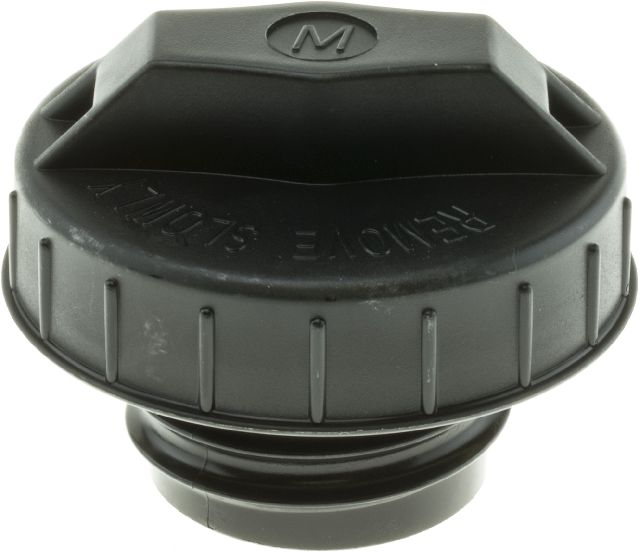
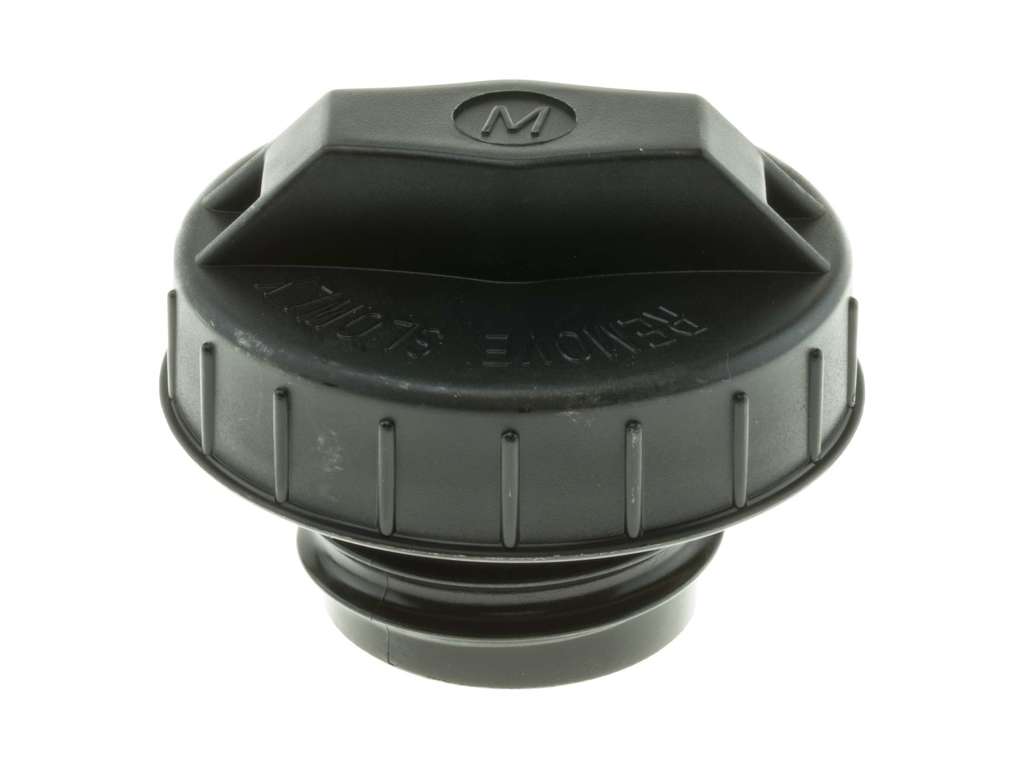
(OEM #77300-06040)— A worn seal on the gas cap can cause EVAP system pressure issues. It's an inexpensive and easy first step in diagnosis.
Trusted brands: Toyota (OEM), Stant
OEM price range: $25-$35
Aftermarket price range: $15-$25 - Vapor Canister Assembly
(OEM #77740-08042 (Example for 2007-2010 models, part number varies by year))— Needed if the canister is cracked, saturated with fuel, or has released charcoal pellets into the EVAP lines. Location varies by generation; it is near the fuel tank under the vehicle.
Trusted brands: Toyota (OEM)
OEM price range: $250-$450
Aftermarket price range: $150-$300
Related Codes That Often Appear With This One
- P0446 — Stands for 'Evaporative Emission Control System Vent Control Circuit'. This code often appears with P0441 on 2004-2007 Siennas when the purge VSV assembly is failing, as noted in TSB EG048-07.
- P0442 — Stands for 'Evaporative Emission System Leak Detected (Small Leak)'. A failing valve can sometimes be interpreted by the system as a small leak, causing both codes to appear. The same TSB also applies if this code is present with P0441 and P0446.
- P0455 — Stands for 'Evaporative Emission System Leak Detected (Gross Leak)'. If a purge valve is stuck wide open, it can be flagged as a gross leak in addition to the incorrect flow. NHTSA ODI #11703613 and #11331260 both document P0441 appearing alongside P0455.
- P0171 — System Too Lean. This often appears with P0441 when an EVAP fault causes an unmetered air leak into the intake (NHTSA ODI #11415574).
- P0505 — Idle Control System Malfunction. This can be triggered alongside P0441 if the incorrect purge flow disrupts the engine's idle stability (NHTSA ODI #11703613).
Technical Service Bulletins (TSBs) & Recalls
- TSB EG048-07: For 2004-2007 Sienna models, this bulletin addresses a condition where codes P0441, P0442, and P0446 are set simultaneously. The recommended fix is to replace the EVAP purge VSV (the purge valve in the engine bay).
Platform-Specific Known Issues
- TSB for P0441, P0442 & P0446: Technical Service Bulletin EG048-07 for 2004-2007 models indicates that codes P0441, P0442, and P0446 appearing together are likely due to a sticking EVAP purge VSV.
- Forum Discussion on SiennaChat.com: Multiple threads on the SiennaChat.com forum describe owners successfully resolving the P0441 code by replacing only the purge valve (VSV) in the engine bay. Many describe it as a 15-30 minute job.
- Charcoal Canister Contamination: A known failure pattern involves the charcoal canister breaking down internally, sending black plastic pellets into the purge lines and clogging the purge valve. If these pellets are found, both the canister and the valve must be replaced.
Mechanic-Grade Diagnostic Values
- EVAP Pressure Change During Purge — expected: The ECM expects to see a pressure change greater than 0.1 kPa-g (0.75 mmHg-g) when the purge operation starts.. Failure: If the pressure change is less than this threshold, the ECM flags an incorrect purge flow condition.
Hidden / Shadow Codes Worth Checking
- Mode $06, Test ID $39: This monitor test specifically checks the EVAP Purge Flow. A failure here can precede a P0441 code or confirm the fault is with the purge system itself, rather than a leak. The data will show a measured value against a min/max limit. (see via A professional scan tool capable of displaying Mode $06 data.)
Scan Tool Commands That Help
- Toyota Techstream: Active Test: Control the Purge VSV — This allows a technician to manually command the purge valve open and closed while the engine is running to verify its mechanical and electrical operation. You can monitor fuel trims or system pressure to see if the valve responds to the command.
- Toyota Techstream: Utility: EVAP System Check (Automatic Mode) — This is a comprehensive, automated test that commands the various EVAP solenoids and monitors the fuel tank pressure sensor to check the entire system for leaks and flow issues. It can confirm a fix or help pinpoint a problem area if initial checks are inconclusive.
Wiring & Ground Locations
- Purge Valve (VSV) Connector — On top of the engine, typically near the intake manifold, for both 2nd (XL20) and 3rd (XL30) generations.. This is the electrical connection for the most common failure part. One pin should have 12V with the key on, and the other is the ground-side control from the ECM. Checking for voltage here is a key step if the valve doesn't 'click' when manually energized.
- Charcoal Canister Assembly — On 2004-2010 models, it is located under the vehicle near the fuel tank, roughly beneath the driver's side area. For earlier models (pre-2004), it was sometimes located in the engine bay.. Knowing the canister's location is critical if you need to inspect it for damage, check for loose charcoal pellets, or test the attached vent valve.
Real Owner Repair Stories
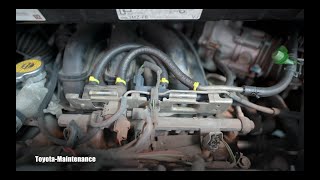
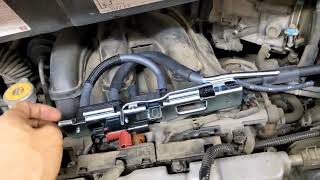
- YouTube channel 'Toyota Maintenance' (2005 Toyota Sienna CE with 179,000 miles) — Check Engine Light. Initially had codes P0442 (small leak) and P0456 (very small leak).
❌ Tried (didn't work) The initial problem was found to be rotted and crumbled vacuum hoses in the engine bay due to heat, which were replaced.
✅ What actually fixed it After replacing the hoses, the Check Engine Light returned a few months later with codes P0441 and P0446. The fix for these codes was replacing the purge valve (VSV) located in a bank of three similar valves in the engine compartment. - NHTSA ODI #11651658 — An owner reported that the P0441 code appeared alongside ABS, Brake, and Traction Control lights. The dealer initially indicated the issue might be covered under a specific customer service program.
OEM Part Supersession History
90910-12276→90910-TC001— Standard part update/revision by Toyota. The new part is a direct replacement.
Heads up: No incompatibility reported. 90910-TC001 is the correct current replacement for the original 90910-12276.
Model Year Variations Within This Range
- 2004-2010 (XL20) vs 2011-2020 (XL30): The purge valve (VSV) remains in a similar, accessible location in the engine bay. However, the charcoal canister on the XL20 (2nd gen) is located under the vehicle near the driver's side area, while on earlier (pre-2004) Siennas it was sometimes in the engine bay. The canister design and associated vent valves also differ between generations.
- 2007: Toyota used two different vapor canister designs during the 2007 model year. Vehicles produced up to March 2007 use a different canister (OEM 77740-08020) than those produced from April 2007 onward (OEM 77740-08060). It is critical to check the vehicle's manufacturing date before ordering a replacement canister.
Diagnostic Flowchart
Other Known Issues on This Vehicle
Issues unrelated to this code that are worth knowing about as an owner of this generation:
- Power Sliding Door Cable Failure 🔴 High — Extremely common across all generations. The cable frays and snaps, jamming the door. Onset can be anywhere from 50,000 to 150,000 miles. (Ref: TSB T-SB-0141-18 for 2011-2018 models; Safety Recall for 2011-2016 models.)
- Ruptured VVT-i Oil Line (2GR-FE Engine) 🔴 High — Affects 2007-2010 Siennas with the 3.5L V6. The original rubber section of the oil line can burst, causing rapid and catastrophic oil loss, leading to engine seizure. (Ref: Toyota issued a Limited Service Campaign (LSC 90K) to replace the rubber line with an all-metal one (Part No. 15772-31030).)
- Cracked Dashboard 🟡 Low — Very common on the 2nd generation (2004-2010), especially in warmer climates. The dash material becomes brittle and cracks. (Ref: A warranty enhancement program was issued but has since expired for most vehicles.)
- Intermediate Steering Shaft Clunk 🟠 Medium — Common on 2nd and 3rd generation models. The U-joint in the shaft wears out, causing a clunking or binding feeling in the steering wheel during low-speed turns. (Ref: TSB POL06-03 was issued for earlier models. Updated parts are available (e.g., 45220-08030 for 2011-2019).)
- EVAP Canister Failure 🟠 Medium — More common on the 2nd generation (2004-2010). The canister assembly itself fails, often leading to a variety of EVAP codes, not just P0441.
Used vs. New Parts: Buying Guide for This Vehicle
When a used part is the smart pick: A used OEM purge valve (VSV) from a low-mileage donor vehicle can be a reliable and cost-effective option, as it is a simple solenoid. Complete charcoal canister assemblies are also viable used parts, especially since aftermarket versions can have compatibility issues with Toyota's sensitive EVAP monitoring system.
Donor-vehicle mileage cap: roughly under 80000 miles for the part to have meaningful remaining life.
What to inspect on the donor part:
- For a purge valve, ensure the electrical connector is not cracked or corroded.
- For a charcoal canister, inspect the plastic housing for any cracks, especially around mounting tabs and hose ports.
- Check the donor vehicle's history if possible to avoid parts from flood or heavy-rust vehicles.
- Shake the canister; there should be no sound of loose charcoal pellets inside.
OEM-only on this vehicle (don't cheap out):
- Gas Cap: Aftermarket gas caps are notorious for having poor seals that fail to meet Toyota's strict EVAP system pressure requirements, often causing the same or new codes to appear. Always use an OEM Toyota cap.
Aftermarket brands forum-validated for this vehicle:
- Denso (often the original OEM supplier)
- Standard Motor Products (SMP)
- Beck/Arnley (often re-boxes OEM parts like Denso)
Brands owners have reported issues with on this vehicle:
- Unbranded, 'white-box' parts from online marketplaces should be avoided for all EVAP components, especially purge valves and gas caps.
Real Owner Stories
Aggregated from forums and TSBs cited above. Mileages and costs reflect what owners reported in those sources.
2004-2007 Toyota Sienna
Symptoms: Codes P0441, P0442, and P0446 appearing together.
What fixed it: Replacement of the EVAP purge VSV (Vacuum Switching Valve) in the engine bay as per TSB EG048-07.
Source hint: TSB EG048-07
2005 Toyota Sienna
Symptoms: Check engine light on; EVAP lines near the engine were found to be brittle and crumbling due to heat.
What fixed it: Replacement of the brittle EVAP vacuum lines.
Source hint: Article Context
Toyota Sienna (Generation Specific)
Symptoms: P0441, P0446, and P0456 codes present simultaneously.
What fixed it: Replacing the VSV (part 90910-12276).
Source hint: SiennaChat.com thread titled 'P0441, P0446, and P0456 codes'
2004-2007 Toyota Highlander (3MZ-FE V6)
Symptoms: P0441 code; owner advised to check gas cap and purge valve.
What fixed it: Replacing the purge valve (VSV) or gas cap.
Source hint: Reddit r/ToyotaHighlander
Documented NHTSA Reports

Toyota Owner Report
Symptoms: P0441 appeared with P0445 (large leak), P0505 (idle control), and P0171 (system lean).
Details: The owner noted multiple simultaneous codes affecting the evaporative emission system and idle control.
Source hint: NHTSA ODI #11703613
Toyota Owner Report
Symptoms: P0441, P0455, P1604, P1605, and P0171.
Details: A mechanic hypothesized issues with the leak detection pump and vapor canister purge solenoid, though initial replacements did not resolve the fault.
Source hint: NHTSA ODI #11415574
Toyota Owner Report
Symptoms: P0441, P0171, P0505, P117B, and P0455.
Details: The owner reported the car was not performing properly and noted a noise from the fuel pump indicating a potential failure.
Source hint: NHTSA ODI #11331260
Related OBD-II Codes
Frequently Asked Questions
Does TSB EG048-07 apply to my 2005 Toyota Sienna?
Can I test the Sienna's purge valve (VSV) myself before buying a new one?
Why would I find black charcoal pellets in my Sienna's vacuum lines?
Is the P0441 code on my Sienna likely caused by the gas cap?
Where is the charcoal canister located on a 2004-2020 Sienna?
What specific part number should I look for to fix P0441, P0446, and P0456 on my Sienna?
Helpful Videos


Used OEM Parts in Stock


New Aftermarket Parts Available



The information in this article is provided for general reference and educational purposes only. Vehicle specifications, procedures, and part compatibility can vary by production date, trim level, and region. Always consult your vehicle's factory service manual and verify part numbers before purchasing or performing repairs. Safety-critical components such as airbags, seat belts, and braking systems should be installed by a qualified professional.
- Toyota Sienna:
- 🎬 Helpful Videos
- 🛍️ Shop This Part
- What's Unique About the 2004-2020 Toyota Sienna
- Symptoms You May Notice
- Most Likely Causes
- Rare But Worth Checking
- Diagnosis Steps
- Parts You'll Likely Need
- Related Codes That Often Appear With This One
- Technical Service Bulletins (TSBs) & Recalls
- Platform-Specific Known Issues
- Mechanic-Grade Diagnostic Values
- Hidden / Shadow Codes Worth Checking
- Scan Tool Commands That Help
- Wiring & Ground Locations
- Real Owner Repair Stories
- OEM Part Supersession History
- Model Year Variations Within This Range
- Diagnostic Flowchart
- Other Known Issues on This Vehicle
- Used vs. New Parts: Buying Guide for This Vehicle
- Real Owner Stories
- 2004-2007 Toyota Sienna
- 2005 Toyota Sienna
- Toyota Sienna (Generation Specific)
- 2004-2007 Toyota Highlander (3MZ-FE V6)
- Documented NHTSA Reports
- Toyota Owner Report
- Toyota Owner Report
- Toyota Owner Report
- Related OBD-II Codes
- Frequently Asked Questions
- 🎟️ Get 5% Off