

P0441 on 2008-2013 Toyota Highlander: EVAP Incorrect Purge Flow Causes and Fixes
For a 2008-2013 Toyota Highlander, code P0441 is most often caused by a faulty gas cap or a failed vapor purge valve (solenoid) in the engine bay. Start by checking the gas cap for a tight seal, and if that doesn't work, the purge valve is the next likely and affordable part to replace. In some cases, a disconnected EVAP hose near the air filter box can be the culprit.
- Always start with the simplest fix: check that your gas cap is tight and its seal is in good condition. An OEM replacement is recommended if it's old.
- The second most likely culprit is the purge valve/solenoid (part #90910-12276) located in the engine bay. It's a common failure item and is relatively easy to replace.
- Before replacing expensive parts like the charcoal canister, perform a thorough visual inspection of all EVAP hoses for cracks, especially around the engine.
- Avoid habitually topping off your fuel tank after the pump clicks off, as this can force liquid fuel into the charcoal canister and cause it to fail, leading to a much more expensive repair.
What's Unique About the 2008-2013 Toyota Highlander
On the second-generation Toyota Highlander, the EVAP system components are known for their longevity, but certain parts are common failure points after a decade or more of service. The two most frequent culprits for a P0441 code are simple: the gas cap seal degrading over time or the purge valve solenoid in the engine bay sticking. All 2008-2013 Highlanders use a sophisticated key-off vacuum pump EVAP system, which performs self-tests hours after the vehicle is shut off. While charcoal canister failures happen, they are less common on this platform unless the fuel tank has been habitually overfilled, which can flood the canister with liquid gasoline and ruin the charcoal pellets. Some owners have found the issue to be as simple as a disconnected EVAP hose near the air filter housing.
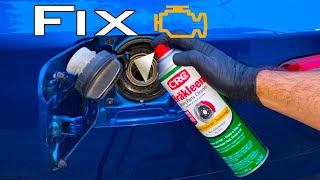
🎬 Watch: How to fix a disconnected EVAP hose for free.Symptoms You May Notice
- Check Engine Light is on.
- A faint smell of fuel, particularly around the gas cap or rear of the vehicle.
- In rare cases, a slight drop in fuel economy.
- Difficulty starting the engine immediately after refueling.
- Rough idle.
- Replacing the oxygen (O2) sensors. O2 sensors are not directly related to the EVAP system's purge flow test.
- Replacing the mass airflow (MAF) sensor. While a dirty MAF can cause other issues, it is not a primary cause for P0441.
Most Likely Causes
- Loose, Worn, or Incorrect Gas Cap 🔴 High Probability The rubber O-ring on the gas cap naturally degrades over time, losing its ability to create a perfect seal. This is a common wear-and-tear item on any vehicle of this age. Using a non-OEM cap can also cause issues.
How to confirm: Remove the gas cap and inspect the rubber seal for cracks, stiffness, or debris. Ensure the cap clicks at least once when tightened. If the seal is visibly damaged or the cap feels loose, it's suspect. Many forum users recommend starting with an OEM replacement cap if in doubt.
Typical fix: Clean the cap and filler neck sealing surfaces. If the problem persists or the cap is damaged, replace it with a new OEM part.
Est. part cost: $25-$45 - Faulty Vapor Purge Valve / Solenoid (VSV) 🔴 High Probability This solenoid is located in the engine bay and cycles thousands of times during the vehicle's life. It can become stuck open or closed, directly causing an incorrect purge flow reading. It is a very common failure point for this code.
How to confirm: Locate the valve in the engine bay, typically on top of the engine. With the engine off, disconnect the vapor line and try to blow through it; it should be closed. You can also apply 12V power to the terminals to see if it clicks and opens. A hand-held vacuum pump can also be used to check if it holds vacuum when closed.
Typical fix: Replace the purge valve. It is typically mounted near the top of the engine with two hoses and an electrical connector, making it a straightforward DIY job.
Est. part cost: $35-$90 - Cracked or Disconnected EVAP Hoses 🟡 Medium Probability Rubber vacuum hoses in the engine bay become brittle from heat and age, especially in hot climates. A small crack or a hose that has popped off its fitting will cause a flow error. One owner on Reddit found a disconnected hose at the air filter box was the source of P0441, P0442, and P0446 codes. 🎬 See why a visual inspection is critical for these specific codes.
How to confirm: Perform a thorough visual inspection of all vacuum and vapor lines connected to the purge solenoid and around the air filter housing. A smoke test is the most effective way to find small, hard-to-see leaks.
Typical fix: Replace the cracked section of hose or the entire hose assembly. Ensure all connections are secure.
Est. part cost: $10-$50 - Failed Charcoal Canister ⚪ Low Probability This is most often caused by repeatedly overfilling the fuel tank, which forces liquid fuel into the canister and saturates the charcoal pellets. It can also fail internally with age, releasing charcoal bits that clog the system.
How to confirm: Inspect the canister (located near the fuel tank) for physical cracks or signs of fuel saturation. Disconnect the lines to check for black charcoal pellets, which is a definitive sign of failure. A clogged canister can also cause the gas pump to click off repeatedly when fueling.
Typical fix: Replacement of the entire charcoal canister assembly. This is the most expensive common cause.
Est. part cost: $450-$750
Rare But Worth Checking
- Faulty Vent Valve: Located on or near the charcoal canister, this valve can also stick. It's less common than the engine bay purge valve but should be checked if other fixes fail. A vent valve clogged with charcoal dust often points to a failed canister.
- Wiring to EVAP Solenoids: A damaged wire or corroded connector for the purge or vent valve can prevent it from operating correctly. Check the wiring harness for opens or shorts if a new valve doesn't solve the issue.
- Cracked Air Intake Boot: One owner of a 2008 Highlander Hybrid with a P0441 code found the issue was a crack in the large rubber air intake boot, which was discovered after checking the purge valve and hoses.
- Engine Control Module (ECM): While rare, electronic failures can occur. For instance, NHTSA ODI #10314949 describes a Toyota owner who experienced power loss and gear-switching sensations accompanied by P0441; the required correction was the replacement of the Engine Control Module.
Diagnosis Steps
- Read the Code: Confirm P0441 is the primary code. Note any other codes present, as codes like P0455 or P0446 can help pinpoint the issue.
- Inspect the Gas Cap: Remove the gas cap. Check the seal for cracks or damage. Ensure it's an OEM or equivalent cap, as aftermarket caps can be problematic. Clean the seal and the filler neck, then tighten the cap until it clicks multiple times. Clear the code and drive for a few days to see if it returns.
- Visual Inspection (Engine Bay): Open the hood and carefully inspect all rubber hoses connected to the purge valve (usually on top of the engine) and around the air filter housing for any visible cracks, loose fittings, or disconnections. A disconnected hose near the air filter is a known simple fix.
- Test the Purge Valve (VSV): Locate the purge valve in the engine bay. Disconnect its electrical connector and hoses. With the valve unpowered, try to blow through it; it should be closed and not allow air to pass. If air passes, the valve is stuck open and must be replaced. You can also test the solenoid's resistance with a multimeter; for a 2008 Hybrid, it should be between 26-30 ohms. 🎬 Watch: How to test and replace the purge VSV on a Hybrid.
- Perform a Smoke Test: If the above steps do not reveal the issue, the most effective next step is to have a smoke test performed. This involves injecting harmless, visible smoke into the EVAP system to quickly reveal the location of any cracks or leaks in hoses or components.
- Inspect the Charcoal Canister and Vent Valve: If the smoke test shows no leaks, inspect the components at the rear of the vehicle. Check the charcoal canister for cracks or fuel saturation. Check the vent valve (often attached to the canister) and its hoses for blockages or damage, including black charcoal granules which indicate canister failure.
Parts You'll Likely Need
- Vapor Purge Valve / Solenoid
(OEM #90910-12276)— This is the most common mechanical failure for P0441 after the gas cap. It's an electromechanical valve in the engine bay that frequently sticks open or closed after years of use.
Trusted brands: Genuine Toyota, Denso, Standard Motor Products
OEM price range: $60-$90
Aftermarket price range: $30-$60 - Fuel Tank Cap
(OEM #77300-06040 (supersedes 77310-48010))— The seal on the gas cap is a simple but critical part of the EVAP system. It's an inexpensive and easy first step in diagnosis and repair. Owners report that Toyotas can be picky, and an OEM cap is often the best solution.
Trusted brands: Genuine Toyota
OEM price range: $25-$45
Aftermarket price range: $15-$30 - Charcoal Canister Assembly
(OEM #77740-48121)— This part fails less often, but when it does, it requires replacement. Failure is often due to fuel saturation from overfilling the tank or internal breakdown with age, which can release charcoal pellets into the EVAP lines. Note: Part number may vary based on Hybrid vs. non-Hybrid models; confirm with VIN.
Trusted brands: Genuine Toyota
OEM price range: $450-$750
Related Codes That Often Appear With This One
- P0455 — Indicates a large leak in the EVAP system. Often seen with P0441 if a hose is completely disconnected or the gas cap is very loose or missing.
- P0446 — This code indicates a problem with the vent control circuit. If the vent valve is clogged (sometimes by charcoal from a failed canister) or malfunctioning, it can lead to incorrect pressure during the purge cycle, triggering P0441 as well.
- P0442 — This code indicates a small leak in the EVAP system. A cracked hose or bad seal causing P0441 can also be detected as a small leak by the system.
- P0456 — Indicates a very small leak in the EVAP system. This can be triggered by the same root causes as P0441, such as a worn gas cap seal or a tiny crack in a hose.
- P0171 — This code indicates a lean fuel/air mixture. As noted in NHTSA ODI #11331260 and #11415574, P0441 often appears alongside P0171 when the engine is not performing properly due to EVAP or fuel delivery issues.
- P0505 — Relates to the idle control system. NHTSA ODI #11703613 shows that P0441 can occur simultaneously with P0505 and large EVAP leaks (P0445).
Platform-Specific Known Issues
- Purge Valve Location: On the V6 models, the purge valve (VSV) is located on the top of the engine, making it easily accessible for testing and replacement.
- Air Intake Boot Crack: A 2008 Highlander Hybrid owner traced a persistent P0441 code to a crack in the large rubber air intake boot, not a typical EVAP component. This caused an unmetered air leak that the system interpreted as a purge flow error.
- Owner Experience with Multiple Parts: One owner of a 2008 Highlander Hybrid with over 200k miles documented their struggle with a persistent P0441. They replaced the gas cap (noting issues with both aftermarket and a faulty OEM cap), the fuel pump assembly (incorrectly diagnosed by a mechanic), and the purge valve solenoid, with the light still returning. This highlights the importance of a smoke test to find elusive leaks, especially on older vehicles from hot climates where rubber and plastic parts degrade.
Mechanic-Grade Diagnostic Values
- Purge Valve (VSV) Coil Resistance (Hybrid Model) — expected: 26 to 30 Ohms. Failure: A reading outside this range indicates a faulty solenoid coil.
- Long Term Fuel Trim (Live Data) — expected: Close to 0% at idle.. Failure: A strong negative value (e.g., -20%) suggests the engine is running rich, which can be caused by a purge valve stuck open, allowing un-metered fuel vapor into the intake.
- EVAP System Pressure Hold Test — expected: After pressurizing to 13.5 - 15.5 in.Aq, the pressure should remain above 7.7-8.8 in.Aq after 2 minutes.. Failure: A rapid drop in pressure indicates a leak in the system.
Hidden / Shadow Codes Worth Checking
- Mode $06 Test and Component IDs: Toyota's ECU runs a series of self-tests on the EVAP system, often hours after the engine is turned off. A professional scan tool can access Mode $06 data to see the results of individual tests (TID) for specific components (CID), revealing which part of the multi-step check failed (e.g., purge flow, vent valve seal, leak check). This is more detailed than the generic P0441 code. (see via A professional scan tool like Toyota Techstream or an advanced OBD-II scanner with Mode $06 capability (e.g., Autel, BlueDriver).)
- Freeze Frame Data: Engine Run Time: This is not a code, but a critical diagnostic clue within the freeze frame data stored when P0441 is set. If the 'Engine Run Time' is very short (less than 200 seconds), it points towards a potential issue with the vapor pressure sensor providing an incorrect reading at startup, rather than a flow problem during normal operation. (see via Any OBD-II scanner that can display freeze frame data.)
Scan Tool Commands That Help
- Toyota Techstream: Utility -> Evaporative System Check — This is the primary, automated diagnostic function. The software commands the various EVAP valves (purge, vent) and the leak detection pump in sequence to perform a full system test, monitoring pressure and vacuum to pinpoint failures.
- Toyota Techstream / Professional Scan Tool: Active Test -> Control the Purge VSV — This bidirectional control allows a technician to manually command the purge valve open and closed. It's used to confirm if the valve is physically stuck. For example, with the valve commanded closed (0%), you can apply smoke or vacuum to see if it leaks, proving it's stuck open.
Wiring & Ground Locations
- EB — Right front fender apron, in the engine bay.. This is a primary engine bay ground point. A corroded or loose connection here could affect the operation of the engine-bay-mounted purge valve solenoid (VSV), causing it to function intermittently or not at all.
- Purge Valve Connector — On the purge valve solenoid itself, typically on top of the engine or near the air filter housing.. The wires for the solenoid on a similar generation Toyota were found to be pink and black with a white stripe. Checking for voltage at this connector while performing an active test with a scan tool can determine if the valve is receiving the command to open, isolating a wiring problem from a failed valve.
- Driver's Side Kick Panel Ground — Behind the plastic kick panel, to the left of the pedals.. This is a common interior ground cluster. While the primary EVAP components are grounded in the engine bay or rear of the vehicle, circuits passing through the main ECU could rely on these interior grounds. A loose ground here can cause a wide range of difficult-to-diagnose electronic issues.
Real Owner Repair Stories
- YouTube video by 'How to Fix a 2008 Toyota Highlander Hybrid Code P0441' (2008 Toyota Highlander Hybrid) — P0441 Check Engine Light.
❌ Tried (didn't work) The owner first tested the purge valve solenoid with a multimeter.
✅ What actually fixed it The purge valve tested good (29 ohms). The actual cause was a large crack in the rubber air intake boot, found during visual inspection after removing the air filter housing to access the purge valve. - Reddit user in /r/ToyotaHighlander (2008 Highlander Hybrid, 232,000 miles) — Persistent P0441 code, reduced MPG, strong fuel smell when refueling.
❌ Tried (didn't work) Replacing the fuel pump (for a different issue, but did not fix P0441)., Replacing the purge valve solenoid with an aftermarket part.
✅ What actually fixed it The issue was not fully resolved by the original poster, but a commenter provided the critical advice that fixed their identical issue: replacing the aftermarket purge valve with a genuine OEM (Denso) part. They had gone through two failed NAPA-branded valves before the OEM part finally solved the problem. - CarTalk Community forum user (2019 Toyota Highlander Hybrid, 4,000 miles) — Check Engine Light, engine sputter, dealer found gasoline in the charcoal canister.
❌ Tried (didn't work) Dealer initially blamed the owner for overfilling the gas tank and denied warranty coverage.
✅ What actually fixed it The owner, armed with forum advice, questioned the dealer about the roll-over/over-fill valve. Further testing directed by Toyota corporate confirmed the valve inside the fuel tank was sticking. The valve and the saturated charcoal canister were replaced under warranty, resolving the issue. - NHTSA ODI #11415574 — An owner reported that even after replacing the EVAP system leak detection pump and the vapor canister purge solenoid, the P0441 code persisted along with P0455 and P0171.
- NHTSA ODI #11651658 — A Toyota owner reported that the P0441 code appeared simultaneously with brake system error code C1391, triggering the ABS, Brake, and Traction Control lights.
"I Checked Everything" — The Actual Cause
- In one case involving a 2017 Highlander, the P0441 code kept returning even after replacing the purge valve, the gas cap, and performing a smoke test that showed no leaks. An expert suggested the problem was likely electrical (wiring harness) or a computer issue, requiring advanced bidirectional testing with a high-end scan tool to isolate, as simple parts swapping and leak checks were not sufficient.
- A 2019 Highlander had its charcoal canister saturated with fuel, causing EVAP codes. The dealer's initial diagnosis was owner-error from overfilling. However, the actual cause was a faulty roll-over/over-fill valve inside the fuel tank assembly, a component not checked during a standard smoke test.
When the Usual Fixes Don't Work
- While the purge valve is a very common cause, simply replacing it with an aftermarket part may not fix the issue. One owner went through two new NAPA-branded purge valves that failed to resolve the P0441 code; the problem was only solved after installing a genuine OEM (Denso) valve. This indicates that for this specific component, the vehicle's ECU may be sensitive to the exact electrical characteristics of the OEM part. Furthermore, in another case, a P0441 was ultimately traced to a cracked air intake boot, a component completely separate from the EVAP hose system, demonstrating that vacuum leaks elsewhere in the intake can trigger this specific flow code.
OEM Part Supersession History
90910-12276→90910-TC001— Standard part revision by the manufacturer.
Heads up: The parts are considered direct replacements and fully compatible.77740-48121→77740-0E020— Standard part revision for the non-hybrid charcoal canister assembly.
Heads up: These parts are for non-hybrid models. The Highlander Hybrid uses a different part number, such as 77740-48140. Always verify with VIN.
Model Year Variations Within This Range
- 2008-2013: All models in this range use the 'Key-Off' vacuum pump-based EVAP system, which is more complex than earlier systems. The self-test runs 5+ hours after the engine is shut off, which can delay the Check Engine Light from appearing after a repair is attempted.
- Hybrid vs. Non-Hybrid: The charcoal canister assembly has different part numbers for Hybrid and non-Hybrid models (e.g., 77740-48140 for Hybrid vs. 77740-48121 for non-Hybrid). Additionally, the purge valve on the Hybrid model is located under the air filter housing, requiring more disassembly to access.
Diagnostic Flowchart
Other Known Issues on This Vehicle
Issues unrelated to this code that are worth knowing about as an owner of this generation:
- Rupturing VVT-i Oil Line (V6 Only) 🔴 High — Common on early 2GR-FE V6 engines (approx. 2007-2010). A rubber section of a high-pressure oil line can burst, leading to rapid oil loss and catastrophic engine failure if not shut down immediately. (Ref: Toyota issued a Limited Service Campaign (LSC) to replace the rubber hose with an all-metal line, but the campaign has expired. Owners should visually inspect the rear VVT-i line to see if the update was performed.)
- Steering Intermediate Shaft Clunk/Noise 🟡 Low — A common issue where a clunk, pop, or knock-type noise is heard when turning the steering wheel at low speeds. It is generally considered an annoyance rather than a critical safety failure. (Ref: Toyota released TSB-0034-13 describing the issue and the repair procedure, which involves replacing the steering intermediate shaft with an updated part (P/N 45220-48171).)
- Melting / Sticky Dashboard 🟠 Medium — Widespread in vehicles used in high-heat, high-humidity climates. The dashboard material degrades, becoming sticky, shiny, and prone to cracking. The glare from the shiny surface can impair driver vision. (Ref: Toyota initiated a Warranty Enhancement Program (ZE6) to replace affected dashboards, but the program had a limited timeframe and faced parts shortages. It covered various models including the 2004-2010 Sienna and 2007-2011 Camry, with similar issues reported on Highlanders.)
- Water Pump Failure (V6 Only) 🟠 Medium — The water pump on the 2GR-FE V6 engine is a known failure point, often starting as a slow coolant leak from the weep hole. If not addressed, it can lead to overheating.
- Ignition Coil Failure 🟡 Low — Fairly common on higher-mileage Highlanders, leading to engine misfires (codes P0300-P0306), rough running, and a flashing check engine light.
Used vs. New Parts: Buying Guide for This Vehicle
When a used part is the smart pick: For the expensive charcoal canister assembly, a used part from a low-mileage, non-corroded donor vehicle can be a cost-effective option. It is not recommended for electronic parts like the purge valve, as they are relatively inexpensive new and are a high-failure item.
Donor-vehicle mileage cap: roughly under 80000 miles for the part to have meaningful remaining life.
What to inspect on the donor part:
- For a charcoal canister, shake it gently; it should not rattle loudly, as this indicates the internal charcoal media has broken apart.
- Inspect the canister for any signs of liquid fuel saturation or dark, wet stains, which means it was likely ruined by overfilling.
- Check for physical cracks or damage to the plastic housing and hose ports.
- Select parts from vehicles in dry climates to avoid corrosion on associated valves and lines.
OEM-only on this vehicle (don't cheap out):
- Vapor Purge Valve / Solenoid: Multiple owner reports indicate that aftermarket purge valves (specifically NAPA brand) may not work correctly and fail to resolve the P0441 code. Using an OEM Toyota or Denso-branded valve is strongly recommended.
- Gas Cap: Toyotas are known to be sensitive to gas cap seals. An OEM cap is the most reliable choice to eliminate it as a variable.
Aftermarket brands forum-validated for this vehicle:
- Denso (This is the Original Equipment Manufacturer for Toyota)
- Beck/Arnley (Forum users report this brand often re-boxes genuine Denso parts for Toyota applications).
Brands owners have reported issues with on this vehicle:
- NAPA (for the purge valve, specifically, as reported by owners for this P0441 issue).
- Holstein (A user on a general auto forum reported very poor quality with this brand's parts).
Real Owner Stories
Aggregated from forums and TSBs cited above. Mileages and costs reflect what owners reported in those sources.
2008 Highlander Hybrid — 200000 miles
Symptoms: Persistent P0441 code, a drop in MPG, and a faint smell of fuel when refilling the vehicle.
What fixed it: The owner replaced the gas cap, fuel pump assembly, and purge valve solenoid, but noted that heat-related degradation of hoses in desert climates often requires a smoke test to find the final leak.
Source hint: Reddit: 2008 HiHy Persistent P0441 Code
2008-2013 Highlander
Symptoms: The vehicle was throwing three different EVAP codes: P0441, P0442, and P0446.
What fixed it: A simple disconnected hose at the air filter box was found and reconnected.
Source hint: Reddit: Fixed OBD codes P0441, P0442, and P0446
2008 Highlander Hybrid
Symptoms: Persistent P0441 code that was interpreted by the system as a purge flow error.
What fixed it: The owner traced the issue to a crack in the large rubber air intake boot, which was causing an unmetered air leak.
Source hint: Vehicle Specific Issues: Air Intake Boot Crack
2012 Highlander
Symptoms: Check engine light with a cluster of codes including P0441, P0455, and P0456.
What fixed it: Inspection of the gas cap O-ring for defects, as it is the most common starting point for these codes.
Source hint: Reddit: Check engine light codes P0441, P0455, P0456 on Highlander
Toyota Owner Report — NHTSA ODI #11331260
Symptoms: The car was not performing properly and the owner heard the fuel pump making a noise indicating it was bad. Scan tool revealed codes P0171, P0505, P117B, P0441, and P0455, indicating a lean fuel/air mixture.
Source hint: NHTSA ODI #11331260
Toyota Owner Report — NHTSA ODI #11703613
Symptoms: Check engine light came on with codes P0445 (large EVAP leak), P0441 (incorrect purge flow), P0505 (idle control system), and P0171 (system too lean).
Source hint: NHTSA ODI #11703613
Related OBD-II Codes
Frequently Asked Questions
Where is the purge valve (VSV) located on my V6 Highlander?
Why does my Highlander have trouble starting only after I fill up the gas tank?
Can a problem with my air intake cause a P0441 purge flow code?
Should I buy an aftermarket gas cap to fix this code?
How can I tell if my charcoal canister has failed internally?
What is the resistance specification for the purge valve on a 2008 Highlander Hybrid?
Helpful Videos
Used OEM Parts in Stock


New Aftermarket Parts Available


The information in this article is provided for general reference and educational purposes only. Vehicle specifications, procedures, and part compatibility can vary by production date, trim level, and region. Always consult your vehicle's factory service manual and verify part numbers before purchasing or performing repairs. Safety-critical components such as airbags, seat belts, and braking systems should be installed by a qualified professional.
- Toyota Highlander:
- 🎬 Helpful Videos
- 🛍️ Shop This Part
- What's Unique About the 2008-2013 Toyota Highlander
- Symptoms You May Notice
- Most Likely Causes
- Rare But Worth Checking
- Diagnosis Steps
- Parts You'll Likely Need
- Related Codes That Often Appear With This One
- Platform-Specific Known Issues
- Mechanic-Grade Diagnostic Values
- Hidden / Shadow Codes Worth Checking
- Scan Tool Commands That Help
- Wiring & Ground Locations
- Real Owner Repair Stories
- "I Checked Everything" — The Actual Cause
- When the Usual Fixes Don't Work
- OEM Part Supersession History
- Model Year Variations Within This Range
- Diagnostic Flowchart
- Other Known Issues on This Vehicle
- Used vs. New Parts: Buying Guide for This Vehicle
- Real Owner Stories
- 2008 Highlander Hybrid — 200000 miles
- 2008-2013 Highlander
- 2008 Highlander Hybrid
- 2012 Highlander
- Toyota Owner Report — NHTSA ODI #11331260
- Toyota Owner Report — NHTSA ODI #11703613
- Related OBD-II Codes
- Frequently Asked Questions
- 🎟️ Get 5% Off