

P0441 on 1998-2008 Toyota Corolla: EVAP Incorrect Purge Flow Causes and Fixes
On a 1998-2008 Toyota Corolla, code P0441 is most often caused by a faulty vapor canister purge valve (also called a VSV) or a saturated charcoal canister. Replacing the purge valve is a common DIY fix costing between $40 and $90 for the part. A smoke test is the best way to diagnose leaks in the system.
- P0441 means the EVAP system has an incorrect purge flow, not necessarily a leak.
- The most likely cause on a 1998-2008 Corolla is a bad purge valve (VSV) in the engine bay.
- The second most likely cause is a fuel-saturated or cracked charcoal canister, often due to overfilling the gas tank.
- A smoke test is a critical diagnostic step to avoid replacing the wrong parts.
- Always use an OEM gas cap if replacement is needed.
What's Unique About the 1998-2008 Toyota Corolla

For this generation of Corolla and its platform mates, the two most common culprits for P0441 are a faulty purge valve (VSV) located in the engine bay and a failed charcoal canister at the rear of the vehicle. The canister often fails due to the owner habitually 'topping off' the fuel tank, which forces raw gasoline into the canister, saturating the charcoal media and ruining it. The purge valve is a relatively simple electro-mechanical part that can get stuck open or closed over time, a very common failure on many Toyotas of this era.
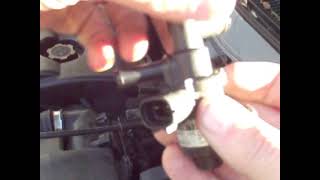
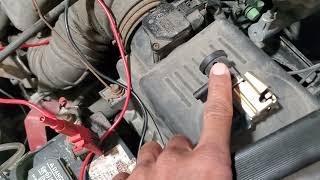
Generation note: This guide covers the 8th generation (1998-2002) and 9th generation (2003-2008) Toyota Corolla. While the EVAP system components are similar, their exact location and part numbers can differ. For the 8th gen, the purge valve (VSV) is often mounted directly to the air filter housing. On the 9th gen, it is typically found on the engine itself, near the intake manifold. 🎬 See this diagnostic walkthrough for 9th gen Corolla EVAP codes. The charcoal canister is located near the fuel tank at the rear of the vehicle on all models.
Symptoms You May Notice
- Check Engine Light is on
- Rough idle or engine stumbling, especially at a stop
- Difficulty starting the engine immediately after refueling
- A faint smell of gasoline
- Slight decrease in fuel economy
- Loss of power or a sensation of the vehicle "switching gears" unexpectedly (as reported in NHTSA ODI #10314949)
- Replacing other EVAP components like the vent valve or pressure sensor before properly testing the purge valve (VSV) and inspecting the charcoal canister.
- Using a cheap aftermarket gas cap that fails to seal correctly, leading to persistent EVAP codes.
- Replacing parts without performing a smoke test to confirm the location of a leak first.
Most Likely Causes

- Faulty Vapor Canister Purge Valve (VSV) 🔴 High Probability This valve, also called a Vacuum Switching Valve (VSV) by Toyota, cycles frequently and can wear out or get clogged with charcoal particles from a failing canister. It's a very common failure point on many Toyota models of this era.
How to confirm: With the engine idling, disconnect the vacuum hose from the purge valve that goes to the canister. There should be no vacuum felt. If there is, the valve is stuck open. A more definitive test involves a hand-held vacuum pump; with the valve de-energized, apply vacuum to the port. It should hold vacuum. If it doesn't, it's leaking internally. Then, apply 12V power to the valve's electrical connector; you should hear a click and the vacuum should release immediately. If it releases slowly or only after tapping, the valve is sticking.
Typical fix: Replace the purge valve. It is typically located in the engine bay and held by one or two bolts and connected by two vacuum hoses and an electrical connector.
Est. part cost: $40-$90 - Saturated or Failed Charcoal Canister 🟡 Medium Probability Repeatedly overfilling the gas tank after the pump clicks off can force liquid gasoline into the canister, which is only designed for vapor. This saturates the charcoal, causing blockage or even sending charcoal granules down the line to clog the purge valve.
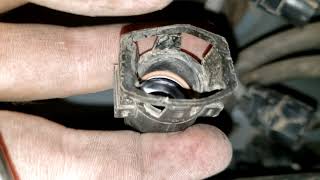
How to confirm: The canister, located near the gas tank, may feel unusually heavy if saturated with fuel or water. During a smoke test, smoke may not pass through the canister correctly, or you may find cracks in the canister body. If you remove the purge valve and find black charcoal pellets inside, the canister has failed and must be replaced.
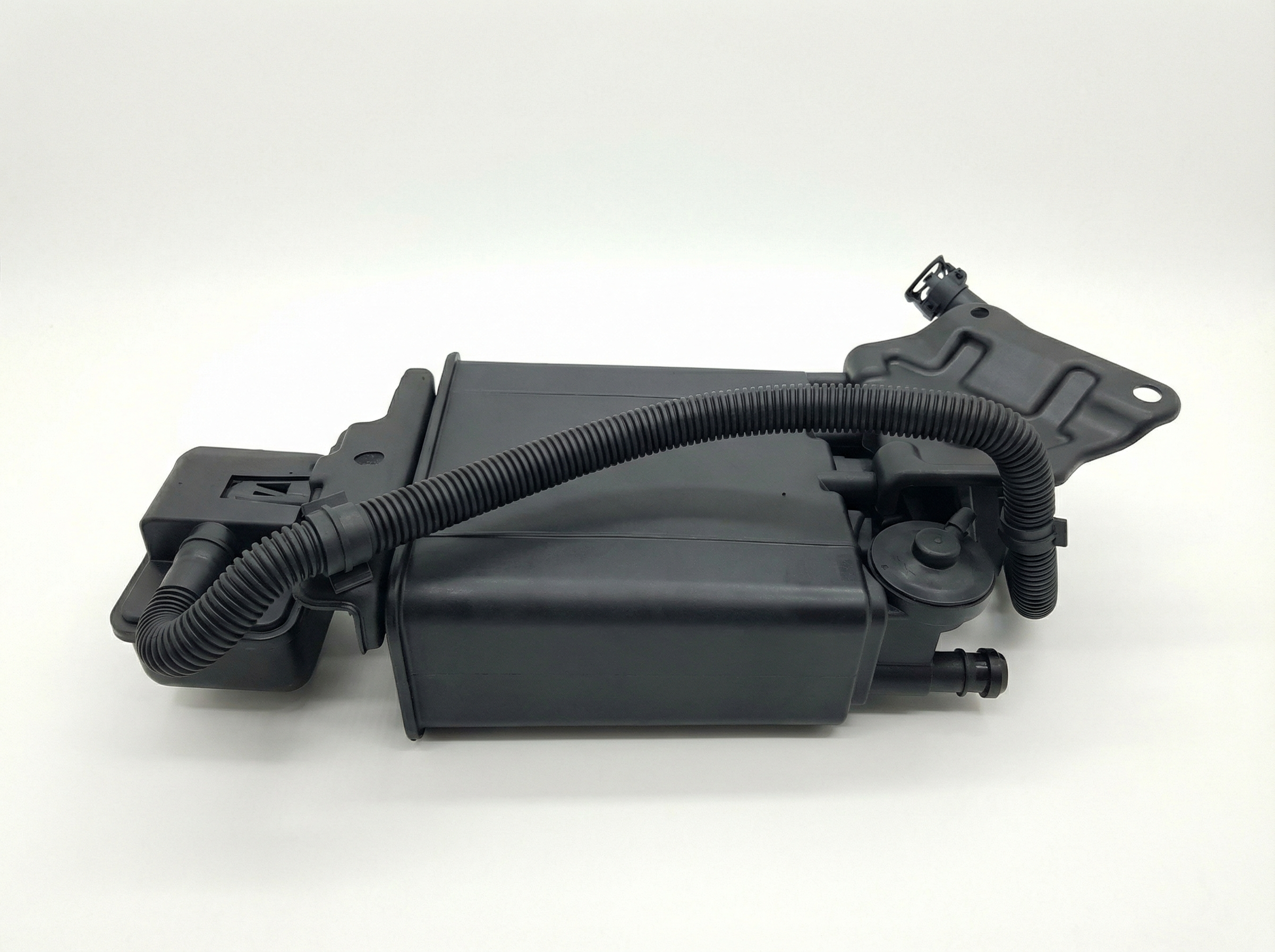
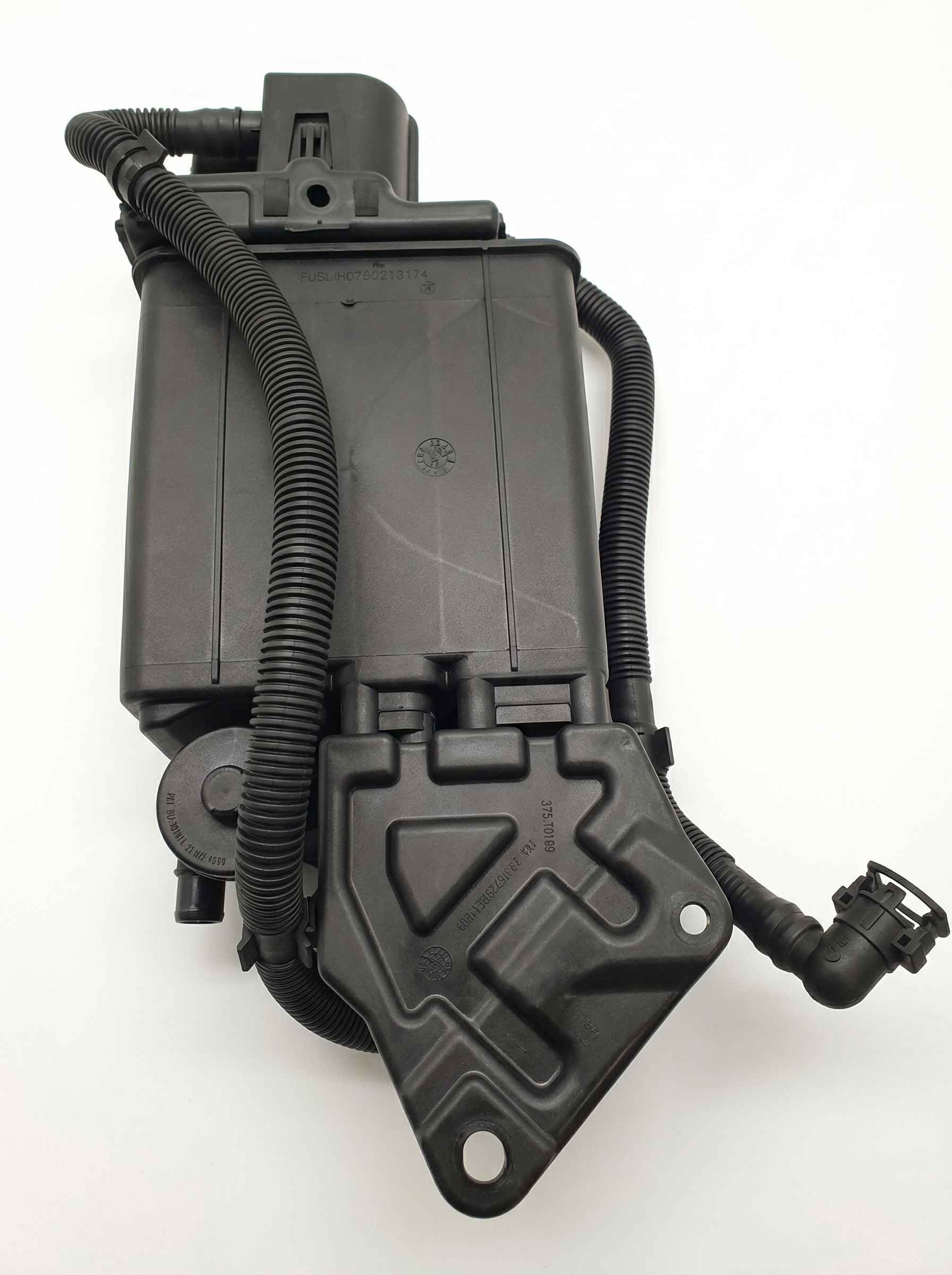
Typical fix: Replace the entire charcoal canister assembly. This is located at the rear of the vehicle, near the spare tire well and may require lowering the exhaust to access. 🎬 Watch: Step-by-step guide to replacing the charcoal canister assembly.
Est. part cost: $150-$300 - Cracked, Disconnected, or Clogged EVAP Hoses 🟡 Medium Probability
How to confirm: Visually inspect all vacuum lines running from the engine bay to the charcoal canister at the rear. Look for obvious cracks, especially at connection points and where they bend. The most definitive way to find a leak is with an automotive smoke machine, which will show smoke exiting from any cracks or loose connections.
Typical fix: Replace the damaged section of hose. Ensure all connections are secure.
Est. part cost: $10-$30 - Loose or Faulty Gas Cap ⚪ Low Probability While more common for large leak codes (like P0455), a worn-out gas cap seal can sometimes contribute to incorrect flow issues. It's an inexpensive and simple first step in diagnosis.
How to confirm: Inspect the rubber O-ring on the gas cap for cracks or damage. Ensure it clicks several times when tightened. If in doubt, replace it. A loose-feeling cap, even after clicking, can be a sign of a worn seal or a damaged fuel filler neck.
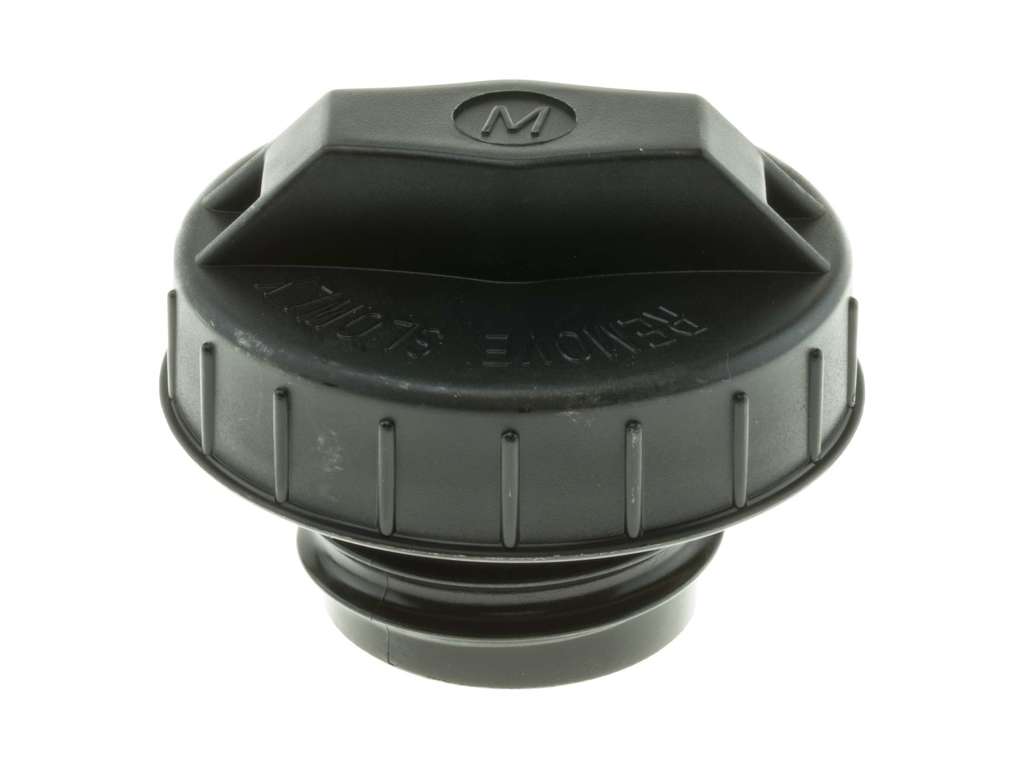
Typical fix: Replace the gas cap. It is highly recommended to use an OEM (Original Equipment Manufacturer) cap from a Toyota dealer, as many aftermarket caps do not seal properly and can cause persistent EVAP codes.
Est. part cost: $20-$40
Rare But Worth Checking
- Rusted Fuel Filler Neck: In regions where road salt is used, the metal fuel filler neck can rust through, especially where the vent lines attach. This creates a leak in the EVAP system that can contribute to this code. This is usually found with a smoke test and is a known issue discussed by owners.
- Faulty Engine Control Module (ECM): Toyota issued TSB EG041-07 for some 2007 Corollas and Matrix models where a faulty ECM could erroneously trigger codes P0441 and P0455. The fix involves replacing the original ECM (P/N 89661-02K20) with an updated version.
Diagnosis Steps

- Check the Gas Cap: Ensure it is tight and the seal is not cracked or brittle. If it's old, consider replacing it with an OEM part as a cheap first step.
- Inspect the Purge Valve (VSV): Locate the valve in the engine bay. On 8th gen models, it's often on the airbox; on 9th gen, it's on the engine. Check for vacuum at the canister-side port at idle (there should be none). Test the valve with a hand-held vacuum pump and a 12V source to confirm it holds vacuum when closed and opens fully when energized.
- Visually Inspect Hoses: Check all accessible EVAP vacuum lines in the engine bay and near the canister for obvious cracks or loose connections.
- Perform a Smoke Test: This is the most effective next step. Introduce smoke into the EVAP system (usually via the purge line in the engine bay). Watch for smoke leaking from any hoses, the purge valve, the charcoal canister, the gas cap, or the fuel filler neck.
- Inspect the Charcoal Canister: During the smoke test, check the canister itself for cracks. If no leaks are found but the code persists (especially with P0446), the canister may be internally clogged or saturated with fuel. It may feel heavy or you may find charcoal pellets in the purge line.
Parts You'll Likely Need
- Vapor Canister Purge Valve / Vacuum Switching Valve (VSV)
(OEM #90910-12276 (Supersedes 90910-12210 for many applications))— This is the most common mechanical failure point for code P0441 on this vehicle, often getting stuck or clogged.
Trusted brands: Denso (OEM supplier), Genuine Toyota, Dorman, Standard Motor Products
OEM price range: $70-$110
Aftermarket price range: $40-$90 - Charcoal Canister Assembly
(OEM #77740-02121 (2003-2004), 77740-02310 (2005-2008))— This part commonly fails due to fuel saturation from overfilling the tank, causing a blockage that triggers the incorrect flow code. A cracked canister is also possible.
Trusted brands: Genuine Toyota
OEM price range: $250-$350
Aftermarket price range: $150-$250 - Gas Cap
(OEM #77300-52030 (example, verify by VIN))— A worn seal can cause EVAP system issues. It's an inexpensive and easy part to replace during diagnosis. An OEM part is strongly recommended.
Trusted brands: Genuine Toyota
OEM price range: $20-$40
Aftermarket price range: $10-$25
Related Codes That Often Appear With This One
- P0446 — P0446 (EVAP Vent Control Circuit) often appears with P0441 because a failure in a core component like the canister or a major line blockage can affect both the purge and vent sides of the system.
- P0442 — P0442 (EVAP Small Leak Detected) can appear if the incorrect purge flow is caused by a small crack in a vacuum hose or a faulty seal, such as from a rusted fuel filler neck.
- P0455 — P0455 (EVAP Large Leak Detected) can accompany P0441 if a major component like the fuel filler neck has rusted through or a hose has become completely disconnected.
- P0171 — System Too Lean. This code is frequently seen alongside P0441 when a purge valve is stuck open or there is a vacuum leak, as noted in NHTSA ODI #11703613 and #11331260.
- P0505 — Idle Control System Malfunction. This can occur when EVAP issues disrupt the air/fuel mixture at idle, as seen in NHTSA ODI #11331260.
Technical Service Bulletins (TSBs) & Recalls
- TSB EG041-07: For some 2007 Toyota Corolla and Matrix models, the ECM may erroneously set P0441 and P0455. The solution is to replace the ECM.
Platform-Specific Known Issues
- On 2007 models, TSB EG041-07 notes that a faulty ECM can be the root cause, requiring ECM replacement to fix persistent P0441 and P0455 codes.
- The fuel filler neck is a known rust point in salt-belt states, leading to EVAP leaks that can trigger P0441, often alongside P0442 or P0455.
- Cross-manufacturer data from NHTSA ODI #11415574 suggests that even after replacing the leak detection pump and purge solenoid, P0441 and P0455 may persist if the root cause is not correctly identified through diagnostic proof.
Mechanic-Grade Diagnostic Values
- Vapor Canister Purge Valve (VSV) internal resistance — expected: 15 to 36 Ohms at room temperature (approx. 60°F / 15°C).. Failure: A reading of 0 Ohms (short circuit) or infinite/OL (open circuit) indicates a failed valve coil.
- Voltage at Purge Valve (VSV) connector with key on, engine off — expected: One pin should show battery voltage (approx. 12V) and the other (signal wire from ECM) should also show battery voltage when the circuit is inactive.. Failure: No voltage on the power supply pin indicates a wiring or fuse issue. Voltage near 0V on the signal wire when inactive could indicate a short to ground.
- Purge Solenoid Duty Cycle at idle (Live Scan Tool Data) — expected: Should be low, typically between 5-20% on a warm engine at idle.. Failure: A value of 0% when it should be purging, or a high value (e.g., 100%) when it should be closed, points to a problem with the valve or its control circuit.
- EVAP System Pressure at idle (Live Scan Tool Data) — expected: Should be near 0 kPa or 0 inH2O (atmospheric pressure) when the purge valve is commanded off.. Failure: A significant negative pressure (vacuum) reading while the purge valve is supposed to be closed indicates it is stuck open or leaking internally.
Hidden / Shadow Codes Worth Checking
- Mode 6, Test ID $39: This test monitor specifically checks the integrity of the EVAP system purge flow. Failing this monitor can be an early indicator of the problem that sets P0441, even before the Check Engine Light comes on. (see via A professional scan tool or an advanced OBD-II app that can access Mode 6 test results. The ECM compares measured pressure changes during purge events against expected values.)
- C1391: An owner report (NHTSA ODI #11651658) noted that P0441 can sometimes appear alongside brake system codes like C1391, which may be covered under specific manufacturer customer service programs.
Scan Tool Commands That Help
- Toyota Techstream: Active Test: 'Activate the VSV for Evap Control' — This bidirectional command allows a technician to manually open and close the purge valve (VSV) while the engine is running. You can monitor the 'EVAP (Purge) VSV' percentage in the data list to confirm the ECM is sending the command, and physically listen for a 'click' from the valve to confirm it is mechanically responding. This is the definitive way to test if the valve is stuck or if the control circuit is faulty.
- Toyota Techstream: Utility: 'Evaporative System Check' — This automated test forces the vehicle to run its internal EVAP leak and flow monitor. It sequences the purge and vent valves to seal the system, draw a vacuum, and monitor for pressure decay. This is useful to verify a repair has been successful without waiting for the vehicle's natural 5-hour-plus monitor cycle.
Wiring & Ground Locations
- Purge Valve (VSV) Connector — On the purge valve itself, located on the air filter housing (8th gen) or on the intake manifold area (9th gen).. The two-pin connector supplies power and the ground signal from the ECM. One pin is for 12V+ power (often from the EFI relay) and the other is the ground-side switched signal from the ECM. Checking for voltage here is a primary step in diagnosing a non-responsive valve.
- Engine Bay Ground Points (e.g., A1, A2) — Typically located on the inner fender aprons in the engine compartment, often near the battery or strut towers.. The ECM and its related sensors rely on clean ground connections. A corroded or loose engine-to-chassis ground can cause erratic behavior in computer-controlled components like the purge valve, leading to incorrect flow.
- ECM/PCM Ground — The ECM itself is grounded to the chassis, typically behind the glove box or center console area.. The ECM provides the switched ground to activate the purge valve solenoid. While a rare failure point, a bad ground at the ECM itself can prevent the valve from being commanded open, leading to an incorrect (no flow) condition.
Real Owner Repair Stories
- Tacoma World forum user (2002 Toyota Tacoma 2.7L (Similar EVAP system design)) — Persistent P0441 code and stalling immediately after refueling.
❌ Tried (didn't work) Replaced fuel tank, Replaced charcoal canister, Replaced all EVAP hoses, Replaced gas cap with OEM, Replaced fuel filler neck, Replaced purge valve solenoid, Replaced MAF sensor, Replaced both O2 sensors
✅ What actually fixed it The final culprit was suspected to be the Fuel Tank Pressure Sensor. After replacing nearly the entire EVAP and fuel system, this sensor was one of the last remaining original components that could provide incorrect data to the ECM, causing it to misinterpret purge flow. - YouTube video by 'Harvey Spooner' (2005 Toyota Corolla 1.8L 1ZZ-FE) — Check Engine Light with codes P0441, P0445, and P0446.
❌ Tried (didn't work) First dealer visit: Reset codes, which returned quickly., Replacing the gas cap alone.
✅ What actually fixed it A second visit to the dealer involved another smoke test, which led to the replacement of the purge valve assembly. This combination of a proper smoke test and replacing the faulty valve finally resolved all three EVAP codes. - NHTSA ODI #10314949 — An owner reported the vehicle felt as though it was losing power or switching gears. The dealer found codes P0441 and P2716.
✅ What actually fixed it The correction was to remove and replace (R&R) the Engine Control Module (ECM).
"I Checked Everything" — The Actual Cause
- In some cases, a smoke test will show no leaks, and the purge valve may test good electrically, but the P0441 code persists. This can happen if the charcoal canister is internally clogged with charcoal granules or saturated with fuel. It is not leaking, so smoke passes through, but the restriction is enough to disrupt the flow rate when the purge valve opens, which the ECM detects via the fuel tank pressure sensor. Another possibility is a faulty fuel tank pressure sensor providing incorrect readings to the ECM, making it believe there is a flow problem when there isn't one.
OEM Part Supersession History
90910-12210→90910-12276— Updated design for improved reliability and performance.77740-02121→77740-02310— Design change for later model years in the generation.
Heads up: Part number 77740-02121 is specified for 2003-2004 Corollas, while 77740-02310 is for 2005-2008 models. While they may look similar, mounting points or hose connections may differ. It is critical to verify the correct part number by VIN.
Model Year Variations Within This Range

- 1998-2002 (8th Gen) vs 2003-2008 (9th Gen): The location of the Vapor Canister Purge Valve (VSV) is a key difference. On 8th generation models, it is commonly found mounted to the side of the air filter housing. On 9th generation models, it is typically located on the engine near the intake manifold.
- 2003-2004 vs 2005-2008: The charcoal canister assembly has different part numbers for these ranges (77740-02121 for early 9th gen, 77740-02310 for late 9th gen), indicating a design change that may affect fitment and hose routing.
Diagnostic Flowchart
Real Owner Stories
Aggregated from forums and TSBs cited above. Mileages and costs reflect what owners reported in those sources.
2006 Toyota Corolla — 230000 miles
Symptoms: Check engine light with codes P0441 and P0455, no noticeable difference in RPM or engine sounds.
What fixed it: A commenter suggested checking if the car was affected by Toyota TSB EG041-07, which indicates the ECM may need to be replaced for these codes. The owner scheduled a service at the dealership for inspection.
Source hint: Reddit r/MechanicAdvice
2007 Toyota Corolla
Symptoms: Persistent P0441 and P0455 codes.
What fixed it: Replaced the purge solenoid and gas cap with no success, then found TSB EG041-07 regarding the faulty ECM, showing the complexity of diagnosis.
Source hint: BobIsTheOilGuy.com - '2007 Corolla - P0441 and P0455 codes'
2008 Toyota Corolla
Symptoms: P0441 code that persisted after replacing the purge valve and gas cap.
What fixed it: Discovered a leak at the fuel filler neck via a smoke test.
Source hint: Reddit r/MechanicAdvice - '08 Toyota Corolla P0441 Code'
Pontiac Vibe
Symptoms: Experienced P0441 after overfilling the gas tank.
What fixed it: Another user in the thread fixed their code by replacing the purge solenoid.
Source hint: GenVibe.com - 'P0441'
Documented NHTSA Reports
- An owner reported in NHTSA ODI #11703613 that their vehicle displayed P0441 alongside P0445 (large leak), P0505 (idle control), and P0171 (lean condition).
- NHTSA ODI #11331260 describes a vehicle not performing properly with a lean mixture and a noisy fuel pump, showing codes P0171, P0505, P117B, P0441, and P0455.
- According to NHTSA ODI #11415574, a mechanic hypothesized that persistent P0441 and P0455 codes remained even after replacing the leak detection pump and purge solenoid.
- NHTSA ODI #11651658 notes a case where P0441 appeared in conjunction with brake system error code C1391.
Related OBD-II Codes
Frequently Asked Questions
Does TSB EG041-07 apply to my Corolla for code P0441?
Where is the purge valve (VSV) located on my 1998-2008 Corolla?
Can rust cause a P0441 code on my Corolla?
I overfilled my gas tank and now have a P0441 code. What happened?
Should I buy an aftermarket gas cap to fix P0441?
Are the Pontiac Vibe and Toyota Matrix prone to the same P0441 issues?
Helpful Videos

Used OEM Parts in Stock
New Aftermarket Parts Available


The information in this article is provided for general reference and educational purposes only. Vehicle specifications, procedures, and part compatibility can vary by production date, trim level, and region. Always consult your vehicle's factory service manual and verify part numbers before purchasing or performing repairs. Safety-critical components such as airbags, seat belts, and braking systems should be installed by a qualified professional.
- Toyota Corolla:
- 🎬 Helpful Videos
- 🛍️ Shop This Part
- What's Unique About the 1998-2008 Toyota Corolla
- Symptoms You May Notice
- Most Likely Causes
- Rare But Worth Checking
- Diagnosis Steps
- Parts You'll Likely Need
- Related Codes That Often Appear With This One
- Technical Service Bulletins (TSBs) & Recalls
- Platform-Specific Known Issues
- Mechanic-Grade Diagnostic Values
- Hidden / Shadow Codes Worth Checking
- Scan Tool Commands That Help
- Wiring & Ground Locations
- Real Owner Repair Stories
- "I Checked Everything" — The Actual Cause
- OEM Part Supersession History
- Model Year Variations Within This Range
- Diagnostic Flowchart
- Real Owner Stories
- 2006 Toyota Corolla — 230000 miles
- 2007 Toyota Corolla
- 2008 Toyota Corolla
- Pontiac Vibe
- Documented NHTSA Reports
- Related OBD-II Codes
- Frequently Asked Questions
- 🎟️ Get 5% Off