

P0441 on 2010-2014 Subaru Outback: Incorrect Purge Flow Causes and Fixes
For a 2010-2014 Subaru Outback, code P0441 is most often caused by a faulty vapor canister purge valve (solenoid) located in the engine bay. Replacing this part is a common and relatively simple DIY fix, with the genuine OEM part costing between $100 and $160 and aftermarket versions available for $40-$90. While less common, cracked hoses connected to the valve can also trigger the code.
- P0441 on a 2010-2014 Outback almost always points to a problem with the purge valve or its immediate hoses.
- The most likely fix is replacing the vapor canister purge valve, a task that is
What's Unique About the 2010-2014 Subaru Outback

On this generation of Subaru Outback, the P0441 code is a straightforward emissions issue, almost always pointing to a component failure rather than a complex system leak. The most common culprit is the purge control solenoid valve located in the engine bay. Unlike some vehicles where this code can be triggered by a loose gas cap, on the Outback it more reliably indicates a problem with the purge valve itself or its associated hoses. A low battery voltage event can sometimes trigger this code, so it's worth clearing the code after a jump-start to see if it returns before replacing parts.
Symptoms You May Notice
- Check Engine Light is on.
- Slightly rough idle in some cases if the purge valve is stuck open.
- A faint smell of fuel is possible but uncommon.
- In some cases, no symptoms will be noticeable other than the Check Engine Light.
- Replacing the gas cap. While a loose or faulty gas cap can cause other EVAP codes (like P0457 or P0455), it is not a primary cause for the specific 'Incorrect Purge Flow' logic of P0441. Owners often replace the cap first with no success for this particular code.
Most Likely Causes

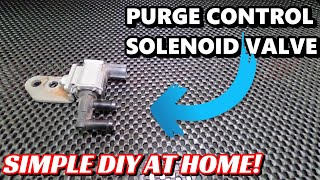
- Faulty Vapor Canister Purge Valve (Solenoid) 🔴 High Probability The purge valve is a known high-failure item across many vehicle makes, including Subaru. It's a mechanical solenoid that actuates frequently and can wear out over time, with internal components sticking open or closed, which is a common failure point in many EVAP systems.
How to confirm: With the engine off, disconnect the hose from the intake manifold side of the valve and apply vacuum with a hand pump; it should hold vacuum. Then, apply 12V to the valve's electrical connector; it should click open and release the vacuum. A scan tool can also command the valve to open and close to test function. Visually, the valve is located in the engine bay, making it accessible for testing.
Typical fix: Replace the purge valve. It is typically located in the engine bay, attached to the intake manifold, and is easy to access and replace with basic hand tools.
Est. part cost: $40-$160 - Cracked or Disconnected EVAP Hoses 🟡 Medium Probability Rubber hoses in the engine bay are exposed to constant heat cycles and can become brittle, leading to cracks or splits over time, especially at connection points.
How to confirm: Visually inspect all vacuum and vapor lines connected to the purge valve and running between the intake manifold and the charcoal canister. Look for visible cracks, loose connections, or blockages. A smoke test is the most effective method to find leaks that are not visually apparent.
Typical fix: Replace the damaged section of hose. Trimming the cracked ends and re-securing the hose can sometimes be a temporary fix if there is enough slack.
Est. part cost: $10-$30
Rare But Worth Checking
- Clogged Charcoal Canister: This can happen if you habitually overfill your fuel tank ('topping off'), which can force liquid gasoline into the canister, saturating the charcoal and causing a blockage or damage. If charcoal pellets are found in the purge lines or valve, the canister is compromised and must be replaced.
- Faulty EVAP System Pressure Sensor: The sensor that monitors pressure in the EVAP system can fail and send incorrect data to the ECM. However, this will usually trigger other specific sensor-related codes (like P0453) along with P0441.
- Wiring Issue to Purge Valve: An open or short in the electrical circuit providing power to the purge valve solenoid will prevent it from operating. This could be due to a damaged wire or a blown fuse. You can check for voltage at the connector with a multimeter.
Diagnosis Steps

- Read the code with an OBD-II scanner to confirm P0441 is present.
- Check that the gas cap is tight and the seal is not cracked or damaged, as a simple first step.
- Locate the purge control solenoid valve in the engine compartment. On the 2.5L engine, it is typically mounted on or near the intake manifold.
- Visually inspect the vacuum hoses connected to and surrounding the purge valve for any obvious cracks, splits, or disconnections.
- Test the purge valve. Disconnect the electrical connector and vacuum lines. Try to blow through the valve; it should be closed (no air passes) when no power is applied.
- Apply 12 volts to the two pins on the valve's electrical connector (a 9V battery can also work for a quick test). You should hear an audible click, and the valve should now be open, allowing you to blow through it.
- If the valve is stuck open, stuck closed, or does not operate with power, it needs to be replaced.
- If the valve and hoses appear to be in good condition, check the wiring to the purge valve for power with the key on. Lack of voltage could indicate a blown fuse or wiring fault.
- If the above steps do not reveal the issue, a smoke test is the next logical step to find hard-to-see leaks in the EVAP lines or canister. 🎬 Watch: A helpful guide to troubleshooting EVAP system flow issues.
Parts You'll Likely Need

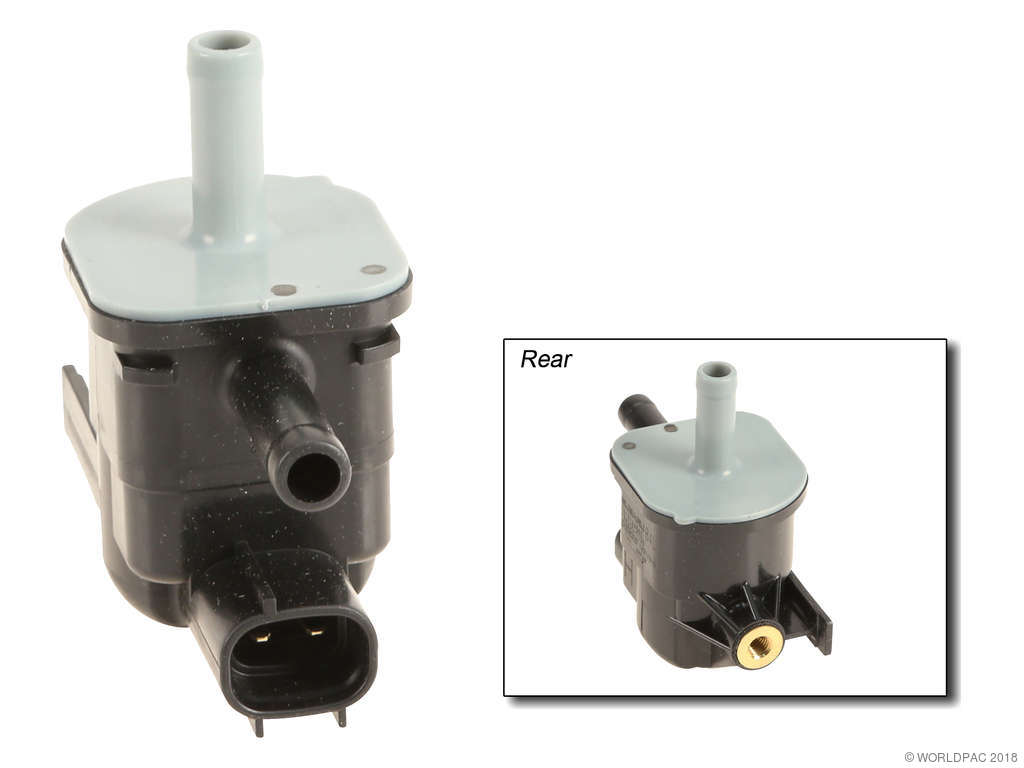
- Vapor Canister Purge Valve / Solenoid
(OEM #16131AA070)— This is the most common failure point for the P0441 code on this vehicle. It gets stuck open or closed, causing the incorrect purge flow detected by the ECM.
Trusted brands: Subaru (OEM), Dorman (911-650, though this may be for the vent valve on older models, cross-reference carefully), Standard Motor Products (CVS59), Carquest
OEM price range: $100-$160
Aftermarket price range: $40-$90
Platform-Specific Known Issues
- Low Battery Voltage Triggering Code: In a documented case on a 2013 Outback, the P0441 code appeared immediately after receiving a jump-start for a dead battery. After replacing the gas cap and clearing the code, it did not return, suggesting the low voltage event may have caused a spurious error in the EVAP system's self-test.
Mechanic-Grade Diagnostic Values
- Purge Control Solenoid Valve Coil Resistance — expected: Approximately 20-40 ohms at room temperature. One technician measured a functional Subaru valve at 36 ohms.. Failure: A reading of infinite resistance (open circuit) or very low resistance (short circuit) indicates a failed solenoid coil.
Scan Tool Commands That Help
- Professional Scan Tool (e.g., Subaru Select Monitor): EVAP System Test / Actuator Test — This bidirectional command allows the technician to manually open and close the purge valve solenoid to verify its mechanical operation. The technician can listen for an audible click and monitor EVAP system pressure data to confirm the valve is functioning as commanded.
Wiring & Ground Locations
- Purge Control Solenoid Valve — Located on the left side of the engine, typically mounted to or near the intake manifold.. This is the component being tested. Knowing its location is the first step in diagnosis. It is also in a location known to be a potential nesting spot for rodents, which can chew through the wiring.
- ECU Ground — A critical ground point for the Engine Control Unit (ECU) is located on the top of the intake manifold.. Poor grounding at this point can cause a wide range of strange electrical issues and incorrect sensor readings. Since the ECU controls and monitors the purge valve, a bad ground here could theoretically contribute to an incorrect flow detection. This is especially important to check if TGV (Tumble Generator Valve) deletes or spacers have been installed, as they can interrupt this ground path.
Real Owner Repair Stories
- Reddit user on r/subaruoutback (2013 Subaru Outback) — Check engine light, brake light, and no cruise control light all illuminated after receiving a jump-start for a dead battery. The code was P0441.
❌ Tried (didn't work) The owner was concerned about another major repair after recently replacing the catalytic converter.
✅ What actually fixed it The owner replaced the gas cap and cleared the code with a scanner. The code did not return after driving. It was suggested by another user that the low battery voltage event itself may have caused the computer to fail the EVAP test, triggering a spurious code.
OEM Part Supersession History
16131AA070→N/A— No supersession found. This part number remains current for the specified model years.
Heads up: This part number is specifically listed for 2010-2012 Subaru Outback 2.5L models (with the EJ253 engine), often with the note 'without California emissions'. It may not be correct for 2013-2014 models with the FB25 engine. Always verify with VIN.
Model Year Variations Within This Range
- 2010-2012 vs. 2013-2014: The engine was changed for the 2013 model year. 2010-2012 models use the EJ253 2.5L engine, while 2013-2014 models use the FB25 2.5L engine. This change likely resulted in a different part number for the purge control solenoid. The commonly cited OEM part number 16131AA070 is specified for the 2010-2012 models. Owners of 2013-2014 models must verify the correct part number for their specific vehicle, as it may be different.
Diagnostic Flowchart
Real Owner Stories
Aggregated from forums and TSBs cited above. Mileages and costs reflect what owners reported in those sources.
2013 Subaru Outback
Symptoms: Engine light triggered along with the brake light, no cruise light, etc., shortly after getting a jumpstart for a dead battery.
What fixed it: Replacing the gas cap and clearing the code kept the light from returning.
Source hint: Reddit r/subaruoutback - Thread: 'Code P0441 Evap. Emission System Incorrect Purge Flow'
2013 Subaru Legacy
Symptoms: Check Engine Light, VDC Lights Solid. Cruise Control and Brake lights flashing.
What fixed it: Replaced the purge valve.
Source hint: Reddit r/Subaru_Outback - 2013 Subaru Legacy. Check Engine Light, VDC Lights Solid. Cruise Control and Brake lights flashing.
2013 Subaru Outback Legacy
Symptoms: Check engine light is on, no cruise control.
What fixed it: The owner was quoted for a charcoal canister and vapor hose replacement to fix the P0441 code after a $360 purge valve replacement failed to solve the issue.
Cost: $1500
Source hint: Reddit r/subaru - Is it reasonable to be charged $1500 to replace a charcoal canist
1998 Subaru
Symptoms: Persistent P0441 after an engine repair where the purge solenoid was broken and replaced.
What fixed it: Checking and repairing the associated vacuum hoses and wiring connections in the immediate area of the repair.
Source hint: Ultimate Subaru Message Board - Thread: 'P0441 won't go away.'
Related OBD-II Codes
Frequently Asked Questions
Where is the purge valve located on my 2010-2014 Subaru Outback?
Can a dead battery or jump-start cause a P0441 code on my Outback?
What are the symptoms of a P0441 code on this generation of Outback?
Does the 2010-2014 Subaru Legacy share this P0441 issue?
How much does it cost to fix a P0441 code on my Outback?
How can I test the purge valve on my 2.5L engine?
Helpful Videos


![How to Fix P0441 Engine Code in 6 Minutes [4 DIY Methods / Only $3.50]](https://img.youtube.com/vi/NJYZiDhYhP8/mqdefault.jpg)
Used OEM Parts in Stock
New Aftermarket Parts Available


The information in this article is provided for general reference and educational purposes only. Vehicle specifications, procedures, and part compatibility can vary by production date, trim level, and region. Always consult your vehicle's factory service manual and verify part numbers before purchasing or performing repairs. Safety-critical components such as airbags, seat belts, and braking systems should be installed by a qualified professional.
- Subaru Outback:
- 🎬 Helpful Videos
- 🛍️ Shop This Part
- What's Unique About the 2010-2014 Subaru Outback
- Symptoms You May Notice
- Most Likely Causes
- Rare But Worth Checking
- Diagnosis Steps
- Parts You'll Likely Need
- Platform-Specific Known Issues
- Mechanic-Grade Diagnostic Values
- Scan Tool Commands That Help
- Wiring & Ground Locations
- Real Owner Repair Stories
- OEM Part Supersession History
- Model Year Variations Within This Range
- Diagnostic Flowchart
- Real Owner Stories
- 2013 Subaru Outback
- 2013 Subaru Legacy
- 2013 Subaru Outback Legacy
- 1998 Subaru
- Related OBD-II Codes
- Frequently Asked Questions
- 🎟️ Get 5% Off