

P0441 on 2005-2010 Scion tC: Incorrect Purge Flow Causes and Fixes
On a 2005-2010 Scion tC, code P0441 is most often caused by a faulty or loose gas cap. A Toyota/Scion Technical Service Bulletin (S-SB-0030-09) confirms this common failure. Replacing the gas cap with a new OEM part (77300-47010) for around $25-$40 is the most likely and cheapest first step to fixing the issue. If that fails, the purge valve is the next most likely culprit.
- For a P0441 on a 2005-2010 Scion tC, start by replacing the gas cap. It's the cheapest, easiest, and most likely fix, backed by a manufacturer TSB.
- If a new gas cap doesn't solve it, the next part to inspect and likely replace is the purge valve (solenoid) located on top of the engine's airbox.
- This code does not indicate a serious mechanical problem, and the car is safe to drive.
- This code is often paired with P0455 (Gross Leak) or P0456 (Small Leak); the diagnostic process remains the same.
What's Unique About the 2005-2010 Scion tC

For the first-generation Scion tC, this code is so frequently linked to a faulty gas cap that Toyota issued a Technical Service Bulletin (S-SB-0030-09). The original gas cap's rubber O-ring seal can degrade and crack over time due to exposure to ethanol in modern fuels, causing the system to fail its pressure test. This triggers the P0441 code, often along with P0455 (gross leak) or P0456 (small leak). While other causes are possible, the gas cap is the first and most important part to check on this specific vehicle, with many owners on forums confirming that an OEM replacement cap solved the problem instantly.
Symptoms You May Notice
- Check Engine Light is on.
- Difficulty starting the engine, especially right after refueling. This is a classic symptom of a purge valve stuck open, allowing un-metered fuel vapor into the intake manifold.
- Slightly rough or uneven idle.
- A faint smell of gasoline around the vehicle, particularly near the rear.
- Audible clicking from the purge solenoid at idle may be present, but this is often normal operation; the absence of clicking could indicate a problem.
- Replacing the oxygen sensor. This code is strictly related to the EVAP system and has no connection to the O2 sensors.
- Replacing the charcoal canister before checking the gas cap and purge valve. The canister is more expensive and less likely to be the root cause than the cap or valve.
- Using a cheap, non-OEM gas cap. Many forum users report that aftermarket caps fail to seal properly and do not resolve the code, leading them to believe the problem is elsewhere.
Most Likely Causes

- Faulty or Loose Gas Cap 🔴 High Probability A Technical Service Bulletin (S-SB-0030-09) was issued for a defective factory gas cap seal that degrades over time, making this the most common point of failure for this code on this car. Forum users repeatedly confirm that using a cheap aftermarket cap may not solve the issue, and an OEM Toyota cap is strongly recommended.
How to confirm: First, ensure the cap is tight and clicks several times. If the code returns, inspect the cap's rubber O-ring for cracks, stiffness, or damage. Given the low cost and high probability, replacing it with an OEM part is a standard and effective diagnostic step.
Typical fix: Replace the gas cap with a new, OEM-spec part (Toyota P/N: 77300-47010). Aftermarket caps often have poorly designed gaskets and may not seal correctly.
Est. part cost: $25-$40 - Faulty Vapor Canister Purge Valve (Purge Solenoid) 🟡 Medium Probability This valve is an electromechanical part that cycles frequently and can fail by sticking open or closed over time. A stuck-open valve is a common cause of the 'hard start after refueling' symptom.
How to confirm: The purge valve is located on top of the air filter box in the engine bay. With the engine off, disconnect the valve and try to blow through it; it should be closed (no air passes). Apply 12V (a 9V battery also works) to the two electrical pins; it should click open and allow air to pass. If it fails either test, it's faulty. You can also disconnect the vacuum hose leading to the intake manifold while the engine is idling; there should be no vacuum felt at the valve's port.
Typical fix: Replace the purge valve. It is typically held by a single 10mm bolt and has two hoses and one electrical connector, making it a simple DIY replacement.
Est. part cost: $50-$90 - Cracked or Disconnected EVAP Vacuum Hose ⚪ Low Probability Rubber hoses in the engine bay become brittle over time due to heat and age. A small crack or loose connection can disrupt the purge flow. A specific hose is known to crack right where it connects to a metal hard pipe near the firewall.
How to confirm: Visually inspect all vacuum lines connected to the purge valve and running towards the intake manifold and firewall. A user on ScionLife.com noted that a hose near the firewall is notorious for cracking; this is a key area to inspect. If a leak is not visible, a smoke test is the most effective way to find it.
Typical fix: Replace the cracked section of hose. Vacuum hose is inexpensive and can be cut to length. Some owners have had success trimming the cracked end and re-clamping the hose as a temporary fix.
Est. part cost: $5-$15
Rare But Worth Checking
- Clogged or Failed Charcoal Canister: This is less common but can happen if you consistently overfill your gas tank ('topping off'), which can force liquid fuel into the canister and saturate the charcoal pellets, creating a restriction. A user on a forum eventually traced their persistent P0441 to a bad vapor canister after replacing the cap and purge valve. It is located under the car near the gas tank.
Diagnosis Steps

- Check the Gas Cap: Ensure your current gas cap is tightened until it clicks at least once. Inspect the rubber seal for visible cracks or deformities.
- Replace the Gas Cap: Due to the TSB and high failure rate, the most effective first step is to replace the gas cap with a new OEM part (Part No. 77300-47010). Many owners report aftermarket caps do not work. Clear the code and drive for a few days to see if it returns.
- Inspect EVAP Hoses: Visually inspect the vacuum hoses connected to the purge solenoid on top of the airbox. Pay special attention to a hose that runs to a hard pipe near the firewall, as it is known to crack at the connection point.
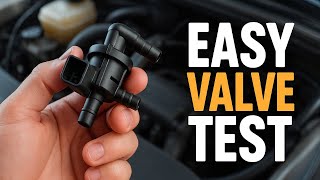
- Test the Purge Valve: Locate the purge valve on the airbox. Disconnect the electrical connector and hoses. Try to blow through it; it should be closed (no air passes through). Apply 12V from the battery or a 9V battery to the two pins; it should click open and allow you to blow through it. If it fails either of these tests, or if you experience hard starts after refueling, it needs replacement. 🎬 See this DIY guide for testing your EVAP purge valve
- Smoke Test: If the above steps do not resolve the issue, the system has a less obvious leak. A smoke test is the definitive way to find it. This involves injecting pressurized smoke into the EVAP system's service port to find the source of a leak, such as a cracked charcoal canister or a pinhole in a line. This is often best performed by a professional mechanic.
Parts You'll Likely Need

- Fuel Tank Cap Assembly
(OEM #77300-47010)— This is the most common cause for P0441 on this vehicle, as documented in Toyota's own Technical Service Bulletin S-SB-0030-09. This part number supersedes several previous versions.
Trusted brands: Toyota Genuine Part
OEM price range: $25-$40
Aftermarket price range: $15-$25 - Vapor Canister Purge Valve / Solenoid
(OEM #90910-12271)— This is the second most common failure point. It's a mechanical valve that can stick open or closed after many years of use, causing an incorrect purge flow reading and often leading to difficulty starting after getting gas.
Trusted brands: Denso (OEM Manufacturer), Standard Motor Products (SMP), Dorman
OEM price range: $70-$110
Aftermarket price range: $40-$80
Related Codes That Often Appear With This One
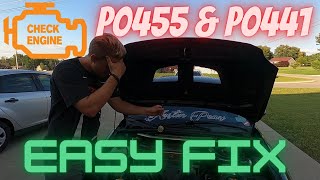
- P0455 — P0455 indicates a 'Gross EVAP Leak'. A completely failed or missing gas cap seal can be interpreted by the ECU as both an incorrect flow (P0441) and a large leak. The TSB for the tC specifically mentions this code combination. 🎬 Watch: A walkthrough of these specific codes on a Scion tC
- P0456 — P0456 indicates a 'Very Small EVAP Leak'. A degrading gas cap seal might initially cause a small leak code before it worsens to a P0441 or P0455. The TSB also covers this combination.
Technical Service Bulletins (TSBs) & Recalls
- S-SB-0030-09 Rev1 (November 19, 2009): MIL 'ON' DTC P0455 & P0441 or P0456 - This TSB identifies a faulty fuel cap as the cause for these EVAP codes and applies to all 2005-2010 Scion tC vehicles.
Platform-Specific Known Issues
- A Technical Service Bulletin (S-SB-0030-09, revised Nov 2009) was issued for all 2005-2010 Scion tC models for the MIL being on with codes P0441, P0455, and/or P0456. The bulletin identifies a faulty fuel cap as the primary cause and instructs technicians to replace it with an updated part.
Mechanic-Grade Diagnostic Values
- Purge Valve Solenoid Coil Resistance — expected: 15-30 Ohms at 68°F (20°C). Failure: A reading of infinity (open circuit) or near zero (short circuit) indicates a failed solenoid coil.
- EVAP System Pressure Change (Purge Start) — expected: Greater than 0.1 kPa-g (0.75 mmHg-g). Failure: If the pressure change is below this threshold when the purge operation starts, it's one of the conditions that sets P0441.
- EVAP System Pressure Change (During Purge) — expected: Greater than 0.4 kPa-g (3.0 mmHg-g). Failure: If the pressure change during purge (with vent valve closed) is below this threshold, it's the second condition that confirms a P0441 fault.
Hidden / Shadow Codes Worth Checking
- Mode 6, Test ID $39: This is not a traditional DTC, but a monitor for the EVAP system's purge flow. A technician can view this data with an advanced scan tool to see the raw test results from the ECU's last self-check. Seeing a 'FAIL' result for this test ID, even before the main P0441 code has set, can confirm an intermittent purge flow issue. (see via Advanced OBD-II scanner or Toyota Techstream software, under Mode 6 or non-continuous monitor test results.)
Scan Tool Commands That Help
- Toyota Techstream: Evaporative System Check (Automatic Mode) — This is a dealer-level function used to command a full, automated 5-step test of the entire EVAP system. It can be used after a repair to verify the fix without having to perform a full drive cycle. It takes approximately 18 minutes and requires the fuel tank to be between 15% and 90% full.
- Toyota Techstream: Active Test: Control the Purge VSV — This bidirectional command allows a technician to manually open and close the purge valve while the engine is running. By monitoring fuel trims or system pressure at the same time, they can confirm if the valve is physically responding to ECU commands and if flow is occurring as expected.
Wiring & Ground Locations
- Engine Ground 'ED' — Located on the left rear of the engine block/cylinder head.. The ECU and its sensors require a clean, stable ground reference. A corroded or loose main engine ground can cause erratic sensor readings, potentially leading to incorrect calculations for the EVAP monitor. Some owners report that the tC has a weak grounding system, making this a critical check for persistent, hard-to-diagnose electronic issues.
- Engine Room R/B — The main fuse/relay box located on the left side of the engine compartment.. This box contains the EFI (Electronic Fuel Injection) relay and fuse, which supply power to the ECU and, by extension, the EVAP system components like the purge valve. A poor connection or corrosion here can cause intermittent power issues.
Real Owner Repair Stories
- NHTSA ODI #10493611 — An owner reported that their vehicle exhibited a MIL ON condition with one or more of the following DTCs: P0455, P0441, or P0456, which is consistent with manufacturer service bulletin documentation.
- Reddit user in r/SciontC (Scion tC (year not specified, but 1st gen implied)) — Persistent P0441 code.
❌ Tried (didn't work) Replaced purge valve solenoid, Replaced gas cap
✅ What actually fixed it The vapor canister (charcoal canister) needed to be replaced. The user noted that topping off the gas tank can saturate the canister and cause this failure. - ScionLife.com forum user (Scion tC 1st Gen) — P0441 code returned after replacing gas cap.
❌ Tried (didn't work) Replaced gas cap
✅ What actually fixed it The user found a crack in the EVAP hose right where it connects to a metal hard pipe near the firewall. The user noted this specific hose is 'notorious for cracking' and that they had success temporarily by trimming the cracked end and re-clamping it, though it eventually needed full replacement. - Reddit user in r/MechanicAdvice (2008 Scion tC) — P0441 and P0455 codes. Car struggles to start only after filling the fuel tank completely.
❌ Tried (didn't work) Replaced purge valve, Replaced gas cap, Replaced MAF sensor, Replaced PCV hose
✅ What actually fixed it The user did not post a final fix, but provided a critical diagnostic data point: the codes would not trigger if they did not fill the gas tank past 3/4 full. This strongly points to an issue with either the charcoal canister being saturated or a faulty fuel tank pressure sensor giving incorrect readings at full tank levels.
"I Checked Everything" — The Actual Cause
- In a case involving a similar Scion (xB), an owner reported that after replacing the charcoal canister, purge valve, and gas cap, the P0441 code remained. Two separate smoke tests of 30+ minutes each revealed no leaks. A forum expert suggested the problem was likely not a leak, but a faulty sensor, specifically the 'Evap fuel tank pressure sensor'. This sensor provides the data for the EVAP monitor, and if it's sending incorrect pressure readings to the ECU, the system will fail its self-test and set a P0441 code even with no physical leaks present.
When the Usual Fixes Don't Work
- While the gas cap and purge valve are the most common fixes, numerous owner reports indicate that these fixes are not always sufficient. In multiple documented cases, owners replaced both the OEM gas cap and the purge valve, yet the P0441 code returned. The next most successful repair in these instances was the replacement of the charcoal canister, especially if the owner had a habit of 'topping off' the fuel tank. In other cases where even the canister was replaced and smoke tests showed no leaks, the problem was traced to hairline cracks in vacuum hoses that only opened under specific temperature or vibration conditions, or to a faulty fuel tank pressure sensor providing bad data to the ECU.
OEM Part Supersession History
77300-33010, 77300-33030, 77300-33050, 77300-33051, 77300-33052, 77300-33062, 77300-33070, 77300-35040→77300-47010— Updated design to improve sealing and longevity, specifically to address the issues outlined in TSB S-SB-0030-09.90910-12109→90910-12271— Internal design or material improvements for reliability and durability.
Diagnostic Flowchart
Real Owner Stories
Aggregated from forums and TSBs cited above. Mileages and costs reflect what owners reported in those sources.
2008 Scion tC
Symptoms: Check engine light with codes P0441 and P0455; struggles to start after filling the gas tank to max.
What fixed it: The user had not found a fix despite replacing the vapor canister, MAF, gas cap, and PCV. A commenter suggested the most likely problem was the purge valve itself.
Source hint: Reddit r/MechanicAdvice
2008 Scion tC
Symptoms: Check engine light illuminated with P0441 and P0455 error codes.
What fixed it: Installing a new gas cap fixed the codes. The user noted the original factory cap was 'pure dog poo'.
Source hint: ScionLife.com thread titled 'p0441 and p0445 error code. check engine light'
2005-2010 Scion tC
Symptoms: Triggered a P0441 EVAP Incorrect Purge Flow code.
What fixed it: The user had already replaced the gas cap and was advised by the community to check a specific vacuum hose known to crack near the firewall.
Source hint: ScionLife.com thread titled 'P0441 EVAP Incorrect Purge Flow'
2008-2009 Scion xB (2.4L 2AZ-FE)
Symptoms: P0441 code present on a platform-mate vehicle sharing the 2AZ-FE engine.
What fixed it: Replaced the vapor canister after replacing the gas cap and purge valve failed to resolve the issue.
Source hint: Owner forums cited in platform mates section
Related OBD-II Codes
Frequently Asked Questions
Is there a Technical Service Bulletin (TSB) for the P0441 code on my 2005-2010 Scion tC?
Why does my Scion tC struggle to start right after I fill up the gas tank?
Will a cheap aftermarket gas cap fix the P0441 code on my tC?
Where is the purge valve located on the 2.4L 2AZ-FE engine?
I replaced the gas cap and purge valve, but the P0441 code came back. What should I check next?
Does the P0441 code affect other Toyota or Scion models with the 2.4L engine?
Helpful Videos
We Have This Part in Stock


The information in this article is provided for general reference and educational purposes only. Vehicle specifications, procedures, and part compatibility can vary by production date, trim level, and region. Always consult your vehicle's factory service manual and verify part numbers before purchasing or performing repairs. Safety-critical components such as airbags, seat belts, and braking systems should be installed by a qualified professional.
- Scion tC:
- 🎬 Helpful Videos
- 🛍️ Shop This Part
- What's Unique About the 2005-2010 Scion tC
- Symptoms You May Notice
- Most Likely Causes
- Rare But Worth Checking
- Diagnosis Steps
- Parts You'll Likely Need
- Related Codes That Often Appear With This One
- Technical Service Bulletins (TSBs) & Recalls
- Platform-Specific Known Issues
- Mechanic-Grade Diagnostic Values
- Hidden / Shadow Codes Worth Checking
- Scan Tool Commands That Help
- Wiring & Ground Locations
- Real Owner Repair Stories
- "I Checked Everything" — The Actual Cause
- When the Usual Fixes Don't Work
- OEM Part Supersession History
- Diagnostic Flowchart
- Real Owner Stories
- 2008 Scion tC
- 2008 Scion tC
- 2005-2010 Scion tC
- 2008-2009 Scion xB (2.4L 2AZ-FE)
- Related OBD-II Codes
- Frequently Asked Questions
- 🎟️ Get 5% Off