

P0441 on 2003-2010 Pontiac Vibe: EVAP Incorrect Purge Flow Causes and Fixes
On a 2003-2010 Pontiac Vibe, code P0441 is most often caused by a faulty purge valve solenoid (Toyota P/N 90910-12276 or the updated 90910-TC001) located in the engine bay. This is a relatively inexpensive part ($30-$70) and is very easy to replace, often in under 30 minutes, making it the best starting point for a DIY repair.
- P0441 on a Vibe almost always points to a problem with the EVAP system's purge flow, not a simple gas cap leak.
- The most likely culprit is the purge valve solenoid in the engine bay, which is an easy and inexpensive DIY replacement.
- Do not habitually top off your fuel tank, as this can ruin the expensive charcoal canister and cause this code.
- If you have a 2007 model and have exhausted all other possibilities, be aware of the rare but documented issue where the ECM itself may be faulty.
What's Unique About the 2003-2010 Pontiac Vibe
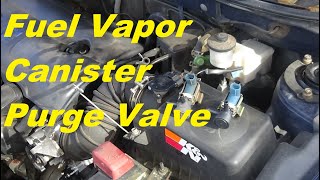
The Pontiac Vibe is a mechanical twin to the Toyota Matrix, sharing its entire powertrain and emissions system. Therefore, GM-specific knowledge does not apply here; this is a Toyota system. For this code, the Vibe is known for having an extremely common failure point in the engine-bay-mounted purge valve (also called a vacuum switching valve or VSV by Toyota). For 2003-2008 models, it is often mounted directly on the air filter housing, making it one of the easiest repairs on the vehicle.
Generation note: This range covers two Vibe generations: the first (2003-2008) and the second (2009-2010). While the causes are nearly identical, the purge valve is located on the airbox for many 1st-gen models, making it exceptionally easy to access. For 2nd-gen models, it is typically located on the intake manifold, still very accessible. For 2007 models specifically, a known Toyota TSB (EG041-07) indicates a faulty engine computer (ECM) can be the root cause, though this is rare.
Symptoms You May Notice
- Check Engine Light is on.
- No noticeable change in driving performance for most cases.
- Difficulty starting the engine immediately after refueling.
- Slightly rough idle.
- A faint smell of fuel, particularly after parking in an enclosed space.
- In rare cases with a significant vacuum leak, the engine may stall at low speeds.
- Replacing the gas cap when the purge valve is the actual problem. While a cheap first step, the purge valve is a much more frequent cause for P0441 specifically on this platform.
- Replacing other EVAP components like the charcoal canister when the issue is a simple cracked vacuum hose that could be found with a smoke test.
Most Likely Causes
- Faulty Vapor Canister Purge Valve / Solenoid 🔴 High Probability This is the most common failure point for this code on the Vibe/Matrix platform. The valve's internal diaphragm or solenoid coil fails over time, causing it to stick open or closed. It's a widely reported issue in owner forums.
How to confirm: Locate the valve in the engine bay. With the engine off, disconnect the hoses and try to blow through it. Air should NOT pass through, as it is normally closed. If air passes, it's stuck open and faulty. You can also apply 12V from the battery to its two terminals; you should hear a distinct click as it opens. If it doesn't click, the solenoid has failed.
Typical fix: Replace the purge valve solenoid. This is a simple repair involving disconnecting two hoses and an electrical connector, often completed in under 30 minutes.
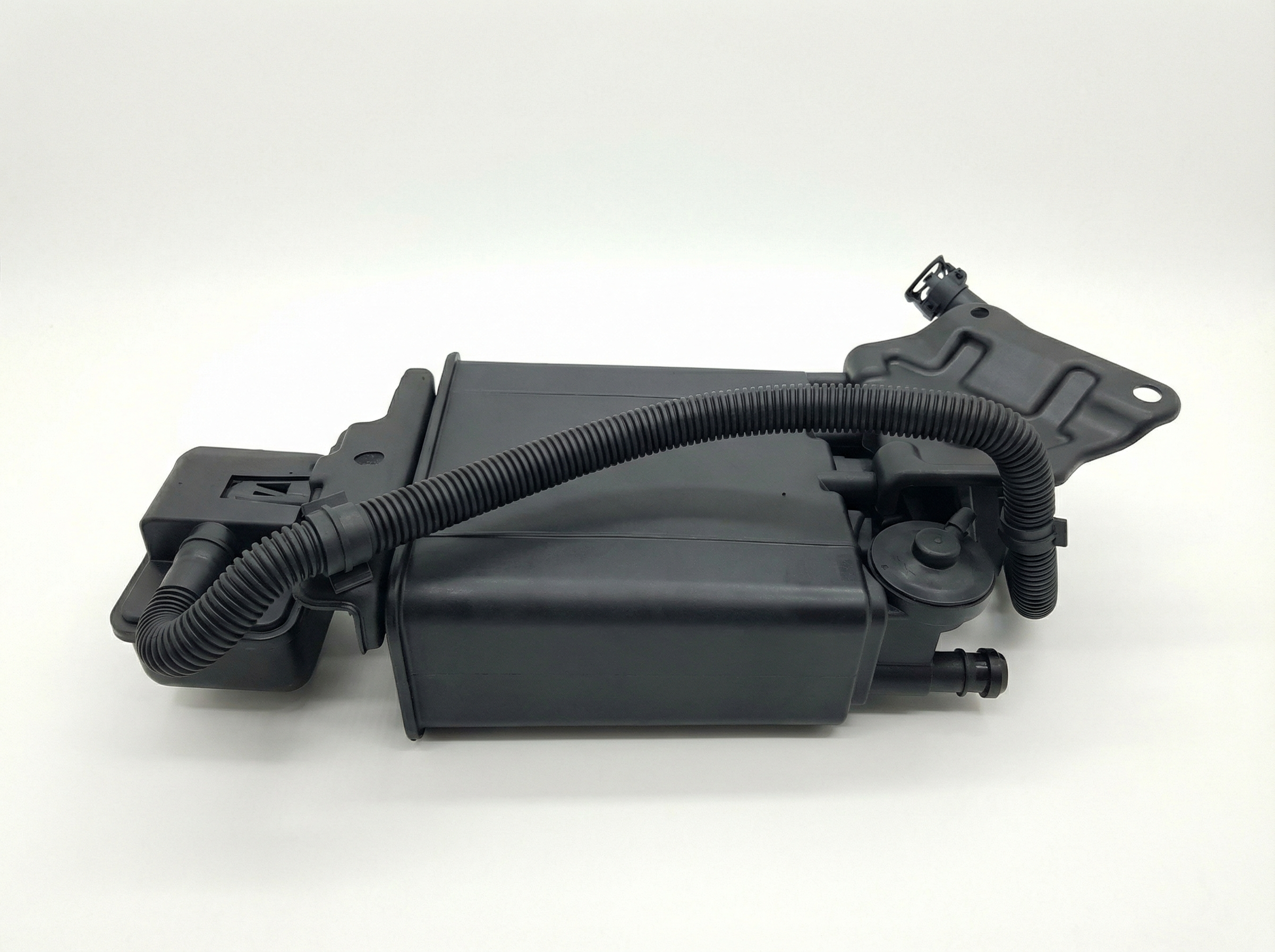
Est. part cost: $30-$90 - Cracked or Fuel-Saturated Charcoal Canister 🟡 Medium Probability Consistently overfilling the fuel tank (continuing to pump after the nozzle clicks off) can force liquid gasoline into the charcoal canister, saturating the charcoal pellets and blocking vapor flow. The plastic canister can also develop cracks with age.
How to confirm: Visually inspect the canister (located under the car near the fuel tank) for cracks or signs of fuel saturation (wet spots, strong fuel smell). If you frequently have trouble starting after refueling, this is a strong possibility. A definitive diagnosis may require a professional smoke test.
Typical fix: Replace the charcoal canister assembly.
Est. part cost: $150-$300 - Cracked, Disconnected, or Blocked EVAP Hoses 🟡 Medium Probability The rubber and plastic hoses in the EVAP system become brittle with age and exposure to engine heat, leading to cracks and vacuum leaks. This is a common finding on older vehicles.
How to confirm: Visually inspect all accessible EVAP vacuum lines, especially around the purge valve and intake manifold, for obvious cracks, brittleness, or loose connections. A user on genvibe.com fixed their P0441, P0440, and P0446 codes by replacing a faulty hose on the EVAP canister. A smoke test is the most effective way to find hidden leaks.
Typical fix: Replace the damaged section of hose.
Est. part cost: $5-$25 - Loose or Faulty Gas Cap ⚪ Low Probability While more likely to cause a gross leak code (P0455), a severely worn, incorrect, or dirty gas cap can sometimes affect the system's ability to seal, contributing to a flow fault. A Toyota service foreman suggested cleaning the filler neck mating surface as a first step.
How to confirm: Ensure the gas cap clicks at least once when tightened. Check the rubber seal on the cap for cracks or damage. Clean any rust or grime from the fuel filler neck where the cap seals.
Typical fix: Replace the gas cap, preferably with an OEM part for a guaranteed seal.
Est. part cost: $15-$30
Rare But Worth Checking
- Faulty Engine Control Module (ECM): For 2007 models only, Toyota issued a Technical Service Bulletin (TSB EG041-07) acknowledging that the ECM could incorrectly trigger P0441 and P0455. If all other components check out on a 2007 Vibe/Matrix/Corolla, the ECM may be the culprit. The fix involves replacing the original ECM (P/N 89661-02K20) with an updated version (P/N 89661-02K21).
- Damaged Fuel Filler Neck or Hoses: In some cases, road debris can damage the fuel filler neck or the connected EVAP hoses near the rear of the vehicle, causing a leak that can manifest as a P0441 code, often accompanied by other leak codes like P0455. One owner found a cut in a line near the tank that was the source of their issue.
Diagnosis Steps
- Read the code with an OBD-II scanner to confirm P0441 is present and check for any other related codes like P0442, P0446, or P0455.
- Check the gas cap. Ensure it is tight and the seal is not cracked or worn. As a simple maintenance step, wipe the fuel filler neck sealing surface clean of any dirt or rust.
- Visually inspect the engine bay. Look for any cracked, disconnected, or brittle vacuum hoses, particularly the ones connected to the purge valve.
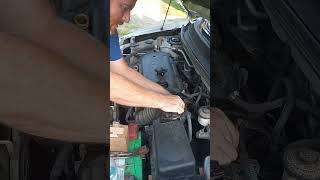
- Locate and test the purge valve. It's a small black solenoid, often on the air filter box (1st gen) or near the intake (2nd gen). Disconnect it and attempt to blow through it; if air passes, it's stuck open and needs replacement. If it's closed, apply 12V power and listen for a click to confirm it can open.
- If the purge valve and hoses seem fine, inspect the charcoal canister and associated hoses under the rear of the vehicle for any visible cracks or damage.
- If the cause is still not apparent, a professional smoke test is the next step to identify hard-to-see leaks in the system.
- For 2007 models ONLY, if all other components test good and you also have a P0455, investigate TSB EG041-07 regarding a potentially faulty ECM.
Parts You'll Likely Need
- Vapor Canister Purge Valve / Solenoid
(OEM #90910-12276 (Superseded by 90910-TC001))— This is the most frequent cause of P0441 on this platform. It's an electromechanical part that wears out over time, getting stuck open or closed.
Trusted brands: Denso (OEM), Standard Motor Products (SMP), Dorman
OEM price range: $60-$90
Aftermarket price range: $30-$60 - Charcoal Canister — The second most likely cause, usually due to fuel saturation from overfilling the gas tank or age-related cracking.
Trusted brands: ACDelco, Dorman, Genuine Toyota
OEM price range: $250-$350
Aftermarket price range: $150-$250
Related Codes That Often Appear With This One
- P0446 — This code relates to the vent control circuit. If the charcoal canister or its associated valves are failing, it's common to see both flow (P0441) and vent (P0446) codes together.
- P0442 — This indicates a small leak. A cracked hose or failing canister can cause both a flow issue and a small leak, triggering both codes.
- P0455 — This indicates a gross leak. It often appears with P0441 on 2007 models due to the ECM issue described in TSB EG041-07.
Technical Service Bulletins (TSBs) & Recalls
- EG041-07 (Toyota) - Addresses an issue on some 2007 models where the ECM (P/N 89661-02K20) may erroneously set P0441 and P0455, requiring replacement with an updated ECM (P/N 89661-02K21).
Platform-Specific Known Issues
- On 2003-2008 models, the purge valve is often conveniently located directly on the air filter housing, making replacement a sub-15-minute job with basic tools.
- A TSB (EG041-07) exists for the 2007 Toyota Matrix/Corolla (and by extension, the Vibe) where the ECM itself can cause a false P0441 code, requiring ECM replacement in rare cases.
Mechanic-Grade Diagnostic Values
- Purge Valve (VSV) Coil Resistance — expected: 30 – 36 Ω at 20°C (68°F). Failure: No continuity (open circuit) or resistance outside the specified range indicates a faulty solenoid coil.
- Purge Solenoid Duty Cycle at Idle (Live Data) — expected: 5-20%. Failure: A value of 0% could indicate a stuck-closed valve or an electrical issue. A high value or 100% at idle could indicate a stuck-open valve.
- EVAP System Pressure at Idle (Live Data) — expected: Near 0 kPa (atmospheric pressure). Failure: A significant negative or positive pressure reading at idle when the purge valve should be closed suggests a leak or a stuck-open valve.
Scan Tool Commands That Help
- Toyota Techstream: Evaporative System Check Utility — This utility allows a technician to manually command the EVAP system's valves and pumps to operate, forcing a system self-test without waiting for the vehicle's natural 5-hour cold soak cycle. It can confirm a fix or help isolate a leak by monitoring system pressure during the test.
- Toyota Techstream: Active Test: Control the Purge VSV — This bidirectional command allows the user to directly open and close the purge valve while monitoring engine RPM or vacuum. This definitively confirms if the ECM can control the valve and if the valve is physically responding to commands.
Wiring & Ground Locations
- G105 — For the 1.8L engine, G105 is a ground point located on the top of the engine. For the 2.4L engine, it is on the left rear of the engine.. A poor ground at this location can cause erratic behavior or failure of various engine sensors and solenoids, including potentially the EVAP purge solenoid control circuit.
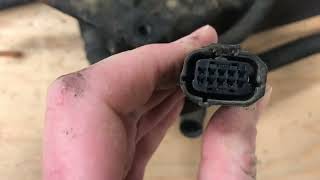
- Purge Solenoid Connector — On the purge valve solenoid itself, located on the air cleaner assembly (1st gen) or near the intake manifold (2nd gen).. This is the primary point for electrical testing. One pin should receive 12V+ with the key on, and the other pin is the control wire that the ECM grounds to activate the solenoid. Checking for voltage and control signal here is a key diagnostic step.
Real Owner Repair Stories
- GenVibe forum user (Pontiac Vibe (year not specified, but post-2005 with plastic fuel tank)) — EVAP codes present.
❌ Tried (didn't work) Testing the purge valve (clicked with 9V battery), Testing the vent valve, Checking for voltage at the canister connector
✅ What actually fixed it Found a damaged wiring harness located under the spare wheel, near the left rear strut. Repairing the damaged wires in the harness resolved the EVAP codes. - CarKiller forum user (2006 Toyota Matrix, 230,000 miles) — P0441 code for 2 years.
❌ Tried (didn't work) Gas cap (replaced twice), Fuel Pump, Fuel Filter, Vapor canister solenoid/purge valve, Charcoal canister, Multiple hoses, gaskets, and sensors
✅ What actually fixed it The issue remained unresolved after replacing numerous parts. The final recommendation from a shop was to replace the fuel filler neck, which is a common area for rust-through leaks that are hard to spot. This highlights a scenario where throwing parts at the problem is ineffective without a proper smoke test to pinpoint the exact leak source.
"I Checked Everything" — The Actual Cause
- In a case on a GenVibe forum, a user with persistent EVAP codes passed initial component tests (valves clicking, etc.). The final culprit was not a leak but a damaged wiring harness under the spare tire, which would not be found by a smoke test. This emphasizes the need to check electrical circuits if a smoke test reveals no leaks.
OEM Part Supersession History
90910-12276→90910-TC001— Standard part update/revision by Toyota. The new part is a direct replacement.
Heads up: These parts are interchangeable. 90910-TC001 is the currently supplied service part.
Model Year Variations Within This Range
- 2003-2004: These early models used a steel fuel tank and had the fuel tank pressure sensor located on the fuel pump sending unit under the rear seat.
- 2005-2008: These models switched to a plastic fuel tank. The fuel tank pressure sensor was integrated into the leak detection pump, which is part of the charcoal canister assembly located above the rear axle. This change makes diagnosing pressure sensor codes (like P0451/P0452) different from earlier years.
- 2009-2010: The purge valve is typically located on the intake manifold or left side of the engine compartment, rather than directly on the air filter box as seen in many 1st generation models.
Diagnostic Flowchart
Other Known Issues on This Vehicle
Issues unrelated to this code that are worth knowing about as an owner of this generation:
- Excessive Oil Consumption (2.4L 2AZ-FE Engine) 🔴 High — Common in 2009-2010 GT and AWD models, often starting around 70,000 miles. Caused by a faulty piston ring design. (Ref: Toyota addressed this in other models with a warranty enhancement, but it's a known issue to monitor closely in the Vibe by checking oil levels frequently.)
- Manual Transmission Bearing Failure (2003-2004) 🔴 High — A significant number of early 5-speed manual transmission models experienced premature bearing failure, sometimes with little warning before 100,000 miles.
- Automatic Transmission Failure (Early Models) 🟠 Medium — Some 2003 models were prone to automatic transmission failure, including shifting difficulties and sudden engine shutdown.
- Sunroof Leaks 🟡 Low — Common across many model years, often caused by clogged drain tubes, leading to water staining the headliner or dripping into the cabin.
- Window Regulator Bolt Failure (2003-2004) 🟠 Medium — Bolts securing the front window glass could loosen, causing the glass to separate from the regulator and potentially shatter. (Ref: NHTSA Recall 08V233000)
Used vs. New Parts: Buying Guide for This Vehicle
When a used part is the smart pick: For the Vapor Canister Purge Valve (solenoid), a used OEM part from a reputable salvage yard is often a reliable and cost-effective choice. These Denso-made parts are generally robust, and a used original part can be preferable to a low-quality new aftermarket one.
Donor-vehicle mileage cap: roughly under 150000 miles for the part to have meaningful remaining life.
What to inspect on the donor part:
- Check for visible cracks or damage on the plastic housing and hose ports.
- Ensure the electrical connector pins are clean and free of corrosion.
- If possible, bring a 9V or 12V power source to test the valve at the junkyard. It should make a distinct 'click' when power is applied.
- Avoid parts from vehicles with obvious signs of front-end collision damage near the engine bay.
OEM-only on this vehicle (don't cheap out):
- Gas Cap: Aftermarket gas caps are notoriously unreliable and often do not seal correctly, leading to persistent EVAP codes. It is strongly recommended to use a genuine Toyota/GM OEM gas cap.
Aftermarket brands forum-validated for this vehicle:
- Denso (OEM manufacturer)
- Standard Motor Products (SMP)
Brands owners have reported issues with on this vehicle:
- Unbranded, 'white-box' parts from online marketplaces, especially for the gas cap and purge valve, as their quality control is often poor.
Real Owner Stories
Aggregated from forums and TSBs cited above. Mileages and costs reflect what owners reported in those sources.
2009 Pontiac Vibe
Symptoms: The car was almost stalling on the road and experiencing power loss along with the Evap Purge Code P0441.
What fixed it: A tip from a Toyota foreman suggested cleaning the fuel filler neck mating surface of rust and grime to ensure the gas cap seals correctly.
Source hint: genvibe.com: '2009 Almost Stalling on road / Evap Purge Code P0441'
2003-2010 Pontiac Vibe
Symptoms: The owner had multiple EVAP codes including P0441, P0440, and P0446.
What fixed it: Replacing a faulty hose on the EVAP charcoal canister.
Source hint: genvibe.com user report cited in 'Cracked, Disconnected, or Blocked EVAP Hoses' section
Related OBD-II Codes
Frequently Asked Questions
I have a 2007 Pontiac Vibe with codes P0441 and P0455. Is there a specific known issue for this year?
Where is the purge valve located on my first-generation (2003-2008) Vibe?
Can overfilling my gas tank cause the P0441 code on a Vibe?
My 2009 Vibe is stalling at low speeds and has a P0441 code. Are these related?
Should I buy an aftermarket gas cap to fix this code?
Is the P0441 issue on my Vibe the same as the one on the Toyota Matrix?
Helpful Videos
![How to Fix P0441 Engine Code in 6 Minutes [4 DIY Methods / Only $3.50]](https://img.youtube.com/vi/NJYZiDhYhP8/mqdefault.jpg)

Used OEM Parts in Stock
New Aftermarket Parts Available


The information in this article is provided for general reference and educational purposes only. Vehicle specifications, procedures, and part compatibility can vary by production date, trim level, and region. Always consult your vehicle's factory service manual and verify part numbers before purchasing or performing repairs. Safety-critical components such as airbags, seat belts, and braking systems should be installed by a qualified professional.
- Pontiac Vibe:
- 🎬 Helpful Videos
- 🛍️ Shop This Part
- What's Unique About the 2003-2010 Pontiac Vibe
- Symptoms You May Notice
- Most Likely Causes
- Rare But Worth Checking
- Diagnosis Steps
- Parts You'll Likely Need
- Related Codes That Often Appear With This One
- Technical Service Bulletins (TSBs) & Recalls
- Platform-Specific Known Issues
- Mechanic-Grade Diagnostic Values
- Scan Tool Commands That Help
- Wiring & Ground Locations
- Real Owner Repair Stories
- "I Checked Everything" — The Actual Cause
- OEM Part Supersession History
- Model Year Variations Within This Range
- Diagnostic Flowchart
- Other Known Issues on This Vehicle
- Used vs. New Parts: Buying Guide for This Vehicle
- Real Owner Stories
- 2009 Pontiac Vibe
- 2003-2010 Pontiac Vibe
- Related OBD-II Codes
- Frequently Asked Questions
- 🎟️ Get 5% Off