

P0441 on 2004-2010 Mazda 3: EVAP Incorrect Purge Flow Causes and Fixes
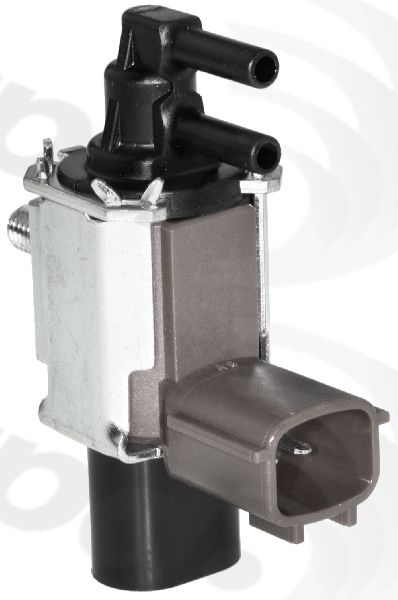
On a 2004-2010 Mazda 3, the P0441 code is almost always caused by a faulty EVAP purge solenoid valve. This is an inexpensive part (around $25-$75) that is easy to replace for a DIYer in under 30 minutes. Before replacing, ensure the gas cap is tight and its seal is not damaged.
- P0441 on a 2004-2010 Mazda 3 is most likely a bad purge solenoid valve.
- Before buying parts, always check that your gas cap is tight and its seal is intact, as this can also cause the code and is a cheaper fix.
- The purge valve is located in the engine bay and is very easy to access and replace, making this a great DIY repair.
- Do not overfill your gas tank. Stop at the first click to prevent damage to the charcoal canister, which is a more expensive repair.
What's Unique About the 2004-2010 Mazda 3
For this generation of Mazda 3, the P0441 code is overwhelmingly linked to a simple failure of the purge solenoid valve. While EVAP system diagnosis can be complex on many vehicles, Mazda 3 owners frequently find this single, accessible part to be the culprit. The valve is conveniently located in the engine bay, often near the automatic transmission dipstick (if equipped), making it an unusually straightforward fix for this common code. Mazda also issued a Technical Service Bulletin (TSB 01-002-18-3417) that groups P0441 with other EVAP codes, pointing towards a common diagnostic path.
Generation note: This guide covers the first generation (BK, 2004-2009) and the first model year of the second generation (BL, 2010) Mazda 3. The primary cause, the purge solenoid valve, and its location are consistent across these model years. Forum discussions confirm the issue is prevalent across these years, including for the Mazdaspeed3 variant.
Symptoms You May Notice
- Check Engine Light is on
- Slightly rough or erratic idle in some cases
- A faint smell of fuel (rare)
- Slight decrease in fuel economy over time
- Difficulty starting the car after refueling (rare)
- Popping or backfiring sounds between shifts on Mazdaspeed3 models has been anecdotally reported.
- Replacing the oxygen (O2) sensors
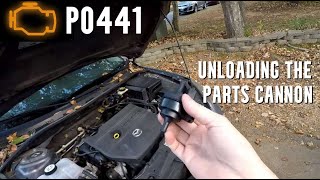
- Replacing the mass airflow (MAF) sensor 🎬 Watch: Why you shouldn't just fire the 'parts cannon' at P0441.
- Confusing the Purge Solenoid Valve with the PCV valve, a mistake noted on a Mazdas247 forum thread.
Most Likely Causes
- Faulty EVAP Purge Solenoid Valve 🔴 High Probability This specific part is the most common failure point for this code on the 2004-2010 Mazda 3, frequently cited in owner forums and repair databases. The valve can get stuck open or closed due to age and heat cycles.
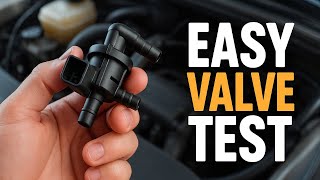
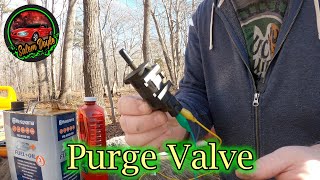
How to confirm: The valve is normally closed. With the engine off, disconnect the hoses and try to blow through it; no air should pass. Apply 12V to the electrical connector pins; the valve should click open and allow air to pass. If it fails either of these tests, it needs to be replaced. A YouTube video by 'KY Home Garage' demonstrates testing the valve on a 2007 Mazda 3. 🎬 Watch: A step-by-step guide to testing your EVAP purge valve.
Typical fix: Replace the purge solenoid valve. It is located in the engine bay, is held by a bracket with one or two small bolts, and has two hoses and an electrical connector. Some owners on forums like Mazdaspeeds.org have noted that using a non-OEM (aftermarket) part sometimes causes the code to return, suggesting a genuine Mazda part is a safer, albeit more expensive, choice.
Est. part cost: $25-$75 - Loose or Faulty Gas Cap 🟡 Medium Probability
How to confirm: Ensure the gas cap is tightened until it clicks. Inspect the rubber seal on the cap for cracks, tearing, or deterioration. A worn seal will not hold pressure. A user on Mazdaspeeds.org solved their persistent P0441 code by replacing the gas cap after a new purge valve didn't fix the issue.
Typical fix: Tighten the gas cap correctly. If the seal is damaged, replace the gas cap. An OEM replacement is recommended.
Est. part cost: $10-$30 - Clogged or Disconnected EVAP Purge Line ⚪ Low Probability Overfilling the fuel tank can force liquid gasoline and charcoal pellets from the canister into the purge lines, causing a blockage.
How to confirm: Visually inspect the vacuum hoses running from the purge valve to the intake manifold and back towards the charcoal canister. Check for cracks, loose connections, or blockages. If charcoal pellets are found in the lines or inside the purge valve, the canister is likely compromised.
Typical fix: Clear the blockage or replace the cracked/damaged hose. If charcoal pellets are present, the charcoal canister will also need to be replaced.
Est. part cost: $5-$20 for hoses, $150-$250 for a canister
Rare But Worth Checking
- Cracked Charcoal Canister: This usually happens due to physical damage or consistently overfilling the fuel tank, which saturates the canister with liquid fuel.
- Faulty EVAP Vent Solenoid: The vent solenoid, located near the charcoal canister, can get stuck. While less common for P0441 specifically, it's part of the same system and can cause related issues.
- PCM Software Issue: In some rare cases, the vehicle's computer may have software that is too sensitive, requiring an update from the dealer.
- Fuel Pressure Sensor or Shutter Valve: As noted in a cross-model manufacturer bulletin (TSB Bulletin #SA-059-25), P0441 can sometimes be caused by a concern with the fuel pressure sensor or shutter valve operation.
Diagnosis Steps
- Read the code with an OBD-II scanner to confirm P0441 is present.
- Check the gas cap. Ensure it is tight and the seal is in good condition. A user on Mazdaspeeds.org reported a new gas cap fixed their P0441 after a purge valve replacement did not. Clear the code and drive to see if it returns.
- Locate the EVAP purge solenoid valve in the engine bay, near the intake manifold and firewall.
- Inspect all vacuum lines connected to and surrounding the purge valve for cracks, brittleness, or loose connections.
- Test the purge valve. Disconnect it and attempt to blow through it; it should be closed. Apply 12V power and it should click open, allowing air to pass. Replace it if it fails this test.
- If the valve and hoses are good, the next step is to perform a smoke test on the EVAP system to check for any hard-to-see leaks in the lines or charcoal canister.
- If charcoal pellets are found in the purge lines, the charcoal canister has failed and must be replaced along with cleaning out the lines.
Parts You'll Likely Need
- EVAP Canister Purge Solenoid Valve
(OEM #LF15-18-741, Z504-18-741 (superceded))— This is the most frequent failure item causing code P0441 on this specific vehicle.
Trusted brands: Mazda (OEM), Bosch, Dorman (911-700), Standard Motor Products (CP563), Duralast (PV703)
OEM price range: $60-$120
Aftermarket price range: $25-$50
Related Codes That Often Appear With This One
- P0442 — Indicates a small EVAP leak. A failing purge valve can sometimes cause both codes. The official Mazda TSB groups these codes together.
- P0455 — Indicates a large EVAP leak. Often seen if a hose is completely disconnected from the purge valve. The official Mazda TSB groups these codes together.
- P0456 — Indicates a very small EVAP leak, often related to a bad gas cap seal, which can be an initial misdiagnosis for P0441. The official Mazda TSB groups these codes together.
Technical Service Bulletins (TSBs) & Recalls
- 01-002-18-3417: Groups P0441 with other EVAP codes, suggesting a common diagnostic path. The full text is not publicly available but its existence is widely referenced in relation to EVAP diagnostics for this platform.
- TSB Bulletin #01-002-18-3417: A manufacturer service bulletin notes that some vehicles may have a MIL illumination with DTCs P0441, P0442, P0455, or P0456 stored in memory, and provides a procedure to determine the location of the evaporative system leak.
- TSB Bulletin #SA-059-25: A manufacturer bulletin for other Mazda models indicates that P0441 may be caused by a concern with the fuel pressure sensor or shutter valve operation.
Platform-Specific Known Issues
- A Technical Service Bulletin (TSB 01-002-18-3417) was issued by Mazda that groups P0441 with other EVAP leak codes (P0442, P0455, P0456), indicating a common diagnostic procedure for these related issues.
- A user on a Mazdas247 forum thread from 2007 mentioned that a dealer acknowledged a known manufacturing issue with the purge valve affecting multiple Mazda models from that era, including the Mazda 3, CX-7, and Miata.
- In a Reddit thread, an owner of a 2008 Mazda 3 described the replacement process, noting the solenoid is attached with an 8mm hex screw to a bracket held by two 10mm hex screws, providing a real-world example of the job's simplicity.
Mechanic-Grade Diagnostic Values
- Short-Term Fuel Trim (STFT) during bidirectional test — expected: When the purge valve is commanded open via a scan tool, STFT should go negative as fuel vapors create a rich condition.. Failure: If STFT does not change, the valve is stuck closed or a line is blocked. If STFT is already negative at idle with the valve commanded closed, the valve may be stuck open.
- Purge Solenoid Valve Control Voltage (Key On, Engine Off) — expected: Battery voltage (B+). Failure: Voltage less than B+ indicates a potential open or short in the power supply circuit or a blown fuse.
- Purge Solenoid Valve Control Voltage (PCM commanding valve ON) — expected: Less than 11.5 V. Failure: If the control voltage is more than 11.5 V when the PCM commands the valve on, the PCM determines the control circuit voltage is high.
- Purge Solenoid Valve Control Voltage (PCM commanding valve OFF) — expected: Greater than 5.8 V. Failure: If the control voltage is less than 5.8 V when the PCM commands the valve off, the PCM determines the control circuit voltage is low.
Hidden / Shadow Codes Worth Checking
- Mode 6, Test ID $39 & $3A: These are not hidden codes but raw data from the PCM's self-tests for the EVAP system. They can show test results for purge flow and system leaks, indicating if the system is marginally passing or failing before a DTC is set. (see via Requires an OBD-II scanner with Mode 6 functionality. Specific Component IDs (CID) will correspond to different tests.)
Scan Tool Commands That Help
- Advanced OBD-II Scanner (e.g., FORScan, Autel, Snap-on): Purge Valve Solenoid Bidirectional Control / Actuator Test — This command allows the technician to manually open and close the purge valve while monitoring live data like Short-Term Fuel Trim (STFT) or system pressure to confirm if the valve is physically responding to the PCM's command and if flow is occurring.
Wiring & Ground Locations
- PCM Connector Pin 2C — At the Powertrain Control Module (PCM) main connector.. This is the specific pin that the PCM uses to control the Purge Solenoid Valve. Testing for a signal at this pin can confirm if the PCM is commanding the valve to open, helping to isolate a wiring fault from a faulty PCM.
- Purge Solenoid Power Supply — One of the two wires at the purge solenoid electrical connector.. This wire should have battery voltage with the key in the ON position. A lack of voltage points to a blown fuse or a break in the power supply wire, not a faulty valve.
Real Owner Repair Stories
- YouTube channel 'P0441 Easy Fix - Parts Cannon' (2007 Mazda 3) — Check Engine Light with code P0441.
❌ Tried (didn't work) Replacing the gas cap initially did not resolve the issue, as the light returned after a month.
✅ What actually fixed it Replacing the EVAP purge solenoid valve located next to the automatic transmission dipstick ultimately resolved the P0441 code. - Mazdaspeeds.org forum user (2008 Mazdaspeed3, 144k miles) — P0441 and P0446 codes.
❌ Tried (didn't work) Replaced canister purge valve with a non-Mazda part; codes returned., Replaced the Leak Detection Pump with a genuine Mazda part; P0441 code returned.
✅ What actually fixed it The user was contemplating replacing the fuel filler cap as the next step, suggesting that even after replacing major components, this basic item was a potential final culprit. The thread implies this is a common troubleshooting path. - NHTSA ODI #10162479 — An owner reported bringing their vehicle in for a P0441 code (EVAP Emissions Control-Incorrect Purge Flow), but noted that the dealership mechanic instead pulled a code for a slipping torque converter, highlighting potential diagnostic confusion at the service level.
OEM Part Supersession History
Z504-18-740, Z504-18-741→Z504-18-741A— Standard part revision and update by the manufacturer.
Heads up: The Z504-18-741A is listed as the current replacement for the older numbers and is compatible with a wide range of Mazda vehicles from the era, including the Mazda 3, 6, RX-8, and Miata.LF15-18-741→Not explicitly superseded, but often listed as an alternative or equivalent to Z504-18-741.— Potentially different supplier or specific application within the model range.
Heads up: Both LF15-18-741 and Z504-18-741 are commonly cited as the correct part. Verification with VIN is always recommended, but functionally they are interchangeable for this fault code.
Diagnostic Flowchart
Real Owner Stories
Aggregated from forums and TSBs cited above. Mileages and costs reflect what owners reported in those sources.
2005 Mazda 3 2.3L — 180000 miles
Symptoms: Check engine light with codes P0442 and P0456 initially, which changed to P0455 and P0441 after repairs.
What fixed it: The owner had not found a fix at the time of posting; the issue was ongoing after replacing the gas cap, leak detection pump, and purge valve.
Source hint: Reddit r/mazda3
2008 Mazdaspeed3 — 144000 miles
Symptoms: Check Engine Light with codes P0441 and P0446, then only P0441. No fuel smell and car ran great.
What fixed it: The new gas cap fixed the problem after replacing the canister purge valve with a non-Mazda part and the Leak Detection Pump with an OEM part failed to resolve it.
Source hint: Mazdaspeeds.org
Related OBD-II Codes
Frequently Asked Questions
Does TSB 01-002-18-3417 apply to my Mazda 3 for code P0441?
Should I use an aftermarket EVAP purge solenoid valve to fix P0441 on my Mazda 3?
Why is my Mazdaspeed3 making popping or backfiring sounds between shifts with this code?
How do I test the purge solenoid valve on my 2004-2010 Mazda 3?
Are there other Mazda models that share this exact P0441 purge valve issue?
What tools do I need to replace the purge valve on my 2008 Mazda 3?
Helpful Videos
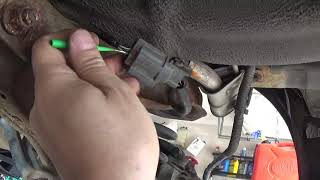
Used OEM Parts in Stock


New Aftermarket Parts Available

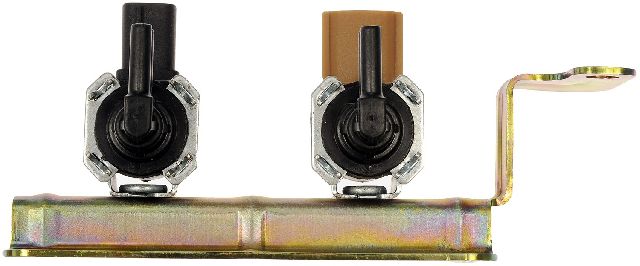
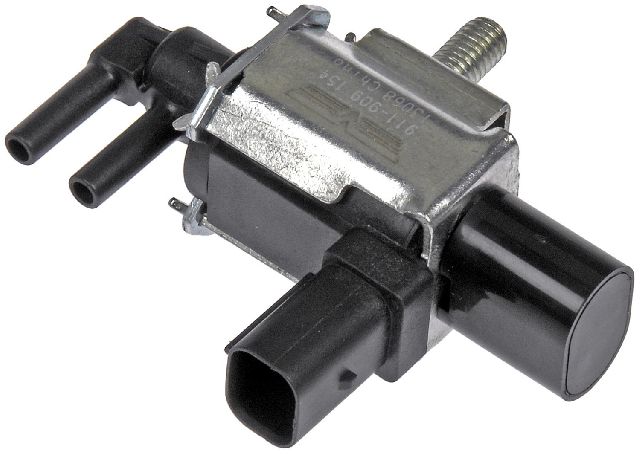
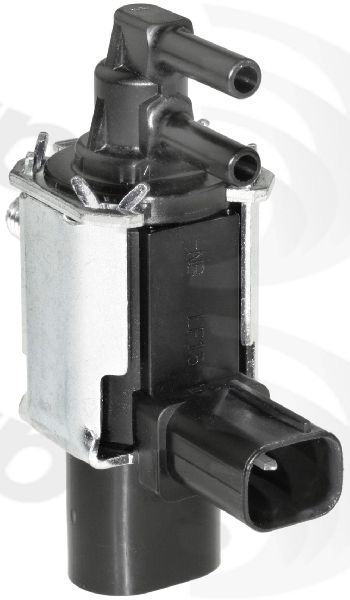

The information in this article is provided for general reference and educational purposes only. Vehicle specifications, procedures, and part compatibility can vary by production date, trim level, and region. Always consult your vehicle's factory service manual and verify part numbers before purchasing or performing repairs. Safety-critical components such as airbags, seat belts, and braking systems should be installed by a qualified professional.
- Mazda 3:
- 🎬 Helpful Videos
- 🛍️ Shop This Part
- What's Unique About the 2004-2010 Mazda 3
- Symptoms You May Notice
- Most Likely Causes
- Rare But Worth Checking
- Diagnosis Steps
- Parts You'll Likely Need
- Related Codes That Often Appear With This One
- Technical Service Bulletins (TSBs) & Recalls
- Platform-Specific Known Issues
- Mechanic-Grade Diagnostic Values
- Hidden / Shadow Codes Worth Checking
- Scan Tool Commands That Help
- Wiring & Ground Locations
- Real Owner Repair Stories
- OEM Part Supersession History
- Diagnostic Flowchart
- Real Owner Stories
- 2005 Mazda 3 2.3L — 180000 miles
- 2008 Mazdaspeed3 — 144000 miles
- Related OBD-II Codes
- Frequently Asked Questions
- 🎟️ Get 5% Off