

P0441 on 2000-2007 Ford Taurus: EVAP Incorrect Purge Flow Causes and Fixes
For a 2000-2007 Ford Taurus, code P0441 is most often caused by a faulty EVAP purge valve (also called a vapor management valve) located in the engine bay on the firewall. This is a relatively inexpensive part, costing around $25-$60 for an aftermarket replacement, and is a straightforward DIY repair for many owners.
What's Unique About the 2000-2007 Ford Taurus
On the fourth-generation Ford Taurus (2000-2007), the EVAP system components are fairly standard. However, owners sometimes confuse the EVAP canister purge valve (often called the vapor management valve by Ford, located in the engine bay) with the canister vent solenoid, which is located at the rear of the car near the charcoal canister. The most common failure point leading to P0441 is the purge valve itself, which can get stuck open or closed. Diagnosing this code is usually straightforward, starting with the purge valve and its associated hoses.
Symptoms You May Notice
- Check Engine Light is on.
- Possible slight rough idle, especially if the purge valve is stuck open.
- A faint fuel smell may be noticeable in rare cases.
- In very rare cases, difficulty starting the engine. 🎬 Watch: A breakdown of common symptoms of a bad purge valve
- Replacing the gas cap. While a loose or faulty gas cap can cause other EVAP codes (like P0455 or P0457 for system leaks), it is not a common cause for P0441, which specifically points to an incorrect flow problem rather than a general system leak.
Most Likely Causes
- Faulty EVAP Purge Valve (Vapor Management Valve) 🔴 High Probability The purge valve is a solenoid that cycles thousands of times, and can wear out, get stuck open, or fail to seal (stuck closed). It's the most common point of failure for this specific code.
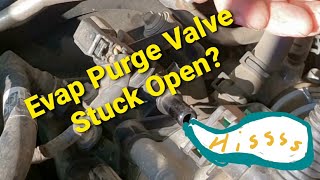
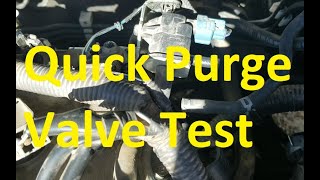
How to confirm: Locate the valve in the engine bay, typically mounted to the firewall. It will have two hoses and an electrical connector. With the engine off, disconnect the vapor line and try to blow through it; it should be closed (no air passes). If you can blow through it, it's stuck open and needs replacement. You can also apply 12V power to its terminals to see if it clicks open. A hand vacuum pump can also be used to confirm it holds vacuum when closed. 🎬 Watch: How to test the purge valve without using any tools
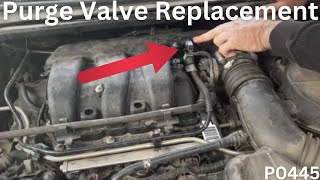
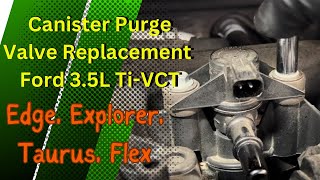
Typical fix: Replace the EVAP purge valve. This involves disconnecting two hoses and an electrical connector, and unbolting it from its mount. It is a common DIY repair. 🎬 See this walkthrough for replacing the valve on a Ford Taurus
Est. part cost: $25-$60 - Cracked or Disconnected EVAP Hoses 🟡 Medium Probability The plastic and rubber hoses in the engine bay become brittle over time due to heat and age, leading to cracks and vacuum leaks that disrupt the purge flow.
How to confirm: Visually inspect all EVAP lines running from the charcoal canister (at the rear of the car) to the purge valve and from the purge valve to the intake manifold. Look for obvious cracks, breaks, or loose connections. A smoke test is the most effective way to find small, hard-to-see leaks.
Typical fix: Replace the damaged section of hose. Ensure all connections are secure.
Est. part cost: $10-$30 - Clogged EVAP Charcoal Canister ⚪ Low Probability Habitually overfilling the fuel tank (i.e., 'topping off' after the pump clicks off) can force liquid gasoline into the charcoal canister, saturating the charcoal pellets and causing them to break down. These pellets can then travel up the purge line, clogging it and the purge valve.
How to confirm: Disconnect the purge line from the canister or the purge valve itself and check for black charcoal pellets inside the hose. If pellets are present, the canister has failed and is the root cause.
Typical fix: Replace the charcoal canister and thoroughly clean out all connected EVAP lines to remove any debris before installing a new purge valve. Failure to clean the lines will cause the new purge valve to fail quickly.
Est. part cost: $50-$100 - Blown Fuse or Electrical Circuit Issue ⚪ Low Probability
How to confirm: For 2000-2003 models, check fuse #28 (15A) in the engine compartment fuse box. This fuse powers the canister vent solenoid. Use a multimeter to check for battery voltage at the purge valve connector with the key on. Lack of voltage points to a wiring or fuse issue.
Typical fix: Replace the blown fuse. If it blows again, diagnose the circuit for a short to ground.
Est. part cost: $1-$5
Rare But Worth Checking
- Faulty Canister Vent Solenoid: This component, located near the charcoal canister at the rear of the car, is more likely to cause other EVAP codes (like for a large leak or vent control circuit), but a malfunctioning one can sometimes contribute to a P0441.
- Faulty Fuel Tank Pressure (FTP) Sensor: An FTP sensor providing incorrect readings can confuse the PCM's diagnostic tests. However, a bad FTP sensor will typically set its own specific trouble codes (e.g., P0452, P0453).
Diagnosis Steps
- Check the gas cap to ensure it is tight and the seal is not cracked. While not the most likely cause, it is the easiest check.
- Visually inspect the EVAP purge valve and all accessible vacuum lines in the engine bay. Look for any obvious cracks, damage, or disconnected hoses.
- Locate the EVAP purge valve on the engine firewall. Disconnect the electrical connector and the two vapor lines.
- Test the purge valve. With no power applied, try to blow through it. It should be closed and allow no air to pass. If you can blow through it, it's stuck open and must be replaced.
- If the valve is closed, use jumper wires to apply 12V and ground to its two pins. You should hear an audible click, and the valve should now be open (air should pass through). If it doesn't open, it has failed.
- Check for the presence of black charcoal pellets in the vapor lines. If found, the charcoal canister has failed and must be replaced, and the lines cleaned out thoroughly.
- If the valve tests good, check for power at the electrical connector with a multimeter. With the ignition on, one pin should have ~12V.
- If no obvious faults are found, the next step is a smoke test to identify any hard-to-find leaks in the EVAP lines between the engine and the rear canister.
Parts You'll Likely Need
- EVAP Canister Purge Valve / Vapor Management Valve
(OEM #Motorcraft CX1757 (for 1996-2003) or CX2095 (for 2004-2007))— This is the most frequent failure point for code P0441 on most Ford vehicles of this era. It's a solenoid that wears out over time.
Trusted brands: Motorcraft, Bosch, Dorman, Standard Motor Products
OEM price range: $50-$90
Aftermarket price range: $25-$60
Related Codes That Often Appear With This One
- P0442 — P0442 indicates a small EVAP leak. If the purge valve isn't sealing correctly when closed, it can be interpreted by the system as both an incorrect flow (P0441) and a small leak.
- P0443 — P0443 indicates a malfunction in the purge valve's electrical circuit (e.g., an open or short). If the PCM cannot command the valve, it will result in incorrect purge flow and set both codes.
Platform-Specific Known Issues
- Purge Valve Location: On the 2000-2007 Taurus with the 3.0L V6, the EVAP Purge Valve (Vapor Management Valve) is typically mounted on the firewall, on the passenger side of the engine compartment. It's a small black plastic component with two hose connections and one electrical connector, making it relatively easy to access for testing and replacement.
Mechanic-Grade Diagnostic Values
- EVAP Canister Purge Valve Connector Voltage (Power Pin) — expected: ~12V (Battery Voltage) with key on, engine off.. Failure: Low or no voltage indicates a problem with the power supply circuit, such as a blown fuse or broken wire.
- EVAP Canister Purge Valve Connector Voltage (Control Pin) — expected: This is a ground-side switched circuit. With the valve commanded OFF, it should read ~12V. When the PCM commands the valve ON (during a bidirectional test or under specific driving conditions), the voltage should drop to near 0V.. Failure: Voltage that stays at 12V when commanded ON indicates an open in the control wire to the PCM. Voltage that is always 0V could indicate a short to ground.
Scan Tool Commands That Help
- Ford IDS, FORScan, or other professional scan tool: EVAP System Test / Purge Valve Control — This bidirectional command allows the technician to manually open and close the purge valve while the engine is running. It is used to verify the valve's mechanical operation (listening for a click) and its effect on the system (monitoring fuel trims or FTP sensor data) without having to remove it from the vehicle. This can quickly confirm if the valve is stuck or if the control circuit is working.
Wiring & Ground Locations
- G101 — On the left side of the engine, above the starter motor.. This is a primary engine ground. A poor connection here can cause a variety of electrical issues for engine-mounted components, potentially affecting sensor readings and solenoid operation.
- G104 / G105 — On the right front side of the engine compartment.. These grounds serve components on the passenger side of the engine bay. Since the purge valve is often located on the firewall on this side, checking these grounds is important if electrical issues are suspected.
- Purge Valve Connector — On the purge valve itself, mounted to the firewall in the engine bay.. This is the primary test point for voltage and control signals. Pin 1 is typically the PCM control (ground-side switch) and Pin 2 is the 12V power supply (VPWR).
Real Owner Repair Stories
- Samarins.com (General, but common in rust belt states) — P0441 Check Engine Light
❌ Tried (didn't work) Not specified, but implies common fixes like purge valve replacement may have been attempted.
✅ What actually fixed it A rusted fuel filler neck was found to be the source of the incorrect purge flow. The rust created a leak that the EVAP system could not compensate for, triggering the flow code. - NHTSA ODI #11405532 (Cross-manufacturer reference) — An owner of a similar Ford platform reported that their vehicle "stumbles excessively for a couple minutes after being able to drive after refueling" while the check engine light was on for code P0441.
Model Year Variations Within This Range
- 2004-2007: For the 2004 model year, the Taurus received a minor facelift which included a redesigned front grille and bumper. This also corresponds with a change in the vapor management valve part number. While the earlier CX1757 fits up to 2003, 2004-2007 models use part number CX2095. While they function similarly, the mounting or connectors may differ slightly.
Diagnostic Flowchart
Other Known Issues on This Vehicle
Issues unrelated to this code that are worth knowing about as an owner of this generation:
- Automatic Transmission Failure 🔴 High — Extremely common, especially on 2003-2005 models. Can occur under 100,000 miles. Symptoms include slipping, erratic shifting, or complete failure to engage gears.
- Broken Front/Rear Coil Springs 🟠 Medium — Common failure where springs corrode and break, often while parked or driving at low speeds. Can cause a sudden drop in one corner of the car and potential tire damage. (Ref: NHTSA Action Number: PE09043 (Investigation into front spring failures))
- Camshaft Synchronizer Failure (3.0L Vulcan V6) 🔴 High — The synchronizer, which replaced the distributor, has bushings that wear out, typically between 80,000-120,000 miles. It often produces a 'chirping' or 'squeaking' noise from the back of the engine. Since it drives the oil pump, failure can lead to a sudden loss of oil pressure and catastrophic engine damage.
- Leaking Valve Cover & Oil Pan Gaskets 🟡 Low — Common oil leaks for the 3.0L V6 engines as they age. Typically noticed as oil spots under the car or a burning oil smell.
Used vs. New Parts: Buying Guide for This Vehicle
When a used part is the smart pick: For this repair, using a used part from a junkyard is generally not recommended for the electronic solenoids (purge valve, vent solenoid). Their internal seals and coils wear out, and a used part may have limited remaining life or be faulty already. Used structural parts like hoses or the charcoal canister can be a good value if they are from a low-mileage vehicle and pass a thorough visual inspection for cracks or damage.
Donor-vehicle mileage cap: roughly under 80000 miles for the part to have meaningful remaining life.
What to inspect on the donor part:
- For hoses: Check for flexibility; avoid any that are hard, brittle, or show surface cracking.
- For the charcoal canister: Inspect the plastic housing for any cracks or broken hose nipples. Shake it gently; there should be no sound of loose, rattling pellets inside.
- For the fuel filler neck: Inspect for heavy rust, especially around the sealing surface for the gas cap. Minor surface rust is okay, but avoid any with deep pitting or flaking.
OEM-only on this vehicle (don't cheap out):
- EVAP Purge Valve / Vent Solenoid: While some aftermarket brands are acceptable, forum users across many Ford platforms report higher failure rates with certain aftermarket electronic parts compared to OEM Motorcraft. For maximum reliability and to avoid repeat repairs, Motorcraft is the safest choice.
Aftermarket brands forum-validated for this vehicle:
- Standard Motor Products (SMP) is often cited as a reliable alternative to OEM for sensors and valves.
- Bosch is an OEM supplier for many parts, but some users note a decline in quality for certain components after being acquired.
Brands owners have reported issues with on this vehicle:
- Dorman: While widely available, some users report issues with fitment (especially electrical connectors) and premature failure of their electronic EVAP components compared to OEM.
Real Owner Stories
Aggregated from forums and TSBs cited above. Mileages and costs reflect what owners reported in those sources.
2000-2007 Ford Taurus
Symptoms: The user experienced a P0441 code that persisted even after replacing the gas cap.
What fixed it: Replacing the purge valve (solenoid).
Source hint: Reddit r/MechanicAdvice - User experience with P0441
2000-2007 Ford Taurus
Symptoms: Recurring P0441 code even after the purge valve was replaced; history of overfilling the gas tank.
What fixed it: Diagnosis of charcoal canister failure due to liquid fuel saturation.
Source hint: Reddit r/MechanicAdvice - Discussion on charcoal canister failure
2000-2007 Ford Taurus
Symptoms: An owner reported that the vehicle "stumbles excessively for a couple minutes after being able to drive after refueling" and the check engine light was triggered for P0441.
What fixed it: Diagnostic investigation into the fuel and propulsion system.
Source hint: NHTSA ODI #11405532
Related OBD-II Codes
Frequently Asked Questions
Where is the EVAP Purge Valve located on my 2000-2007 Ford Taurus with the 3.0L V6?
I have a 2002 Taurus; which fuse should I check for EVAP system power issues?
Can overfilling my gas tank cause the P0441 code on this vehicle?
How can I tell if my charcoal canister has failed and is causing the P0441 code?
Is there a TSB or investigation regarding the coil springs on my Taurus?
My Mercury Sable has the same P0441 code; is the fix the same as the Taurus?
Helpful Videos

Used OEM Parts in Stock

New Aftermarket Parts Available


The information in this article is provided for general reference and educational purposes only. Vehicle specifications, procedures, and part compatibility can vary by production date, trim level, and region. Always consult your vehicle's factory service manual and verify part numbers before purchasing or performing repairs. Safety-critical components such as airbags, seat belts, and braking systems should be installed by a qualified professional.
- Ford Taurus:
- 🎬 Helpful Videos
- 🛍️ Shop This Part
- What's Unique About the 2000-2007 Ford Taurus
- Symptoms You May Notice
- Most Likely Causes
- Rare But Worth Checking
- Diagnosis Steps
- Parts You'll Likely Need
- Related Codes That Often Appear With This One
- Platform-Specific Known Issues
- Mechanic-Grade Diagnostic Values
- Scan Tool Commands That Help
- Wiring & Ground Locations
- Real Owner Repair Stories
- Model Year Variations Within This Range
- Diagnostic Flowchart
- Other Known Issues on This Vehicle
- Used vs. New Parts: Buying Guide for This Vehicle
- Real Owner Stories
- 2000-2007 Ford Taurus
- 2000-2007 Ford Taurus
- 2000-2007 Ford Taurus
- Related OBD-II Codes
- Frequently Asked Questions
- 🎟️ Get 5% Off