

P0441 on 1997-2004 Chevrolet Corvette (C5): EVAP Incorrect Purge Flow Causes and Fixes
On a C5 Corvette, code P0441 is most often caused by a faulty EVAP Purge Solenoid Valve located on the driver's side of the engine. A bad gas cap is the second most likely and easiest fix. Expect to pay $25-$50 for a new solenoid and about $20 for a new gas cap.
- Start with the simplest fixes: check that the gas cap is tight and its seal is intact.
- The most likely failed part is the EVAP Purge Solenoid (ACDelco 214-641), located on the driver's side of the engine.
- This is a very DIY-friendly repair; the Check Engine Light is the only major symptom and the car is safe to drive.
- Before replacing the purge solenoid, inspect its vacuum lines for cracks or blockages, as this can also cause the code. Specifically check for black charcoal bits in the line.
What's Unique About the 1997-2004 Chevrolet Corvette
The 1997-2004 Corvette, known as the C5 generation, has a relatively straightforward EVAP system. The key components for this code, the purge solenoid and its associated vacuum switch, are located in the engine bay on the driver's side of the intake manifold, making them much more accessible than on many other vehicles. Owners frequently resolve this code with basic hand tools. A key difference is that early models ('97-'98) use a separate, and now harder to find, vacuum switch to confirm purge flow, while '99 and later models have different diagnostic logic and integrated components. Forum users confirm that for '99+ models, the P0441 code was split into more specific codes, making the single P0441 more common on the earlier C5s.
Symptoms You May Notice
- Check Engine Light is on
- Possible faint fuel smell
- Failure to pass an emissions inspection
- Slight decrease in fuel economy
- Replacing the charcoal canister or vent solenoid at the rear of the car before thoroughly testing the purge solenoid and gas cap at the front. P0441 specifically points to a flow problem during the purge cycle, which is directly controlled by the front-mounted purge solenoid.
- On 1997-98 models, replacing the purge solenoid when the separate vacuum switch is the actual point of failure.
Most Likely Causes
- Faulty EVAP Canister Purge Solenoid Valve 🔴 High Probability The purge solenoid is an electromechanical valve that cycles frequently. Over time, its internal coil can fail or it can become stuck closed or clogged with debris, which is a common failure mode for this part on the LS1 engine.
How to confirm: The valve is normally closed. Remove the solenoid and try to blow through it; no air should pass. Apply 12V to its electrical terminals (the pink wire should have 12V with the key on); it should click open and allow air to pass. A scan tool can also be used to command the valve open for testing.
Typical fix: Replace the EVAP purge solenoid valve. It is located on the driver's side of the intake manifold. Be careful when disconnecting the plastic hoses, as they can be brittle and tricky to release.
Est. part cost: $25-$50 - Loose or Defective Gas Cap 🟡 Medium Probability The rubber seal on the gas cap can dry out, crack, and fail to create a proper seal over time, which the EVAP system relies on to function. This is a very common first step for any EVAP code due to its simplicity and low cost.
How to confirm: Inspect the gas cap for tightness. Remove it and check the rubber O-ring for any cracks, stiffness, or damage. A user on CorvetteForum noted their code was resolved after finding a cracked gas cap gasket. Even if it looks okay, it can be the cause.
Typical fix: Replace the gas cap with a new, OEM-spec part. It is recommended to use an OEM cap as some aftermarket caps may not seal correctly.
Est. part cost: $15-$30 - Clogged or Cracked EVAP Hoses/Lines 🟡 Medium Probability Engine bay heat can make the rubber and plastic vacuum lines brittle, leading to cracks. It's also possible for charcoal pellets from an aging canister to break loose and clog the purge line between the rear canister and the front solenoid.
How to confirm: Visually inspect all accessible EVAP lines between the firewall and the purge solenoid for cracks or disconnections. A user on CorvetteForum fixed their P0441 by finding a vacuum line that had simply fallen off the purge solenoid. Disconnect the line at both ends and use compressed air to blow it out, checking for blockages or little black bits of charcoal.
Typical fix: Replace any cracked sections of vacuum hose. If clogged with charcoal, blow out the line and consider inspecting the charcoal canister for internal failure, as the problem will return.
Est. part cost: $5-$20 - Faulty EVAP Vacuum Switch ⚪ Low Probability This applies primarily to 1997-1998 models, which use a separate vacuum switch mounted in-line with the purge solenoid to confirm purge flow to the PCM. This switch is a known failure point on these specific years.
How to confirm: The switch is normally closed. It should have continuity when no vacuum is present and should open (lose continuity) when vacuum is applied during a commanded purge event. The PCM supplies 12 volts to the switch and expects to see the circuit open (signal voltage high) when purge is active.
Typical fix: Replace the EVAP vacuum switch. The original GM part number can be difficult to find, but aftermarket equivalents are available.
Est. part cost: $20-$40
Rare But Worth Checking
- Clogged EVAP Charcoal Canister: While a clogged canister is a possible cause, it's less common for P0441 than a failed purge valve. However, a failing canister can shed charcoal bits that clog the purge line and solenoid, causing this code repeatedly. If you find charcoal pellets in the lines, the canister is likely the root cause. The canister is located near the passenger-side rear wheel.
- Wiring Issue to Purge Solenoid: An open or short in the circuit providing power and ground to the purge solenoid can prevent it from opening, which mimics a failed valve and sets a P0441. This can be caused by corrosion in the connector or damaged wiring. One should check for 12V at the pink wire on the solenoid connector.
Diagnosis Steps
- Check the gas cap. Ensure it is tight and the seal is not cracked or brittle. Replace if in doubt, preferably with an OEM part.
- Clear the codes and drive the vehicle to see if the light returns. A history DTC will clear after 40 consecutive warm-up cycles if the fault does not reoccur.
- Locate the EVAP purge solenoid on the driver's side of the intake manifold.
- Visually inspect the vacuum hoses connected to and surrounding the solenoid for any obvious cracks, brittleness, or disconnections. One owner found the code was caused by a hose that was simply knocked off.
- Test the purge solenoid. Disconnect it and attempt to blow through it. It should be closed and block airflow. Use a scan tool to command the valve open or apply a 12V source to its pins (Pink wire is 12V+); it should click and allow air to pass.
- If the solenoid works, disconnect the main EVAP line coming from the rear of the car and use compressed air to check for blockages from charcoal particles. If black bits come out, the charcoal canister is failing.
- For 1997-1998 models, test the in-line EVAP vacuum switch for proper operation with a multimeter and vacuum pump. It is normally closed and should open with vacuum.
- If all other components check out, perform a smoke test on the EVAP system to find any hard-to-see leaks in the lines.
Parts You'll Likely Need
- EVAP Canister Purge Solenoid Valve
(OEM #ACDelco 214-641 (GM 1997278))— This valve is the most common failure point for a P0441 code, as it can get stuck closed or clogged, preventing vapor flow.
Trusted brands: ACDelco, Delphi
OEM price range: $40-$60
Aftermarket price range: $25-$45 - Fuel Cap
(OEM #ACDelco GT233 (GM 10372866) - check fitment)— A faulty gas cap seal is a frequent and simple-to-fix cause for EVAP system codes.
Trusted brands: ACDelco, Stant
OEM price range: $20-$30
Aftermarket price range: $15-$25 - EVAP Vacuum Switch (1997-1998 only)
(OEM #GM 15759044 (may be superseded/discontinued))— This switch is a unique failure point for the first two years of the C5, used to verify purge flow.
Trusted brands: ACDelco
OEM price range: $30-$50
Aftermarket price range: $25-$40
Related Codes That Often Appear With This One
- P0443 — P0443 indicates a problem with the electrical circuit of the purge solenoid. If the solenoid's coil fails or there's a wiring issue, it can trigger both the circuit code (P0443) and the flow code (P0441). Diagnostic procedures state that P0443 should be diagnosed and fixed first.
- P0440 — P0440 indicates a general EVAP system leak. While P0441 is about incorrect flow, a significant leak (like a very bad gas cap or a cracked line) can sometimes cause the system to fail the flow test, potentially triggering both codes.
Platform-Specific Known Issues
- Charcoal Debris Clogging Lines: Several owners on both Corvette and LS1 forums have reported that a deteriorating charcoal canister can send black plastic/charcoal particles up the purge line. This debris clogs the purge solenoid, causing it to fail. If a new purge solenoid fails quickly, it is critical to blow out the lines and inspect/replace the rear charcoal canister to solve the root cause.
- 1997-1998 Vacuum Switch: The diagnostic procedure for 1997 and 1998 models is unique due to the external EVAP Vacuum Switch used to confirm purge flow. The PCM supplies 12V to this normally-closed switch and expects the voltage to drop (circuit to open) when vacuum is applied during a purge event. If the switch fails to open, the PCM logs P0441. This part is specific to these two model years.
Mechanic-Grade Diagnostic Values
- EVAP Purge Solenoid Voltage (Key-On) — expected: 12V at the Pink wire (Pin A). Failure: No voltage indicates a power supply issue, likely from a fuse or wiring.
- EVAP Purge Solenoid Control Signal — expected: The PCM supplies a ground signal to the Dark Green/White stripe wire (Pin B) to activate the solenoid.. Failure: If the PCM commands purge but no ground is present, it could be a wiring or PCM driver issue.
- EVAP Vacuum Switch State (1997-1998) — expected: Normally closed (continuity to ground, low signal voltage). Opens (no continuity, high signal voltage) when vacuum is applied during purge.. Failure: If the switch remains closed (low voltage) when the PCM commands purge, it triggers P0441.
Scan Tool Commands That Help
- Tech 2: EVAP System Service Bay Test — This function allows the technician to command the purge solenoid, vent solenoid, and monitor fuel tank pressure sensor readings in a controlled sequence to isolate a fault within the EVAP system without having to drive the vehicle. It's the factory-level method for diagnosing leaks, flow issues (P0441), and component failures.
Wiring & Ground Locations
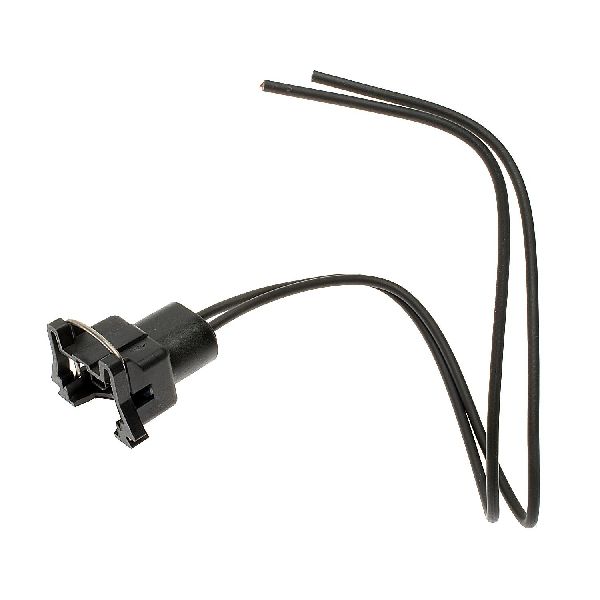
- EVAP Purge Solenoid Connector — On the EVAP purge solenoid, driver's side of the intake manifold.. Pin A (Pink wire) is the 12V ignition feed. Pin B (Dark Green/White wire) is the ground control from the PCM. Verifying voltage and control signal here is a primary electrical diagnostic step.
- G104 / G108 — On top of the frame rail, just forward and outboard of the battery.. This is a major chassis and battery ground point. G104 specifically grounds the BCM and the underhood fuse block, which supplies power to the EVAP system components. A poor connection here can cause intermittent and widespread electrical issues.
- G106 — On the right side of the engine block, above the starter.. This is a primary ground for the PCM and the main negative battery cable to the engine. A fault here could cause erratic PCM behavior, though it would likely present with more codes than just P0441.
- G107 — On the rear of the driver's side cylinder head.. This is the ground point for the ignition coils. While not directly related to the EVAP solenoid, ensuring all engine grounds are clean and tight is a crucial step in diagnosing any engine management code.
Real Owner Repair Stories
- CorvetteForum user 'AMRAAM' (1997 Corvette) — P0441 code
❌ Tried (didn't work) Inspecting hoses and connections around the engine bay.
✅ What actually fixed it The user discovered the electrical connector to the purge solenoid itself was disconnected. Reconnecting it was implied to be the fix. Another user with a '97 confirmed that two vacuum ports on the associated vacuum switch assembly correctly go to nowhere, which can be confusing during diagnosis. - CorvetteForum user 'c5-newbie' (Unknown year C5) — P0441 code
❌ Tried (didn't work) Initial diagnosis was unclear.
✅ What actually fixed it The user found a cracked gasket on the gas cap. Replacing the gas cap resolved the code.
OEM Part Supersession History
GM 1997278→This part number appears to be stable, but is also listed with alternate numbers 12569751 and 12575746. It is sold under ACDelco P/N 214-641.— Standard part lifecycle and branding.GM 15759044 (EVAP Vacuum Switch for 1997-98)→This part is often listed with aftermarket interchange numbers like 911-080 and 214-1091. Availability of the genuine GM part is limited due to age.— Part discontinuation for older models.
Heads up: This part is often misidentified in catalogs for other EVAP components like the vent valve solenoid due to shared part numbers across different GM truck platforms. Extreme care must be taken to ensure the purchased part is the vacuum switch for a C5 Corvette and not a vent valve for a Silverado.
Model Year Variations Within This Range
- 1997-1998: These years use a separate, external EVAP Vacuum Switch (P/N 15759044) in-line with the purge solenoid to provide feedback to the PCM about purge flow. This switch is a unique point of failure for P0441 on these early C5s.
- 1999-2004: The diagnostic logic was changed, and the external vacuum switch was eliminated. The PCM uses other sensor inputs (like the fuel tank pressure sensor) to infer purge flow. The P0441 code was also split into more specific codes, making a general P0441 less common on these later years.
- Late 2003-2004: Starting with VIN 35114929 (Nov 25, 2002), GM introduced the FFS (Fuel Forward System). This system moved the fuel filter inside the tank and changed the fuel pressure regulator design. While not directly causing P0441, any work on the fuel tanks of a late '03 or '04 model is significantly different and more involved than on earlier C5s. This could be relevant if a P0441 is accompanied by fuel tank pressure codes.
Diagnostic Flowchart
Real Owner Stories
Aggregated from forums and TSBs cited above. Mileages and costs reflect what owners reported in those sources.
1997 Chevrolet Corvette
Symptoms: Check Engine Light on, throwing code P0441. Owner was seeking advice before taking the dreaded step of calling the dealer.
What fixed it: Followed the specific service manual diagnostic steps for the 1997 model to test the in-line EVAP vacuum switch.
Source hint: CorvetteForum.com - Thread 'P0441 Evaporative Emission (EVAP) System No Flow During Purge'
1997-2004 Chevrolet Corvette (C5)
Symptoms: P0441 incorrect purge flow code triggered.
What fixed it: Found a vacuum line that had simply been knocked off the purge solenoid and reconnected it.
Source hint: CorvetteForum.com - Thread 'Help w P0441 incorrect purge flow'
1997-2004 Chevrolet Corvette (LS1)
Symptoms: P0441 code returned shortly after replacing the purge solenoid.
What fixed it: Disconnected the main EVAP line coming from the rear of the car and used compressed air to blow out black charcoal particles. Addressed the failing rear charcoal canister that was sending debris up the line.
Source hint: CorvetteForum.com / LS1Tech.com forum consensus
1997-2004 Chevrolet Corvette
Symptoms: Check Engine Light illuminated with a P0441 code.
What fixed it: Inspected the gas cap and found a cracked gas cap gasket. Replaced the gas cap with a new unit.
Source hint: CorvetteForum.com
Related OBD-II Codes
Frequently Asked Questions
Is the diagnostic process for P0441 different on early C5 Corvettes?
Where is the EVAP purge solenoid located on my LS1 Corvette?
I replaced the purge solenoid on my Corvette but P0441 came back quickly. What else could it be?
Can a bad gas cap cause the P0441 code on my C5?
How do I test the purge solenoid on my LS1 engine?
Will the P0441 code clear itself on my Corvette?
We Have This Part in Stock


The information in this article is provided for general reference and educational purposes only. Vehicle specifications, procedures, and part compatibility can vary by production date, trim level, and region. Always consult your vehicle's factory service manual and verify part numbers before purchasing or performing repairs. Safety-critical components such as airbags, seat belts, and braking systems should be installed by a qualified professional.
- Chevrolet Corvette:
- 🛍️ Shop This Part
- What's Unique About the 1997-2004 Chevrolet Corvette
- Symptoms You May Notice
- Most Likely Causes
- Rare But Worth Checking
- Diagnosis Steps
- Parts You'll Likely Need
- Related Codes That Often Appear With This One
- Platform-Specific Known Issues
- Mechanic-Grade Diagnostic Values
- Scan Tool Commands That Help
- Wiring & Ground Locations
- Real Owner Repair Stories
- OEM Part Supersession History
- Model Year Variations Within This Range
- Diagnostic Flowchart
- Real Owner Stories
- 1997 Chevrolet Corvette
- 1997-2004 Chevrolet Corvette (C5)
- 1997-2004 Chevrolet Corvette (LS1)
- 1997-2004 Chevrolet Corvette
- Related OBD-II Codes
- Frequently Asked Questions
- 🎟️ Get 5% Off