

P0440 on 1995-2002 Suzuki Esteem: EVAP System Malfunction Causes and Fixes
For a 1995-2002 Suzuki Esteem, the P0440 code most often points to a simple fix like a loose or worn-out gas cap. If that doesn't solve it, the next likely culprits are age-related cracked vacuum hoses in the EVAP system, a rusted fuel filler neck, or a faulty purge valve. A new gas cap is inexpensive, and inspecting hoses and the filler neck are straightforward first diagnostic steps.
- Start with the simplest fix: check and tighten the gas cap, and inspect the filler neck for rust.
- If the gas cap is not the issue, a visual inspection of EVAP hoses for cracks is the next logical step.
- A professional smoke test is the most efficient way to find a leak that is not obvious visually.
- Be aware of the severe front subframe corrosion issue covered under Suzuki's Special Coverage Campaign PZ, as it is a major safety and value concern for this model.
What's Unique About the 1995-2002 Suzuki Esteem
On an older vehicle like the 1995-2002 Suzuki Esteem, the P0440 code is frequently caused by the simple degradation of materials over time. The plastic and rubber hoses in the EVAP system become brittle and are prone to cracking, leading to leaks. Additionally, the fuel filler neck is susceptible to rust, which can compromise the gas cap seal. While the components are standard, their age makes these simple parts a high-probability failure point compared to more complex electronic failures.
Generation note: The Suzuki Esteem had a facelift for the 1999 model year, but the underlying platform and powertrain, including the EVAP system, remained largely the same. A 1.8L engine became available in 2000, but the core EVAP components and P0440 causes are generally applicable across the entire 1995-2002 year range.
Symptoms You May Notice
- Check Engine Light is on.
- A faint smell of gasoline, especially around the rear of the vehicle or after refueling.
- Vehicle will not pass an emissions inspection.
- Difficulty fueling the car (gas pump nozzle clicks off prematurely) if the EVAP vent system is clogged.
- Replacing the oxygen (O2) sensors. O2 sensors are part of the exhaust system and have no direct connection to the EVAP system.
- Replacing the catalytic converter. This is an expensive exhaust component that is unrelated to the fuel vapor system.
Most Likely Causes
- Loose, Damaged, or Incorrect Gas Cap 🔴 High Probability The gas cap seal is a simple rubber gasket that degrades and cracks over 20+ years, preventing a proper seal. This is the most common cause for this code on any vehicle.
How to confirm: First, ensure the cap is tightened until it clicks. Inspect the cap for visible cracks and check the rubber seal for brittleness or damage. Also, inspect the fuel filler neck for rust or pitting that could prevent a good seal. If the light returns after tightening, a replacement cap is the cheapest and easiest next step.
Typical fix: Replace the gas cap.
Est. part cost: $10-$25 - Cracked or Disconnected EVAP Hoses 🟡 Medium Probability After 20+ years, the rubber and plastic vacuum lines become hard and brittle, making them susceptible to cracking from engine vibration and heat. This is a very common failure point on older vehicles.
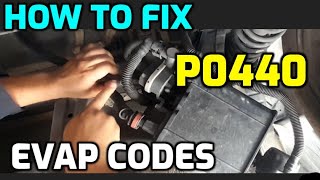
How to confirm: Visually inspect all accessible EVAP hoses running from the fuel tank, to the charcoal canister, and to the purge valve in the engine bay. Look for obvious cracks, breaks, or loose connections. A smoke test is the most effective way to find a leak that isn't visually apparent.
Typical fix: Replace the cracked section of hose.
Est. part cost: $5-$30 - Faulty EVAP Canister Purge Valve 🟡 Medium Probability This valve controls the flow of stored vapors to the engine. It can get stuck open or closed, or develop a leak over time. A user on Reddit with a 2001 Esteem reported replacing this part in an attempt to fix a P0440.
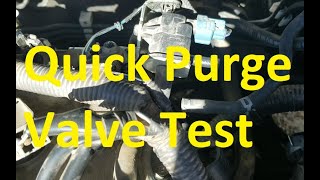
How to confirm: The purge valve is typically located in the engine bay. With the engine off, you can remove it and try to blow through it; it should be closed. You can also apply 12V power to its terminals to see if it clicks open. Resistance should be between 30 and 38 ohms.
Typical fix: Replace the canister purge valve.
Est. part cost: $30-$70 - Leaking or Damaged Charcoal Canister ⚪ Low Probability The plastic housing of the canister, located near the fuel tank, can develop cracks from age or road debris impact.
How to confirm: Visually inspect the canister for any cracks or physical damage. A smoke test will definitively show if the canister body is leaking.
Typical fix: Replace the charcoal canister.
Est. part cost: $80-$150 - Faulty EVAP Vent Valve/Solenoid ⚪ Low Probability This valve, usually located on or near the charcoal canister, can get stuck open or closed, preventing the system from sealing or venting properly.
How to confirm: A diagnostic scan tool can often command the valve to open and close, allowing you to listen for a click. It can also be removed and tested by applying 12V power. A smoke test will reveal if it's stuck open. Resistance should be between 48 and 65 ohms.
Typical fix: Replace the vent valve.
Est. part cost: $40-$80
Rare But Worth Checking
- Cracked Fuel Filler Neck: Rust or physical damage can cause the metal pipe leading to the gas tank to develop a leak, which will trigger a P0440 code. This is more common in regions where road salt is used and is a known issue on similar platforms like the Geo Metro.
- Faulty Fuel Tank Pressure Sensor: The sensor that monitors EVAP system pressure can fail and send incorrect data to the computer, causing it to think there is a leak when there isn't one.
Diagnosis Steps
- Check the gas cap. Remove it, inspect the seal for cracks, and retighten it until it clicks at least once. Also inspect the fuel filler neck for heavy rust that could prevent a seal. Clear the code and drive for a few days to see if it returns.
- If the code returns, perform a thorough visual inspection of all EVAP hoses and lines in the engine bay and under the vehicle near the fuel tank. Look for any visible cracks, disconnections, or brittle sections.
- Locate the EVAP canister purge valve in the engine bay. Test its function by applying 12V power to see if it clicks. Check if it's stuck open or closed. Test resistance, which should be 30-38 ohms.
- Inspect the EVAP vent valve, located near the charcoal canister under the car. Check for blockages and test its operation similarly to the purge valve. Test resistance, which should be 48-65 ohms.
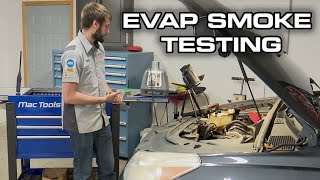
- If no obvious issues are found, the most effective next step is to have a smoke test performed. A mechanic will inject pressurized smoke into the EVAP system, and any leaks will be immediately visible as smoke escapes 🎬 Watch a demonstration of how to perform an EVAP smoke test. from the cracked component (hose, canister, filler neck, etc.).
Parts You'll Likely Need
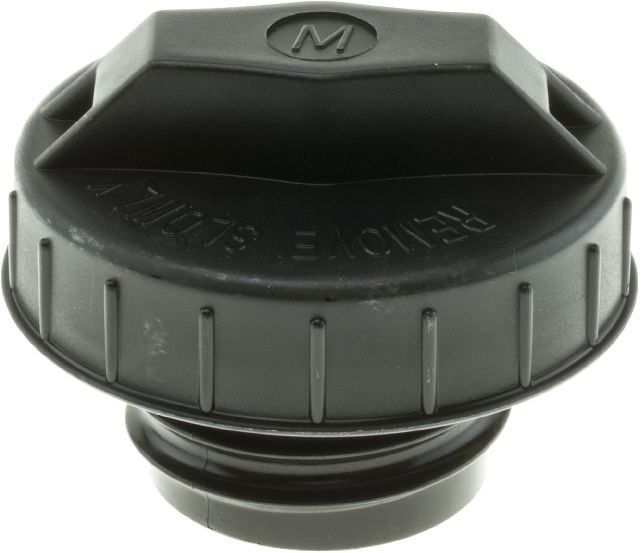
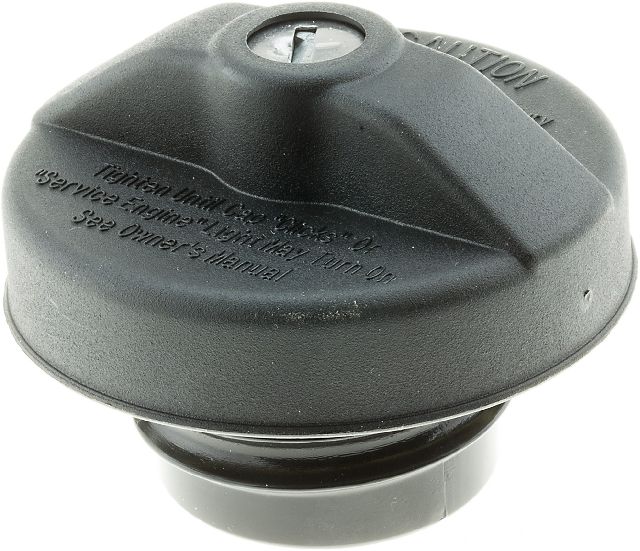
- Gas Cap
(OEM #16920-83G02)— This is the most frequent and simplest cause. The seal fails over time, preventing the system from holding pressure.
Trusted brands: Stant, Gates, Motorad
OEM price range: $20-$35
Aftermarket price range: $10-$25 - EVAP Canister Purge Valve / Solenoid
(OEM #18117-52G00)— This valve is electromechanical and cycles frequently, leading to eventual failure where it may stick open or closed.
Trusted brands: Standard Motor Products (CP851), Dorman
OEM price range: $60-$100
Aftermarket price range: $30-$70 - EVAP Vacuum Hose — The rubber hoses become brittle and crack with age, creating vacuum leaks that are a primary cause of P0440 on older vehicles.
OEM price range: $15-$40
Aftermarket price range: $5-$20 - Charcoal Canister
(OEM #18560-50G01)— The plastic housing can crack over time, or the internal filter material can become saturated or break down, causing blockages or leaks.
OEM price range: $100-$180
Aftermarket price range: $80-$150
Related Codes That Often Appear With This One
- P0455 — P0455 indicates a 'Large EVAP Leak Detected'. P0440 is a more general system malfunction code. They often appear together because a large leak is a type of system malfunction.
- P0442 — P0442 indicates a 'Small EVAP Leak Detected'. If the leak is borderline, the system may set either a P0440 or P0442, or both over time.
Technical Service Bulletins (TSBs) & Recalls
- source_type: tsb | id_or_name: Special Coverage Campaign SC-52 (Code: PZ) | relevance: Addresses severe corrosion of the front suspension frame cross-member. Suzuki provided extended coverage (12 years / 180,000 miles) for inspection and replacement if perforation was found. This is a critical structural issue for any owner of a high-mileage or rust-belt Esteem.
Platform-Specific Known Issues
- Front Subframe Corrosion: This vehicle was subject to a Special Coverage Campaign (Code: PZ) for severe corrosion of the front suspension frame cross-member, particularly in rust-belt regions. While not directly related to the EVAP system, owners should be aware of this potentially dangerous and costly issue. Advanced corrosion could affect the integrity of nearby components.
Mechanic-Grade Diagnostic Values
- EVAP Canister Purge Valve Resistance — expected: 30 to 38 ohms (when cool). Failure: A reading outside this range indicates a faulty valve coil.
- EVAP Canister Vent Solenoid Resistance — expected: 48 to 65 ohms. Failure: A reading outside this range indicates a faulty solenoid coil.
- Fuel Tank Pressure (FTP) Sensor Voltage (Key On, Engine Off, atmospheric pressure) — expected: ~2.5 Volts (or ~1.5V on some systems). Failure: A reading of 0V or 5V suggests a wiring issue or a failed sensor. Voltage should decrease with vacuum applied and increase with pressure.
Wiring & Ground Locations
- EVAP Purge Valve ECM Pin — On the ECM connector C-20, pin 13 is the signal wire for the EVAP Purge Valve. The wire color is typically Red/Blue.. This allows a technician to test for continuity and signal voltage directly from the ECM, helping to isolate a wiring fault from a faulty valve.
- Ground Distribution G101 — Located at the front of the right front fender for 1999 models.. While not exclusively for the EVAP system, poor grounds can cause erratic behavior in various electronic components. Knowing the location of major ground points is crucial for diagnosing electrical issues.
- Ground Distribution G400 — Located on the left side of the cargo area (wagon) or left front side of the trunk (sedan) for 1999 models.. This ground point is physically closer to rear-mounted EVAP components like the charcoal canister, vent valve, and fuel tank pressure sensor. A corroded G400 could cause issues with these specific parts.
Real Owner Repair Stories
- Reddit user on r/MechanicAdvice (2001 Suzuki Esteem) — P0440 code, strong smell of gas for the first minute after starting the car.
❌ Tried (didn't work) Replacing the gas cap, Replacing the EVAP canister purge valve
✅ What actually fixed it The user did not post a final resolution, but the combination of a P0440 and a strong, raw fuel smell after trying the two most common fixes strongly points to a physical leak in a hose, the charcoal canister itself, or the fuel filler neck. The smell is the key indicator that this is beyond a simple stuck valve.
OEM Part Supersession History
18117-52G00→18117-52G00-000— Standard part number format update by Suzuki.
Heads up: The parts are identical. This part is listed as fitting a wide range of Suzuki vehicles including the Esteem, Swift, Alto, and Vitara, indicating it is a common component.
Model Year Variations Within This Range
- 1999-2002: The Esteem received a significant facelift for the 1999 model year. While the core EVAP system function is the same, wiring diagrams and component locations may differ slightly from the 1995-1998 models.
- 2000-2002: A new, more powerful 1.8L DOHC engine became available alongside the original 1.6L engine. While the P0440 code applies to both, there may be minor differences in hose routing or component placement in the engine bay between the two engine types.
Diagnostic Flowchart
Other Known Issues on This Vehicle
Issues unrelated to this code that are worth knowing about as an owner of this generation:
- Front Suspension Frame Corrosion 🔴 High — Common enough to warrant a Special Coverage extension from Suzuki (Code: PZ), especially in regions where road salt is used. Affects the cross-member where the lower control arms attach. (Ref: Special Coverage Campaign SC-52 (Code: PZ))
- Engine Oil Leak From Front Crankshaft Seal 🟠 Medium — A frequently reported issue according to RepairPal, with at least 7 documented reports. The leaking oil can saturate and damage the nearby crankshaft pulley.
- Crankshaft Pulley Failure 🟠 Medium — The rubber harmonic balancer on the pulley can degrade and fail, causing engine vibration, damage to the serpentine belt, and an irregular idle. This can be accelerated by the common front crank seal oil leak.
- Brake Pedal Pulsation 🟡 Low — Frequently reported by owners, often caused by warped brake rotors.
- Inaccurate Fuel Gauge 🟡 Low — Noted on 1995 models, requiring the replacement of the fuel sending unit and breather pipe to resolve.
Used vs. New Parts: Buying Guide for This Vehicle
When a used part is the smart pick: For this vehicle, sourcing a used charcoal canister or fuel filler neck from a junkyard can be a cost-effective option, especially if the original failed due to physical damage or rust. These are generally robust parts if they come from a dry, rust-free region.
Donor-vehicle mileage cap: roughly under 120000 miles for the part to have meaningful remaining life.
What to inspect on the donor part:
- For a charcoal canister, inspect the plastic body for any cracks, especially around the hose ports.
- For a fuel filler neck, check for any signs of rust, pitting, or perforation, particularly on the lip where the gas cap seals.
- Avoid parts from vehicles that show signs of significant rust or have been in major accidents near the fuel tank area.
OEM-only on this vehicle (don't cheap out):
- Gas Cap: While aftermarket is acceptable, an OEM gas cap is often recommended as they are specifically designed for the correct pressure and seal, reducing the chance of a recurring code.
Aftermarket brands forum-validated for this vehicle:
- Standard Motor Products (SMP) for sensors and valves like the purge solenoid (Part: CP851).
- Dorman for various replacement components.
Brands owners have reported issues with on this vehicle:
- No specific brands are consistently reported as problematic, but be wary of unbranded, extremely low-cost electronic components from online marketplaces, as their quality and durability can be questionable.
Real Owner Stories
Aggregated from forums and TSBs cited above. Mileages and costs reflect what owners reported in those sources.
2001 Suzuki Esteem
Symptoms: Check Engine Light with code P0440 was on, accompanied by a strong gas smell on startup.
What fixed it: The owner first replaced the gas cap and then the canister purge valve, but neither fixed the issue. The persistent gas smell indicated a larger physical leak in a hose, the filler neck, or the canister itself was the likely underlying cause, requiring a smoke test to locate.
Source hint: Reddit r/MechanicAdvice - 'Help with code P0440 in my 2001 Suzuki Esteem.'
Related OBD-II Codes
Frequently Asked Questions
What is the most common reason for a P0440 code on a 1995-2002 Suzuki Esteem?
I smell gasoline near the back of my Esteem. Is this related to the P0440 code?
Why does the gas pump keep shutting off when I try to fuel my Esteem?
What are the correct electrical resistance specs for the EVAP valves on my Suzuki Esteem?
I heard about a serious rust problem on the Esteem. Could this cause the P0440 code?
Can I use EVAP parts from a Geo Metro on my Suzuki Esteem?
Helpful Videos
We Have This Part in Stock

The information in this article is provided for general reference and educational purposes only. Vehicle specifications, procedures, and part compatibility can vary by production date, trim level, and region. Always consult your vehicle's factory service manual and verify part numbers before purchasing or performing repairs. Safety-critical components such as airbags, seat belts, and braking systems should be installed by a qualified professional.
- Suzuki Esteem:
- 🎬 Helpful Videos
- 🛍️ Shop This Part
- What's Unique About the 1995-2002 Suzuki Esteem
- Symptoms You May Notice
- Most Likely Causes
- Rare But Worth Checking
- Diagnosis Steps
- Parts You'll Likely Need
- Related Codes That Often Appear With This One
- Technical Service Bulletins (TSBs) & Recalls
- Platform-Specific Known Issues
- Mechanic-Grade Diagnostic Values
- Wiring & Ground Locations
- Real Owner Repair Stories
- OEM Part Supersession History
- Model Year Variations Within This Range
- Diagnostic Flowchart
- Other Known Issues on This Vehicle
- Used vs. New Parts: Buying Guide for This Vehicle
- Real Owner Stories
- 2001 Suzuki Esteem
- Related OBD-II Codes
- Frequently Asked Questions
- 🎟️ Get 5% Off