

P0440 on 1998-2002 Subaru Forester: EVAP System Malfunction Causes and Fixes
For a 1998-2002 Forester, code P0440 is most often caused by a loose gas cap or a rusted fuel filler neck. Always check the gas cap first, but be prepared to inspect the filler neck, a common failure point on these vehicles due to age and rust. A smoke test is the definitive way to find the leak if visual inspection fails.
- For a P0440 on a 1998-2002 Forester, always start by checking the gas cap for tightness and wear.
- The most likely cause after the gas cap is a rusted-out fuel filler neck; a thorough visual inspection of this part is critical.
- A smoke test is the most efficient way to find leaks if a visual inspection doesn't reveal the problem.
- This code does not affect how the car drives but will cause it to fail an emissions inspection.
- Due to the vehicle's age, brittle rubber hoses are also a common source of leaks.
What's Unique About the 1998-2002 Subaru Forester
The first-generation (SF) Forester is highly susceptible to rust, particularly in the fuel filler neck area. This pipe, which connects the gas cap to the fuel tank, is often hidden behind a plastic shield in the wheel well that owners refer to as a 'salt trap'. This shield traps salt, dirt, and moisture, accelerating corrosion. As a result, a rusted-out filler neck is one of the most frequent causes of a P0440 code on this specific vehicle, more so than on many other cars.
Symptoms You May Notice
- Check Engine Light is on
- A faint smell of gasoline, particularly around the rear of the vehicle
- Difficulty filling the fuel tank (gas pump nozzle clicks off repeatedly before the tank is full).
- Replacing the oxygen sensors. O2 sensors are not related to the EVAP system.
- Replacing the catalytic converter. While a P0420 code can appear alongside a P0440, the P0440 code itself is not caused by a bad catalytic converter.
Most Likely Causes
- Loose or Faulty Gas Cap 🔴 High Probability The gas cap is a simple wear item. Its rubber O-ring can crack, stiffen, and degrade over time, preventing the EVAP system from sealing properly. This is the most common and cheapest first thing to check for any vehicle.
How to confirm: Ensure the gas cap is tightened until it clicks at least once. Inspect the rubber seal on the cap for cracks, stiffness, or damage. If it looks worn, replacement is a cheap and easy first step. Some owners report temporary success by applying a thin layer of Vaseline to the O-ring to improve the seal for diagnostic purposes.
Typical fix: Tighten or replace the gas cap.
Est. part cost: $10-$30 - Rusted or Cracked Fuel Filler Neck 🔴 High Probability These Foresters are notorious for severe rust on the fuel filler neck, especially in regions that use road salt. The metal pipe corrodes under the plastic shield, creating pinholes or large holes that cause a major EVAP leak. One owner reported being plagued by the code for a year until the neck finally rusted through and dumped gas on the ground during refueling.
How to confirm: Visually inspect the entire length of the fuel filler neck, from behind the fuel door down to the gas tank. You must remove the plastic splash guard in the passenger-side rear wheel well for a clear view. Probe any rusted areas gently with a screwdriver to check for soft spots or holes, as the metal can be paper-thin.
Typical fix: The rusted filler neck must be replaced. This is a common DIY job for experienced owners but can be labor-intensive due to rusted bolts. 🎬 Watch: Step-by-step guide to replacing a rusted fuel filler neck. It is recommended to replace the small valve attached to the neck at the same time.
Est. part cost: $80-$150 - Cracked or Disconnected EVAP Hoses 🟡 Medium Probability After two decades, the rubber and plastic hoses in the EVAP system become brittle and can easily crack or disconnect, especially the lines around the charcoal canister and filler neck.
How to confirm: Visually inspect all accessible EVAP hoses, particularly around the charcoal canister (located near the right rear wheel) and the purge solenoid in the engine bay. A smoke test is the most effective way to find small, hard-to-see leaks. One owner traced their P0440 to a small, cracked air vent hose hidden between the gas tank and the wheel well that was only found after extensive searching.
Typical fix: Replace the cracked or broken hose section. Small sections of vacuum hose are inexpensive.
Est. part cost: $5-$50 - Faulty Purge Control Solenoid Valve ⚪ Low Probability While not as common as leaks, the purge solenoid can fail by getting stuck open or closed, which the system will detect as a malfunction.
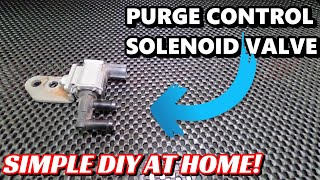
How to confirm: The purge solenoid is located under the intake manifold. 🎬 See how to test and replace the purge solenoid at home. It can be tested with a handheld vacuum pump and by applying 12V to see if it opens and closes correctly. A stuck-open valve can sometimes cause a rough idle.
Typical fix: Replace the purge control solenoid valve.
Est. part cost: $40-$90
Rare But Worth Checking
- Cracked Charcoal Canister or Clogged Vent: The charcoal canister, located near the right rear wheel, can be damaged by road debris or develop cracks. Internally, the charcoal media can break down and clog the canister or attached vent valve/solenoid. This can also cause issues with refueling.
- Clogged Vent Line (Spiders): A known, though strange, issue on Subarus is for spiders to build nests and egg sacs in the EVAP vent line elbow, which is located above the rear differential. This creates a blockage that can trigger a P0440 and cause difficulty when filling the gas tank.
- Faulty Vent Valve/Solenoid: Similar to the purge valve, the vent valve (usually located on or near the charcoal canister) can fail, but it is less common than a simple leak elsewhere in the system.
Diagnosis Steps
- Read the code with an OBD-II scanner to confirm P0440 is the primary code.
- Inspect the gas cap. Ensure it is tight. If the seal is old or cracked, replace it with a quality OEM or equivalent cap. Clear the code and drive for a few days to see if the light returns.
- Perform a thorough visual inspection of the fuel filler neck. Remove the plastic shroud (the 'salt trap') in the passenger-side rear wheel well to get a clear view. Probe any rusted areas gently with a screwdriver to check for soft spots or holes.
- Inspect all visible EVAP system hoses for cracks, brittleness, or loose connections. Pay close attention to the hoses connected to the charcoal canister (rear passenger side) and the purge solenoid (under intake manifold). Check the vent line elbow above the rear differential for blockages like spider webs.
- If no visible leaks are found, the most reliable next step is to perform a smoke test. This involves injecting low-pressure smoke into the EVAP system (usually via the purge valve line) and watching where it escapes. This will pinpoint the exact location of any leak, no matter how small.
- If no leaks are found, test the function of the purge control solenoid and the vent valve. This may require a multimeter or an advanced scan tool 🎬 Watch: Professional diagnosis and testing procedure for the purge valve. that can command the valves to open and close.
Parts You'll Likely Need
- Fuel Filler Neck
(OEM #42066FA140)— This is the most common point of failure on 1998-2002 Foresters due to rust, causing a large leak that triggers P0440.
Trusted brands: Subaru (OEM), Spectra Premium (FN664), Dorman (577-086), Autopart Premium
OEM price range: $120-$160
Aftermarket price range: $80-$150 - Gas Cap
(OEM #42031AE020 (Verify with VIN))— A worn-out gas cap seal is a very common and simple cause for an EVAP leak code. It's always the first part to check and replace.
Trusted brands: Subaru (OEM), Stant, Gates (31832), Duralast (5791)
OEM price range: $25-$40
Aftermarket price range: $10-$20 - Purge Control Solenoid Valve — Can become stuck open or closed, preventing the EVAP system from functioning correctly. It's a less common but known failure point.
Trusted brands: Denso, Standard Motor Products (SMP), Wells, Carquest (CPC1168)
OEM price range: $70-$120
Aftermarket price range: $40-$90
Platform-Specific Known Issues
- The fuel filler neck is extremely prone to rusting out, especially in states that use road salt. This is the most significant vehicle-specific issue related to code P0440.
- If a trailer hitch has been installed, check that the canister drain hose was not disconnected or damaged during the installation process, as the canister must be moved to fit the hitch.
- Spider nests are a known cause of blockages in the EVAP vent lines on Subarus of this era, leading to P0440 and fueling issues.
Mechanic-Grade Diagnostic Values
- Purge Control Solenoid Valve Resistance — expected: 30 - 50 Ohms. Failure: A reading outside this range, particularly an open circuit (infinite resistance) or a short (very low resistance), indicates a faulty solenoid coil.
- Vent Valve / Drain Valve Solenoid Resistance — expected: 20 - 30 Ohms. Failure: A reading of 0 or infinite resistance indicates a failed solenoid.
- Purge Control Solenoid Function Test (No Tools) — expected: With the engine cold and at idle, no vacuum should be felt at the valve's inlet port (from the canister). After 5-10 minutes of warming up, the ECU should command the valve to open, and a slight vacuum should be felt.. Failure: Feeling vacuum immediately after a cold start indicates the valve is stuck open. Feeling no vacuum after the engine is fully warm indicates the valve is stuck closed or not being commanded to open.
Scan Tool Commands That Help
- Subaru Select Monitor: Evaporative System Leak Test — This is a dealer-level forced test to check the integrity of the entire EVAP system without having to perform a full drive cycle. The technician can command the system to seal and monitor for pressure changes, confirming a leak exists before starting a manual search with a smoke machine.
Wiring & Ground Locations
- R69 — Connector for the Drain Valve, located on the rear wiring harness near the charcoal canister assembly (rear passenger side of the vehicle).. This 2-pole connector provides power and ground to the drain/vent valve. Corrosion or damage to this connector or its wiring can cause EVAP codes related to the vent circuit.
- R68 — Connector for the Pressure Control Solenoid Valve, located on the rear wiring harness near the EVAP components.. This 2-pole connector is critical for the valve that helps regulate system pressure during testing. A bad connection here can disrupt the ECU's ability to properly test the system.
- R47 — Connector for the Fuel Tank Pressure Sensor, a 3-pole connector on the rear wiring harness.. This sensor provides the primary feedback to the ECU about whether the system is holding pressure. Faulty wiring at this connector will lead directly to EVAP codes.
- G405 (Forester) — A primary ground point located in the right rear of the cargo compartment.. The rear-mounted EVAP components (canister, drain valve, pressure sensor) rely on a solid chassis ground. Corrosion or a loose connection at this ground point can cause intermittent and difficult-to-diagnose electrical faults for the entire EVAP system.
Real Owner Repair Stories
- Hearth.com forum user (1999 Subaru Legacy (shares similar EVAP system and rust issues)) — P0440 Check Engine Light
❌ Tried (didn't work) Fixing an exhaust leak and resetting the code.
✅ What actually fixed it The user was advised that the most likely cause was a rusted fuel filler neck. Another user confirmed their own P0440 was fixed by patching a half-dollar-sized rust hole in the filler neck with JB Weld and a metal patch as a temporary fix before replacement. - NHTSA ODI #10283295 (Subaru Outback) — An owner reported that fuel filler tube corrosion caused a leak of fuel and fuel vapor, which illuminated the check engine light with code P0440. The repair involved replacing the fuel filler tube and valve assembly.
OEM Part Supersession History
42066FA031→42066FA030— Part number consolidation or minor revision.
Heads up: According to Subaru parts diagrams, 42066FA030 replaces 42066FA031 for the Legacy/Impreza/Forester of this era. Users should always verify by VIN, but these are generally interchangeable for the specified application.
Model Year Variations Within This Range
- Mid-1998 and later: A major change occurred around mid-1998 where the engine design was updated with different heads and a plastic intake manifold, replacing the earlier design. While this doesn't directly change the P0440 diagnosis, the routing of vacuum lines and the location of the purge solenoid on the manifold may differ slightly between early 1998 models and 1999-2002 models.
- 2001-2002: The 'S' trim level for 2001-2002 added features like heated mirrors and wiper de-icers, indicating more complex wiring harnesses. While not directly related to the EVAP system, be aware of potential differences in harnesses and connectors when sourcing parts from donor vehicles of different trim levels.
Diagnostic Flowchart
Used vs. New Parts: Buying Guide for This Vehicle
When a used part is the smart pick: A used fuel filler neck can be a smart buy IF it is sourced from a vehicle in a dry, rust-free climate. Given that rust is the primary failure mode, a used part from a 'salt belt' region is a waste of money. Other non-electronic components like the charcoal canister can also be sourced used if they are visually inspected for cracks and damage.
Donor-vehicle mileage cap: roughly under 150000 miles for the part to have meaningful remaining life.
What to inspect on the donor part:
- For a fuel filler neck, inspect the entire pipe for any signs of bubbling paint, flaking, or surface rust, especially at the bends and mounting brackets.
- Check that all smaller vent tube nipples on the filler neck are intact and not cracked or rusted away.
- For a charcoal canister, ensure the plastic body has no cracks and that none of the hose connection ports are broken off.
- Shake the canister gently; if you hear loose particles rattling inside, the internal charcoal media may have broken down, and the part should be avoided.
OEM-only on this vehicle (don't cheap out):
- Gas Cap: While aftermarket caps are available, many owners report persistent P0440 issues until an OEM Subaru cap is installed. The specific pressure/vacuum seal tolerance is critical, and OEM parts are most reliable.
Aftermarket brands forum-validated for this vehicle:
- Spectra Premium (for fuel filler neck)
- Denso (for solenoids, often the OEM supplier)
- Stant (for gas caps, sometimes the OEM supplier)
Brands owners have reported issues with on this vehicle:
- No-name, unbranded 'white box' gas caps and electronic solenoids from online marketplaces are frequently reported as being dead-on-arrival or failing shortly after installation.
Real Owner Stories
Aggregated from forums and TSBs cited above. Mileages and costs reflect what owners reported in those sources.
1999 Outback — 198000 miles
Symptoms: Check engine light with P0440 code, fuel spilling from filler neck area when refueling.
What fixed it: Replaced the corroded fuel filler neck, gas cap, and shut valve. Some metal evap lines were also replaced with rubber hose.
Cost: $225
Source hint: Code p0400 and p0440 - Ultimate Subaru Message Board
2000 Subaru Forester L
Symptoms: P0440 code and the gas pump clicks off every couple of seconds when trying to fill the tank.
What fixed it: The owner was advised that the charcoal canister was likely clogged and to check for spider egg sacks in the vent line.
Source hint: Reddit r/subaru: P0440 and Unable to fill tank
1997 Impreza
Symptoms: P0440 code for a year, which eventually led to the fuel filler neck rusting through and dumping gas on the ground during refueling.
What fixed it: Replacement of the rusted fuel filler neck.
Source hint: Ultimate Subaru Message Board: P0440 code
1998-2002 Subaru Forester
Symptoms: Persistent P0440 code with no obvious large leaks.
What fixed it: After extensive searching, a small, cracked air vent hose hidden between the gas tank and the wheel well was found and replaced. A smoke test is recommended to find such leaks.
Source hint: Ultimate Subaru Message Board: P0440 - EVAP Issue
Related OBD-II Codes
Frequently Asked Questions
I live in a state with road salt. Is my 1998-2002 Forester more likely to have a P0440 code?
The gas pump keeps clicking off when I try to refuel my Forester. Is this related to the P0440 code?
I've already replaced my gas cap. What is the most common next step for a P0440 on this specific vehicle?
Where is the charcoal canister located on my Forester?
I'm installing a trailer hitch. Is there anything I need to watch out for to prevent an EVAP code?
Is the P0440 issue from a rusted filler neck also common on other Subarus from this era?
Helpful Videos

We Have This Part in Stock


The information in this article is provided for general reference and educational purposes only. Vehicle specifications, procedures, and part compatibility can vary by production date, trim level, and region. Always consult your vehicle's factory service manual and verify part numbers before purchasing or performing repairs. Safety-critical components such as airbags, seat belts, and braking systems should be installed by a qualified professional.
- Subaru Forester:
- 🎬 Helpful Videos
- 🛍️ Shop This Part
- What's Unique About the 1998-2002 Subaru Forester
- Symptoms You May Notice
- Most Likely Causes
- Rare But Worth Checking
- Diagnosis Steps
- Parts You'll Likely Need
- Platform-Specific Known Issues
- Mechanic-Grade Diagnostic Values
- Scan Tool Commands That Help
- Wiring & Ground Locations
- Real Owner Repair Stories
- OEM Part Supersession History
- Model Year Variations Within This Range
- Diagnostic Flowchart
- Used vs. New Parts: Buying Guide for This Vehicle
- Real Owner Stories
- 1999 Outback — 198000 miles
- 2000 Subaru Forester L
- 1997 Impreza
- 1998-2002 Subaru Forester
- Related OBD-II Codes
- Frequently Asked Questions
- 🎟️ Get 5% Off