

P0440 on 2008-2012 Jeep Liberty: EVAP System Malfunction Causes and Fixes
For a 2008-2012 Jeep Liberty with the 3.7L V6, code P0440 almost always points to a simple issue like a loose or faulty gas cap, or a cracked EVAP hose. Checking the gas cap is free and a new Mopar cap costs around $30-$40. If that doesn't work, a smoke test is the next step to find the leak, which is often a brittle plastic line near the purge valve or a failed ESIM on the charcoal canister.
- Always start with the simplest fix: check that your gas cap is tight and its seal is intact. This resolves P0440 most of the time and is the cheapest part to replace.
- If the gas cap isn't the issue, visually inspect the EVAP hoses in the engine bay, especially the one attached to the purge valve, for cracks before moving to more complex diagnostics.
- A smoke test is the most reliable way to find a physical leak in the system.
- The Dodge Nitro from 2007-2011 shares the same platform and is susceptible to the identical P0440 failures.
- Be aware of severe rust on the fuel tank skid plate/straps, as a failure can cause secondary damage to EVAP lines.
What's Unique About the 2008-2012 Jeep Liberty

The 2008-2012 Jeep Liberty (KK generation) with the 3.7L engine uses an EVAP system with a component called an EVAP System Integrity Module (ESIM) switch, which is a common failure point that can trigger this code. Unlike older vacuum-based systems, this switch helps the computer test for leaks by sealing the system and monitoring pressure changes. A smoke test can sometimes damage the delicate diaphragm inside the ESIM, so it's often diagnosed after a smoke test reveals no external leaks. Owners frequently find that the brittle plastic EVAP hoses, especially the line connected to the purge valve in the engine bay, crack over time, leading to leaks that are best found with a smoke test.
Symptoms You May Notice
- Check Engine Light is on.
- A faint smell of fuel, especially near the rear of the vehicle after refueling.
- Remote start feature is disabled by the system due to the active Check Engine Light.
- Replacing the charcoal canister when only the attached ESIM switch is bad.
- Replacing the purge valve when the actual problem is a simple cracked hose nearby.
- Replacing the gas cap with a cheap aftermarket version that doesn't seal correctly, leading to a persistent code.
Most Likely Causes


- Loose or Faulty Gas Cap 🔴 High Probability The gas cap is a frequently used part and its seal can wear out over time, preventing it from sealing correctly. This is the most common and cheapest first step for any EVAP code.
How to confirm: Ensure the gas cap is tightened until it clicks at least once. Inspect the rubber O-ring on the cap for cracks, tearing, or signs of wear. If it looks worn or damaged, it needs replacement. An aftermarket cap that doesn't seal properly can also cause this code.
Typical fix: Tighten or replace the gas cap with a quality OEM part.
Est. part cost: $15-$40 - Cracked or Disconnected EVAP Hoses 🟡 Medium Probability The plastic and rubber hoses in the EVAP system become brittle with age and exposure to engine heat, leading to cracks and leaks. A very common failure point is the plastic line running to the purge valve in the engine bay.
How to confirm: A visual inspection may reveal obvious cracks or disconnected lines, particularly around the purge valve solenoid near the battery. A smoke test is the most effective way to find small, hard-to-see leaks. 🎬 Watch: How to perform a smoke test on a Liberty. One owner found a cracked hose this way and documented the repair on YouTube.
Typical fix: Replace the cracked section of hose. Sometimes a small piece of rubber fuel hose and clamps can be used to repair a cracked plastic line as a durable, low-cost fix.
Est. part cost: $10-$50 - Faulty EVAP Purge Valve/Solenoid 🟡 Medium Probability This valve, located next to the battery on the 3.7L V6, controls the flow of fuel vapors from the canister to the engine. It can get stuck open or closed, causing the system to fail its pressure test.
How to confirm: The purge valve is located in the engine bay by the washer fluid reservoir. With the engine off, you can try to blow through it; if air passes, it's stuck open and is faulty. You can also test it for clicking with a 12V source or a capable scan tool.
Typical fix: Replace the purge valve solenoid. 🎬 See this step-by-step guide to replacing the purge valve.
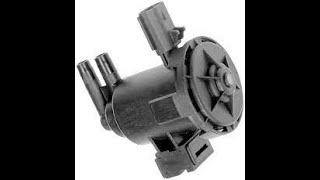
Est. part cost: $25-$70 - Faulty EVAP System Integrity Module (ESIM) ⚪ Low Probability The ESIM (also called a leak detection pump) is mounted on the charcoal canister near the rear passenger-side wheel. It contains a delicate diaphragm and switch to test system integrity. These are a known failure point on Chrysler/Jeep vehicles of this era, often failing internally without an external leak.
How to confirm: This part is difficult to test without a bidirectional scan tool. It's often diagnosed after a smoke test reveals no external leaks and other components (gas cap, purge valve) have been checked or replaced. The O-ring that seals the ESIM to the canister can also fail, causing a leak.
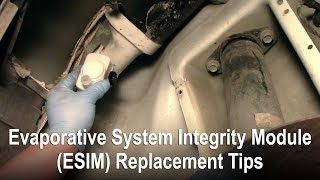
Typical fix: Replace the ESIM on the charcoal canister. This involves a simple twist-lock mechanism. 🎬 Watch: Diagnosing and replacing a faulty ESIM unit.
Est. part cost: $30-$80
Rare But Worth Checking
- Cracked Charcoal Canister: The canister itself, located near the rear axle, can crack from road debris impact or age, creating a large leak. This is usually found during a smoke test when smoke billows from the canister body itself.
- Damaged Fuel Filler Neck: Rust or damage to the metal tube leading to the gas tank can prevent the gas cap from sealing properly, causing a leak. A visual inspection of the neck where the cap seals is necessary if a new cap doesn't solve the issue.
- Rusted Fuel Tank Straps/Skid Plate: The fuel tank skid plate and straps on the KK Liberty are highly prone to severe rust, especially in the salt belt. In a failure event, the shifting or dropping tank can break EVAP hose connections at the tank or fuel pump module, causing a P0440 code.
Diagnosis Steps

- Read the code with an OBD-II scanner.
- Inspect the gas cap. Ensure it is tight and the seal is in good condition. If in doubt, replace it with an OEM Mopar cap, clear the codes, and drive for a few days.
- If the code returns, perform a thorough visual inspection of all accessible EVAP hoses. Pay close attention to the plastic line connected to the purge valve solenoid in the engine bay, as it is prone to cracking.
- Test the purge valve solenoid. Disconnect the hose from the canister side, start the engine, and check for vacuum. There should be none at idle. If there is, the valve is stuck open.
- If no obvious issues are found, perform a smoke test. Connect the smoke machine to the EVAP service port and watch for smoke exiting from any cracked hoses, the canister, the filler neck, or other components.
- If the smoke test reveals no leaks, the issue is likely internal to a component. The ESIM switch on the charcoal canister is the next most likely suspect.
Parts You'll Likely Need

- Fuel Cap
(OEM #52030433AB (replaces 52124512AA))— This is the most common failure point for any EVAP code due to its seal wearing out over time. Using an OEM cap is highly recommended.
Trusted brands: Mopar, Stant, Gates
OEM price range: $30-$40
Aftermarket price range: $15-$30 - EVAP Purge Valve / Solenoid
(OEM #04891731AC (replaces 4891731AA))— This valve frequently gets stuck open or closed, causing the system to fail its self-test. It's located in the engine bay for easy access.
Trusted brands: Mopar, Bosch, Standard Motor Products
OEM price range: $60-$90
Aftermarket price range: $25-$50 - EVAP System Integrity Module (ESIM)
(OEM #04861962AD (replaces 4861962AC))— This switch, mounted on the charcoal canister, is a known weak point on this platform and can fail internally, causing a persistent P0440 code even with no physical leaks.
Trusted brands: Mopar, Dorman, Standard Motor Products
OEM price range: $75-$100
Aftermarket price range: $25-$60
Related Codes That Often Appear With This One
- P0441 — Indicates incorrect purge flow, often caused by a faulty or stuck purge valve which can also trigger a general P0440 fault.
- P0456 — Indicates a small EVAP leak. This is a more specific code, but if the leak is intermittent or on the borderline between small and large, the system may set P0440 first. A failing ESIM seal is a common cause.
- P0457 — Indicates a leak due to a loose or missing fuel cap. This is a more specific version of the general P0440 fault and strongly points to the gas cap as the culprit.
Platform-Specific Known Issues
- Rusted Fuel Tank Skid Plate / Straps: The 2008-2012 Liberty is known for severe corrosion of the fuel tank skid plate and mounting straps, particularly in rust-belt states. If these supports fail, the fuel tank can shift or drop, potentially breaking the EVAP lines connected to the top of the fuel pump module, causing a P0440 or other EVAP codes.
- Brittle Purge Valve Hose: The plastic EVAP line that connects to the purge solenoid in the engine bay is exposed to significant heat and becomes very brittle. It commonly cracks, creating a vacuum leak that triggers P0440. This is often found during a smoke test or visual inspection.
Mechanic-Grade Diagnostic Values
- ESIM Connector Reference Voltage — expected: 5 Volts (with connector unplugged, key on). Failure: Significantly lower or no voltage suggests a wiring or PCM issue.
- ESIM Signal Wire Voltage (KOEO) — expected: ~1.8 Volts (Key On, Engine Off, connector plugged in). Failure: Incorrect voltage can indicate a faulty ESIM or a wiring problem.
- ESIM Switch Resistance — expected: ~1.0 Ohm (when switch is closed). Failure: High resistance or an open circuit (OL) when the switch should be closed indicates a failed switch.
- EVAP Purge Valve Solenoid Resistance — expected: 14-18 Ohms (approximate for Mopar solenoids of this era). Failure: Resistance far outside this range, or an open/shorted reading, indicates a failed solenoid coil.
Scan Tool Commands That Help
- WiTech or equivalent professional scanner: ESIM Switch State — This data PID should be monitored during all EVAP diagnostics. It will show 'Open' or 'Closed'. Manually jumping the ESIM connector pins should cause this to change state on the scanner, verifying the wiring and PCM circuit.
- WiTech or equivalent professional scanner: EVAP System Test / Large Leak Test — Forcing the system to run its large leak self-test allows a technician to watch the ESIM switch data PID to see if the switch closes as expected. If it passes the large leak test but fails the small leak test (P0456), it points towards a very small physical leak. If the ESIM switch never changes state, the ESIM itself is likely faulty.
- WiTech or equivalent professional scanner: Purge Solenoid Actuation — This bidirectional command allows the technician to manually open and close the purge solenoid to check for clicking and to see if it holds vacuum when commanded closed.
Wiring & Ground Locations
- G100 — On the engine block, under the engine and behind the oil filter.. This is a main engine ground. While not directly for the EVAP system, poor grounding here can cause a host of bizarre electronic issues. It is notoriously difficult to access, requiring long extensions and a universal joint.
- Main Harness Ground — On a stud on the fender rail, directly beside the underhood fuse box (TIPM).. This is a critical body and harness ground point. Corrosion at this location can affect the operation of multiple systems, including the power supply or ground reference for EVAP components located in the engine bay.
- Front Harness Ground (Passenger Side) — Underneath the battery tray.. This ground is for the front harness. The EVAP purge solenoid is located near the battery, and its circuit integrity relies on good grounds in this area. Battery acid leaks can cause severe corrosion here.
- PCM Connector C3 — The Powertrain Control Module is located in the engine compartment. C3 is one of its main connectors.. A diagnostic procedure specifies checking for resistance between the ESIM harness connector and the C3 connector on the PCM to diagnose wiring faults.
Real Owner Repair Stories
- YouTube user 'Jeep Error Code P0440, Emissions Parts replacement' (2009 Jeep Liberty) — P0440 Check Engine Light. After disconnecting a component, a P0443 code was also triggered.
❌ Tried (didn't work) The owner considered replacing the purge valve and ESIM as suggested by an auto parts store scan.
✅ What actually fixed it The owner performed a visual inspection and found the plastic EVAP line connected to the purge solenoid was extremely brittle and cracked. The final fix was cutting off the cracked section of the plastic line and splicing in a new piece of rubber fuel hose secured with two hose clamps. The Check Engine Light went out after this repair.
"I Checked Everything" — The Actual Cause
- If a smoke test is performed and no leaks are found, the official Chrysler diagnostic procedure points to a failure of the ESIM switch itself. The next step is to test the switch electronically. With the ignition on, a technician should monitor the 'ESIM Switch State' on a scan tool. By disconnecting the ESIM connector and using a jumper wire between the signal and ground circuits, the scan tool display should change from 'Open' to 'Closed'. If it does not change, it indicates a wiring or PCM problem. If it does change, but the code persists with no physical leaks, the ESIM has failed internally and must be replaced.
OEM Part Supersession History
4861962AA, 4861962AB, 4861962AC, 4891685AA, 4891685AB→04861962AD— Standard part revision and consolidation over time. The ESIM is used across a wide range of Chrysler/Dodge/Jeep vehicles, and the part has been updated several times.
Heads up: The latest part number, 04861962AD, is the correct service replacement for all previous versions on this vehicle. Using old stock or a used part with a previous number may lead to premature failure.
Diagnostic Flowchart
Real Owner Stories
Aggregated from forums and TSBs cited above. Mileages and costs reflect what owners reported in those sources.
Jeep Liberty
Symptoms: Persistent EVAP codes including P0440, P0456, and P0457.
What fixed it: Diagnosed and replaced the ESIM (Leak Detection Pump) on the charcoal canister.
Source hint: LOSTJeeps.com - 'P0440, P0456, P0457'
Jeep Liberty
Symptoms: Check Engine Light on with a P0440 code due to a hard-to-see leak in the engine bay.
What fixed it: Found a cracked plastic EVAP hose running to the purge valve using a smoke test. Repaired the cracked section using a small piece of rubber fuel hose and clamps.
Source hint: YouTube repair documentation cited in context
Related OBD-II Codes
Frequently Asked Questions
Why did my remote start stop working on my 2008-2012 Jeep Liberty when the P0440 code appeared?
Where is the EVAP purge valve located on the 3.7L V6 Liberty?
Could rust underneath my Jeep Liberty cause a P0440 code?
What kind of gas cap should I buy to fix a P0440 on my Jeep Liberty?
Where is the ESIM (leak detection pump) located on the 2008-2012 Liberty?
Is there a specific EVAP hose that commonly fails on this generation of Jeep Liberty?
Helpful Videos
Used OEM Parts in Stock


New Aftermarket Parts Available


The information in this article is provided for general reference and educational purposes only. Vehicle specifications, procedures, and part compatibility can vary by production date, trim level, and region. Always consult your vehicle's factory service manual and verify part numbers before purchasing or performing repairs. Safety-critical components such as airbags, seat belts, and braking systems should be installed by a qualified professional.
- Jeep Liberty:
- 🎬 Helpful Videos
- 🛍️ Shop This Part
- What's Unique About the 2008-2012 Jeep Liberty
- Symptoms You May Notice
- Most Likely Causes
- Rare But Worth Checking
- Diagnosis Steps
- Parts You'll Likely Need
- Related Codes That Often Appear With This One
- Platform-Specific Known Issues
- Mechanic-Grade Diagnostic Values
- Scan Tool Commands That Help
- Wiring & Ground Locations
- Real Owner Repair Stories
- "I Checked Everything" — The Actual Cause
- OEM Part Supersession History
- Diagnostic Flowchart
- Real Owner Stories
- Jeep Liberty
- Jeep Liberty
- Related OBD-II Codes
- Frequently Asked Questions
- 🎟️ Get 5% Off