

P0440 on 2012-2016 Honda CR-V: EVAP System Malfunction Causes and Fixes
For a 2012-2016 Honda CR-V, the P0440 code is most often caused by a loose or faulty gas cap. Before buying any parts, tighten the cap until it clicks and clear the code. If it returns, a new OEM gas cap is a cheap and common fix. If the cap doesn't solve it, the next most likely culprit is the EVAP purge valve in the engine bay.
- P0440 is a minor issue that won't stop you from driving, but it will cause an automatic emissions test failure. Always check the gas cap first; it's the most common and cheapest fix. If that fails, the purge valve is the next likely culprit.
What's Unique About the 2012-2016 Honda CR-V
The 2012-2016 Honda CR-V (fourth generation) uses a fairly standard EVAP system design. There are no widespread, unique design flaws that make it exceptionally prone to the P0440 code compared to other vehicles. The causes are typical for most modern cars, with the gas cap and purge valve being frequent points of failure due to age and wear. Some owners report receiving a specific "CHECK FUEL CAP" message on the dashboard even before a Check Engine Light appears, highlighting the system's sensitivity to the cap seal.
Symptoms You May Notice
- Check Engine Light is on.
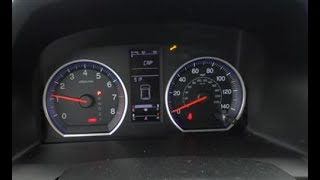
- A "CHECK FUEL CAP" message may appear on the multi-information display.
- A faint smell of gasoline, particularly around the rear of the vehicle or after refueling.
- No noticeable impact on drivability or performance.
- Replacing the oxygen (O2) sensors. O2 sensors are not part of the EVAP system and will not cause a P0440 code.
- Replacing the catalytic converter. This is an expensive exhaust component and is unrelated to the fuel vapor system.
Most Likely Causes
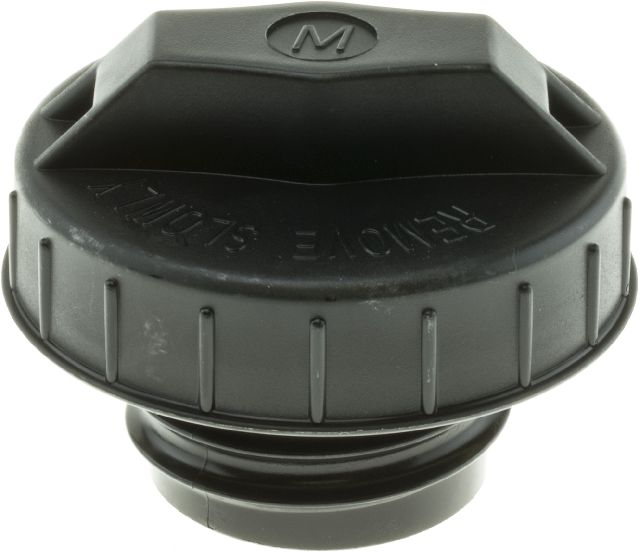
- Loose, Damaged, or Incorrect Gas Cap 🔴 High Probability The gas cap seal is a rubber component that degrades over time with exposure to fuel vapors and weather, leading to a poor seal. This is the most common cause for any EVAP code. Many owners on forums report that using a non-OEM or a faulty locking gas cap can trigger the code, while switching back to a genuine Honda cap resolves it.
How to confirm: Ensure the cap is tightened until it clicks at least once. Inspect the rubber O-ring on the cap for cracks, stiffness, or damage. A new, correct-spec OEM cap is a cheap and effective diagnostic test.
Typical fix: Replace the gas cap with a genuine Honda part.
Est. part cost: $15-$30 - Faulty EVAP Canister Purge Valve 🟡 Medium Probability This solenoid valve is located in the engine bay and cycles frequently, leading to eventual failure where it can get stuck open or closed. It is a widely reported failure item for this CR-V generation and its platform mates.
How to confirm: With the engine running, you can sometimes feel for vacuum at the valve's port or listen for a clicking sound when it's commanded on by a scan tool. A definitive test involves applying voltage to see if it actuates correctly. A stuck-open valve may also cause a rough idle immediately after refueling.
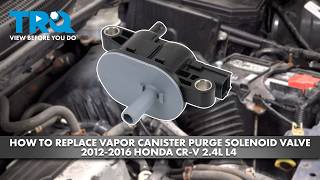
Typical fix: Replace the canister purge valve solenoid. It is located on the intake manifold and requires removing the air filter housing for access. 🎬 See this step-by-step walkthrough for replacing the purge solenoid valve.
Est. part cost: $40-$70 - Cracked or Disconnected EVAP Hoses 🟡 Medium Probability The rubber and plastic hoses that make up the EVAP system can become brittle and crack with age and exposure to under-car conditions.
How to confirm: A visual inspection may reveal obvious cracks or disconnected lines. The most effective method is a smoke test, where a technician injects pressurized smoke into the EVAP system to see where it leaks out.
Typical fix: Replace the specific section of cracked hose.
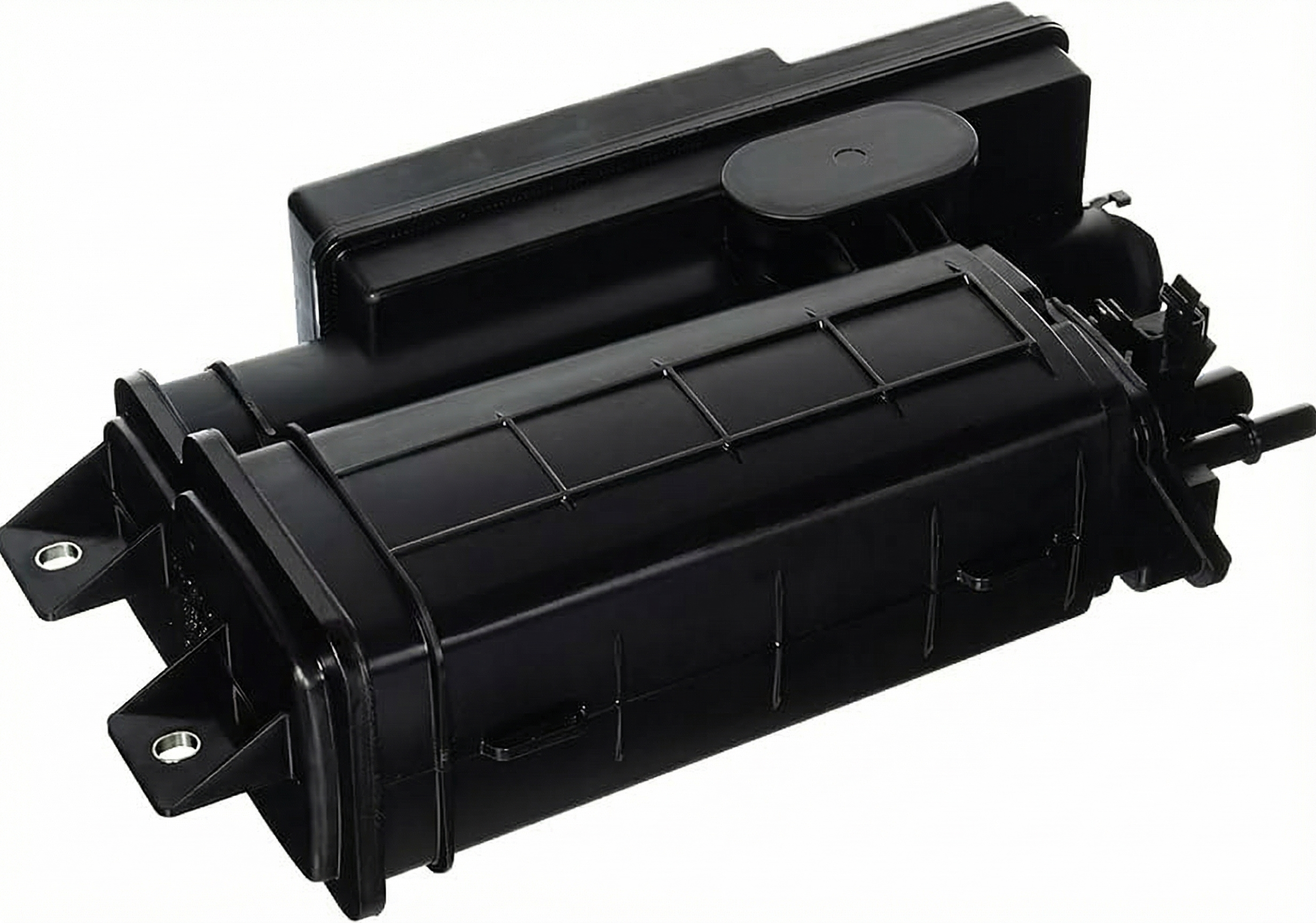
Est. part cost: $10-$50 - Faulty EVAP Canister Vent Solenoid ⚪ Low Probability Located near the charcoal canister under the car, this valve can fail due to corrosion or dirt ingress, causing it to stick open or closed.
How to confirm: Similar to the purge valve, it can be tested with a scan tool or by applying direct voltage to see if the valve operates. It should be normally open and close when energized. A multimeter can be used to check resistance.
Typical fix: Replace the vent solenoid.
Est. part cost: $50-$100
Rare But Worth Checking
- Cracked EVAP (Charcoal) Canister: The plastic housing of the canister can develop cracks from road debris or age, causing a leak. This is less common than valve or hose failures but should be checked during a smoke test.
- Faulty Fuel Tank Pressure (FTP) Sensor: The sensor that monitors system pressure can fail and send incorrect data to the ECM, falsely triggering the P0440 code. If no leaks are found with a smoke test, the FTP sensor's readings should be verified with a professional scan tool.
- Failed Evaporative System Integrity Module (ESIM) / Leak Detection Pump (LDP): Some EVAP systems use an ESIM or LDP to test for leaks. The internal seals or diaphragm can fail, leading the system to incorrectly report a fault. This is a known issue on some vehicle platforms, though less specifically documented for the CR-V than the gas cap or purge valve.
Diagnosis Steps
- Retrieve the code with an OBD-II scanner to confirm P0440 is the only code present.
- Check the gas cap. Remove it, inspect the seal for cracks or damage, and reinstall it, ensuring it clicks several times. Clear the code and drive for a few days to see if it returns. Many owners report this as the fix.
- If the code returns, replace the gas cap with a new OEM (Honda) part. Aftermarket caps, especially locking ones, are a known source of EVAP codes.
- Perform a thorough visual inspection of all accessible EVAP hoses in the engine bay and under the vehicle near the fuel tank. Look for any obvious cracks, breaks, or loose connections. Pay close attention to the lines connected to the purge valve in the engine bay.
- Locate the EVAP canister purge valve in the engine bay. With the engine at idle, disconnect the electrical connector and the hose going towards the canister. There should be no vacuum felt from the valve's port. If there is constant suction, the valve is stuck open and needs replacement.
- If visual inspection reveals no issues, the most reliable next step is to have a smoke test performed. This test fills the EVAP system with a harmless, visible smoke under low pressure, making even the smallest leaks easy to spot.
- Based on the smoke test results, replace the leaking component, which could be a hose, the charcoal canister, the vent valve, or a seal.
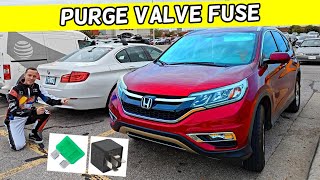
- If no leaks are found, the purge valve, vent valve, or fuel tank pressure sensor may be electrically faulty and should be tested for proper operation using a multimeter or advanced scan tool. 🎬 Check this quick guide to find the purge valve fuse location.
Parts You'll Likely Need
- Fuel Tank Cap
(OEM #17670-TR0-A11 (Superseded by 17670-T3W-A01))— This is the most frequent failure point. The seal wears out, preventing the system from holding pressure. Using a genuine OEM cap is highly recommended.
Trusted brands: Honda (Genuine), Stant, Gates, Motorad
OEM price range: $25-$40
Aftermarket price range: $15-$25 - Vapor Canister Purge Valve
(OEM #36162-RRA-A01)— This valve cycles constantly and can get stuck open or closed, which is a common cause for the P0440 code if the gas cap is good.
Trusted brands: Honda (Genuine), Dorman, Standard Motor Products, ACDelco
OEM price range: $60-$90
Aftermarket price range: $40-$70
Technical Service Bulletins (TSBs) & Recalls
- Honda TSB 09-010: Addresses VTC actuator rattle on cold start for various models.
- Honda TSB 16-012: Also relates to the VTC actuator noise issue.
- Honda TSB 15-046: Addresses vibration issues on 2015 models with the CVT transmission.
- Honda TSB 15-086: Pertains to transmission judder and software updates for 2012-2014 models.
Platform-Specific Known Issues
- A common owner experience shared on Reddit and other forums is the appearance of a 'CHECK FUEL CAP' message on the dashboard, which often precedes the P0440 code and Check Engine Light. Resolving this message often involves replacing the gas cap with an OEM part.
- The EVAP Purge Valve (solenoid) is a known high-failure item across the Honda/Acura lineup from this period, including the CR-V and its platform mates with the K24Z7 engine.
Mechanic-Grade Diagnostic Values
- EVAP Canister Purge Valve internal resistance — expected: 22 - 28 Ohms at room temperature. A similar source for a slightly different year range suggests 23-26 Ohms.. Failure: Readings significantly outside this range (e.g., below 15Ω or above 40Ω) suggest a faulty coil in the solenoid.
- EVAP Canister Vent Valve Solenoid resistance — expected: A general guide for Honda suggests a range of 0.4 to 2.0 Ohms, though this can vary. Another source testing a similar valve found a good reading around 35 Ohms.. Failure: An open circuit (infinite resistance) or a direct short (zero resistance) indicates a failed solenoid.
- Fuel Tank Pressure (FTP) Sensor reference voltage — expected: Approximately 5.0 volts at the sensor connector with the key on, engine off (KOEO).. Failure: No voltage or significantly low voltage points to a wiring issue or a problem with the PCM's 5V reference circuit.
- Fuel Tank Pressure (FTP) Sensor signal voltage — expected: Normal range is typically between 0.5 and 4.5 volts, changing with tank pressure. With the gas cap off (atmospheric pressure), the voltage should be around 2.5V on many systems.. Failure: Voltage stuck high (near 5V) or low (near 0V) can indicate a faulty sensor or wiring short/open. Codes P0452 (low voltage) or P0453 (high voltage) would be present.
Scan Tool Commands That Help
- Honda HDS (Honda Diagnostic System) or equivalent professional scanner: EVAP System Function Test — This is a guided test commanded by the scan tool that automatically closes the vent valve, opens the purge valve to create a vacuum, and then monitors the Fuel Tank Pressure (FTP) sensor to check for leaks. It's the most comprehensive way to test the entire system's integrity without a smoke machine.
- Professional Bidirectional Scan Tool: EVAP Purge Solenoid On/Off — To test the purge valve. With the engine running, you can command the valve open and closed while listening for a click and feeling for vacuum on the port to confirm mechanical operation.
- Professional Bidirectional Scan Tool: EVAP Vent Solenoid On/Off — To test the vent valve. The vent valve is normally open. Commanding it 'On' should close it. This is critical for sealing the system during a smoke test or the HDS function test. You should hear a click from the valve, located near the charcoal canister.
Wiring & Ground Locations
- EVAP System Fuse — In the interior fuse box under the driver's side dashboard. It is a 10A fuse in position #2.. A blown fuse will cut power to the EVAP system components, such as the purge valve, preventing them from operating and potentially setting a circuit code or a general malfunction code like P0440.
- EVAP Canister Purge Valve Connector — On the intake manifold, near the throttle body. A wiring diagram shows one wire is BLK/YEL, which receives power, and the other wire goes to the PCM (e.g., Pin B23 on some models).. This is the connection point for testing voltage and resistance of the purge valve. Corrosion or damage here can cause a circuit fault.
- Main Engine/Transmission Ground — A key ground point is located on the transmission housing, under the air filter box. These grounds are known to corrode on Hondas, showing 'crusty green' oxidation.. A poor ground connection can cause a variety of electrical issues, including erratic behavior of sensors and solenoids that rely on a stable ground reference, such as those in the EVAP system.
Real Owner Repair Stories
- YouTube user 'Fix it Angel' (Unspecified sedan with P0440 (process is generic but outcome is specific)) — Check Engine Light with code P0440.
❌ Tried (didn't work) Replaced gas cap, Inspected hoses in the engine bay, Replaced purge valve and other electronic components from a junkyard
✅ What actually fixed it After dropping the fuel tank, the user found a hairline crack in the seal for the fuel tank vent valve. Replacing this seal, which was part of the fuel pump assembly, finally resolved the code after driving 400 miles.
"I Checked Everything" — The Actual Cause
- A common 'smoke test clean' scenario for P0440 is a faulty Fuel Tank Pressure (FTP) sensor. The system is holding pressure perfectly, but the sensor is sending incorrect voltage data to the ECM, making the computer believe there is a leak. Verifying the FTP sensor's voltage against actual pressure with a gauge is the definitive test.
- Another possibility is an intermittent electrical fault in a solenoid (purge or vent valve) that only occurs under specific temperature or vibration conditions, which would not be caught by a static smoke test. Testing the component's resistance when hot and cold can sometimes reveal these issues.
OEM Part Supersession History
17670-SNA-A02→17670-TR0-A11— Standard part evolution and consolidation across models.17670-TR0-A11→17670-T3W-A01— Updated design or material for better sealing and longevity.
Heads up: The new part may look physically different but is functionally correct and is the recommended replacement.
Model Year Variations Within This Range
- 2015-2016: The 2015 model year refresh introduced a new direct-injected 2.4L 'Earth Dreams' engine and a Continuously Variable Transmission (CVT), replacing the 5-speed automatic. While the core EVAP components and P0440 causes are largely the same, some wiring connectors or component locations may have minor differences. The fundamental diagnostic approach remains unchanged.
Diagnostic Flowchart
Other Known Issues on This Vehicle
Issues unrelated to this code that are worth knowing about as an owner of this generation:
- VTC Actuator Rattle on Cold Start 🟠 Medium — Very common, especially on 2012-2014 models. A metallic grinding or rattling sound for 1-2 seconds immediately after a cold start. (Ref: Honda TSBs 09-010 and 16-012 address this issue.)
- Vibration at Idle (2015-2016 Models) 🟡 Low — Widespread on 2015-2016 models with the CVT. A noticeable vibration or buzzing felt in the cabin when the vehicle is stopped in gear. (Ref: Honda TSB 15-046 was released to address this, involving software updates and potential hardware changes.)
- Premature Starter Motor Failure 🟠 Medium — A frequently reported issue where the vehicle fails to start, often without prior warning.
- Harsh Shifting (2012-2014 Models) 🟡 Low — Some owners of models with the 5-speed automatic transmission report rough or delayed shifts, particularly in stop-and-go traffic. Often attributed to dirty transmission fluid. (Ref: Honda TSB 15-086 mentions a software update and fluid change for judder issues.)
- Parasitic Battery Drain 🟠 Medium — Reports of the battery dying after the vehicle sits for a few days. A stuck A/C relay is a commonly cited cause.
Used vs. New Parts: Buying Guide for This Vehicle
When a used part is the smart pick: For this repair, using used parts is generally not recommended. The most common failure items (gas cap, purge valve) are relatively inexpensive new, and their failure is often due to age-related wear of rubber seals and internal components. A used part from a junkyard is likely to have similar wear and a short remaining lifespan.
Donor-vehicle mileage cap: roughly under 80000 miles for the part to have meaningful remaining life.
What to inspect on the donor part:
- For a purge or vent valve, check for corrosion on electrical pins.
- Ensure plastic housings are not cracked or brittle.
- Verify the part numbers match exactly.
OEM-only on this vehicle (don't cheap out):
- Fuel Cap: Strongly recommended to use a genuine Honda (OEM) fuel cap. Aftermarket caps are a very common cause of persistent EVAP codes due to slight variations in thread and seal design.
Aftermarket brands forum-validated for this vehicle:
- Dorman is a frequently cited aftermarket brand for the EVAP Purge Valve and is considered a reliable, cost-effective alternative to OEM.
- Standard Motor Products (SMP)
- ACDelco (often a re-boxed OEM part)
Brands owners have reported issues with on this vehicle:
- No-name, unbranded parts from online marketplaces should be avoided, especially for electronic solenoids and the gas cap.
Real Owner Stories
Aggregated from forums and TSBs cited above. Mileages and costs reflect what owners reported in those sources.
2009 Honda CR-V
Symptoms: "CHECK FUEL CAP" (but no CEL) won't go away even with a new genuine Honda cap.
What fixed it: The purge valve was the ultimate culprit after replacing the cap.
Source hint: reddit.com/r/crv - A thread titled '2009 Honda CR-V. "CHECK FUEL CAP" (but no CEL) won't go away even with a new genuine Honda cap'
2012-2016 Honda CR-V
Symptoms: Check engine code p0440; owner inquiring about the best plan for repair and safety of driving.
What fixed it: Confirming the gas cap is the first and easiest check.
Source hint: reddit.com/r/MechanicAdvice - A thread titled 'Check engine code p0440 - best plan for this?'
Related OBD-II Codes
Frequently Asked Questions
My 2015 CR-V has a vibration at idle and now a P0440 code; are they related?
I see a 'CHECK FUEL CAP' message on my multi-information display. What should I do?
Can I use a locking gas cap from an auto parts store to fix P0440?
Where is the EVAP canister purge valve located on the 2012-2016 CR-V?
Does TSB 15-086 apply to the P0440 EVAP code?
My CR-V has a rough idle only after I fill up at the gas station. Is this P0440?
Helpful Videos

Used OEM Parts in Stock
New Aftermarket Parts Available


The information in this article is provided for general reference and educational purposes only. Vehicle specifications, procedures, and part compatibility can vary by production date, trim level, and region. Always consult your vehicle's factory service manual and verify part numbers before purchasing or performing repairs. Safety-critical components such as airbags, seat belts, and braking systems should be installed by a qualified professional.
- Honda CR-V:
- 🎬 Helpful Videos
- 🛍️ Shop This Part
- What's Unique About the 2012-2016 Honda CR-V
- Symptoms You May Notice
- Most Likely Causes
- Rare But Worth Checking
- Diagnosis Steps
- Parts You'll Likely Need
- Technical Service Bulletins (TSBs) & Recalls
- Platform-Specific Known Issues
- Mechanic-Grade Diagnostic Values
- Scan Tool Commands That Help
- Wiring & Ground Locations
- Real Owner Repair Stories
- "I Checked Everything" — The Actual Cause
- OEM Part Supersession History
- Model Year Variations Within This Range
- Diagnostic Flowchart
- Other Known Issues on This Vehicle
- Used vs. New Parts: Buying Guide for This Vehicle
- Real Owner Stories
- 2009 Honda CR-V
- 2012-2016 Honda CR-V
- Related OBD-II Codes
- Frequently Asked Questions
- 🎟️ Get 5% Off