

P0440 on 2004-2008 Ford F-150: EVAP System Malfunction Causes and Fixes
For a 2004-2008 F-150, code P0440 most often means you have a loose gas cap, a bad EVAP vent valve near the spare tire, or a cracked EVAP hose. Always check the gas cap first, as it's a free fix. If that's not it, the vent valve (Motorcraft CX2127) and purge valve (Motorcraft CX2418) are the next most likely culprits, costing $30-$90 for the parts.
- Always check that your gas cap is tight and its seal is intact before attempting any repairs; this is the most common fix.
- If the gas cap isn't the issue, the next most likely culprits on a 2004-2008 F-150 are the EVAP vent valve (near the spare tire) or a cracked hose.
- Inspect the wiring to the vent valve carefully for corrosion, as this is a known weak point and can save you from buying a part you don't need.
- If you have trouble filling your gas tank, it strongly points to a problem with the vent valve or its circuit.
- A smoke test is the most reliable way to find a leak if a visual inspection doesn't reveal the problem.
What's Unique About the 2004-2008 Ford F-150
On this generation of F-150, while a loose gas cap is always the first suspect, the EVAP vent valve (solenoid) located near the spare tire is a very frequent point of failure. The wiring and connector to this valve are also a known weak point, often corroding and breaking due to exposure to road salt and moisture. Additionally, the rubber and plastic EVAP hoses, particularly the molded hose running from the purge valve on the firewall to the intake manifold, are prone to drying out and cracking with age, creating leaks that can be tricky to spot without a smoke test.
Symptoms You May Notice
- Check Engine Light is on
- A noticeable smell of gasoline, especially around the rear of the truck or after refueling.
- Difficulty filling the fuel tank (gas pump nozzle clicks off repeatedly), often points to a clogged charcoal canister or stuck vent valve.
- A 'whoosh' sound of air escaping when you remove the gas cap.
- Hard starting or rough idle immediately after filling the gas tank, which can be a symptom of a stuck-open purge valve.
- Replacing the O2 sensors. Oxygen sensors are not part of the EVAP system and will not cause a P0440 code.
- Replacing the catalytic converter. This is an expensive exhaust component and is unrelated to the fuel vapor system.
Most Likely Causes
- Loose or Faulty Gas Cap 🔴 High Probability This is the most common cause for an EVAP code on any vehicle due to user error or a worn-out seal.
How to confirm: Ensure the gas cap is tightened until it clicks at least three times. Inspect the rubber O-ring seal on the cap for cracks, tears, or signs of drying out.
Typical fix: Tighten the cap. If the seal is damaged, replace the gas cap. A genuine Motorcraft cap is recommended as some aftermarket caps do not seal correctly.
Est. part cost: $15-$35 - Failed EVAP Vent Valve/Solenoid 🔴 High Probability This component is a known high-failure item on 2004-2008 F-150s. It is exposed to the elements near the rear axle, and its wiring is prone to corrosion and breakage.
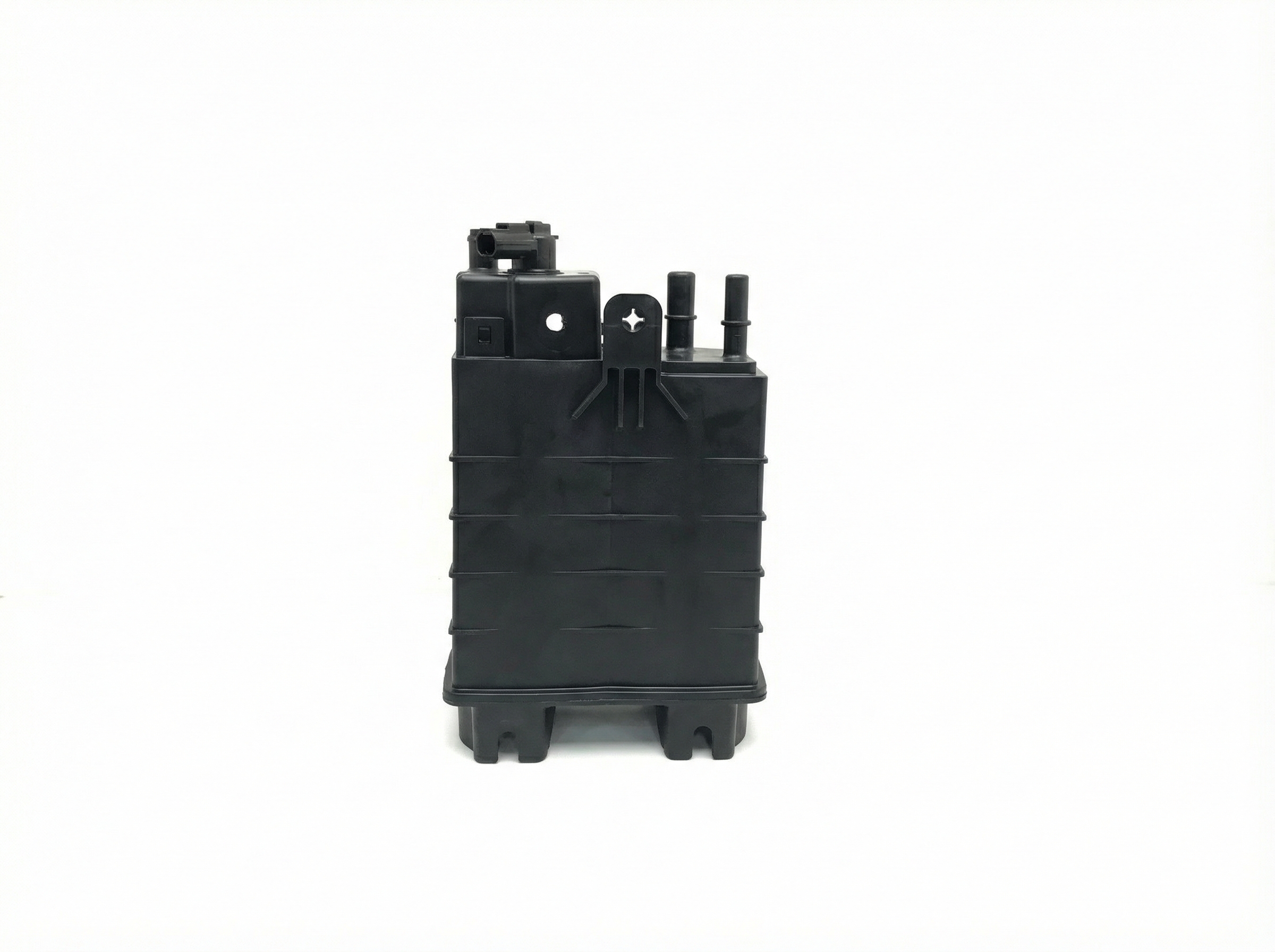
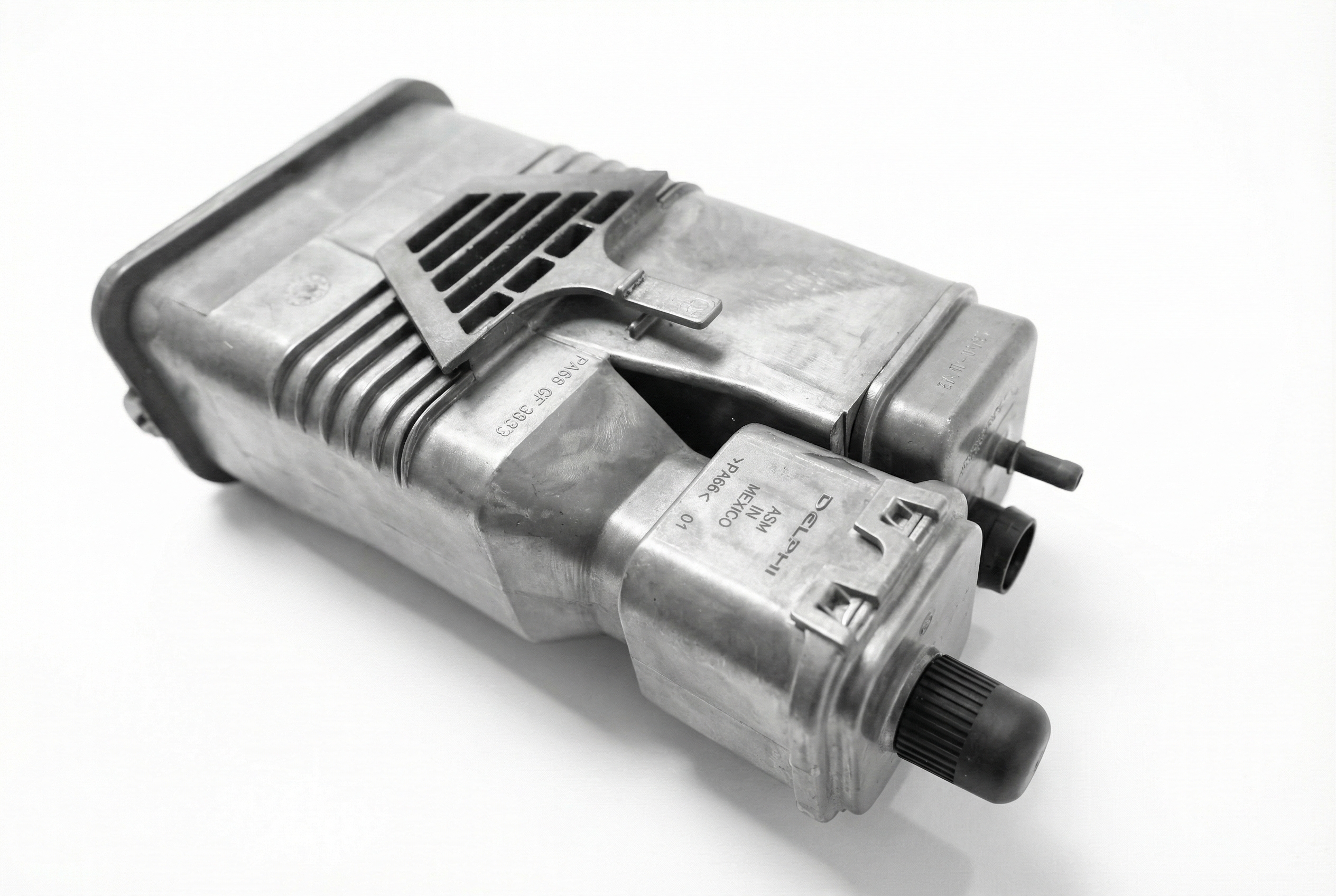
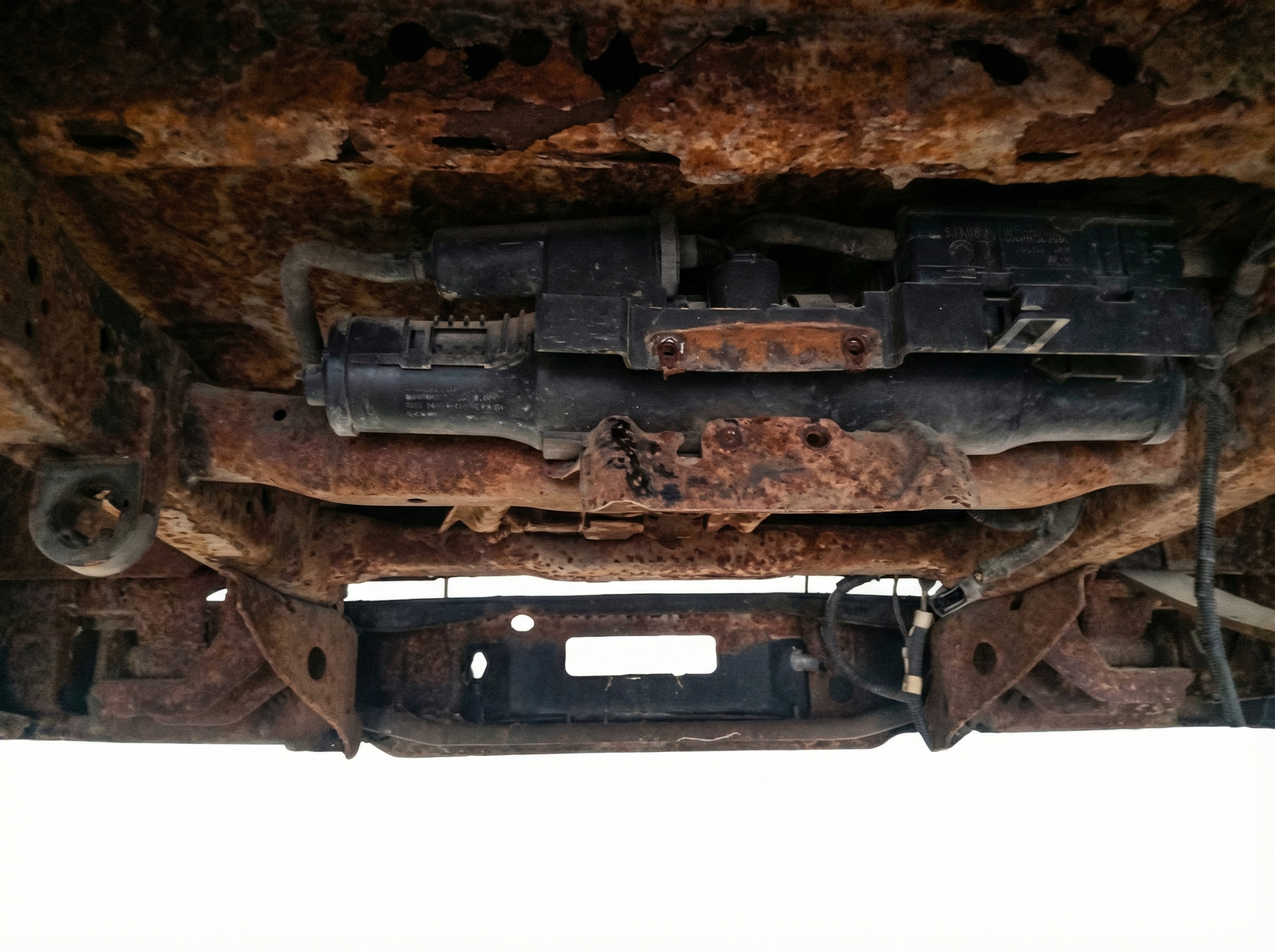
How to confirm: The valve is located above the rear differential, near the spare tire, attached to the charcoal canister. Inspect the wiring and connector for green corrosion or breaks. A common symptom of failure is difficulty refueling. A scan tool can command the valve to close to verify its function during a smoke test.
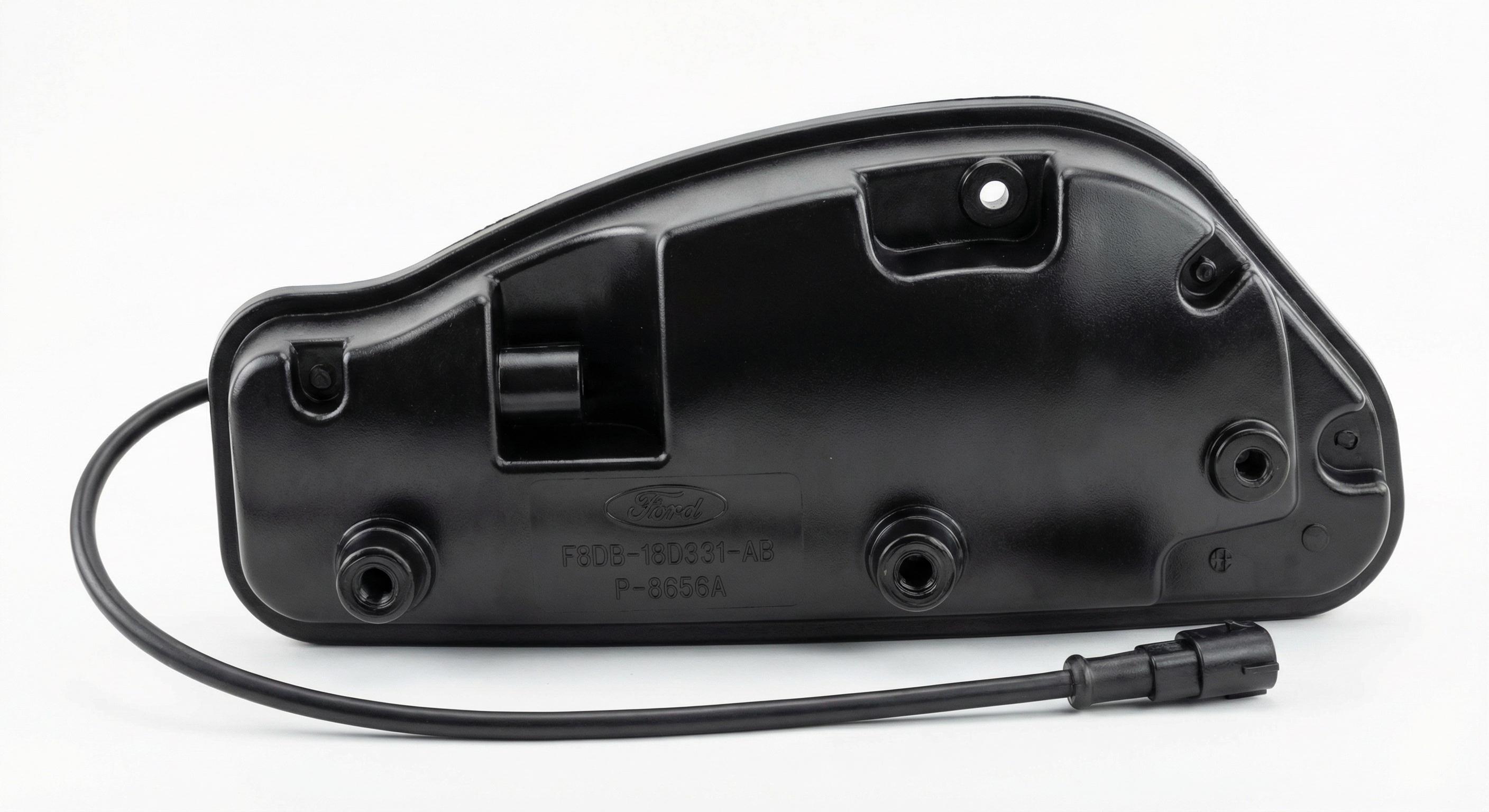
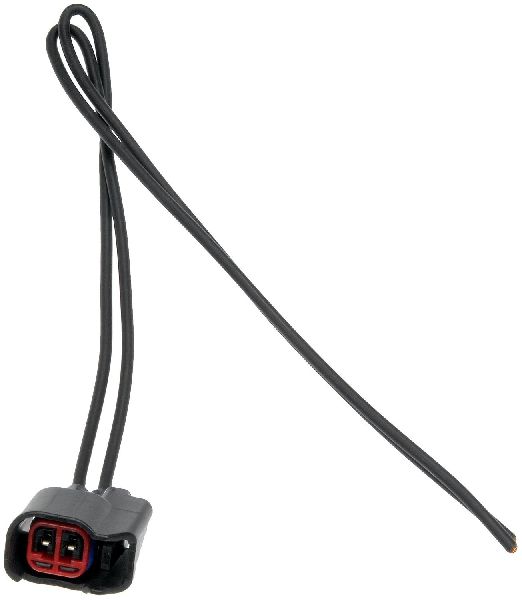
Typical fix: Replace the vent valve solenoid. The wiring pigtail may also need to be replaced if corroded (Dorman 645-211). The valve is often sold with the charcoal canister but can be replaced separately.
Est. part cost: $30-$80 for the valve, $20-$30 for the pigtail. - Cracked or Disconnected EVAP Hoses 🟡 Medium Probability Engine heat and age cause the rubber and plastic hoses to become brittle and crack, especially the hose running from the purge valve on the firewall to the intake manifold.
How to confirm: Visually inspect all accessible EVAP lines for obvious cracks, especially at connection points and elbows. A smoke test is the most effective way to find small, hard-to-see leaks. Pay close attention to the hose assembly near the purge valve.
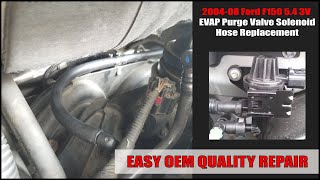
Typical fix: Replace the cracked section of hose. In many cases, a generic 3/8" fuel/EVAP hose can be used to repair a section, as shown by owners online. 🎬 See this guide for a cheap, high-quality purge valve hose fix.
Est. part cost: $10-$50 - Failed Canister Purge Valve/Solenoid 🟡 Medium Probability This valve cycles frequently and can get stuck open or closed over time. A stuck-open valve can cause rough running after a fill-up.
How to confirm: The purge valve is located on the firewall on the driver's side of the engine bay (on the 5.4L V8). You can test it by applying 12V power to its terminals to see if it clicks open and closed. When disconnected and with the engine running, you should not feel vacuum from the port leading to the canister.
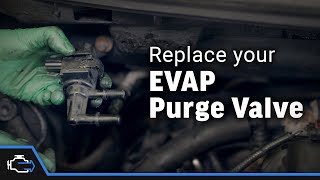
Typical fix: Replace the canister purge valve. This is a quick repair, often taking less than 10 minutes.
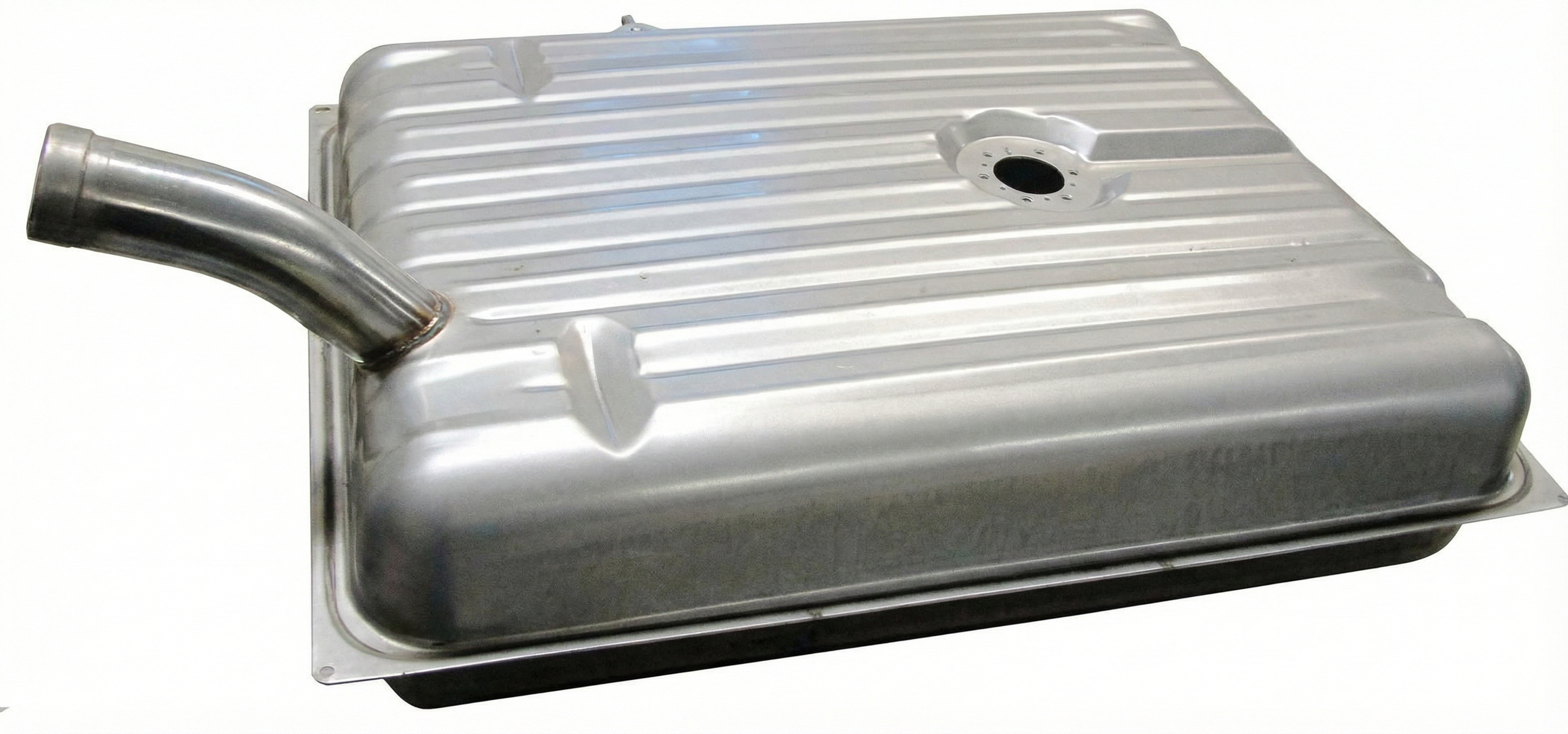
Est. part cost: $40-$90 - Leaking Fuel Filler Neck ⚪ Low Probability The metal filler neck is highly susceptible to rust and corrosion in areas that use road salt, which can create holes and cause a leak.
How to confirm: Visually inspect the entire fuel filler neck from the gas cap down to the tank for signs of rust, flaking metal, or wetness from fuel. A smoke test will clearly show smoke escaping from any rust holes.
Typical fix: Replace the entire fuel filler neck assembly. This is a common repair documented by owners in forums.
Est. part cost: $100-$200
Rare But Worth Checking
- Cracked Charcoal Canister: The canister itself can be damaged by road debris or impacts, causing a crack in the plastic housing. This is usually found during a smoke test.
- Leaking Fuel Pump Gasket or Assembly: The gasket that seals the fuel pump assembly to the top of the fuel tank can fail, causing a fuel smell and an EVAP leak. In some cases, the plastic top of the fuel pump assembly itself can crack.
- Faulty Fuel Tank Pressure (FTP) Sensor: Less commonly, the sensor that monitors EVAP system pressure can fail and send incorrect readings to the computer, falsely triggering the P0440 code. The sensor is often located on top of the fuel tank as part of the fuel pump assembly.
Diagnosis Steps
- Check the Gas Cap: Ensure it is a genuine OEM-spec cap, is tightened until it clicks multiple times, and the seal is not cracked or worn. Clear the code and drive for a few days to see if it returns.
- Visual Inspection: Carefully inspect all visible EVAP hoses in the engine bay and along the frame rail to the fuel tank. Look for any cracks, disconnections, or brittle sections. Pay special attention to the hoses connected to the purge valve on the firewall.
- Inspect the Vent Solenoid Wiring: Lower the spare tire to get clear access to the EVAP canister and vent solenoid above the rear axle. Closely inspect the connector and wires going to the vent solenoid for any signs of green corrosion or broken wires. This is a very common failure point.
- Test the Purge Valve: Locate the purge valve on the driver's side firewall. Disconnect the electrical connector and the two hoses. Try to blow through the valve; it should be closed and not allow air to pass. Apply 12V to the pins; you should hear a click and be able to blow through it.
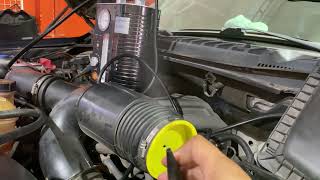
- Perform a Smoke Test: If no obvious issues are found, use an EVAP smoke machine. Connect the smoke machine to the EVAP service port (often has a green cap) in the engine bay. The smoke will fill the system and escape from any leak point, making even hairline cracks 🎬 Watch: How to perform a smoke test on your F-150. in hoses, the filler neck, or the canister visible.
Parts You'll Likely Need
- Gas Cap
(OEM #Motorcraft FC988)— This is the most frequent and easiest fix for a P0440 code. Aftermarket caps can cause issues, so OEM is recommended.
Trusted brands: Motorcraft, Stant
OEM price range: $20-$35
Aftermarket price range: $15-$25 - EVAP Canister Vent Valve/Solenoid
(OEM #Motorcraft CX2127 (replaces 9L3Z-9C915-A))— A very common failure point on this specific truck generation, causing P0440 and often refueling problems. The wiring pigtail (Dorman 645-211) is also a common failure item.
Trusted brands: Motorcraft, Dorman (911-223), Standard Motor Products (CVS22)
OEM price range: $50-$100
Aftermarket price range: $30-$70 - EVAP Canister Purge Valve/Solenoid
(OEM #Motorcraft CX2418 (replaces 9U5Z-9C915-H))— This valve is located in the hot engine bay and cycles frequently, leading to failure where it sticks open or closed.
Trusted brands: Motorcraft, Dorman, Bosch
OEM price range: $60-$110
Aftermarket price range: $40-$90 - Fuel Filler Neck
(OEM #8L3Z-9034-C (Varies by bed length/style))— Prone to rusting through in salt-belt states, creating a significant EVAP leak that is often found with a smoke test.
Related Codes That Often Appear With This One
- P0455 — P0455 indicates a 'Large EVAP Leak Detected.' P0440 is a more general malfunction code, but they often point to the same set of problems, like a completely failed component or a very large crack in a hose.
- P0446 — P0446 specifically points to a fault in the 'EVAP Vent Control Circuit.' If you see this with P0440, it strongly suggests the problem is the vent valve solenoid near the spare tire or its wiring/connector.
- P0457 — P0457 indicates 'EVAP Leak Detected (Fuel Cap Loose/Off)'. While it points directly at the cap, it can also be triggered by other large leaks if the system logic interprets it that way.
Technical Service Bulletins (TSBs) & Recalls
- TSB 09-19-1: While this TSB is officially for a 'Slow Fuel Fill' condition, the cause is often a redesigned fuel filler neck. Since a rusted and leaking filler neck is a common cause for P0440, this TSB is relevant as the fix (replacing the filler neck) addresses both potential issues.
Platform-Specific Known Issues
- The wiring harness for the canister vent solenoid (above the rear axle) is known to corrode and fail, which can mimic a failed solenoid. Always inspect the wires before replacing the part. A replacement pigtail connector, such as Dorman 645-211, is a common repair.
- The steel fuel filler neck is a major weak point for rust, especially in northern climates. A pinhole leak from rust is a very common cause for P0440 that can be difficult to find without a smoke test.
Mechanic-Grade Diagnostic Values
- Fuel Tank Pressure (FTP) Sensor Voltage — expected: Approximately 2.5V to 2.6V with Key On Engine Off (KOEO) and the gas cap removed.. Failure: A reading significantly different from the 2.5-2.6V baseline indicates a potential sensor or wiring issue. When vacuum is applied (like during a system self-test), the voltage should drop to around 0.5V.
- EVAP System Pressure (during scan tool test) — expected: During a commanded test, the system should pull a vacuum of approximately -7.0 to -10.0 in-H2O and hold it steady.. Failure: If the target vacuum isn't reached, it indicates a large leak (P0455). If the vacuum doesn't hold and decays, it indicates a smaller leak (P0442/P0440).
Hidden / Shadow Codes Worth Checking
- Mode $06, Test ID $81: This is not a hidden code but refers to Mode 6 diagnostic data. Test ID $81 specifically monitors the EVAP system for large leaks. A failing value here can point to the P0440 cause before the full monitor completes and sets the code. (see via A scan tool capable of reading Mode 6 data.)
- OBDII PID 1639: This is the specific Parameter ID (PID) for the Fuel Tank Pressure (FTP) sensor on this F-150 generation. It allows for direct reading of the sensor's raw data. (see via Advanced scan tools like Torque Pro or Ford IDS where custom PIDs can be monitored.)
Scan Tool Commands That Help
- Ford IDS (Integrated Diagnostic System): EVAP System Test — This is a guided, automated test that commands the purge and vent solenoids to close, pulls the system into a vacuum, and monitors the FTP sensor for pressure decay to check for leaks. It's the factory-level method for confirming system integrity.
- Ford IDS or equivalent professional scanner: Manual EVAP Test / Bidirectional Control — Allows a technician to manually command the Canister Purge Valve (CPV) and Canister Vent Solenoid (CVS) on or off while watching live data from the FTP sensor. This is crucial for isolating a specific component failure, such as commanding the vent valve closed to see if it seals during a smoke test.
Wiring & Ground Locations
- G103 — Located at the right rear of the engine compartment.. This is a primary ground point for the Powertrain Control Module (PCM). A corroded or loose G103 ground can cause erratic behavior from sensors and solenoids controlled by the PCM, including the EVAP system components, leading to false codes.
- EVAP Canister Vent Valve Connector — Above the rear differential, near the spare tire, connected to the vent valve on the charcoal canister.. The wiring and connector at this location are highly exposed to road spray, salt, and debris. Corrosion (green crust) or broken wires at this specific connector are a very common cause of EVAP codes on the F-150 and should be one of the first places to inspect closely.
Real Owner Repair Stories
- YouTube user 'profdlp' (2004 Ford F-150 5.4L 3V) — Not specified, but performing preventative maintenance on a dried-out EVAP hose.
✅ What actually fixed it The owner noticed the rubber hose from the purge valve solenoid on the firewall going to the intake manifold was becoming dry and cracked. Instead of buying a discontinued and expensive OEM assembly, he replaced the cracked portion with a generic 3/8" ID fuel/EVAP hose and fuel injection clamps, retaining the factory quick-connect ends. This proactively fixed a common source of EVAP leaks.
"I Checked Everything" — The Actual Cause
- A common scenario is a faulty Fuel Tank Pressure (FTP) sensor. A smoke test will show no leaks because the system is mechanically sealed, but the sensor provides an incorrect pressure reading to the PCM, causing the computer to believe there is a leak. The voltage reading will be out of spec (not ~2.6V at rest).
Model Year Variations Within This Range
- 2004: The 2004 model year was a transition year. There is the F-150 Heritage (old body style, based on the 10th gen) and the new body style F-150 (11th gen). They use different EVAP components, including the vapor canister. It is critical to verify which 2004 model you have before ordering parts.
Diagnostic Flowchart
Real Owner Stories
Aggregated from forums and TSBs cited above. Mileages and costs reflect what owners reported in those sources.
2005 Ford F-150
Symptoms: Intermittent check engine light and poor engine performance.
What fixed it: Replaced the purge valve with part number 911-228 (compatible with 4L3Z9C915AB), which resulted in an immediate improvement in performance and cleared the CEL.
Source hint: AliExpress Review
2008 Ford F-150
Symptoms: Chasing EVAP system leaks and multiple codes after replacing the purge valve and gas cap.
What fixed it: Performed a smoke test and checked the canister vent valve to locate the remaining leak.
Source hint: f150forum.com: EVAP system leak 08 f150
2004-2008 Ford F-150
Symptoms: Noticeable smell of fuel around the vehicle.
What fixed it: Found and repaired a crack on the top of the fuel pump assembly.
Source hint: f150forum.com: Fuel leak
2004-2008 Ford F-150
Symptoms: Experiencing hard starting immediately after refueling the gas tank.
What fixed it: Diagnosed and replaced a failing evap canister purge valve.
Source hint: f150forum.com: What are the usual symptoms of the evap canister purge valve failure?
Related OBD-II Codes
Frequently Asked Questions
Does TSB 09-19-1 apply to my P0440 code on my 2004-2008 F-150?
Why is my F-150 hard to start right after I fill up the gas tank?
I replaced the vent valve above the rear axle, but the code came back. What else should I check?
Can a rusted fuel filler neck cause an EVAP code on my truck?
Are there any specific replacement parts recommended for the gas cap?
Is the EVAP system on the Lincoln Mark LT the same as my F-150?
Helpful Videos
Used OEM Parts in Stock
New Aftermarket Parts Available


The information in this article is provided for general reference and educational purposes only. Vehicle specifications, procedures, and part compatibility can vary by production date, trim level, and region. Always consult your vehicle's factory service manual and verify part numbers before purchasing or performing repairs. Safety-critical components such as airbags, seat belts, and braking systems should be installed by a qualified professional.
- Ford F-150:
- 🎬 Helpful Videos
- 🛍️ Shop This Part
- What's Unique About the 2004-2008 Ford F-150
- Symptoms You May Notice
- Most Likely Causes
- Rare But Worth Checking
- Diagnosis Steps
- Parts You'll Likely Need
- Related Codes That Often Appear With This One
- Technical Service Bulletins (TSBs) & Recalls
- Platform-Specific Known Issues
- Mechanic-Grade Diagnostic Values
- Hidden / Shadow Codes Worth Checking
- Scan Tool Commands That Help
- Wiring & Ground Locations
- Real Owner Repair Stories
- "I Checked Everything" — The Actual Cause
- Model Year Variations Within This Range
- Diagnostic Flowchart
- Real Owner Stories
- 2005 Ford F-150
- 2008 Ford F-150
- 2004-2008 Ford F-150
- 2004-2008 Ford F-150
- Related OBD-II Codes
- Frequently Asked Questions
- 🎟️ Get 5% Off