

P0440 on 2002-2008 Dodge Ram 1500: EVAP Malfunction Causes and Fixes
For a 2002-2008 Dodge Ram 1500, a P0440 code, often with a 'gas cap' message, is most commonly caused by cracked rubber EVAP hoses near the charcoal canister or a faulty Natural Vacuum Leak Detection (NVLD) pump. The small, hard-to-see hose between the NVLD pump and the canister is a primary suspect. Check the hoses first, as they are a cheap and easy fix.
- Start by checking for the 'gas cap' message on the dash; if you see it, tighten the cap and replace it with an OEM part if the code returns.
- The most likely physical leaks are cracked rubber hoses under the truck near the charcoal canister. Inspect these carefully before buying any parts.
- If there are no visible leaks, the Natural Vacuum Leak Detection (NVLD) pump is the next most probable cause and is a known failure item on these trucks.
- A smoke test is the most reliable method to find a leak that isn't immediately obvious from a visual inspection.
What's Unique About the 2002-2008 Dodge Ram 1500

On this generation of Dodge Ram, the EVAP system uses a Natural Vacuum Leak Detection (NVLD) pump or a later, simplified version called an Evaporative System Integrity Monitor (ESIM) to test system integrity. This component is a known high-failure part. Additionally, owners frequently report seeing a specific 'gas cap' warning message on the instrument cluster's odometer display along with the P0440 code, which is a helpful, platform-specific clue that isn't present on all vehicles. The rubber hoses used in the EVAP system on this truck are also highly prone to dry-rotting and cracking, especially the short, formed section connecting the NVLD/ESIM to the charcoal canister, which is located under the vehicle just behind a crossmember.
Generation note: The 2002-2008 model years cover the third generation of the Dodge Ram 1500. This includes the initial 'DR' platform (2002-2005) and the facelifted 'DH' platform (2006-2008). The core EVAP system design and common failure points like the NVLD pump and rubber hoses are consistent across this entire generation. Some later models in this range may use the updated ESIM instead of the NVLD pump, but they perform the same function and have similar failure modes.
Symptoms You May Notice

- Check Engine Light is on
- A 'gas cap' message appearing on the odometer display
- A faint smell of fuel around the vehicle (less common)
- Possible failure of a state emissions test.
- Replacing the gas cap with a cheap aftermarket version that doesn't seal properly, leading the owner to believe the gas cap was not the problem.
- Replacing the purge solenoid in the engine bay when the leak is actually from a rotted hose under the truck.
- Replacing the NVLD pump when the issue is a simple, inexpensive cracked hose connected to it.
Most Likely Causes


- Cracked or Rotted EVAP Hoses 🔴 High Probability The rubber hoses connecting the charcoal canister, NVLD pump, and filler neck are exposed to the elements under the truck and become brittle and crack over time. The most common failure is the short hose between the NVLD pump and the charcoal canister, which is often hidden from plain view.
How to confirm: Visually inspect all rubber EVAP lines, especially the short sections connected to the charcoal canister and NVLD pump under the truck. Use a mirror to get a good view of the top of the canister. Look for visible cracks, splits, or loose connections. A smoke test is the most definitive way to find a leak if it's not obvious.
Typical fix: Replace the cracked section of hose. OEM-formed hoses are available (e.g., Mopar 52102793AA, 55366012AA), or you can use an appropriate size of generic EVAP-rated hose and clamps.
Est. part cost: $15-$50 - Faulty Natural Vacuum Leak Detection (NVLD) Pump / ESIM 🔴 High Probability This specific Dodge component has a high failure rate. The internal diaphragm can rupture or the internal switch can fail, causing it to send incorrect information to the PCM even if there are no leaks.
How to confirm: If a smoke test reveals no leaks, the NVLD pump is the next most likely suspect. The internal switch can fail to close when vacuum is applied, which can be tested with a scan tool or multimeter. Often, it is replaced based on the absence of other identifiable leaks due to its high failure rate.
Typical fix: Replace the NVLD pump/ESIM. It is typically mounted directly 🎬 See this walkthrough on replacing the ESIM to clear gas cap codes. to the charcoal canister with a twist-lock fitting, an electrical connector, and one hose.
Est. part cost: $40-$90 - Loose or Faulty Gas Cap 🟡 Medium Probability This is a common cause on all vehicles. The seal can wear out, or the cap may not be tightened correctly. The 'gas cap' message on the dash is a direct indicator.
How to confirm: Ensure the cap is tightened until it clicks. Check the rubber seal for cracks or damage. If the 'gas cap' message persists after tightening, the cap itself is likely faulty.
Typical fix: Replace the gas cap. It is highly recommended to use an OEM Mopar gas cap, as some aftermarket caps do not seal properly and can cause the code to return.
Est. part cost: $15-$35 - Faulty EVAP Purge Solenoid/Valve ⚪ Low Probability Like any solenoid, it can fail over time. It can get stuck open or closed, or fail to hold vacuum. It is often replaced unnecessarily when the actual fault is a cracked hose underneath the truck.
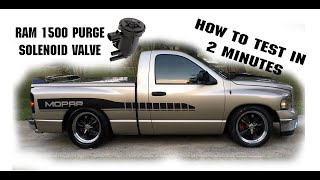
How to confirm: The purge solenoid is located in the engine bay. It can be tested with a handheld vacuum pump to see if it holds vacuum when de-energized. You can also apply voltage to see if it opens and closes.
Typical fix: Replace the purge solenoid.
Est. part cost: $25-$60
Rare But Worth Checking
- Cracked Charcoal Canister: The canister itself can be cracked by road debris, causing a large leak. This is less common than hose or pump failure but should be checked if the canister shows signs of physical damage.
- Damaged Fuel Filler Neck: Rust and corrosion can damage the metal filler neck where the gas cap seals, preventing a proper seal even with a new cap. Owners have reported needing to sand the filler neck smooth or replace it entirely to solve the issue.
- Damaged Wiring to NVLD Pump: The wiring leading to the NVLD pump is under the vehicle and can be damaged by corrosion or road debris, leading to a loss of signal or an open circuit.
- Leaking Fuel Pump Module Seal: In at least one documented case, the plastic top of the fuel pump module itself had rotted under the retaining ring, causing a hard-to-find leak. This required lifting the truck bed to access and diagnose.
Diagnosis Steps

- Check for the 'gas cap' message on the odometer. If present, tighten the gas cap until it clicks several times. Inspect the cap's seal for cracks.
- If the light returns, consider replacing the gas cap with a new OEM Mopar part as a cheap and easy first step.
- If the code persists, raise the vehicle safely and visually inspect the rubber EVAP hoses under the truck. The system is generally located near the center of the vehicle, often behind a crossmember.
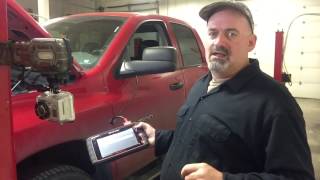
- Pay extremely close attention to the short, formed hose connecting the NVLD pump to the charcoal canister. Use a mirror and a bright light to inspect its entire surface for hairline cracks. 🎬 Watch: A mechanic finds and fixes common Dodge Ram EVAP leaks.
- If no visual damage is found, perform a smoke test on the EVAP system. Introduce smoke into the service port (usually in the engine bay with a green cap) and look for where it escapes from the lines, canister, or filler neck area.
- If a smoke test reveals a leak from the top of the fuel tank area, investigate the fuel pump module seal, which may require lifting the bed for access.
- If the smoke test reveals no leaks, the NVLD pump (or ESIM) is the most likely cause of the failure.
- If all else fails, check the wiring and connector for the NVLD pump for continuity and damage, as this can mimic a component failure.
Parts You'll Likely Need
- EVAP Hose
(OEM #55366012AA, 53032052AC (Varies by specific hose))— The rubber hoses under the truck are highly prone to dry rot and cracking, representing the most common physical leak source. The hose between the canister and NVLD pump is a frequent culprit.
Trusted brands: Mopar, Gates
OEM price range: $20-$50
Aftermarket price range: $10-$30 - Natural Vacuum Leak Detection (NVLD) Pump / ESIM
(OEM #4891561AA (Varies by year))— This is a known high-failure component on Dodge trucks of this era and will trigger a P0440 code when it fails internally, even without a physical leak. Aftermarket versions like Dorman 310-500 are common.
Trusted brands: Mopar, Bosch, Standard Motor Products, Dorman
OEM price range: $70-$120
Aftermarket price range: $40-$90 - Fuel Cap
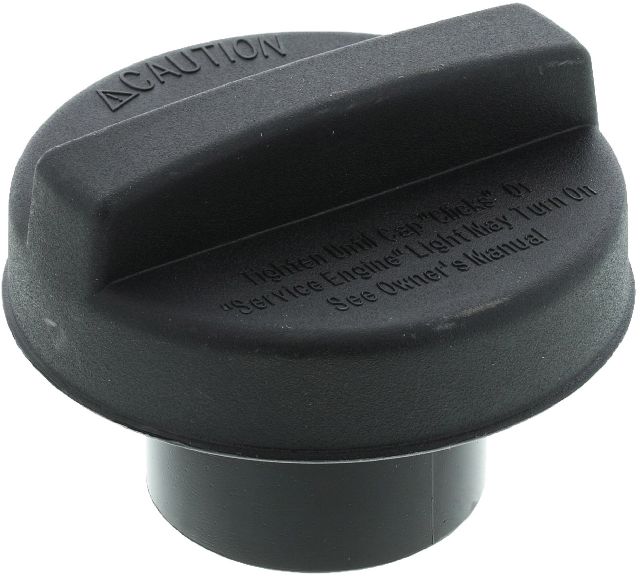
(OEM #52124512AA)— A worn seal on the gas cap is a very common cause for all EVAP codes. The 'gas cap' message on the dash points directly to this. An OEM cap is recommended for a proper seal.
Trusted brands: Mopar
OEM price range: $25-$35
Aftermarket price range: $15-$25
Related Codes That Often Appear With This One
- P0456 — P0456 indicates a small EVAP leak. A deteriorating hose or failing component can initially cause a small leak (P0456) before it worsens and is flagged as a general malfunction (P0440).
- P0441 — P0441 indicates incorrect purge flow. This can be caused by a faulty purge solenoid or a blockage, which are part of the same system and can be flagged during the EVAP self-test.
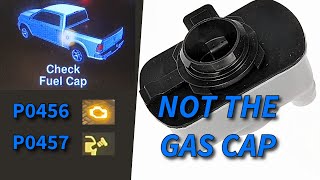
- P0457 — P0457 indicates a leak detected, often interpreted by the system as a loose fuel cap. This code frequently appears alongside P0440 and the 'gas cap' dash message.
Platform-Specific Known Issues
- The Hidden Leak: Fuel Pump Module Rot: A user on RamForum.com chased P0440 and P0455 codes for two years, replacing multiple EVAP components without success. After building a DIY smoke machine, they discovered the leak was coming from the top of the fuel tank. Upon lifting the truck bed, they found the plastic top of the fuel pump module was rotting and crumbling away under the large retaining ring, causing a significant leak that was otherwise impossible to see.
- The Rusty Filler Neck Problem: Multiple owners on forums report that rust buildup on the fuel filler neck, where the gas cap seals, is a common cause for recurring EVAP codes. Even with a new gas cap, the rusted, uneven surface prevents a proper seal. The fix involves sanding the filler neck lip smooth with sandpaper or emery cloth to create a clean sealing surface. In severe cases, the entire fuel filler neck must be replaced.
- Shade Tree Repair for NVLD Filter: One owner on RamForum.com traced their P0440 and 'gas cap' code to a physical hole in the NVLD pump's air filter canister. Rather than replacing the unit, they performed a 'shade tree' repair by cleaning the area and patching the hole with RTV sealant and flexible plastic, which successfully resolved the code.
- Manufacturer Service Bulletins: Manufacturer service bulletins for similar Dodge platforms, such as TSB Bulletin #1809423 and TSB Bulletin #1807422, note that P0440 can be set alongside other EVAP codes like P0455 and P0456, sometimes requiring PCM reprogramming or specific verification tests like the wiTECH Small Leak Verification Test (SLVT).
Mechanic-Grade Diagnostic Values
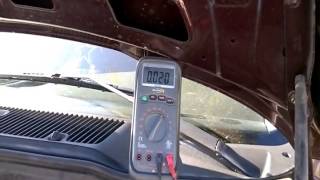
- NVLD Pump Switch Signal Voltage (KOEO) — expected: Approximately 8.8V - 9.0V on the signal wire (orange wire in some cases) with the pump at rest.. Failure: When a small amount of vacuum (as little as 5 in. Hg) is applied to the canister port, the voltage should drop to near 0V. If the voltage does not drop, the internal switch is faulty.
- ESIM Switch Signal Voltage — expected: Can be a 5.0V or 12.0V signal depending on the vehicle. When the PCM reads voltage, the switch is open.. Failure: When system vacuum reaches -187 to -250 Pa, the switch should close, pulling the signal voltage low (to ground). If the switch state doesn't change under vacuum, it is faulty.
Scan Tool Commands That Help
- Professional Scan Tool (e.g., wiTECH, Snap-on, Autel): EVAP Monitor Test / System Test — This command forces the PCM to run the entire EVAP leak detection sequence on demand in the service bay. It's used after a repair to verify the fix without having to complete a full drive cycle. The tool will report if the test passes or fails, and if it fails, it will set the corresponding code immediately.
- Professional Scan Tool: Purge/Vent Solenoid Actuation — This bidirectional control allows the technician to manually command the purge and vent solenoids open or closed. This is critical during a smoke test to seal the system by commanding the vent valve closed. It also helps diagnose a stuck valve by listening for an audible click during actuation.
Wiring & Ground Locations
- NVLD Pump Connector — On the NVLD pump itself, located under the truck near the charcoal canister, just behind a central crossmember.. The connector and its wiring are exposed to road debris and corrosion. A typical 3-pin connector has a power wire (e.g., white/green), a ground wire (e.g., black/purple), and a signal wire (e.g., orange). Damage to any of these can mimic a failed pump.
- G302 / G303 — G302 is located on the left front body. G303 is located below the right side of the rear window.. While not exclusively for the EVAP system, these are major chassis grounds. Poor grounding at these points can cause a variety of intermittent electrical issues for multiple systems controlled by the PCM, including the EVAP components.
Real Owner Repair Stories
- RamForum.com user (2013 Ram 1500 Big Horn (Note: 4th Gen, but the issue is identical to 3rd Gen)) — Check Engine Light with EVAP leak code and 'gas cap' message.
❌ Tried (didn't work) Replacing the gas cap with an aftermarket one., Sanding the rusty filler neck (this worked temporarily but the issue returned).
✅ What actually fixed it The user later reported that the 'gas cap' light issue did not go away until the ESIM was replaced, suggesting the rusty filler neck was a contributing factor but the component failure was the root cause. - RamForum.com user (2008 Ram 1500 4.7L 4x4) — Intermittent P0440 and 'gas cap' code.
❌ Tried (didn't work) Initial visual inspection of hoses.
✅ What actually fixed it Found a quarter-sized hole in the leak detection pump air filter (the black canister attached to the NVLD). The user performed a temporary 'shade tree' fix by patching the hole with plastic and RTV sealant, which resolved the code. This highlights that even the filter housing can be a leak point. - NHTSA ODI #10096008 — An owner reported that the check engine light illuminated and code P0440 was diagnosed, but noted that at the time, there were no TSBs or information available to dealers on what the code meant.
- NHTSA ODI #11350522 — An owner of a similar Dodge vehicle reported that at 69,000 miles, the check engine light came on and code P0440 was thrown twice; they replaced the purge valve at their own cost to address the issue.
- NHTSA ODI #11455058 — A report describes a check engine light appearing where the code stated P0440 Evaporative Emission Systems, leading the owner to investigate potential recalls for the vehicle.
"I Checked Everything" — The Actual Cause
- A very common scenario for the P0440 on this platform is passing a smoke test perfectly, only for the code to return. This almost always points to a failure of the NVLD/ESIM pump's internal switch. The system holds pressure (no physical leak), but the switch fails to send the correct 'closed' signal to the PCM during the self-test. The PCM interprets this lack of signal as a system malfunction, setting P0440.
OEM Part Supersession History
04891561AA→04891994AA— Part has been updated by the manufacturer.
Heads up: The original part number 4891561AA is listed as being replaced by 04891994AA by some vendors. Both are associated with the NVLD/ESIM assembly. Always confirm fitment with a VIN.
Model Year Variations Within This Range
- 2002-~2006: These earlier models primarily used the Natural Vacuum Leak Detection (NVLD) pump system. This system uses a solenoid to perform its self-test.
- ~2007-2008: Later models in this generation transitioned to the Evaporative System Integrity Monitor (ESIM). The ESIM is a simpler, purely mechanical design that uses weighted check valves and a diaphragm instead of a solenoid. While simpler, it performs the same function and is also a common failure point. The ESIM must be mounted vertically to function correctly.
Diagnostic Flowchart
Real Owner Stories
Aggregated from forums and TSBs cited above. Mileages and costs reflect what owners reported in those sources.
Dodge Ram 1500
Symptoms: Chased P0440 and P0455 codes for two years, replacing multiple EVAP components without success.
What fixed it: Built a DIY smoke machine and discovered a leak coming from the top of the fuel tank. Lifted the truck bed and found the plastic top of the fuel pump module was rotting and crumbling away under the large retaining ring. Replaced the fuel pump module.
Source hint: RamForum.com thread titled 'P0440/P0455 EVAP saga concludes'
Dodge Ram 1500
Symptoms: Long battle with a recurring 'gas cap' message and EVAP codes despite installing a new gas cap.
What fixed it: Found rust buildup on the fuel filler neck preventing a proper seal. Sanded the filler neck lip smooth with sandpaper/emery cloth to create a clean sealing surface.
Source hint: RamForum.com thread titled 'Check gas cap purgatory'
Dodge Ram 1500
Symptoms: P0440 code and 'gas cap' message caused by a physical hole in the NVLD pump's air filter canister.
What fixed it: Performed a 'shade tree' repair by cleaning the area and patching the hole with RTV sealant and flexible plastic instead of replacing the entire unit.
Source hint: RamForum.com thread titled 'P0440 code'
3rd Gen Dodge Ram 1500
Symptoms: Persistent P0440 code triggered by an EVAP leak.
What fixed it: Used a mirror to inspect the EVAP system and found the small, rotted hose between the NVLD pump and the charcoal canister. Replaced the short hose section.
Source hint: YouTube - DoctorD907
Related OBD-II Codes
Frequently Asked Questions
Why does my 2002-2008 Dodge Ram 1500 display a 'gas cap' message on the odometer with a P0440 code?
I replaced the gas cap on my Ram 1500, but the P0440 code came back. What should I check next?
Is there a specific replacement gas cap recommended for the 3rd Gen Ram?
Where is the EVAP service port located on the Dodge Ram 1500 for a smoke test?
Could a P0440 code on my Ram be caused by the fuel pump?
What is the NVLD pump on my Dodge Ram, and why does it fail?
Helpful Videos
We Have This Part in Stock



The information in this article is provided for general reference and educational purposes only. Vehicle specifications, procedures, and part compatibility can vary by production date, trim level, and region. Always consult your vehicle's factory service manual and verify part numbers before purchasing or performing repairs. Safety-critical components such as airbags, seat belts, and braking systems should be installed by a qualified professional.
- Dodge Ram 1500:
- 🎬 Helpful Videos
- 🛍️ Shop This Part
- What's Unique About the 2002-2008 Dodge Ram 1500
- Symptoms You May Notice
- Most Likely Causes
- Rare But Worth Checking
- Diagnosis Steps
- Parts You'll Likely Need
- Related Codes That Often Appear With This One
- Platform-Specific Known Issues
- Mechanic-Grade Diagnostic Values
- Scan Tool Commands That Help
- Wiring & Ground Locations
- Real Owner Repair Stories
- "I Checked Everything" — The Actual Cause
- OEM Part Supersession History
- Model Year Variations Within This Range
- Diagnostic Flowchart
- Real Owner Stories
- Dodge Ram 1500
- Dodge Ram 1500
- Dodge Ram 1500
- 3rd Gen Dodge Ram 1500
- Related OBD-II Codes
- Frequently Asked Questions
- 🎟️ Get 5% Off