

P0430 on 2005-2009 Subaru Outback 2.5L: Catalyst Efficiency Fixes
P0430 on your Subaru Outback means the driver's side (Bank 2) catalytic converter is failing its efficiency test. Before replacing the expensive converter, first meticulously check for exhaust leaks at the manifold and flange gaskets and consider replacing the less expensive rear (downstream) oxygen sensor, as this is a common misdiagnosis.
- P0430 on your 2005-2009 Outback points to a problem with the driver's side (Bank 2) catalytic converter system.
- DO NOT immediately replace the catalytic converter. First, thoroughly inspect for exhaust leaks at the gaskets, which is a common and cheap fix.
- If no leaks are found, test the Bank 2 downstream (rear) oxygen sensor. A faulty sensor is much less expensive to replace than the converter and is a frequent cause of this code.
- If leaks and sensors are ruled out, the catalytic converter has likely failed. This is an expensive part, but critical for passing emissions and proper engine function.
- If you replace the converter, ensure any other engine problems (like oil consumption or misfires) are resolved first to avoid damaging the new part.
What's Unique About the 2005-2009 Subaru Outback
On the 2005-2009 Outback with the EJ253 engine, the P0430 code is a straightforward efficiency code. 🎬 Watch: A master technician's guide to performing a complete diagnosis. The primary challenge is the diagnostic order. Due to the high cost of the catalytic converter assembly, it is crucial to rule out cheaper failures first. Exhaust leaks, particularly at the flange gaskets, are very common. Additionally, Subaru ECUs are known to be sensitive, and some aftermarket converters may not have enough precious metal loading to satisfy the monitor, causing the code to return. This is especially true for PZEV-equipped vehicles which require a higher-efficiency (and more expensive) converter.
Symptoms You May Notice
- Check Engine Light is on
- Vehicle fails emissions testing
- Possible reduction in fuel economy
- In some cases, a faint sulfur or "rotten egg" smell from the exhaust, especially under acceleration.
- Cruise control and/or Vehicle Dynamics Control (VDC) may be disabled by the ECU
- Audible ticking or hissing from the engine bay or under the car, especially when cold, indicating an exhaust leak.
- Immediately replacing the catalytic converter without testing the oxygen sensors or checking for exhaust leaks. An exhaust leak between the cylinder head and the rear O2 sensor is a very common cause of P0430 on Subarus and is a much cheaper fix.
Most Likely Causes
- Failing or worn-out catalytic converter 🔴 High Probability Catalytic converters have a finite lifespan. On higher-mileage EJ253 engines, issues like oil consumption or unaddressed misfires can contaminate the catalyst, causing premature failure. The federal emissions warranty covers the converter for 8 years or 80,000 miles, which most of these vehicles have surpassed.
How to confirm: After ruling out exhaust leaks and sensor issues, a temperature test using an infrared thermometer can confirm a bad converter. A healthy converter should be significantly hotter at the outlet than the inlet (e.g., 100°F+ difference). If the temperatures are nearly the same or cooler at the outlet, the catalyst is not working. 🎬 Watch: How to test your catalytic converter with a thermometer.
Typical fix: Replace the Bank 2 catalytic converter assembly. Many owners report success with direct-fit aftermarket brands like Walker or Magnaflow, but caution against budget brands which may not last, especially on PZEV models.
Est. part cost: $400-$800 for aftermarket (Federal/EPA compliant), $1500+ for OEM. - Exhaust system leak 🟡 Medium Probability The gaskets between the cylinder head and converter, and especially the three-bolt flange gasket connecting to the mid-pipe, are common failure points due to rust and heat cycles. The flange bolts are notorious for rusting solid, often requiring cutting and replacement.
How to confirm: Perform a visual inspection for black soot trails around flanges. A common method is to use a shop vacuum in reverse (blower mode) to pressurize the cold exhaust system and spray soapy water on joints; bubbles will indicate a leak. 🎬 See this simple trick to find exhaust leaks using a vacuum. An audible ticking sound when the engine is cold that may quiet down as it warms up is a strong indicator.
Typical fix: Replace the failed gasket(s) and any corroded hardware. The leak must be sealed for the O2 sensors to read correctly.
Est. part cost: $10-$50 for gaskets. - Faulty downstream (rear) oxygen sensor 🟡 Medium Probability Oxygen sensors are wear items. A 'lazy' or failing rear O2 sensor can send slow or incorrect voltage signals to the ECU, falsely indicating a problem with the catalytic converter.
How to confirm: Use an OBD-II scanner with live data. A healthy downstream O2 sensor should show a relatively steady voltage, typically around 0.45V-0.7V when the engine is warm and at a steady cruise. If it's switching rapidly between high (~0.9V) and low (~0.1V), mimicking the upstream sensor, it has likely failed or there's a massive exhaust leak.
Typical fix: Replace the Bank 2 (driver's side) downstream oxygen sensor. Denso is the OEM supplier and highly recommended.
Est. part cost: $50-$120
Rare But Worth Checking
- Engine running rich or lean: An underlying issue like a leaking fuel injector, faulty front air-fuel ratio sensor, or a vacuum leak can destroy a new catalytic converter quickly. If other codes like P0171 (lean) or P0172 (rich) or misfire codes (P030x) are present, they must be diagnosed and fixed first before replacing the converter.
Diagnosis Steps
- Scan for any other DTCs. If codes for misfires (P0301-P0304), fuel trim (P0171/P0172), or other sensor faults are present, diagnose and fix them first. An engine problem can damage a new converter.
- Inspect the exhaust system thoroughly from the driver's side cylinder head to the mid-pipe. Look for cracks, rust holes, and tell-tale black soot at gasket flanges. Listen for audible leaks, especially on a cold start.
- If no leaks are found, connect a scanner and view live data for the Bank 2 oxygen sensors. The upstream (Air/Fuel Ratio) sensor voltage should fluctuate rapidly. The downstream (rear) sensor should show a relatively stable voltage (e.g., ~0.6-0.8V) at steady RPM. If the downstream sensor is fluctuating wildly like the upstream one, it is likely faulty or a significant exhaust leak is present.
- If the sensors appear to be working correctly and no leaks are present, perform a temperature test on the Bank 2 catalytic converter. Use an infrared thermometer to measure the temperature of the pipe just before and just after the converter body. A working converter should be at least 100°F hotter at the outlet.
- If the temperature is the same or cooler at the outlet, and all other causes are ruled out, the catalytic converter has failed and requires replacement.
Parts You'll Likely Need
- Bank 2 Catalytic Converter Assembly
(OEM #44659AA00A)— This is the most probable cause if exhaust leaks and sensor issues have been ruled out. The entire assembly bolts to the driver's side cylinder head and the exhaust mid-pipe.
Trusted brands: Subaru (OEM), Magnaflow, Walker
OEM price range: $1500-$2000
Aftermarket price range: $400-$800 - Bank 2 Downstream Oxygen Sensor
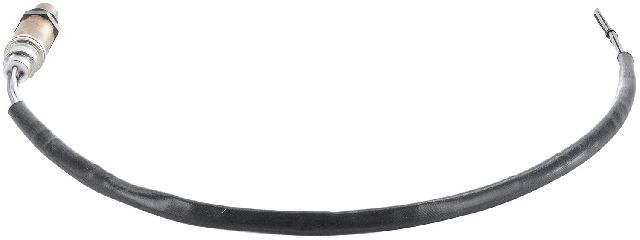
(OEM #22690AA81A (Denso 234-4732 is the OEM equivalent))— This sensor reports catalyst efficiency and is a common failure point. It's often replaced as a first step. Using the OEM supplier (Denso) is highly recommended.
Trusted brands: Denso (OEM supplier), NTK/NGK
OEM price range: $120-$180
Aftermarket price range: $50-$120 - Exhaust Gaskets
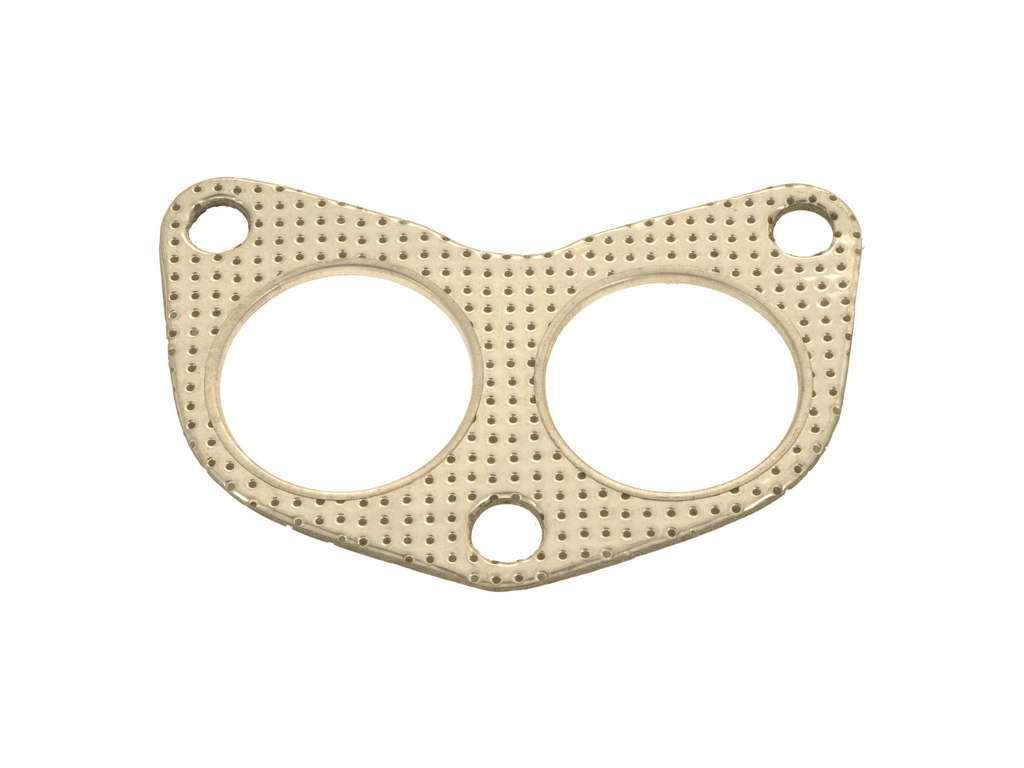
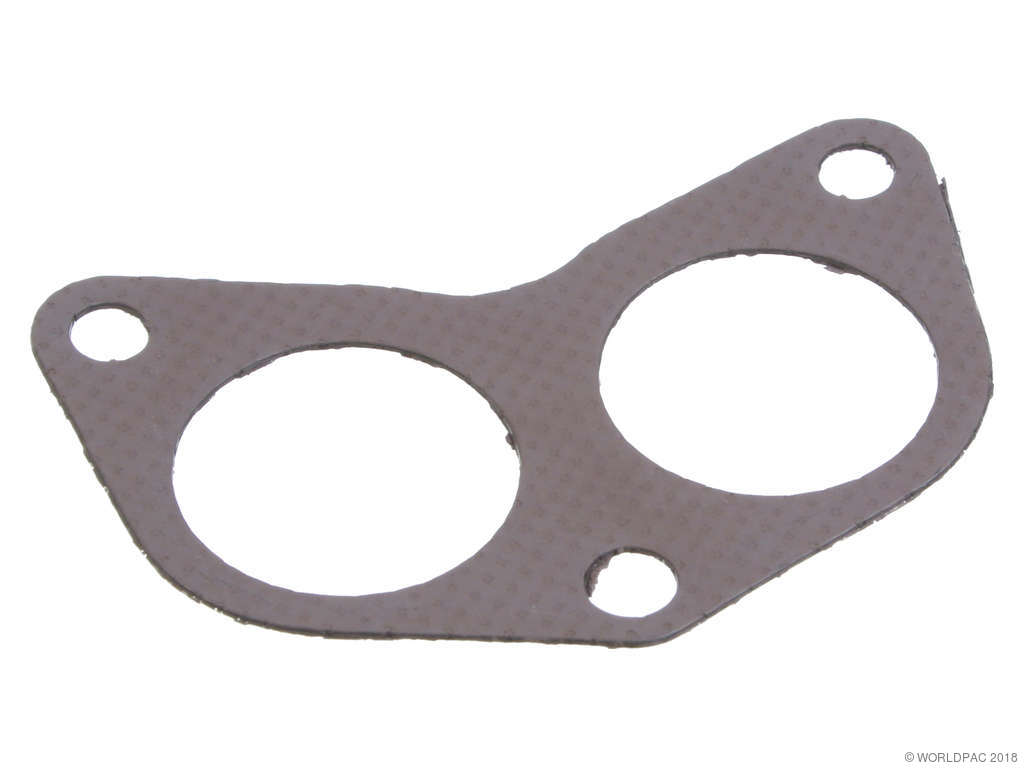
(OEM #Manifold to Converter Gasket: 44022AA020 (crush ring style), Converter to Mid-pipe Gasket: 44011AE01A (3-bolt triangle))— The gaskets at the cylinder head port and at the three-bolt flange are common failure points for leaks that can trigger a P0430 code. Always replace these when servicing the converter.
Trusted brands: Subaru (OEM), Fel-Pro, Walker
OEM price range: $15-$30 per gasket
Aftermarket price range: $5-$15 per gasket
Related Codes That Often Appear With This One
- P0420 — P0420 is the identical code but for Bank 1 (passenger side). Seeing both codes simultaneously could point to a systemic issue like poor fuel quality, a major vacuum leak, or an engine problem affecting both banks, rather than two independent converter failures.
Technical Service Bulletins (TSBs) & Recalls
- While no TSBs are specifically issued for P0430 on this exact model/year range, Subaru has issued TSBs like 09-110-23R and 21-2381 for similar P0420/P0430 issues on other models, often suggesting diagnostic procedure refinements or addressing sulfur content in fuel. These highlight the manufacturer's awareness of the code's sensitivity.
Platform-Specific Known Issues
- Federal Emissions Warranty: The catalytic converters and ECU are covered by a federal emissions warranty for 8 years or 80,000 miles, whichever comes first. While these vehicles are now outside that age range, it's a critical piece of context for owners of newer cars.
- Rusted Flange Bolts: The three bolts connecting the catalytic converter to the mid-pipe are notoriously prone to rusting and seizing. DIYers should be prepared with a penetrating catalyst, heat, and potentially a grinder or bolt cutter, as they often need to be destroyed for removal.
- The 'Spacer' or 'Mechanical' Fix: Forums frequently discuss using an O2 sensor spacer (sometimes called a 'de-fouler' or 'mechanical fix') on the downstream sensor to pull it out of the direct exhaust stream. This can trick the ECU and turn off the light, but it is illegal for on-road vehicles, masks the underlying problem, and will cause an automatic failure on visual inspection during an emissions test.
Mechanic-Grade Diagnostic Values
- Rear O2 Sensor Heater Circuit Resistance — expected: 5 to 10 Ohms at room temperature.. Failure: An open circuit (infinite resistance, OL) or a resistance over 50 Ohms indicates a failed heater element requiring sensor replacement.
- Long-Term Fuel Trim (LTFT) at Idle — expected: Within +/- 10%. A value of -7% to +7% is considered healthy.. Failure: Consistently above +10% suggests a vacuum leak (unmetered air entering). Consistently below -10% suggests a rich condition (e.g., leaking injector). These issues must be resolved before replacing a catalytic converter.
- Rear O2 Sensor Live Data Voltage (Warm Engine, Steady Cruise) — expected: Relatively stable voltage between 0.5V and 0.8V.. Failure: Voltage fluctuating rapidly similar to the front A/F sensor, or a reading below 0.03V or above 1.2V.
Wiring & Ground Locations
- B19 — The 4-pin electrical connector for the rear oxygen sensor. On the EJ253, the connectors for both front and rear sensors are typically mounted on a bracket on the passenger side strut tower in the engine bay. The rear sensor connector is usually all gray.. This connector is a common point for corrosion or water intrusion, which can cause incorrect sensor readings and trigger false P0430 codes. Verifying a clean, dry, and secure connection is a key diagnostic step.
- Heater Circuit Pins — Within the B19 connector on the sensor side, the two heater element pins are typically connected to two wires of the same color (often black).. These are the pins used to perform a resistance test on the sensor's internal heater. A failure in the heater circuit will set its own codes (like P0141) but can also affect the sensor's ability to provide an accurate reading for the catalyst monitor.
- GB-1, GB-2, etc. — These are chassis ground point identifiers found in the Factory Service Manual wiring diagrams. The 'Ground Circuit' section shows what components connect to each ground, and the 'Harness' section shows the physical location of the ground bolt on the vehicle's body or engine block.. A poor ground connection for the ECU or the oxygen sensor heater circuit can cause erratic sensor readings and phantom codes. The O2 sensor's shield wire is also grounded, and loss of this ground can introduce electrical noise.
Real Owner Repair Stories
- Synthesized from multiple threads on subaruoutback.org (2008 Subaru Outback 2.5i PZEV, ~140,000 miles) — Persistent P0430 Check Engine Light, VDC and Cruise disabled. Fails state emissions test.
❌ Tried (didn't work) Replaced the rear O2 sensor (code returned)., Replaced the Bank 2 catalytic converter with a cheaper, direct-fit Federal (EPA) compliant aftermarket unit (code returned within 50 miles).
✅ What actually fixed it The owner learned that PZEV (Partial Zero Emission Vehicle) models have a more efficient catalytic converter and different ECU software. The Federal-spec converter was not efficient enough to satisfy the PZEV ECU's monitoring parameters. The problem was resolved by installing a more expensive, CARB-compliant aftermarket catalytic converter designed for PZEV models. - Synthesized from multiple threads on subaruoutback.org and ultimatesubaru.org (2006 Subaru Outback 2.5i, ~175,000 miles) — P0430 code, slight ticking noise from engine bay when cold.
❌ Tried (didn't work) Used a 'spacer' or 'de-fouler' on the rear O2 sensor (light went off but failed visual emissions inspection)., Replaced the rear O2 sensor (code returned).
✅ What actually fixed it After failing to find a leak with a visual inspection, the owner pressurized the cold exhaust with a shop-vac on 'blow' and sprayed soapy water on all the flanges. Bubbles appeared at the 3-bolt gasket between the catalytic converter and the mid-pipe. Replacing the ~$15 gasket and the three rusted bolts permanently fixed the code. The small leak was allowing oxygen into the exhaust, tricking the rear O2 sensor.
"I Checked Everything" — The Actual Cause
- A faulty front Air/Fuel (A/F) ratio sensor (Bank 2, Sensor 1) can be the root cause. If the sensor is 'lazy' or slightly out of calibration, it may not trigger its own performance code but will cause the ECU to create a slightly incorrect fuel mixture. This long-term rich or lean condition can reduce the efficiency of the catalytic converter and eventually set a P0430, even though the exhaust system has no leaks and the rear O2 sensor is functioning correctly.
- A small vacuum leak from a cracked PCV hose or intake manifold gasket can cause high positive fuel trims at idle that trigger a lean condition (P0171/P0174). This lean condition can affect catalyst operation. Because the leak is most prominent at idle and may diminish under load, it can be difficult to pinpoint and may not be obvious during a standard smoke test if the engine is not in the correct state.
When the Usual Fixes Don't Work
- While replacing the catalytic converter is the ultimate fix for a truly failed unit, many owners have found that this code is more often caused by a cheaper, upstream problem. In numerous documented cases, owners who immediately replaced the catalytic converter, even with an aftermarket unit, saw the P0430 code return. The final fix was often found to be a minor exhaust leak at a gasket that was missed on initial inspection, or a failing front A/F sensor that was causing a fuel trim imbalance and poisoning the new converter.
Model Year Variations Within This Range
- 2005-2009: The most critical variation is between Federal (EPA) emissions and PZEV (Partial Zero Emission Vehicle) models, which were sold new in California and other CARB states. PZEV vehicles use a catalytic converter with a higher loading of precious metals for greater efficiency and have different ECU programming to monitor it. Installing a cheaper Federal-spec converter (like part 44620AB24A) on a PZEV vehicle will almost certainly cause the P0430 code to return. PZEV models require an OEM or CARB-compliant aftermarket converter to satisfy the ECU.
- 2008-2009: The 2008 model year marked a mid-generation refresh which included styling changes like a larger front grille. However, these changes did not materially affect the engine, exhaust system, or the causes and diagnosis of a P0430 code.
Diagnostic Flowchart
Real Owner Stories
Aggregated from forums and TSBs cited above. Mileages and costs reflect what owners reported in those sources.
2005-2009 Subaru Outback 2.5L
Symptoms: Chased the P0430 code by replacing O2 sensors first, but the code persisted.
What fixed it: Found and replaced a leaking exhaust flange gasket after checking for leaks with soapy water.
Source hint: subaruoutback.org
Related OBD-II Codes
Frequently Asked Questions
Will the federal emissions warranty cover the P0430 code on my 2005-2009 Subaru Outback?
Are there any Technical Service Bulletins (TSBs) for the P0430 code on the EJ253 engine?
Why are my cruise control and Vehicle Dynamics Control (VDC) disabled with this code?
What brand of catalytic converter should I buy if I need a replacement?
Which downstream oxygen sensor is recommended for the 2005-2009 Outback?
I'm replacing the catalytic converter myself. Are there any specific hardware issues to watch out for?
Can I use an O2 sensor spacer to fix the P0430 code on my Outback?
Helpful Videos
We Have This Part in Stock



The information in this article is provided for general reference and educational purposes only. Vehicle specifications, procedures, and part compatibility can vary by production date, trim level, and region. Always consult your vehicle's factory service manual and verify part numbers before purchasing or performing repairs. Safety-critical components such as airbags, seat belts, and braking systems should be installed by a qualified professional.
- Subaru Outback:
- 🎬 Helpful Videos
- 🛍️ Shop This Part
- What's Unique About the 2005-2009 Subaru Outback
- Symptoms You May Notice
- Most Likely Causes
- Rare But Worth Checking
- Diagnosis Steps
- Parts You'll Likely Need
- Related Codes That Often Appear With This One
- Technical Service Bulletins (TSBs) & Recalls
- Platform-Specific Known Issues
- Mechanic-Grade Diagnostic Values
- Wiring & Ground Locations
- Real Owner Repair Stories
- "I Checked Everything" — The Actual Cause
- When the Usual Fixes Don't Work
- Model Year Variations Within This Range
- Diagnostic Flowchart
- Real Owner Stories
- 2005-2009 Subaru Outback 2.5L
- Related OBD-II Codes
- Frequently Asked Questions
- 🎟️ Get 5% Off