

P0430 on 2011-2017 Ford F-150 5.0L: Causes and Fixes for Catalyst Efficiency
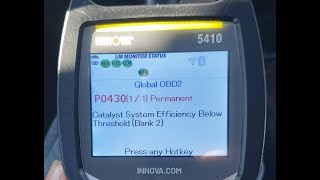
P0430 on a 5.0L F-150 means the driver's side (Bank 2) catalytic converter is inefficient. While this often points to a bad converter, it's crucial to first rule out cheaper causes like faulty oxygen sensors, exhaust leaks, or underlying engine misfires, which are known to cause this code on these trucks. Many owners report chasing this code, highlighting the need for accurate diagnosis before replacing expensive parts.
- P0430 points to an issue with the driver's side (Bank 2) catalytic converter on your 5.0L F-150.
- Before spending over $1,000 on a new converter, always diagnose cheaper potential causes first: faulty O2 sensors, exhaust leaks (especially at the manifold), and engine misfires.
- A scan tool that can graph live O2 sensor data is the most effective tool for diagnosing whether the converter has truly failed.
- If you have under 80,000 miles and your truck is less than 8 years old, the catalytic converter should be covered under the federal emissions warranty.
- Ignoring the code can lead to failed emissions tests, worse fuel economy, and potential long-term engine damage if the converter becomes clogged.
What's Unique About the 2011-2017 Ford F-150
For the 5.0L Coyote V8 in the 2011-2017 F-150, the P0430 code isn't always a straightforward bad catalytic converter. These engines can be prone to exhaust manifold leaks that can skew oxygen sensor readings and trigger the code. Furthermore, as noted in NHTSA complaints, unresolved misfires, sometimes occurring only in specific conditions like high humidity, can lead to unburned fuel damaging the catalytic converter over time, making the P0430 a symptom of a different problem. One owner on F150Forum.com reported a recurring P0430 despite replacing O2 sensors and both catalytic converters, demonstrating how frustrating and difficult this code can be to resolve without a thorough diagnosis of root causes.
Generation note: This range covers the end of the 12th generation (2011-2014) and the start of the 13th generation (2015-2017) F-150. While the 5.0L Coyote engine is present in both, the exhaust systems and some sensor part numbers may differ. Diagnosis remains the same, but always verify part compatibility for your specific year. For example, the Bank 2 catalytic converter for a 2011-2014 model is a different part number than for a 2015-2017 model.
Symptoms You May Notice
- Check Engine Light is on
- Reduced fuel economy
- Engine hesitation or stumbling on acceleration, sometimes in humid weather
- Reduced engine power if the converter is clogged
- A sulfur or "rotten egg" smell from the exhaust
- Immediately replacing the catalytic converter without diagnosing for O2 sensor failure, exhaust leaks, or engine misfires. This is an expensive mistake if the converter was actually damaged by another unresolved problem.
- Replacing the oxygen sensors when the catalytic converter has truly failed. Many forum users report replacing sensors only to have the P0430 code return.
Most Likely Causes
- Failing Catalytic Converter 🔴 High Probability Converters can fail from age, but more often they are damaged by other issues like engine misfires, oil consumption, or a rich fuel mixture which contaminates or melts the catalyst material. The federal emissions warranty covers converters for 8 years or 80,000 miles, so check your vehicle's age and mileage.
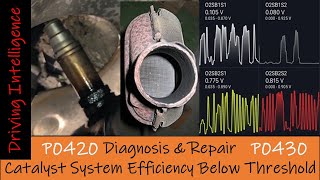
How to confirm: Use a scan tool to graph the upstream (B2S1) and downstream (B2S2) O2 sensors. The upstream should fluctuate rapidly, while the downstream should be relatively steady. If the downstream sensor's graph mimics the upstream, the converter is not working. An infrared thermometer can also be used; the outlet of a working converter should be significantly hotter than the inlet.
Typical fix: Replace the Bank 2 catalytic converter assembly. This is an expensive repair, with dealer quotes sometimes exceeding $1800-$3200.
Est. part cost: $300-$800 (aftermarket), $1000+ (OEM) - Faulty Oxygen (O2) Sensor 🟡 Medium Probability O2 sensors are wear items and can fail, sending incorrect data to the PCM. However, many technicians note that the PCM usually tests the O2 sensors before running the catalyst efficiency monitor, making a faulty sensor a less common cause than a failing converter. Still, it's a frequent first step in diagnosis due to the low cost.
How to confirm: Test the O2 sensor's heater circuit and voltage output. A lazy or biased downstream (Bank 2, Sensor 2) sensor can falsely trigger a P0430 code. A common DIY diagnostic trick is to swap the Bank 1 and Bank 2 downstream sensors. Clear the codes and drive the vehicle. If the code returns as P0420 (Bank 1), the sensor is faulty. If P0430 returns, the issue is likely the converter or an exhaust leak.
Typical fix: Replace the downstream O2 sensor on Bank 2 (driver's side). Some owners attempt to use an O2 sensor spacer or anti-fouler to pull the sensor out of the direct exhaust stream as a temporary, though not recommended, fix.
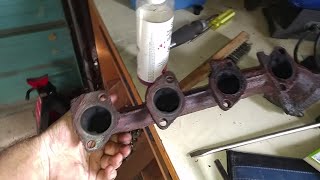
Est. part cost: $40-$100 - Exhaust Leak 🟡 Medium Probability Exhaust manifold gaskets can fail or the manifolds themselves can warp, creating leaks between the engine and the catalytic converter. This allows extra oxygen to enter the exhaust, confusing the O2 sensors and triggering the code. This is a well-documented issue on F-150s.
How to confirm: Perform a visual inspection for black soot marks around exhaust flanges and listen for a 'ticking' noise, especially when the engine is cold. A smoke test is the most definitive way to identify the location of any leaks. A shop can also use a stethoscope to pinpoint the noise.
Typical fix: Replace the leaking gasket or the entire exhaust manifold if warped.
Est. part cost: $20-$50 (gasket), $150-$400 (manifold) - Underlying Engine Misfire ⚪ Low Probability An engine misfire (from a bad spark plug, coil, or injector) allows unburned fuel to enter the exhaust, where it can overheat and destroy the catalytic converter. A NHTSA complaint specifically links P0430 to misfire codes on this truck, particularly in humid weather. TSB 13-8-1 was issued for 2011-2012 EcoBoost models with this issue, but the principle applies to the 5.0L as well.
How to confirm: Check for other stored trouble codes, especially misfire codes (P0300, P0305, P0306, P0307, P0308 for Bank 2). Analyze Mode $06 data to check for misfire counts even if no code is set.
Typical fix: Address the root cause of the misfire (e.g., replace spark plugs, ignition coils, or fuel injectors) before replacing the catalytic converter.
Est. part cost: $50-$300
Rare But Worth Checking
- Leaking Fuel Injector: A leaking injector on a Bank 2 cylinder can create a rich condition that damages the converter over time.
- PCM Software Issue: While less common for this specific model year range, some Ford vehicles have had PCM updates or recalls that affect catalyst monitoring. One TSB for newer EcoBoost models notes this. A PCM reprogram was also part of a fix for a transmission issue that could affect engine parameters.
- Excessive Oil Consumption: Some 2018-2020 5.0L engines had a TSB (19-2365) for excessive oil consumption, which can contaminate and ruin catalytic converters. While this TSB is for a later generation, oil getting into the combustion chamber is a known catalyst killer and could be a root cause on 2011-2017 models as well.
Diagnosis Steps
- Scan for all DTCs. If misfire codes (P030x) or fuel trim codes (P0172, P0175) are present, diagnose and fix those issues first. They are the likely root cause.
- Inspect the exhaust system from the engine to the rear O2 sensor for any signs of leaks, such as black soot, cracks, or broken hangers. Pay close attention to the exhaust manifold on the driver's side.
- Use a scan tool with live data capabilities. Graph the voltage of the Bank 2 upstream (B2S1) and downstream (B2S2) O2 sensors at a steady 2000 RPM.
- A healthy system will show B2S1 fluctuating rapidly between ~0.1V and ~0.9V, while B2S2 remains relatively stable and high (above 0.6V).
- If B2S2 is fluctuating in a similar pattern to B2S1, the catalytic converter is not storing oxygen and has likely failed.
- If B2S2 is stuck low or high, or responds slowly, the sensor itself may be faulty. As a test, swap the downstream sensors from Bank 1 and Bank 2. If the code changes to P0420, you have a bad sensor. If P0430 returns, the sensor is good.
- If all sensors and the exhaust system check out, the catalytic converter is the most likely cause. Before replacing, check for any TSBs or PCM updates related to catalyst monitoring for your specific VIN.
- Consider using a quality fuel system cleaner like Cataclean as a last-ditch effort. Some owners report temporary success, but it rarely fixes a physically damaged or completely depleted converter.
Parts You'll Likely Need
- Bank 2 Catalytic Converter
(OEM #DL3Z-5E212-A (2011-2014))— This is the most common direct cause for the code, assuming other factors have been ruled out. Bank 2 is the driver's side.
Trusted brands: Motorcraft, Walker, MagnaFlow, Eastern Catalytic
OEM price range: $1000-$1500
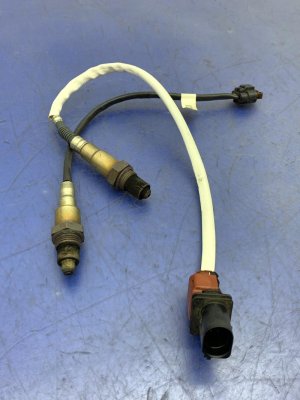
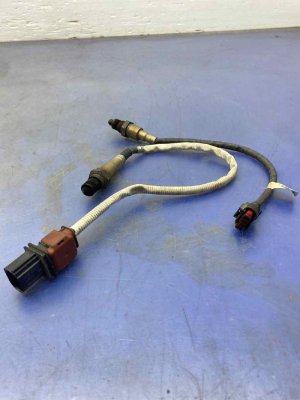
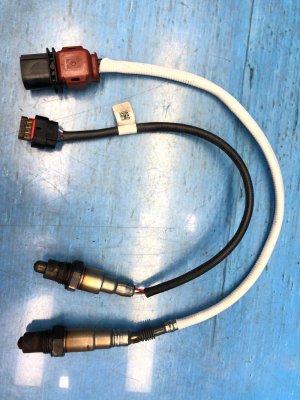
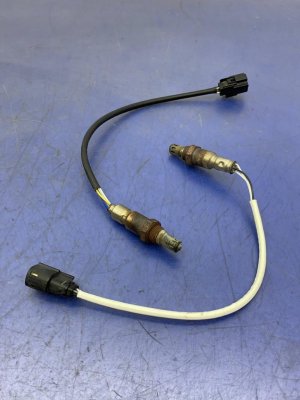
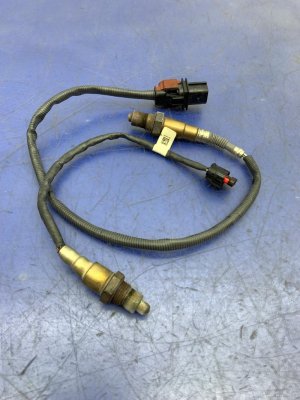
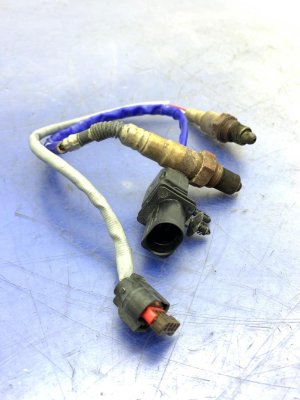
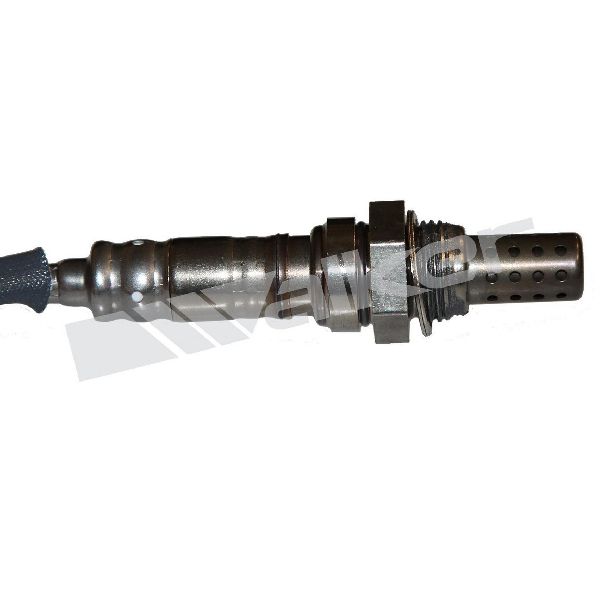
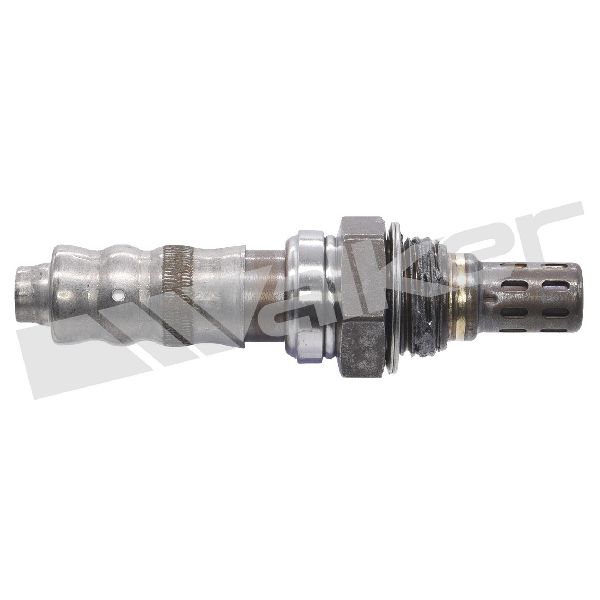
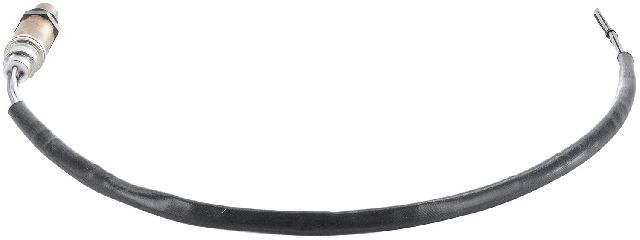
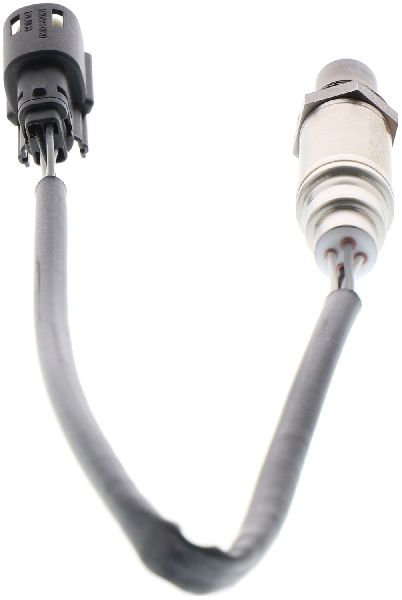
Aftermarket price range: $300-$800 - Downstream Oxygen Sensor (Bank 2, Sensor 2)
(OEM #BR3Z9G444A (superseded by FL3Z-9G444-D for some years))— A faulty downstream O2 sensor can send incorrect data, falsely triggering the P0430 code. It's a common wear item and a much cheaper initial replacement than the converter.
Trusted brands: Motorcraft, Bosch, Denso, NTK
OEM price range: $50-$90
Aftermarket price range: $40-$70
Related Codes That Often Appear With This One
- P0420 — If both catalytic converters are failing due to age or a systemic issue like contaminated fuel, you may see the code for Bank 1 (P0420) as well.
- P0305, P0306, P0307, P0308 — These are misfire codes for cylinders on Bank 2 (5, 6, 7, 8). An unresolved misfire will destroy the catalytic converter, so these codes often appear before or alongside P0430.
Technical Service Bulletins (TSBs) & Recalls
- TSB 13-8-1: Addressed intermittent stumble/misfire in high humidity on 2011-2012 EcoBoost F-150s, which could also present with a P0430 code. While for a different engine, the symptom of misfire leading to catalyst codes is relevant.
- TSB 19-2365: Addresses excessive oil consumption on 2018-2020 5.0L F-150s. The fix involves a PCM reprogram and a new dipstick. Oil consumption is a primary cause of premature catalytic converter failure.
Platform-Specific Known Issues
- NHTSA complaint ODI #10587634 documents a stumble/misfire on acceleration in humid conditions that can trigger P0430.
- NHTSA complaint ODI #11510940 reports a recurring P0430 that multiple repairs could not fix, indicating a complex diagnostic challenge.
- NHTSA complaint ODI #11098402 lists P0430 among a dozen other codes that ultimately required major engine work, showing it can be a symptom of a larger failure.
- Forum thread on F150Forum.com titled '2014 F150 5.0L XLT keeps popping P0430 Code - Help!' where an owner replaced O2 sensors and both cats, yet the code returned, pointing to a potential underlying issue like a vacuum leak or fuel delivery problem.
- Forum thread on Ford-Trucks.com titled '2019 F-150 5.0L - P0430' where an owner with 110k miles was quoted for a new cat and discusses the federal emissions warranty (8yr/80k miles).
Mechanic-Grade Diagnostic Values
- Catalytic Converter Temperature Differential — expected: The outlet pipe temperature should be at least 100°F (38°C) hotter than the inlet pipe temperature after the engine has warmed up.. Failure: If the outlet temperature is the same or cooler than the inlet, the converter is not functioning.
- O2 Sensor Heater Element Resistance — expected: Typically between 2 and 30 ohms, but varies by manufacturer. The key is that it should not be an open circuit (infinite resistance).. Failure: A reading of 'OL' (Over Limit) or infinite ohms on a multimeter indicates a burned-out heater element, requiring sensor replacement.
- Spark Plug Resistance — expected: Around 5000 ohms for standard resistor plugs.. Failure: Significantly higher or lower resistance can indicate a faulty plug that could contribute to incomplete combustion, eventually damaging a catalytic converter.
Hidden / Shadow Codes Worth Checking
- Mode $06, TID $81, CID $11/$21: This refers to the onboard test results for the Catalyst Monitor on Bank 1 (CID $11) and Bank 2 (CID $21). A technician can view the raw test values and compare them against the PCM's maximum allowable threshold. If the value is close to the max, the converter is marginal, even if it hasn't set a P0420/P0430 yet. (see via Requires a professional scan tool capable of displaying Mode $06 data, such as Ford's IDS or a high-end Autel/Snap-on scanner.)
Wiring & Ground Locations
- Bank 2 O2 Sensor Harness — The wiring for the Bank 2 (driver's side) sensors routes down from the main engine harness near the firewall and follows the exhaust pipe. The connectors are typically clipped to the transmission bellhousing or frame rail.. This harness is susceptible to heat damage from the exhaust manifold and catalytic converter. Wires can become brittle, and insulation can melt, leading to shorts or open circuits that mimic a failed sensor. A wiggle test on the harness while monitoring live data can reveal intermittent connections.
Real Owner Repair Stories
- ScannerDanner Forum (2013 F-150 5.0L) — Initial P0430 code, which later became P0430 and P0420.
❌ Tried (didn't work) Replaced both catalytic converters with aftermarket MagnaFlow units., Replaced all four O2 sensors with Bosch parts., Replaced all spark plugs., Replaced ignition coil on cylinder 5 after a misfire count was detected.
✅ What actually fixed it The forum discussion concluded the aftermarket MagnaFlow converters were likely not efficient enough to satisfy the Ford PCM's monitoring parameters, a known issue with some non-OEM cats on modern Fords. The underlying issue was likely a rich fuel condition or misfire that destroyed the original cats, and the aftermarket replacements were not a viable solution, causing the code to return. The final fix was not posted, but the diagnosis pointed to the aftermarket parts being the immediate problem. - Ford F150 Forum (2014 F-150 5.0L) — P0430 code appeared.
❌ Tried (didn't work) Replaced both O2 sensors on Bank 2.
✅ What actually fixed it The owner chased the issue for two years. The final resolution was replacing the Bank 2 catalytic converter. Interestingly, the check engine light did not go out immediately but turned off on its own about a week after the replacement and did not return.
When the Usual Fixes Don't Work
- A common trap is assuming an aftermarket catalytic converter will fix the problem. Multiple owner accounts, including a detailed story on the ScannerDanner forum, show that even reputable aftermarket brands like MagnaFlow may not have enough precious metal loading to satisfy the stringent catalyst efficiency monitoring of the Ford PCM. This results in the P0430 code returning even with a brand new converter, leading the owner to mistakenly chase other non-existent problems. In these cases, only an OEM Motorcraft converter resolves the issue permanently.
OEM Part Supersession History
BL3Z-5E212-B, CL3Z-5E212-B→DL3Z-5E212-A— Standard part evolution and updates by Ford.
Heads up: These part numbers are specific to the 2011-2014 (12th Gen) F-150 5.0L. They will not fit 2015+ models due to chassis and exhaust hanger location changes.BR3Z-9G444-A→Motorcraft DY-1184, potentially FL3Z-9G444-D for later years.— Part number consolidation and minor design updates.
Heads up: BR3Z-9G444-A is a common downstream sensor for 2011-2014 models. Always verify by VIN, as connector keying and harness length can vary. BL3Z-9G444-A is also listed for this application.
Model Year Variations Within This Range
- 2015-2017: The 2015 model year marked the introduction of the 13th generation F-150 with a new frame and aluminum body. The exhaust system, including catalytic converters and piping, is physically different from the 2011-2014 models. While the 5.0L engine is fundamentally the same, part numbers for exhaust components are not interchangeable across these generations.
Diagnostic Flowchart
Other Known Issues on This Vehicle
Issues unrelated to this code that are worth knowing about as an owner of this generation:
- Molded Lead Frame (Transmission) 🔴 High — Common enough to trigger multiple recalls (e.g., 19S07) and a warranty extension (19N01) for 2011-2013 models equipped with the 6R80 transmission. Can cause sudden, unexpected downshifts to 1st gear. (Ref: Recall 19S07, Customer Satisfaction Program 19N01)
- Electronic Throttle Body (ETB) Failure 🟠 Medium — Affects multiple Ford engines from this era, including the 5.0L. Can cause the vehicle to enter 'limp mode' with reduced power. A customer satisfaction program (16B32) was issued. (Ref: Customer Satisfaction Program 16B32)
- Excessive Oil Consumption 🟠 Medium — More formally documented in 2018-2020 models via TSB 19-2365, but owners of earlier 5.0L Coyotes also report oil use. The cause in later models is attributed to high engine vacuum during deceleration. (Ref: TSB 19-2365 (for 2018-2020 models))
- Coolant Leaks 🟡 Low — Some owners report leaks from radiator hoses (specifically the O-rings) or the water pump itself over the life of the vehicle.
Used vs. New Parts: Buying Guide for This Vehicle
When a used part is the smart pick: Used parts are generally not recommended for fixing a P0430 code. The primary failure parts (catalytic converter, O2 sensors) are wear items. A used exhaust manifold from a low-mileage, rear-ended truck could be a cost-effective option if the original is cracked or warped.
Donor-vehicle mileage cap: roughly under 50000 miles for the part to have meaningful remaining life.
What to inspect on the donor part:
- For a manifold, check for any visible cracks, especially around the collector and flange.
- Ensure all mounting studs are intact and not stripped.
- Look for a donor vehicle from a dry, non-salt-belt state to minimize rust and corrosion.
OEM-only on this vehicle (don't cheap out):
- Catalytic Converter: Strongly recommended to use OEM (Motorcraft). Many aftermarket converters lack the necessary precious metal loading to meet the PCM's efficiency requirements, causing the P0430 code to return.
Aftermarket brands forum-validated for this vehicle:
- O2 Sensors: Bosch, Denso, and NTK are often the original equipment manufacturers for Ford and are considered reliable replacements.
Brands owners have reported issues with on this vehicle:
- Universal or 'cheapo' catalytic converters are highly likely to fail the internal PCM test and should be avoided.
- Ultra-Power brand O2 sensors have been noted by some forum users as being lower quality.
Real Owner Stories
Aggregated from forums and TSBs cited above. Mileages and costs reflect what owners reported in those sources.
2014 Ford F-150 XLT 5.0L
Symptoms: The vehicle keeps popping the P0430 code even after the owner replaced the O2 sensors and both catalytic converters.
What fixed it: The source indicates the code returned, pointing to an unresolved underlying issue such as a vacuum leak or fuel delivery problem.
Source hint: Forum thread on F150Forum.com titled '2014 F150 5.0L XLT keeps popping P0430 Code - Help!'
2019 Ford F-150 5.0L — 110000 miles
Symptoms: Owner was quoted for a new catalytic converter and sought advice regarding the federal emissions warranty.
What fixed it: The discussion focused on the 8yr/80k mile warranty limits and the necessity of a new catalytic converter.
Source hint: Forum thread on Ford-Trucks.com titled '2019 F-150 5.0L - P0430'
2011-2017 Ford F-150 5.0L
Symptoms: Engine hesitation or stumbling on acceleration, specifically occurring in humid weather conditions.
What fixed it: Addressing misfires; NHTSA documentation links this specific weather-related stumble to the triggering of P0430.
Source hint: NHTSA complaint ODI #10587634
Related OBD-II Codes
Frequently Asked Questions
Will the federal emissions warranty cover the catalytic converter replacement on my F-150?
Does TSB 13-8-1 apply to my 5.0L V8 engine if I'm experiencing a stumble and P0430?
Can I just swap the oxygen sensors to see if the sensor is the problem?
Is there a TSB for the excessive oil consumption that might be ruining my catalytic converter?
How much does it typically cost to replace the Bank 2 catalytic converter at a Ford dealer?
Could a ticking noise when the engine is cold be related to my P0430 code?
Helpful Videos
Used OEM Parts in Stock
New Aftermarket Parts Available



The information in this article is provided for general reference and educational purposes only. Vehicle specifications, procedures, and part compatibility can vary by production date, trim level, and region. Always consult your vehicle's factory service manual and verify part numbers before purchasing or performing repairs. Safety-critical components such as airbags, seat belts, and braking systems should be installed by a qualified professional.
- Ford F-150:
- 🎬 Helpful Videos
- 🛍️ Shop This Part
- What's Unique About the 2011-2017 Ford F-150
- Symptoms You May Notice
- Most Likely Causes
- Rare But Worth Checking
- Diagnosis Steps
- Parts You'll Likely Need
- Related Codes That Often Appear With This One
- Technical Service Bulletins (TSBs) & Recalls
- Platform-Specific Known Issues
- Mechanic-Grade Diagnostic Values
- Hidden / Shadow Codes Worth Checking
- Wiring & Ground Locations
- Real Owner Repair Stories
- When the Usual Fixes Don't Work
- OEM Part Supersession History
- Model Year Variations Within This Range
- Diagnostic Flowchart
- Other Known Issues on This Vehicle
- Used vs. New Parts: Buying Guide for This Vehicle
- Real Owner Stories
- 2014 Ford F-150 XLT 5.0L
- 2019 Ford F-150 5.0L — 110000 miles
- 2011-2017 Ford F-150 5.0L
- Related OBD-II Codes
- Frequently Asked Questions
- 🎟️ Get 5% Off