

P0420 on 2003-2009 Toyota 4Runner 4.0L V6: Catalyst Efficiency Causes and Fixes
On a 4th Gen 4Runner, code P0420 almost always means the passenger-side catalytic converter has failed, often due to age or a prior engine issue. While a bad oxygen sensor is possible, the converter itself is the most common culprit. Expect a high repair cost for a new converter, but always diagnose first by checking sensor data and for exhaust leaks.
- P0420 on your 4Runner means the passenger-side catalytic converter system is failing.
- While a bad O2 sensor or exhaust leak is possible, the most probable cause is a failed catalytic converter, especially over 100,000 miles.
- Before spending money, confirm the diagnosis by graphing the O2 sensor data with a capable scan tool.
- If you replace an O2 sensor, use the OEM brand (Denso) to avoid compatibility issues.
- If the catalytic converter is replaced, ensure any underlying engine issues (like misfires) are fixed to prevent damaging the new part.
What's Unique About the 2003-2009 Toyota 4Runner

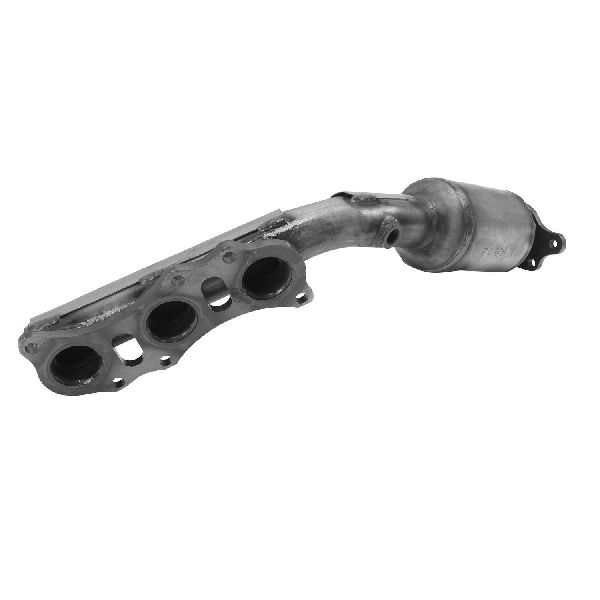
The 4th generation 4Runner's 1GR-FE engine integrates the primary catalytic converters directly into the exhaust manifolds. This design, while efficient for emissions, makes them prone to cracking and failure over time, especially with high mileage. Unlike some vehicles where P0420 is commonly a cheap sensor fix, on this platform, it very frequently points to the expensive catalytic converter assembly itself. Owners often discover this code after a separate engine issue, like a misfire, has damaged the converter with unburnt fuel. Many owners report that replacing the O2 sensor alone does not fix the code, confirming the converter is the true point of failure.
Symptoms You May Notice
- Check Engine Light illuminated
- VSC (Vehicle Stability Control) and TRAC lights may also illuminate
- A sulfur or 'rotten egg' smell from the exhaust, especially under acceleration
- Reduced fuel economy (can be gradual and hard to notice)
- Potential decrease in engine power if the converter is significantly clogged
- Rattling noise from the exhaust if the internal catalyst substrate has broken apart
- Ticking or puffing noise from the engine bay, especially when cold, if an exhaust manifold crack is the cause. 🎬 See why your 4Runner is ticking and how to fix it.
- Replacing the oxygen sensors when the catalytic converter is actually the problem. While cheaper to try first, diagnostic data (graphing sensor waveforms) should be used to confirm which part has failed. Many forum users report this as an unsuccessful first step.
- Replacing the gas cap. A loose or faulty gas cap will typically cause an EVAP system code (e.g., P0442, P0456), not a P0420.
Most Likely Causes

- Failed Catalytic Converter (Bank 1) 🔴 High Probability The catalytic converter is integrated into the exhaust manifold, a design that is susceptible to cracking and internal failure from heat cycles and age. Damage is often accelerated by past engine misfires or other issues that cause unburnt fuel to enter the exhaust. Forum discussions overwhelmingly point to the converter itself being the culprit far more often than the sensors.
How to confirm: Use a scan tool to graph the voltage of the upstream (A/F) and downstream (O2) sensors for Bank 1. If the downstream sensor's waveform mirrors the upstream sensor's, the converter is not working. A temperature gun can also be used; the outlet of a working converter should be significantly hotter (at least 100°F) than the inlet on a fully warmed-up engine.
Typical fix: Replacement of the Bank 1 (passenger side) catalytic converter assembly. Due to the high cost, some owners in areas without emissions testing have opted for 'O2 sensor spacers' to trick the ECU, though this is not a proper repair.
Est. part cost: $400-$1500 - Faulty Downstream Oxygen (O2) Sensor (Bank 1, Sensor 2) 🟡 Medium Probability O2 sensors are wear items that degrade over time. A lazy or failed downstream sensor can send incorrect data to the ECM, falsely indicating a bad catalytic converter. However, this is a very common misdiagnosis; owner forums are filled with stories of replacing the sensor only to have the P0420 code return, indicating the converter was the issue all along.
How to confirm: Graph the sensor's voltage on a scan tool. A healthy, post-cat O2 sensor should show a relatively stable and steady voltage (typically above 0.5V) on a warm engine at idle. If it is stuck high, low, or fluctuating wildly like the upstream sensor, it is suspect. Swapping the Bank 1 and Bank 2 downstream sensors (if accessible and identical) can also be a diagnostic step.
Typical fix: Replace the Bank 1, Sensor 2 (downstream/post-catalyst) oxygen sensor. Using the OEM brand, Denso, is highly recommended to avoid compatibility issues.
Est. part cost: $60-$120 - Exhaust Leak ⚪ Low Probability Gaskets and welds in the exhaust system can fail over time due to rust and heat cycles. A common leak point is the gasket between the exhaust manifold and the Y-pipe, or cracks on the manifold itself. An exhaust leak before or near the O2 sensors can draw in outside air, skewing the sensor readings and triggering a false P0420.
How to confirm: Listen for a ticking noise when the engine is cold that may disappear as it warms up. Visually inspect for black soot marks around manifold flanges and gaskets. A smoke test is the most definitive way to identify the location of a leak.
Typical fix: Replace the leaking gasket or repair/replace the cracked pipe or manifold.
Est. part cost: $20-$50
Rare But Worth Checking
- Engine Misfire or Fuel System Issue: While a misfire or leaking injector will usually set its own code (e.g., P030x), an intermittent or past issue can go unresolved and slowly destroy the catalytic converter. If you replace a P0420-causing converter without addressing the root cause (like a bad ignition coil or injector), the new one will fail prematurely.
Diagnosis Steps

- Check for any other stored diagnostic trouble codes. Address any misfire (P030x), fuel system, or O2 sensor circuit codes first, as they are likely the root cause of converter failure.
- With the engine cold, start it and listen for any ticking sounds from the engine bay or exhaust system, which would indicate an exhaust leak.
- Visually inspect the exhaust manifold on the passenger side for cracks and check gaskets for signs of black soot, indicating a leak.
- Connect a scan tool capable of graphing live data. Bring the engine to operating temperature and hold RPMs around 2000-2500.
- Observe the voltage graphs for Bank 1 Sensor 1 (A/F sensor) and Bank 1 Sensor 2 (O2 sensor).
- A healthy system will show Sensor 1 fluctuating rapidly, while Sensor 2 remains relatively stable and steady (typically >0.5V).
- If Sensor 2's graph mimics Sensor 1's rapid fluctuations, the catalytic converter is not functioning and needs replacement.
- If Sensor 2's reading is flat, unresponsive, or stuck at a specific voltage (e.g., 0V), the sensor itself is likely faulty.
- Use an infrared thermometer to check temperatures. The converter outlet should be at least 100°F hotter than the inlet. If not, the catalyst is not working.
- If all else checks out, consider a past issue (like a severe misfire) may have damaged the converter.
Parts You'll Likely Need

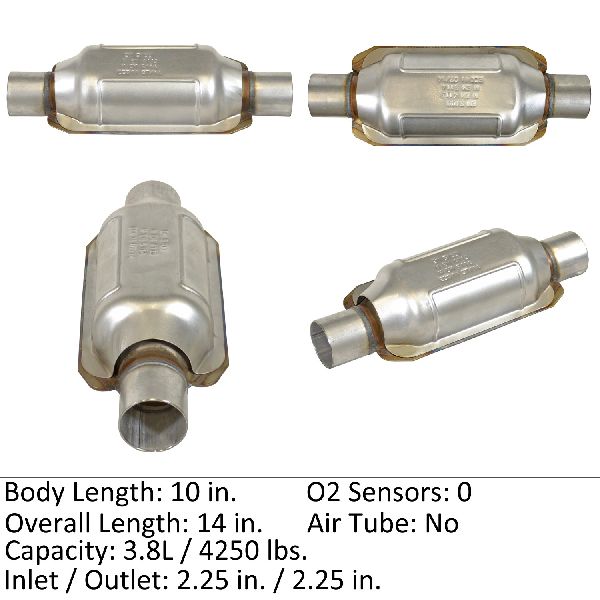
- Catalytic Converter Assembly (Bank 1 - Passenger Side)
(OEM #17150-0P010 (Manifold/Converter Assembly))— This is the most common failure item for a P0420 code on this specific vehicle due to age, mileage, and design.
Trusted brands: Toyota (OEM), Walker, MagnaFlow
OEM price range: $1200-$1800
Aftermarket price range: $400-$900 - Downstream Oxygen Sensor (Bank 1, Sensor 2)
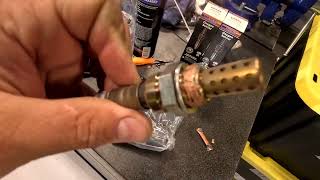
(OEM #89465-35580)— This sensor is responsible for reporting the converter's efficiency. If it fails, it can cause a false P0420 code. It's a common diagnostic step to replace it if its readings are suspect. The OEM equivalent is Denso 234-4261. 🎬 Watch this walkthrough for replacing upstream and downstream O2 sensors.
Trusted brands: Denso (OEM)
OEM price range: $100-$150
Aftermarket price range: $60-$90 - Exhaust Manifold Gasket
(OEM #17173-0P010)— Required when replacing the catalytic converter/manifold assembly. Also replaced to fix an exhaust leak at the cylinder head flange.
Trusted brands: Toyota (OEM), Fel-Pro
OEM price range: $30-$50
Aftermarket price range: $15-$25
Related Codes That Often Appear With This One
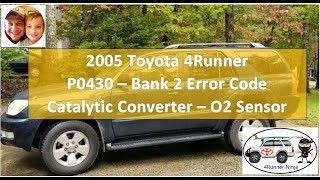
- P0430 — P0430 is the identical 'Catalyst System Efficiency Below Threshold' code but for Bank 2 (driver's side). 🎬 Watch: How to replace the Bank 2 downstream O2 sensor. If both converters are of similar age and mileage, it's common for them to fail around the same time.
- P0137 — P0137 is 'O2 Sensor Circuit Low Voltage (Bank 1, Sensor 2)'. This code points directly to an issue with the downstream oxygen sensor or its circuit, which could be the root cause of an incorrect P0420 reading.
- P0301, P0302, P0303, P0304, P0305, P0306 — These are misfire codes for cylinders 1-6. A persistent misfire on Bank 1 (cylinders 1, 3, 5) will dump unburnt fuel into the exhaust, quickly overheating and destroying the catalytic converter, leading to a P0420 code.
Technical Service Bulletins (TSBs) & Recalls
- EG050-05 (May 2005): While not for the 4Runner specifically, this TSB addresses P0420/P0430 on other Toyota models by modifying ECU software and catalyst coatings, indicating Toyota has actively worked to mitigate this code on various platforms.
- Bulletin #T-58-0161-13A (October 2013): A manufacturer service bulletin for similar Toyota platforms notes that vehicles may exhibit a front exhaust pipe catalyst rattle noise and/or a MIL "ON" condition with DTC P0420 stored in the ECM.
Platform-Specific Known Issues
- The integrated exhaust manifold and catalytic converter design is a known failure point, often cracking near the welds or flanges.
- Driving with a flashing check engine light (indicating a severe misfire) will quickly destroy the catalytic converter with unburnt fuel.
- Many owners on forums report chasing the P0420 code by replacing O2 sensors first, only to find the catalytic converter was the true cause.
- Similar Toyota models have been reported to fail the minimum threshold for the ECM to function properly after a P0420 code is triggered (NHTSA ODI #10639515).
Mechanic-Grade Diagnostic Values
- Upstream Air/Fuel (A/F) Sensor Heater Resistance — expected: 0.8 to 1.4 Ohms at 68°F (20°C). Some sources note good sensors may read up to 1.8 Ohms.. Failure: An open circuit (no continuity) or resistance over 3 Ohms indicates a failed heater circuit.
- Downstream Oxygen (O2) Sensor Heater Resistance — expected: 11 to 16 Ohms at 68°F (20°C).. Failure: Significantly higher or lower resistance, or an open circuit, indicates a failed heater.
- A/F Sensor Signal Wire Voltage (at ECM connector, sensor unplugged, Key On Engine Off) — expected: One signal wire should read ~3.3V and the other should read ~3.0V.. Failure: No voltage or incorrect voltage points to a wiring issue between the ECM and the sensor connector.
- Long Term Fuel Trim (Bank 1) — expected: Ideally close to 0%, but generally within +/- 5% on a healthy engine.. Failure: High positive values (e.g., > +10%) suggest a vacuum leak or under-reporting MAF sensor, while high negative values suggest a leaking injector or other issue causing a rich condition. These should be fixed before condemning the converter.
Scan Tool Commands That Help
- Toyota Techstream: Active Test - Control the Injection Volume for A/F Sensor — This function allows a technician to manually command a rich or lean condition and observe the reaction of both the upstream A/F sensor and the downstream O2 sensor. It's a definitive way to test sensor response without using external methods like propane.
- Toyota Techstream: Utility - Catalyst Check — Some versions of Techstream may have a guided diagnostic utility that runs the engine at specific RPMs to automatically evaluate catalyst efficiency based on sensor switching, providing a pass/fail result.
Wiring & Ground Locations
- E01, E02 — These are primary engine ground points. On the 1GR-FE, a critical ground is located on the lower rear of the left cylinder head (driver's side).. Poor engine grounds can introduce electrical noise and voltage offsets, potentially corrupting the sensitive low-voltage signals from the oxygen sensors and causing incorrect readings or false codes.
- ECM (Engine Control Module) — Located behind the right side of the dashboard, accessible by removing the glove box.. This is the termination point for all sensor wiring. Technicians can back-probe the connector here to test for voltage and continuity from the O2 and A/F sensors, confirming the integrity of the wiring harness itself.
- Bank 1 Sensor 2 (Downstream O2) Connector — The wiring runs from the sensor on the passenger side exhaust pipe up into the vehicle's cabin, with the connector located under the passenger seat carpet.. Knowing the connector is inside the cabin is critical. It is protected from the elements but requires interior disassembly to access for testing or replacement, unlike sensors where the connector is under the vehicle.
Real Owner Repair Stories
- GenVibe Forums (Pontiac Vibe (uses Toyota engine/logic, relevant)) — Persistent P0420 code.
❌ Tried (didn't work) Replacing the catalytic converter, Replacing both upstream and downstream oxygen sensors, Replacing the intake manifold gasket, Replacing spark plugs
✅ What actually fixed it Installing two spark plug non-foulers (one drilled out) to space the downstream O2 sensor out of the direct exhaust stream. This tricked the ECU into seeing a larger difference between upstream and downstream readings, clearing the code. This is not a proper emissions-legal repair. - Tacoma World Forums (2006 Toyota Tacoma 1GR-FE) — Check engine light with codes P0138 and P0157 (O2 sensor circuit high voltage).
❌ Tried (didn't work) Replacing O2 sensors with cheap aftermarket parts from Amazon., Replacing the cheap sensors with correct Denso sensors., Cleaning the MAF sensor., Replacing spark plugs.
✅ What actually fixed it The user suspected a cracked exhaust manifold on the passenger side after noticing black oily spew in that area, which can cause false sensor readings. The final resolution was not posted, but the diagnosis shifted from sensors to a physical exhaust leak at the manifold.
Documented NHTSA Reports
- An owner reported a P0420 fault code accompanied by a rattling sound and exhaust back up to the pressure release mount (NHTSA ODI #11292428).
- NHTSA ODI #10850705 describes a situation where a vehicle returned from service only to have the check engine light illuminate with codes P0420 and P0430, indicating a catalytic converter issue.
- A report filed under NHTSA ODI #11659073 notes the presence of P0420 alongside several other codes including P1423 and C1391, even after significant battery and brake repairs.
OEM Part Supersession History
17150-0P010→17150-0P100— This part number is for the Bank 2 (Driver Side) manifold, but its history is relevant as it shows Toyota updated the part. The update likely involved changes to materials or construction to improve durability and prevent cracking, a common failure on both banks.
Heads up: The original part 17150-0P010 is also replaced by 17150-0P070, indicating multiple revisions.
Diagnostic Flowchart
Other Known Issues on This Vehicle
Issues unrelated to this code that are worth knowing about as an owner of this generation:
- Premature Head Gasket Failure 🔴 High — Most common on 2003-2005 models, often failing at cylinder #6. Toyota redesigned the gasket in mid-2005. Symptoms include unexplained coolant loss and overheating.
- Frame Rust / Corrosion 🔴 High — Widespread issue, especially in salt-belt states. Can lead to structural failure. Other Toyota trucks of the era were covered by a replacement program, but the 4Runner was controversially excluded for a long time. (Ref: Subject of class-action lawsuits.)
- Seized Front Brake Calipers 🟠 Medium — The caliper pistons are prone to seizing due to corrosion, causing brake drag, pulling, and a burning smell. It is a very common repair.
- Leaking/Failing X-REAS Suspension 🟠 Medium — Applies to Sport and Limited trims equipped with the X-REAS system. The interconnected hydraulic shocks are known to leak and fail, often before 100k miles. Replacement is expensive, so many owners opt to delete the system and install conventional shocks.
- Cracked Exhaust Manifolds 🟠 Medium — The manifolds, which integrate the catalytic converters, can develop cracks that cause an exhaust leak (ticking noise when cold). This is separate from the catalyst failing internally.
Used vs. New Parts: Buying Guide for This Vehicle
When a used part is the smart pick: A used OEM catalytic converter/manifold assembly from a low-mileage, rust-free donor vehicle can be a cost-effective alternative to a new OEM part, especially if the failure is due to a crack rather than catalyst poisoning. Used O2 sensors are generally not recommended as they are wear items.
Donor-vehicle mileage cap: roughly under 80000 miles for the part to have meaningful remaining life.
What to inspect on the donor part:
- Visually inspect the manifold for any hairline cracks, especially around the welds and flanges.
- Check for any rattling sounds when shaken, which would indicate a broken internal catalyst substrate.
- Ensure the donor vehicle is from a region without heavy road salt use to avoid rusted and seized studs.
- Verify the donor vehicle did not have a catastrophic engine failure (like a blown head gasket) that could have contaminated or damaged the converter.
OEM-only on this vehicle (don't cheap out):
- Air/Fuel Ratio Sensor (Upstream)
- Oxygen Sensor (Downstream)
Aftermarket brands forum-validated for this vehicle:
- Denso for O2/AF sensors (this is the OEM supplier).
- MagnaFlow for catalytic converters (often considered a higher-quality aftermarket option).
- Walker for catalytic converters (often seen as a budget-friendly option, though some users report quality concerns).
Brands owners have reported issues with on this vehicle:
- Unbranded or 'universal' electronic sensors. Toyota ECUs are notoriously sensitive to the specific resistance and response curves of the OEM Denso sensors, and using other brands like Bosch or generic parts often fails to resolve codes or introduces new ones.
Real Owner Stories
Aggregated from forums and TSBs cited above. Mileages and costs reflect what owners reported in those sources.
2003-2009 Toyota 4Runner 4.0L V6
Symptoms: Owners reported chasing the P0420 code by replacing O2 sensors first, but the light eventually returned.
What fixed it: Replacement of the catalytic converter assembly, as the internal catalyst substrate or the manifold welds had failed.
Source hint: vehicle_specific_issues
2003-2009 Toyota 4Runner 4.0L V6
Symptoms: A ticking noise from the engine bay, especially when the engine was cold.
What fixed it: Repairing or replacing the cracked exhaust manifold or the gasket between the manifold and the Y-pipe.
Source hint: common_causes - Exhaust Leak
2003-2009 Toyota 4Runner 4.0L V6
Symptoms: Check engine light with P0420; owner was looking for diagnostic strategies and considering the high cost of repair.
What fixed it: Some owners in areas without emissions testing used 'O2 sensor spacers' to trick the ECU, though this is noted as not being a proper repair.
Source hint: T4R.org - 'P0420 and P0430 code questions'
Related OBD-II Codes
Frequently Asked Questions
Does TSB EG050-05 apply specifically to my 2003-2009 Toyota 4Runner?
Why are my VSC and TRAC lights on along with the Check Engine Light for P0420?
Can I just replace the O2 sensors to fix the P0420 code on my 1GR-FE engine?
Is there a specific brand of O2 sensor I should use for my 4Runner?
I hear a ticking noise from the engine bay when cold; could this cause a P0420?
What is the difference between Bank 1 and Bank 2 on the 4.0L V6?
Helpful Videos
We Have This Part in Stock



The information in this article is provided for general reference and educational purposes only. Vehicle specifications, procedures, and part compatibility can vary by production date, trim level, and region. Always consult your vehicle's factory service manual and verify part numbers before purchasing or performing repairs. Safety-critical components such as airbags, seat belts, and braking systems should be installed by a qualified professional.
- Toyota 4Runner:
- 🎬 Helpful Videos
- 🛍️ Shop This Part
- What's Unique About the 2003-2009 Toyota 4Runner
- Symptoms You May Notice
- Most Likely Causes
- Rare But Worth Checking
- Diagnosis Steps
- Parts You'll Likely Need
- Related Codes That Often Appear With This One
- Technical Service Bulletins (TSBs) & Recalls
- Platform-Specific Known Issues
- Mechanic-Grade Diagnostic Values
- Scan Tool Commands That Help
- Wiring & Ground Locations
- Real Owner Repair Stories
- Documented NHTSA Reports
- OEM Part Supersession History
- Diagnostic Flowchart
- Other Known Issues on This Vehicle
- Used vs. New Parts: Buying Guide for This Vehicle
- Real Owner Stories
- 2003-2009 Toyota 4Runner 4.0L V6
- 2003-2009 Toyota 4Runner 4.0L V6
- 2003-2009 Toyota 4Runner 4.0L V6
- Related OBD-II Codes
- Frequently Asked Questions
- 🎟️ Get 5% Off